Integrate information from sources Lesson for Fourth Grade
Preparing your worksheet
Integrate information from sources Lesson for Fourth Grade: english language arts practice for Fourth Grade
Integrate information from sources Lesson for Fourth Grade helps children practise English language arts practice, careful reading, and clear explanation. Start with Integrate information from sources Lesson for Fourth Grade, then use the paired worksheet for Integrate information from sources Lesson for Fourth Grade when the child needs the same skill in another format.
This page is useful for parents, teachers, tutors, homeschool families, and children because it turns integrate information from sources into a short reading routine: read around the word, find the clue, test the meaning, and explain the evidence. In the United States, this page can support Grade 1 through Grade 5 reading groups, homework, homeschool, intervention, California, Texas, Florida, New York, Illinois, Pennsylvania, Ohio, Georgia, North Carolina, Michigan, Los Angeles, Houston, Chicago, Dallas, Seattle, Boston, Denver, Atlanta, and Miami. In the UAE, it can support Dubai, Abu Dhabi, Sharjah, Ajman, Al Ain, Ras Al Khaimah, Fujairah, Umm Al Quwain, British, American, IB, and Indian curriculum classrooms. In India, families may connect this page with CBSE, ICSE, state-board, Class 1 through Class 5, Delhi, Mumbai, Bengaluru, Chennai, Hyderabad, Pune, Kolkata, Ahmedabad, Jaipur, Kerala, Tamil Nadu, Karnataka, Maharashtra, Telangana, Gujarat, Rajasthan, and West Bengal.
What the child is learning
The child is learning that unfamiliar words can often be understood from nearby information. A clue might define the word, give an example, show a contrast, repeat the meaning with a synonym, or connect the word to a prefix, suffix, or passage detail.
The goal is not to guess quickly. The goal is to slow down and say, "These words helped me know." That explanation helps adults hear whether the child is reading carefully or choosing a familiar-sounding answer.
Parent practice routine
Use this page for ten calm minutes. Choose one sentence, ask the child to underline the unknown word, and then ask which nearby words help. If the child guesses, reread the sentence together and test the meaning aloud.
- Ask the child to find one clue before answering.
- Let the child explain the meaning in their own words.
- Use Context Clues for Kids when adults need more examples.
- Return to the page after two or three days for spaced practice.
Teacher and tutor routine
Teachers can use this page as a warm-up, vocabulary center, small-group reteach, exit ticket, or homework follow-up. Tutors can use it to decide whether the child needs help with rereading, clue types, vocabulary, morphology, or comprehension.
A strong classroom move is to ask children to mark the clue words, not only circle an answer. Partners can compare which clue helped and whether the meaning fits the sentence.
Examples to try before the page
- Read one sentence and cover the answer choices.
- Ask the child to define the unknown word from the clue.
- Make a contrast sentence using but, unlike, or however.
- Write one example clue for a new vocabulary word.
For more practice, connect this page to Context Clues for Kids, Context Clues Examples for Kids, and Context Clues Worksheets for Grade 3.
Common mistakes to watch for
- The child guesses from the first letter.
- The child chooses a meaning that does not fit the sentence.
- The child finds a clue but cannot explain how it helps.
- The adult gives the meaning before the child has tried.
- The page is finished once and never revisited.
When this happens, return to one sentence and ask for the exact clue words. The adult planning reference can support lesson planning, but children should return to iBloom for direct practice.
How to make the clue visible
Children often need help seeing that the clue is not always beside the unknown word. Sometimes the clue appears in the previous sentence, the next sentence, a repeated idea, a contrast word, or a concrete example. Ask the child to mark the sentence that helped, then say the meaning in simple language. This keeps the work focused on reading evidence instead of memorizing a definition.
Parents can do this with one bedtime reading paragraph, tutors can do it with a short passage, and teachers can do it during whole-group vocabulary instruction. The same routine works across simple stories, science texts, history passages, poems, and classroom directions.
Small extension ideas
- Ask the child to write a new sentence that gives a definition clue.
- Ask a partner to add an example clue for the same word.
- Sort three clue types: definition, example, and contrast.
- Choose one answer choice and explain why it does not fit the sentence.
Keep the extension short. The goal is not to turn vocabulary into a long assignment; the goal is to help children build the habit of rereading, checking, and explaining.
Connected iBloom practice
- Integrate information from sources Lesson for Fourth Grade
- paired worksheet for Integrate information from sources Lesson for Fourth Grade
- Context Clues for Kids
- Context Clues for Kids
- Context Clues Examples for Kids
- Context Clues Worksheets for Grade 3
- Compare event patterns across stories Lesson for Fourth Grade
- Compare themes and structures Lesson for Fourth Grade
- Identify the central message, lesson, or moral Lesson for Third Grade
Frequently asked questions
Who should use this page?
Use it when a Fourth Grade child needs focused english language arts practice connected to integrate information from sources.
How long should practice take?
Most children do well with 10 to 15 minutes and one clear explanation.
Should children use a dictionary first?
Use the sentence first when practising context clues. A dictionary can confirm the meaning later.
What should we do next?
Use one connected iBloom link above so the child sees the same vocabulary skill again in a new format.
More practice for this grade
More English Language Arts lessons
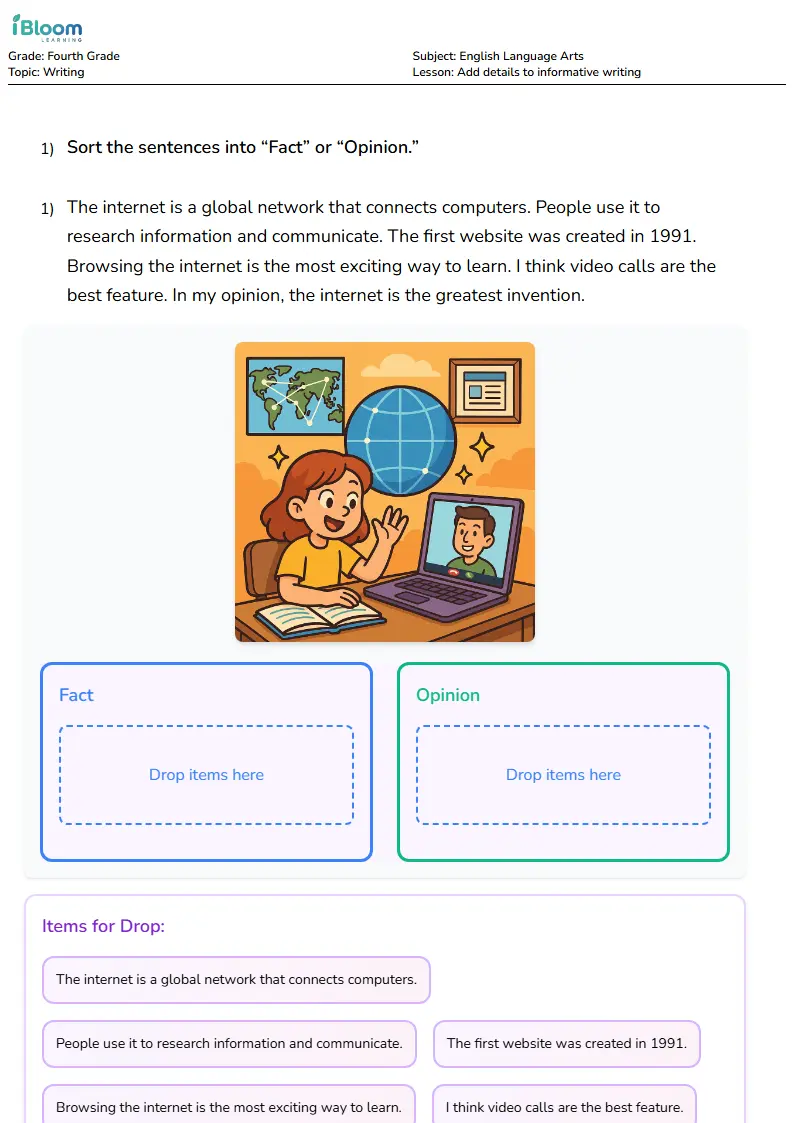
Add details to informative writing Lesson for Fourth Grade
Explore a free interactive english language arts lesson for fourth grade: Add details to informative writing. AI-personalized, Common Core-aligned, and built for kids.
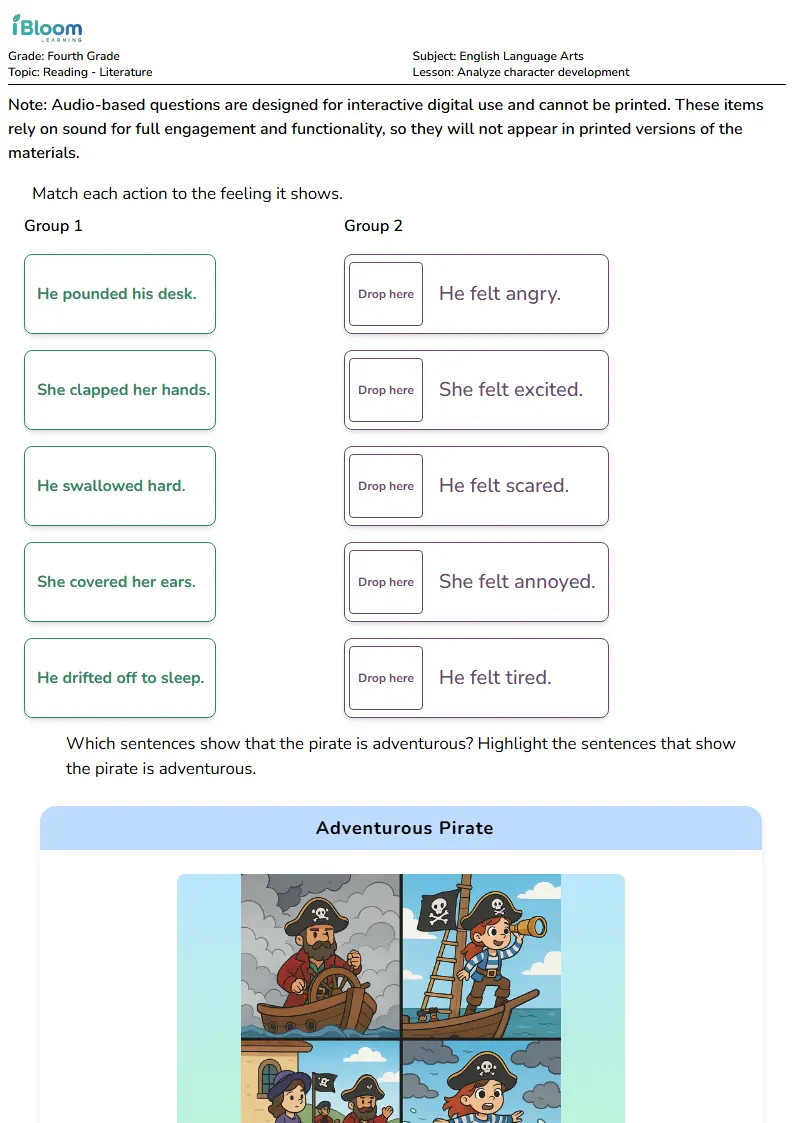
Analyze character development Lesson for Fourth Grade
Explore a free interactive english language arts lesson for fourth grade: Analyze character development. AI-personalized, Common Core-aligned, and built for kids.
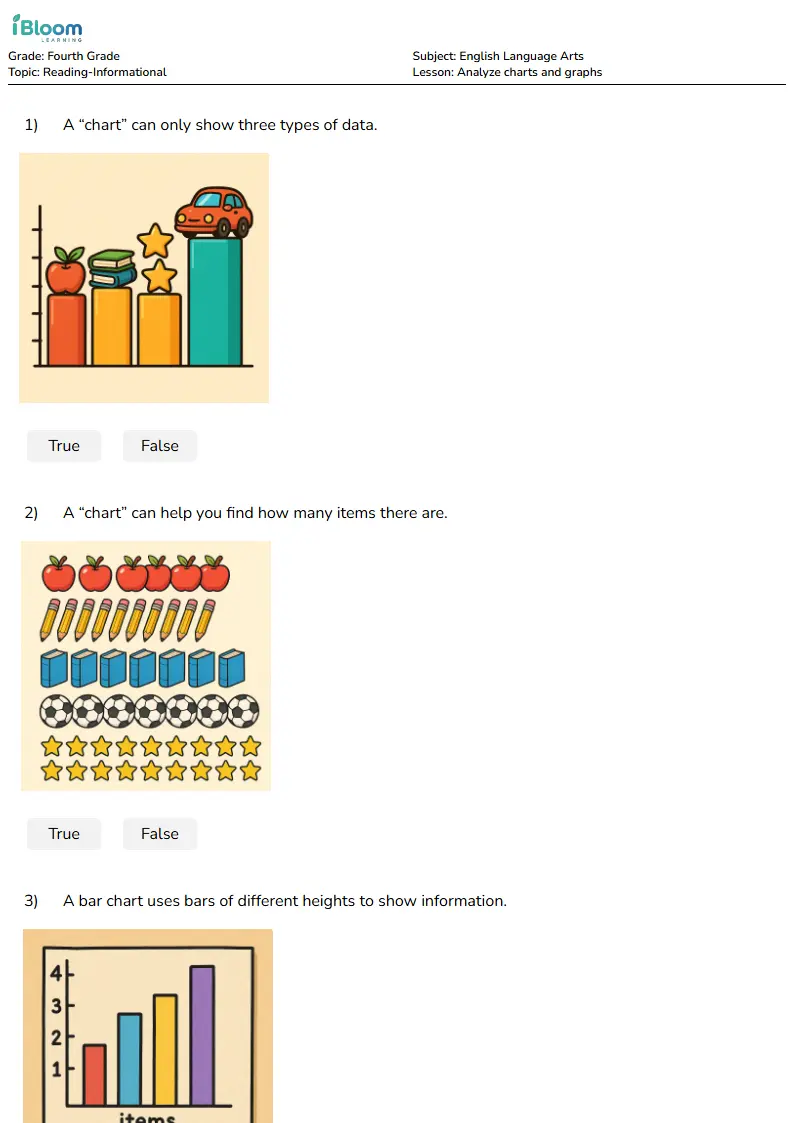
Analyze charts and graphs Lesson for Fourth Grade
Explore a free interactive english language arts lesson for fourth grade: Analyze charts and graphs. AI-personalized, Common Core-aligned, and built for kids.
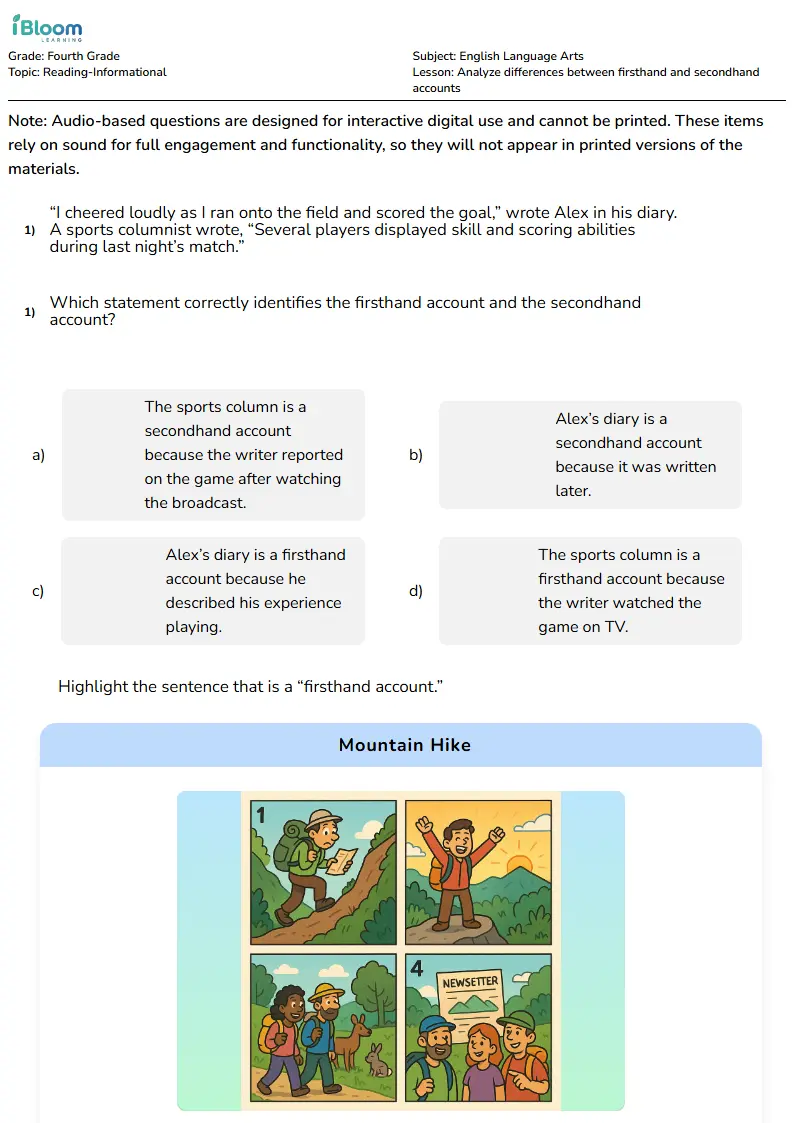
Analyze differences between firsthand and secondhand accounts Lesson for Fourth Grade
Explore a free interactive english language arts lesson for fourth grade: Analyze differences between firsthand and secondhand accounts. AI-personalized, Common Core-aligned, and built for kids.
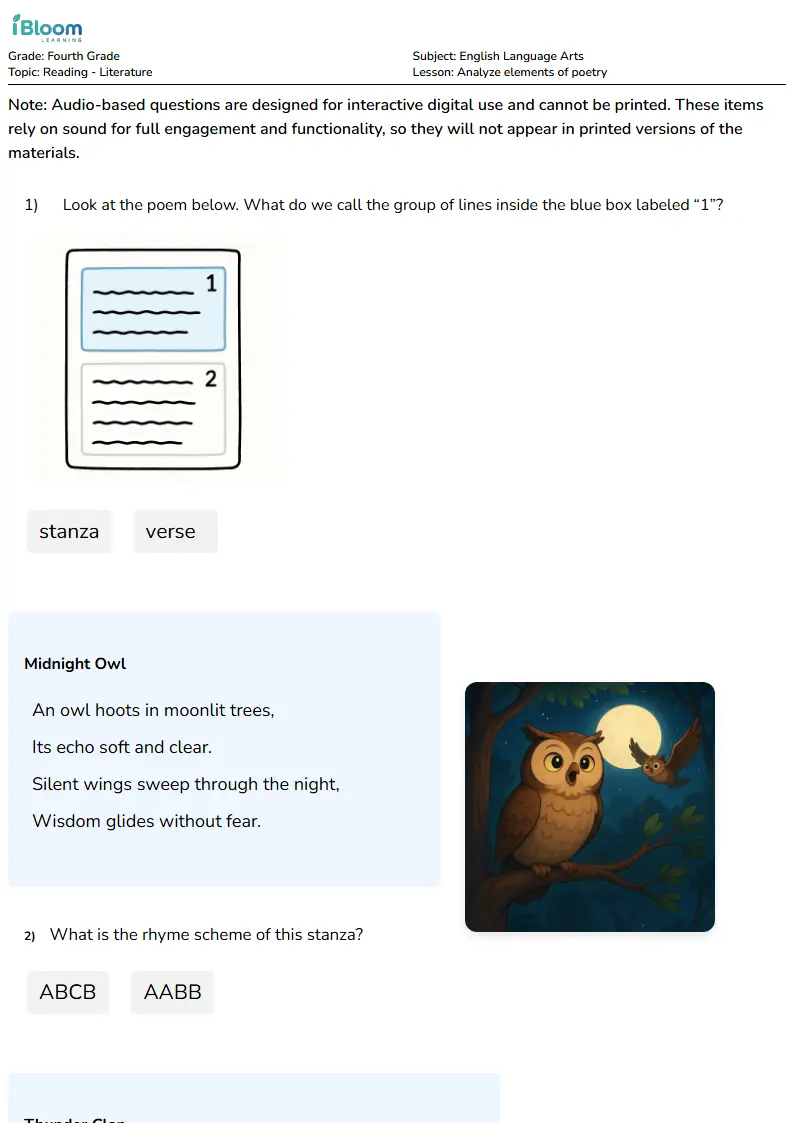
Analyze elements of poetry Lesson for Fourth Grade
Explore a free interactive english language arts lesson for fourth grade: Analyze elements of poetry. AI-personalized, Common Core-aligned, and built for kids.
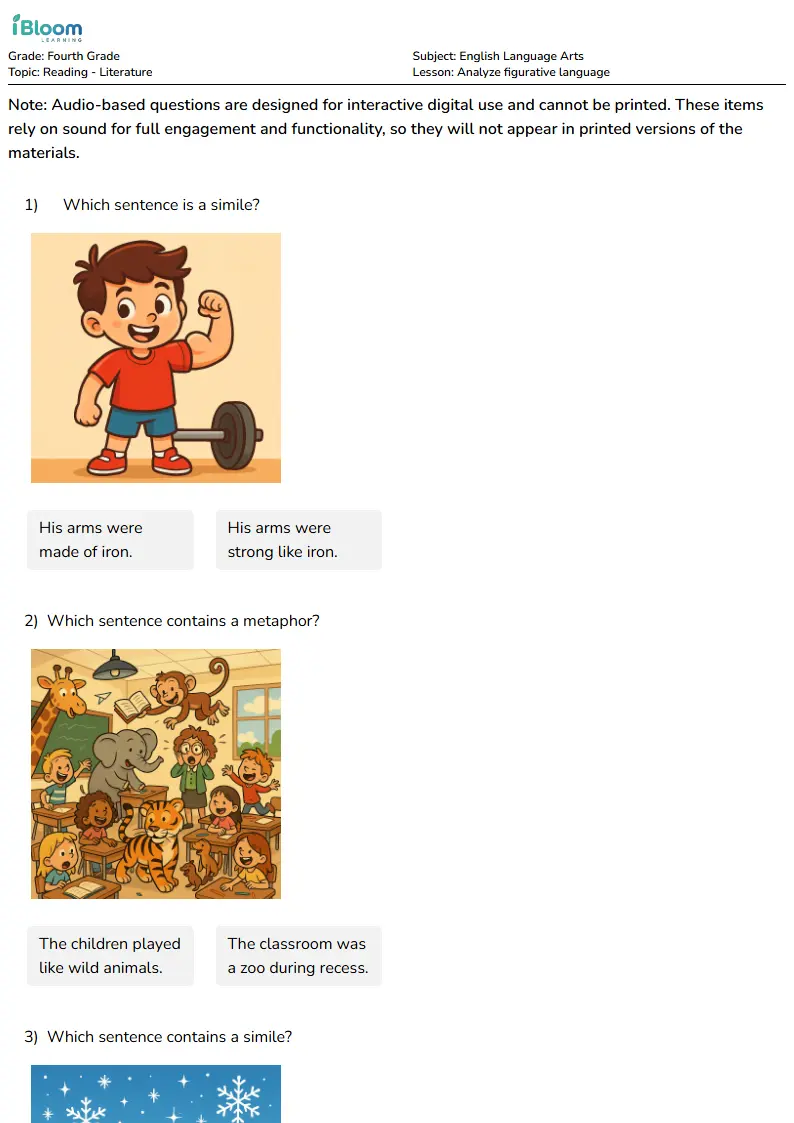
Analyze figurative language Lesson for Fourth Grade
Explore a free interactive english language arts lesson for fourth grade: Analyze figurative language. AI-personalized, Common Core-aligned, and built for kids.
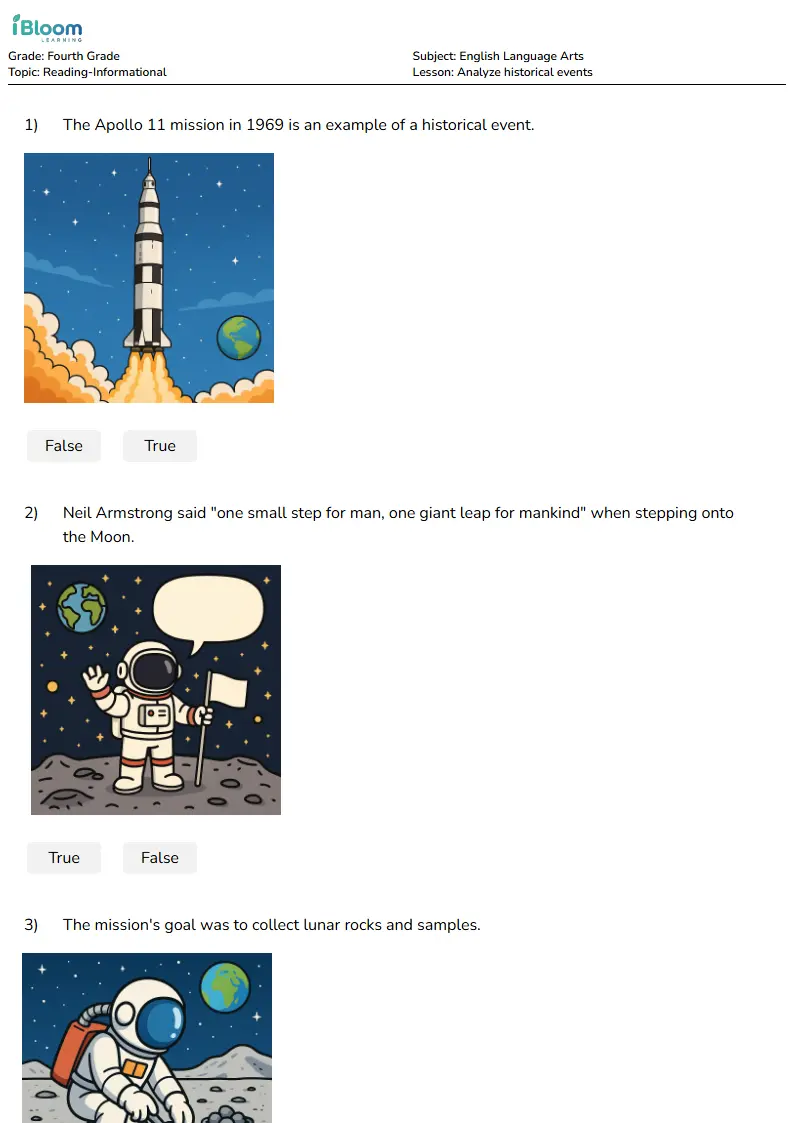
Analyze historical events Lesson for Fourth Grade
Explore a free interactive english language arts lesson for fourth grade: Analyze historical events. AI-personalized, Common Core-aligned, and built for kids.
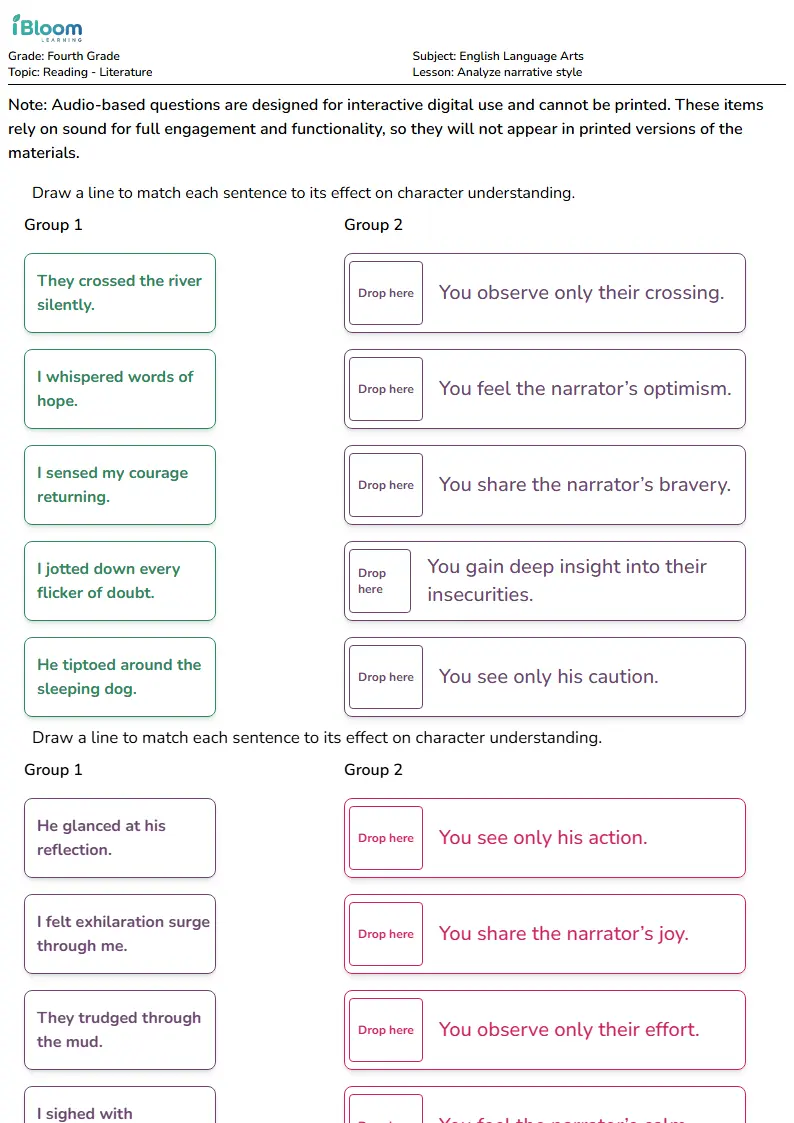
Analyze narrative style Lesson for Fourth Grade
Explore a free interactive english language arts lesson for fourth grade: Analyze narrative style. AI-personalized, Common Core-aligned, and built for kids.
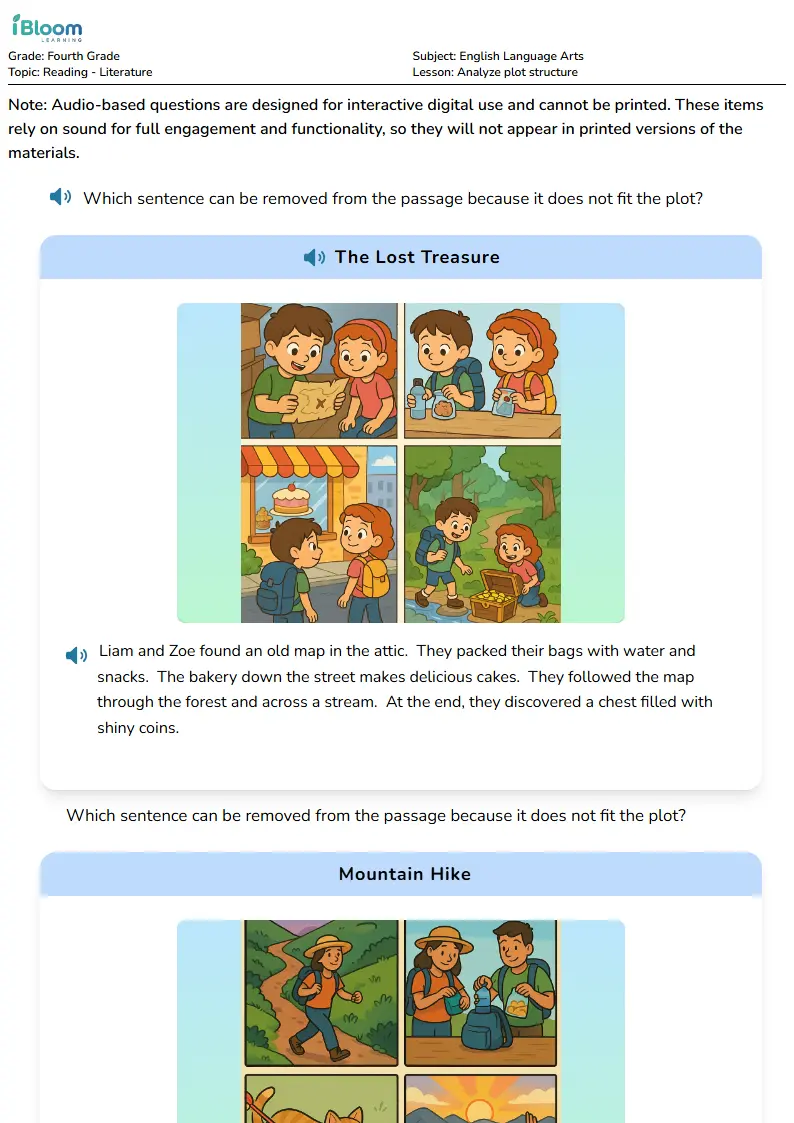
Analyze plot structure Lesson for Fourth Grade
Explore a free interactive english language arts lesson for fourth grade: Analyze plot structure. AI-personalized, Common Core-aligned, and built for kids.
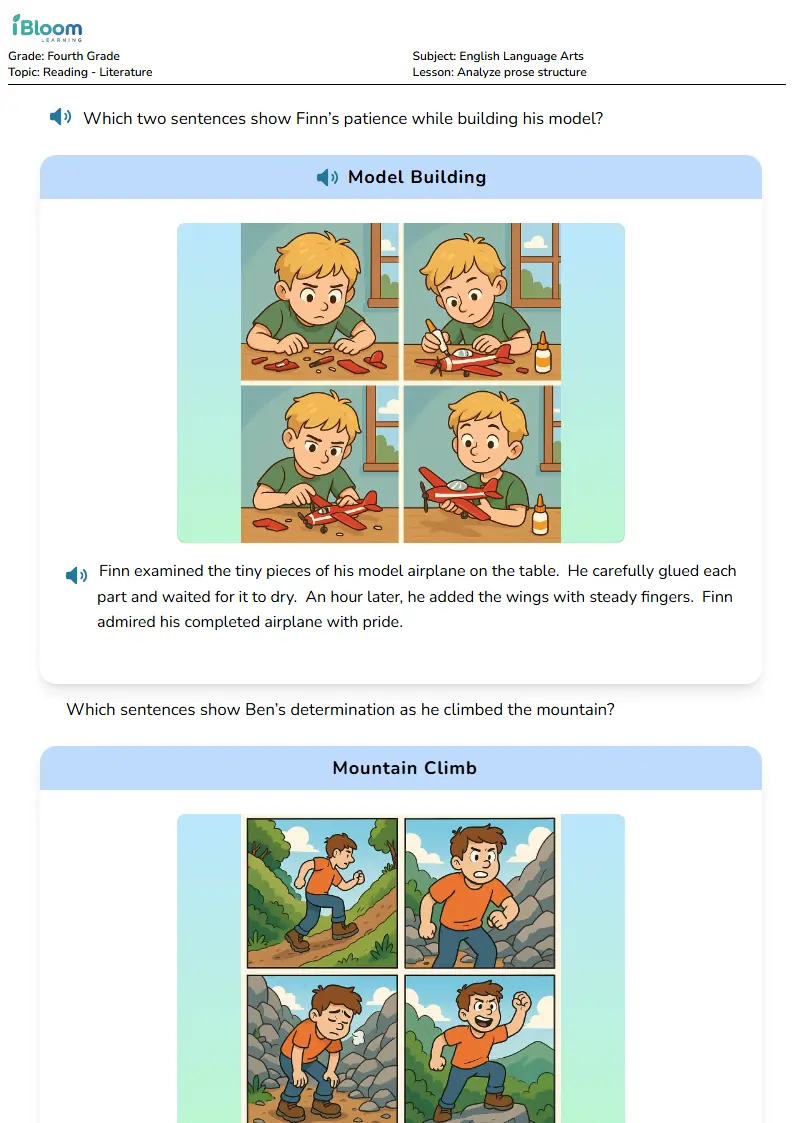
Analyze prose structure Lesson for Fourth Grade
Explore a free interactive english language arts lesson for fourth grade: Analyze prose structure. AI-personalized, Common Core-aligned, and built for kids.
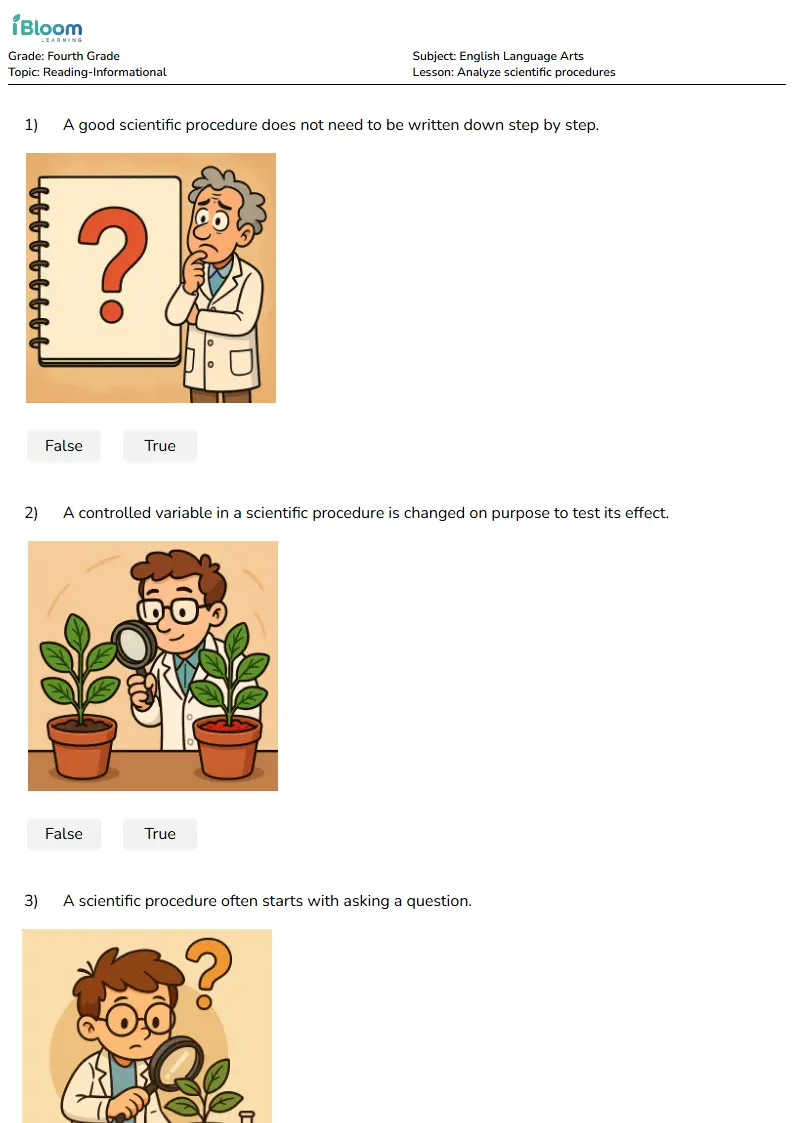
Analyze scientific procedures Lesson for Fourth Grade
Explore a free interactive english language arts lesson for fourth grade: Analyze scientific procedures. AI-personalized, Common Core-aligned, and built for kids.
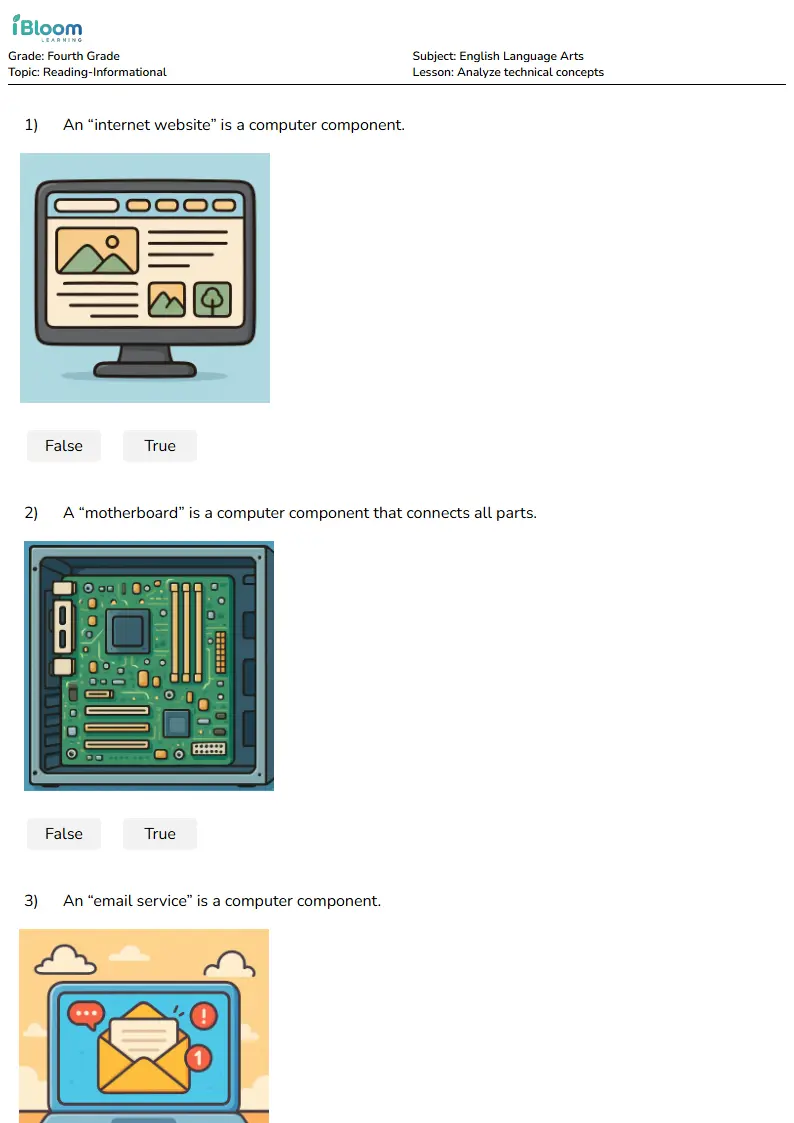
Analyze technical concepts Lesson for Fourth Grade
Explore a free interactive english language arts lesson for fourth grade: Analyze technical concepts. AI-personalized, Common Core-aligned, and built for kids.
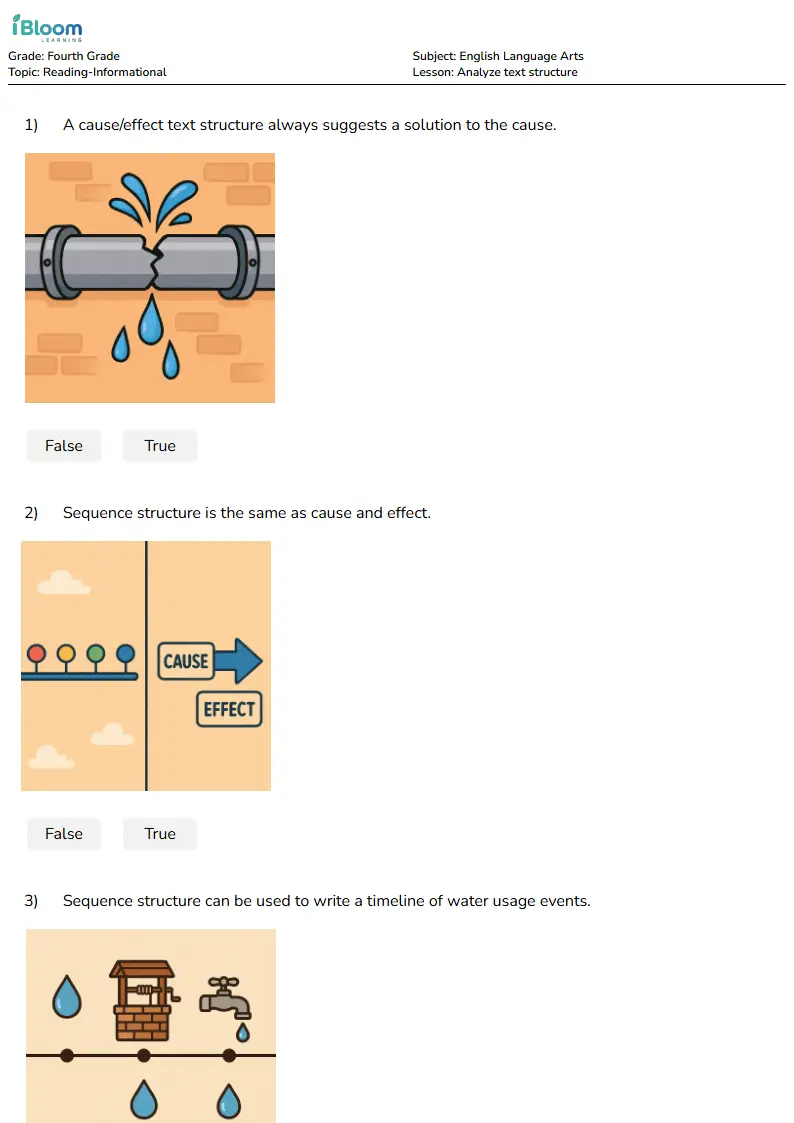
Analyze text structure Lesson for Fourth Grade
Explore a free interactive english language arts lesson for fourth grade: Analyze text structure. AI-personalized, Common Core-aligned, and built for kids.
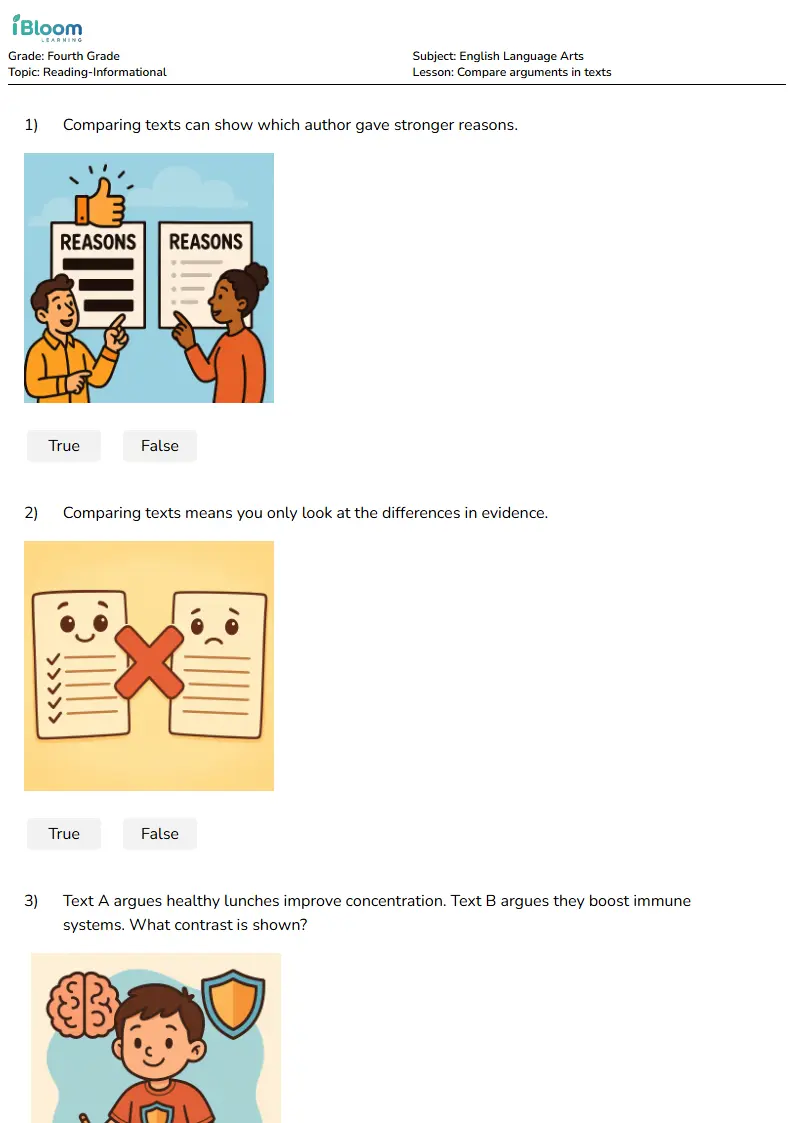
Compare arguments in texts Lesson for Fourth Grade
Explore a free interactive english language arts lesson for fourth grade: Compare arguments in texts. AI-personalized, Common Core-aligned, and built for kids.
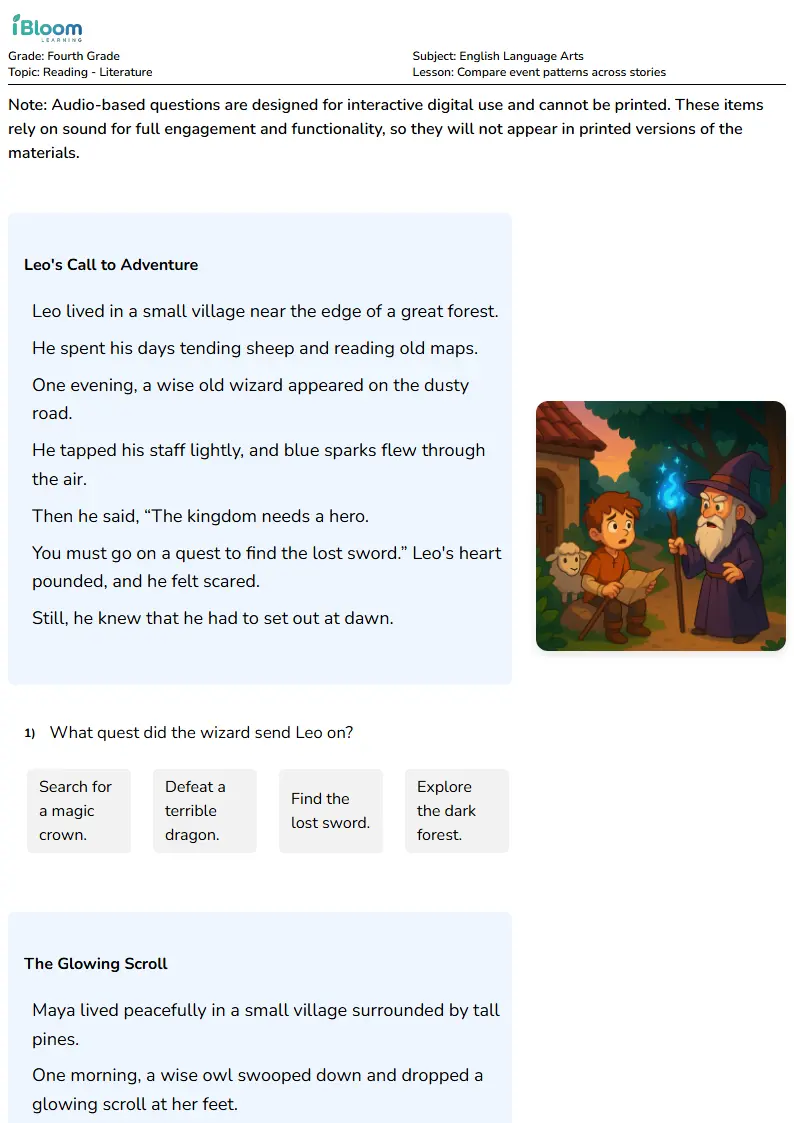
Compare event patterns across stories Lesson for Fourth Grade
Explore a free interactive english language arts lesson for fourth grade: Compare event patterns across stories. AI-personalized, Common Core-aligned, and built for kids.
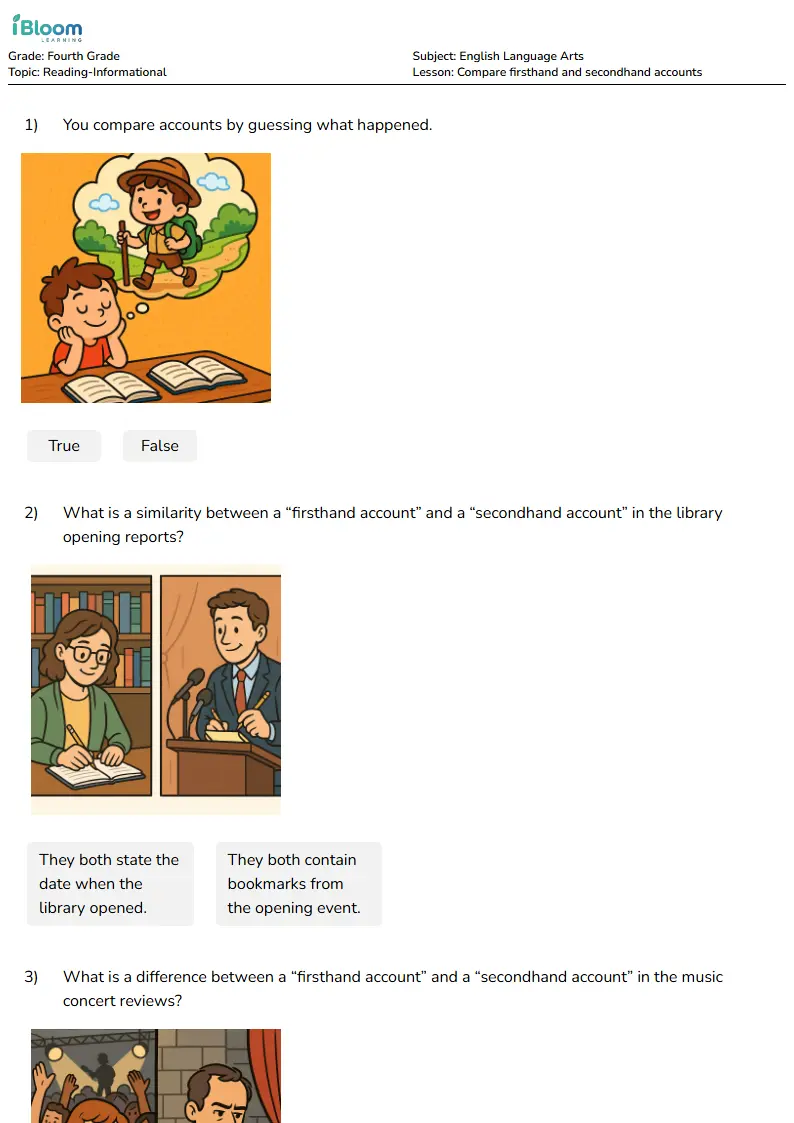
Compare firsthand and secondhand accounts Lesson for Fourth Grade
Explore a free interactive english language arts lesson for fourth grade: Compare firsthand and secondhand accounts. AI-personalized, Common Core-aligned, and built for kids.
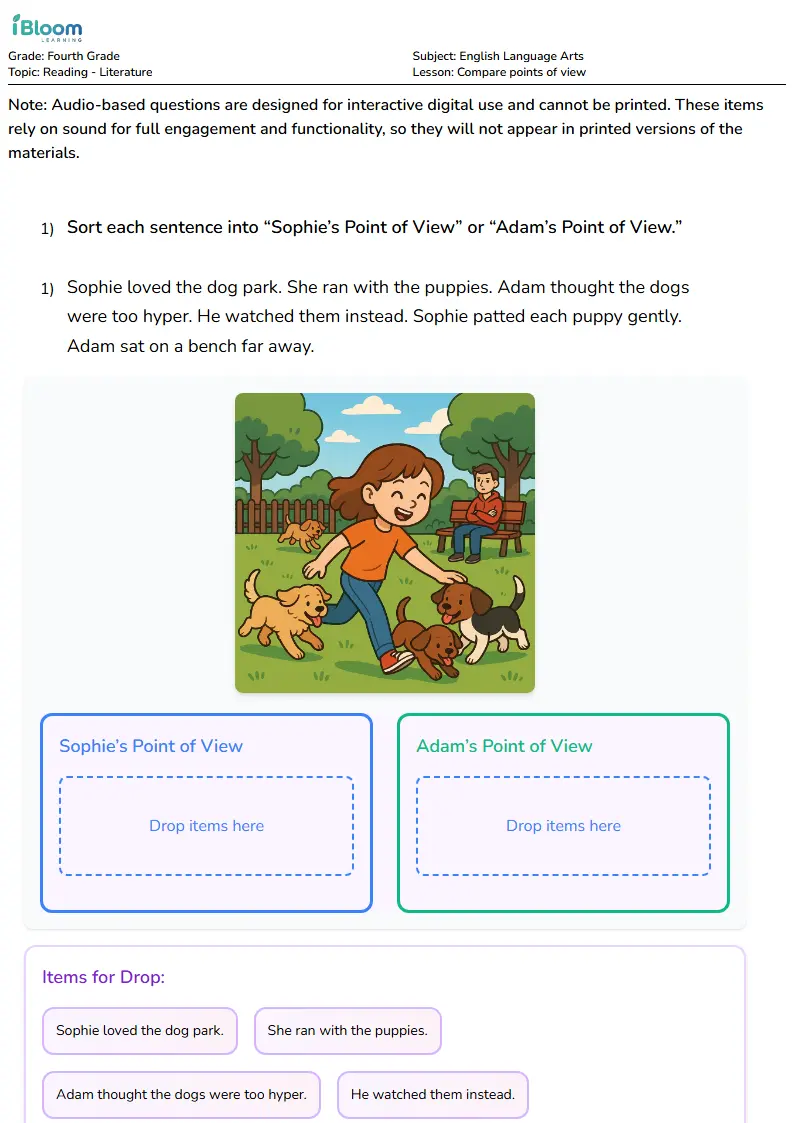
Compare points of view Lesson for Fourth Grade
Explore a free interactive english language arts lesson for fourth grade: Compare points of view. AI-personalized, Common Core-aligned, and built for kids.
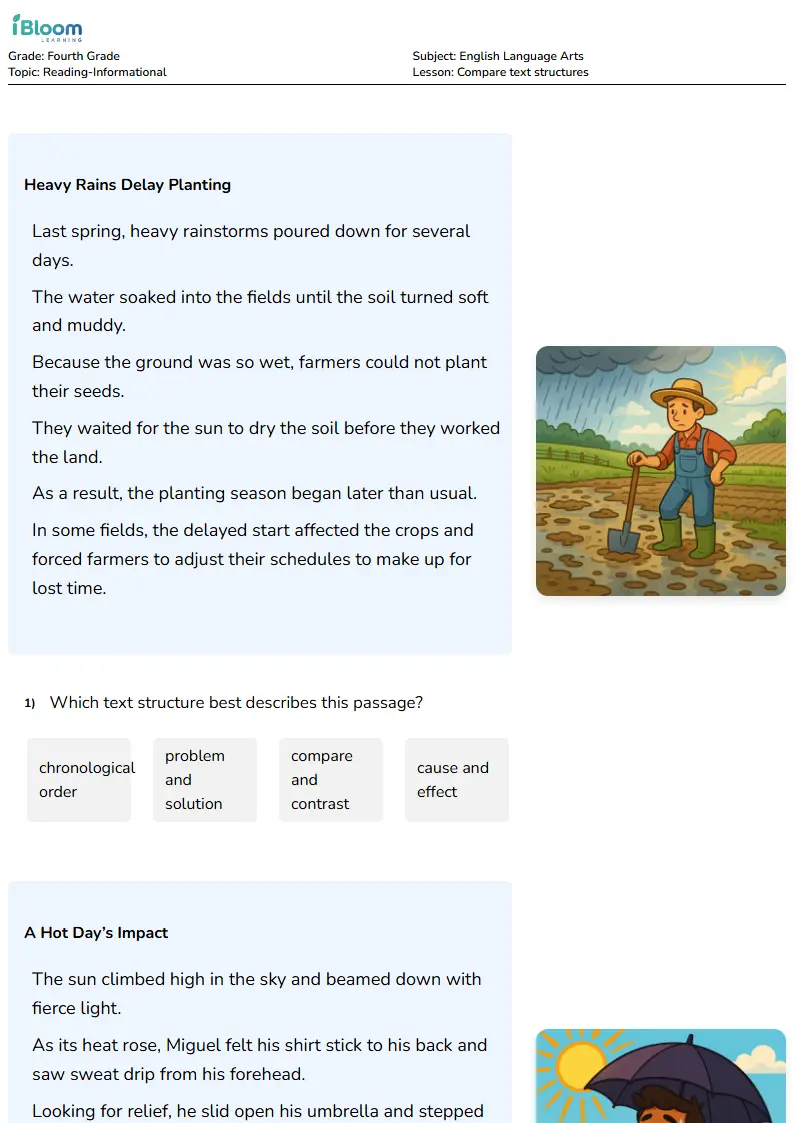
Compare text structures Lesson for Fourth Grade
Explore a free interactive english language arts lesson for fourth grade: Compare text structures. AI-personalized, Common Core-aligned, and built for kids.
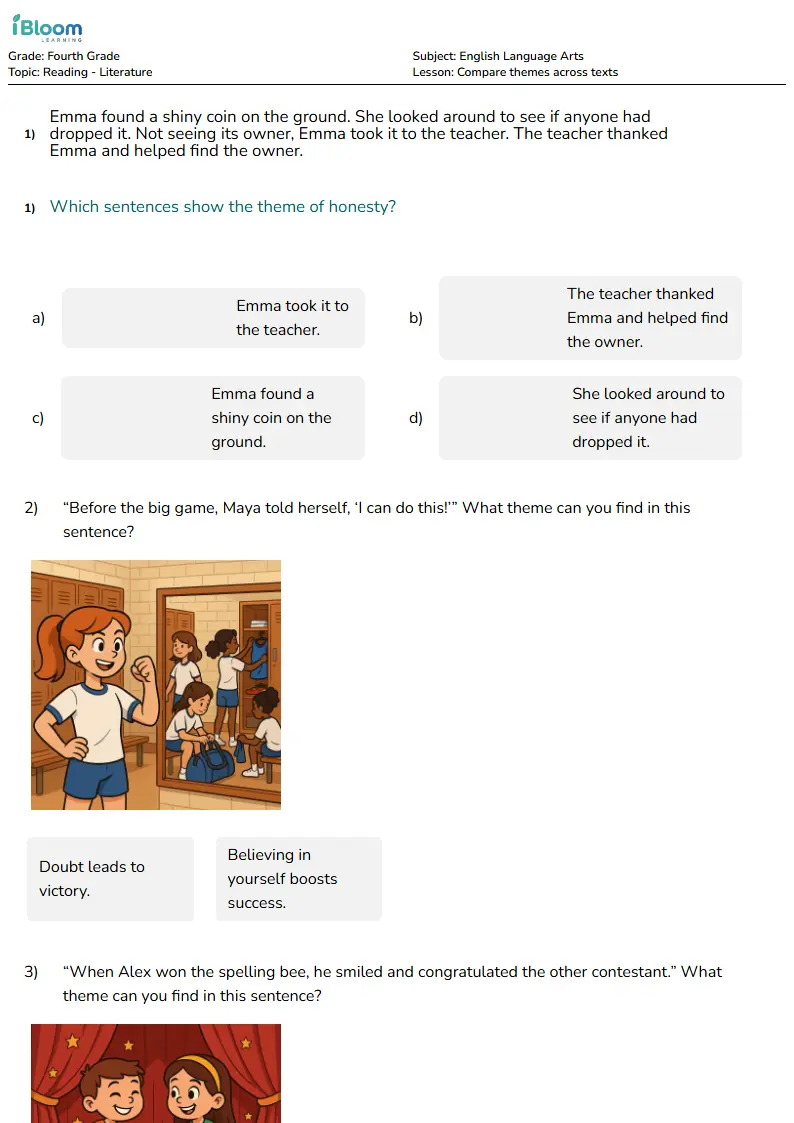
Compare themes across texts Lesson for Fourth Grade
Explore a free interactive english language arts lesson for fourth grade: Compare themes across texts. AI-personalized, Common Core-aligned, and built for kids.
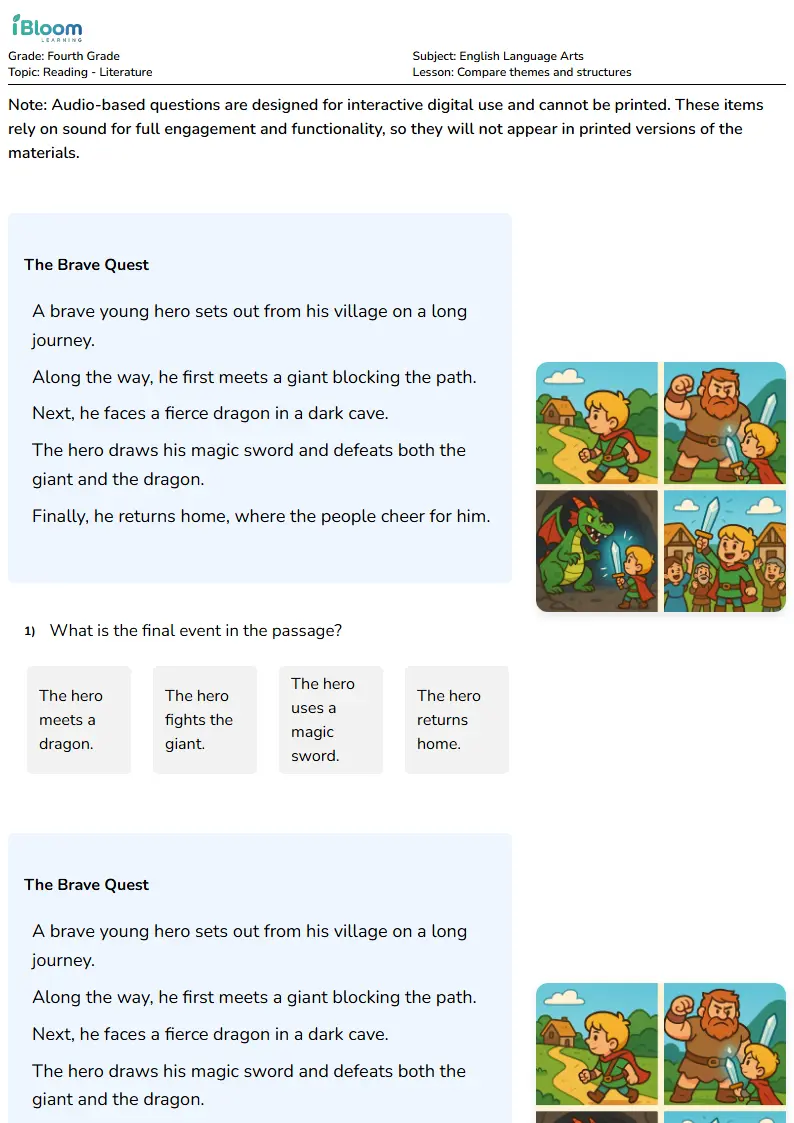
Compare themes and structures Lesson for Fourth Grade
Explore a free interactive english language arts lesson for fourth grade: Compare themes and structures. AI-personalized, Common Core-aligned, and built for kids.
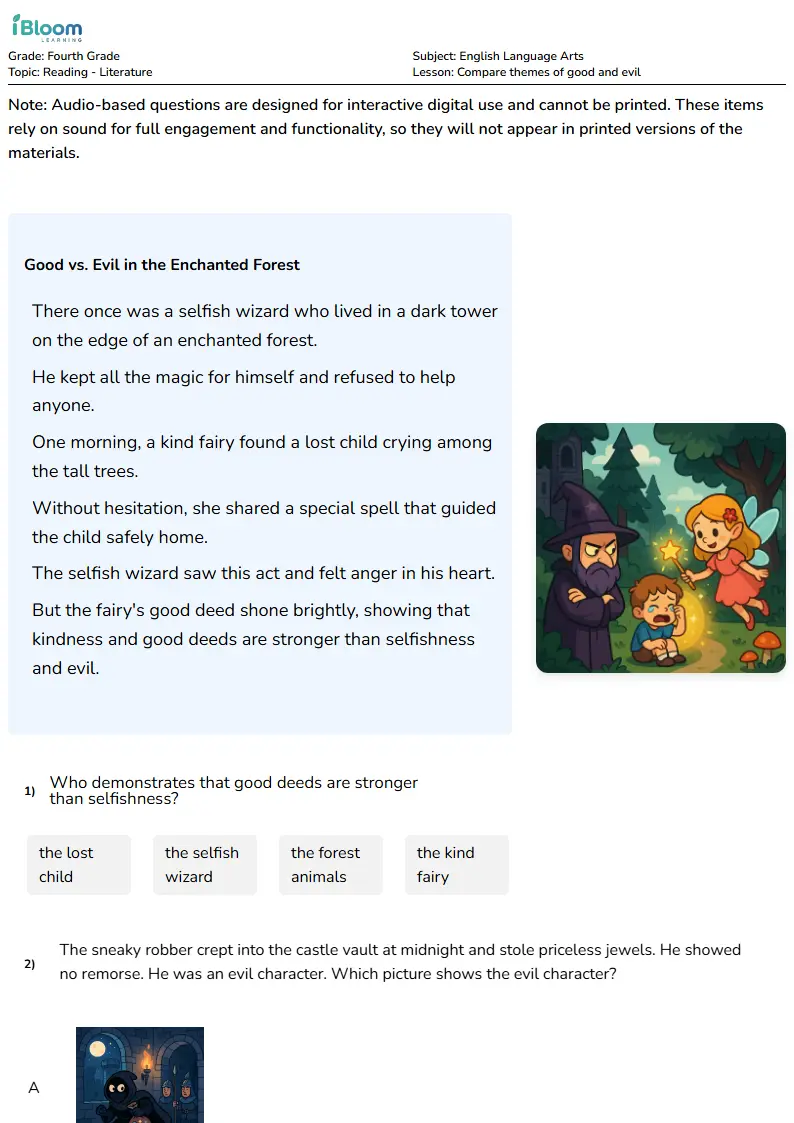
Compare themes of good and evil Lesson for Fourth Grade
Explore a free interactive english language arts lesson for fourth grade: Compare themes of good and evil. AI-personalized, Common Core-aligned, and built for kids.
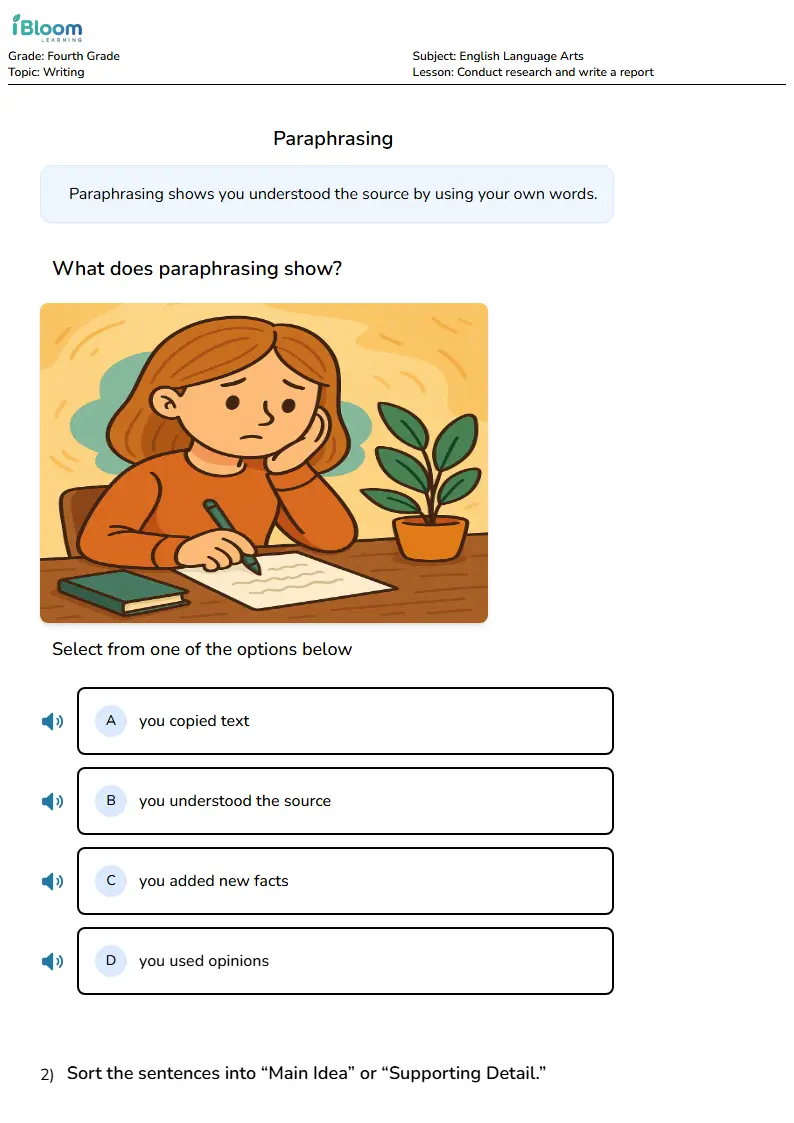
Conduct research and write a report Lesson for Fourth Grade
Explore a free interactive english language arts lesson for fourth grade: Conduct research and write a report. AI-personalized, Common Core-aligned, and built for kids.
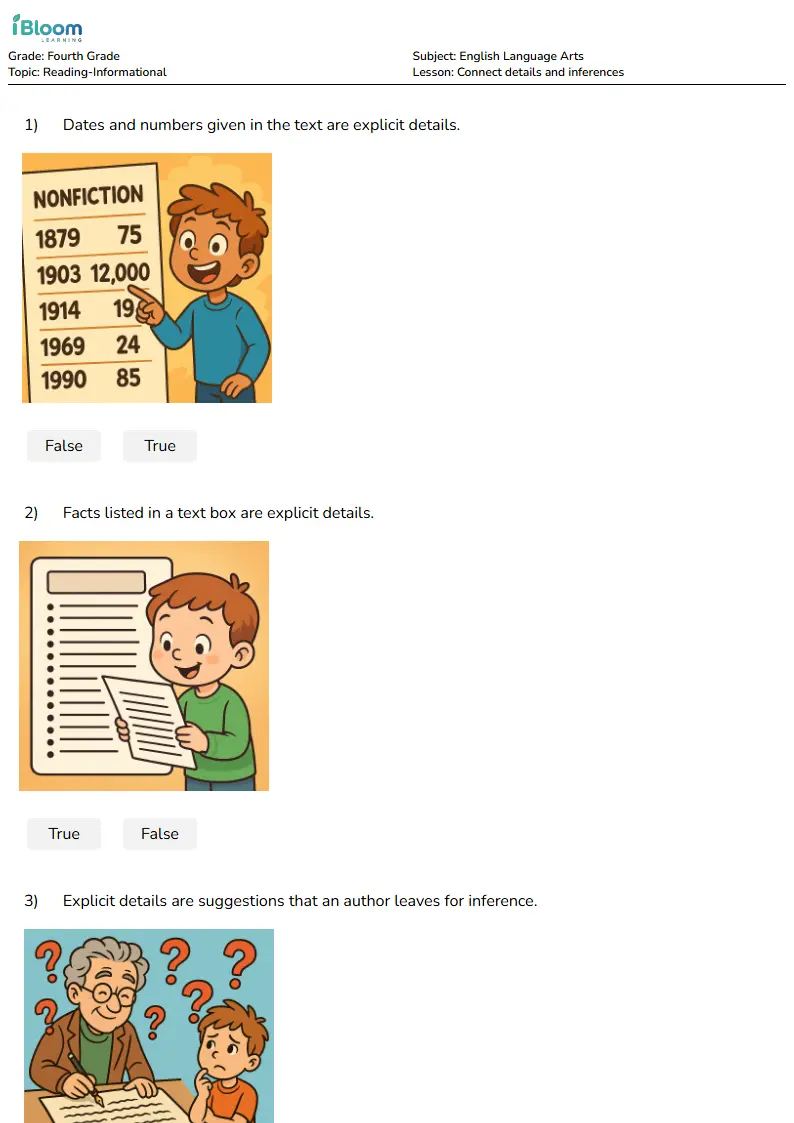
Connect details and inferences Lesson for Fourth Grade
Explore a free interactive english language arts lesson for fourth grade: Connect details and inferences. AI-personalized, Common Core-aligned, and built for kids.
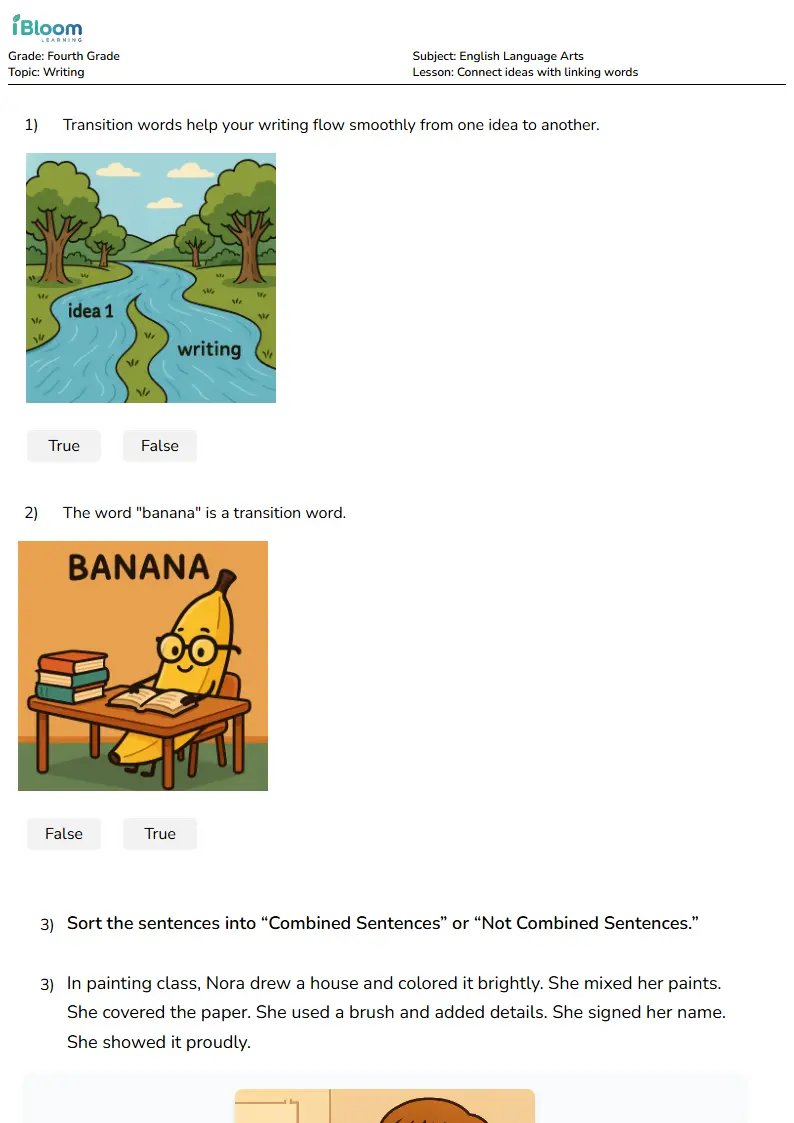
Connect ideas with linking words Lesson for Fourth Grade
Explore a free interactive english language arts lesson for fourth grade: Connect ideas with linking words. AI-personalized, Common Core-aligned, and built for kids.