Identify parts of a storybook Lesson for Kindergarten
Preparing your worksheet
Identify parts of a storybook Lesson for Kindergarten: english language arts practice for Kindergarten
Identify parts of a storybook Lesson for Kindergarten helps children practise reading comprehension and clear sentence-level thinking through a clear, adult-supported routine. Start with Identify parts of a storybook Lesson for Kindergarten, then move to the paired worksheet for Identify parts of a storybook Lesson for Kindergarten when the child needs the same skill in another format.
This page is useful for parents, teachers, tutors, homeschool families, and children because it turns identify parts of a storybook into a small sequence: understand the task, try a few examples, explain one answer, and revisit the skill later. UAE families may use it across Dubai, Abu Dhabi, Sharjah, Ajman, Al Ain, Ras Al Khaimah, Fujairah, Umm Al Quwain, British curriculum, American curriculum, IB, and Indian curriculum settings. Indian families may connect this page with CBSE, ICSE, state-board, LKG, UKG, Class 1, Class 2, Delhi, Mumbai, Bengaluru, Chennai, Hyderabad, Pune, Kolkata, Ahmedabad, Jaipur, Kerala, Tamil Nadu, Karnataka, Maharashtra, Telangana, Gujarat, Rajasthan, and West Bengal. US families and teachers may use it in kindergarten, first grade, second grade, homeschool, intervention, California, Texas, Florida, New York, Illinois, Pennsylvania, Ohio, Georgia, North Carolina, Michigan, Los Angeles, Houston, Chicago, Dallas, Seattle, Boston, Denver, Atlanta, and Miami.
What the child is learning
The main goal is not to finish a page quickly. The goal is for the child to notice the important clue, sound, word, number, sentence, picture, model, or direction. A child who can explain one answer is often showing stronger understanding than a child who silently completes ten items.
For Kindergarten learners, adults should listen for the thinking step. If the child guesses, make the task smaller. If the child answers correctly but cannot explain, model one answer aloud and ask the child to try again with a new item.
Parent practice routine
Use this page for 10 to 15 minutes. Read the direction aloud, model one item, and let the child try a small set. Ask, "How did you know?" or "Can you show me the clue?" Keep the tone calm and stop after one useful correction.
- Ask the child to complete one identify parts of a storybook item and explain the clue, sound, model, or sentence that helped.
- Let the child make a new example using the same reading comprehension and clear sentence-level thinking pattern.
- Use a short oral review before the written page so the task feels familiar.
- Return to the page after two or three days and ask for a faster, clearer explanation.
Parents can connect this routine with Second Grade Reading Comprehension Worksheets when they need a broader explanation before returning to the child-facing page.
Teacher and tutor routine
Teachers can use this page as a warm-up, literacy center, math center, small-group reteach, exit ticket, homework review, or intervention check. Tutors can use it to identify whether the child needs help with directions, vocabulary, decoding, number sense, sentence structure, memory, or confidence.
One strong classroom routine is: model one item, let children solve two independently, then ask partners to compare explanations. Children should point to the clue, sound, model, or word that supports their answer. This makes the page more than a worksheet; it becomes a short thinking lesson.
Examples to try before the page
- Say the title of the page and ask the child what they think the task will ask them to do.
- Cover part of a busy page and solve only the first item together.
- Ask the child to underline, circle, count, sort, blend, reread, draw, or explain before marking the answer.
- After the page, ask the child to create one similar question for an adult.
How this supports India, the US, and the UAE
Curriculum labels change by region, but children still need clear practice. In India, the same skill may appear in CBSE, ICSE, state-board, tuition, revision, LKG, UKG, Class 1, or Class 2 language. In the United States, it may appear in grade-level worksheets, homeschool plans, intervention groups, or classroom centers. In the UAE, it may appear across British, American, IB, and Indian curriculum settings, especially for multilingual families.
Let the child explain in the strongest language first if needed, then return to the English term, sound, number, sentence, or answer on the page. This helps children in Dubai, Abu Dhabi, Sharjah, Delhi, Mumbai, Bengaluru, New York, Houston, Chicago, Dallas, Los Angeles, and many other communities use the page with confidence.
Connected iBloom practice
Use the links below as a natural learning path, choosing only the pages that match the child's current need.
- Identify parts of a storybook Lesson for Kindergarten
- paired worksheet for Identify parts of a storybook Lesson for Kindergarten
- Second Grade Reading Comprehension Worksheets
- iBloom SpellBee
- English Worksheets
- Free Reading and Writing Numbers 1 to 100 Worksheets for Class 1
- Free Reading Time in Hours Using an Analogue Clock Worksheets for Class 2
- Free Reading Time in Hours Using a Digital Clock Worksheets for Class 2
Trusted adult background
Adults who want more planning context can read this supporting education resource. For child practice, return to iBloom pages where the learner can try the skill directly.
Common mistakes to watch for
- The child finishes the page but cannot explain any answer.
- The adult gives the answer instead of giving one small prompt.
- The child skips the direction word or misses the important clue.
- The page is used once and never revisited.
Frequently asked questions
Who should use this page?
Use it when a Kindergarten child needs focused english language arts practice connected to identify parts of a storybook.
How long should practice take?
Most children do best with 10 to 15 minutes and one clear explanation.
Can parents use this without teaching experience?
Yes. Model one item, let the child try a small set, and ask how the child knew. That is enough for a useful home routine.
What should we do next?
Choose one related iBloom lesson, worksheet, or blog from the connected practice links so the child sees the same skill again in a fresh context.
More practice for this grade
More English Language Arts lessons
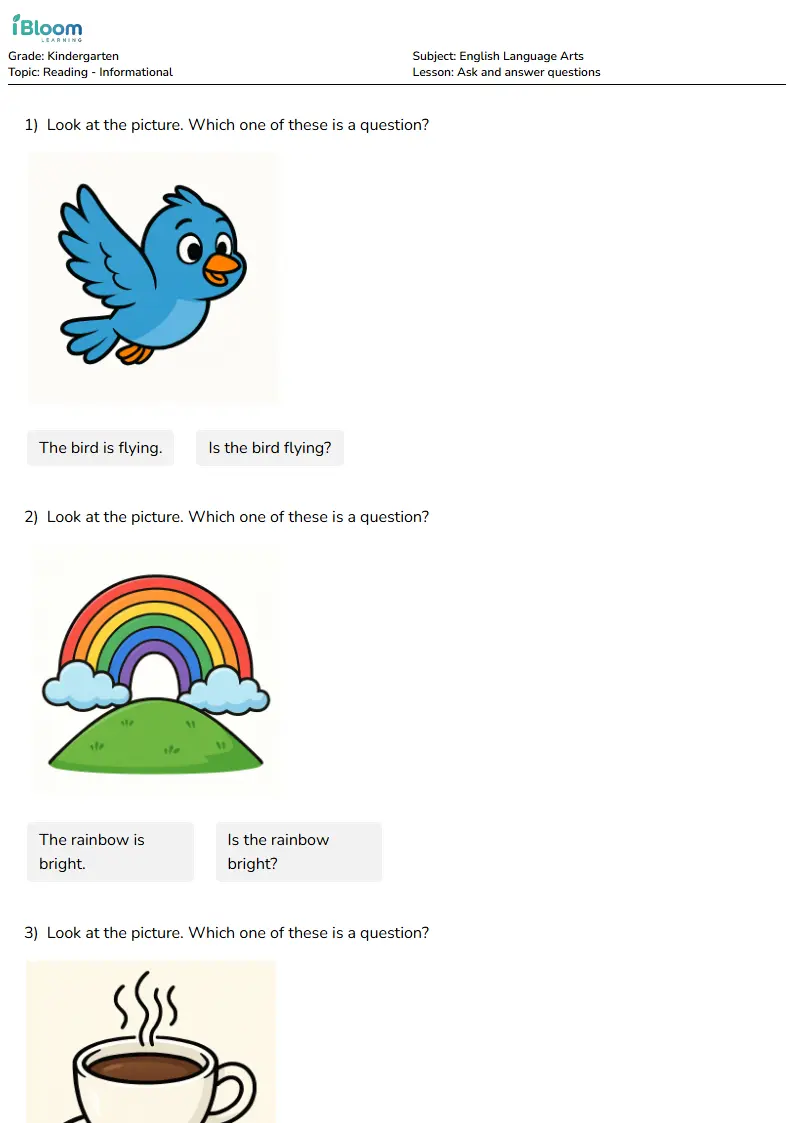
Ask and answer questions Lesson for Kindergarten
Explore a free interactive english language arts lesson for kindergarten: Ask and answer questions. AI-personalized, Common Core-aligned, and built for kids.
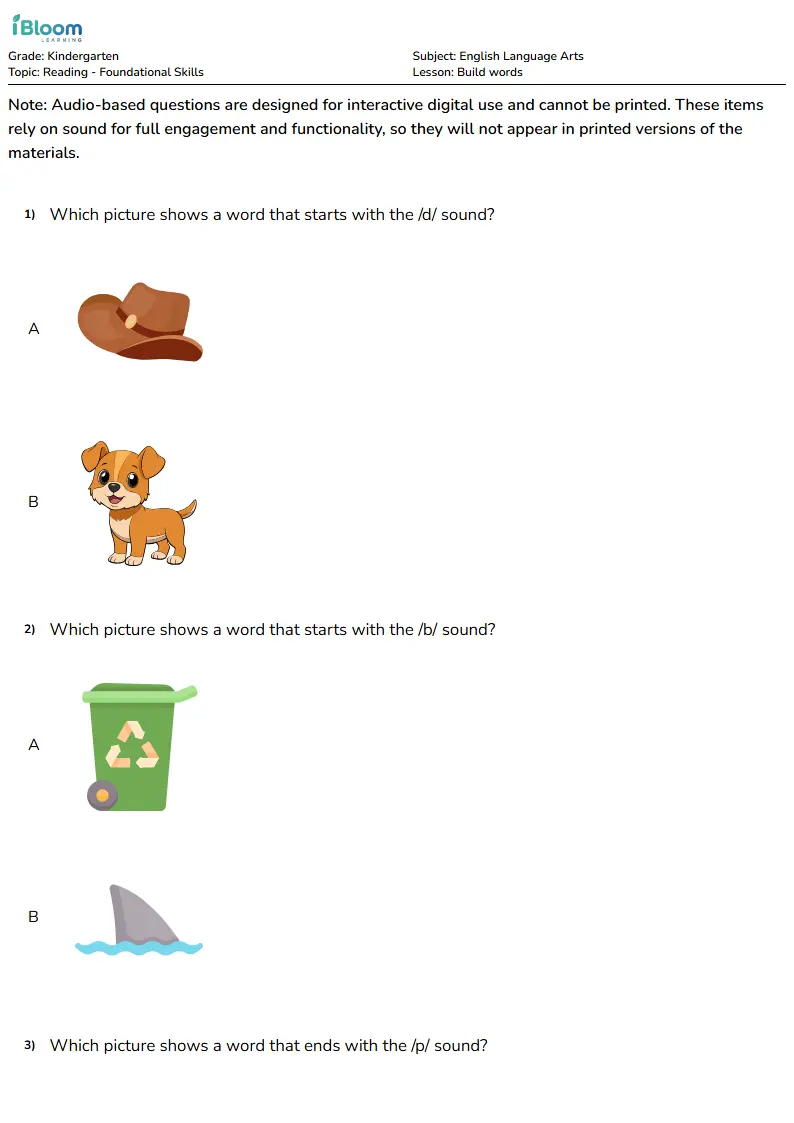
Build words Lesson for Kindergarten
Explore a free interactive english language arts lesson for kindergarten: Build words. AI-personalized, Common Core-aligned, and built for kids.
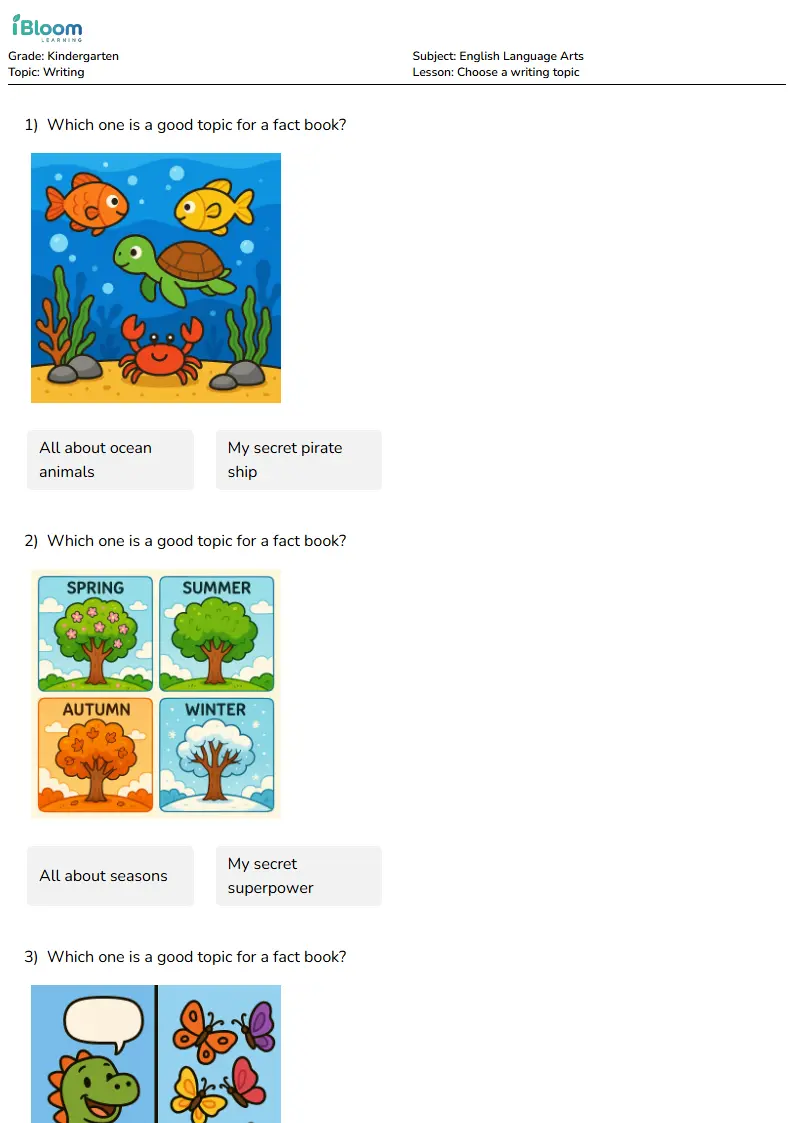
Choose a writing topic Lesson for Kindergarten
Explore a free interactive english language arts lesson for kindergarten: Choose a writing topic. AI-personalized, Common Core-aligned, and built for kids.
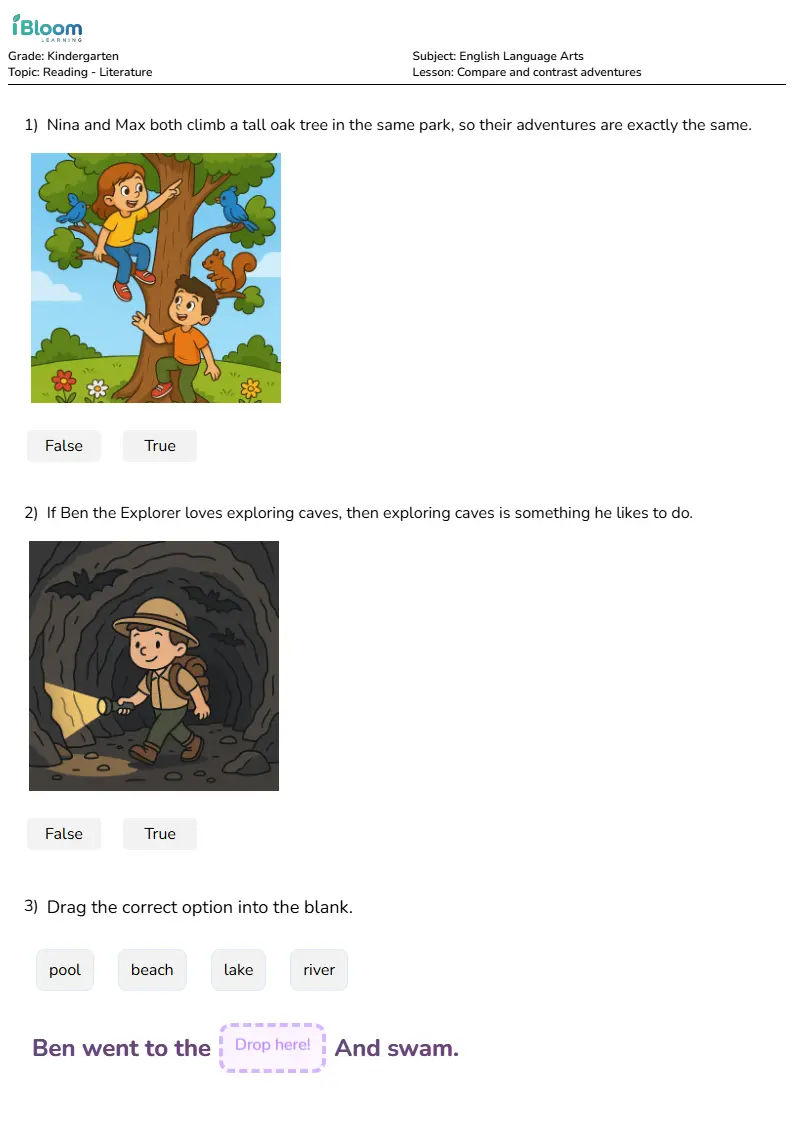
Compare and contrast adventures Lesson for Kindergarten
Explore a free interactive english language arts lesson for kindergarten: Compare and contrast adventures. AI-personalized, Common Core-aligned, and built for kids.
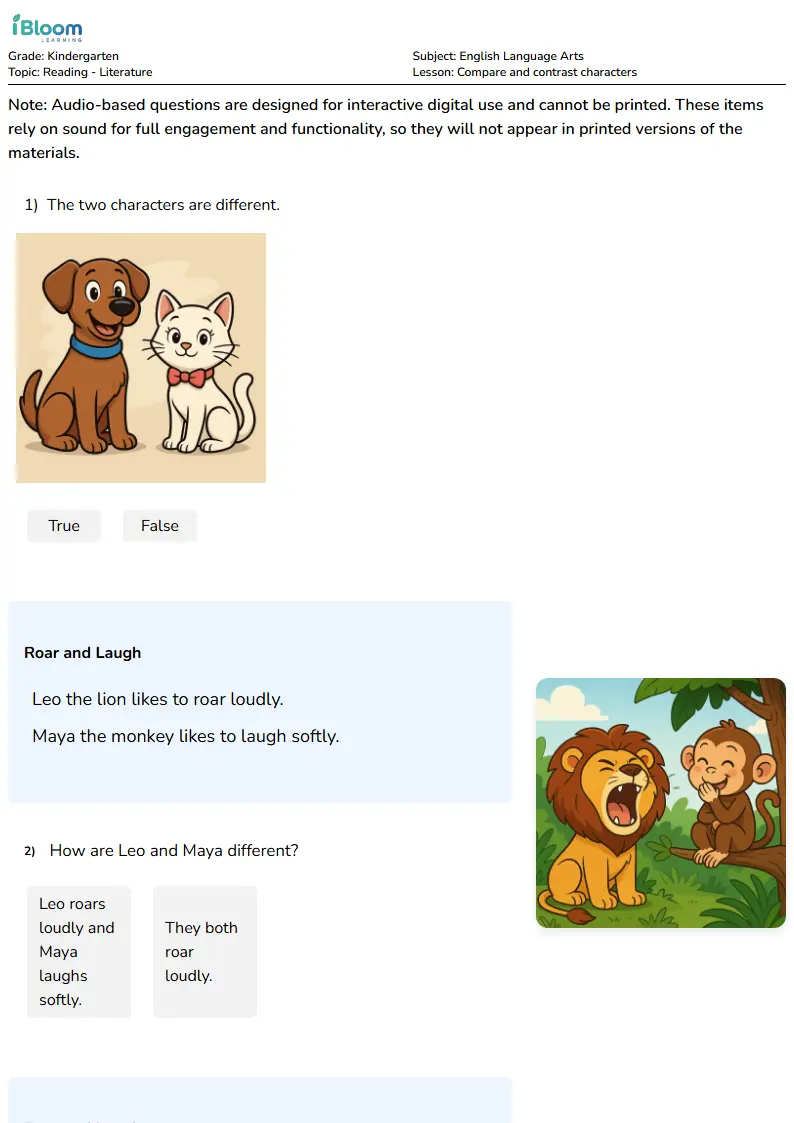
Compare and contrast characters Lesson for Kindergarten
Explore a free interactive english language arts lesson for kindergarten: Compare and contrast characters. AI-personalized, Common Core-aligned, and built for kids.
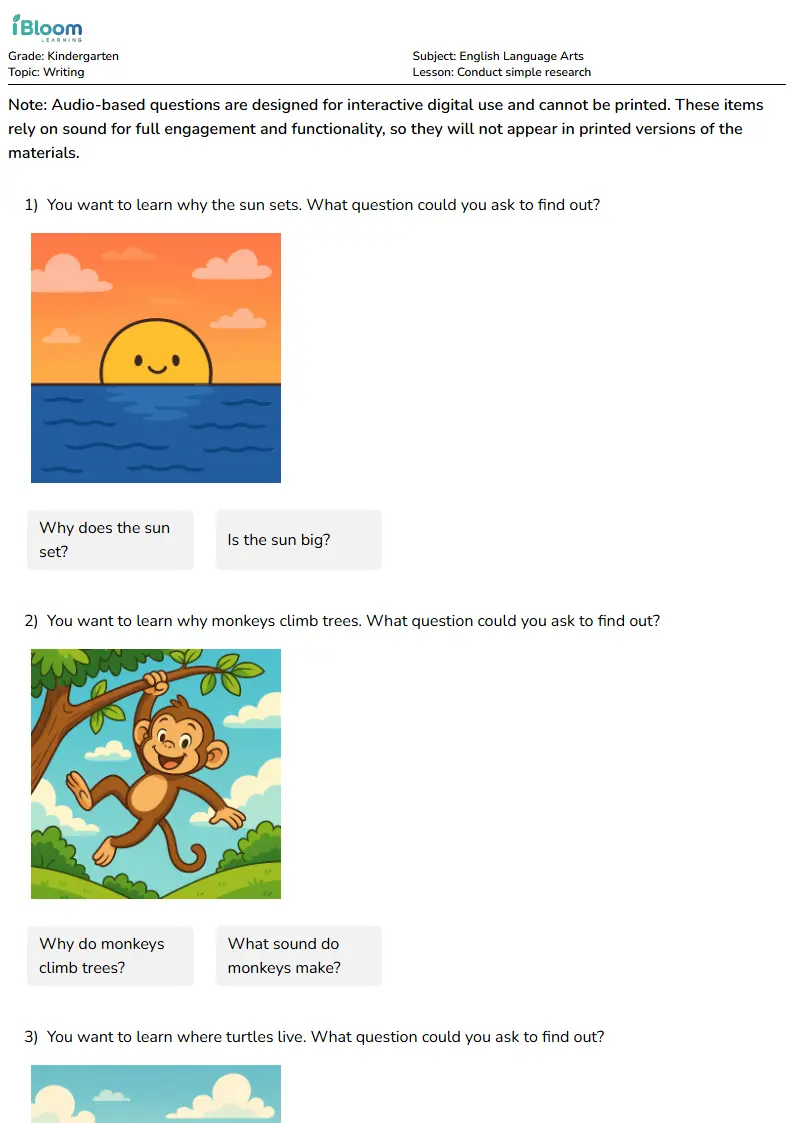
Conduct simple research Lesson for Kindergarten
Explore a free interactive english language arts lesson for kindergarten: Conduct simple research. AI-personalized, Common Core-aligned, and built for kids.
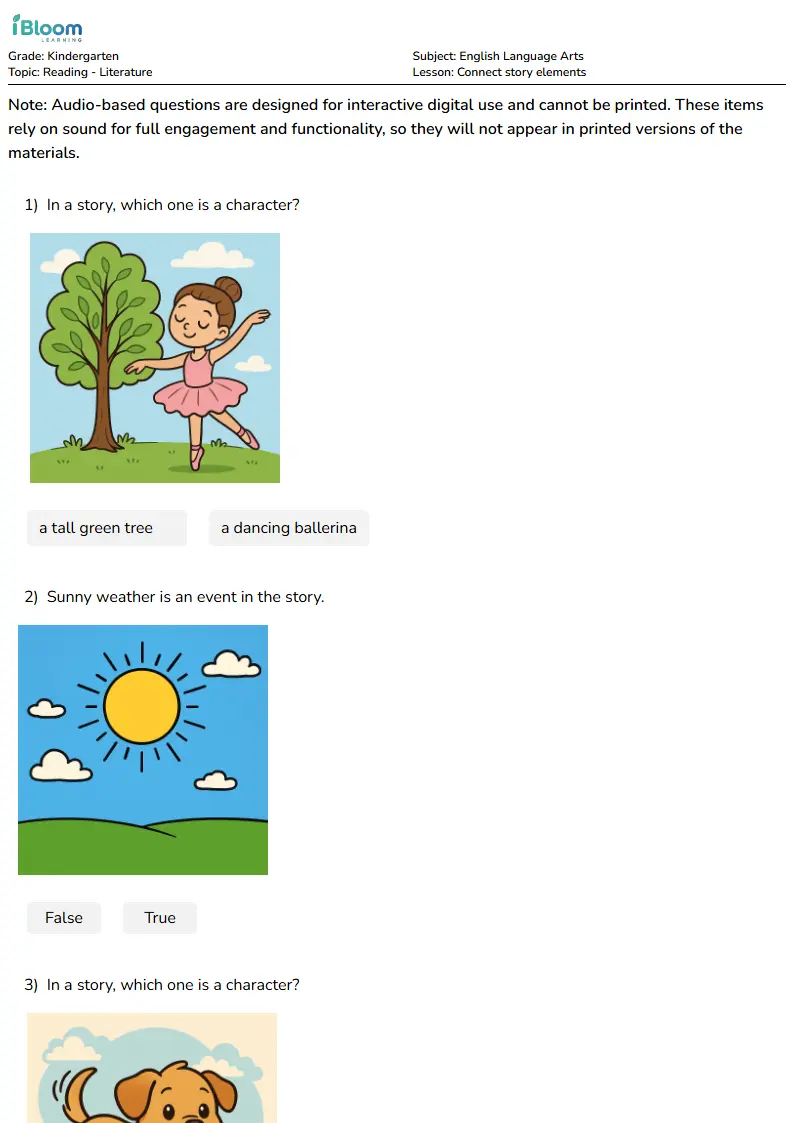
Connect story elements Lesson for Kindergarten
Explore a free interactive english language arts lesson for kindergarten: Connect story elements. AI-personalized, Common Core-aligned, and built for kids.
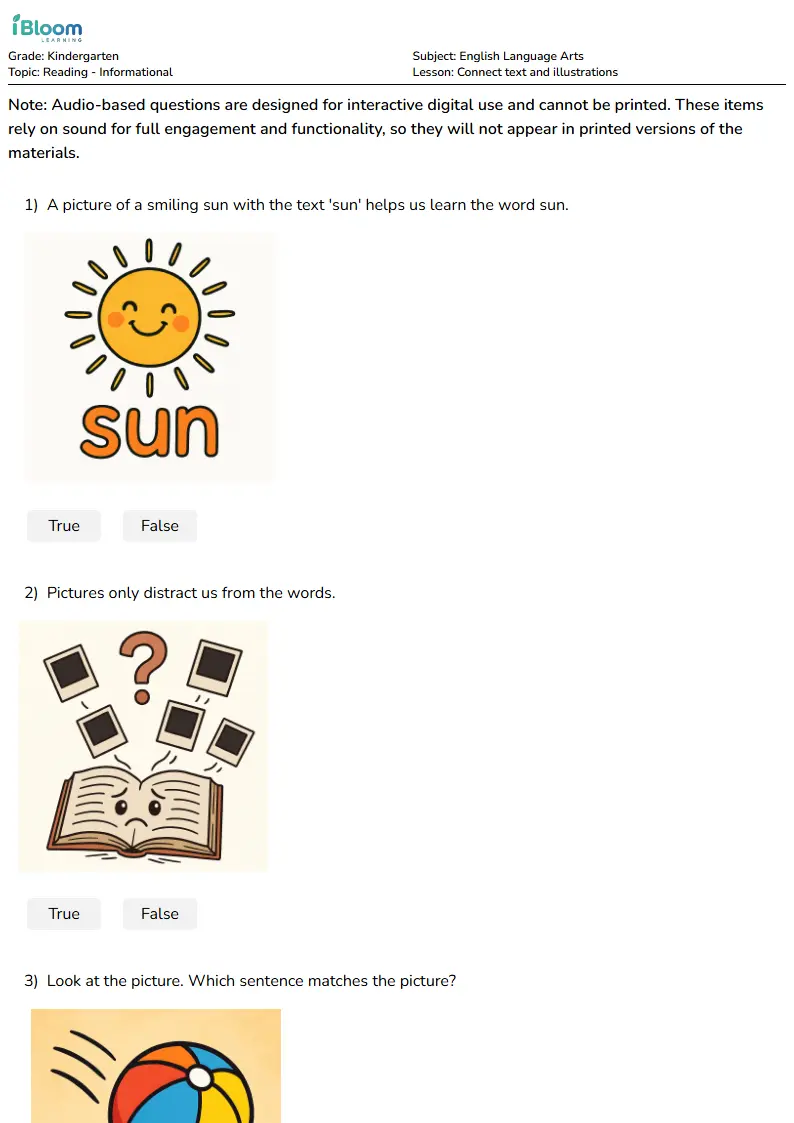
Connect text and illustrations Lesson for Kindergarten
Explore a free interactive english language arts lesson for kindergarten: Connect text and illustrations. AI-personalized, Common Core-aligned, and built for kids.
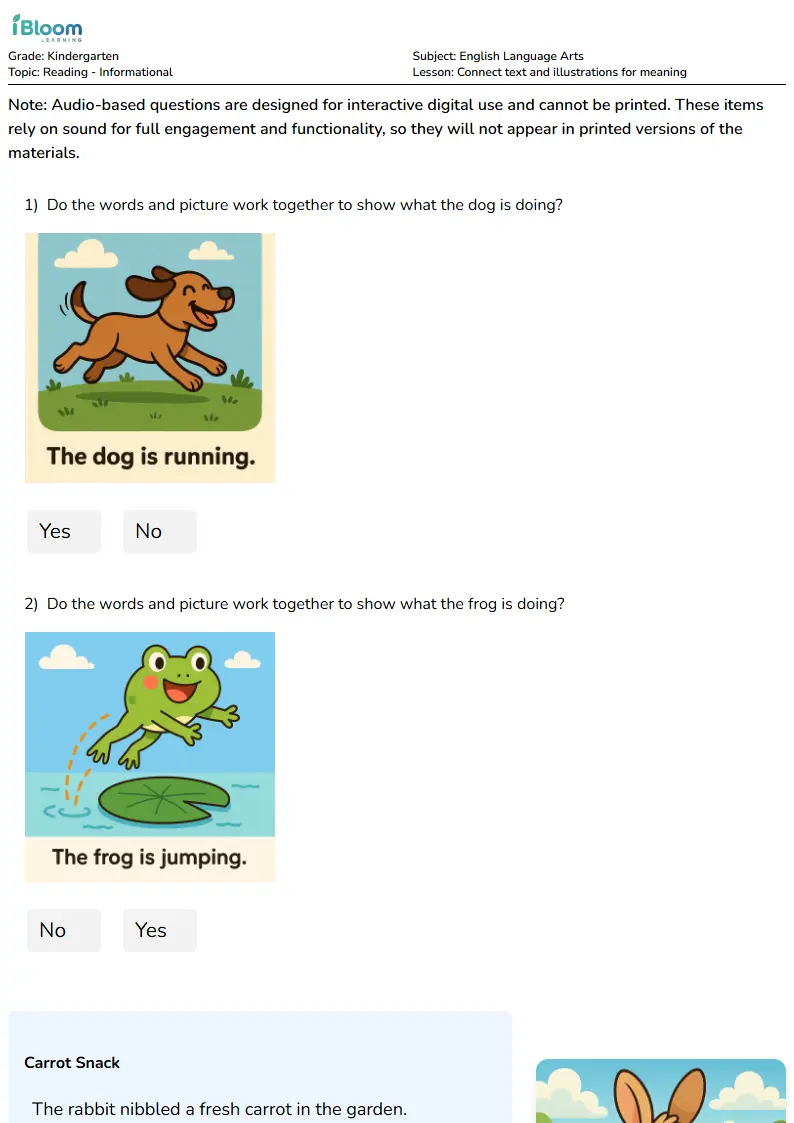
Connect text and illustrations for meaning Lesson for Kindergarten
Explore a free interactive english language arts lesson for kindergarten: Connect text and illustrations for meaning. AI-personalized, Common Core-aligned, and built for kids.
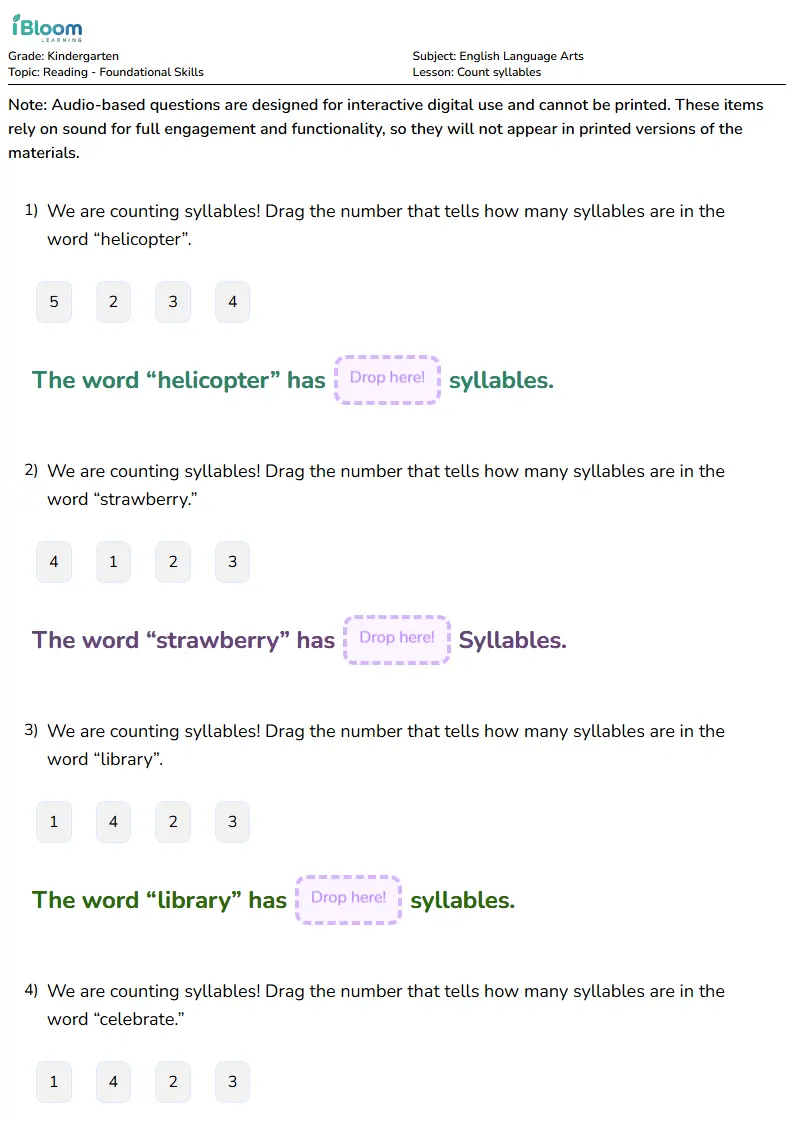
Count syllables Lesson for Kindergarten
Explore a free interactive english language arts lesson for kindergarten: Count syllables. AI-personalized, Common Core-aligned, and built for kids.
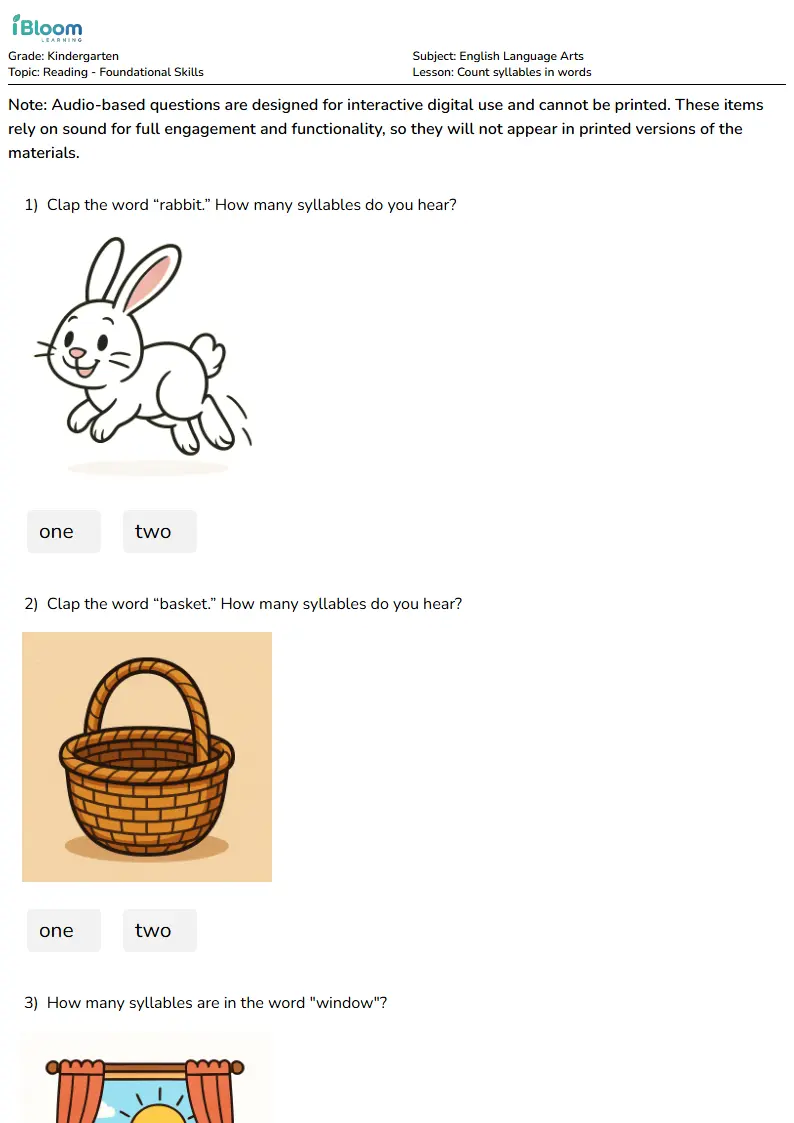
Count syllables in words Lesson for Kindergarten
Explore a free interactive english language arts lesson for kindergarten: Count syllables in words. AI-personalized, Common Core-aligned, and built for kids.
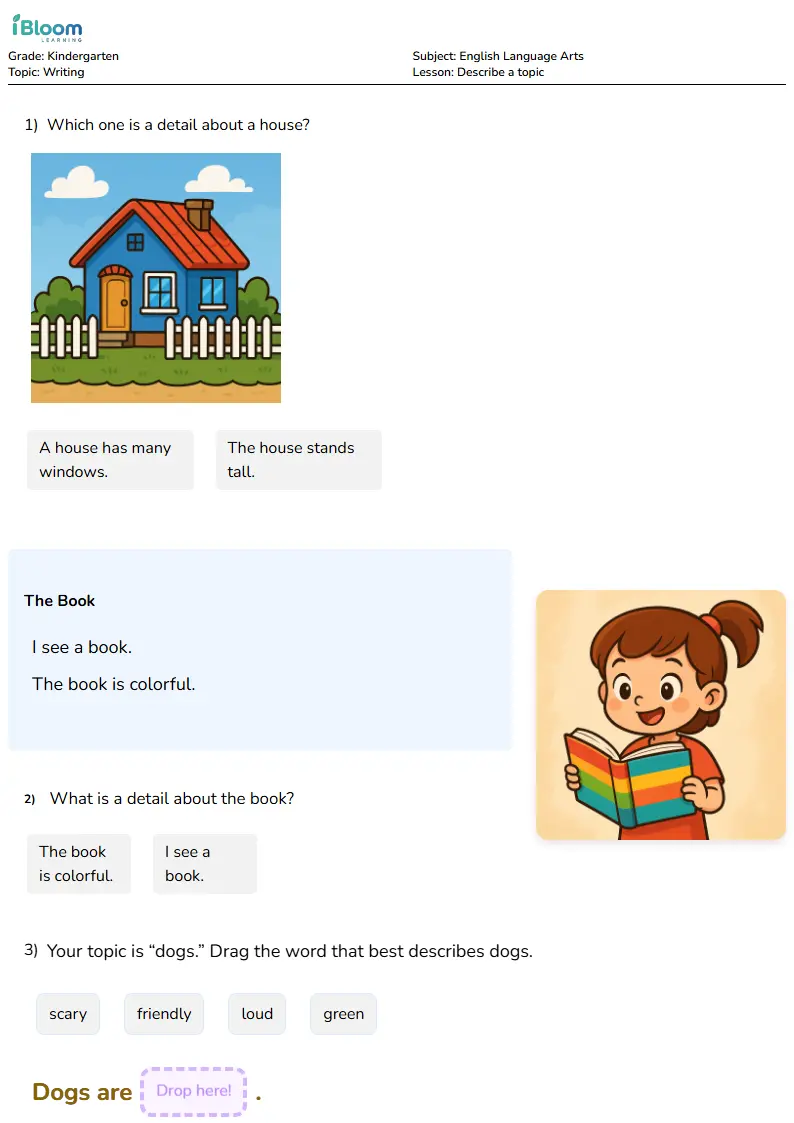
Describe a topic Lesson for Kindergarten
Explore a free interactive english language arts lesson for kindergarten: Describe a topic. AI-personalized, Common Core-aligned, and built for kids.
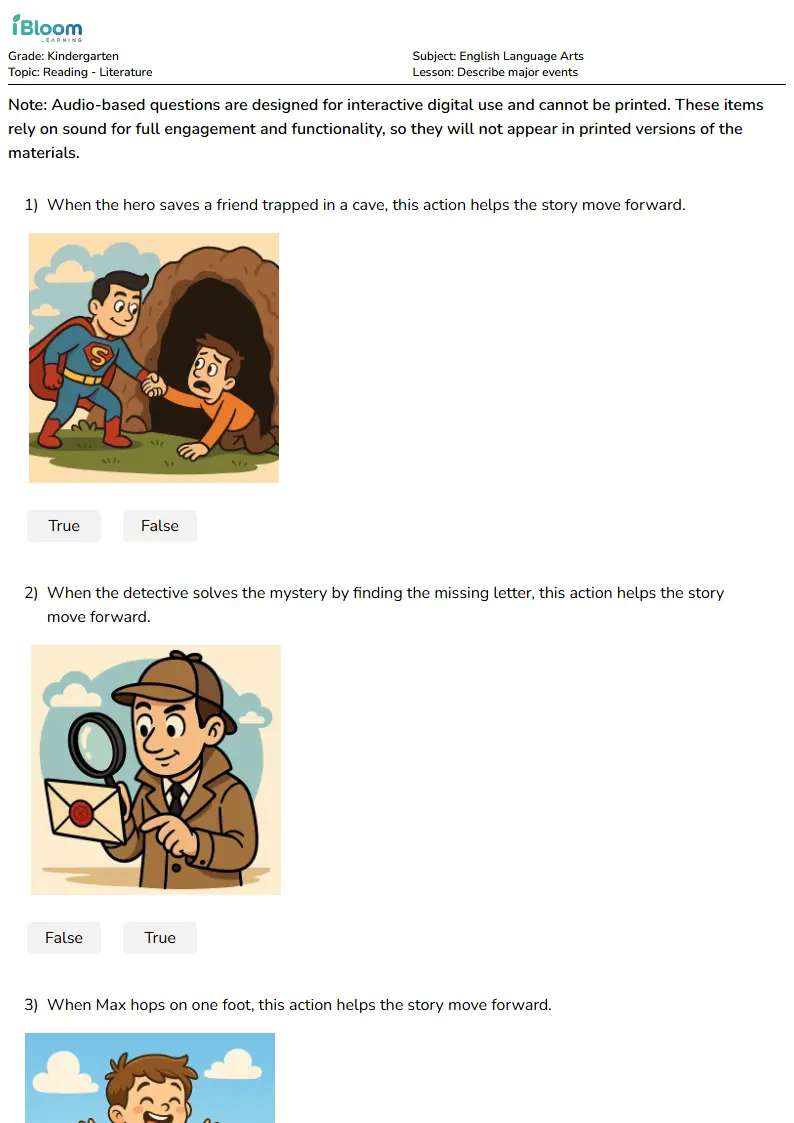
Describe major events Lesson for Kindergarten
Explore a free interactive english language arts lesson for kindergarten: Describe major events. AI-personalized, Common Core-aligned, and built for kids.
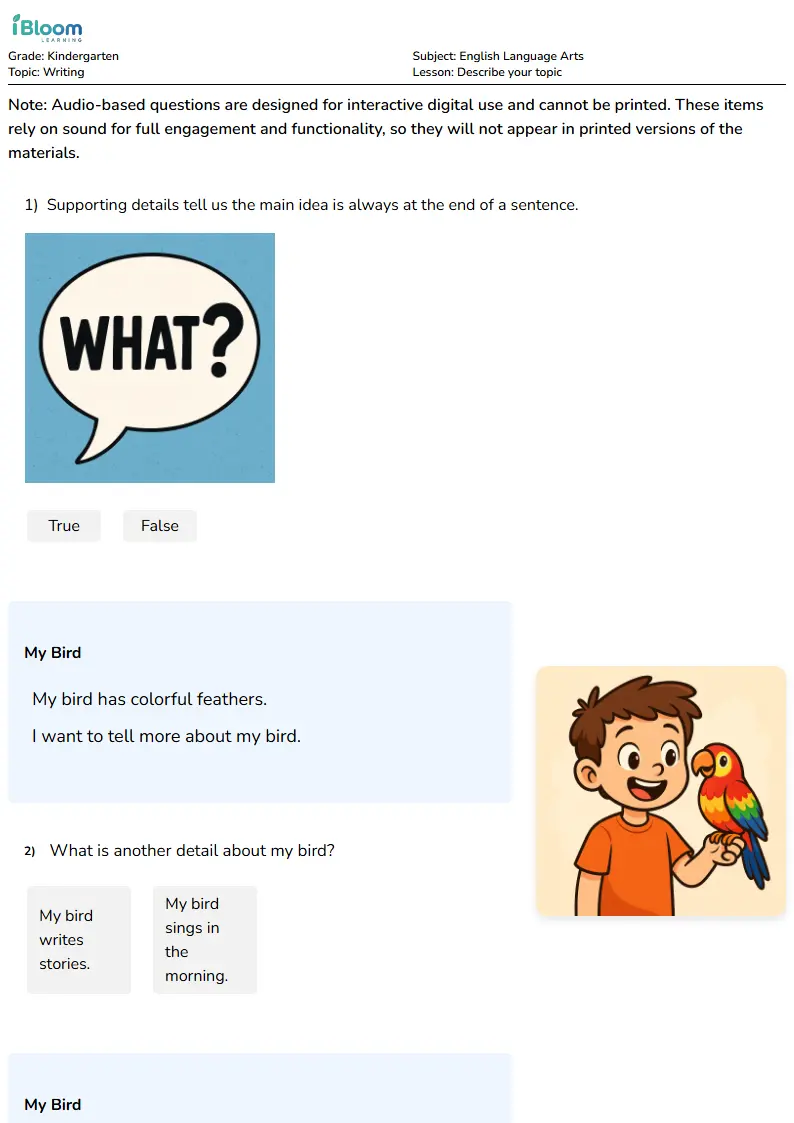
Describe your topic Lesson for Kindergarten
Explore a free interactive english language arts lesson for kindergarten: Describe your topic. AI-personalized, Common Core-aligned, and built for kids.
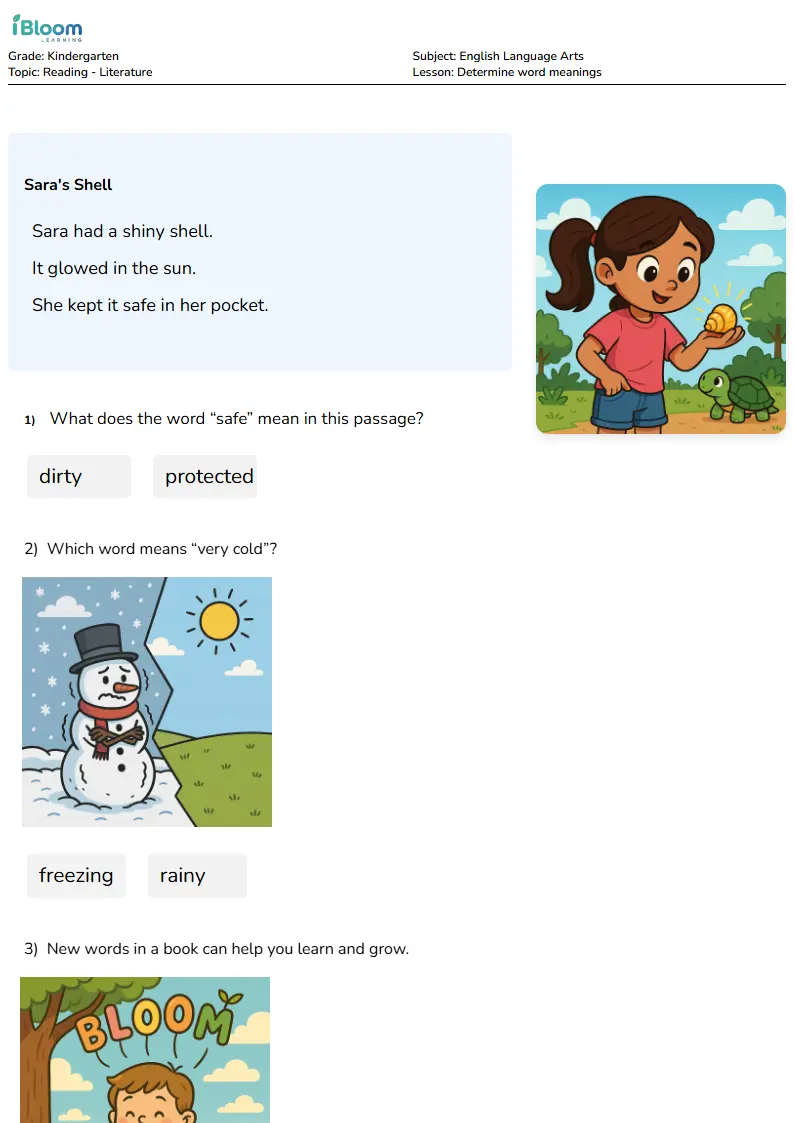
Determine word meanings Lesson for Kindergarten
Explore a free interactive english language arts lesson for kindergarten: Determine word meanings. AI-personalized, Common Core-aligned, and built for kids.
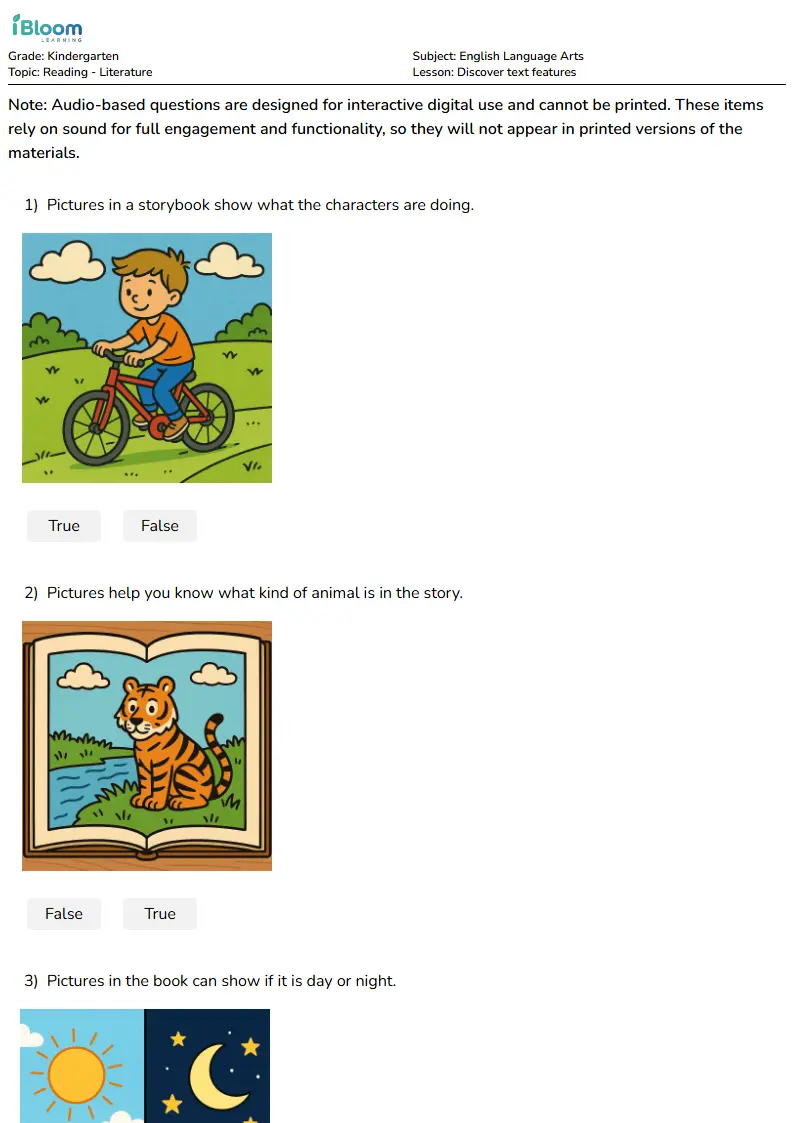
Discover text features Lesson for Kindergarten
Explore a free interactive english language arts lesson for kindergarten: Discover text features. AI-personalized, Common Core-aligned, and built for kids.
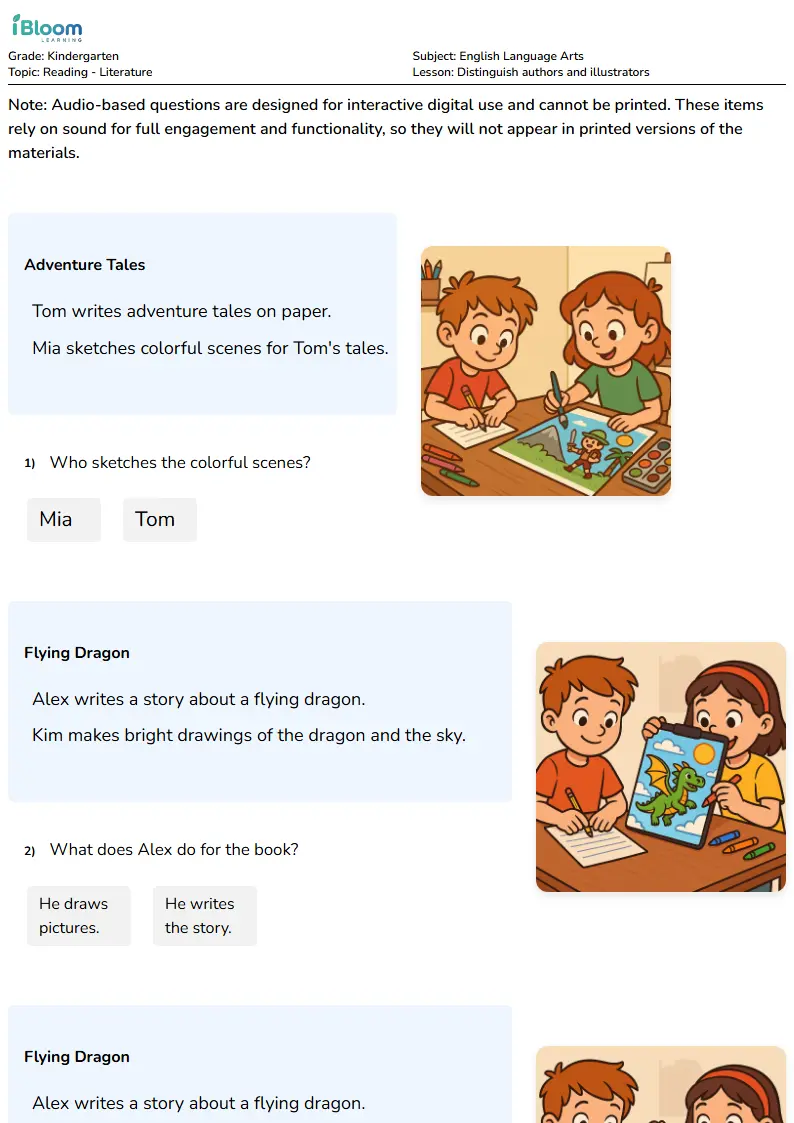
Distinguish authors and illustrators Lesson for Kindergarten
Explore a free interactive english language arts lesson for kindergarten: Distinguish authors and illustrators. AI-personalized, Common Core-aligned, and built for kids.
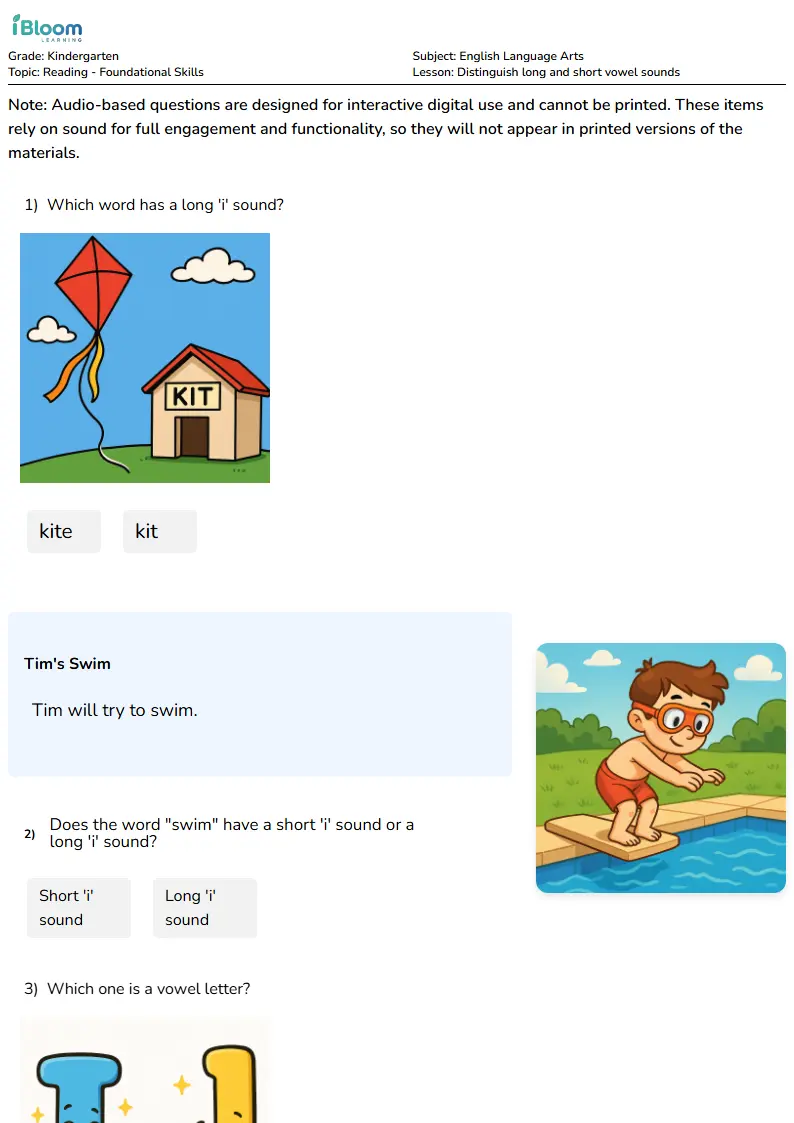
Short and Long Vowel Sounds Lesson
Teach kindergarten children to distinguish short and long vowel sounds with examples, word sorting, and worksheet practice.
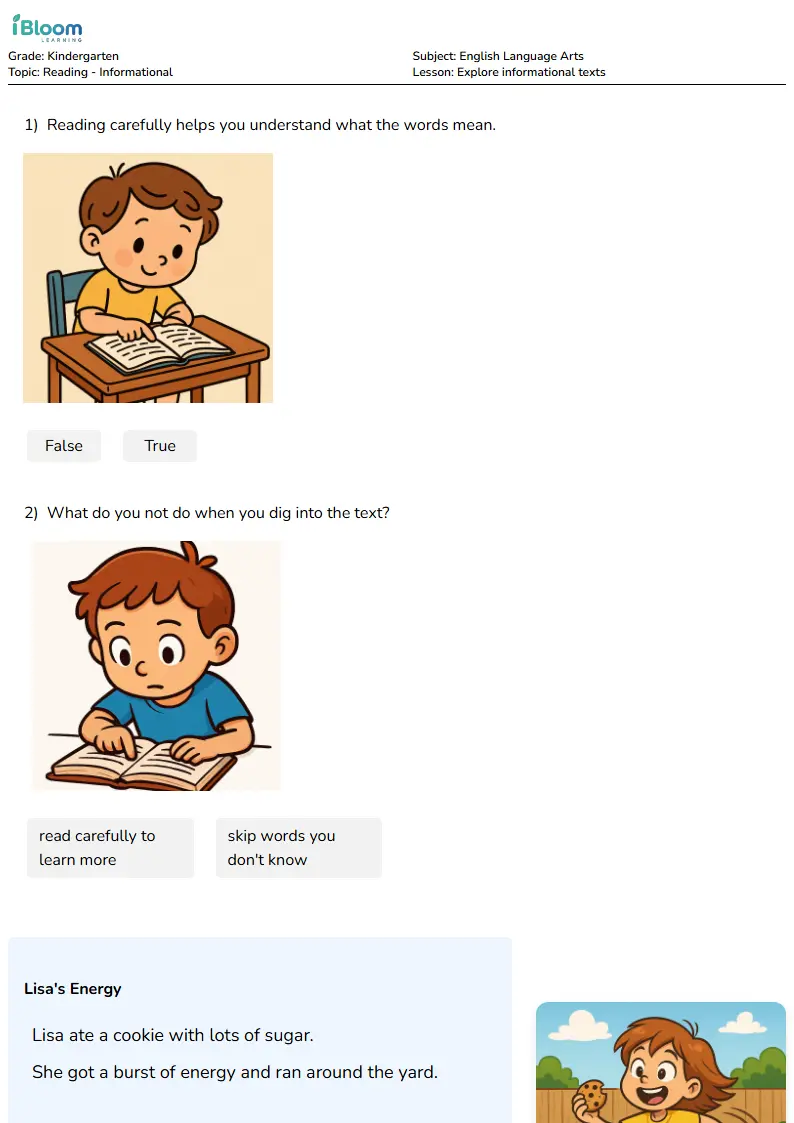
Explore informational texts Lesson for Kindergarten
Explore a free interactive english language arts lesson for kindergarten: Explore informational texts. AI-personalized, Common Core-aligned, and built for kids.
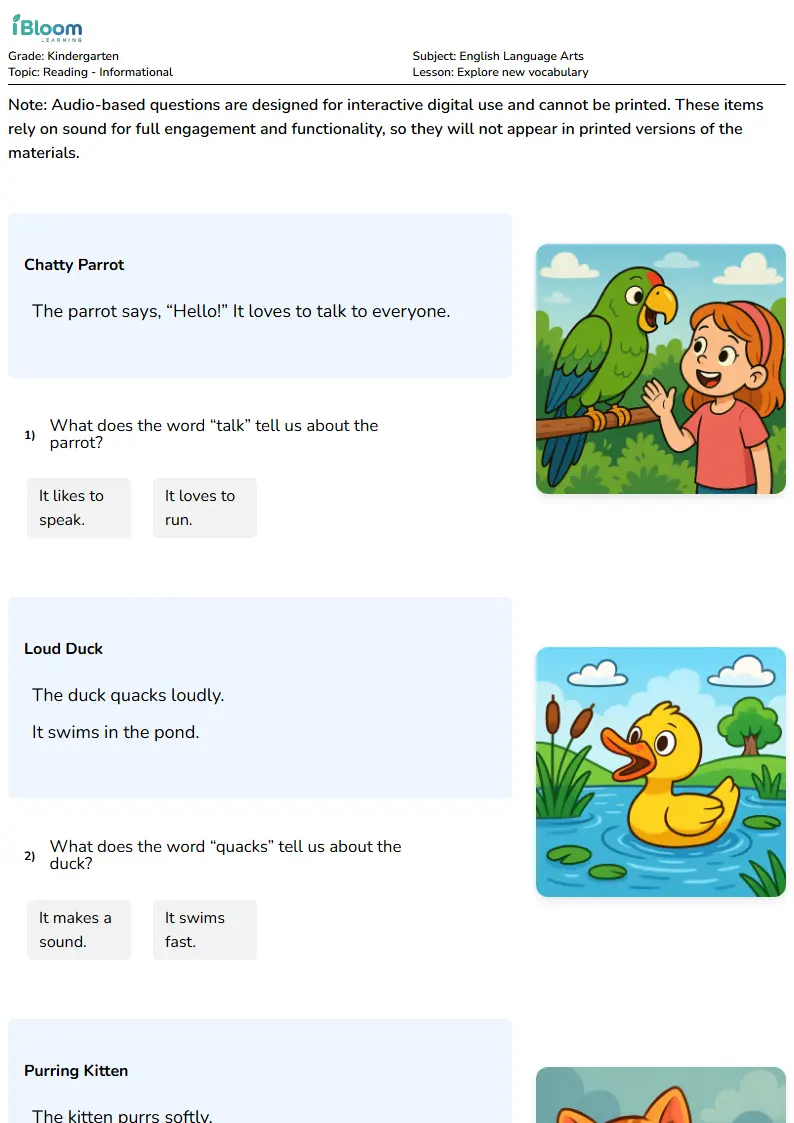
Explore new vocabulary Lesson for Kindergarten
Explore a free interactive english language arts lesson for kindergarten: Explore new vocabulary. AI-personalized, Common Core-aligned, and built for kids.
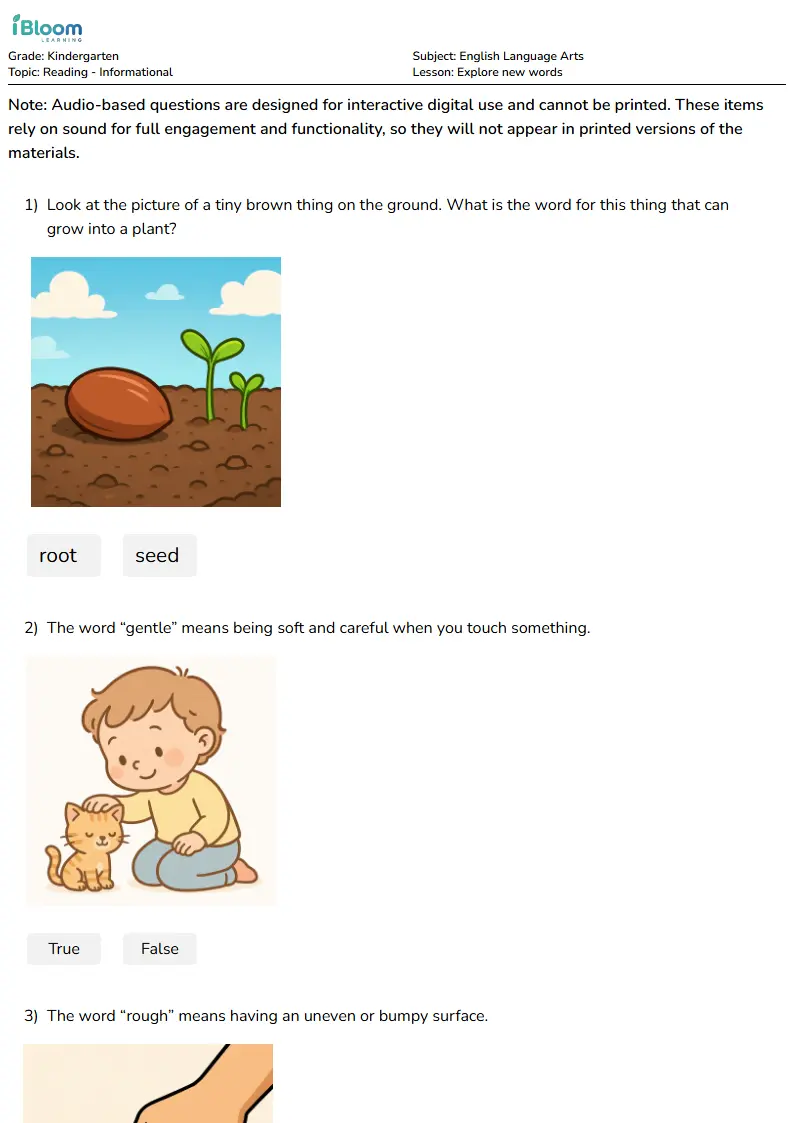
Explore new words Lesson for Kindergarten
Explore a free interactive english language arts lesson for kindergarten: Explore new words. AI-personalized, Common Core-aligned, and built for kids.
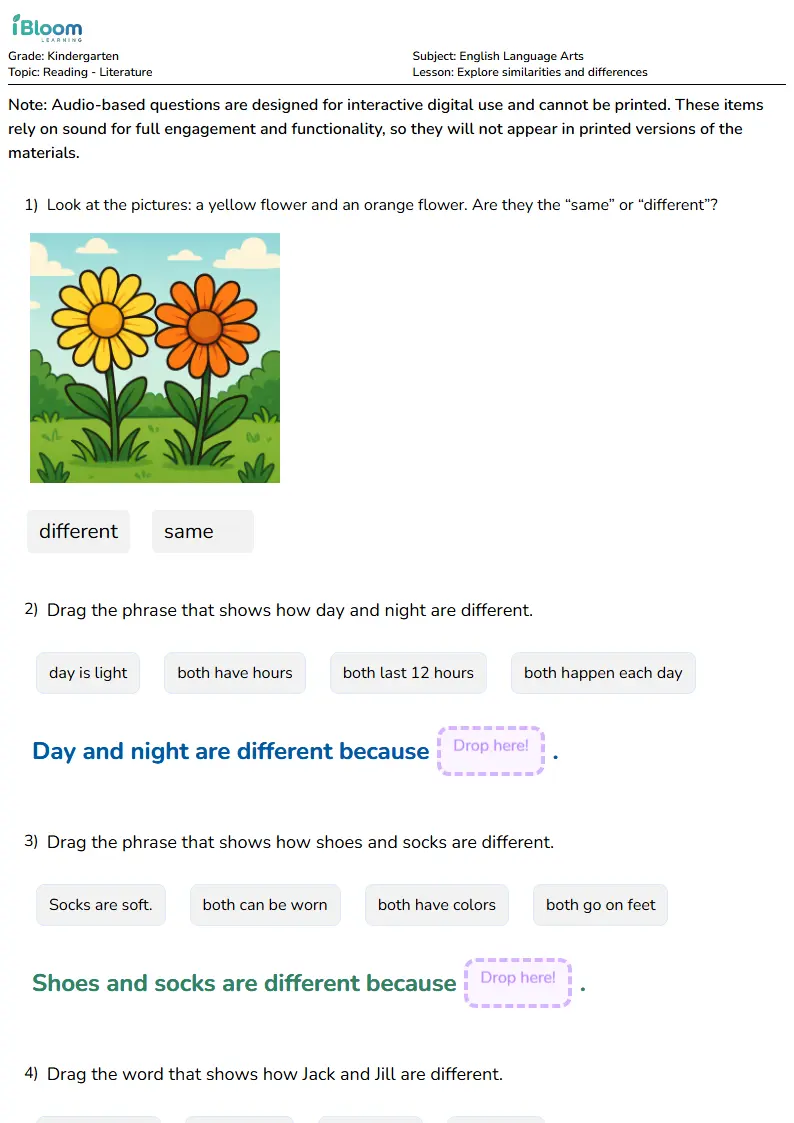
Explore similarities and differences Lesson for Kindergarten
Explore a free interactive english language arts lesson for kindergarten: Explore similarities and differences. AI-personalized, Common Core-aligned, and built for kids.
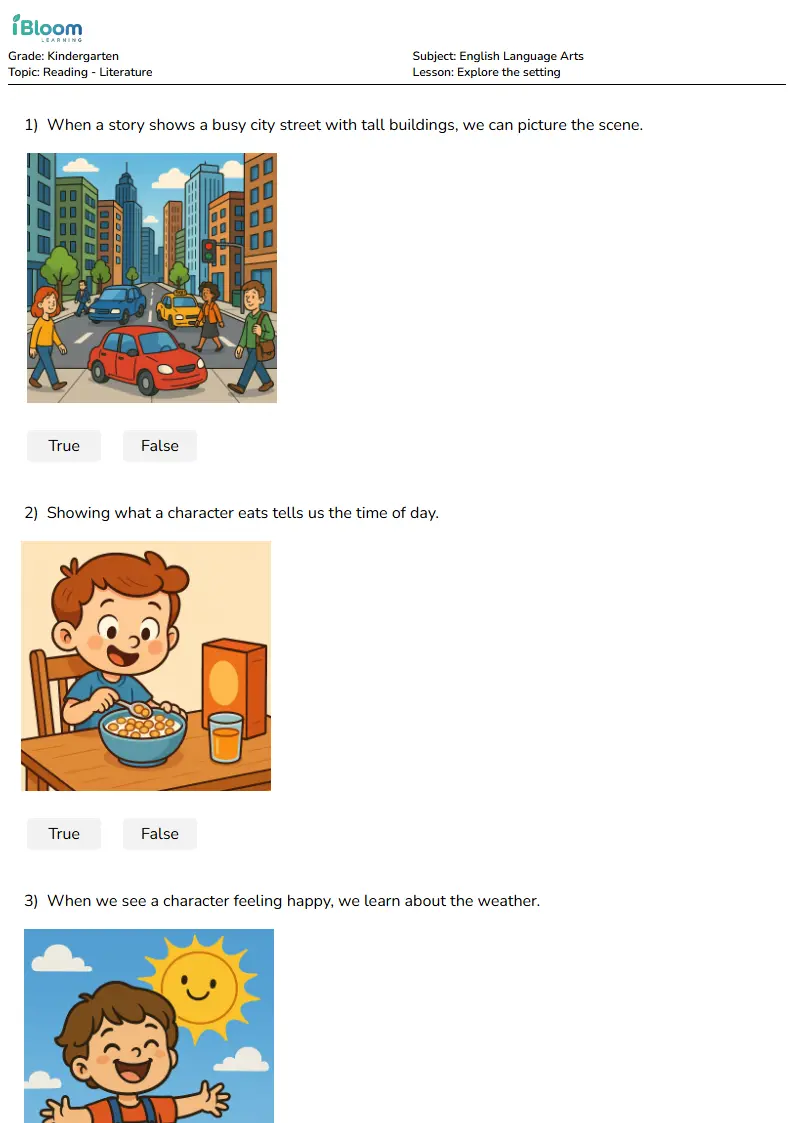
Explore the setting Lesson for Kindergarten
Explore a free interactive english language arts lesson for kindergarten: Explore the setting. AI-personalized, Common Core-aligned, and built for kids.
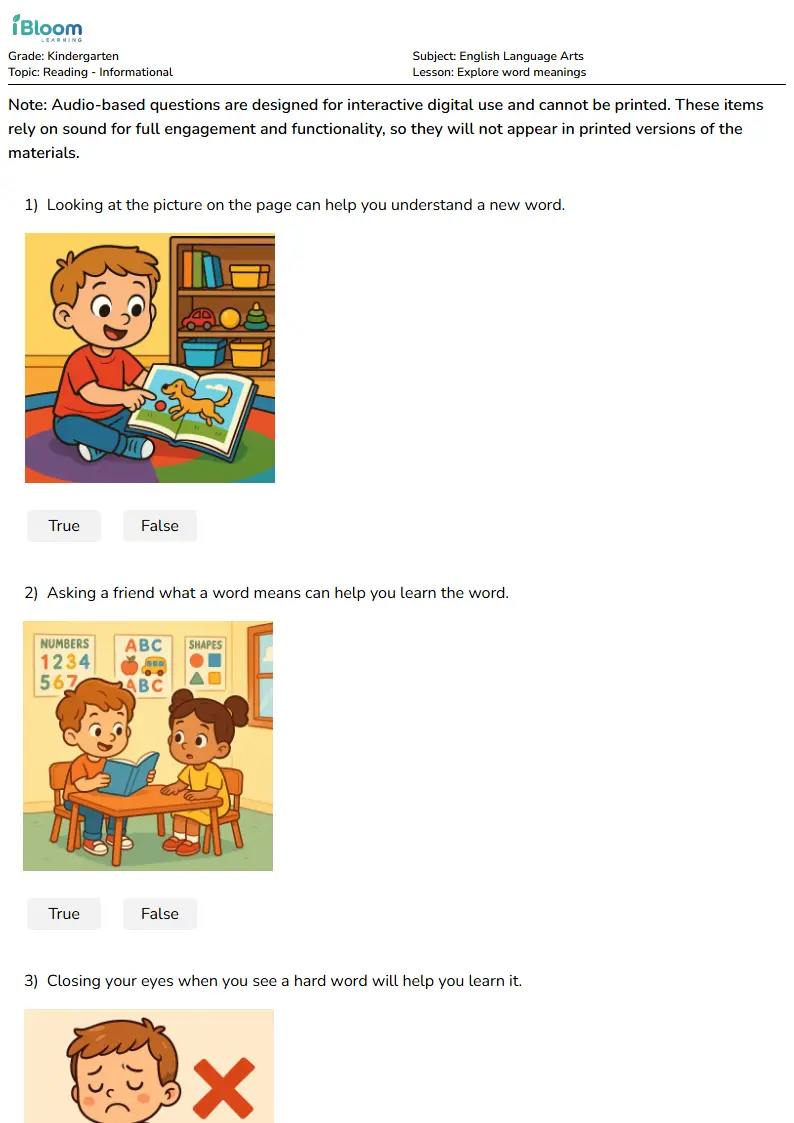
Explore word meanings Lesson for Kindergarten
Explore a free interactive english language arts lesson for kindergarten: Explore word meanings. AI-personalized, Common Core-aligned, and built for kids.