Multiplying by Eight, Nine, Ten Lesson for Third Grade
Preparing your worksheet
Multiplying by Eight, Nine, Ten Lesson for Third Grade: clear practice for Third Grade learners
Multiplying by Eight, Nine, Ten Lesson for Third Grade gives children a focused way to practise multiplication worksheets for kids. It is written for families, classroom teachers, tutors, and children who need a useful page that can move from explanation to action. Start with Multiplying by Eight, Nine, Ten Lesson for Third Grade, then use the paired worksheet page when the child needs a second format for the same skill.
This page belongs to the math operations worksheets practice path. The aim is not to finish a page quickly. The aim is for a child to notice the important information, try the task, explain the answer, and use the same skill again in a new example.
Why this page is useful
Parents and teachers search for multiplication worksheets for kids because children often need repeated practice that is clear, short, and connected to real learning. A strong practice page should help with homework, class review, small-group reteaching, tutoring, and independent confidence. This page supports those needs with one exact skill instead of a mixed set of unrelated questions.
The same learning need appears across Kerala, Tamil Nadu, Karnataka, Maharashtra, Telangana, Gujarat, California, Texas, Florida, New York, Illinois, UAE British schools, UAE American schools, and Indian-curriculum classrooms. A child may be in LKG, UKG, kindergarten, first grade, second grade, third grade, Class 1, Class 2, or an international curriculum, but the routine stays simple: understand the task, try a few examples, explain the thinking, and correct one mistake.
What children should be able to say
After using this page, a child should be able to say: I can correct one mistake and try a similar example with more confidence. This matters because spoken explanation turns a worksheet into real learning. If a child can explain the answer, the skill is more likely to transfer to homework, reading, writing, math problems, and classroom discussion.
Quick practice routine
1. Preview the page
Read the title together and ask the child what the page is asking them to do. If the child is unsure, model one item. Keep the model short and concrete so the child still does the thinking.
2. Try a small set
Use warm up with an easy item, solve a target item, check the reason, and review one mistake. Short practice works better than a long worksheet session when a child is still building the skill.
3. Ask for the reason
Ask, "How do you know?" or "What helped you decide?" Children can answer with a spoken sentence, a drawing, a model, a marked clue, or a corrected example. The format can change, but the reason should always be visible.
4. Review one mistake
Choose one mistake and fix it carefully. Ask the child what changed. Then give one similar item so the correction becomes practice, not just feedback.
Practice prompts for this exact skill
- Solve one item with a drawing before using mental math.
- Say which operation is needed and why it fits.
- Check the answer with an inverse operation, array, number line, or second model.
- Create a new word problem about multiplying by eight, nine, ten using classroom objects.
For more support, connect this page with subtraction worksheets for grade 2, subtraction facts within 20 worksheets, and building numbers worksheets grade 2. These related iBloom resources help parents and teachers build a longer path around the same topic.
Parent guidance
At home, use this page for 10 to 15 minutes. Begin with one shared example, let the child try a small set, and end with one explanation. If the child is multilingual, a quick explanation in the home language can come first, followed by a simple English sentence. This approach helps families in India, the United States, and the UAE use the page without turning practice into pressure.
If the child is stuck, reduce the number of questions and use objects, pictures, pointing, or sentence frames. If the page is easy, ask the child to make a new example, teach the idea back to you, or explain a second method.
Teacher and tutor guidance
Teachers can use this page for a mini lesson, guided group, literacy or math center, exit ticket, homework follow-up, or reteaching activity. Tutors can use it to diagnose whether the child needs help with vocabulary, decoding, reading the full question, number sense, problem setup, or confidence.
- Use the first item as a think-aloud.
- Ask students to compare two answers and choose the stronger explanation.
- Let children mark the clue, model, number, word, or picture that helped.
- Ask each child to create one new item in the same style.
- Return to the page after a few days for spaced review.
Connected iBloom path
Use these related iBloom pages to keep the practice connected:
- Multiplying by Eight, Nine, Ten Lesson for Third Grade
- paired worksheet page
- subtraction worksheets for grade 2
- subtraction facts within 20 worksheets
- building numbers worksheets grade 2
- Multiplying by One, Two, and Three Lesson for Third Grade
- Solve Addition Word Problems using Pictures Lesson for Ukg
- Addition in Daily Life Lesson for Ukg
- Understanding Addition Sentences Lesson for Ukg
- Understanding Addition with Pictures Lesson for Ukg
Trusted support for adults
Adults who want background support can use this education resource and this supporting classroom resource. Use those references to understand the teaching idea, then bring the child back to short, concrete practice on iBloom.
Common mistakes to watch for
- Rushing through the page without reading or looking carefully.
- Guessing an answer without giving a reason.
- Needing the adult to solve every item instead of trying one small step independently.
- Finishing the worksheet but not being able to explain the skill in a sentence.
Frequently asked questions
Who should use this page?
Use it when a child is ready for Third Grade math practice and needs a clear page for review, homework, or skill-building.
How long should one session take?
Most children do best with 10 to 15 minutes. A short session with one good explanation is better than a long session with rushed answers.
Can this page be used for tutoring?
Yes. Tutors can use it as a warm-up, a diagnostic check, or a follow-up page after teaching the skill.
What should I do after the child finishes?
Ask the child to explain one answer, correct one item if needed, and try a related page from the connected iBloom path.
More practice for this grade
More Math lessons
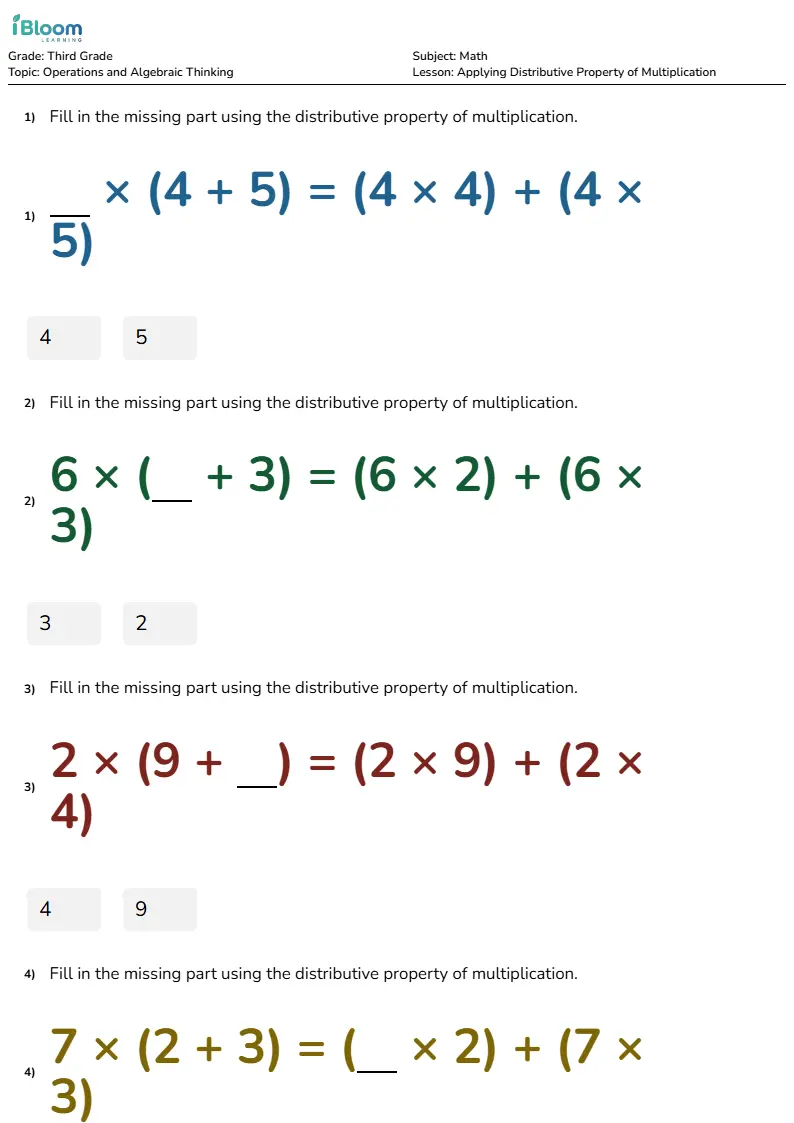
Applying Distributive Property of Multiplication Lesson for Third Grade
Explore a free interactive math lesson for third grade: Applying Distributive Property of Multiplication. AI-personalized, Common Core-aligned, and built for kids.
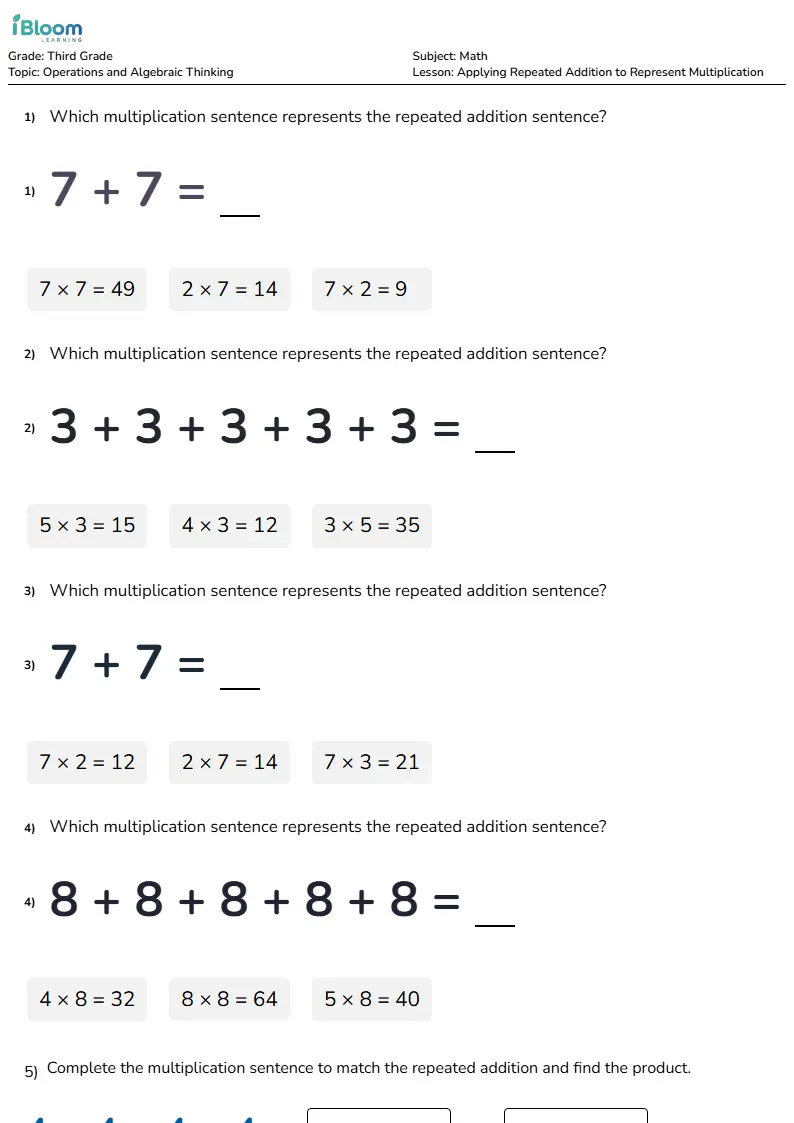
Applying Repeated Addition to Represent Multiplication Lesson for Third Grade
Explore a free interactive math lesson for third grade: Applying Repeated Addition to Represent Multiplication. AI-personalized, Common Core-aligned, and built for kids.
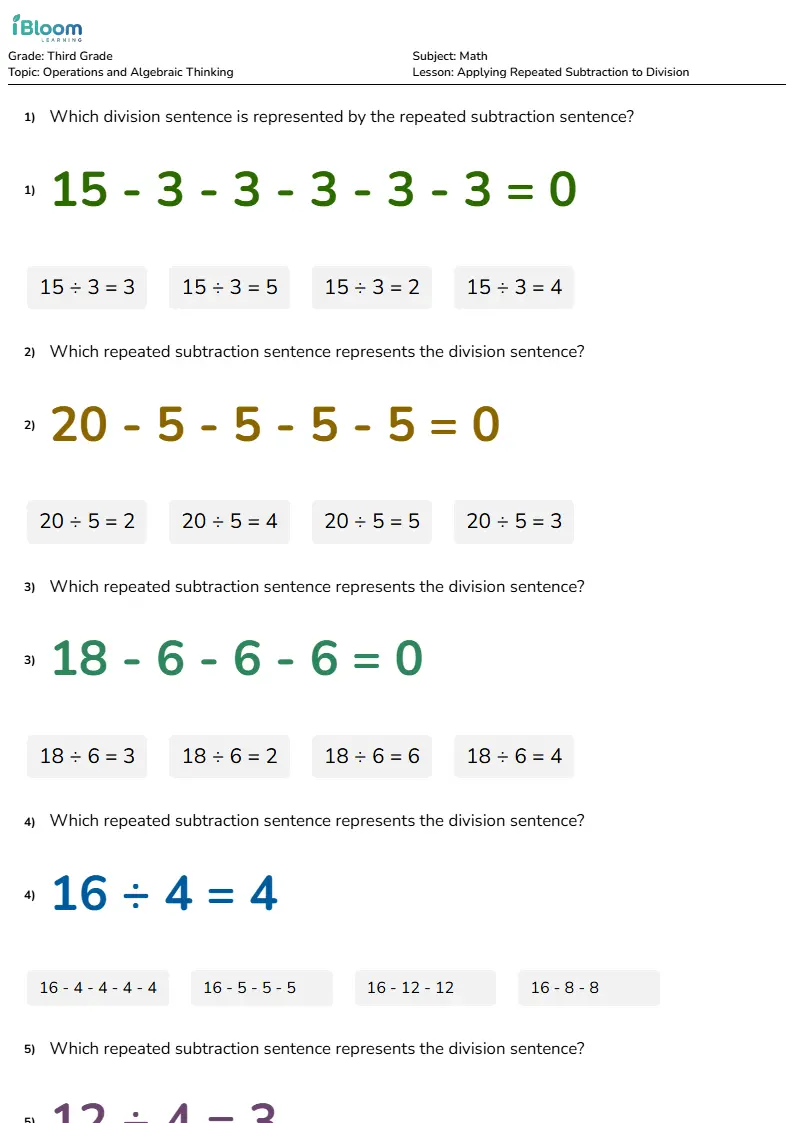
Applying Repeated Subtraction to Division Lesson for Third Grade
Explore a free interactive math lesson for third grade: Applying Repeated Subtraction to Division. AI-personalized, Common Core-aligned, and built for kids.
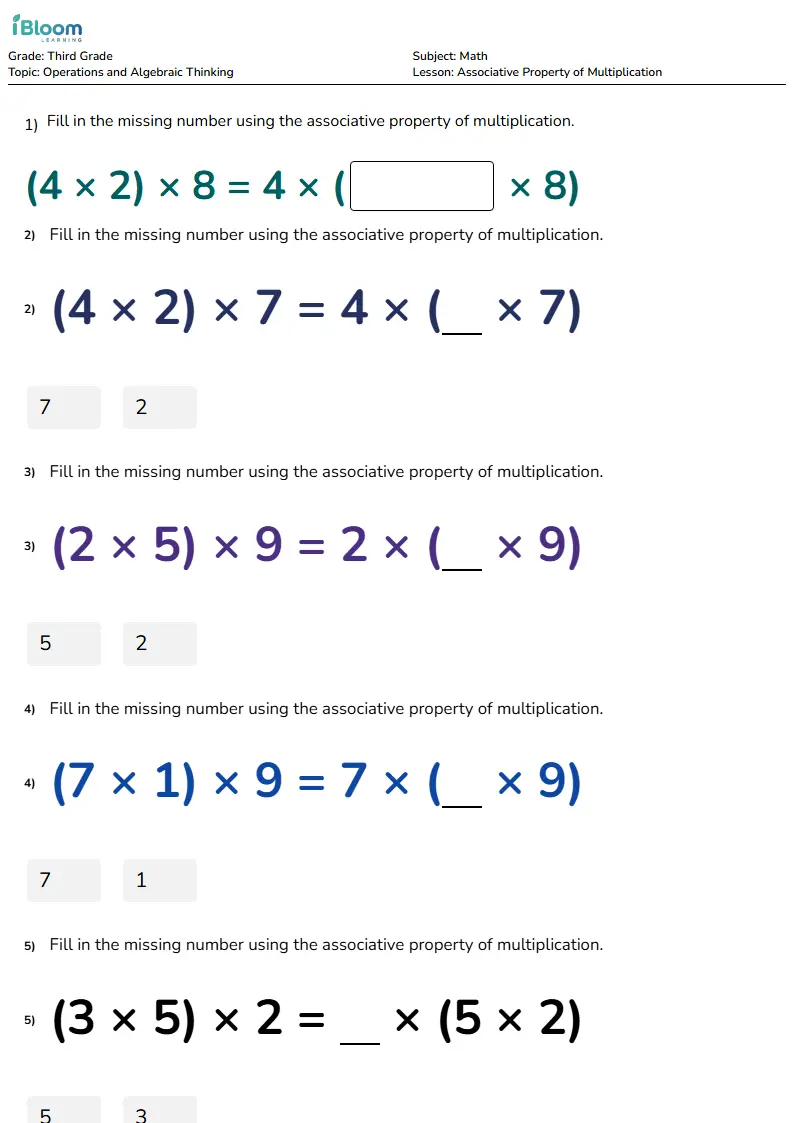
Associative Property of Multiplication Lesson for Third Grade
Explore a free interactive math lesson for third grade: Associative Property of Multiplication. AI-personalized, Common Core-aligned, and built for kids.
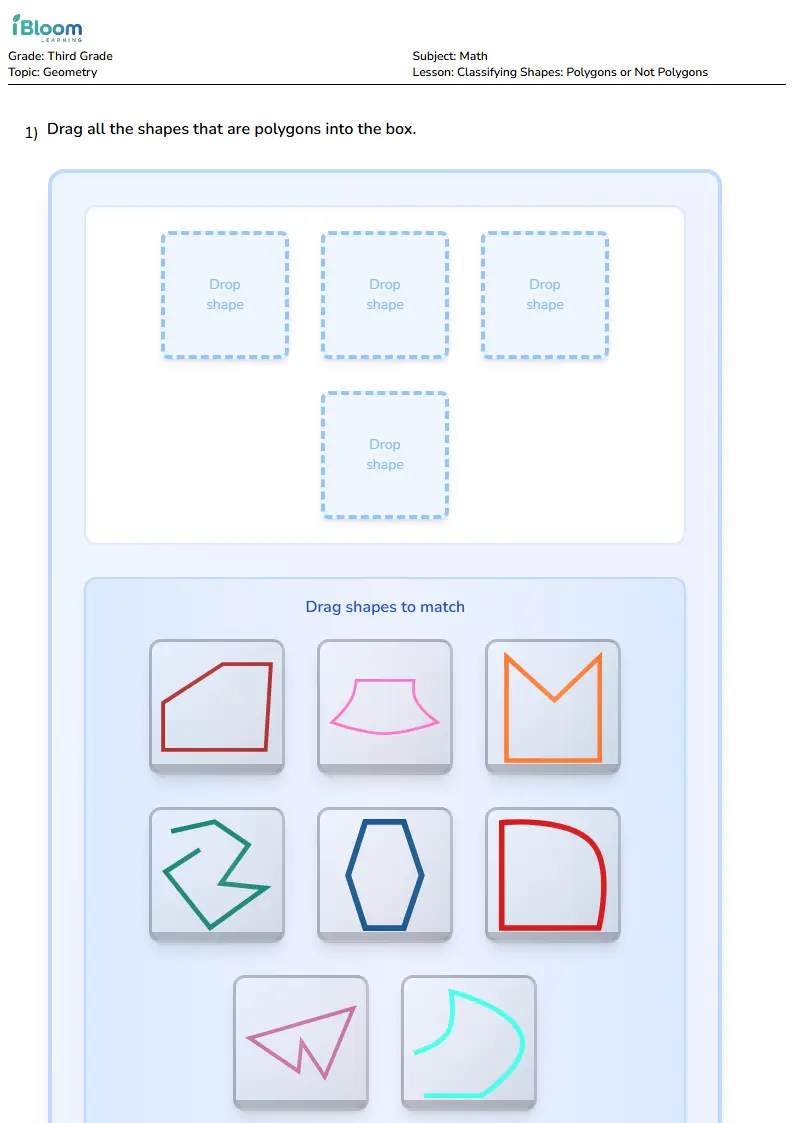
Classifying Shapes: Polygons or Not Polygons Lesson for Third Grade
Explore a free interactive math lesson for third grade: Classifying Shapes: Polygons or Not Polygons. AI-personalized, Common Core-aligned, and built for kids.
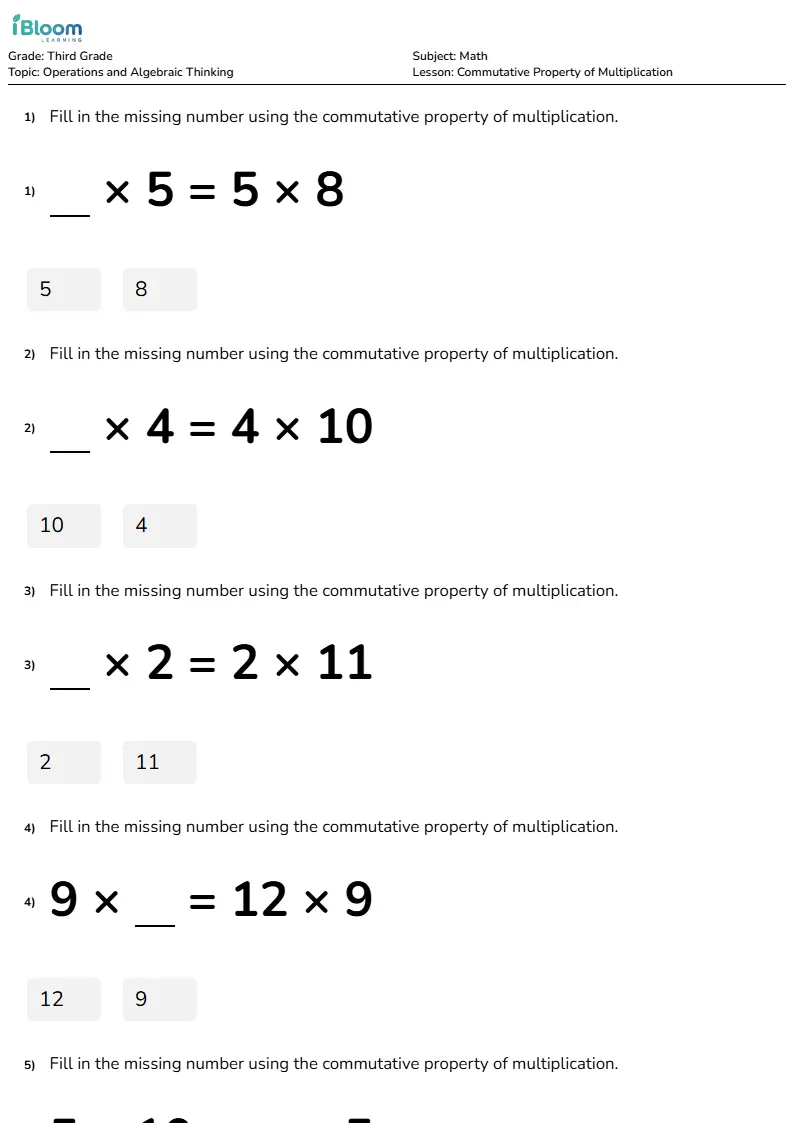
Commutative Property of Multiplication Lesson for Third Grade
Explore a free interactive math lesson for third grade: Commutative Property of Multiplication. AI-personalized, Common Core-aligned, and built for kids.
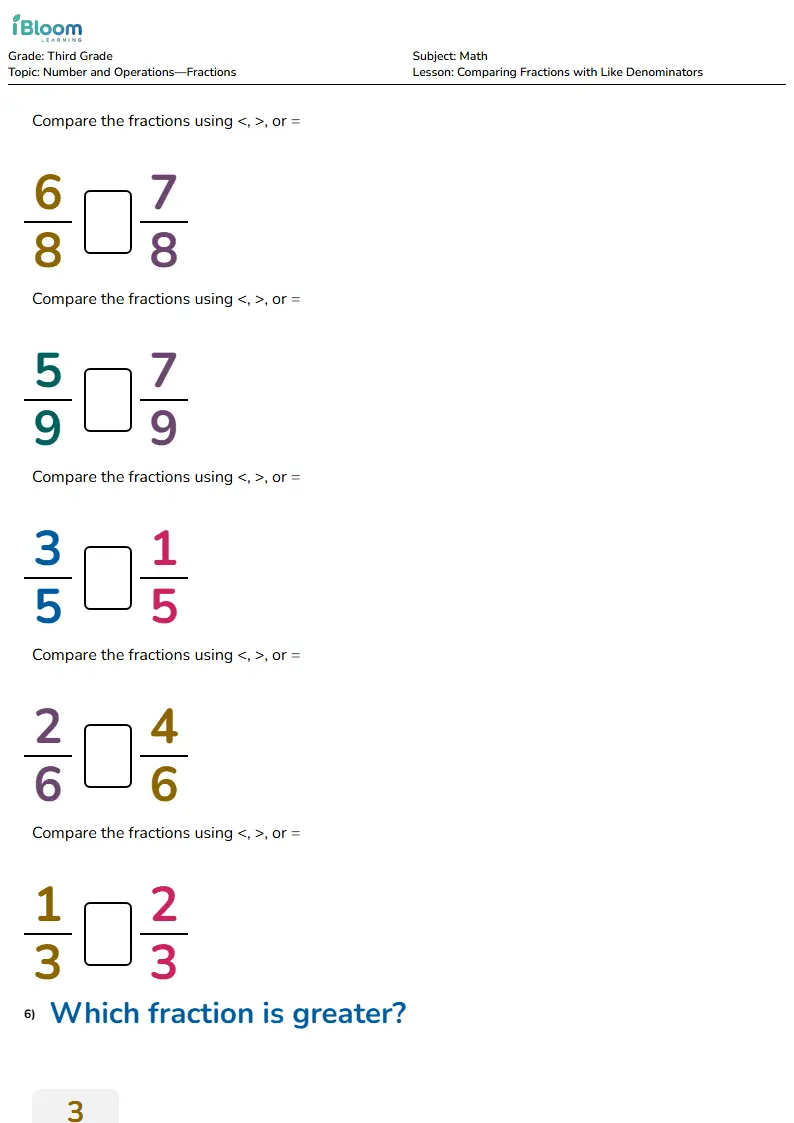
Comparing Fractions with Like Denominators Lesson for Third Grade
Explore a free interactive math lesson for third grade: Comparing Fractions with Like Denominators. AI-personalized, Common Core-aligned, and built for kids.
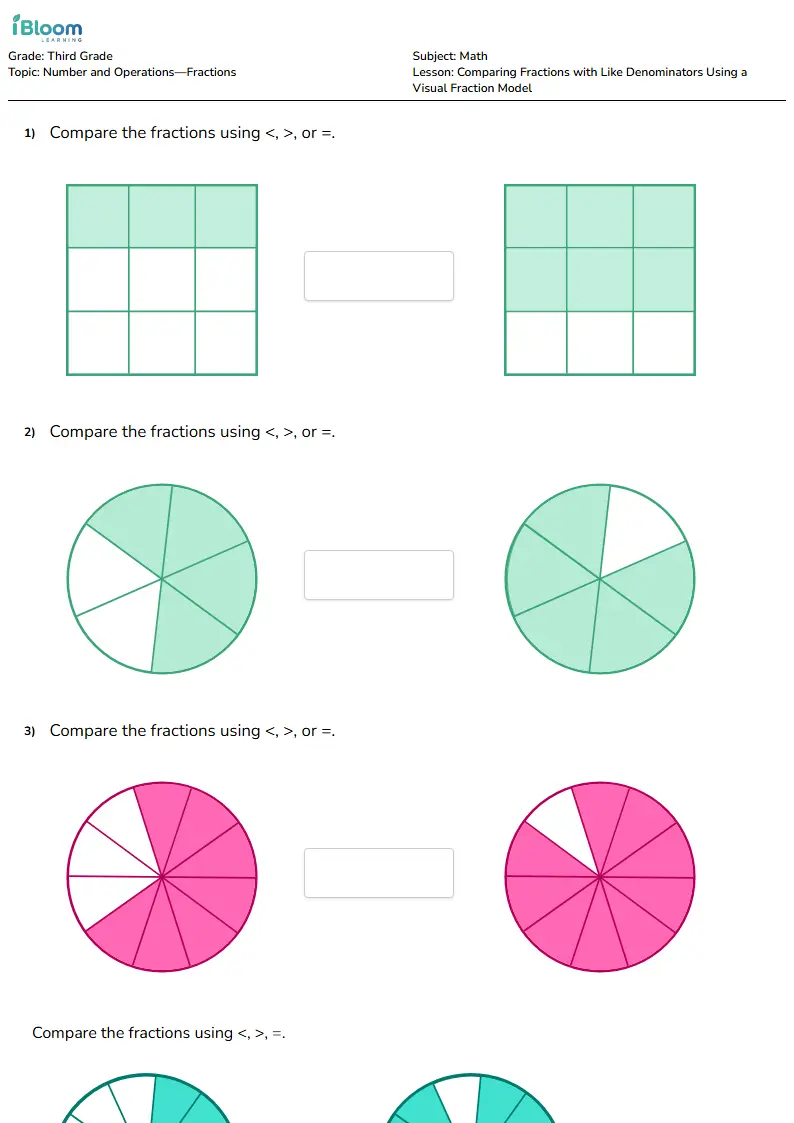
Comparing Fractions with Like Denominators Using a Visual Fraction Model Lesson for Third Grade
Explore a free interactive math lesson for third grade: Comparing Fractions with Like Denominators Using a Visual Fraction Model. AI-personalized, Common Core-aligned, and built for kids.
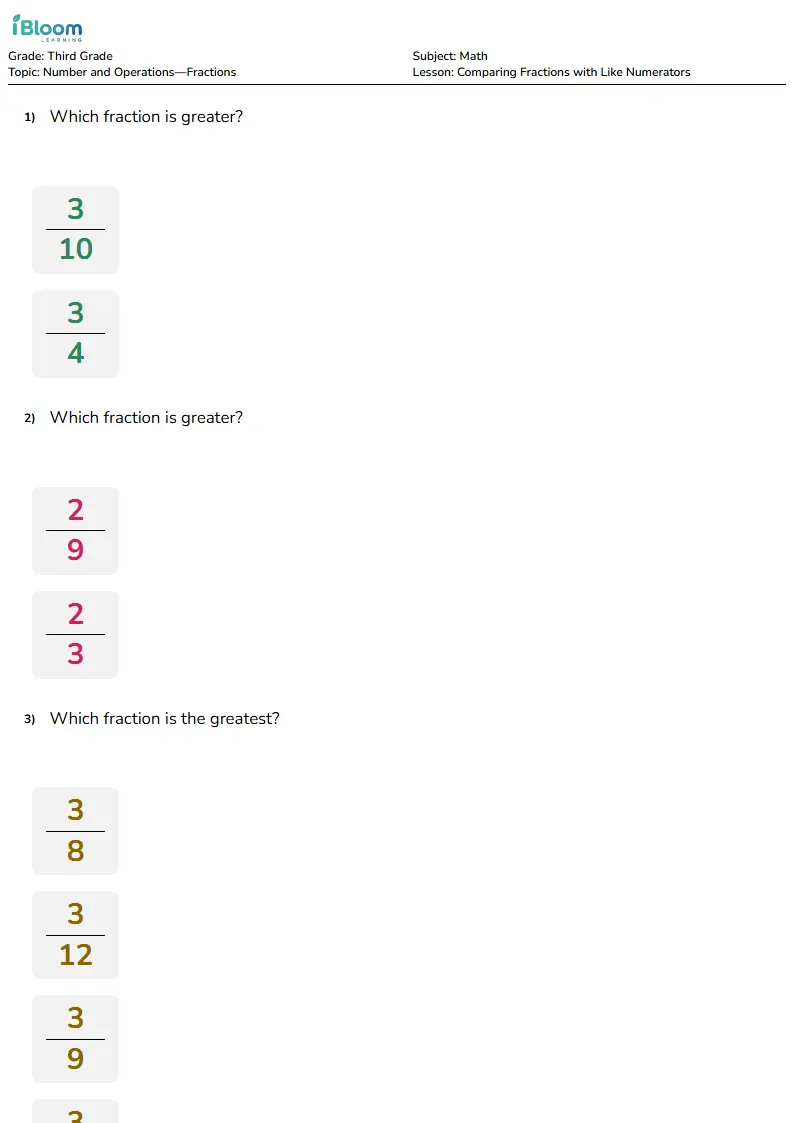
Comparing Fractions with Like Numerators Lesson for Third Grade
Explore a free interactive math lesson for third grade: Comparing Fractions with Like Numerators. AI-personalized, Common Core-aligned, and built for kids.
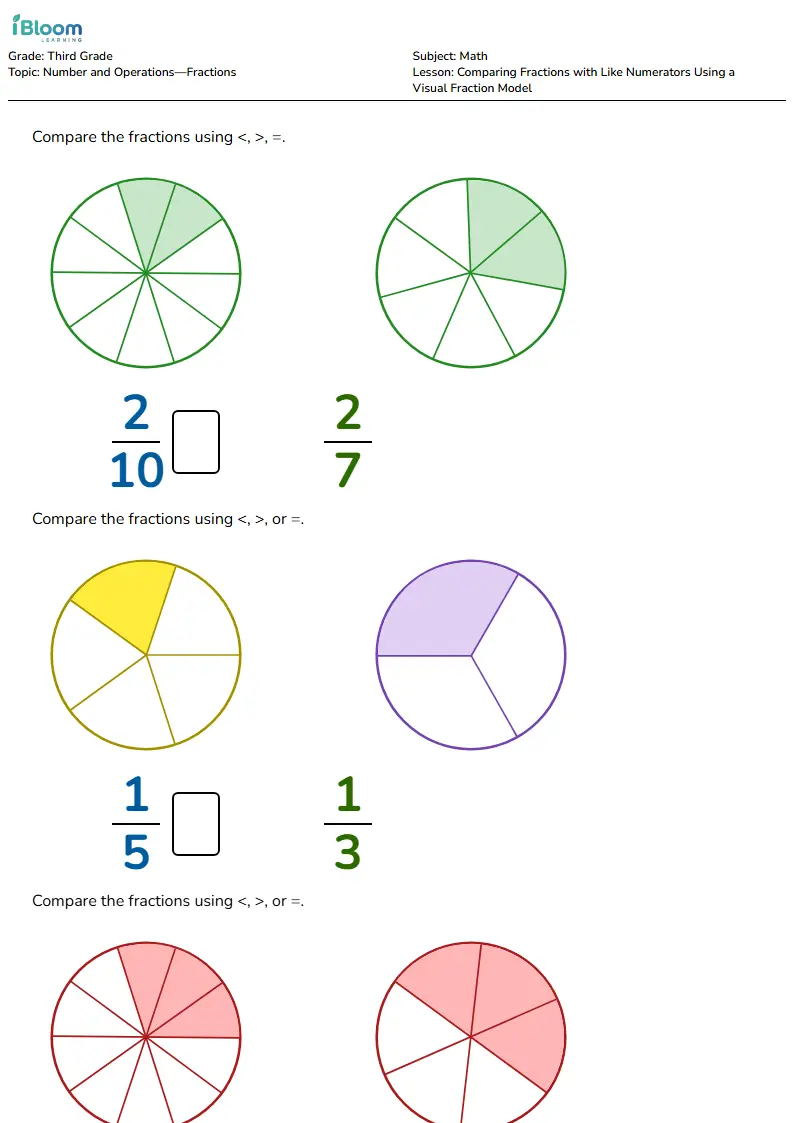
Comparing Fractions with Like Numerators Using a Visual Fraction Model Lesson for Third Grade
Explore a free interactive math lesson for third grade: Comparing Fractions with Like Numerators Using a Visual Fraction Model. AI-personalized, Common Core-aligned, and built for kids.
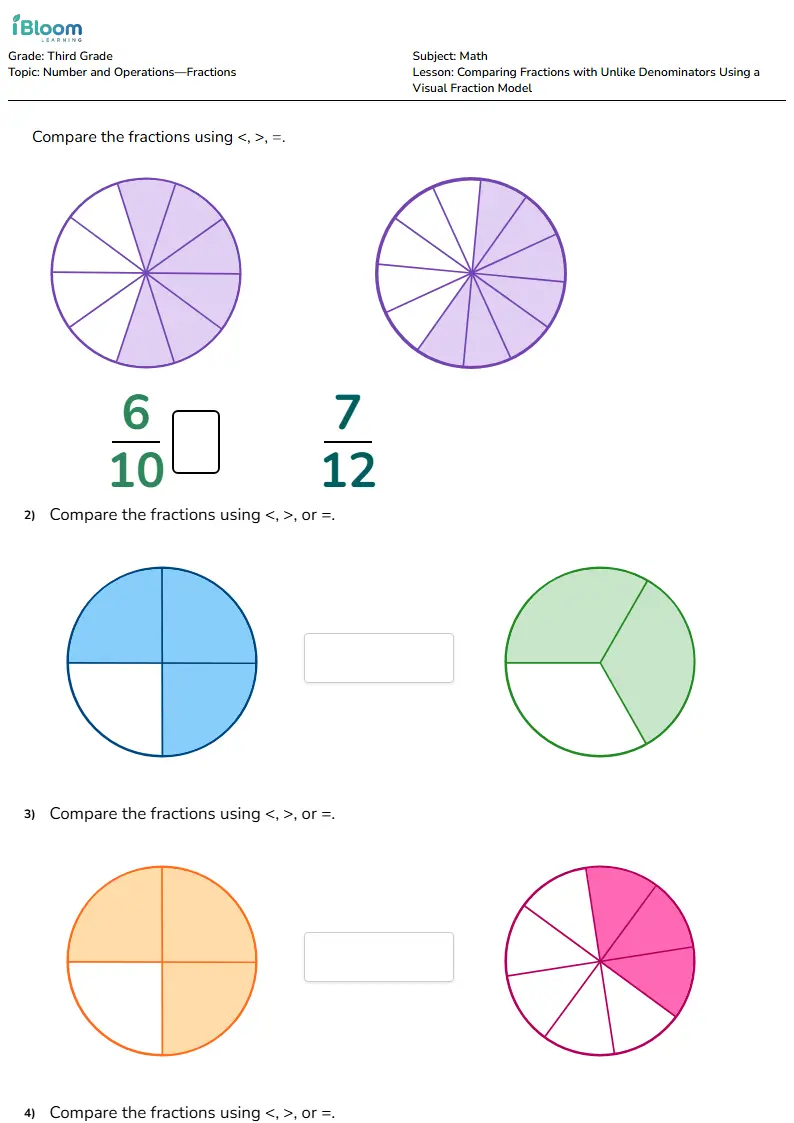
Comparing Fractions with Unlike Denominators Using a Visual Fraction Model Lesson for Third Grade
Explore a free interactive math lesson for third grade: Comparing Fractions with Unlike Denominators Using a Visual Fraction Model. AI-personalized, Common Core-aligned, and built for kids.
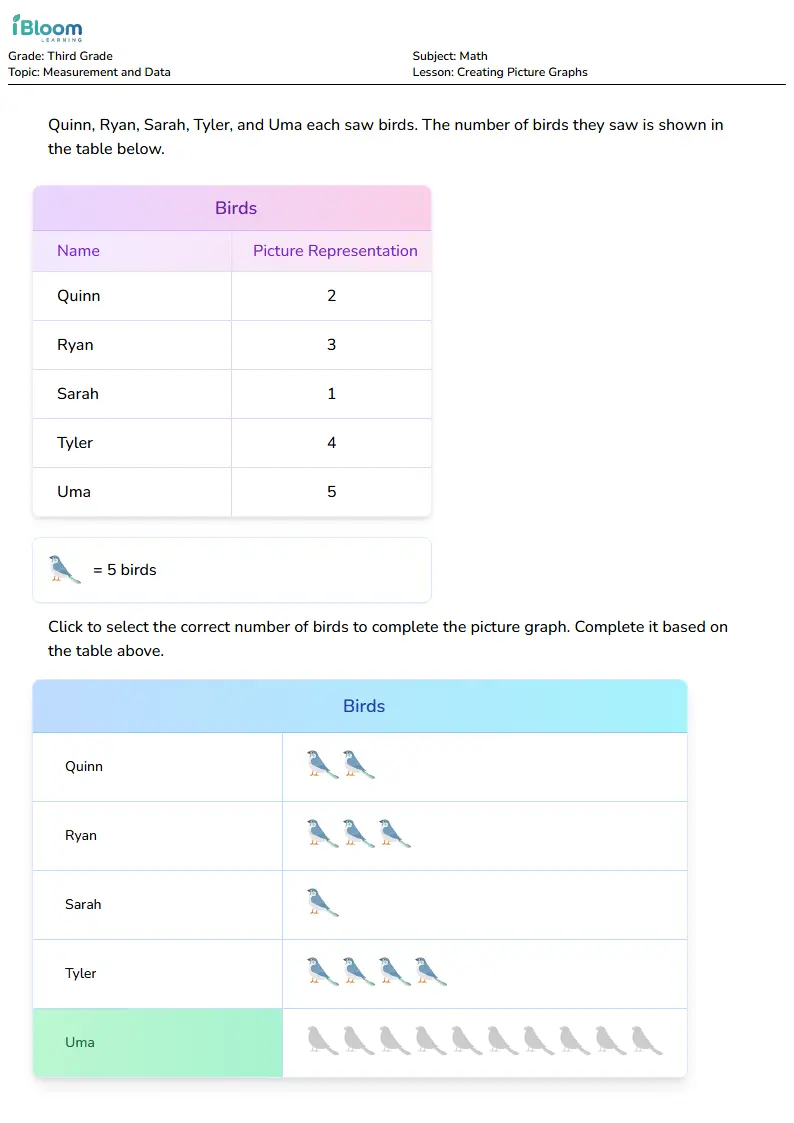
Creating Picture Graphs Lesson for Third Grade
Explore a free interactive math lesson for third grade: Creating Picture Graphs. AI-personalized, Common Core-aligned, and built for kids.
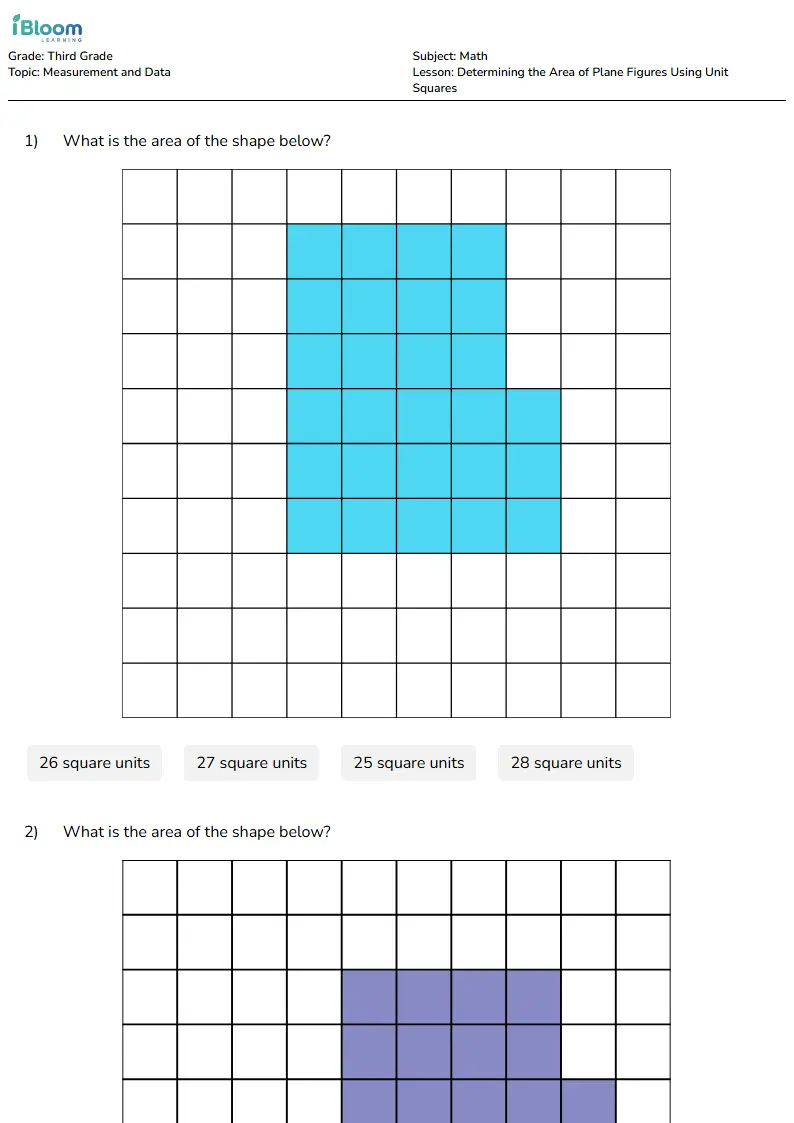
Determining the Area of Plane Figures Using Unit Squares Lesson for Third Grade
Explore a free interactive math lesson for third grade: Determining the Area of Plane Figures Using Unit Squares. AI-personalized, Common Core-aligned, and built for kids.
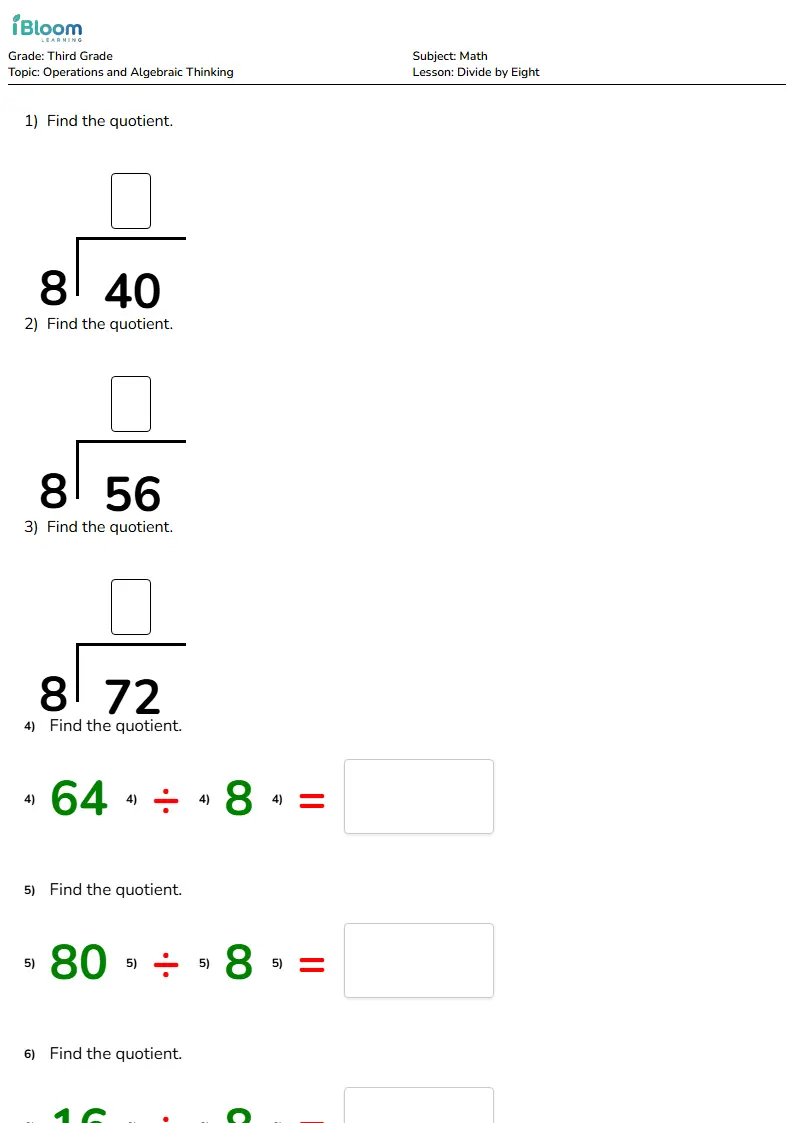
Divide by Eight Lesson for Third Grade
Explore a free interactive math lesson for third grade: Divide by Eight. AI-personalized, Common Core-aligned, and built for kids.
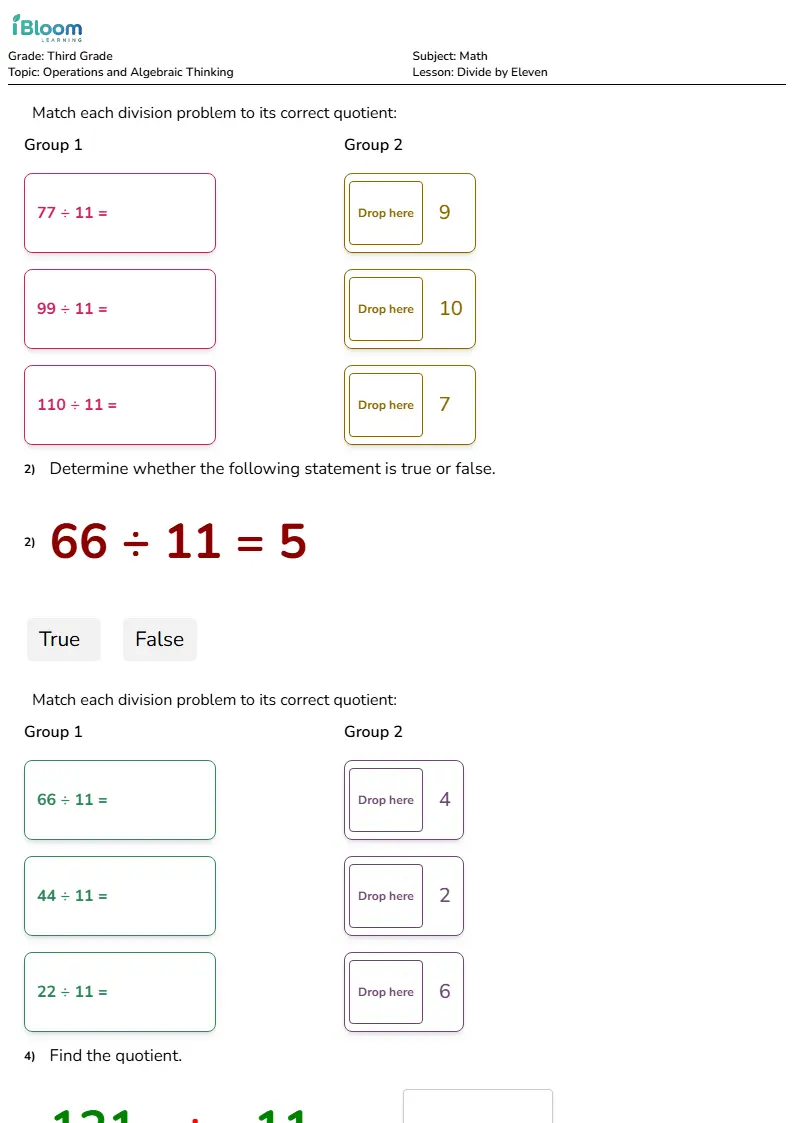
Divide by Eleven Lesson for Third Grade
Explore a free interactive math lesson for third grade: Divide by Eleven. AI-personalized, Common Core-aligned, and built for kids.
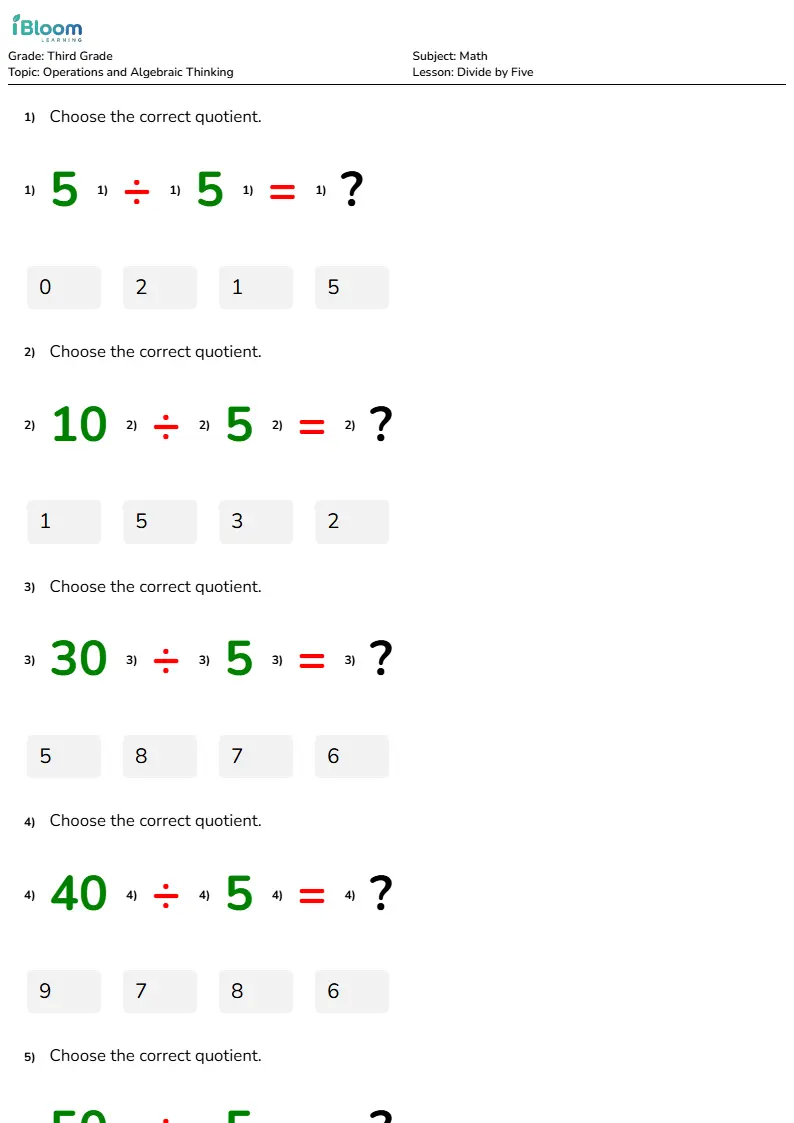
Divide by Five Lesson for Third Grade
Explore a free interactive math lesson for third grade: Divide by Five. AI-personalized, Common Core-aligned, and built for kids.
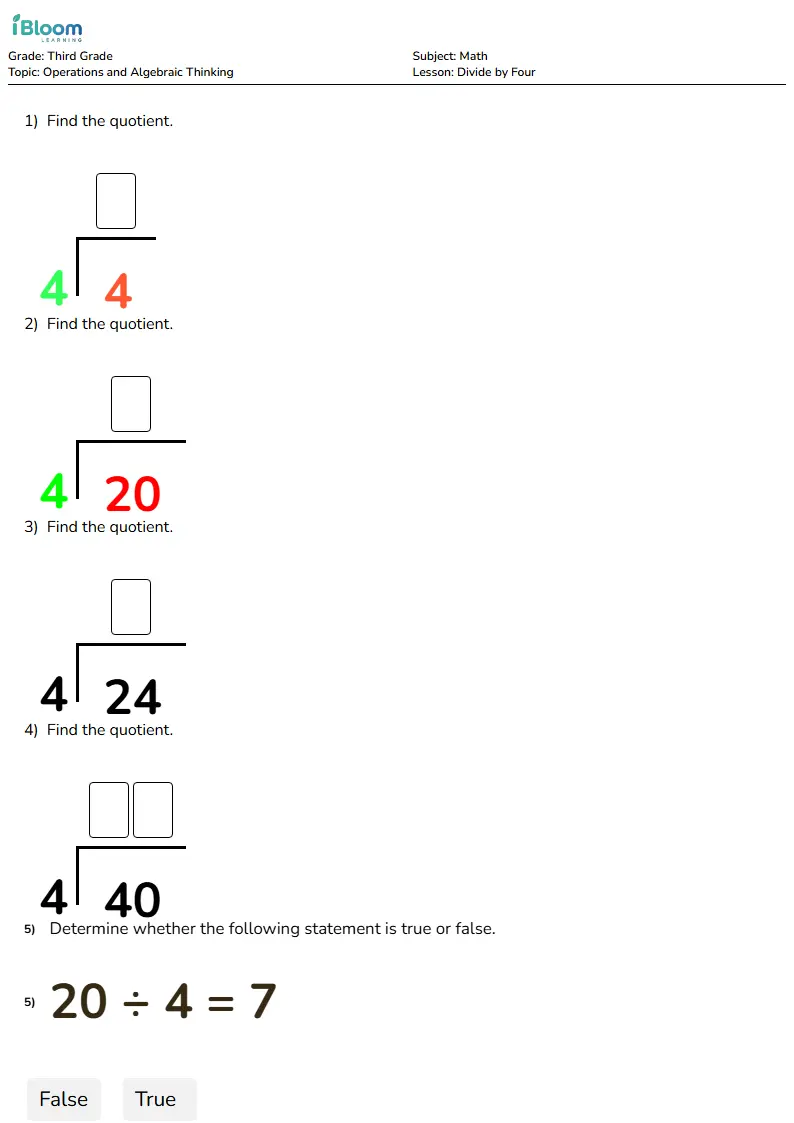
Divide by Four Lesson for Third Grade
Explore a free interactive math lesson for third grade: Divide by Four. AI-personalized, Common Core-aligned, and built for kids.
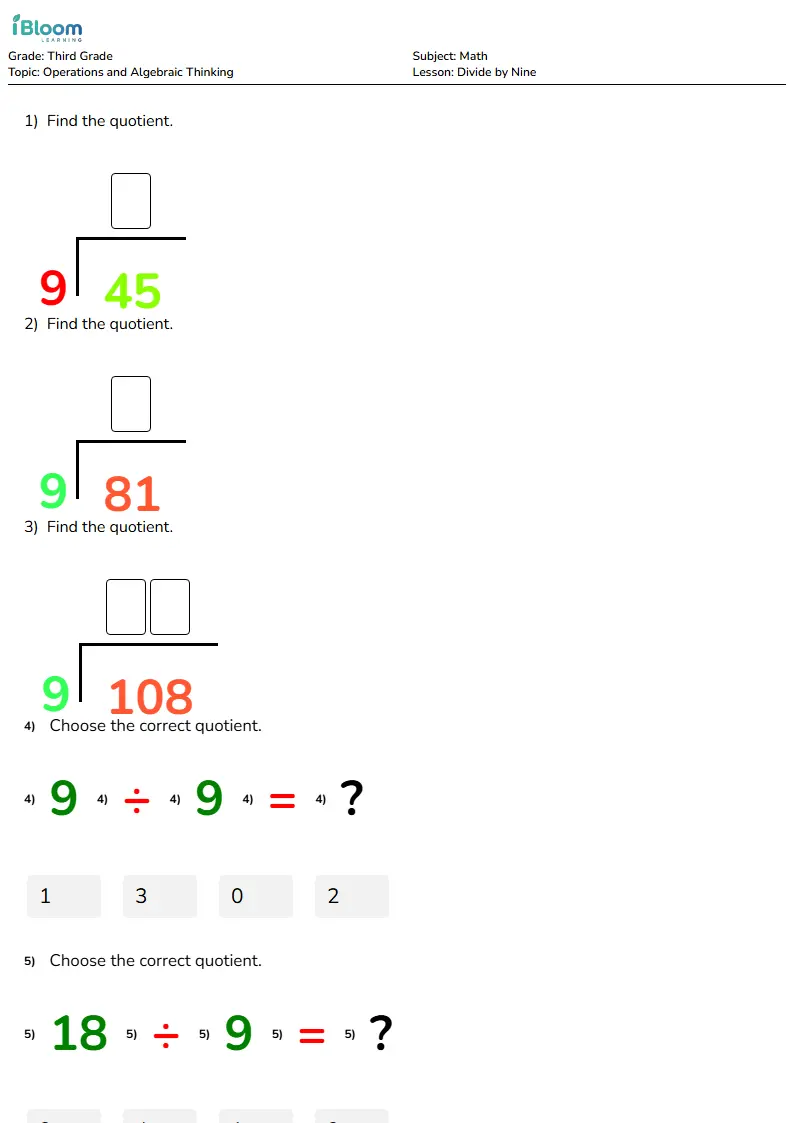
Divide by Nine Lesson for Third Grade
Explore a free interactive math lesson for third grade: Divide by Nine. AI-personalized, Common Core-aligned, and built for kids.
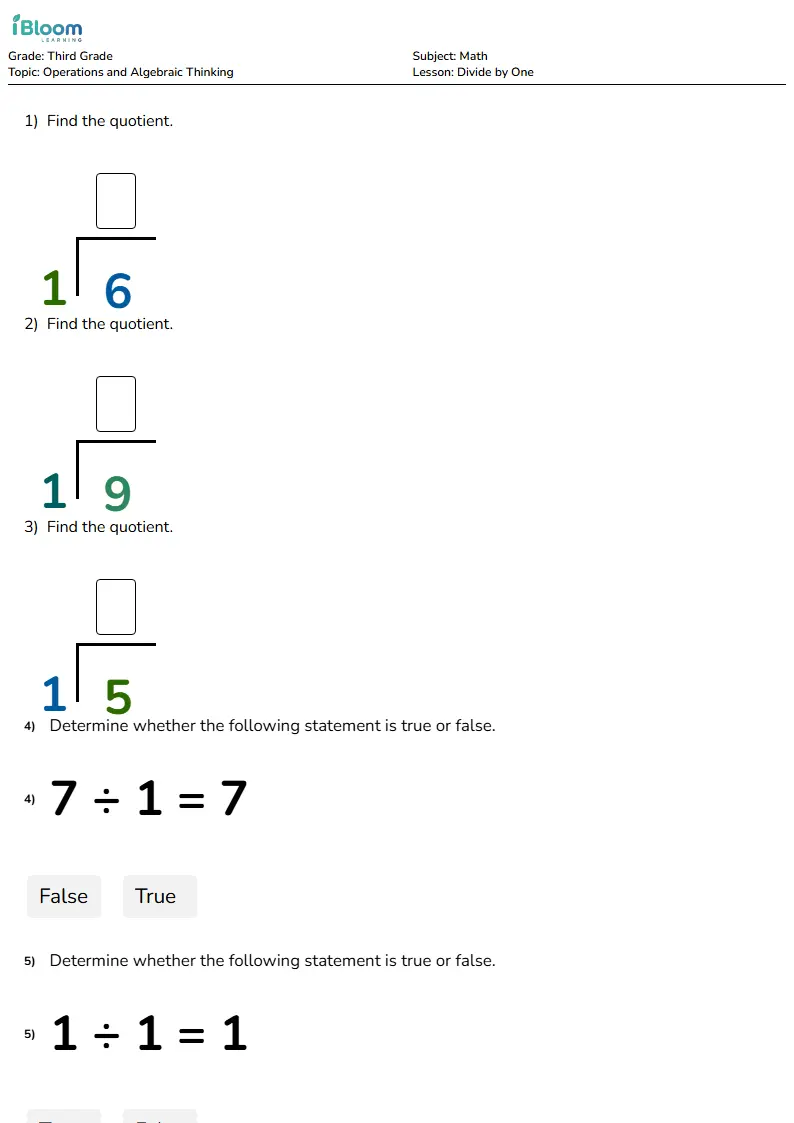
Divide by One Lesson for Third Grade
Explore a free interactive math lesson for third grade: Divide by One. AI-personalized, Common Core-aligned, and built for kids.
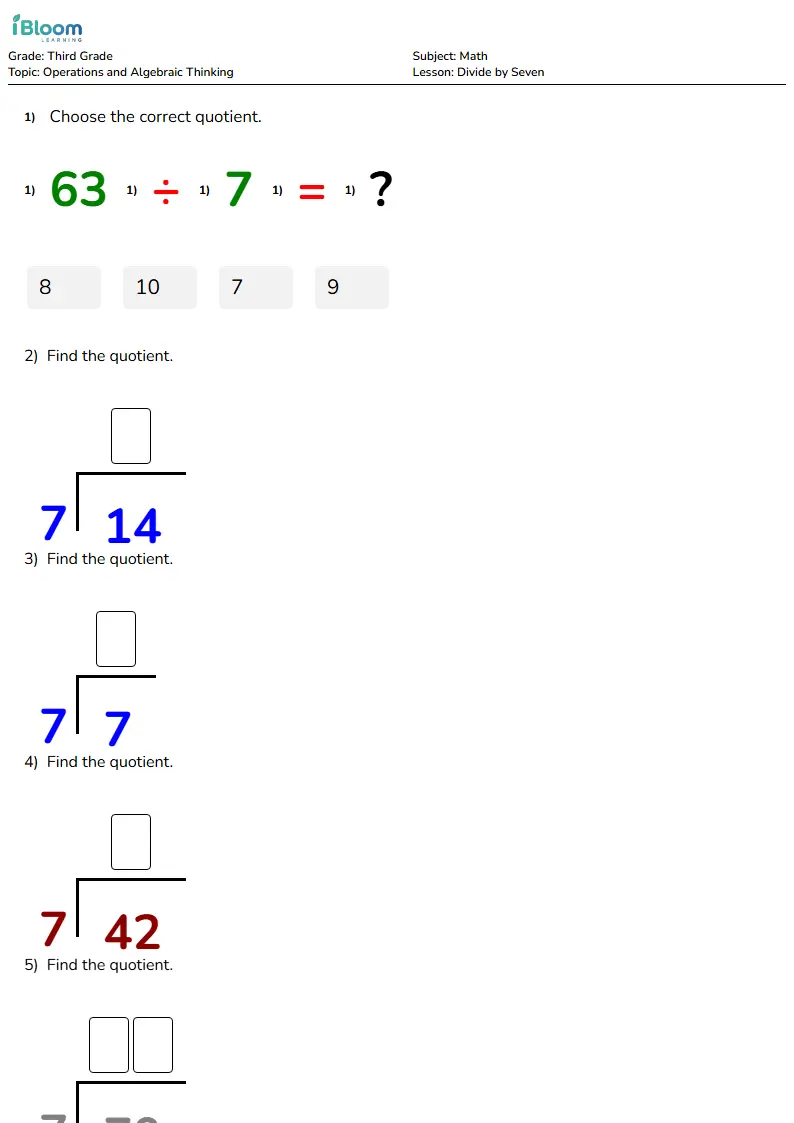
Divide by Seven Lesson for Third Grade
Explore a free interactive math lesson for third grade: Divide by Seven. AI-personalized, Common Core-aligned, and built for kids.
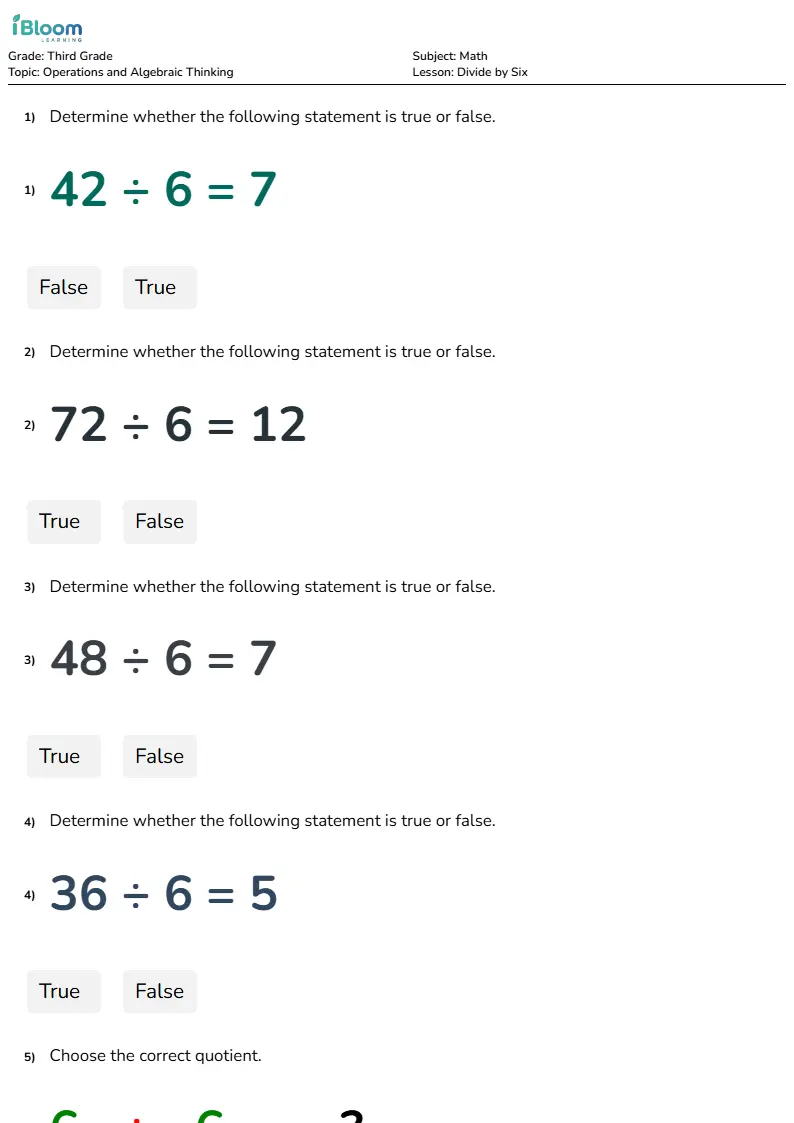
Divide by Six Lesson for Third Grade
Explore a free interactive math lesson for third grade: Divide by Six. AI-personalized, Common Core-aligned, and built for kids.
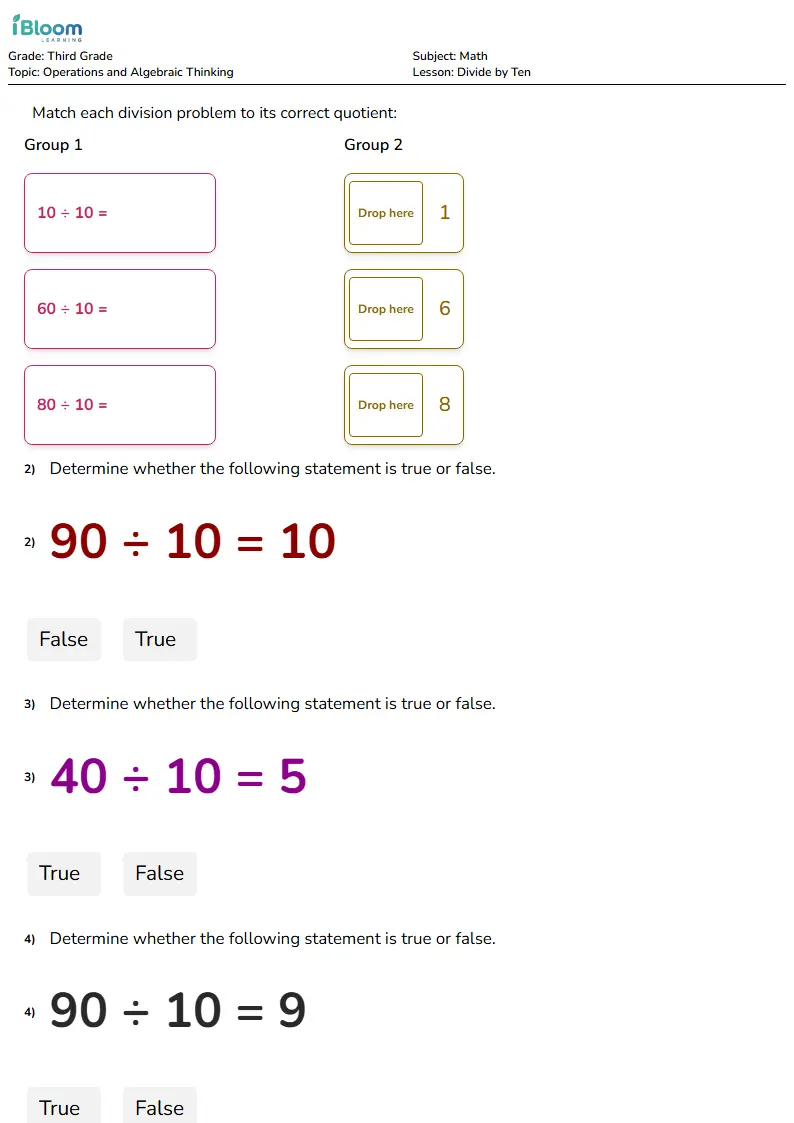
Divide by Ten Lesson for Third Grade
Explore a free interactive math lesson for third grade: Divide by Ten. AI-personalized, Common Core-aligned, and built for kids.
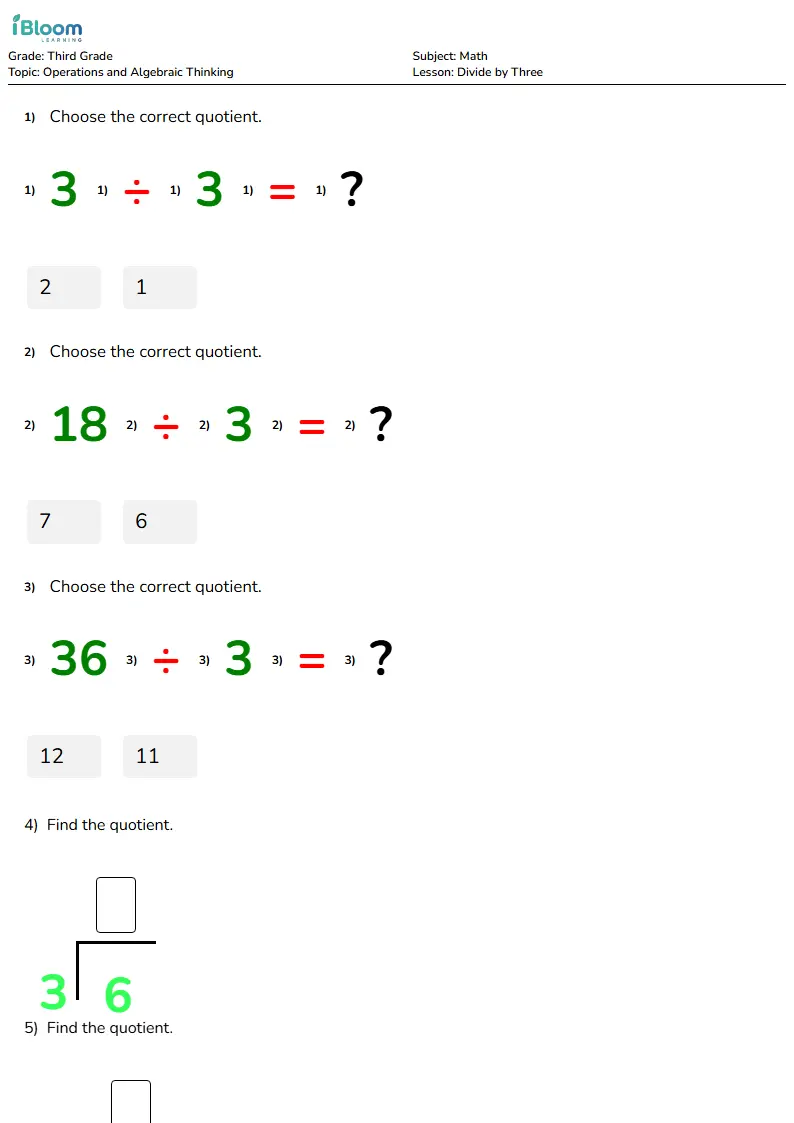
Divide by Three Lesson for Third Grade
Explore a free interactive math lesson for third grade: Divide by Three. AI-personalized, Common Core-aligned, and built for kids.
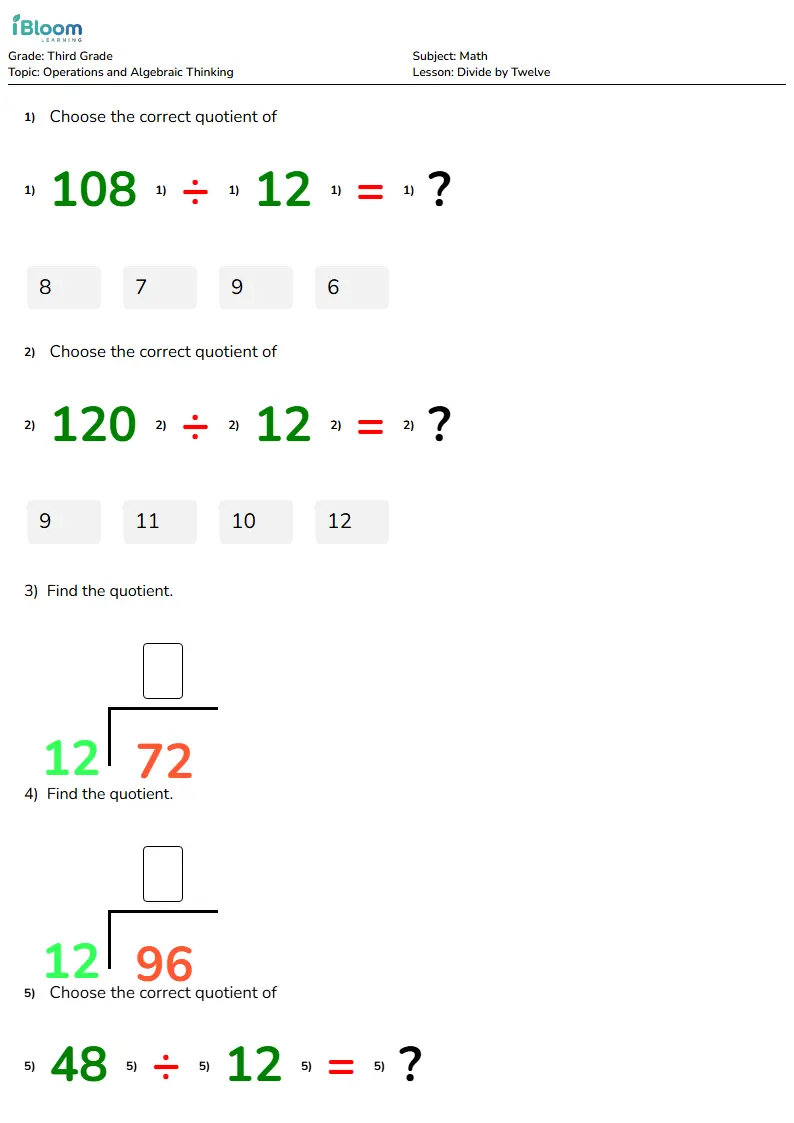
Divide by Twelve Lesson for Third Grade
Explore a free interactive math lesson for third grade: Divide by Twelve. AI-personalized, Common Core-aligned, and built for kids.