






About this worksheet
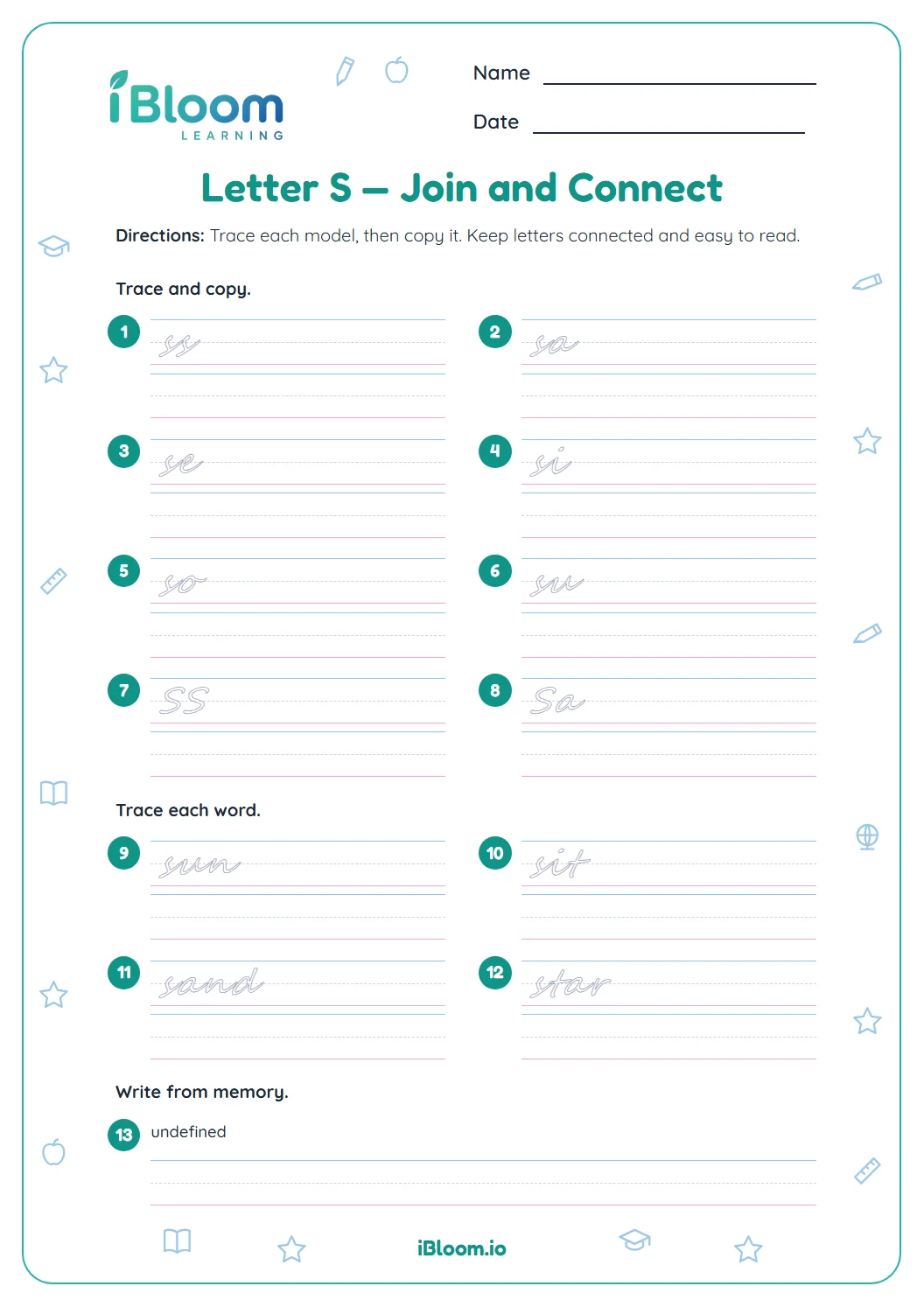
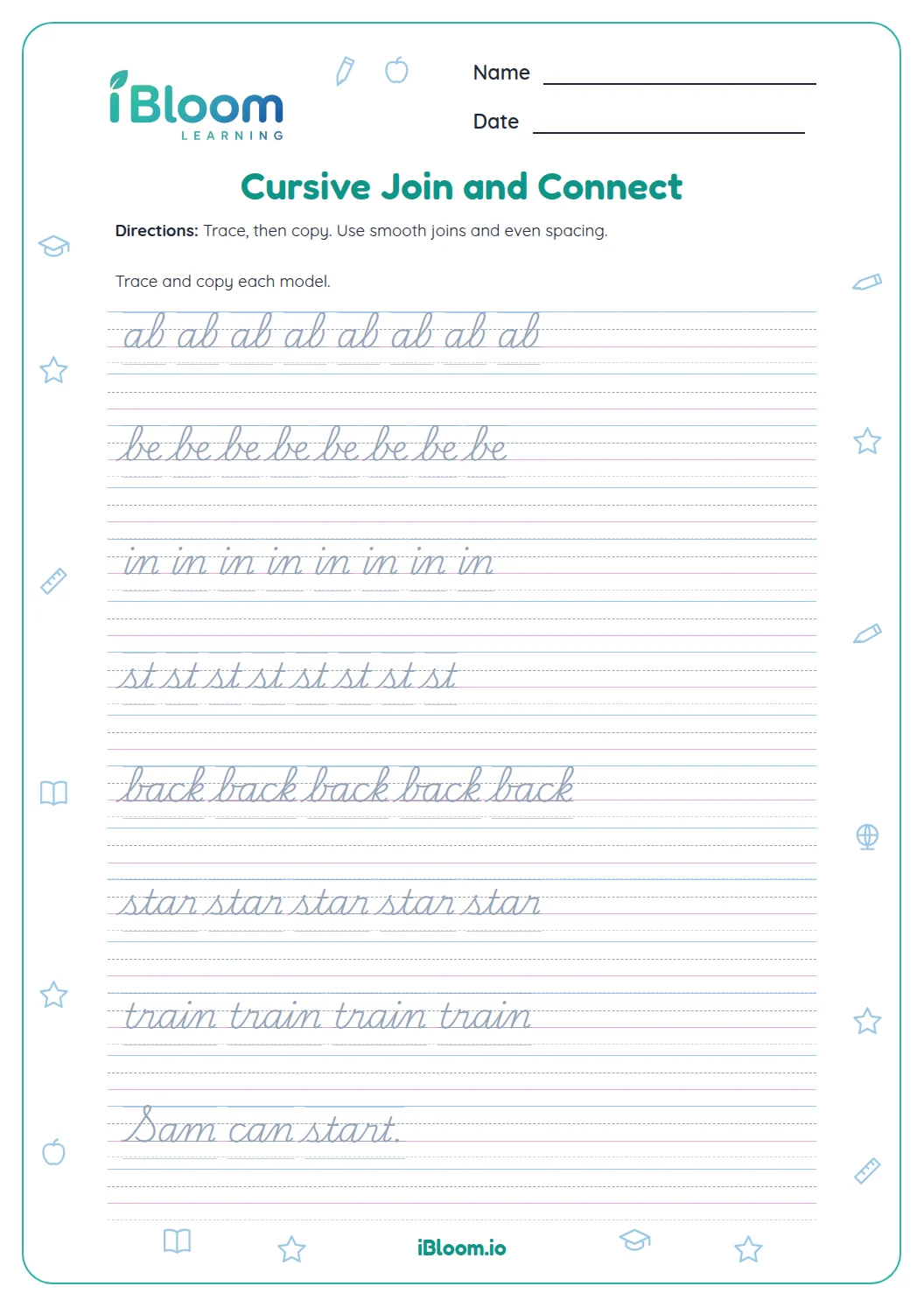
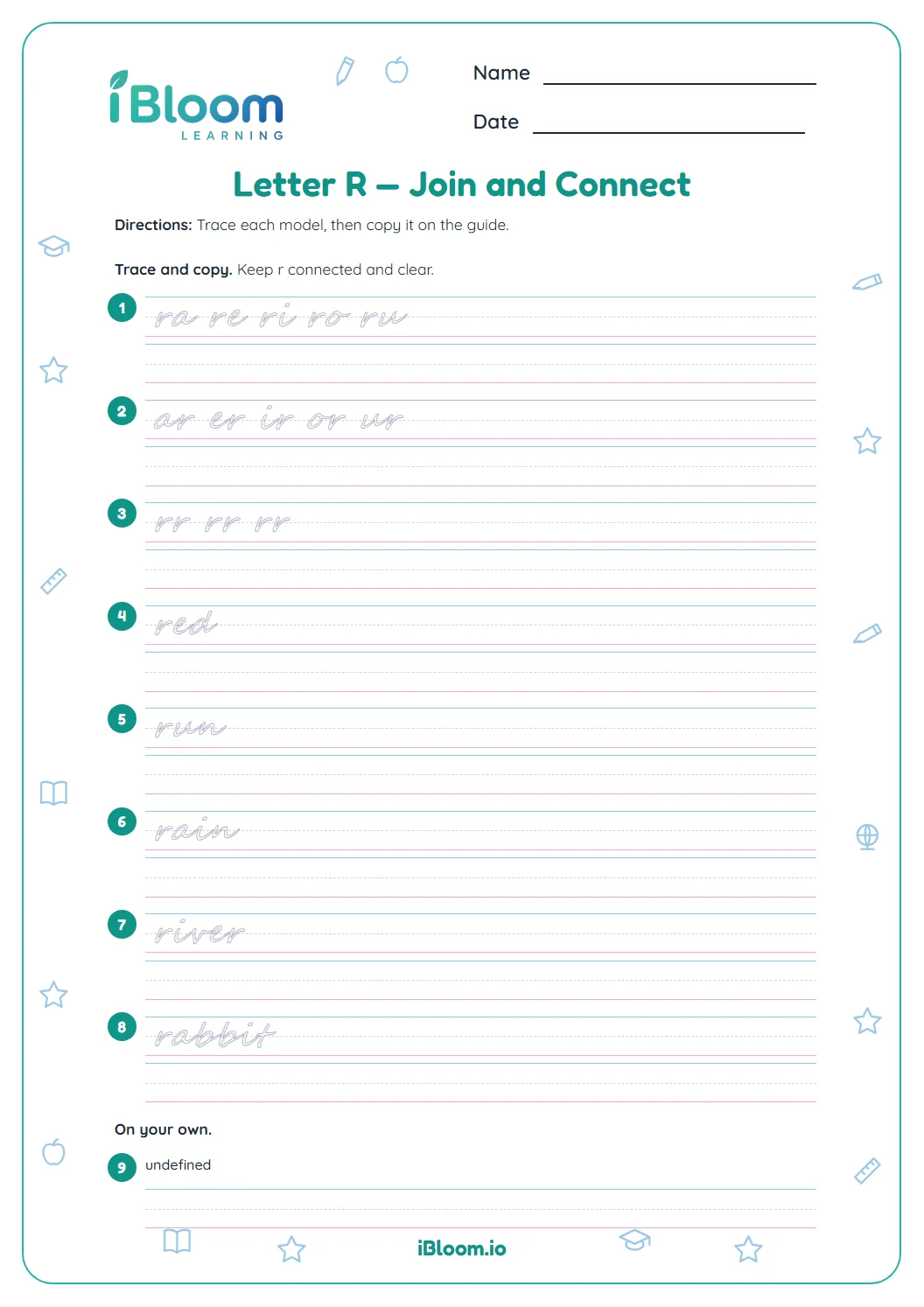
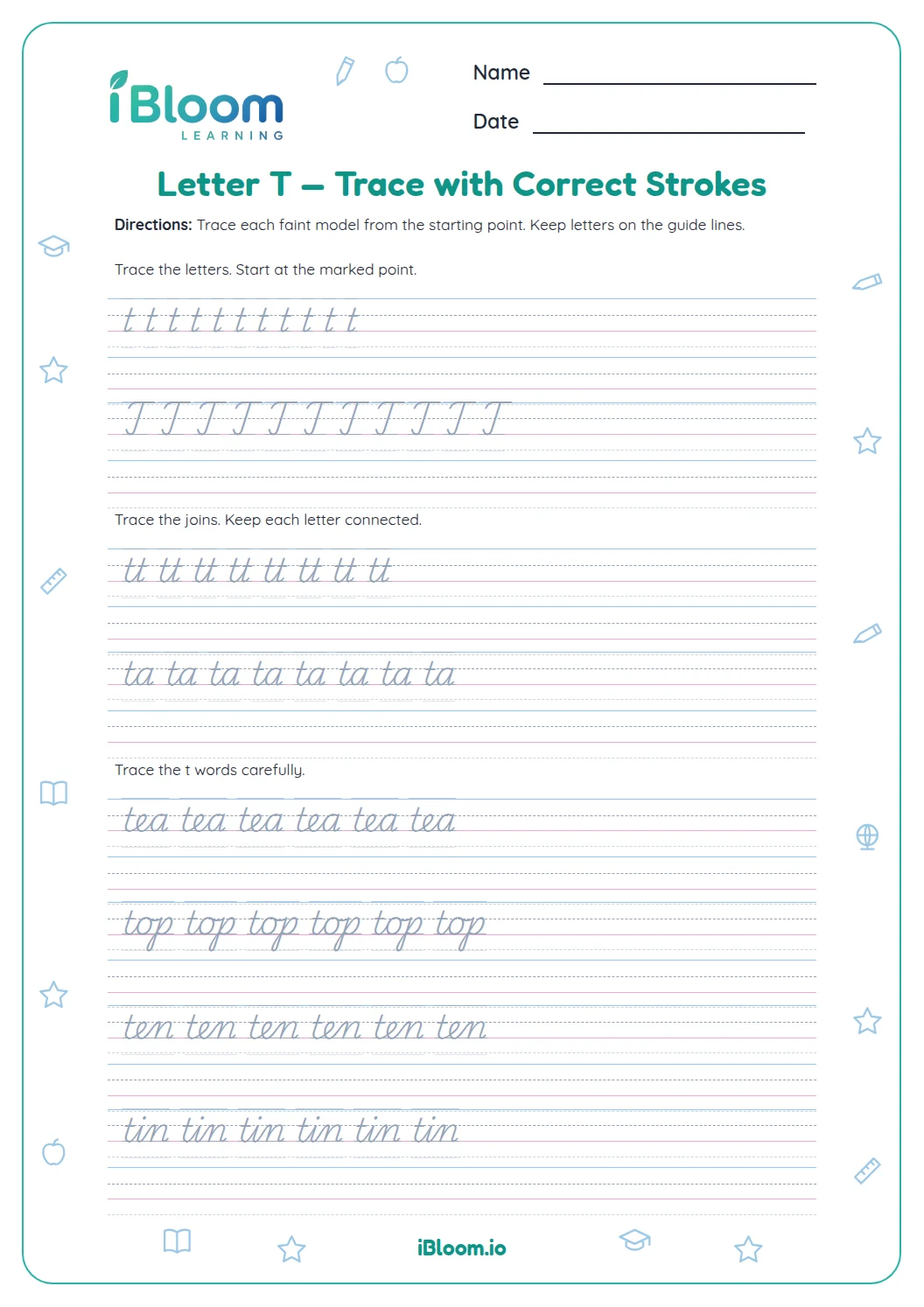
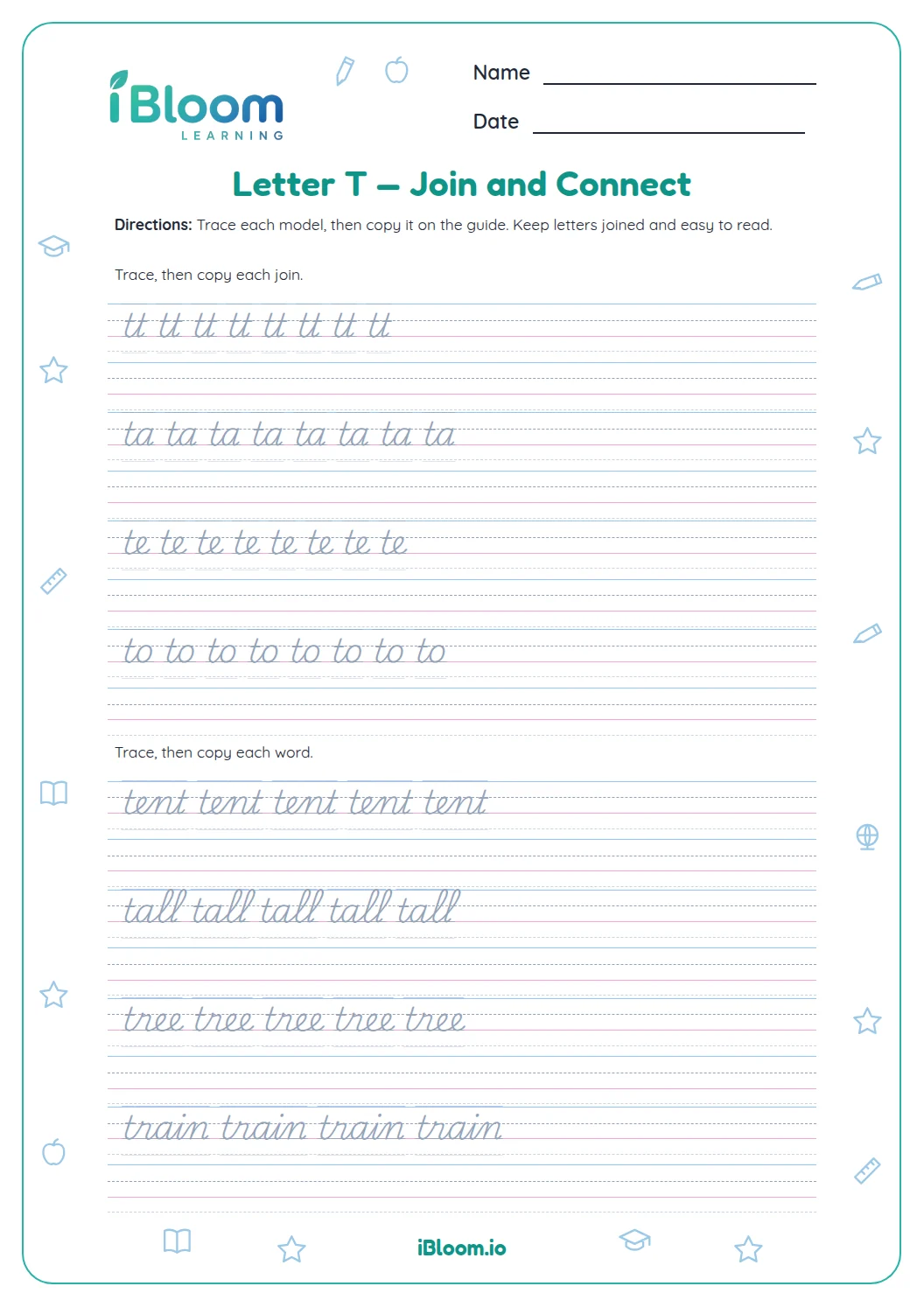
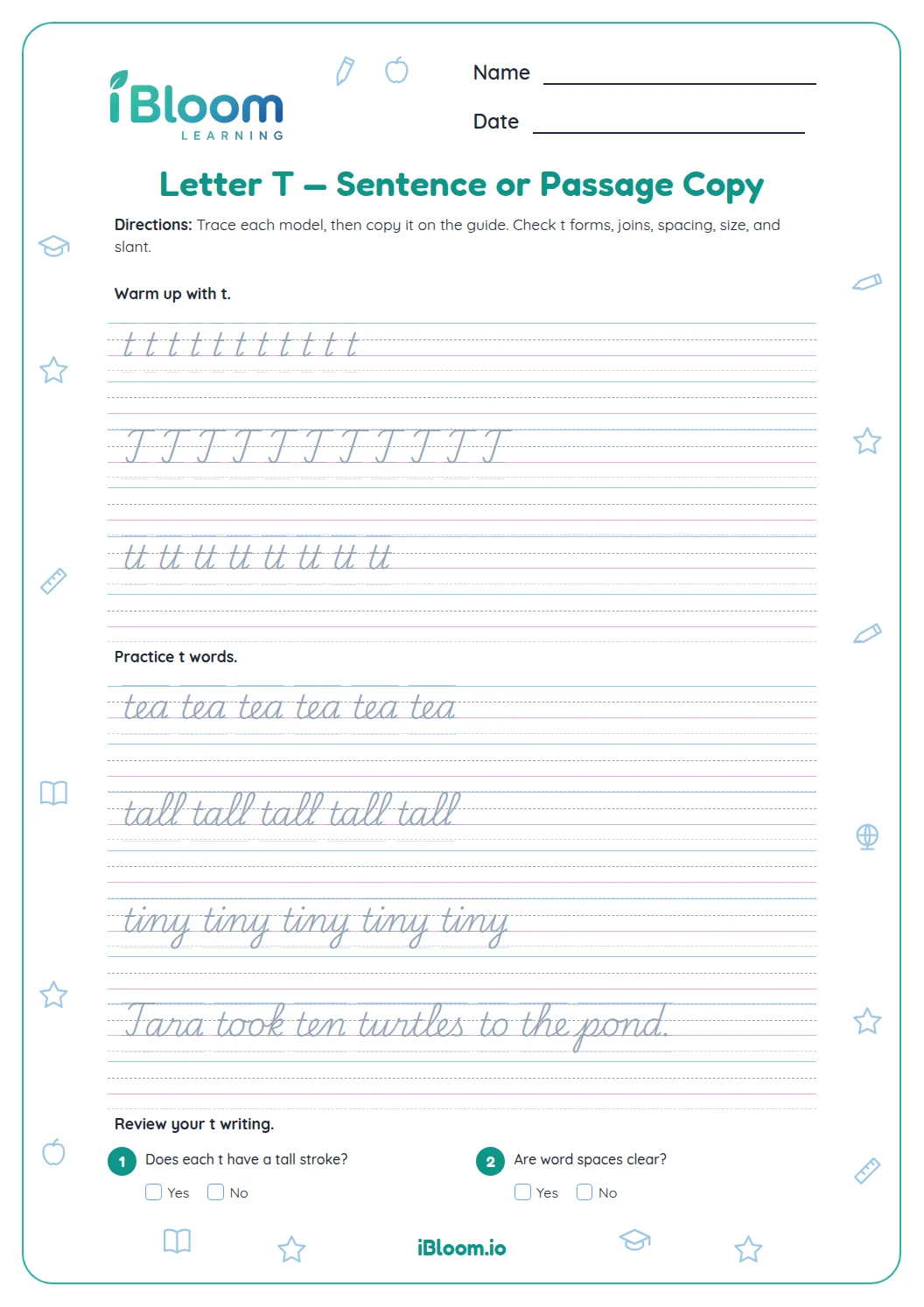
This free printable worksheet gives Grades 2–5 learners focused practice with cursive letter S. Fourteen cursive stroke and copying prompts for s forms, five distinct joins, useful words, and two sentences. The page moves from lowercase and uppercase tracing models to words and short sentences, and its answer key provides text to compare for letter shapes, connections, and spacing.
How does lowercase s begin?
Distinct pairs replace the repeated sa. The pair groups have visible spaces, and word spacing stays clear in the phrases and sentences.
Which distinct s joins can you copy?
The practice continues with cursive stroke and copying prompts for S forms, five distinct joins, useful words, and two sentences and asks learners to keep the target letter readable while writing in cursive.
How do you keep words readable?
The practice continues with cursive stroke and copying prompts for S forms, five distinct joins, useful words, and two sentences and asks learners to keep the target letter readable while writing in cursive.
How to practice cursive S
- 1Trace lowercase s and uppercase S from their models.
- 2Copy each join group with a visible gap between pairs.
- 3Notice the starting stroke on every s.
- 4Copy each word as one connected unit where appropriate.
- 5Leave clear spaces between sentence words and compare with the key.
Common cursive practice slips
The mistake
Starting an s join without its entry stroke.
The fix
Follow the model from the marked beginning.
The mistake
Writing pairs too close together.
The fix
Leave a clear space between each pair.
The mistake
Repeating one join instead of practicing all five.
The fix
Check the sequence: sa, se, si, so, su.
What to practice next
Make more practice
Questions parents and teachers ask
What does this worksheet practice?
This 14-question page practices cursive letter S through trace models, joins, familiar words, and two full sentences. Learners write each model in cursive and use the answer key to compare letter formation, connected strokes, and spacing. Short, focused steps support careful handwriting practice.
How should learners use the models?
Start with the printed s or S forms, then follow the spaced pair models. Copy the shape carefully and connect letters within each pair or word. A small gap between separate groups keeps the models readable. Short, focused steps support careful handwriting practice.
What is in the answer key?
The key shows each model; compare starting strokes, letter forms, connections, and clear spaces between pairs and words. For handwriting, the key is a visual reference rather than a requirement that every learner's pen strokes look identical. Check that the letters are recognizable and the word spacing is clear.
How long does the practice take?
Plan for about 15 minutes, with extra time if a learner wants to repeat a model. A steady pace helps preserve the letter shape and spacing. The page moves from short forms to words and then longer sentence writing.
Which joins are practiced?
The worksheet practices sa, se, si, so, and su, with each pair shown once as a direct copy prompt. The pairs are also grouped with extra spacing in the trace models so each join is easy to distinguish. The page keeps each prompt short so the learner can focus on forming the target letter rather than decoding a long direction.