



About this worksheet
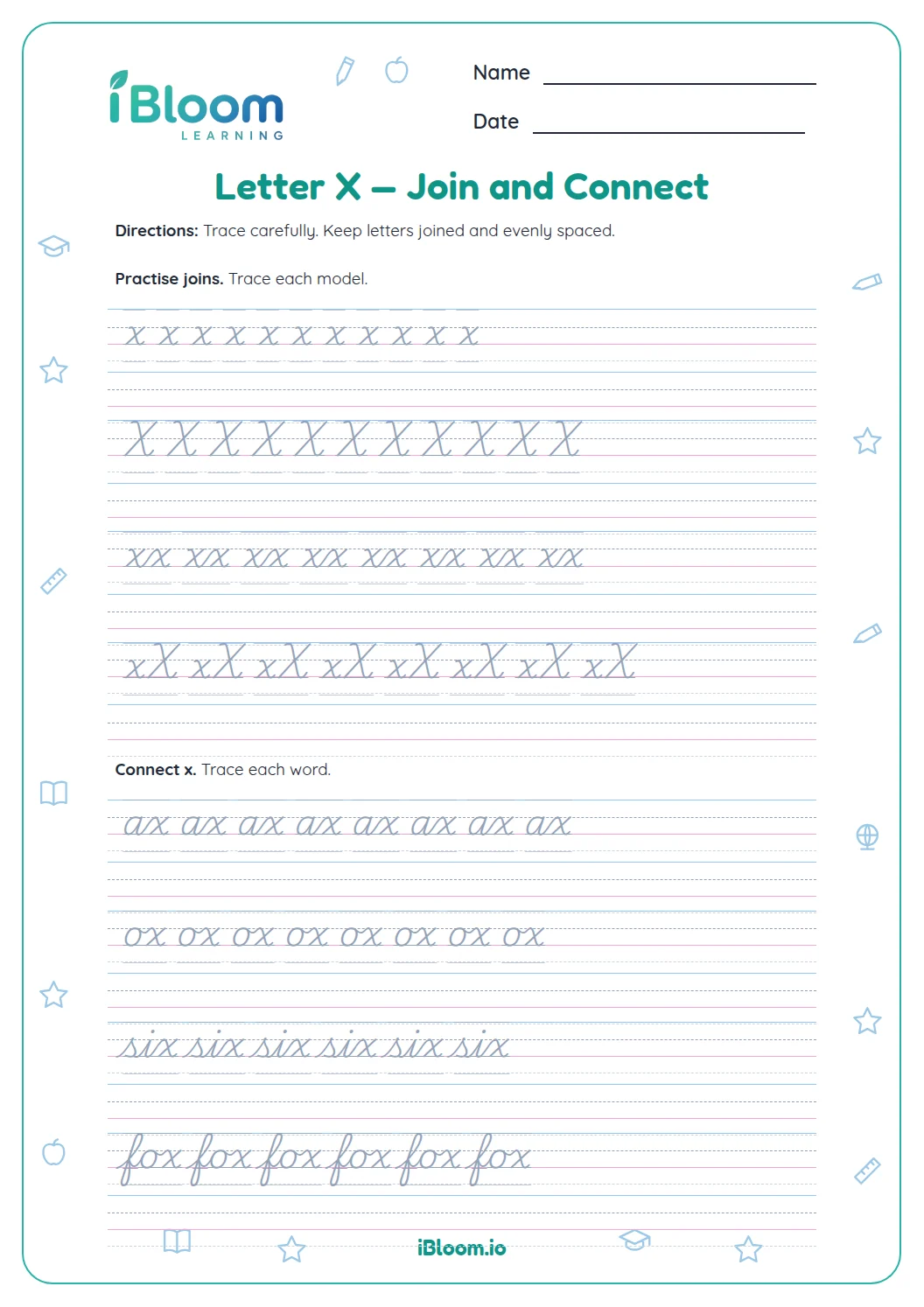
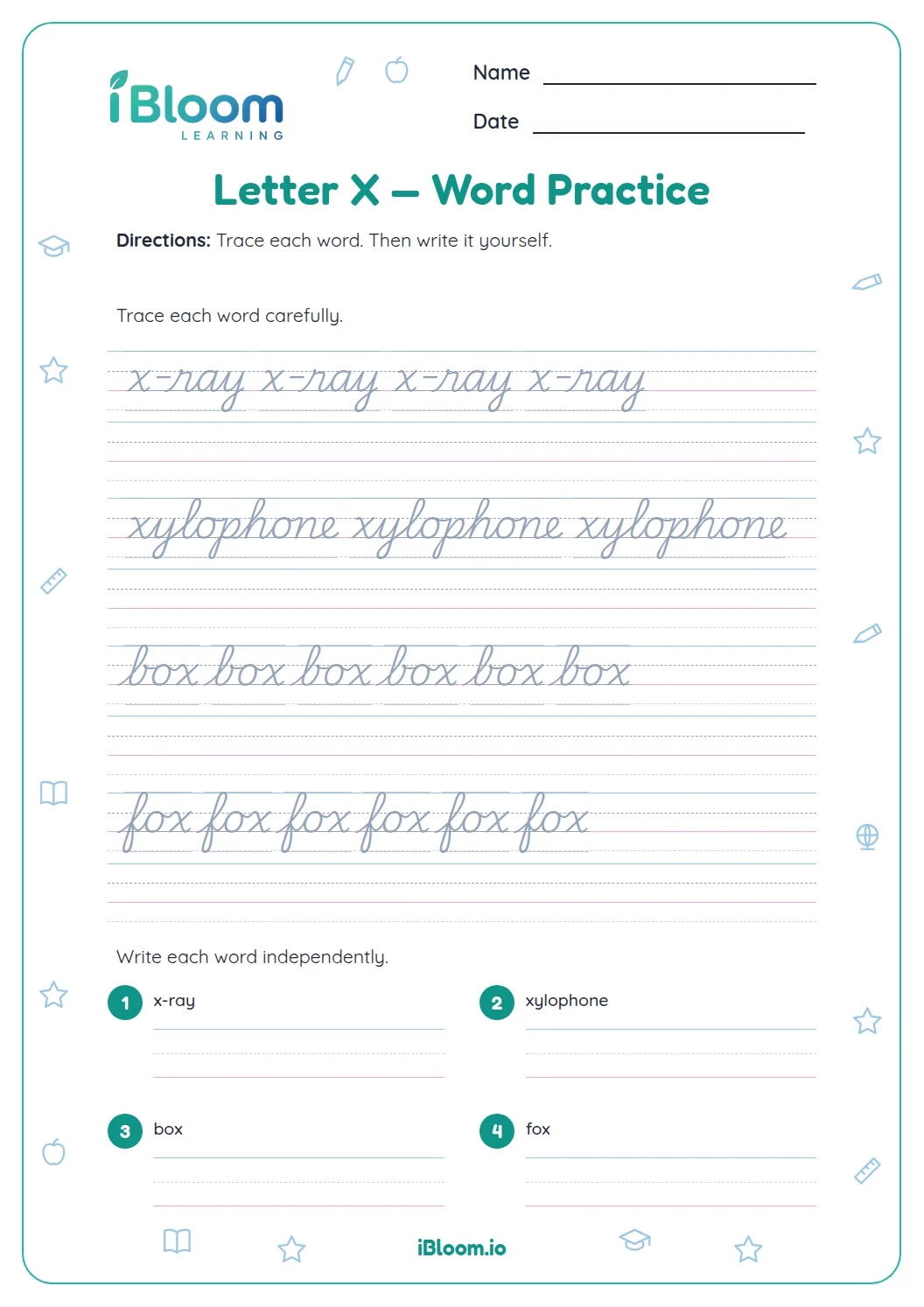
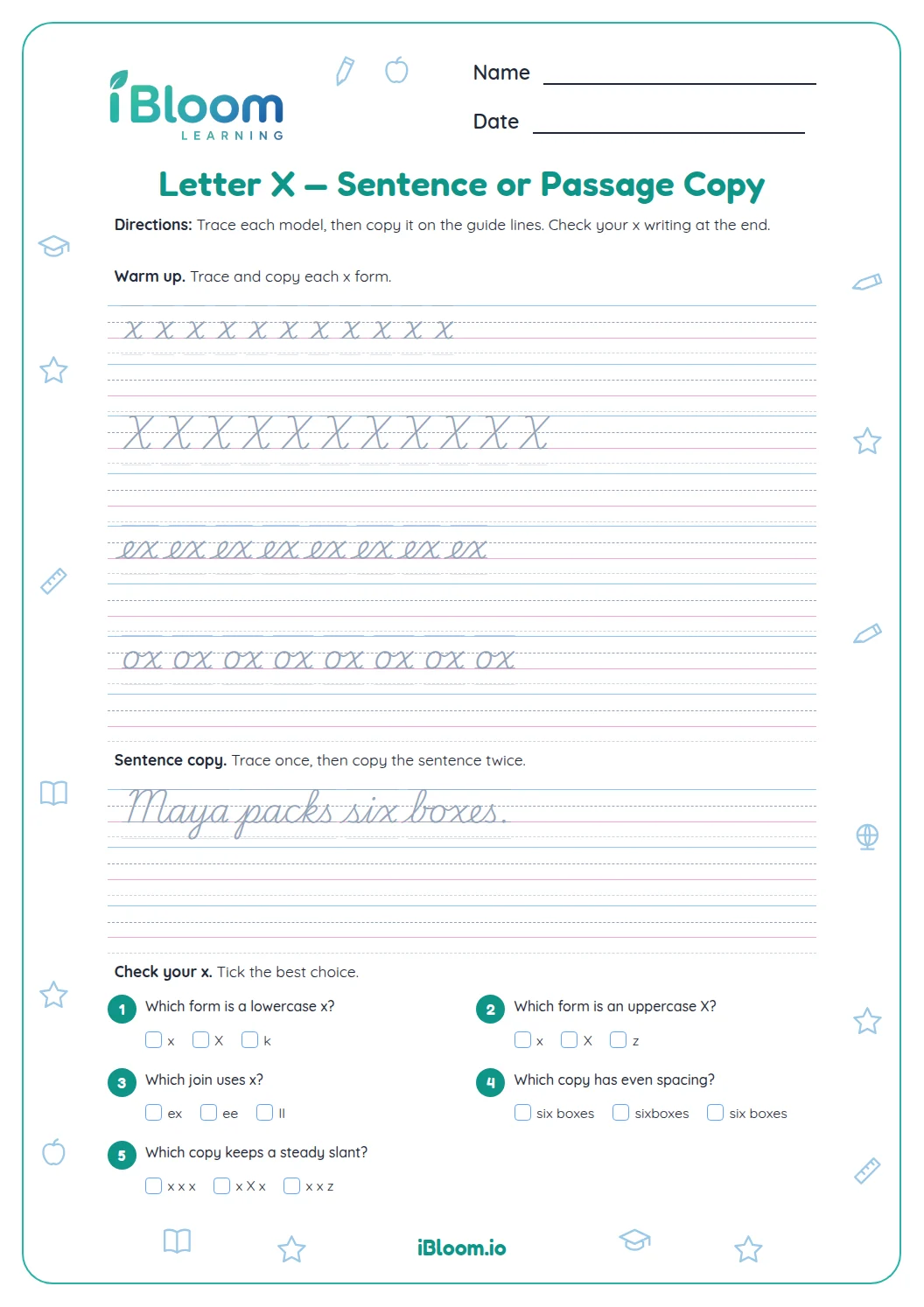
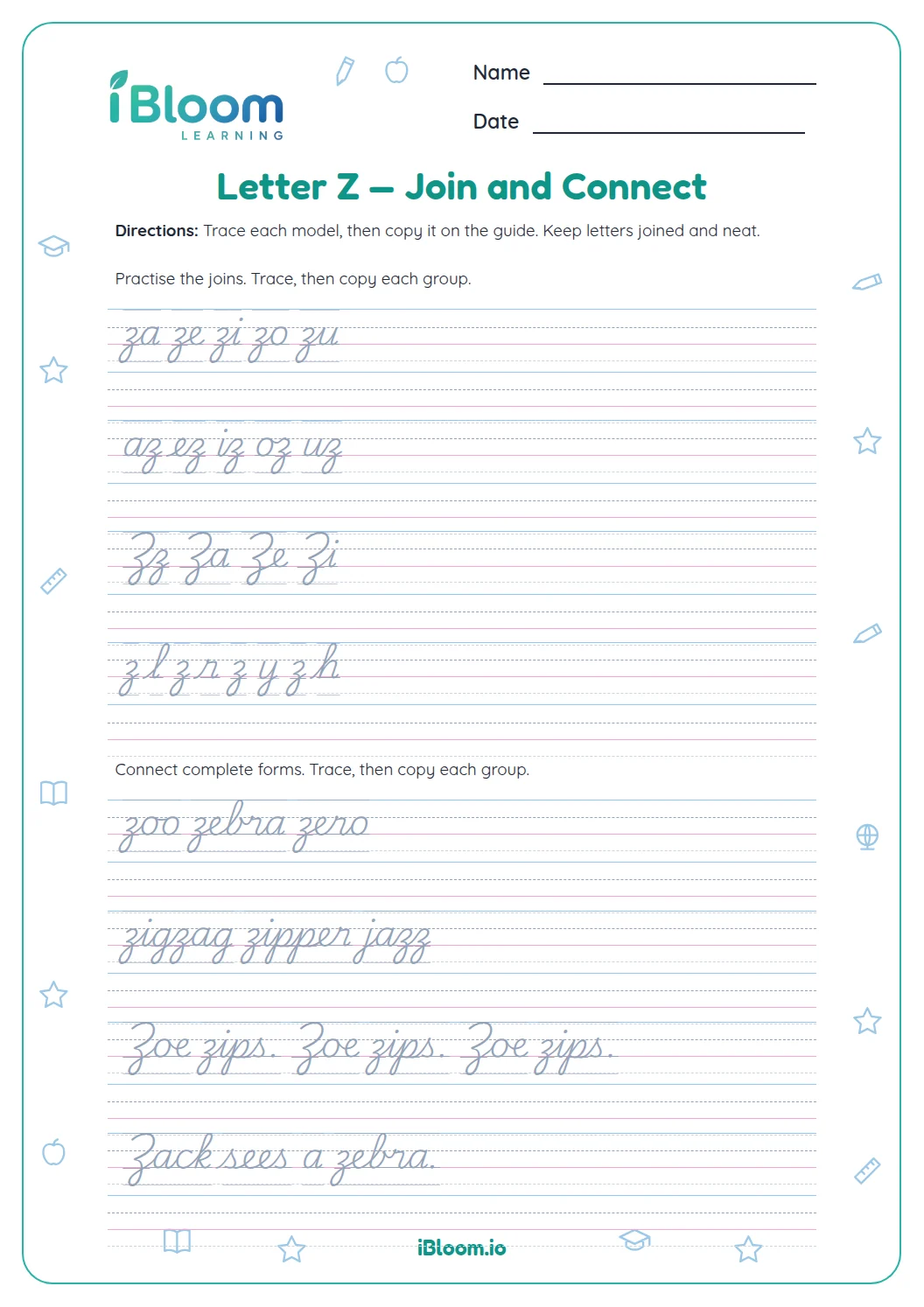
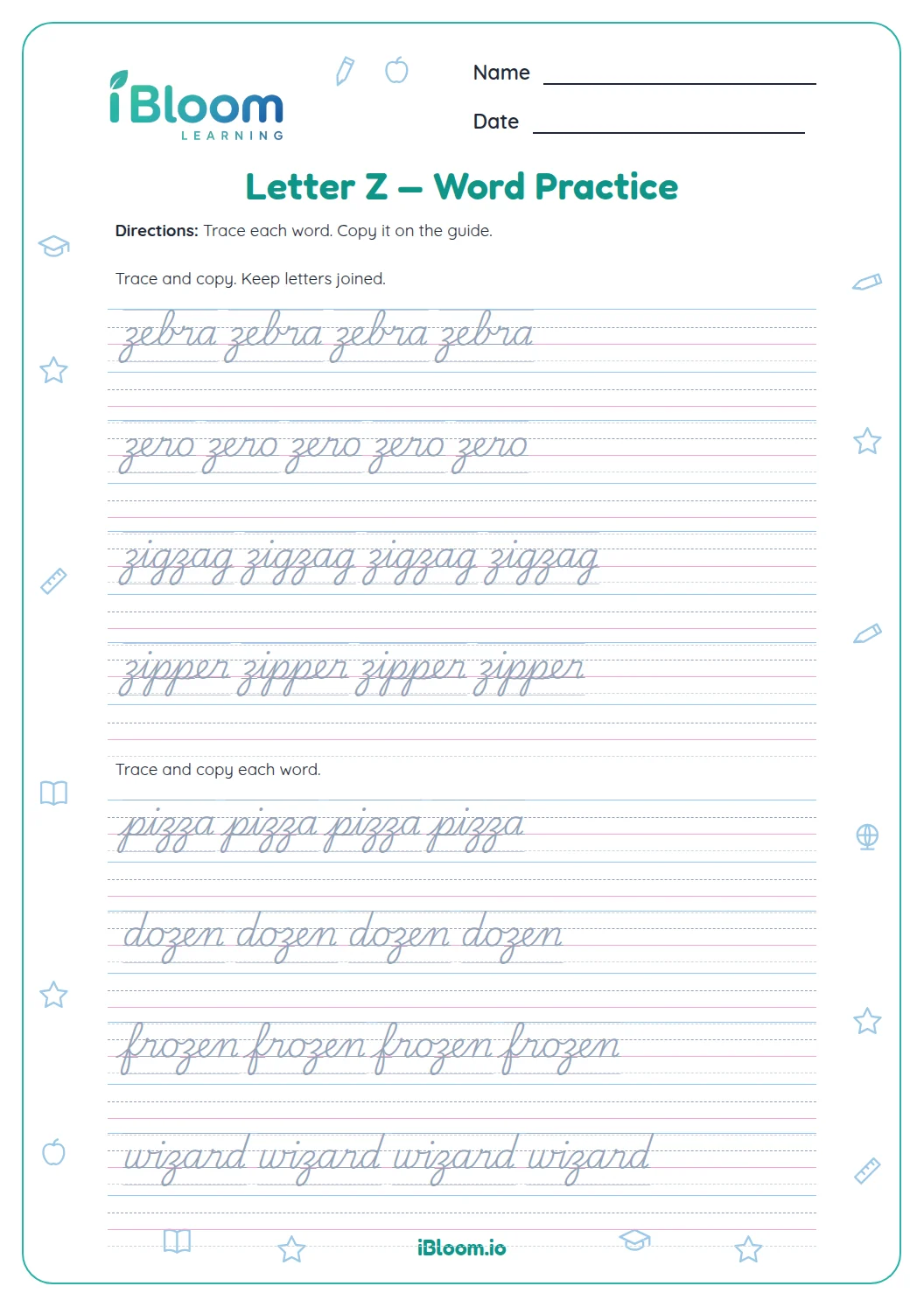
This free printable cursive worksheet gives students in Grades 2–5 focused practice with the letter x. It begins with lowercase and uppercase forms, then moves to short words with x at the beginning, middle and end, followed by short connected phrases. Each item prints in cursive handwriting lines with a trace row and a copy row, so students can rehearse letter shape and fluent joins.
What will students practice?
Fourteen trace-and-copy prompts move from lowercase and uppercase x to x words and the phrase “fox box.”
Students practice the letter alone, then in joins and familiar words.
How does one problem work?
For q5, trace “fox” along the gray model, then copy the same word on the blank cursive row.
- 1q5: Trace “fox,” then copy “fox” on the next row.
How can students check their work?
Compare each copied form with the model: look for a clear x, connected joins where shown, and steady spacing between words.
How to use this worksheet
- 1Review the model and notice where the stroke begins and ends.
- 2Trace the gray cursive form without lifting the pencil unnecessarily.
- 3Copy the same letters on the empty row.
- 4Check that x remains recognizable when joined to neighboring letters.
- 5Pause between parts to relax the hand.
Common slips and quick fixes
The mistake
Making x look like a different lowercase letter.
The fix
Compare the crossing and exit stroke with the printed model.
The mistake
Breaking every connection in a word.
The fix
Keep the pencil moving through joins when the cursive form connects.
The mistake
Rushing and losing consistent size.
The fix
Slow down and keep letters resting on the baseline.
What to practice next
Make more practice
Questions parents and teachers ask
Which letter does this page teach?
The worksheet focuses on cursive lowercase and uppercase x. Later prompts place x in short words and connected phrases so students can practice keeping the letter clear within a word. Have the student begin with a relaxed hand and a light pencil grip. The model gives a consistent form to compare with the new trace and independent copy.
How does the trace-and-copy format work?
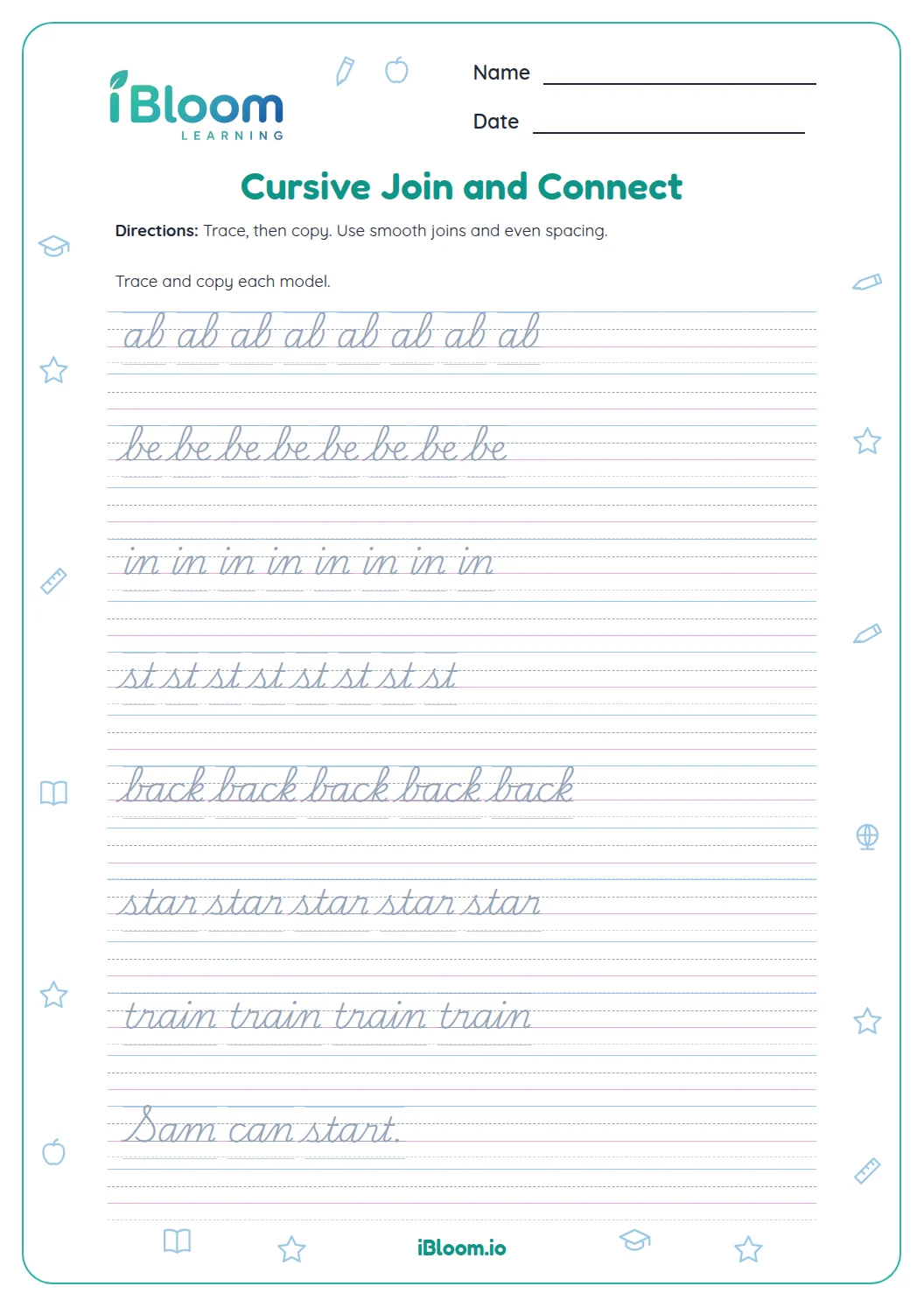
Each prompt appears in cursive handwriting lines with a trace row and an empty row. Students trace the model first, then copy the same letter, word or phrase independently. The trace row demonstrates letter size and slant, while the blank row shows whether the student can reproduce the form. Compare the two gently.
How many prompts are included?
There are 14 prompts in four parts: single letters, words with x, fluent x words and short copy work. The sequence gives practice with both letter formation and connected writing. The sequence includes single forms, short words and phrases. A student can stop after any part and return later for another careful practice round.
Why practice x inside words?
The x shape needs to stay distinct when it joins nearby letters. Words such as fox, extra and exit let students practice the same letter in different positions. The lowercase x should remain clear, while uppercase X gives a chance to practice a larger entry form. Check that the cross-stroke is visible.
Should students write quickly for fluency?
Start with careful, legible letter shapes. After students can form x clearly and connect it smoothly, they can repeat a short word with an even rhythm. Speed should follow control. Encourage smooth movement between connected letters while keeping each word readable on the line.
What comes after this worksheet?
Use the Cursive Letter Guide to review formation, or choose another cursive alphabet page to practice a new letter. Word Practice offers another step toward connecting cursive letters in familiar words. The guide reviews formation, and neighboring alphabet pages keep practice focused on one new letter at a time before moving into longer writing.