







About this worksheet
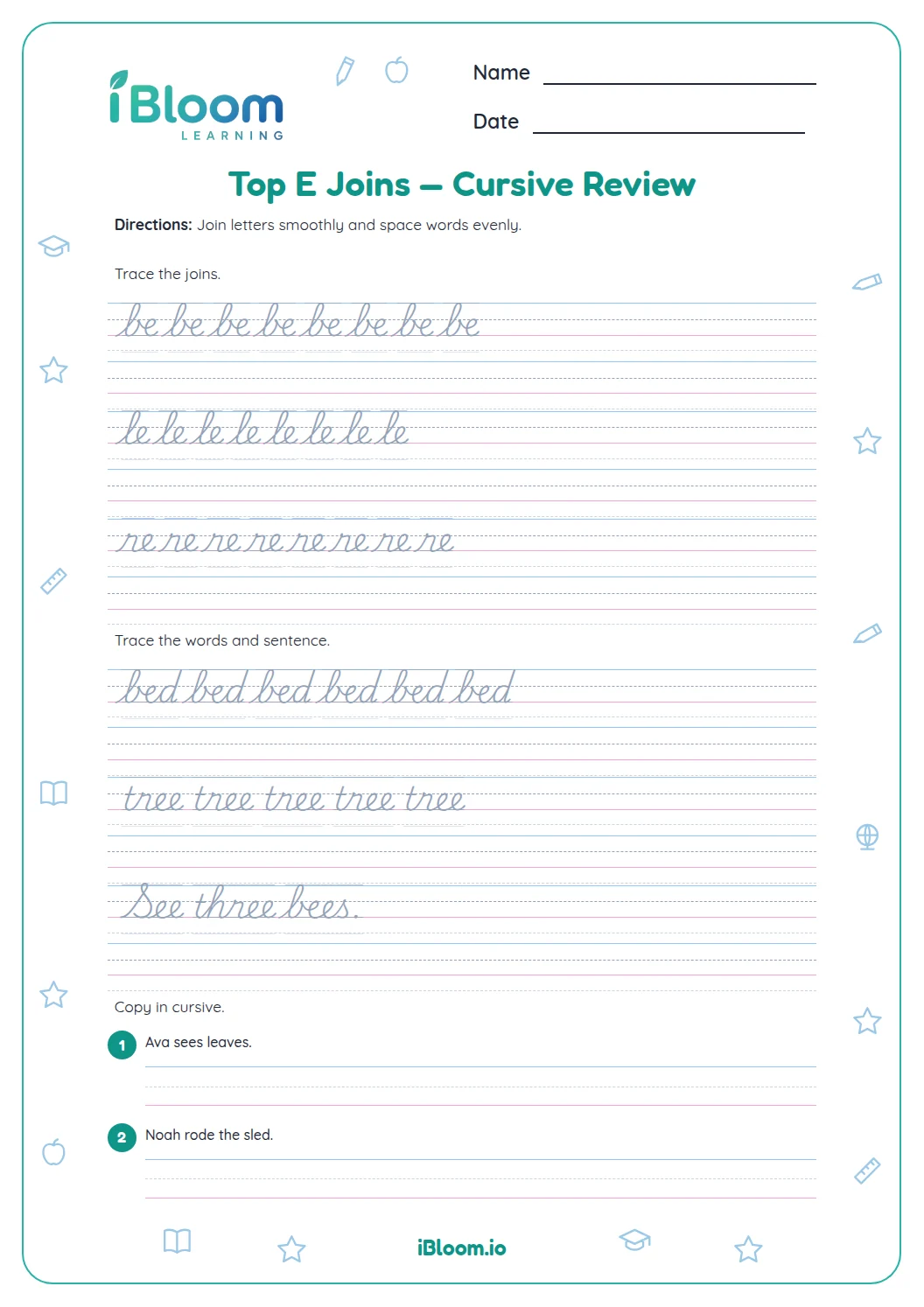
This cursive handwriting worksheet focuses on lowercase e and joins into and out of e. Students trace letter patterns first, then practice short words such as here, these, green and cheese on cursive handwriting lines. The key shows the target text for each row. Encourage a light pencil grip and steady movement between letters rather than lifting after every stroke.
What should children notice in lowercase e?
Begin with the worksheet’s lowercase e model and follow its entry and exit strokes. The goal is a recognizable e that connects smoothly to the next letter. Trace each gray model before copying it on the blank practice row.
The first six prompts isolate e and short letter groups. This lets students attend to the shape and connection before writing whole words.
How do joins work inside a word?
In a connected word, lift the pencil only when the letter pattern requires it. Move from one letter into the next without leaving a gap, while keeping each letter legible. Words such as here, these and green provide repeated e connections to practice.
The copy row is a chance to use the same stroke at a comfortable pace. Neatness comes from steady form and spacing, not from rushing across the line.
How much practice is on the page?
There are 14 tracing prompts: one lowercase e, eight short e joins, four words and a sentence. Use a few rows at a time if the student’s hand becomes tired, then return to the remaining practice later.
How to use this worksheet
- 1Sit with the paper angled slightly toward the writing hand.
- 2Trace the e model from its entry stroke through its exit stroke.
- 3Keep the pencil moving into the next letter where the join connects.
- 4Copy the same pattern once without tracing.
- 5Check that e is readable and the word has even spaces.
Common mistakes and quick fixes
What to practice next
Questions parents and teachers ask
Which letters does this worksheet practice?
It focuses on lowercase e, small e letter groups and short words that contain e joins. The first rows isolate the letter pattern; later rows apply it in words such as here, these, green and cheese. Students trace each printed model and copy the target on the line.
Should children lift the pencil between letters?
They should follow the cursive model and keep connected letters joined where the stroke pattern calls for it. A pencil lift may be needed between separate strokes or after a word, but lifting after each letter interrupts the smooth connection practiced on these rows.
How many practice prompts are included?
There are 14 prompts: one lowercase e, eight short e joins, four short words and one sentence. The answer key lists the target text for each row so an adult can check which letter pattern or text the child was asked to trace.
What if a child finds the words difficult?
Return to the isolated e and letter-group rows, then try one short word at a time. Encourage a slow trace followed by one copy. A clear lowercase e and a smooth connection matter more than writing quickly or filling every row in one sitting.
What can children practice after these e joins?
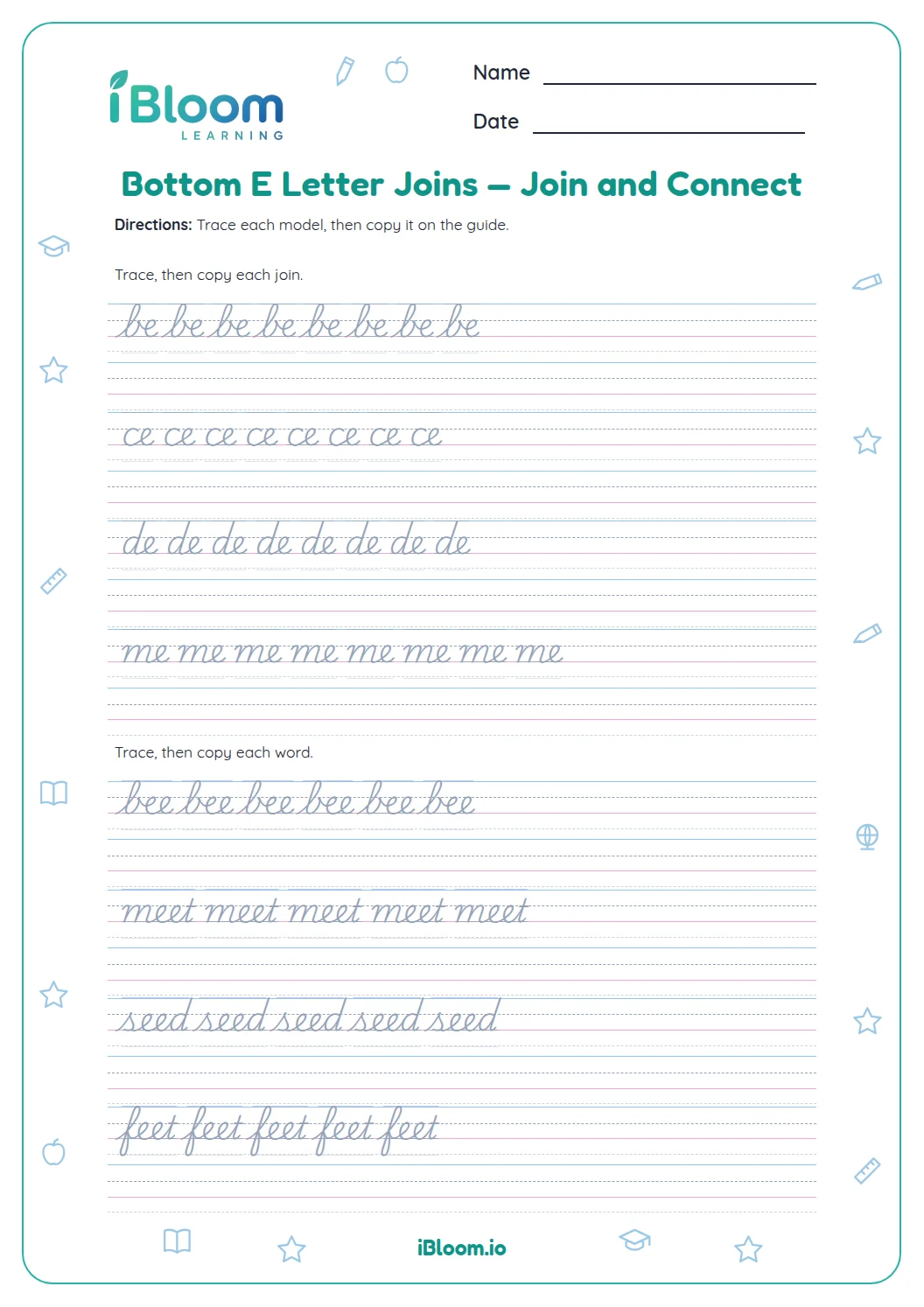
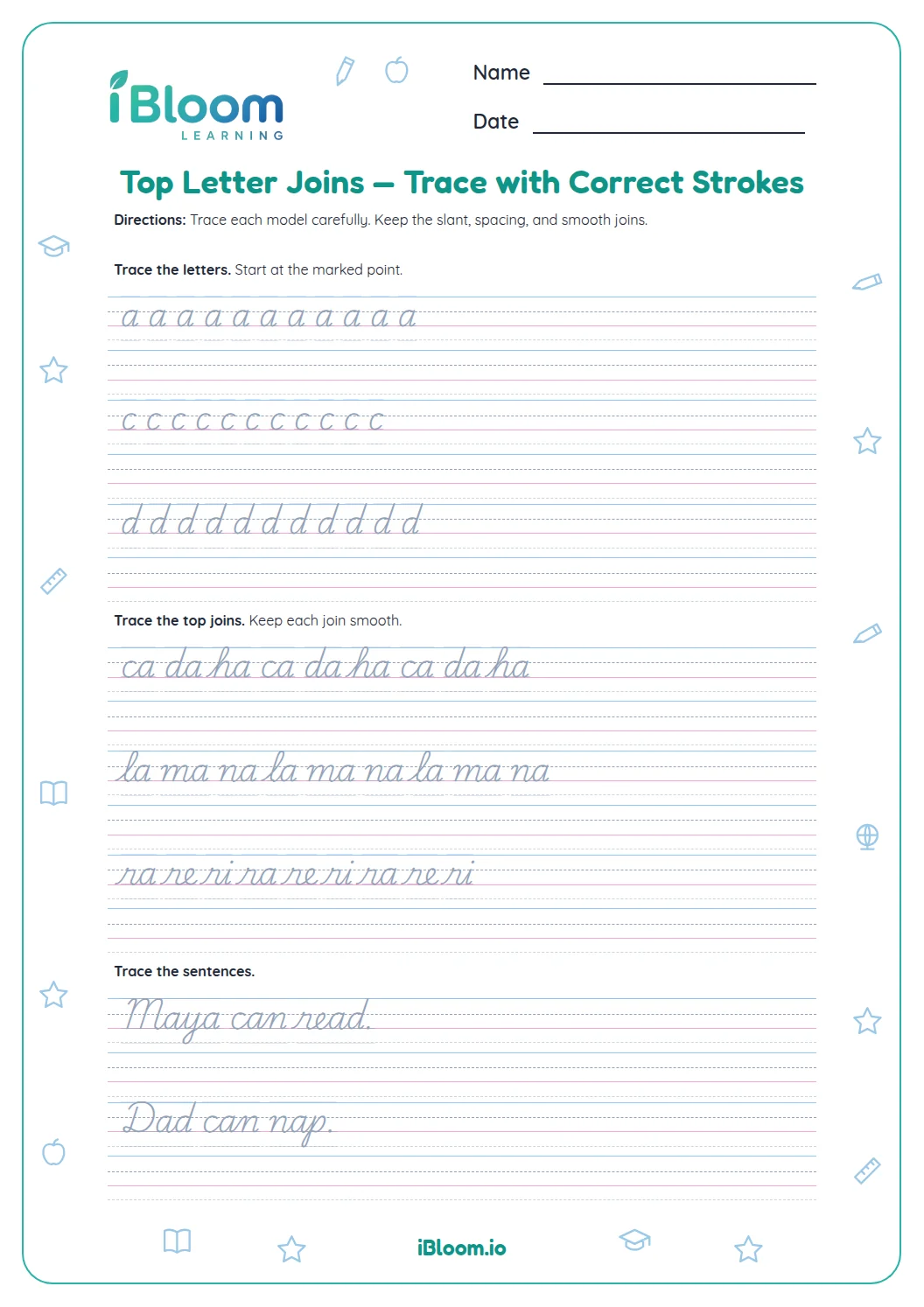
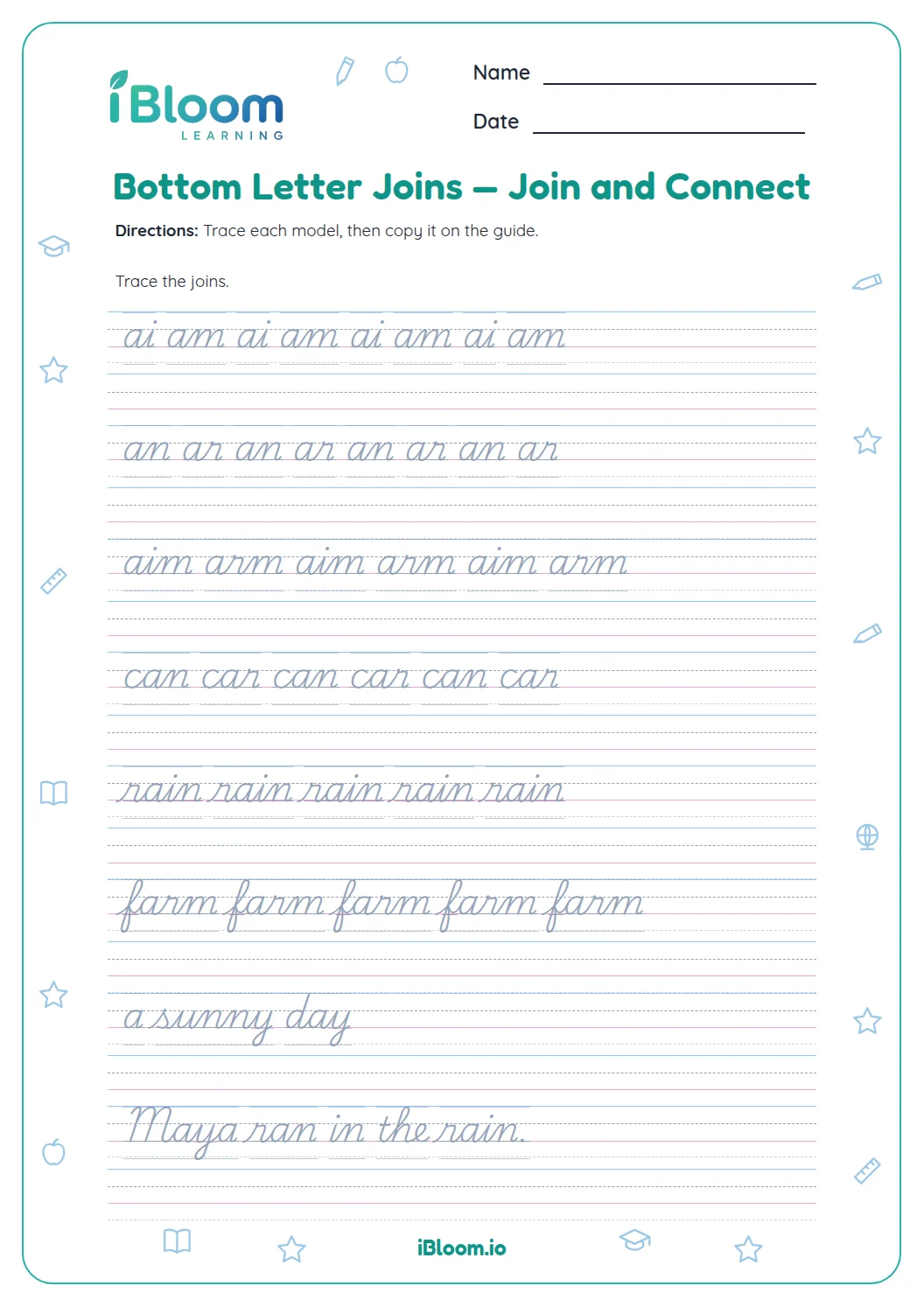
They can apply the same connected movement in other cursive joins, including bottom e joins and broader top-letter joins. The related practice pages below build from a single letter pattern toward more combinations and words. Try one short set at a time and check for a clear e shape.