





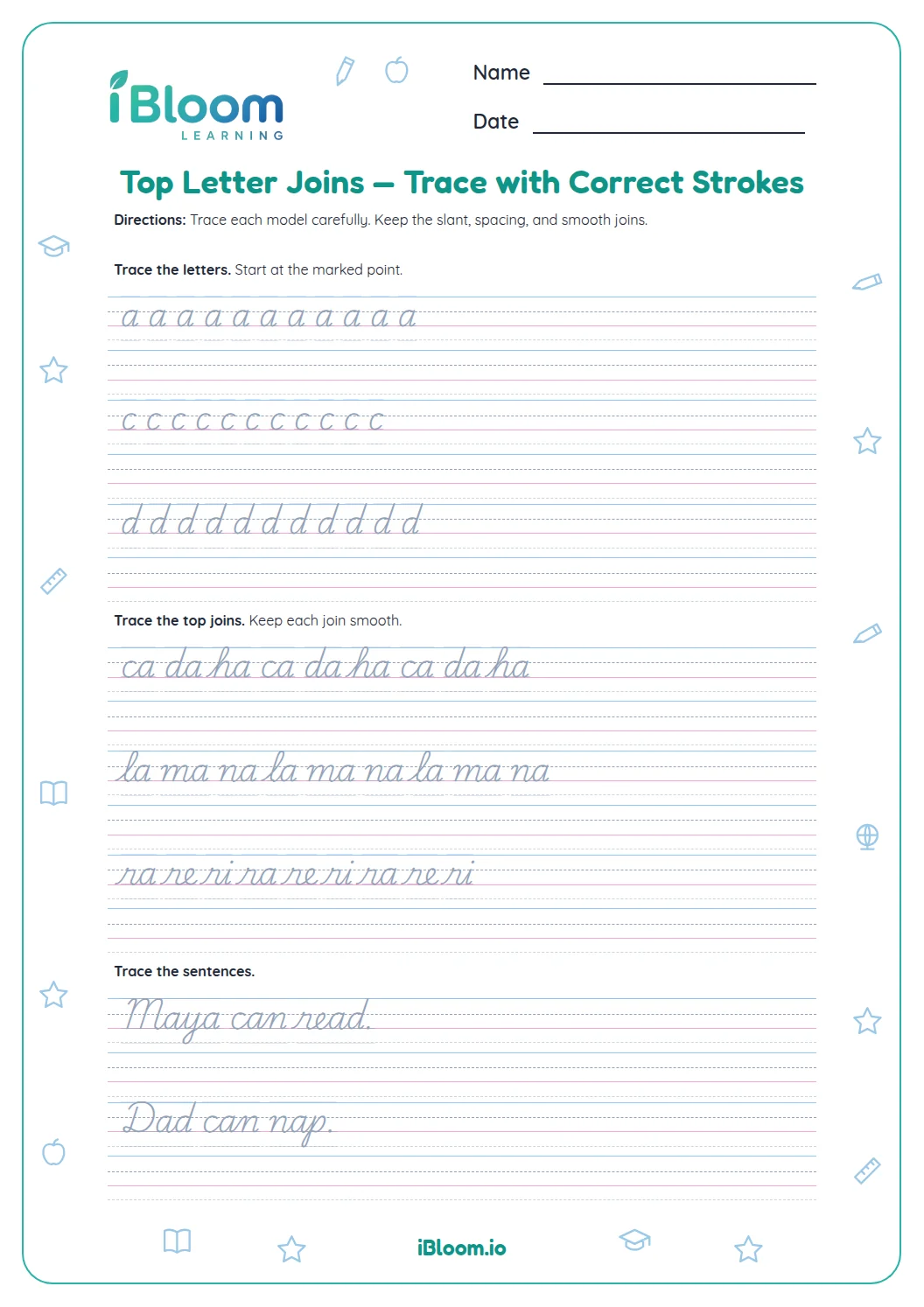


About this worksheet
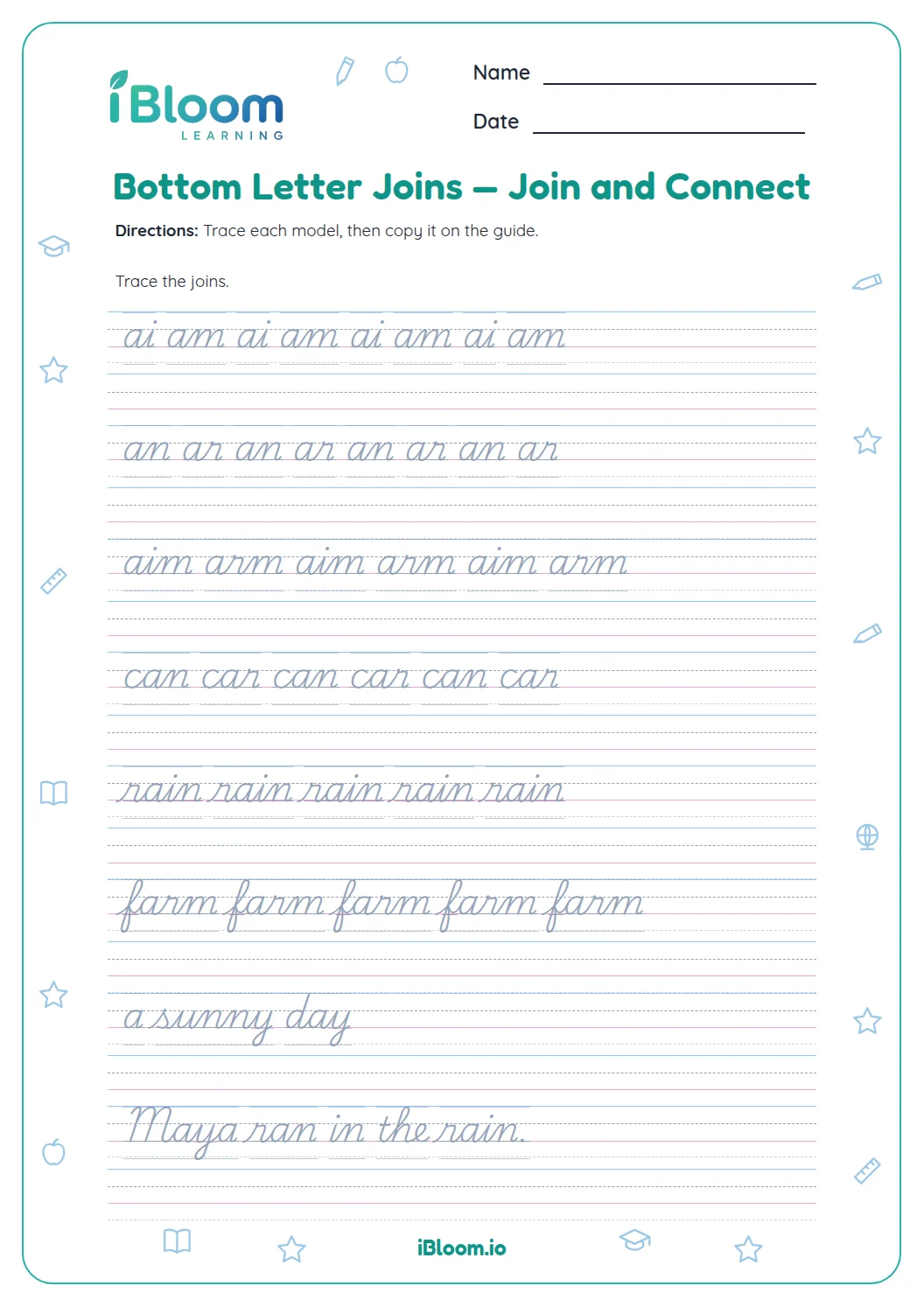
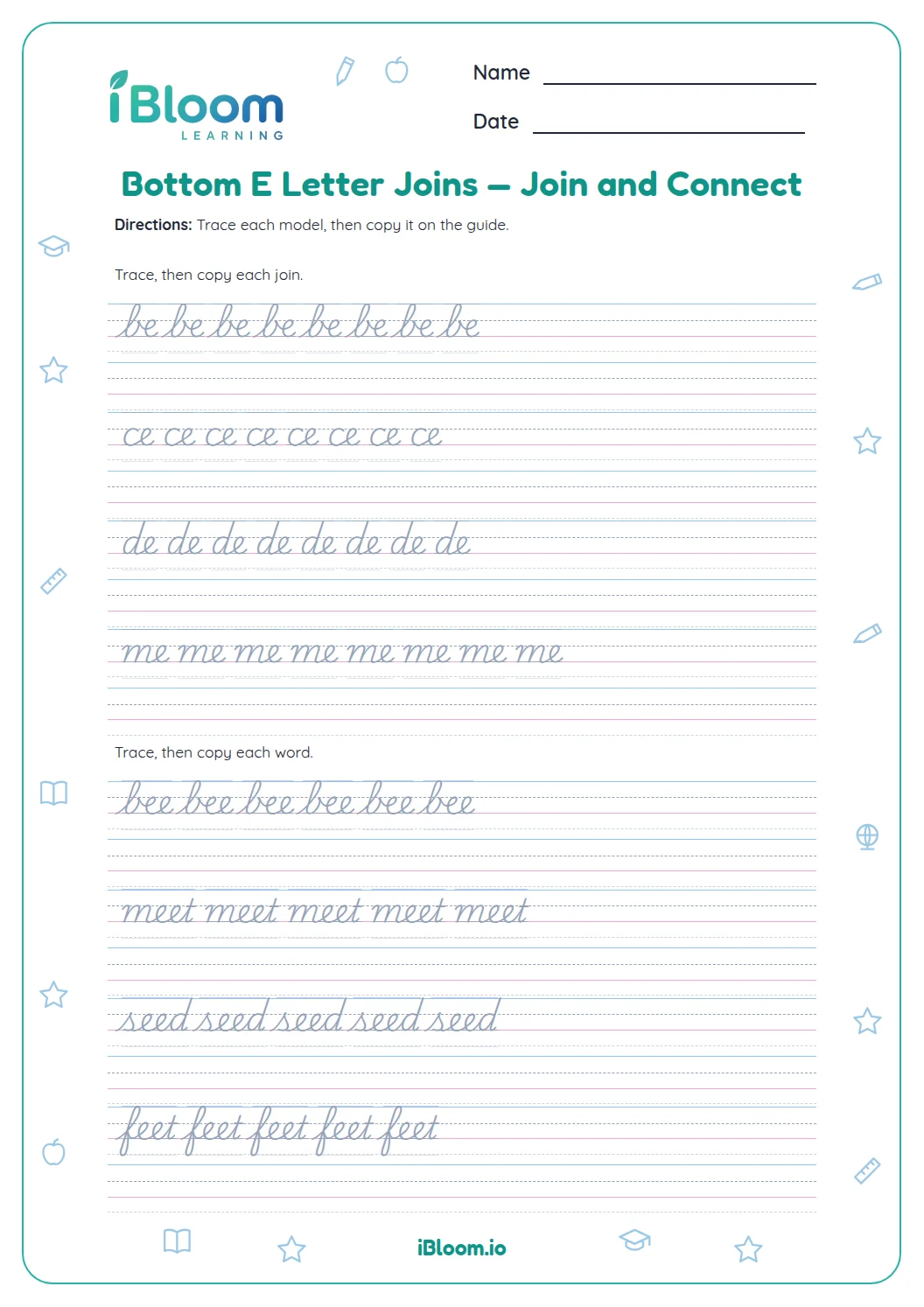
This printable cursive worksheet gives students in Grades 2–5 five short groups containing 15 words to trace and copy on handwriting lines. The target groups practice connections that leave from the baseline, including familiar sequences such as am, an, at, ch, in, be, and cl. Children first trace a gray model and then copy each group on an empty row. The old sheet’s join groups are replaced with whole words that use those connections; the separate key records each target group.
What is a bottom letter join?
A bottom join begins when a cursive letter finishes near the baseline and its exit stroke travels forward to the next letter. Smooth joins help a word stay connected and readable. Students can watch where one letter ends before deciding how to enter the next.
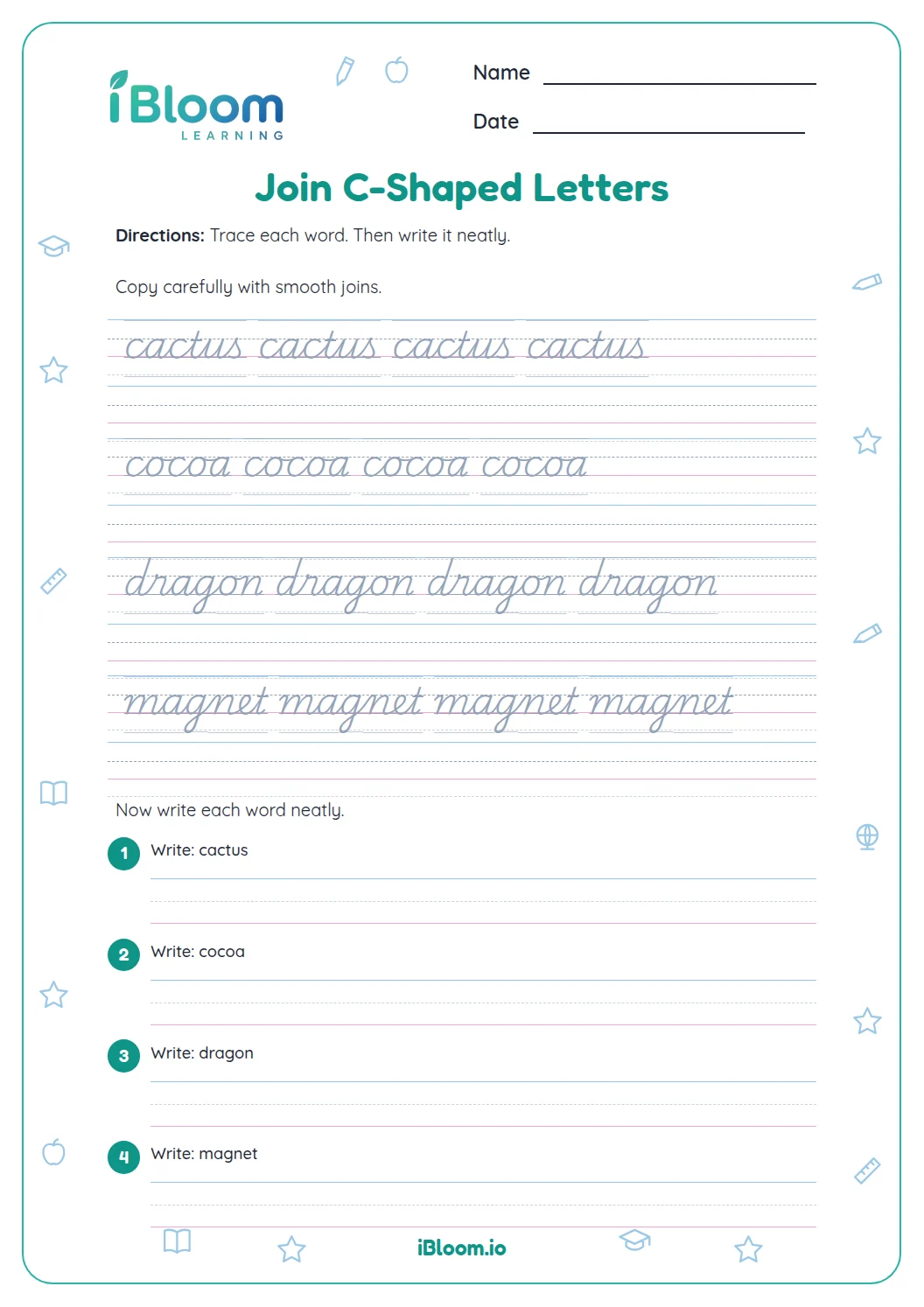
The worksheet places a model above a blank copy row for every group. That gives learners a visual path to trace and then space to reproduce the movement.
- 1Trace the model: learn
- 2Notice the low exit stroke leaving the l.
- 3Copy “learn” once on the open line.
Which words will students trace and copy?
The five groups include am, an, at, chin, chat, inn, inch, bend, best, clap, and clip, along with the short join groups. Each item offers three targets so students can practice connecting cursive shapes while keeping each word readable.
The words are printed as complete targets. Students copy words, not isolated letter trivia or sentence fragments.
How can students make each join smoother?
Begin slowly and keep the pencil moving through the join. Trace the model once, pause to notice where the outgoing stroke sits, then copy the word without tracing. Check that letters have a consistent slant and enough space to remain distinct.
How to use this worksheet
- 1Sit with the paper tilted slightly toward the writing hand.
- 2Trace one word while following each letter into its next connection.
- 3Pause at the baseline exit and notice its direction.
- 4Copy the whole word on the empty row at a steady pace.
- 5Compare the copy with the model for shape, spacing, and smooth joins.
Common mistakes and quick fixes
The mistake
Lifting the pencil between every letter.
The fix
Practice a light, continuous stroke through letters that are meant to join.
The mistake
Making the connection too high or too low.
The fix
Look at where the model leaves the baseline and imitate that exit point.
The mistake
Rushing until letters run together.
The fix
Slow down and preserve a small, even space between each word’s letters.
What to practice next
Make more practice
Questions parents and teachers ask
What are bottom letter joins in cursive?
A bottom join is a connection that leaves one letter near the baseline and moves into the next letter. Students can watch the model’s exit stroke, trace the movement, and copy the complete group on the open line. The goal is a connected, readable word group.
What does a student do for each group?
Each item prints a short group in cursive as a model with handwriting lines for tracing and copying. The student follows the model and writes the same group again, paying attention to smooth connections, consistent slant, and readable spacing. The learner can pause briefly between groups.
Which grades can use this practice?
The source page lists Grades 2, 3, 4, and 5. Teachers and families can choose the pace that suits the learner, since the task is repeated handwriting practice rather than a timed assessment or a spelling test. The same sheet can be paced differently for each child.
Does this page include sentence copying?
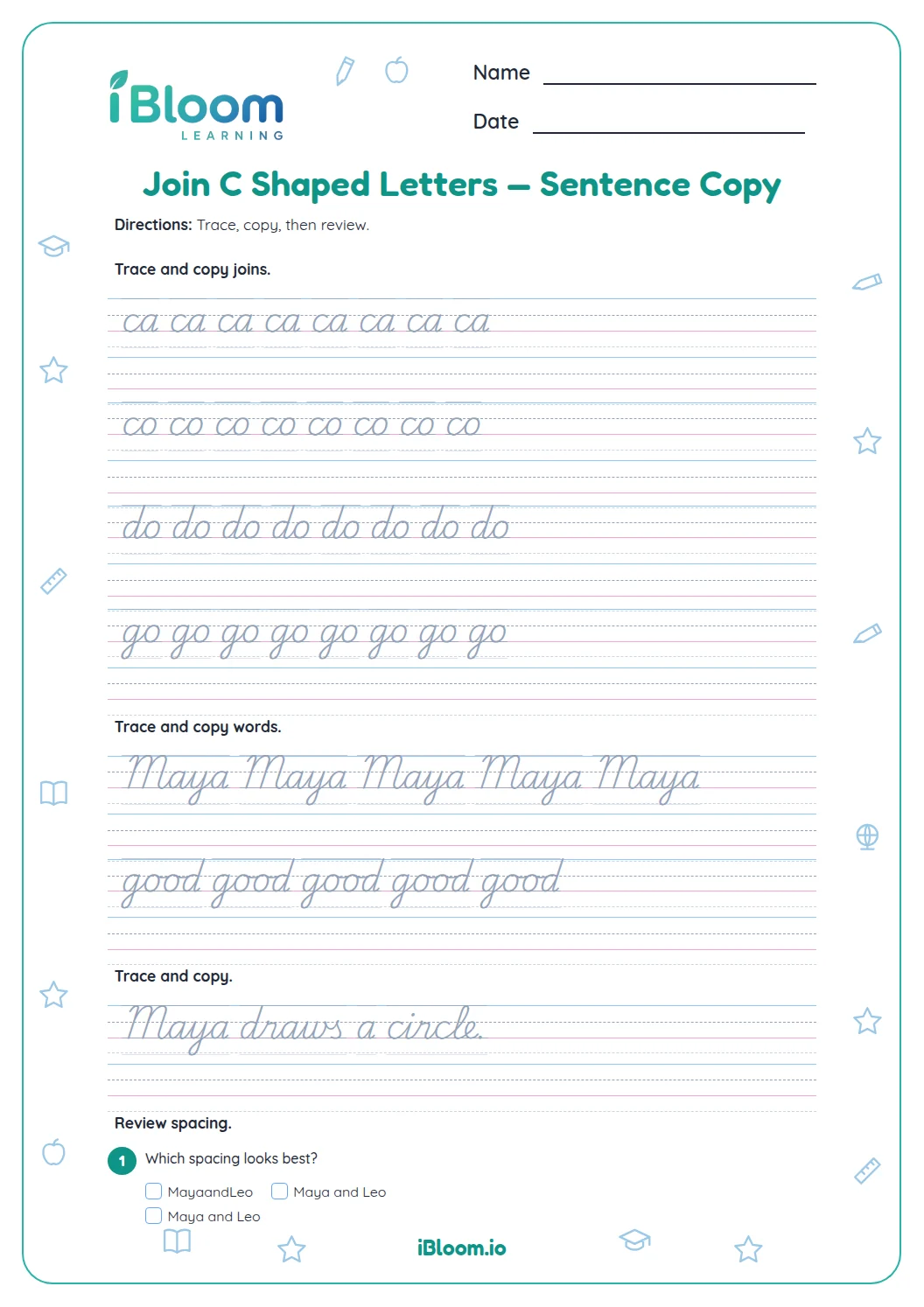
This page focuses on word groups, so each item contains a few complete short words. The related same-skill collection has a separate sentence or passage copy activity for students ready to practice cursive across longer text. This keeps the handwriting task focused on the target join patterns.
Is there an answer key?
Yes. The key lists the target word group for each of the five practice items. Since the task is handwriting, use the model on the worksheet to compare letter forms, joins, spacing, and overall legibility rather than expecting identical personal handwriting.
How long should this worksheet take?
About 15 to 20 minutes is a reasonable working time for five groups. Encourage a careful pace with a short hand break if needed; smooth, legible connections matter more than finishing quickly or writing each word at speed. Leave time to check the forms carefully.