
About this worksheet
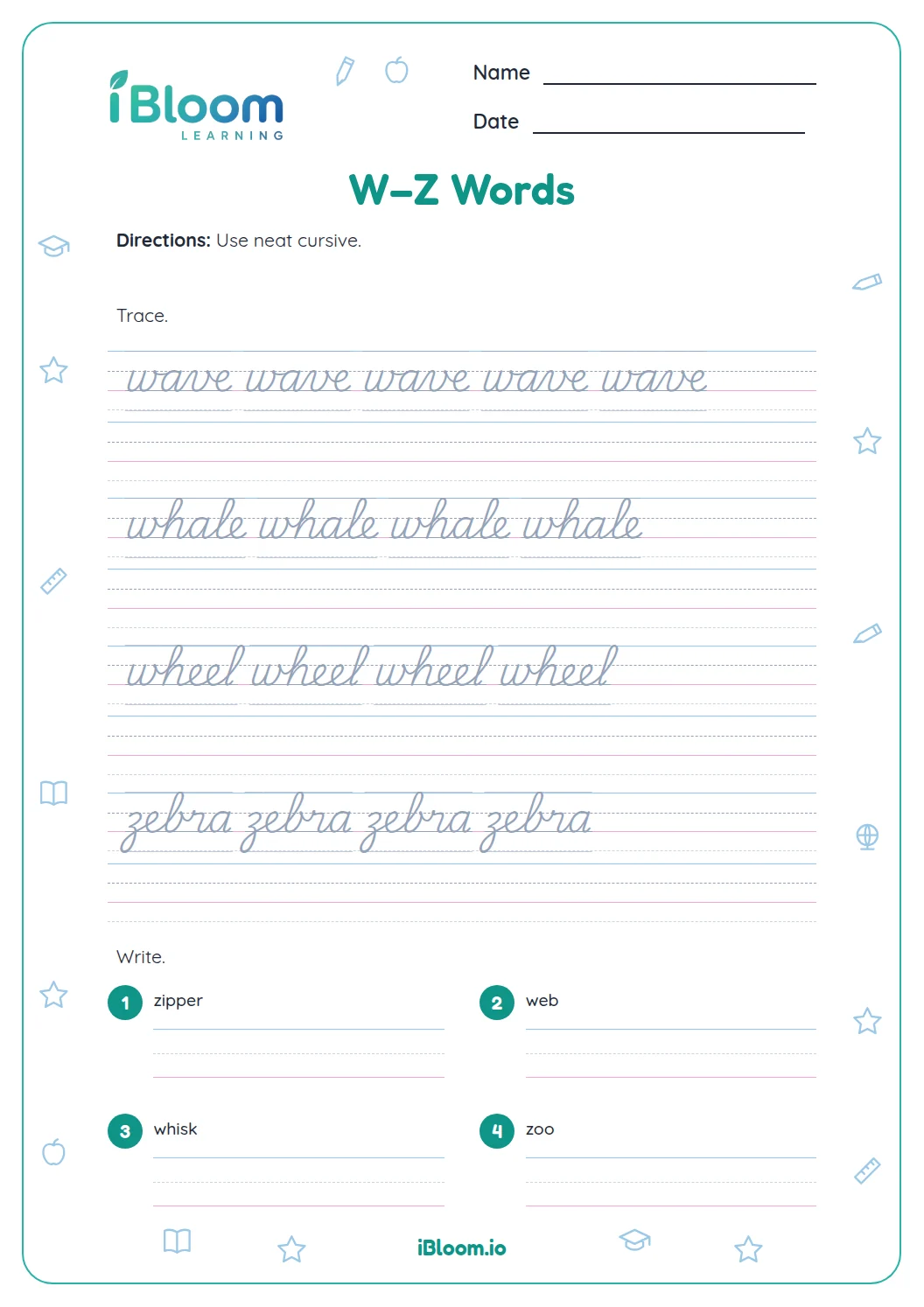
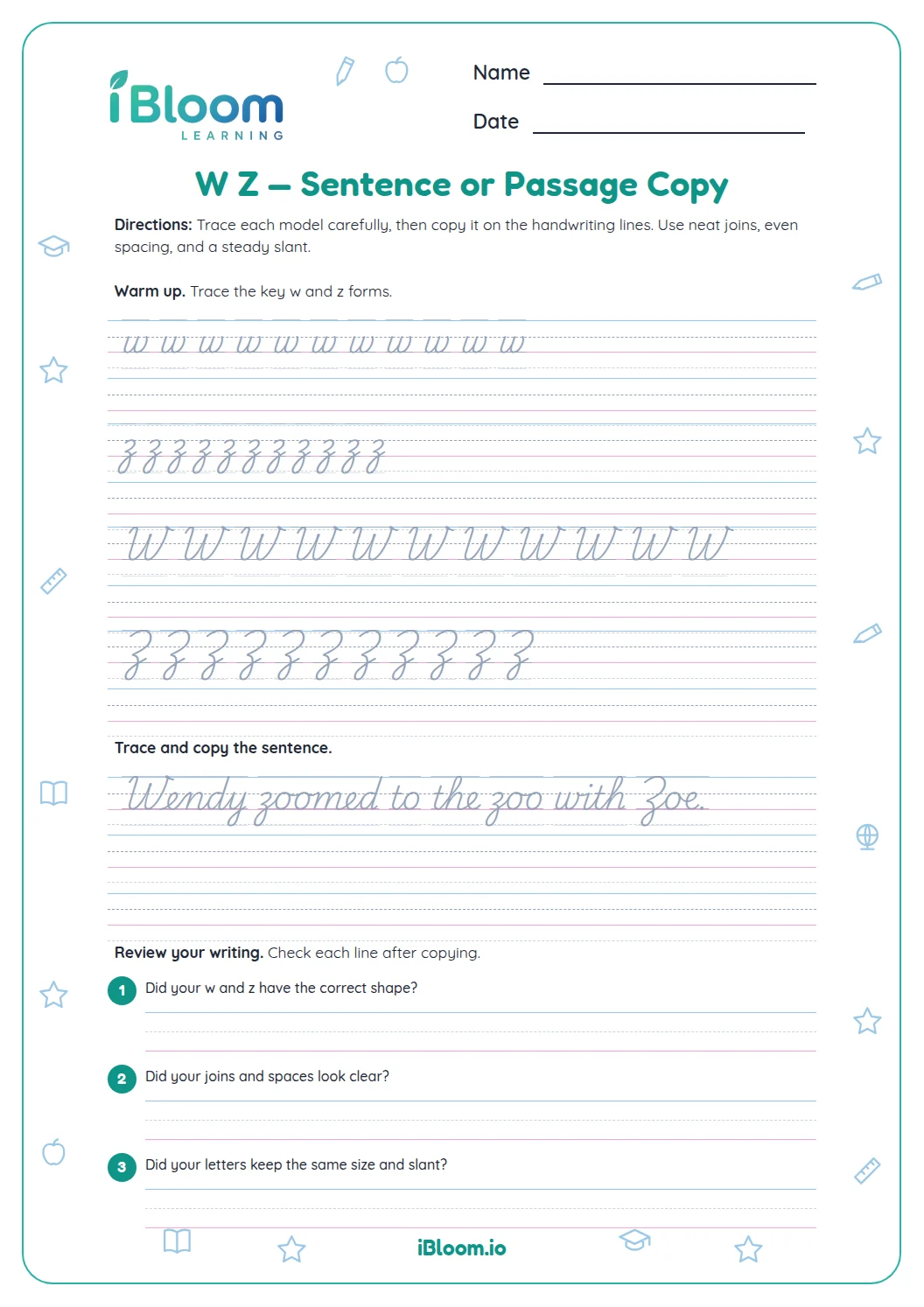
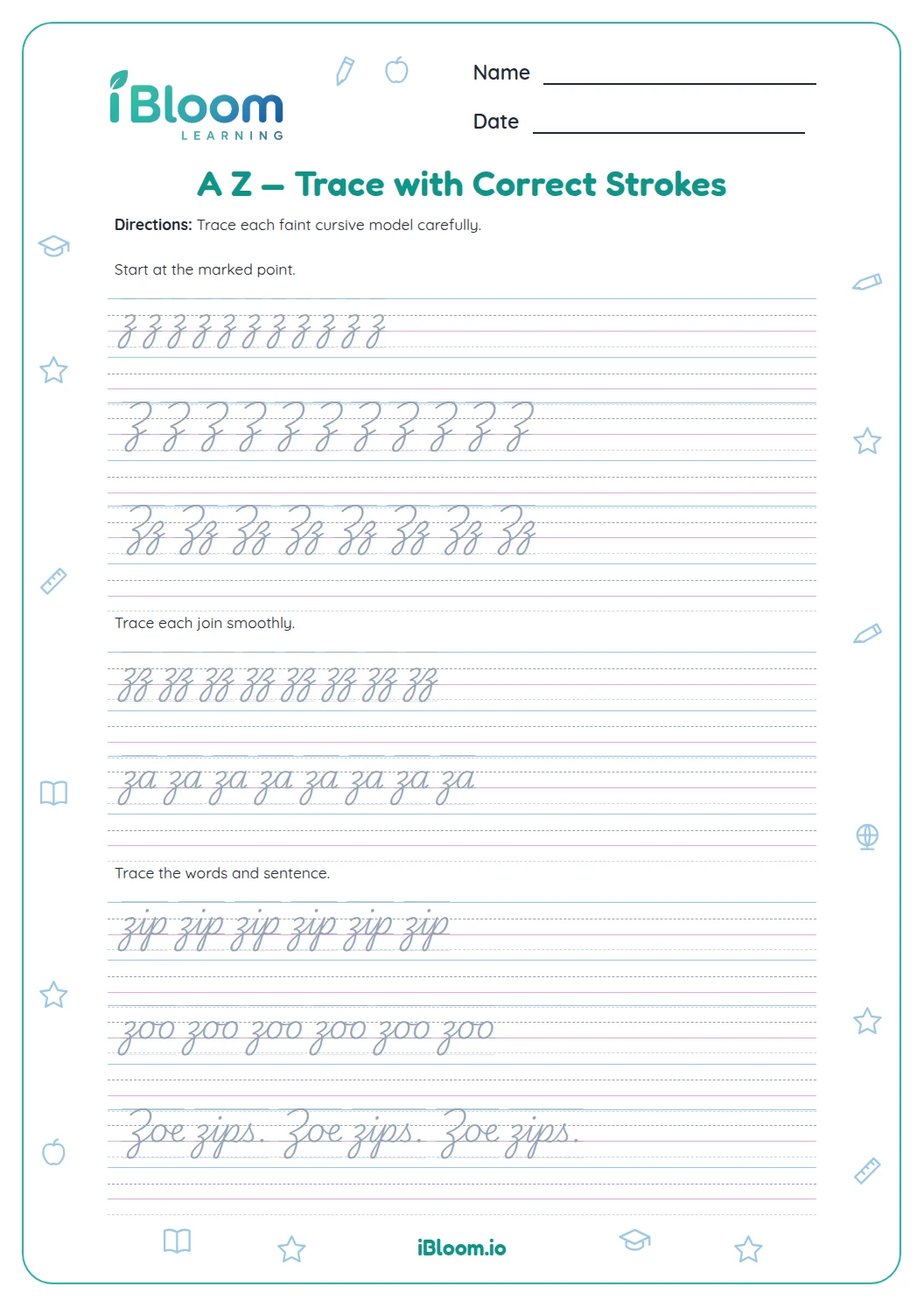
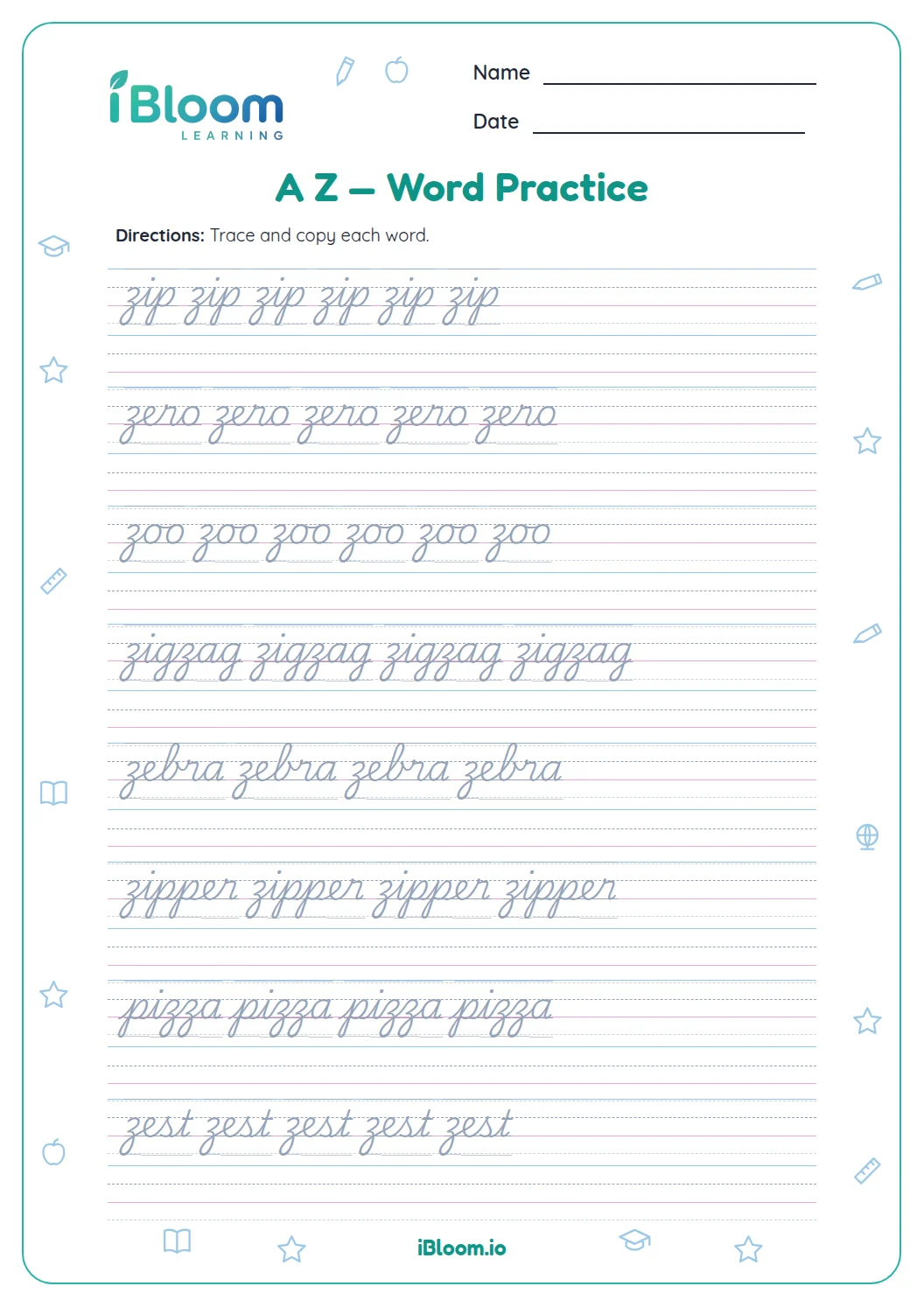
This printable cursive worksheet gives students in Grades 2–5 practice writing r and v and connecting them smoothly in words. Children trace and copy letter forms, join groups, five words, and three complete sentences. The answer key shows the model text for each line. Work moves from short forms to longer, readable writing.
How should r and v look in cursive?
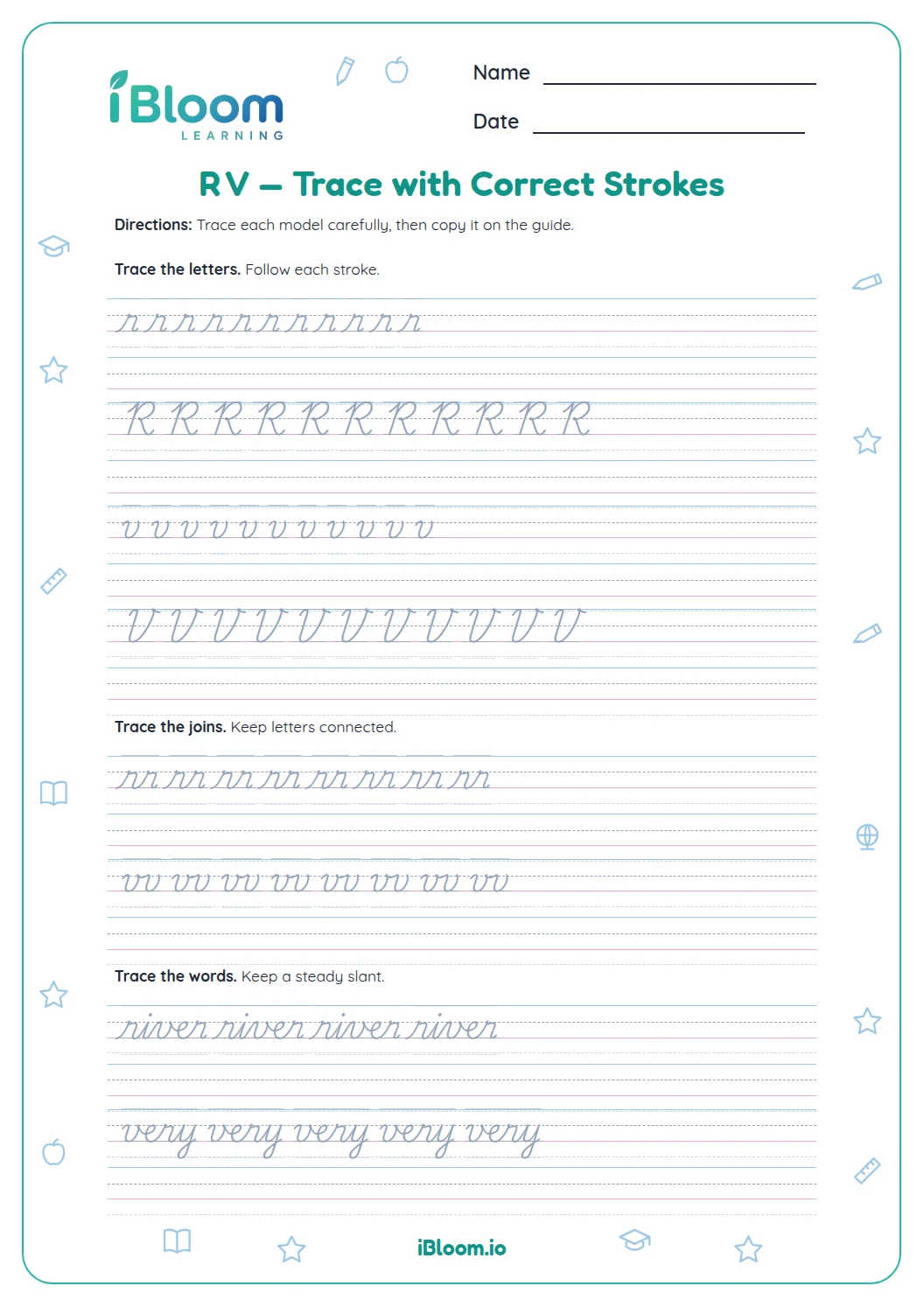
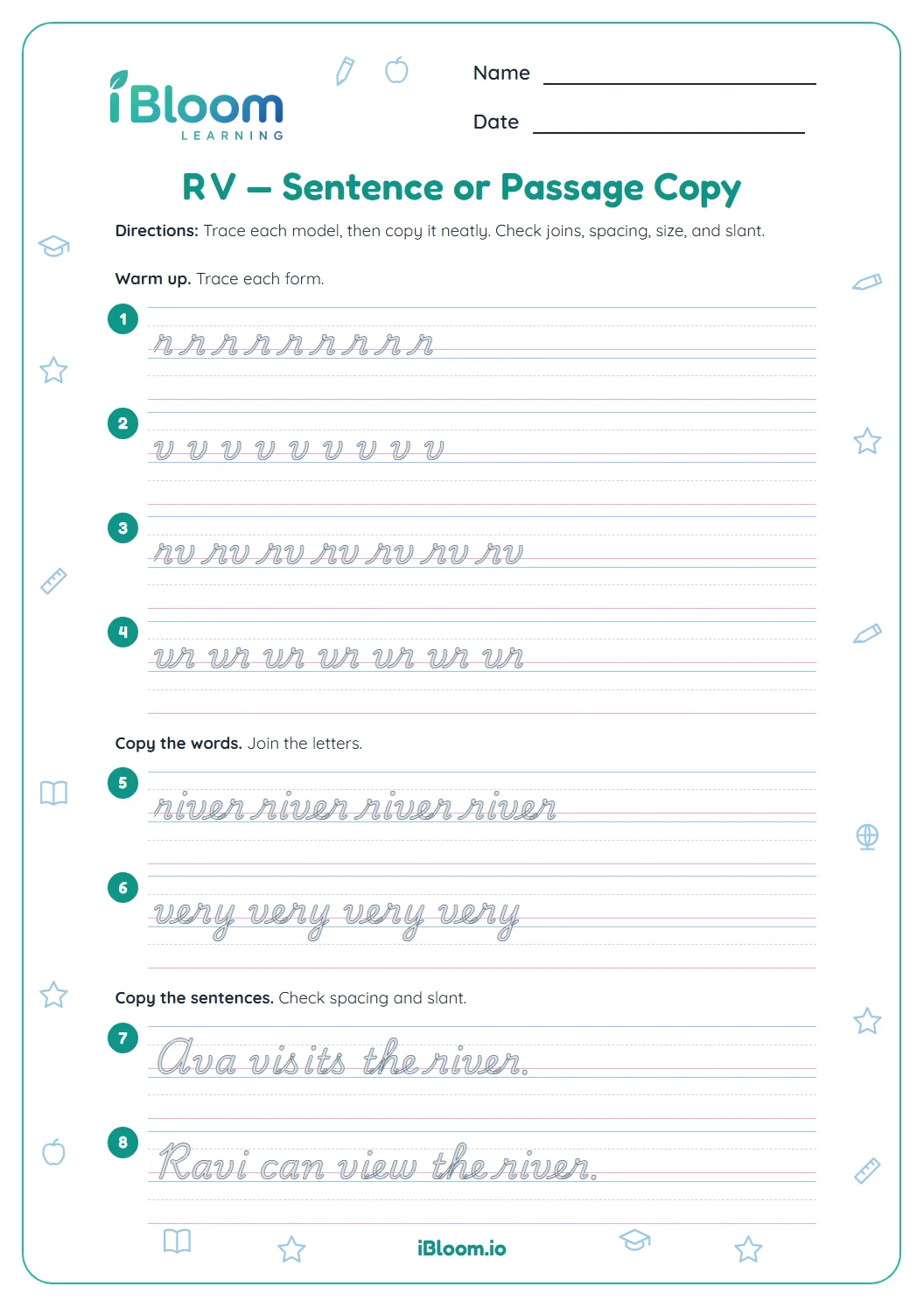
Begin with the model and follow its stroke direction. Practice lowercase r and v separately before joining them. Question 1 pairs the two lowercase forms with a space so each remains easy to see.
How can I keep a join smooth?
Lift the pencil only where the cursive model calls for it. Keep letter groups separated by clear spaces. The join groups in question 3 offer short combinations before full words.
Which words give r and v practice?
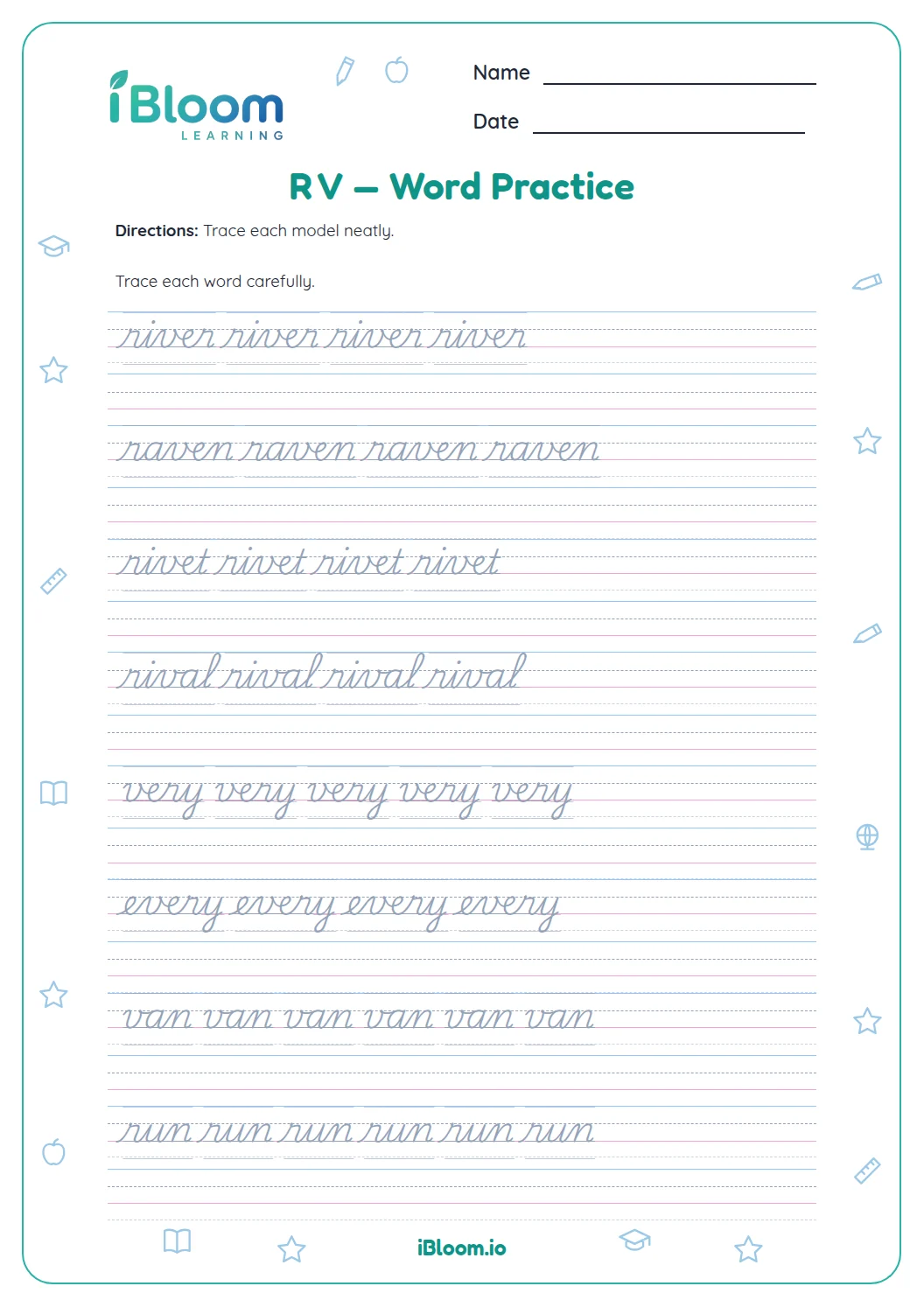
Five short words give practice with r, v or both in connected writing. Copy the whole word with steady spacing instead of writing a long string of repeated joins.
What does the practice page include?
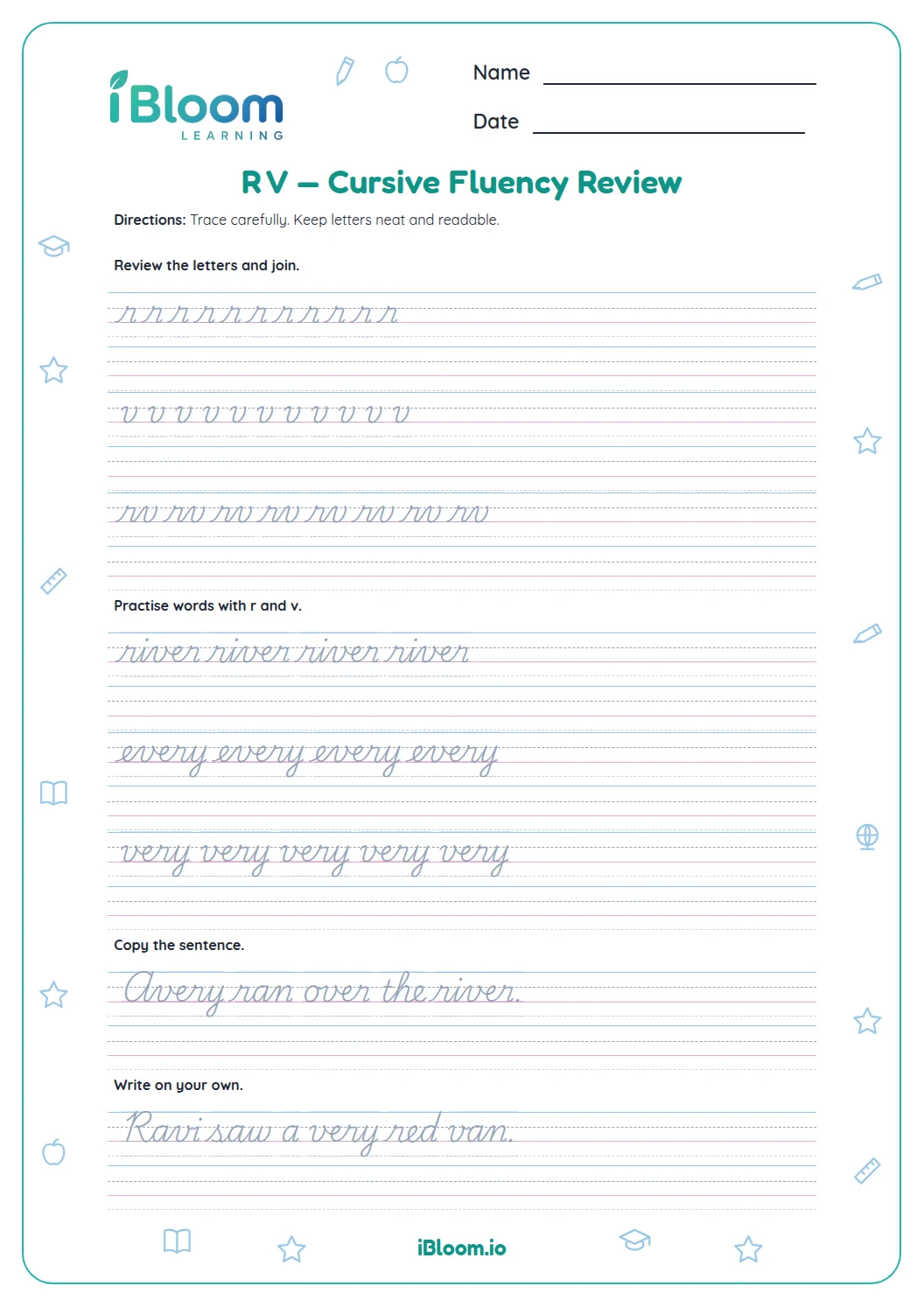
The 14 prompts progress from letter forms and join groups to words and complete sentences. The separate key shows the text model for every item.
How can I use this page?
- 1Trace each gray model slowly.
- 2Copy one letter or group on the open line.
- 3Keep a small space between separate join groups.
- 4Write each word or full sentence smoothly and legibly.
Common slips and quick fixes
The mistake
Joining every group into one long string.
The fix
Leave a clear space between separate groups such as “ra re ri.”
The mistake
Letting the v shape turn into a u.
The fix
Compare the downstroke and pointed turn with the printed model.
The mistake
Dropping or changing a letter while copying a word.
The fix
Touch each letter in the model as you copy, then reread your word.
What to practice next
Make more practice
Questions parents and teachers ask
Which letters does the page practice?
The page focuses on lowercase r and v and capital R and V. Children trace the forms first, then use them in join groups, words and sentences so they can practice the letters in connected writing. The examples progress from isolated forms to connected writing, which gives children a visible model before they copy whole words.
Are there words as well as letter joins?
Yes. After letter and join work, children copy five words: river, brave, drive, Ravi and riverbank. Three fresh complete sentences provide a longer chance to connect letters while keeping spaces between words. The word list and sentence prompts give practice with r and v in varied positions.
How should children practice a join group?
Trace each short group, then copy it on the line. Keep separate groups apart with a clear space, and focus on connecting letters within each group rather than writing a long run. Each item has its own trace-and-copy row, so learners can focus on a short group without crowding the handwriting line.
What does the answer key show for handwriting?
The answer key repeats the target text as a model for each prompt. Handwriting varies from student to student, so use the model to check which letters and words belong on each line. Use the model text to check spelling and letter order; the student’s own stroke shape and spacing can be reviewed on the worksheet.
How many prompts are included?
Fourteen short prompts progress from letter forms to complete sentences across four worksheet pages. The separate key also spans four pages and preserves each model phrase for easy checking. Its four parts give learners separate room for letter shapes, joining patterns, vocabulary and carefully spaced sentences.