



About this worksheet
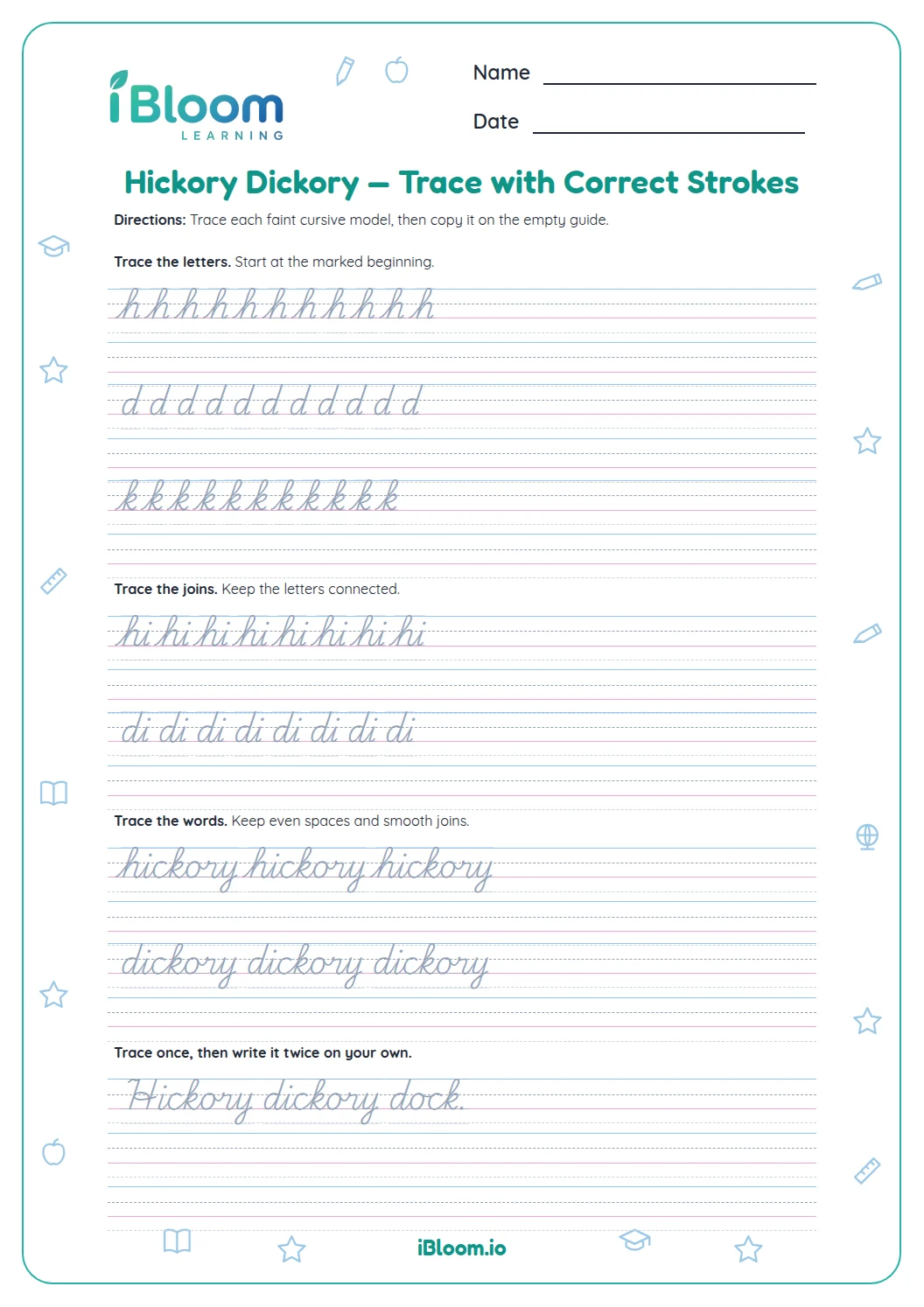
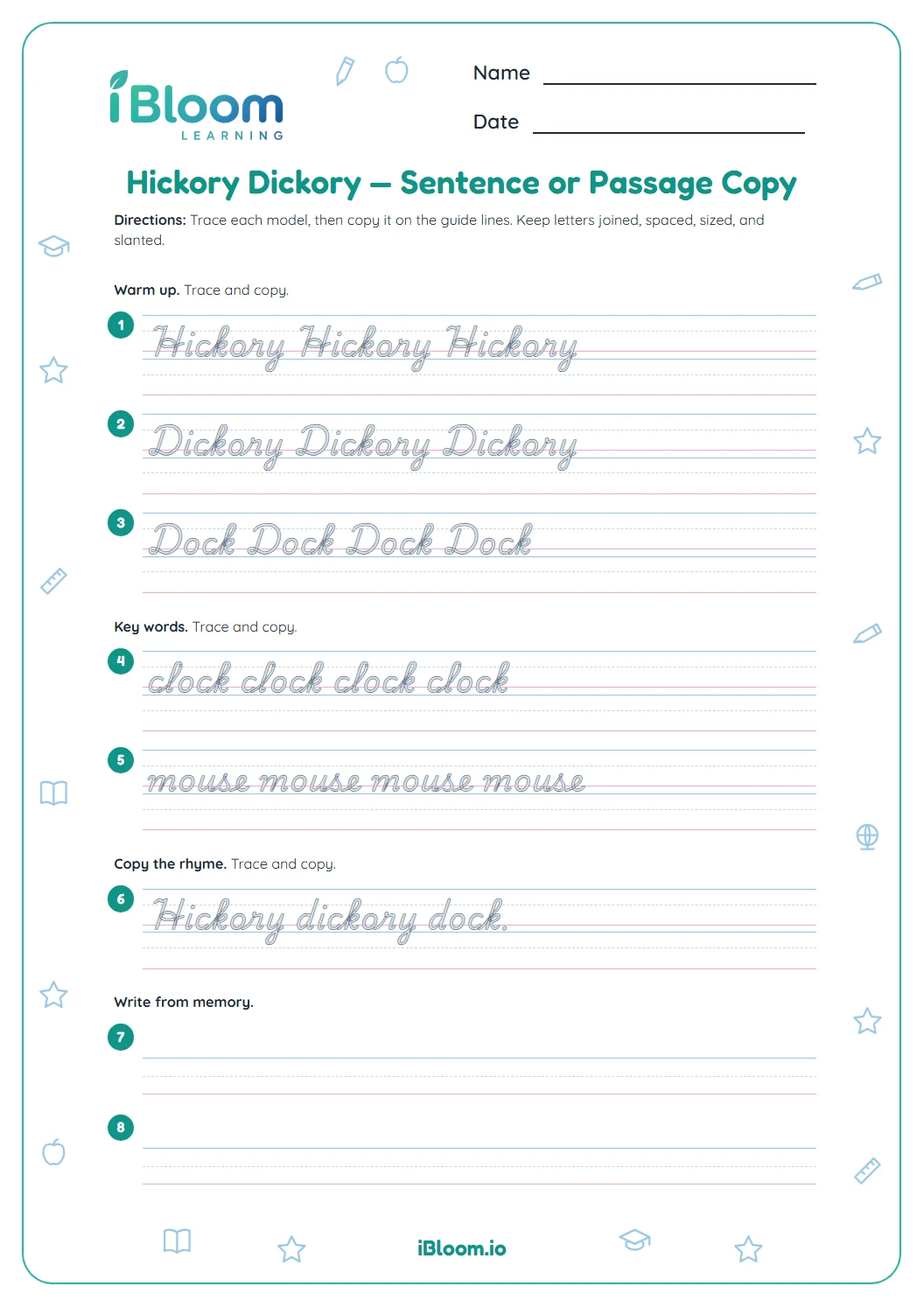
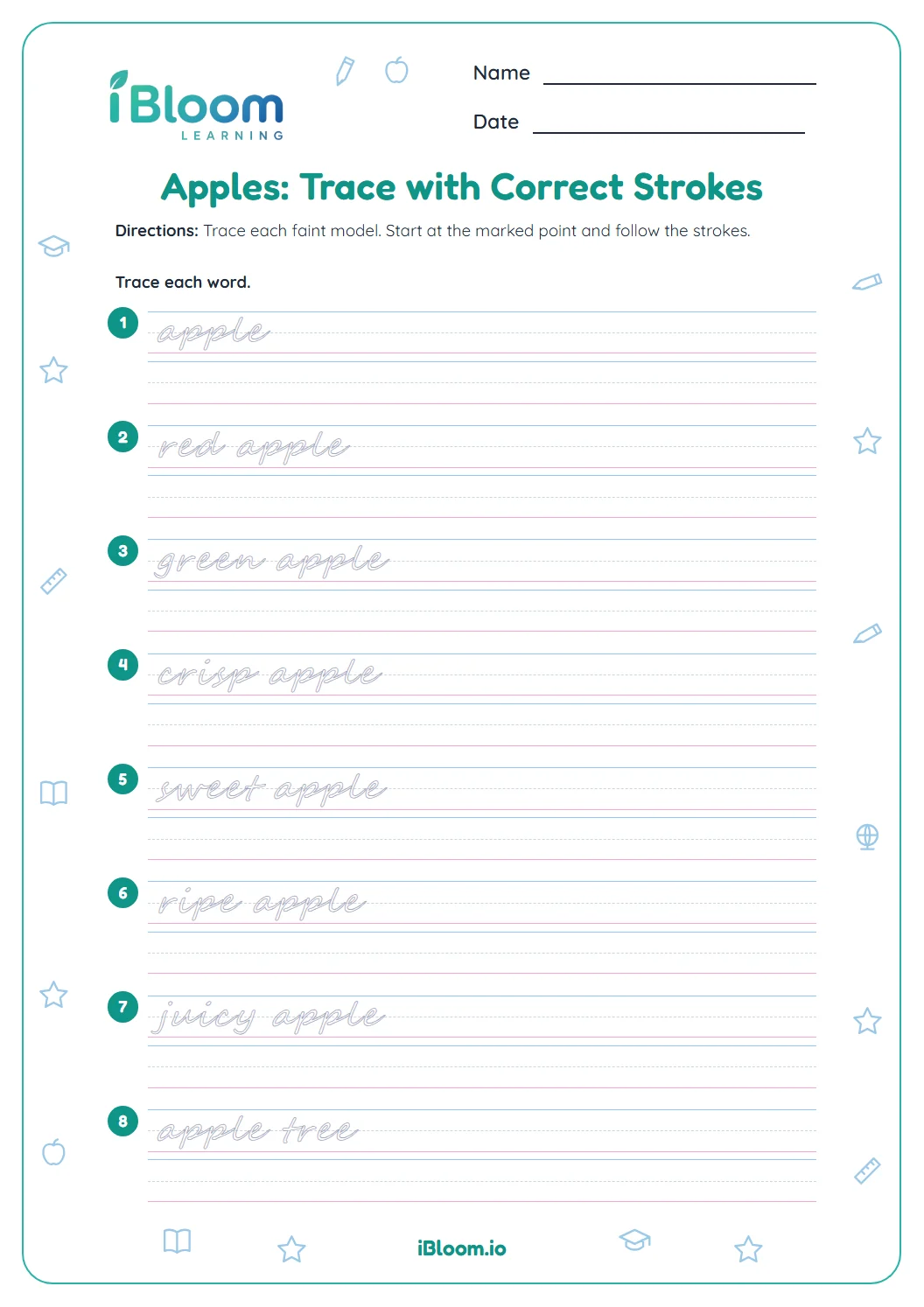
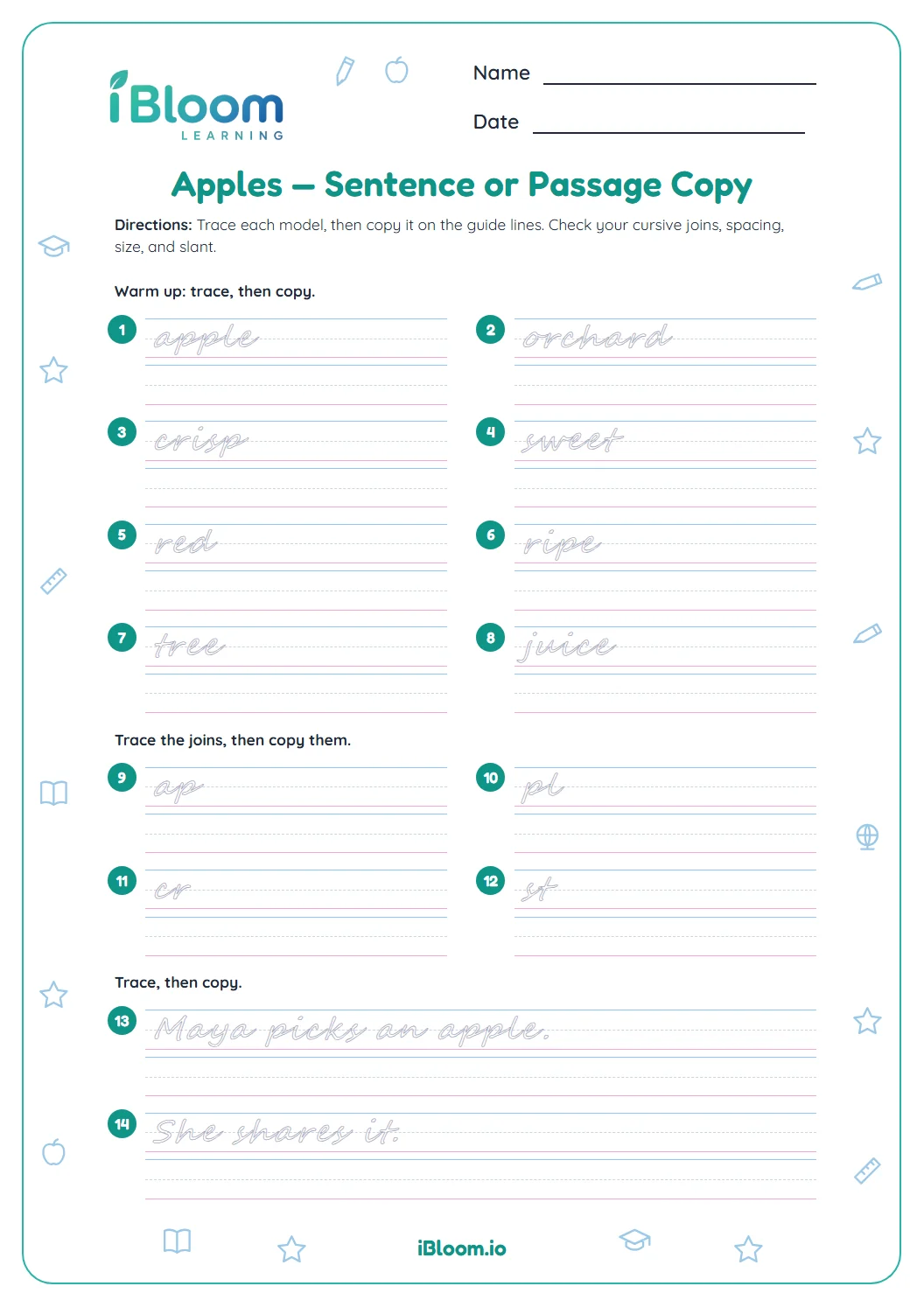
This cursive worksheet gives students 14 prompts: 11 words from “Hickory Dickory” and three additional short words for copy practice. Students trace a gray model and copy each word on handwriting lines, practicing connected letters, consistent letter shapes, and spacing at the end of each word. The answer key repeats every word as a model for checking joins and letter forms.
Which words will students practice?
The first 11 prompts use words from the Hickory Dickory rhyme, including Hickory, Dickory, clock, mouse, and struck. Three additional short words give students more chances to practice connected letters. Each word has a gray model to trace and a handwriting line to copy.
How should students form the joins?
Keep the pencil moving through letters that connect, and lift it only where the letter form or word ending calls for it. Aim for clear letter shapes first; a smooth connection should not make one letter look like another.
- 1Trace: clock
- 2Copy: clock
- 3Keep the c-l-o-c-k shapes readable as they connect.
How can students check their copies?
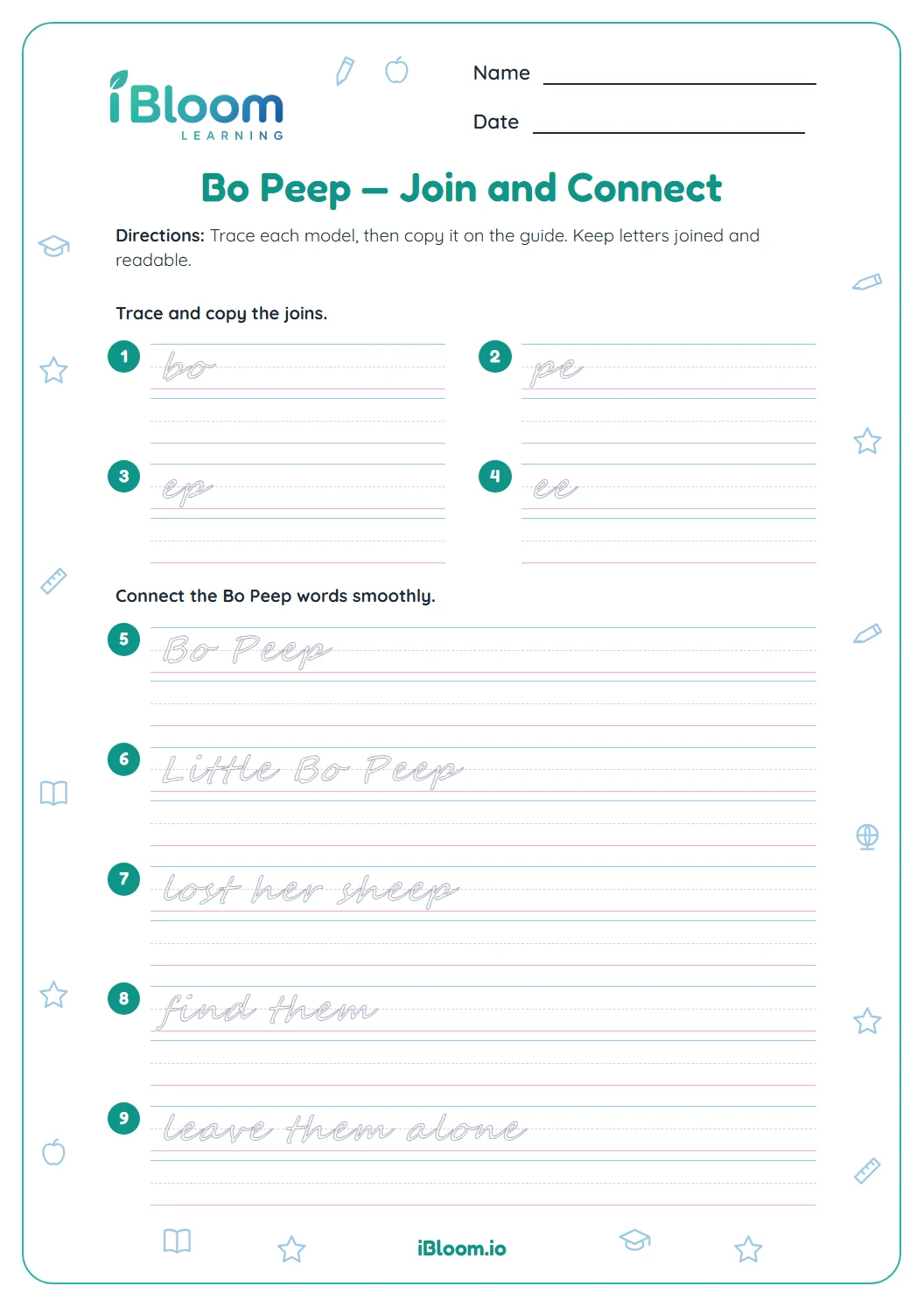
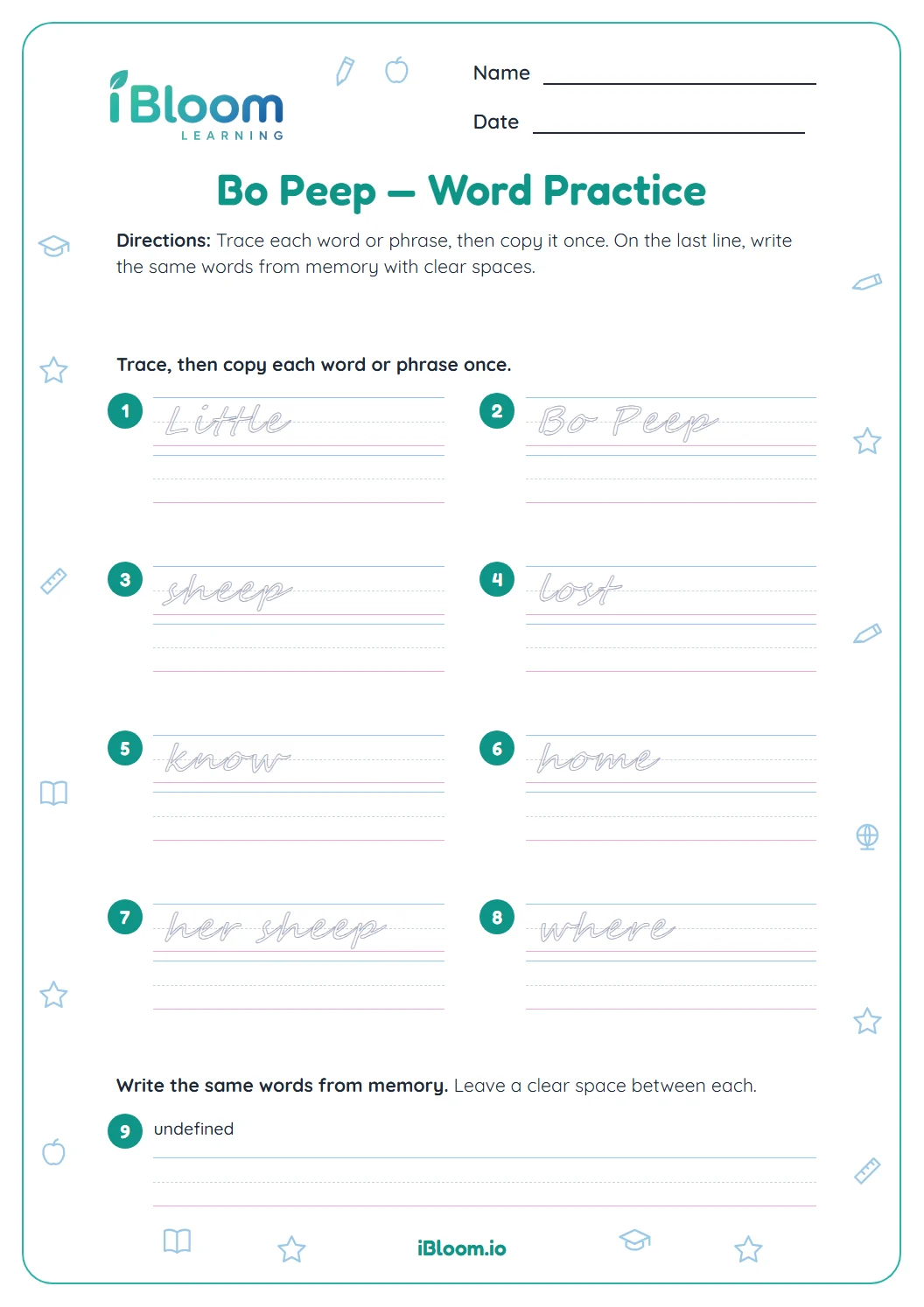
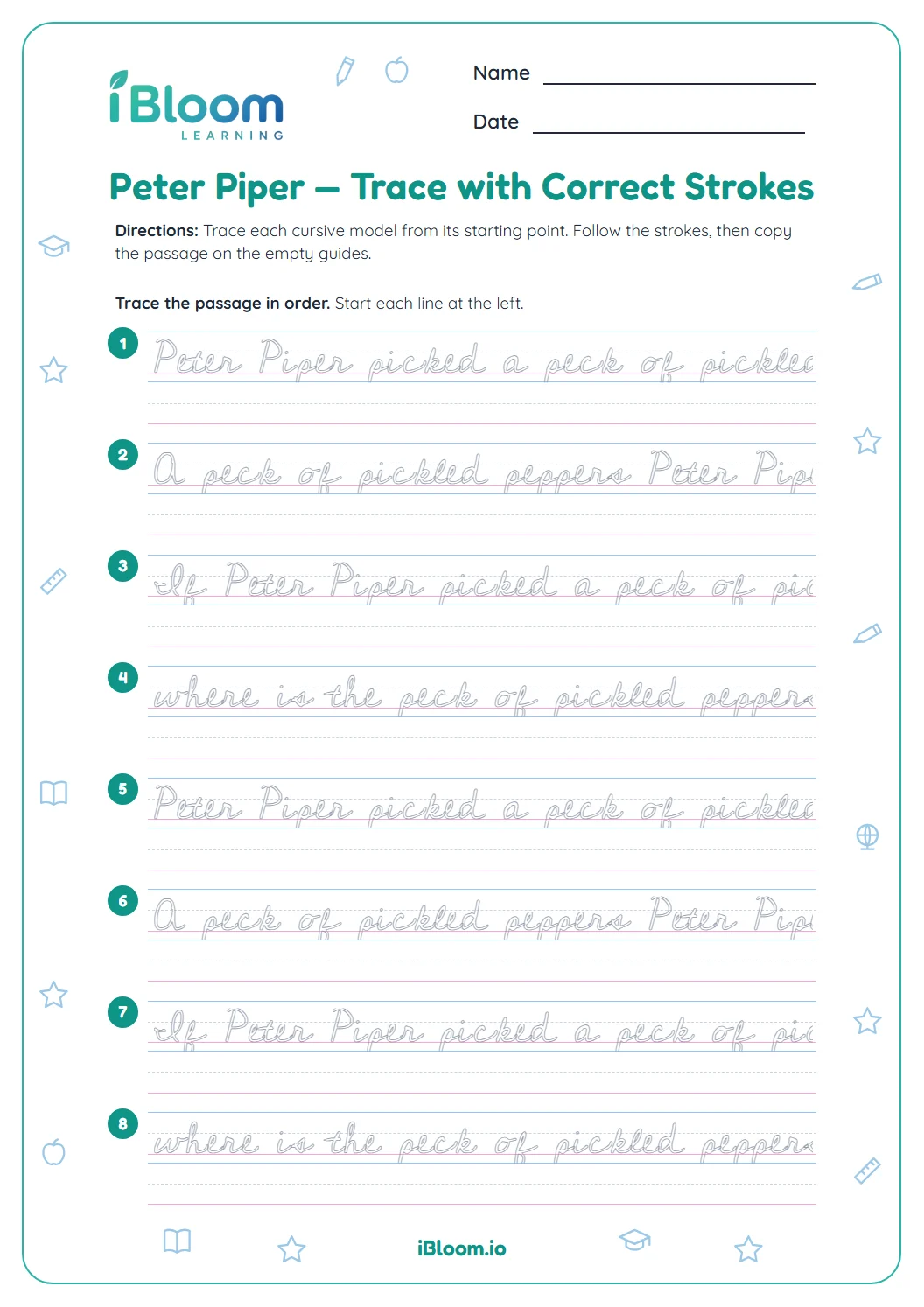
Each prompt gives a model to trace and a line to copy. Students can compare the letter shapes and joins with the answer key, while leaving a small space after completing each word.
How to use this worksheet
- 1Start at the gray model and follow each letter shape.
- 2Keep connected letters joined within a word.
- 3Use steady size and slant across the word.
- 4Leave a clear space between separate words.
- 5Copy the full prompt on the empty row.
- 6Compare letter shapes and spacing with the model key.
Common slips to check
The mistake
Leaving a gap between letters that should connect.
The fix
Slow down and follow the cursive model through the join.
The mistake
Joining two separate words together.
The fix
Finish the first word, leave a clear space, then begin the next.
The mistake
Rushing until letters become hard to read.
The fix
Keep letters a consistent size and make each shape clear before increasing speed.
What to practice next
Make more practice
Questions parents and teachers ask
How many cursive prompts are on this worksheet?
There are 14 cursive prompts on the worksheet. Eleven use words from Hickory Dickory, and three add short words for extra copy practice. Each prompt has a gray model to trace and a row to copy, and the answer key repeats every word as a model.
Does the worksheet include a model to trace?
Yes. Each prompt has a gray cursive word to trace and an empty row where students can copy the same word. They can compare their letter shapes and joins with the separate answer-key pages, which show the target word for every item.
What does “join and connect” mean in cursive?
It means forming connected letters within a word so the pencil can move smoothly through the letter sequence. Separate words still need a visible space. The worksheet starts with single rhyme words, then moves to short lines where both joining and spacing matter.
Should students focus on speed or neatness?
Clear letter shapes and readable spacing are the useful first checks. Students can trace slowly, then copy at a comfortable pace while keeping letter size and slant steady. Once the words are legible and joins are consistent, they can work toward a smoother rhythm.
What does the answer key show?
The key repeats each prompt as a model for comparison. Students can look at the letter shapes, joins, and spaces between words, then make another copy if a letter is unclear. The goal is a readable cursive version of the prompt rather than exact personal handwriting.