



About this worksheet
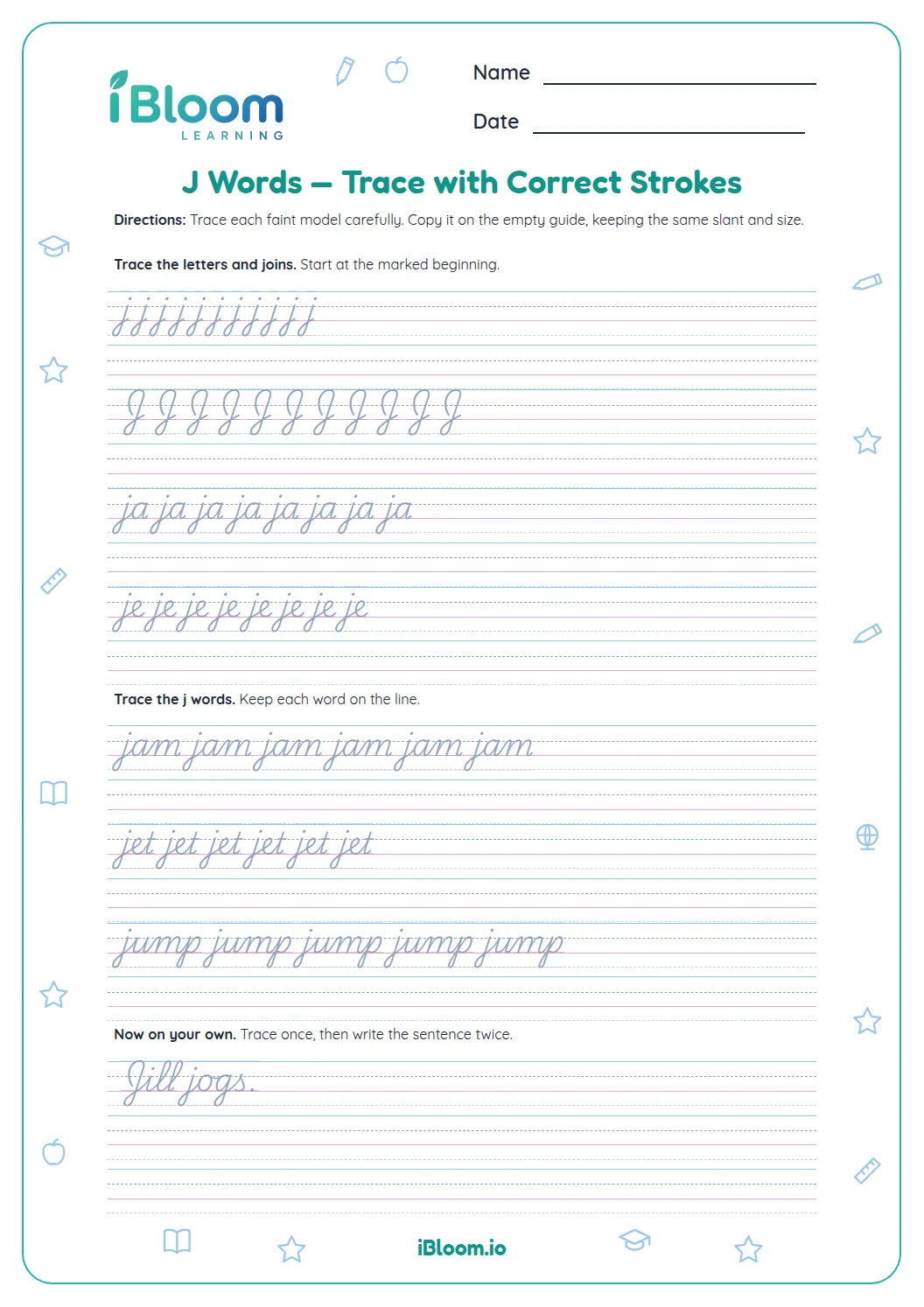
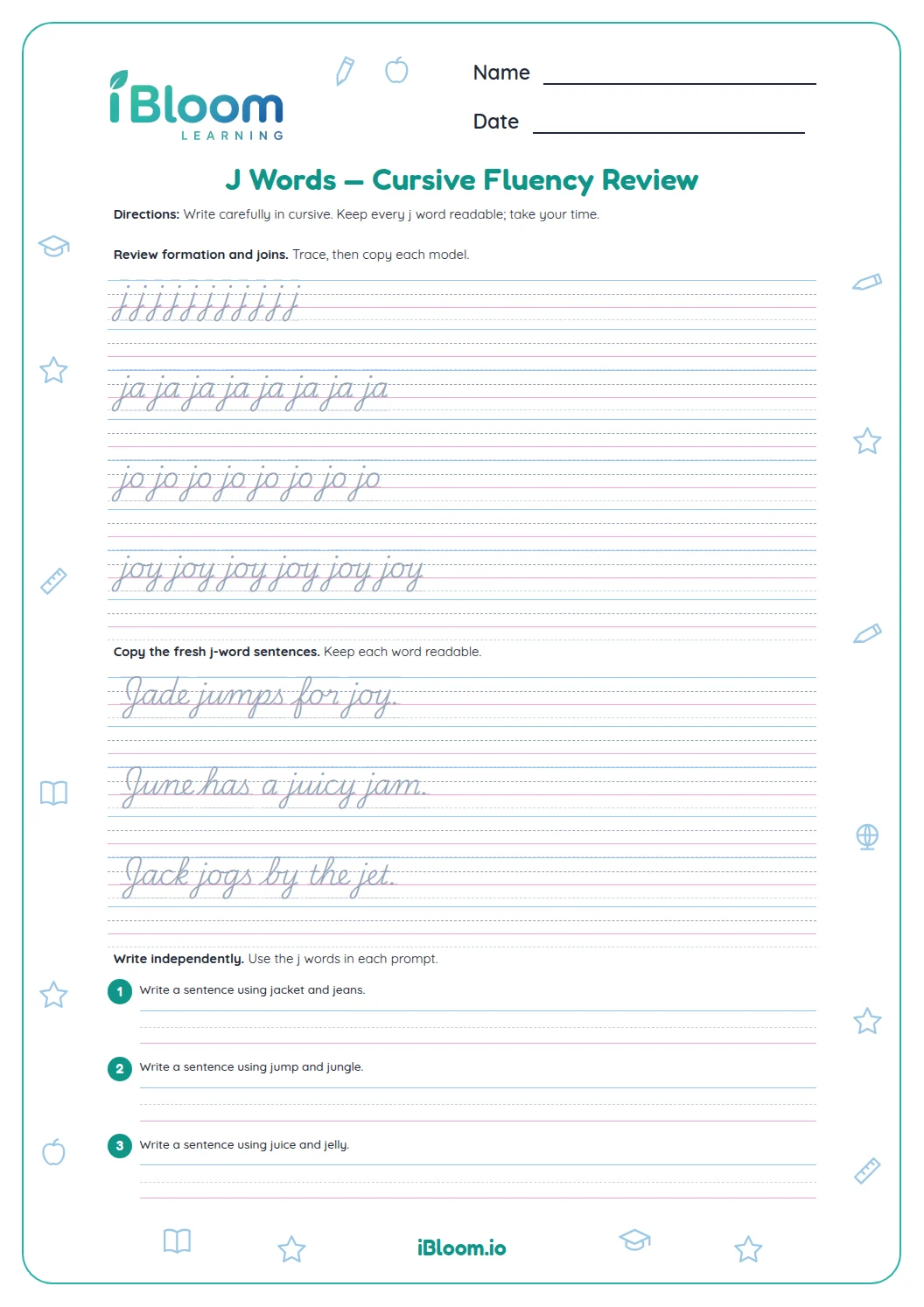
This printable gives cursive writers focused practice with words that begin with J. Children trace a model and copy each word on handwriting lines, moving from short words such as “jam” and “jet” to longer words such as “jacket” and “journey.” June is capitalized as a month name. The practice is suitable for the Grade 2–5 range listed for this page, with a separate key showing each model word.
How should children practice a cursive J word?
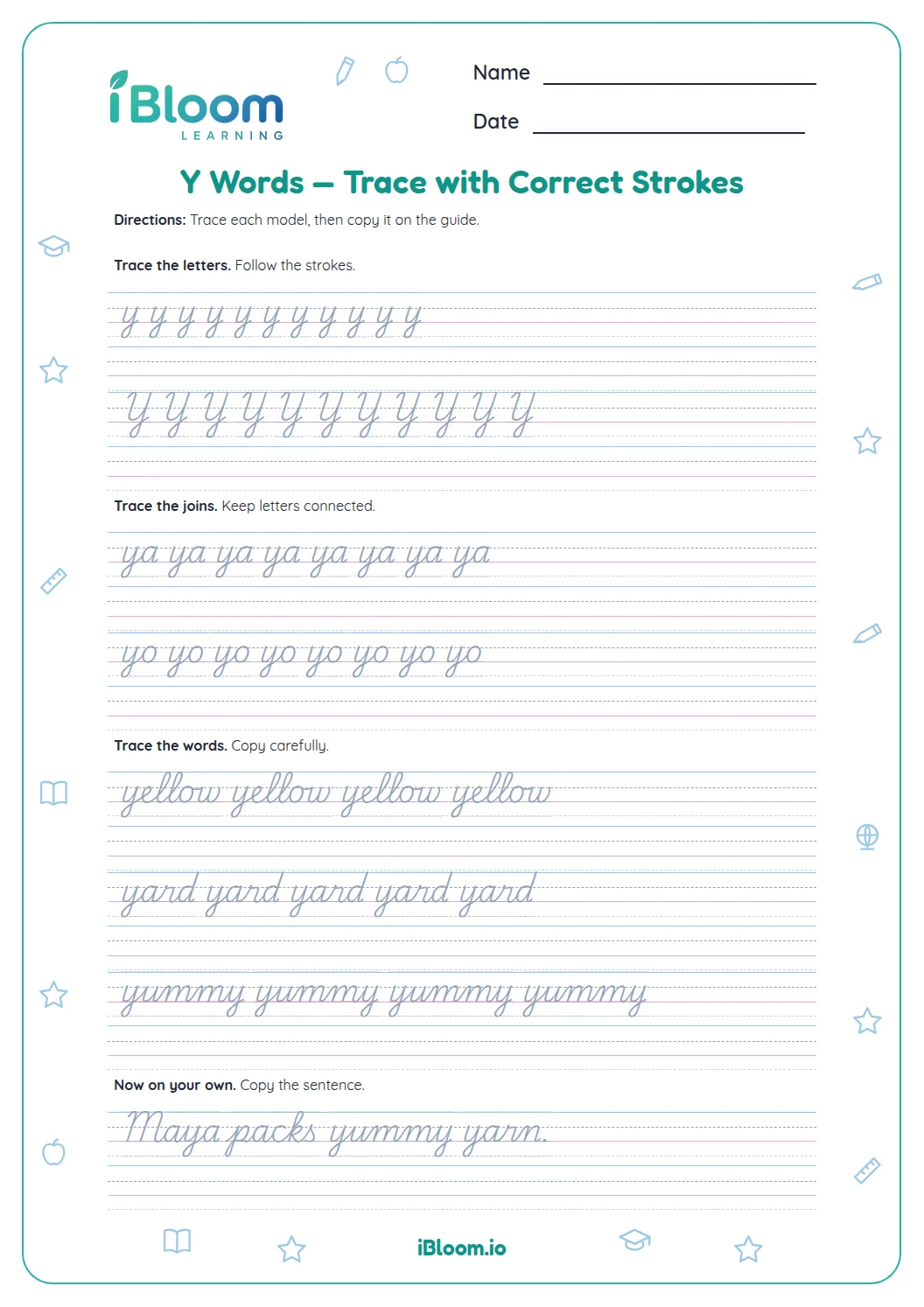
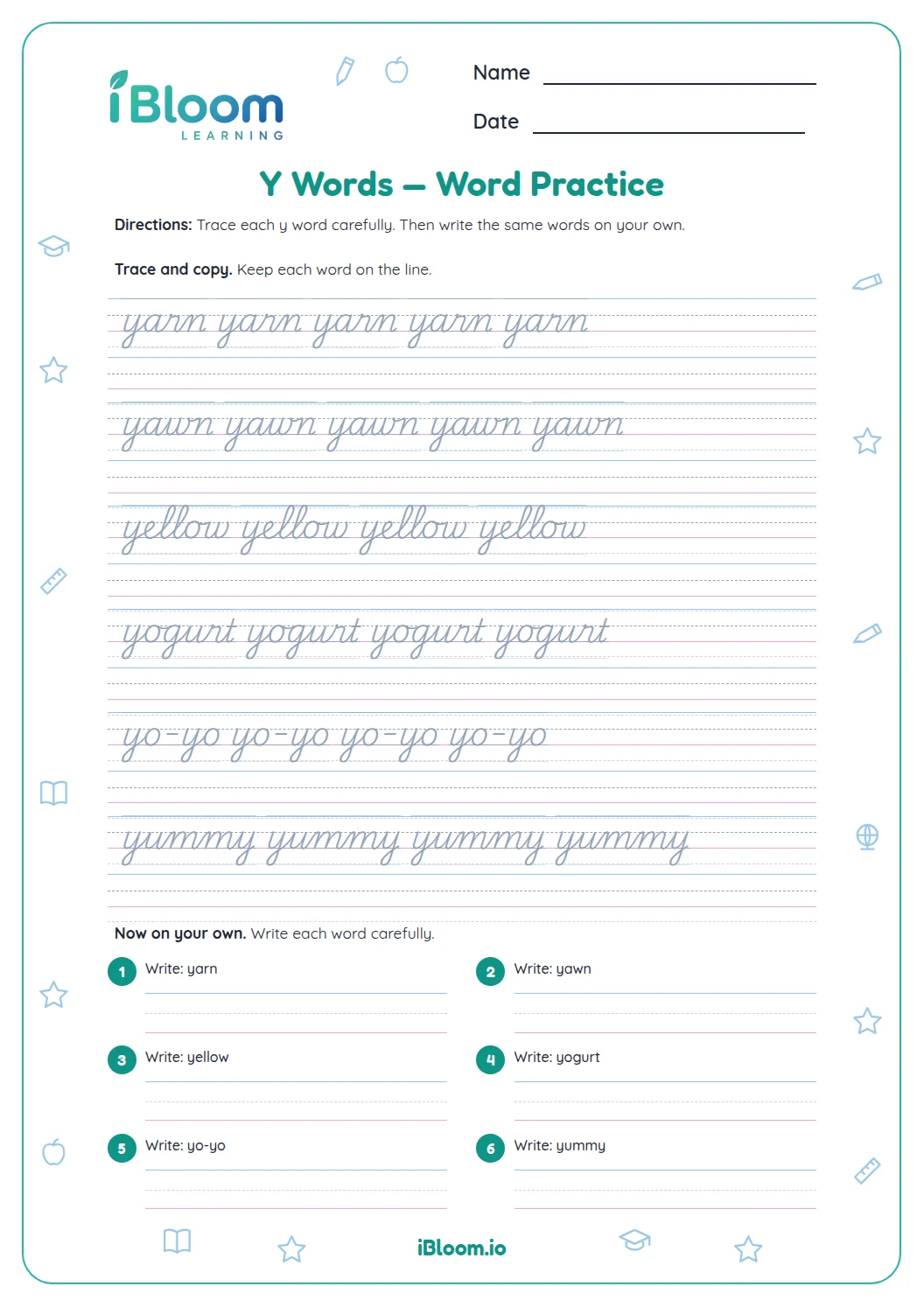
Begin at the printed model and follow the gray cursive letters with a smooth, controlled stroke. On the next line, copy the same word, keeping the letters close enough to connect and leaving a clear space before the next word.
Question 13 is “jacket.” Trace the tall letters carefully, then copy all six letters in order without lifting the pencil between connected lowercase letters.
- 1Model: jacket
- 2Trace the lowercase joins.
- 3Copy jacket with even spacing.
How do the words build cursive practice?
Short words give a quick chance to practice the initial j. Longer words ask writers to keep connected letters consistent across more of the line. June is capitalized because it is the name of a month.
What is included on the worksheet?
All 18 items ask children to trace and copy a J word in cursive. The answer key repeats the model words for checking.
- One part: 18 cursive words, from short to longer forms
- Each item includes a trace model and a copy line
- June is written with a capital J
How can an adult support this practice?
- 1Sit with the paper tilted slightly toward the writing hand.
- 2Trace the model slowly and follow each join.
- 3Keep lowercase letters a similar height.
- 4Leave a clear space after each copied word.
- 5Pause and reset your grip if the pencil feels tight.
- 6Compare the copied word with its model, letter by letter.
Common mistakes and quick fixes
The mistake
Making the j too large compared with the other lowercase letters.
The fix
Keep the j tall enough for its ascender while matching the other letters’ body size.
The mistake
Lifting the pencil between every connected lowercase letter.
The fix
Follow the cursive model’s joins and lift only where the letter form requires it.
The mistake
Writing month names with a lowercase first letter.
The fix
Use a capital J for June, July and January.
What to practice next
Make more practice
Questions parents and teachers ask
Which words are on the page?
There are 18 words: jam, jet, jog, job, jar, joke, jump, jolly, jeans, joint, jelly, juice, jacket, jungle, jigsaw, jingle, journey, and June. Each word begins with J or j and appears as a cursive model to trace and copy. Encourage a careful pace and a short hand-rest break if needed.
Why does the last group use capital J?
June is the name of a month, so it begins with a capital J. The page includes June as one of its cursive models, giving children practice with the capital and lowercase forms in a word. That gives writers a real capital J word to copy while practicing connected lowercase letters.
Should children trace or copy first?
Trace the gray model first, then copy the same word on the empty row. Tracing helps the writer notice the letter path and joins. Copying afterward gives an opportunity to practice the movement independently. Keep the pencil moving through connected lowercase letters, following the printed model closely.
How can children keep cursive words readable?
Aim for consistent letter height, connected lowercase joins and clear spaces between words. Copy one word at a time and compare it with the printed model. Slowing down for a careful attempt is more useful than rushing across the line.
Can the answer key check handwriting quality?
The key shows each word to copy, so an adult can check spelling and letter order. Handwriting shape can vary between writers; compare readable letter forms, spacing and joins with the model rather than expecting identical strokes. An adult can also check that copied words remain distinct and easy to read.
How long should a practice session take?
Plan for about 20 minutes for the 18 trace-and-copy items, with short pauses as needed. Children may complete the words in shorter sessions. A relaxed hand and careful attention to the model matter more than finishing quickly. A short pause between word groups can help keep each tracing and copy attempt neat.