

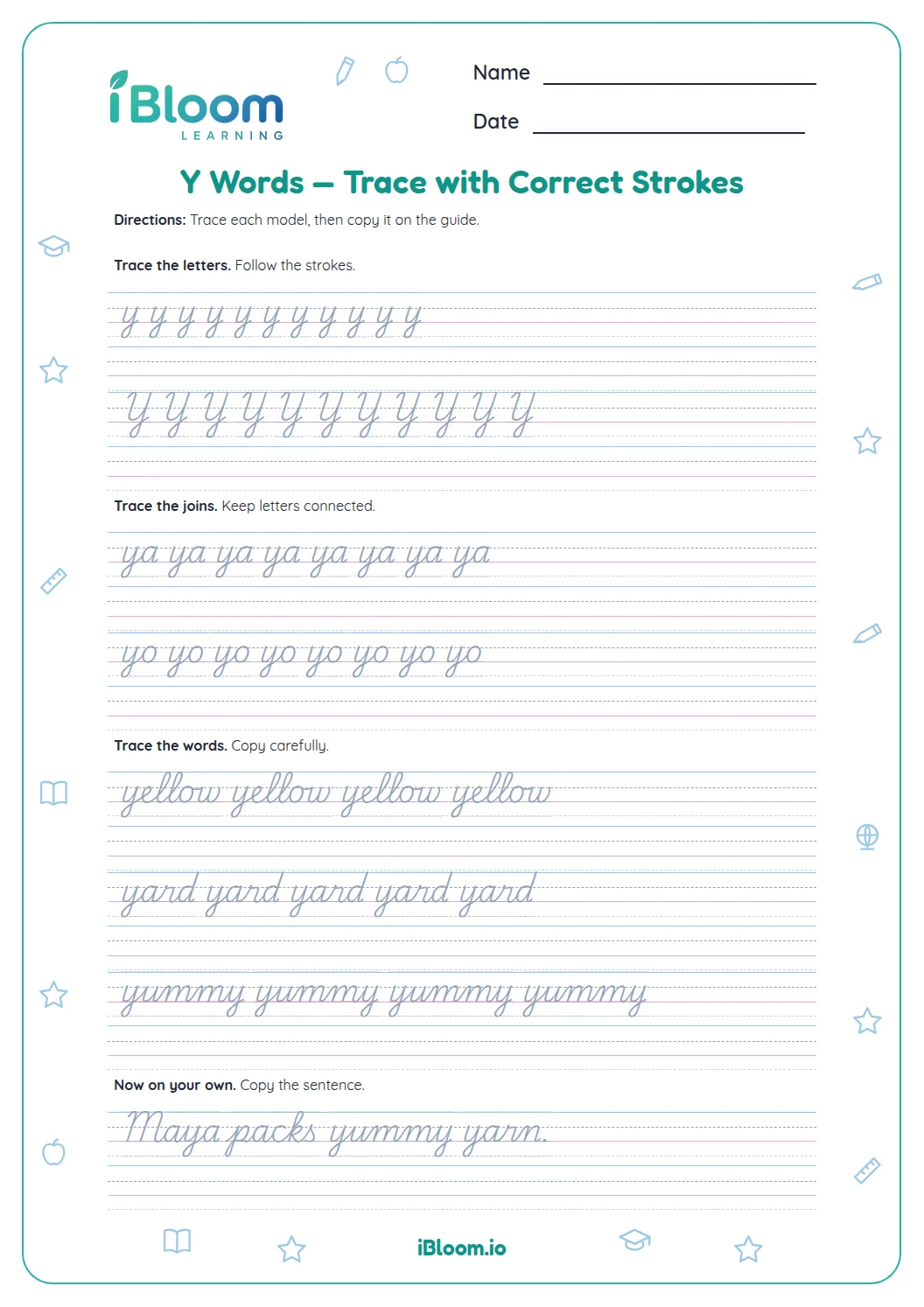

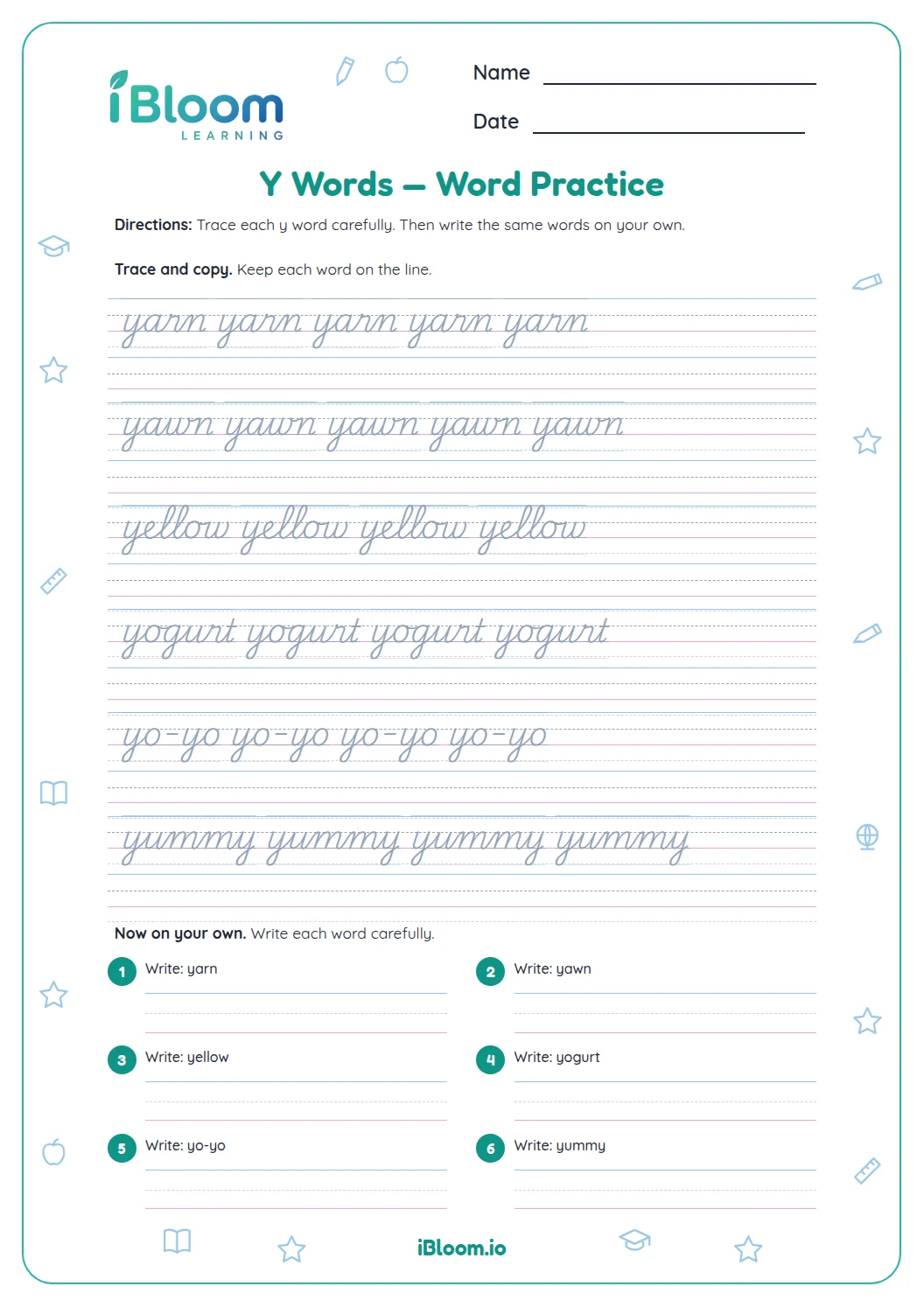
About this worksheet
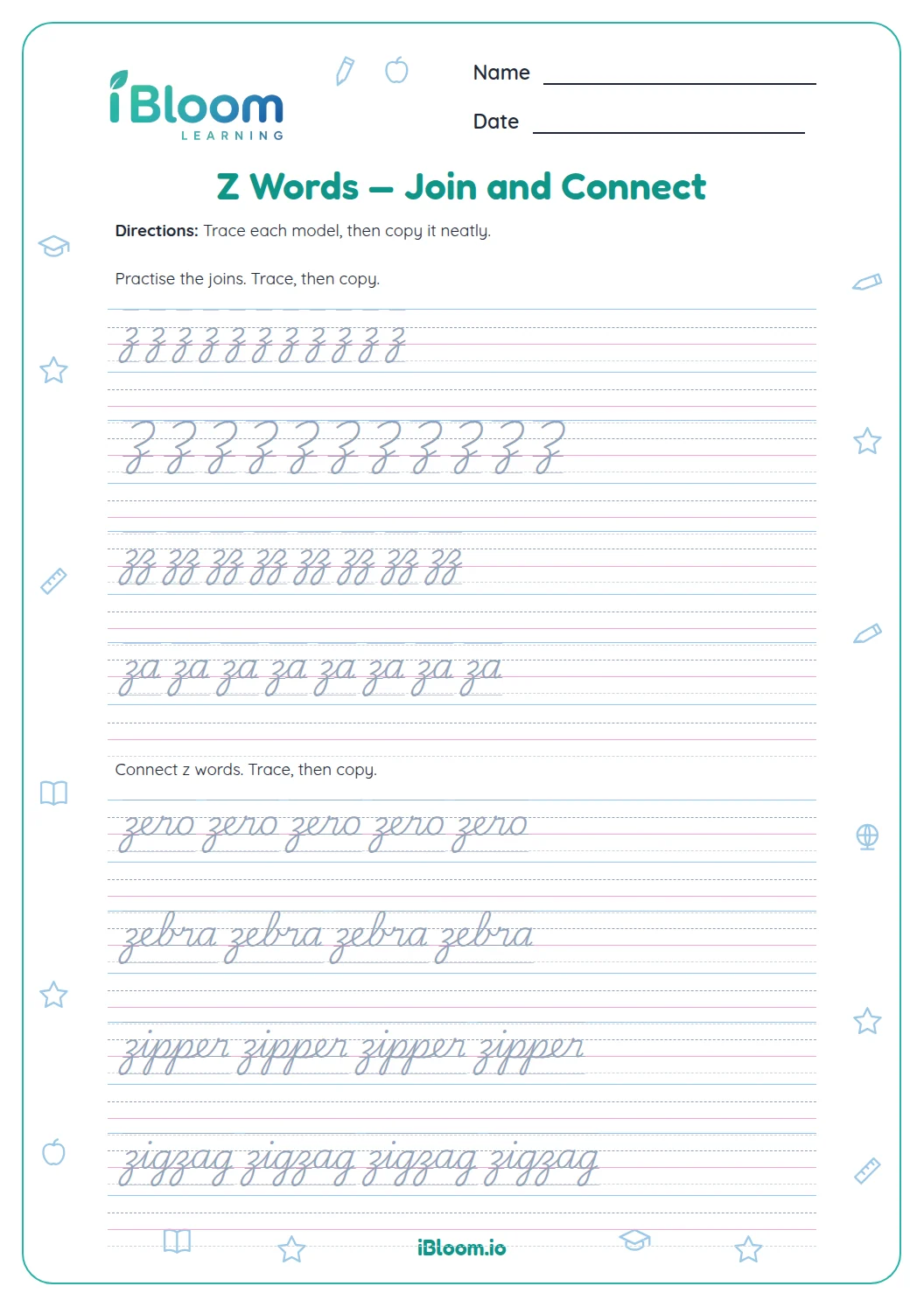
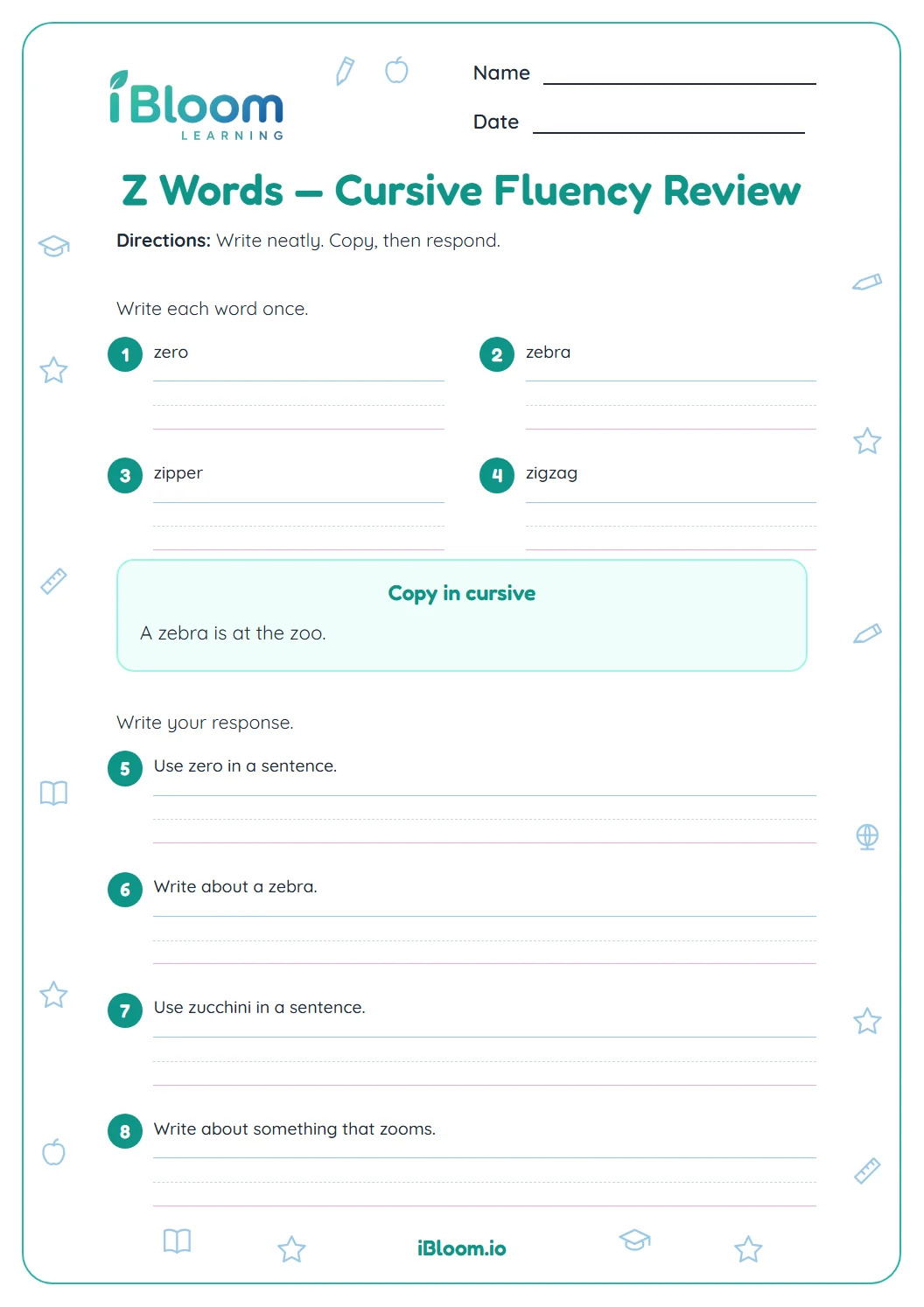
This printable worksheet gives learners in Grades 2–5 concise cursive handwriting practice with Z words. Twelve prompts use a one-line response, followed by two longer trace-and-copy items. Learners can focus on the cursive z shape, joins, and accurate spelling.
Where does cursive z appear?
The first prompts ask learners to write short U words directly on one answer line. For example, “under” gives a brief chance to form and join its letters.
- 1zoo
- 2Answer: zoo
How can learners keep words readable?
Trace each model from left to right, keep letter size steady, and leave spaces between separate words.
What should learners check?
Compare each trace with its printed model, paying attention to the z shape and the letters that follow it.
How to use this worksheet
- 1Read the word before tracing.
- 2Follow the model from left to right.
- 3Keep the z and next letter joined.
- 4Use steady letter size and spacing.
- 5Copy the two longer words in cursive.
Common mistakes and quick fixes
The mistake
Making the z hard to recognize
The fix
Compare its shape with the printed model.
The mistake
Breaking a letter join
The fix
Keep the pencil moving between joined letters.
The mistake
Changing the spelling
The fix
Check each letter against the word model.
What to practice next
Make more practice
Questions parents and teachers ask
Which words are included?
The worksheet has 14 prompts: 12 short words to write on one line and two longer words to trace and copy. The key shows the exact spelling for each prompt. A grown-up can invite the learner to point to the model and explain how it supports the response.
What does each cursive prompt ask children to do?
This page is labeled for Grades 2–5. Learners write each Z word in cursive, then trace and copy two longer words at a careful pace. A grown-up can invite the learner to point to the model and explain how it supports the response. This gives children a simple way to check their thinking before moving to the next item.
Should children write quickly?
The list includes zoo, zebra, zigzag, zucchini, zipper, and puzzle. Each prompt gives a word for cursive handwriting practice. A grown-up can invite the learner to point to the model and explain how it supports the response. This gives children a simple way to check their thinking before moving to the next item.
Why are fuzzy and puzzle included?
Learners write each short word in cursive on the response line. The final two prompts provide a model to trace before copying the longer word. A grown-up can invite the learner to point to the model and explain how it supports the response. This gives children a simple way to check their thinking before moving to the next item.
How can an adult support cursive practice?
The answer key lists the target word for each prompt. Compare each response for spelling, letter order, and the shape of cursive z. A grown-up can invite the learner to point to the model and explain how it supports the response. This gives children a simple way to check their thinking before moving to the next item.