

About this worksheet
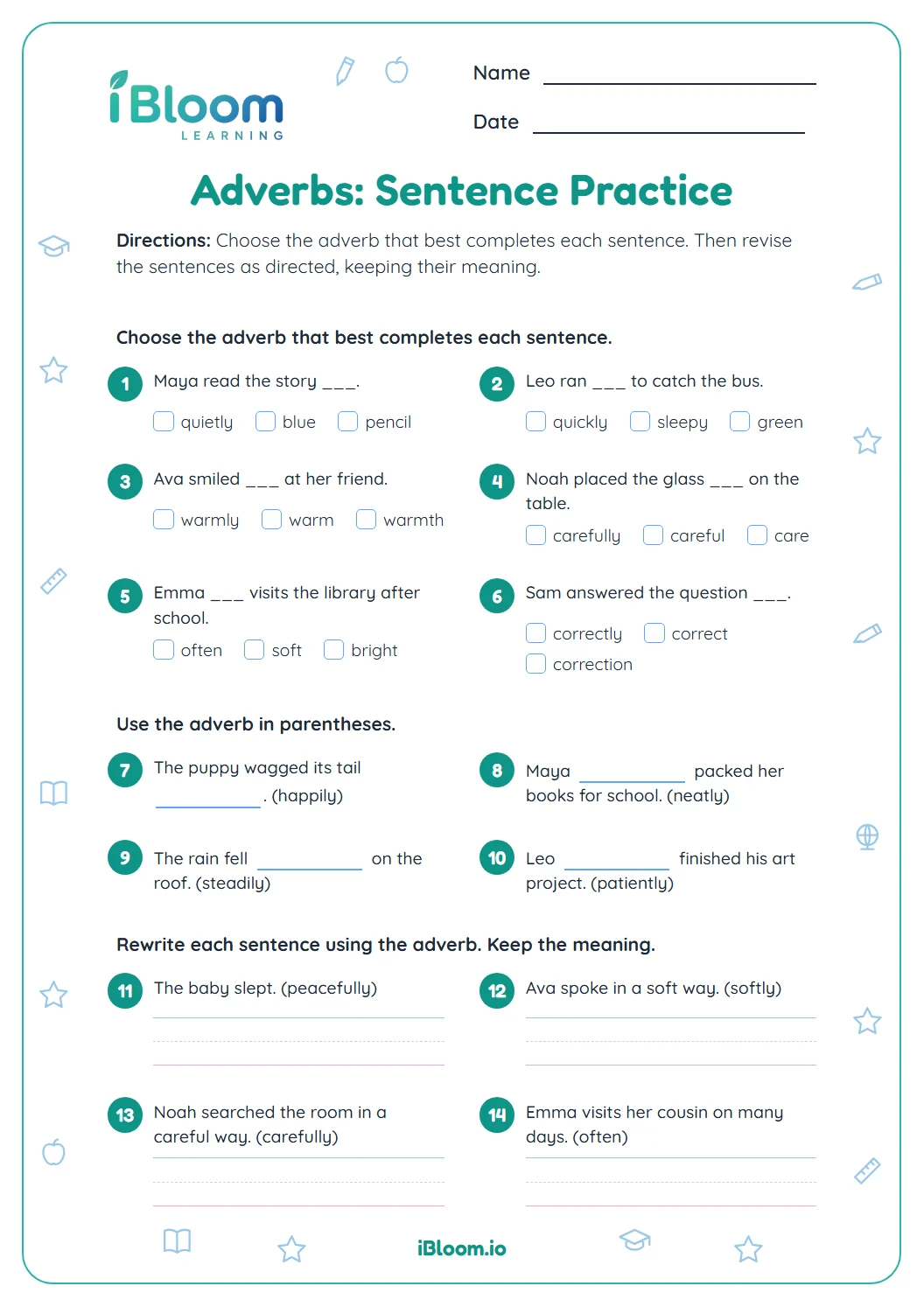
This printable adjectives worksheet gives Grades 3–5 learners 15 questions in three parts. First, students circle adjectives in sentences with more than one describing word. Next, they select an adjective that fits its noun and context. The final part contrasts adjectives with adverbs, such as quiet and quietly. It connects to CCSS L.3.1a, explaining how adjectives and adverbs function in sentences, and includes a separate answer key.
Aligned to L.3.1a
How can students spot an adjective?
Find the noun first, then ask what kind or which one. In “The striped kitten curled up,” striped describes kitten.
How can a sentence help choose an adjective?
Read the noun and the rest of the sentence for clues. A cozy blanket keeps someone warm, so cozy fits better than thin or noisy.
- 1The ___ blanket kept us warm.
- 2Warmth is the clue.
- 3Cozy describes the blanket and fits the idea.
When does an adverb fit better?
An adjective describes a person, place, or thing. An adverb can tell how an action is done: the bird sang sweetly.
How to use this worksheet
- 1Circle the naming word in your mind first.
- 2Ask what kind or which one to find adjectives.
- 3Read the full sentence before choosing a word.
- 4Ask whether the word describes a noun or an action.
- 5Check each response with the key.
Common mistakes and quick fixes
The mistake
Circling the noun instead of the adjective.
The fix
Ask “What kind of noun?” and circle the word that answers.
The mistake
Choosing a word that sounds pleasant but conflicts with the clue.
The fix
Read the completed sentence and test whether its meaning makes sense.
The mistake
Using an adjective after an action when the sentence asks how it happened.
The fix
Ask what the word modifies; use an adverb for how an action occurs.
Common Core alignment
Identify adjectives and explain how they function in sentences.
On this sheet: Parts A and B identify adjectives; Part C distinguishes adjectives from adverbs by what each word modifies.
Show the official wordingHide the official wording
Explain the function of nouns, pronouns, verbs, adjectives, and adverbs in general and their functions in particular sentences.
What to practice next
Make more practice
Questions parents and teachers ask
What is an adjective?
An adjective describes a noun, often by telling what kind or which one. In “the bright yellow kite,” both bright and yellow describe kite. Part A asks learners to find every adjective in short sentences. Part B then asks them to choose a precise adjective that makes sense in a sentence.
What is the difference between an adjective and an adverb?
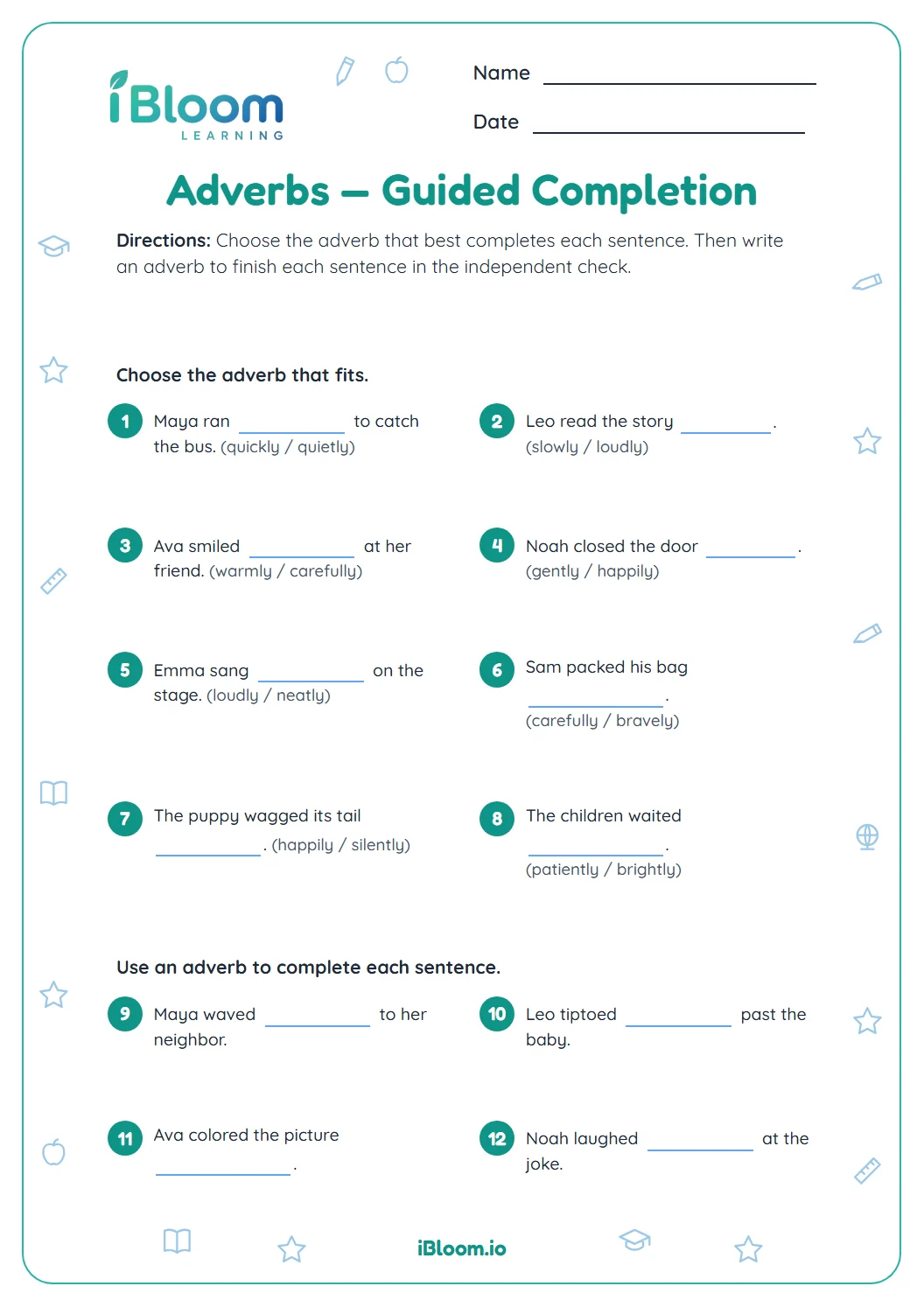
An adjective describes a noun, while an adverb can describe a verb or action. In “The hallway is quiet,” quiet describes hallway. In “The bird sang sweetly,” sweetly tells how the bird sang. Part C contrasts both forms in context, including words after linking verbs.
How many questions are included?
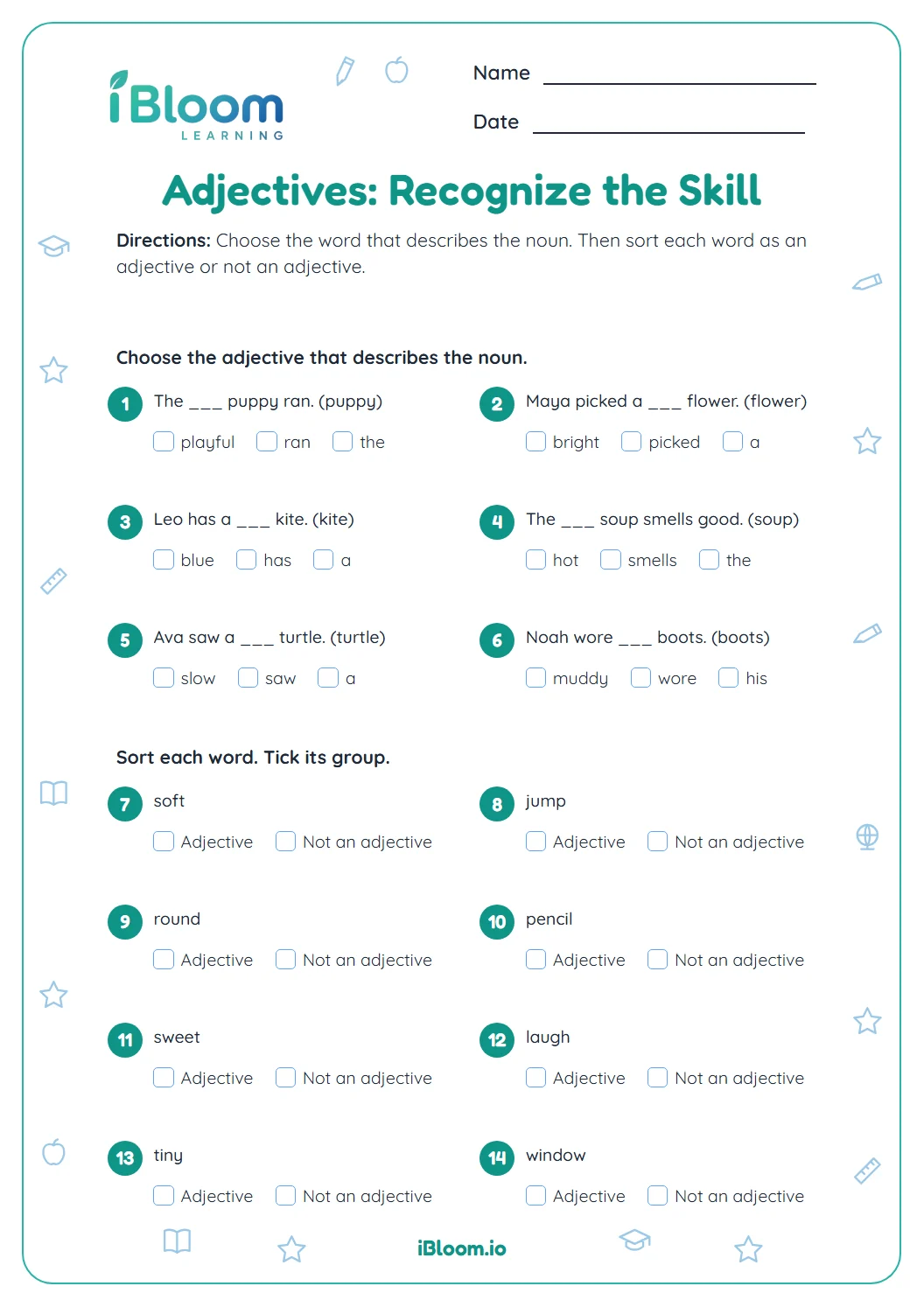
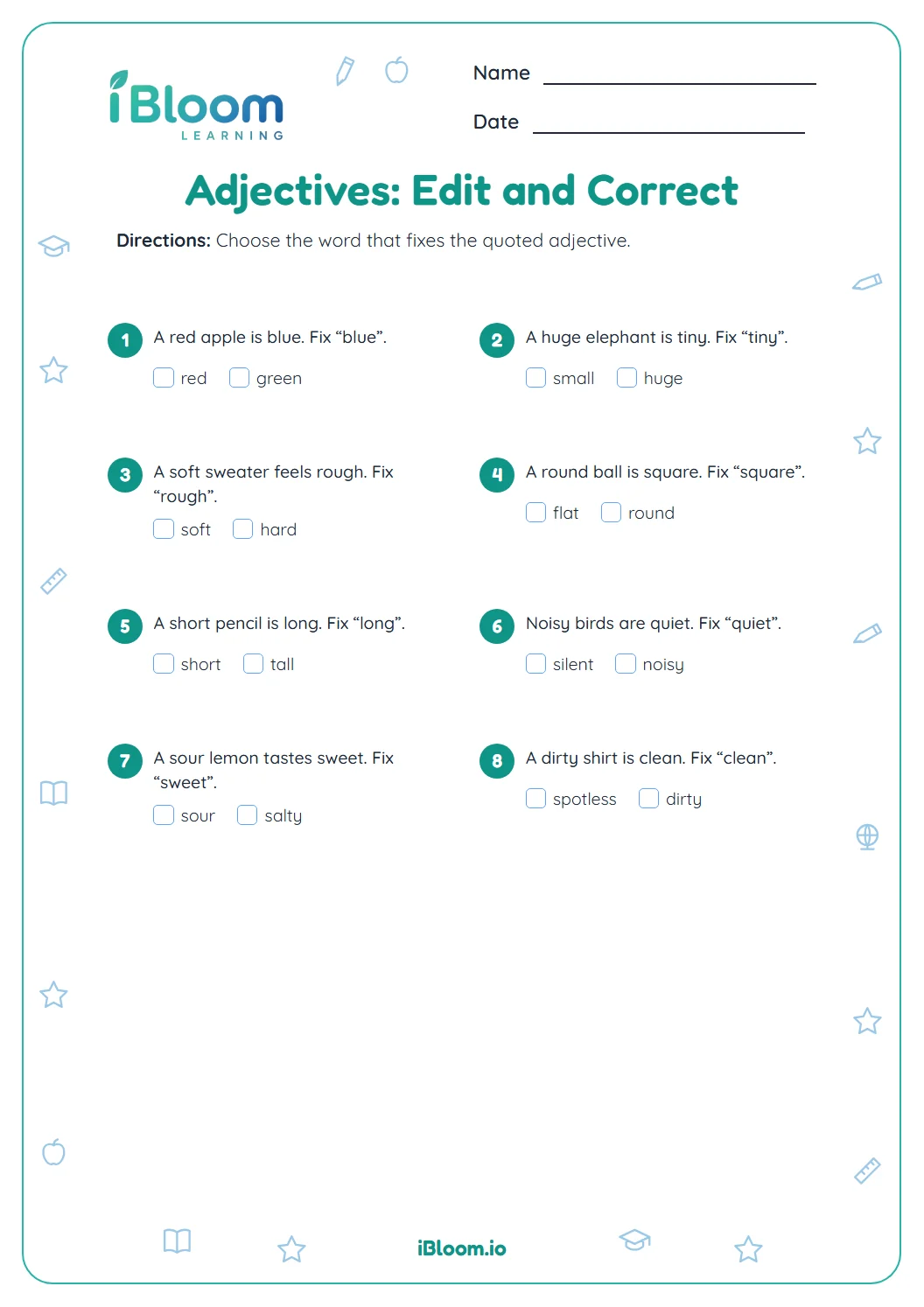
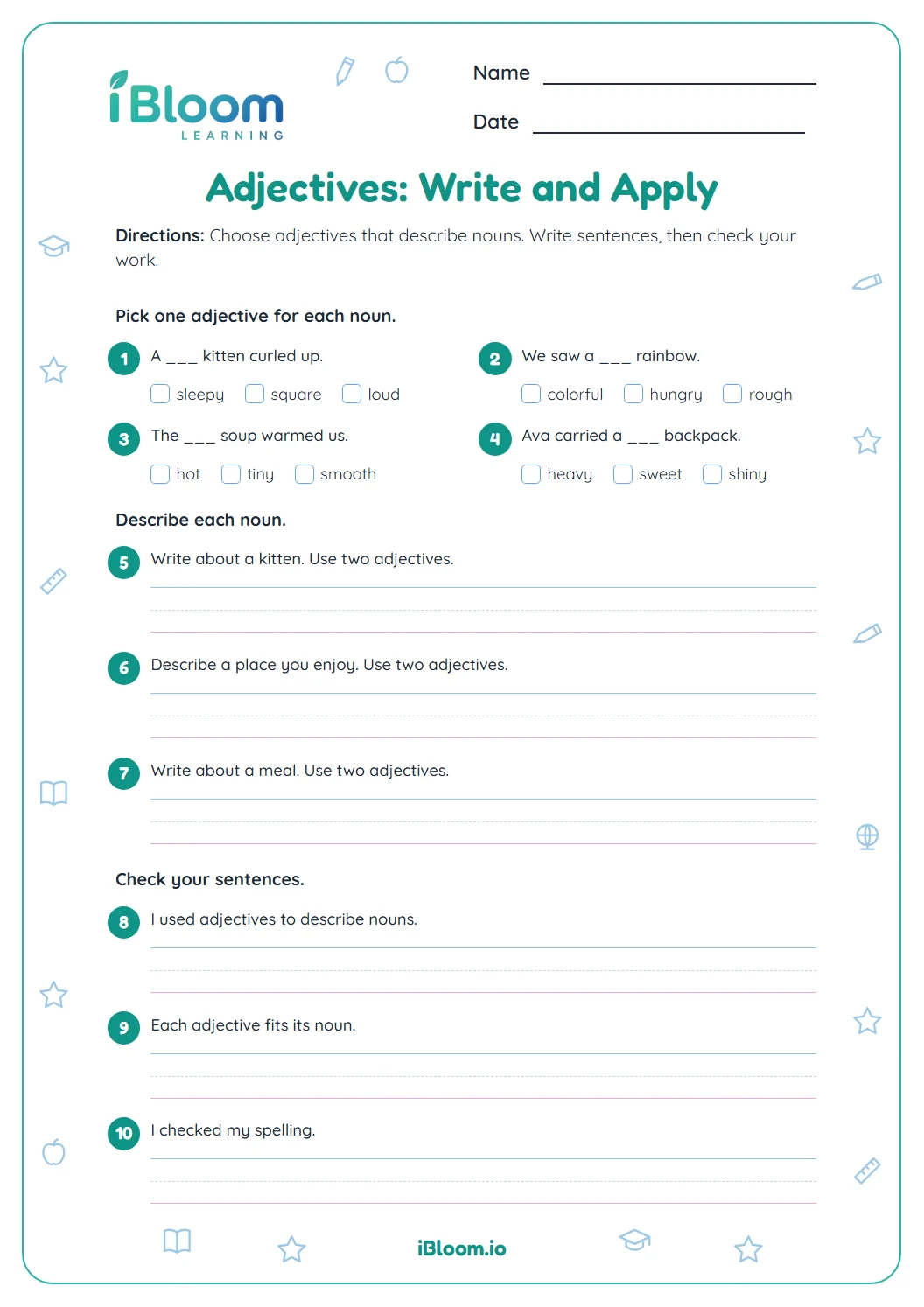
The worksheet has 15 questions across two pages: three circle-the-word sentences, four adjective choices, and eight adjective-or-adverb choices. The separate key lists the answers. Learners move from spotting descriptive words to choosing a fitting form in a complete sentence.
What grades can use this worksheet?
The sheet is labeled for Grades 3–5. Teachers may use it for review or adjust support by reading the sentence clues aloud before students complete the choices. Older learners can explain which noun or action each word describes as they check their answers.
How can a student check a choice?
Read the whole sentence with the chosen word and ask what that word describes. Then check whether it names a quality of a thing or tells how an action happened. The answer key confirms the intended form. A useful check is “The hallway is quiet” versus “The bird sang sweetly.”