

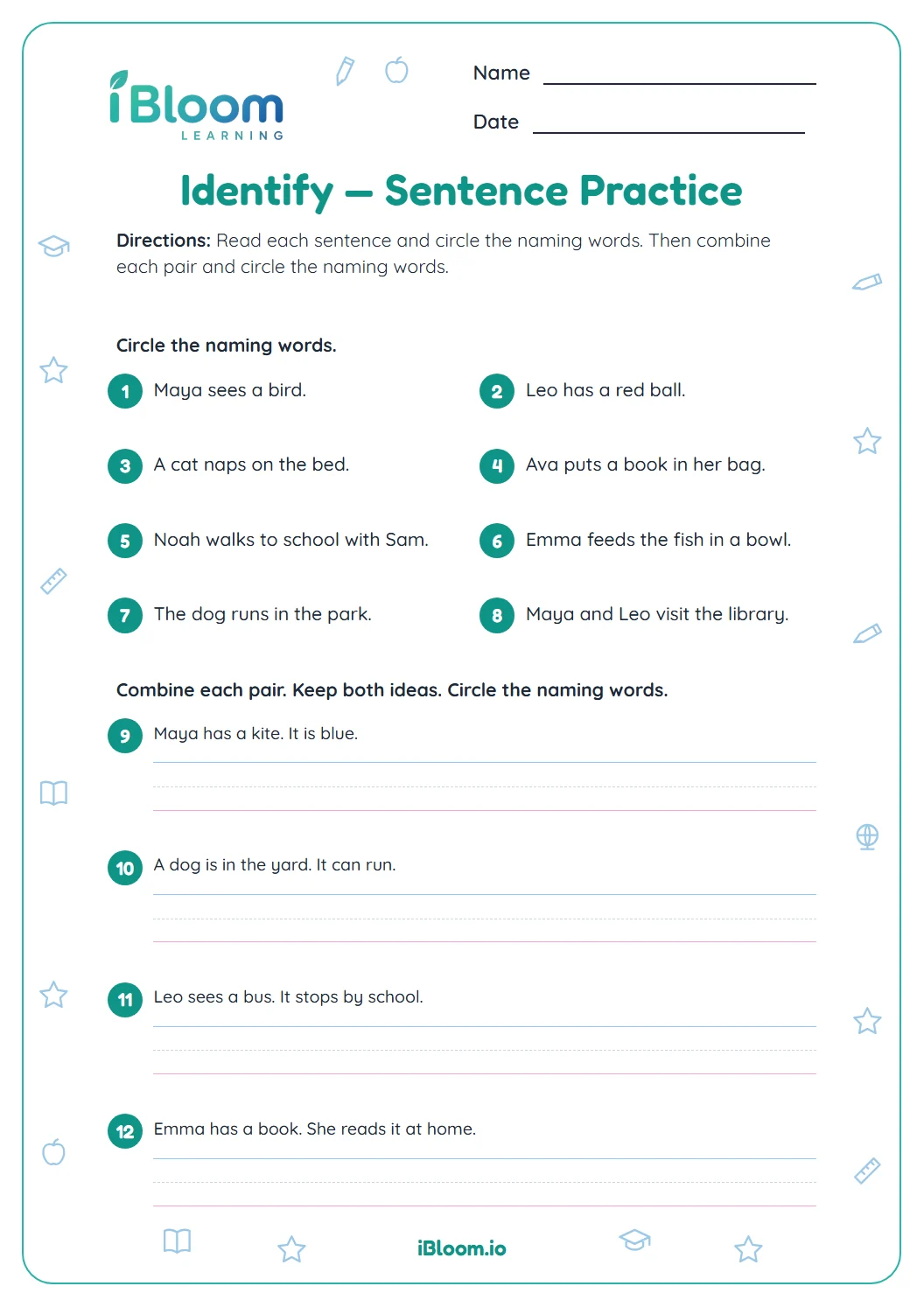
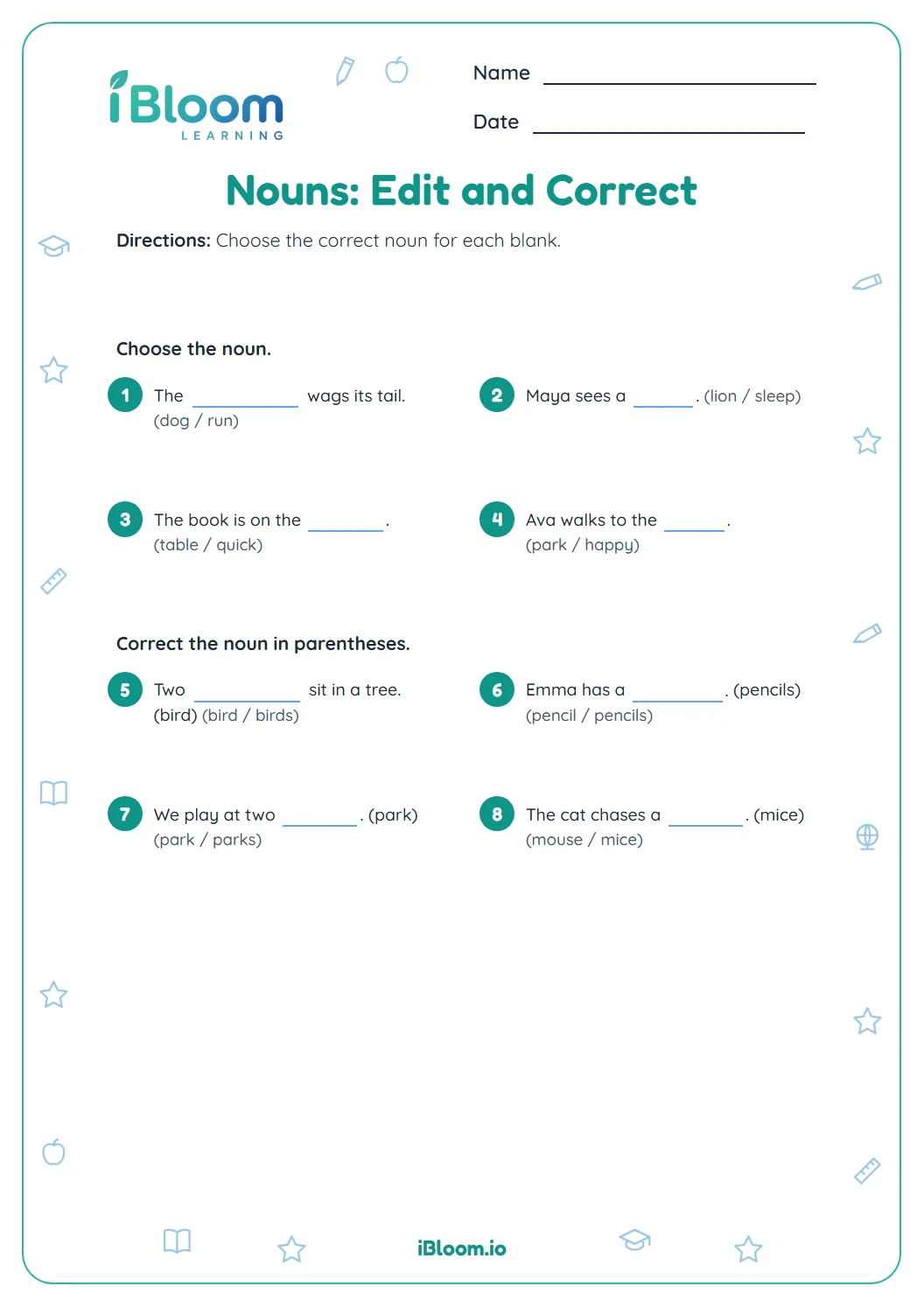
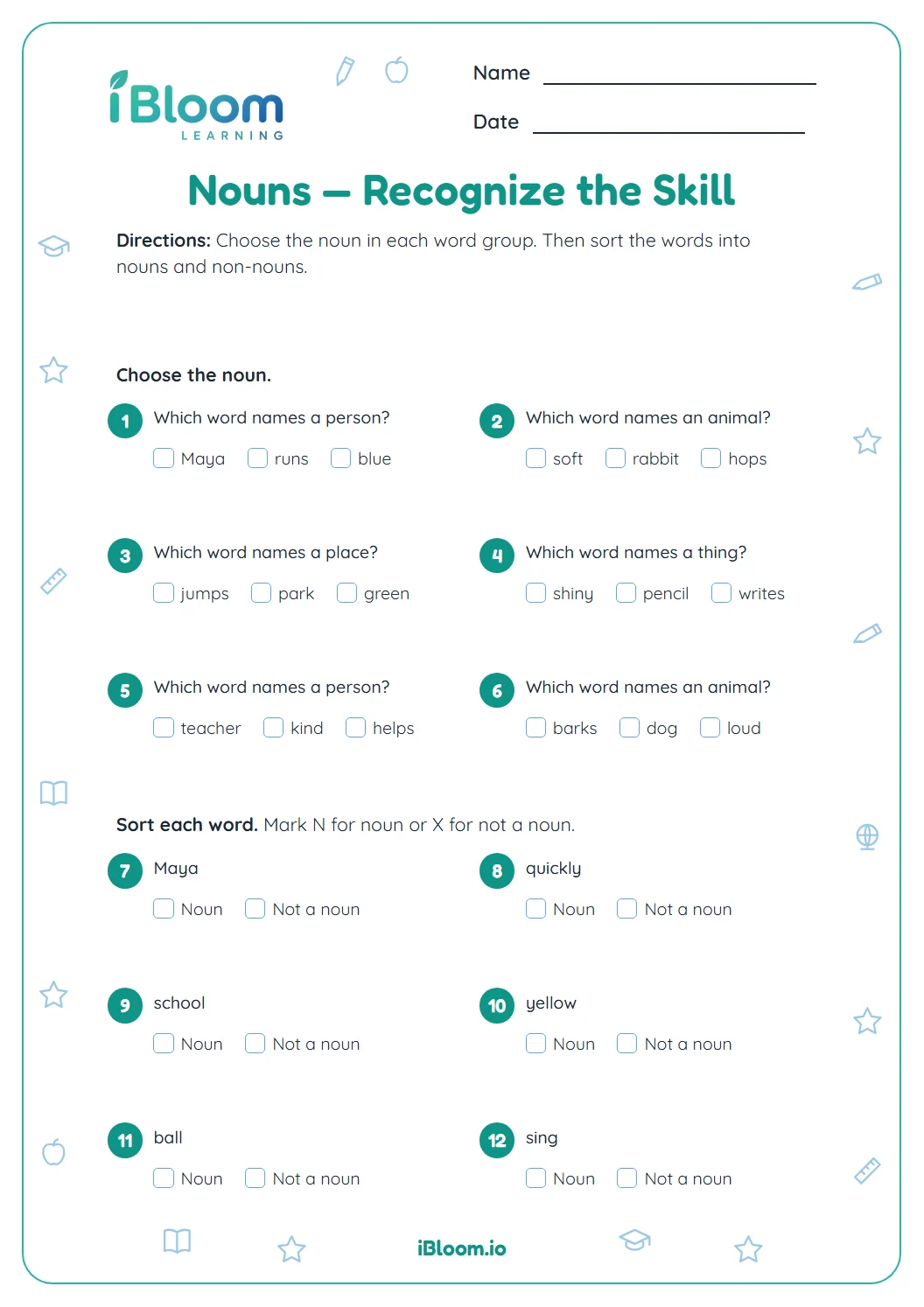
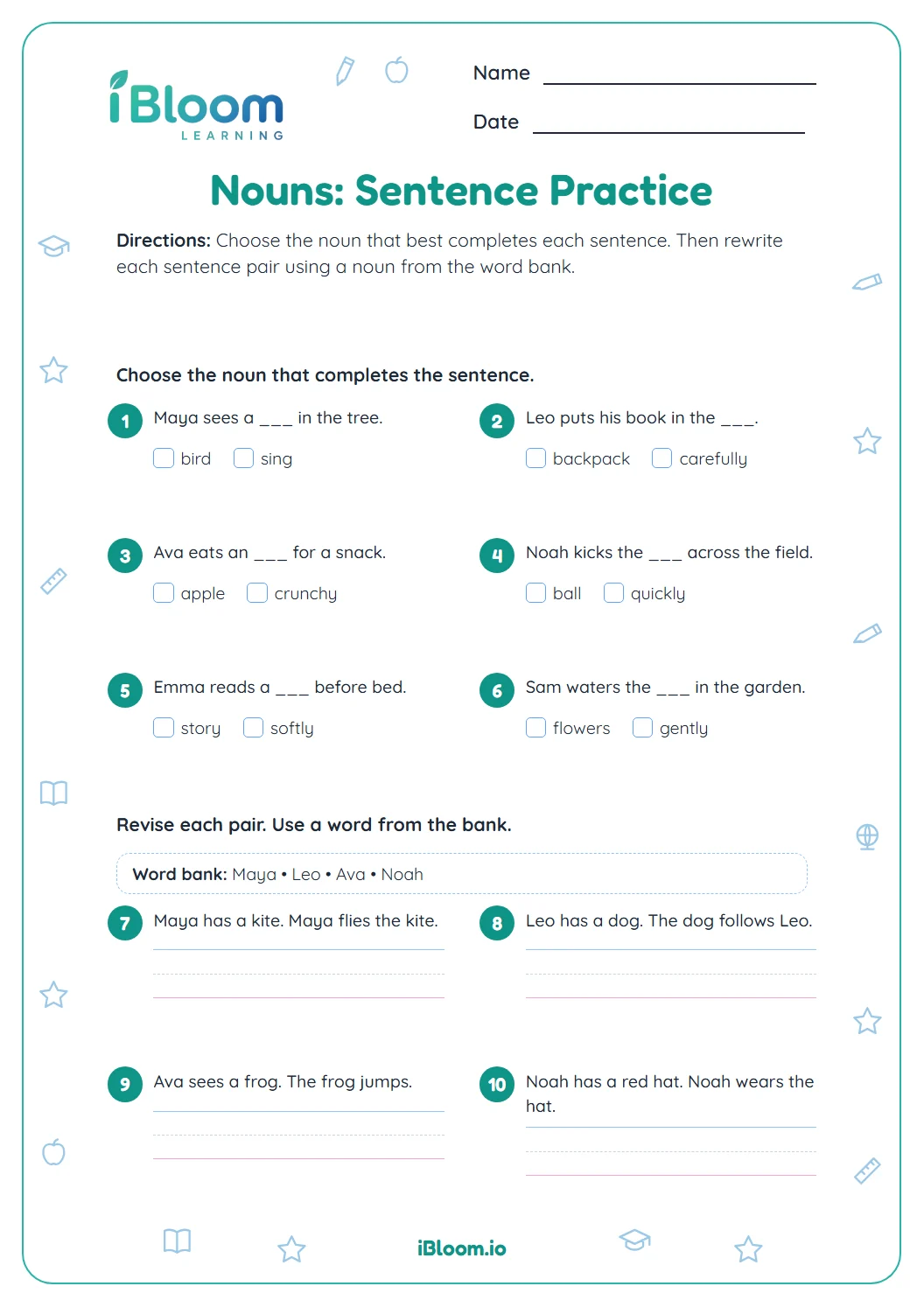

About this worksheet
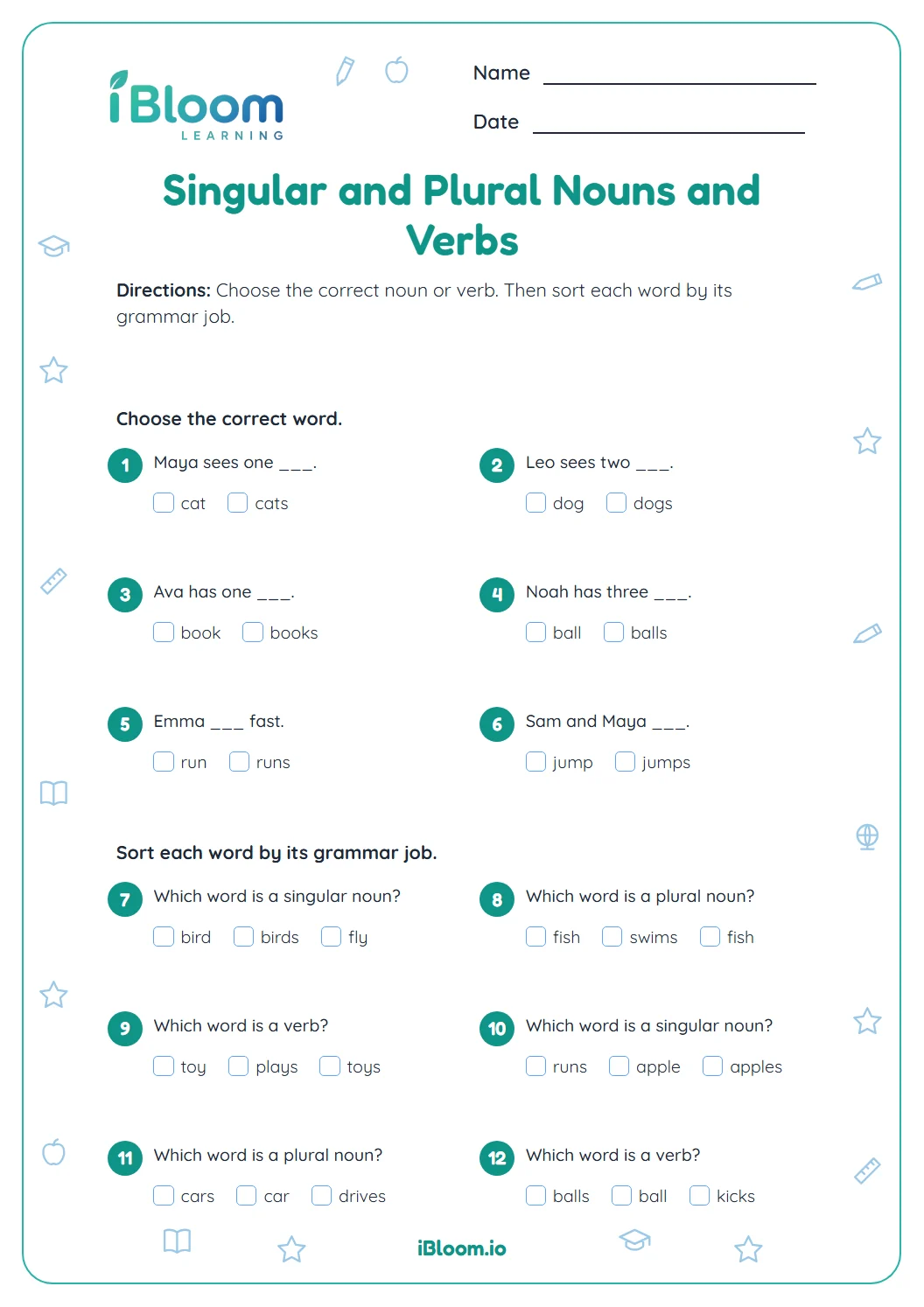
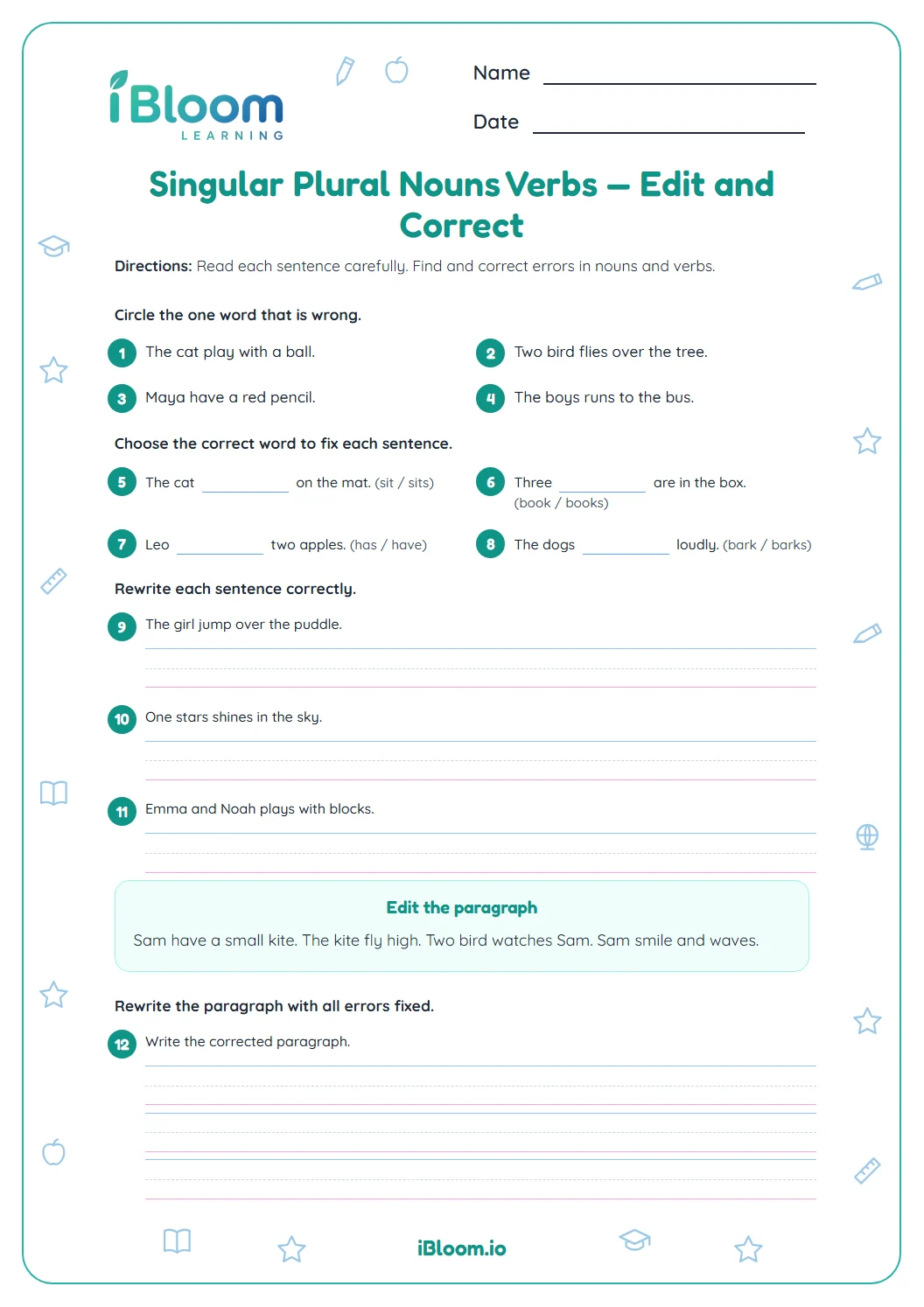
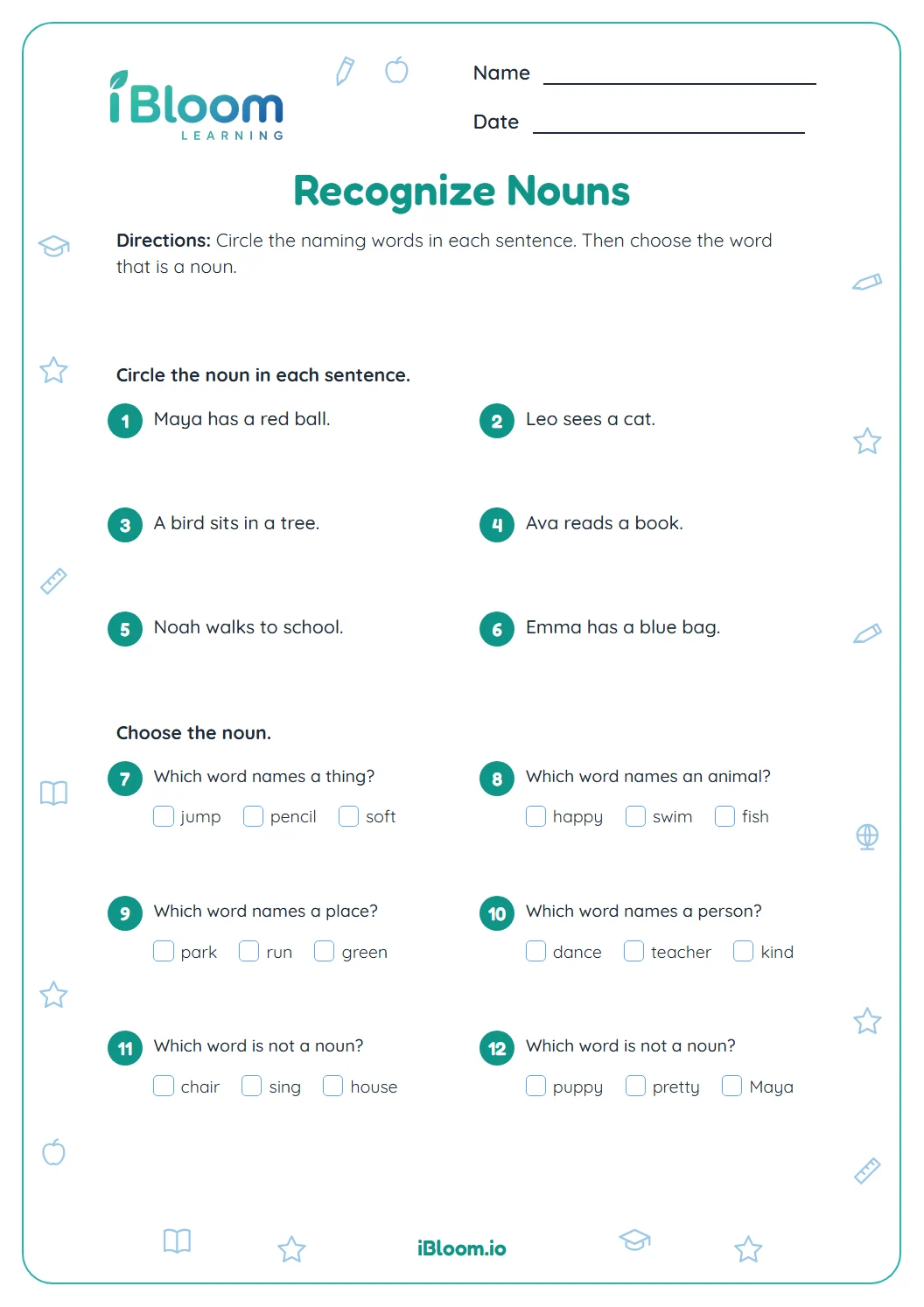
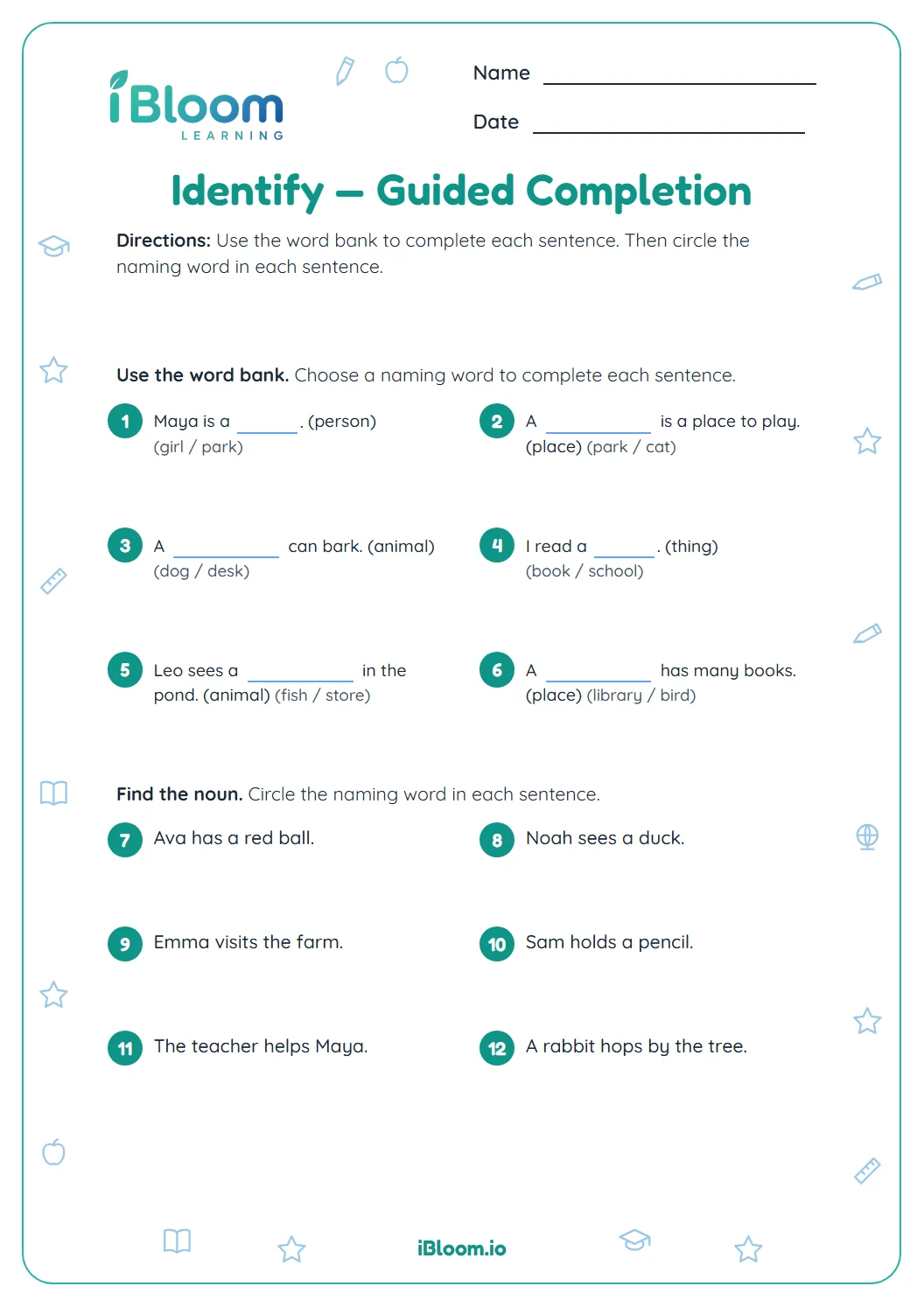
This Grade 1 sentence practice starts with finding nouns and action verbs, then asks children to choose singular or plural forms that fit the sentence. The final part moves into sentence writing and editing. The 14 questions focus on how nouns and verbs work together in basic sentences and align with CCSS L.1.1.b and L.1.1.c. A separate answer key includes sample responses for open-ended items.
Aligned to L.1.1.c
How do I spot the noun and verb?
A noun names who or what the sentence is about. A verb tells what that noun does. In “The puppy naps,” puppy names an animal and naps tells its action.
- 1The puppy naps.
- 2Noun: puppy
- 3Verb: naps
How should the noun and verb match?
One animal usually takes a singular verb form: “The kitten sleeps.” More than one takes the plural form: “The kittens sleep.” Read the subject first, then check the verb ending.
How does the sheet build sentence practice?
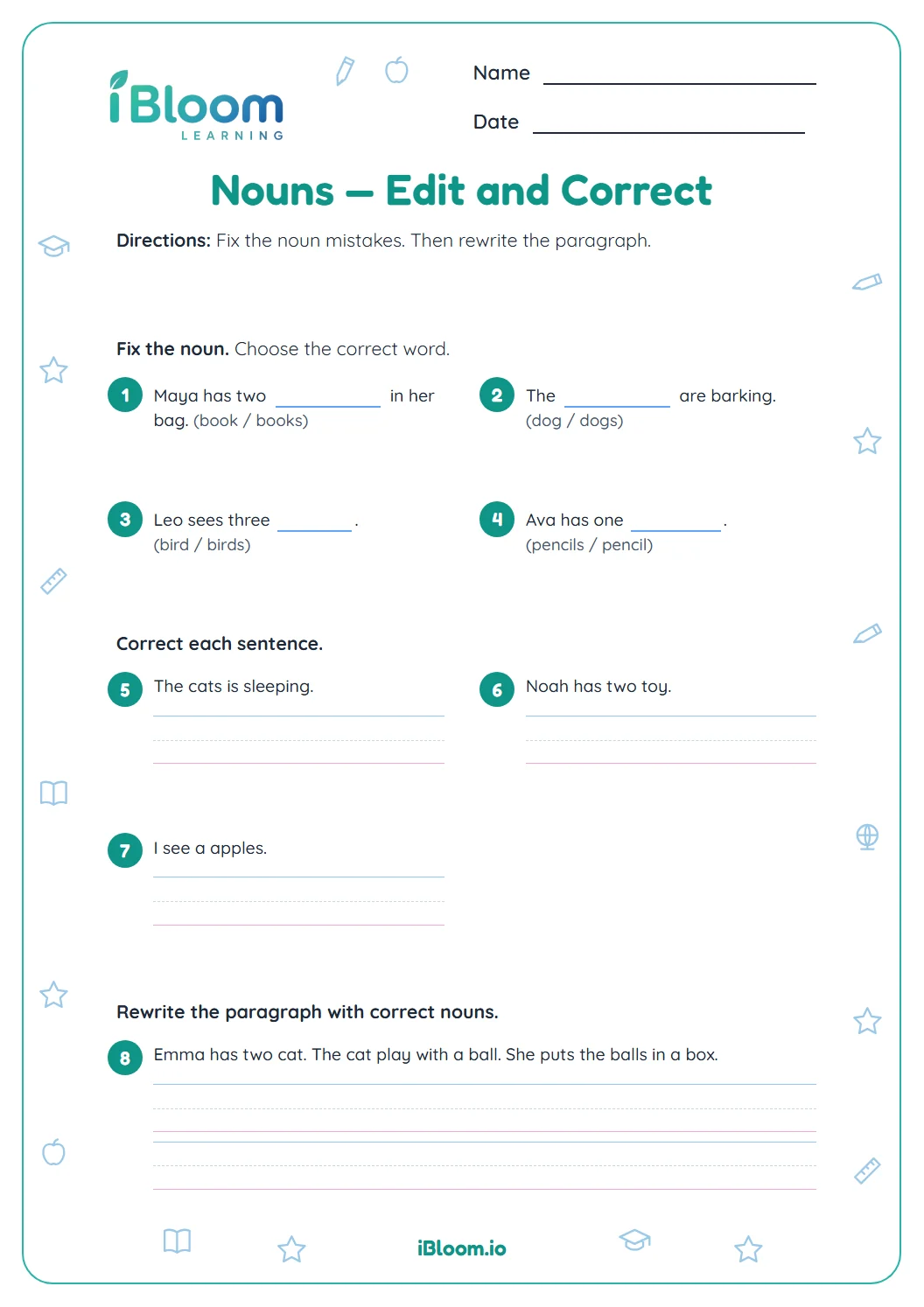
The last part asks children to write a sentence, change a noun from one to more than one, and repair sentences that do not match.
How to use this worksheet
- 1Read the full sentence before choosing a word.
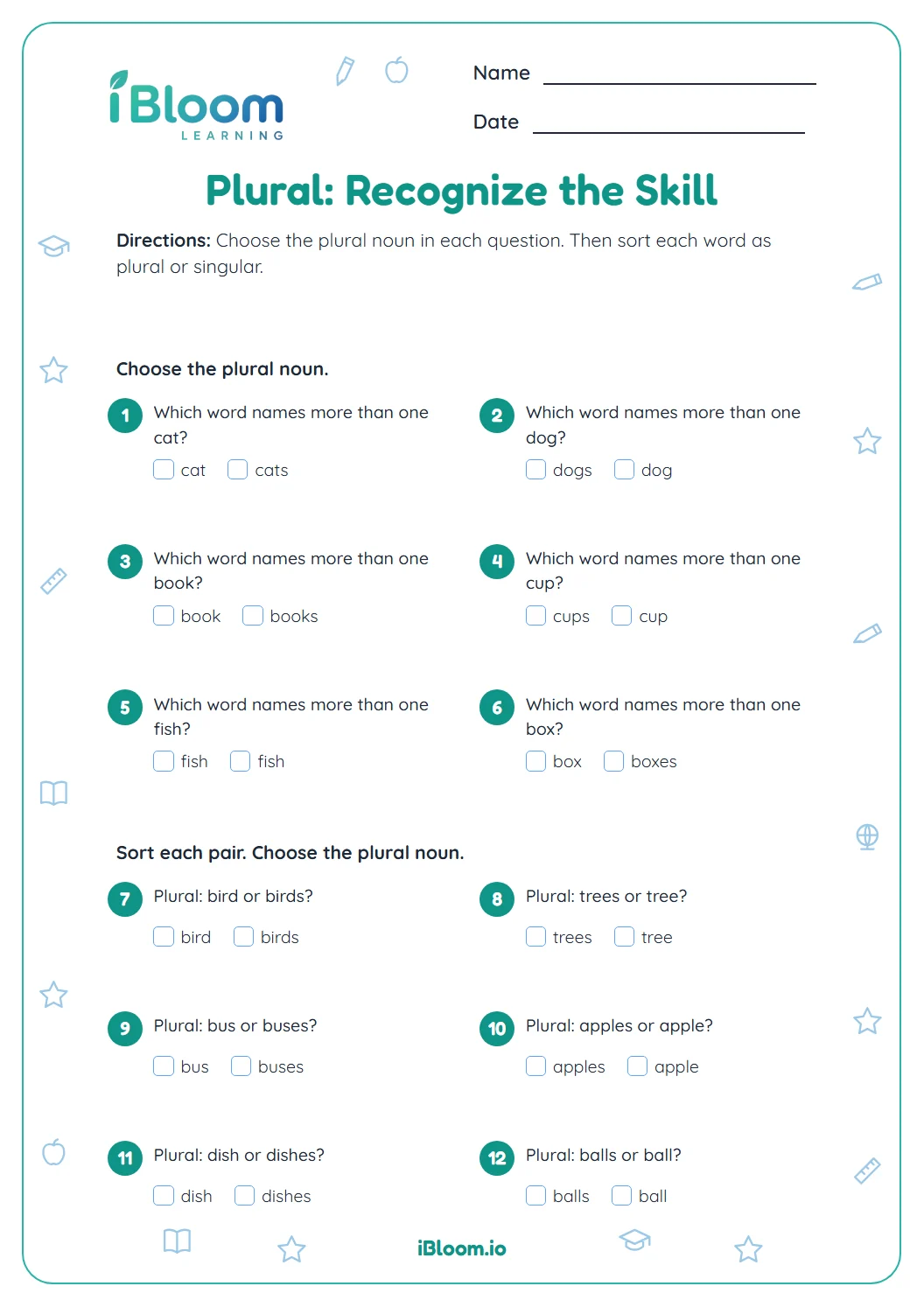
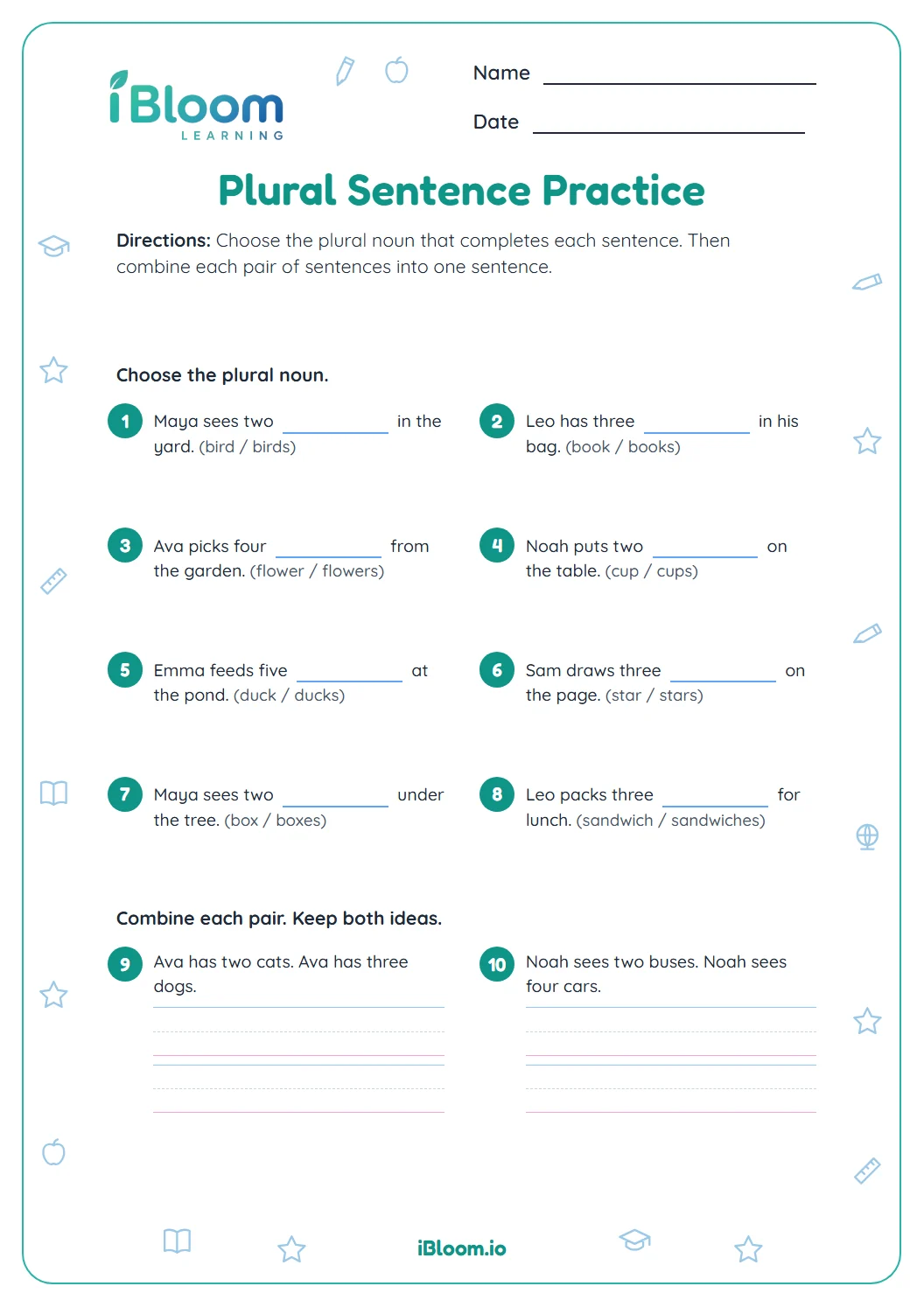
- 2Ask whether the noun means one or more than one.
- 3Check that the verb matches the noun.
- 4For writing items, reread the sentence aloud and check that it is complete.
Mistakes to watch for
The mistake
Adding s to every verb.
The fix
With a plural noun, the basic verb often has no s: “Birds fly.”
The mistake
Changing the noun but not the verb.
The fix
Read both words together after changing one to plural.
The mistake
Writing a phrase instead of a sentence.
The fix
Make sure the sentence tells who or what and what they do.
Curriculum alignment
This page connects the practice to the Common Core standard below.
Use singular and plural nouns with matching verbs in these sentences.
On this sheet: Questions ask children to use singular and plural nouns with matching verbs.
Show the official wordingHide the official wording
Use singular and plural nouns with matching verbs in basic sentences (e.g., He hops; We hop).
What to practice next
Further reading
Questions parents and teachers ask
What is a noun?
A noun names a person, place, animal, or thing. In “The puppy naps,” puppy is the noun because it names the animal the sentence is about. Children identify nouns in the first part and use singular and plural nouns in the following sentence practice.
What is a verb?
A verb tells what someone or something does. In “Birds sing,” sing is the action verb. The worksheet asks children to find verbs and choose a verb form that agrees with the sentence subject. Have your child read the sentence aloud and notice which word tells the action.
How does a verb change with a plural noun?
A basic present-tense verb often drops its s when the subject is plural: “The bird sings” becomes “The birds sing.” Read the whole sentence to hear whether the noun and verb fit together. Read the subject and verb together after changing the noun.
What should a complete sentence include?
A complete sentence tells who or what it is about and says something about that subject. “The dog” names an animal but does not tell what it does. “The dog runs” expresses a complete thought. Ask who or what the sentence is about and what that subject does.
Are there open-ended questions?
Yes. Questions 11, 12, and 14 invite children to write a sentence, and question 13 asks them to edit one. The key gives sample responses; other wording is correct when it follows the prompt and uses a noun and verb that agree.
Which standards does this page practice?
The page practices CCSS L.1.1.c: use singular and plural nouns with matching verbs in basic sentences. Children select matching verb forms, complete sentences, and edit a subject-verb agreement error. This standard fits the central practice throughout the worksheet.