
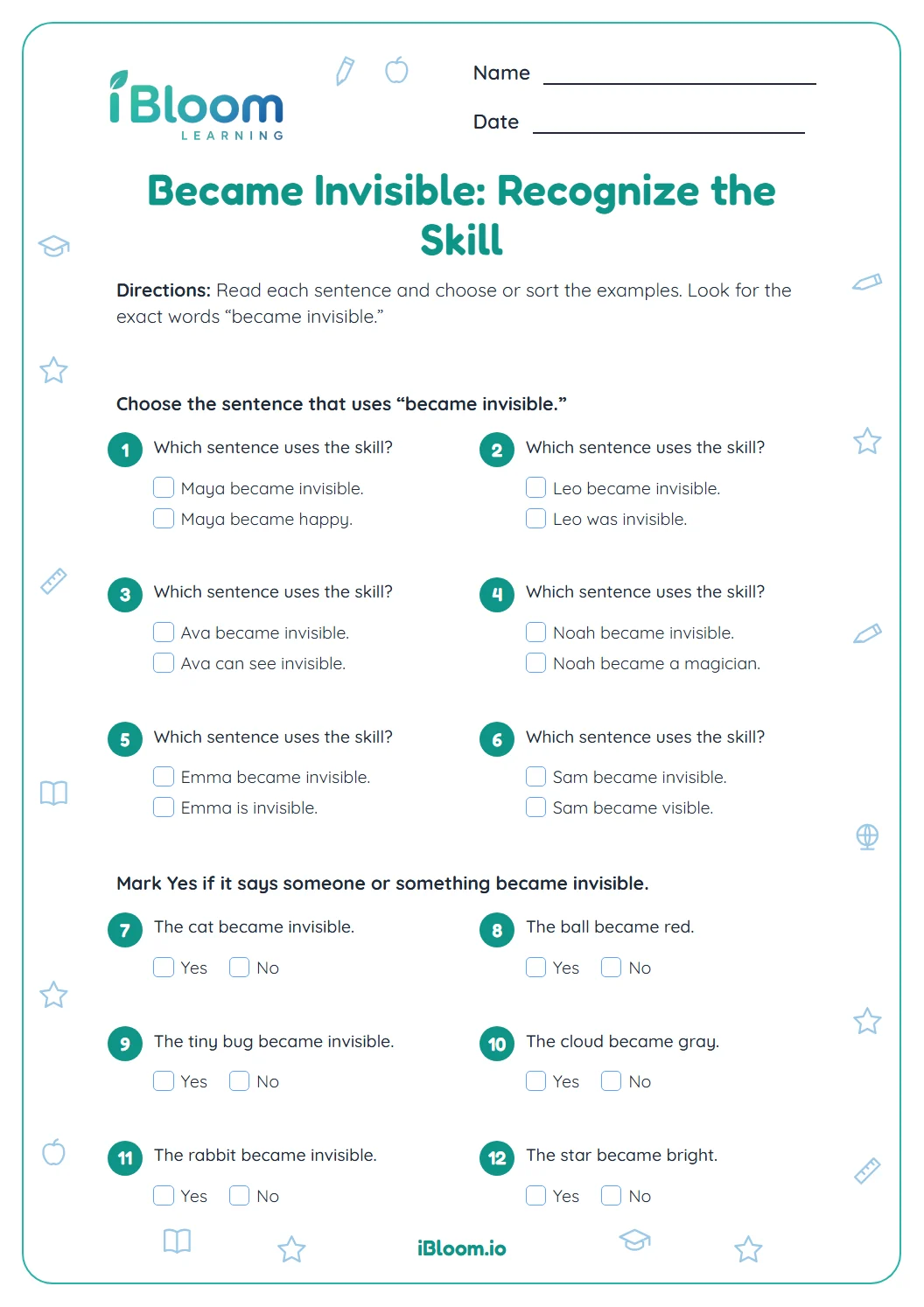
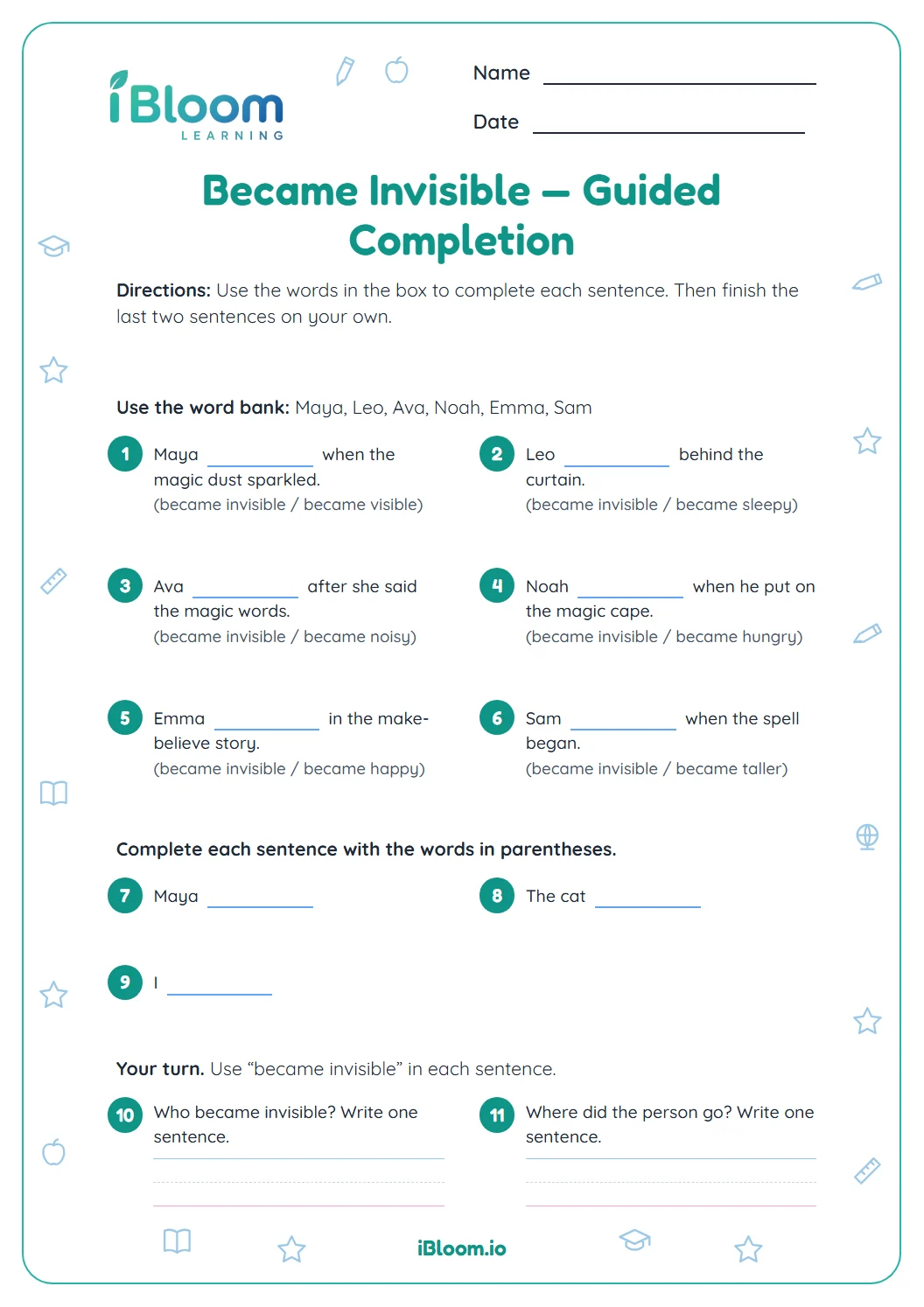
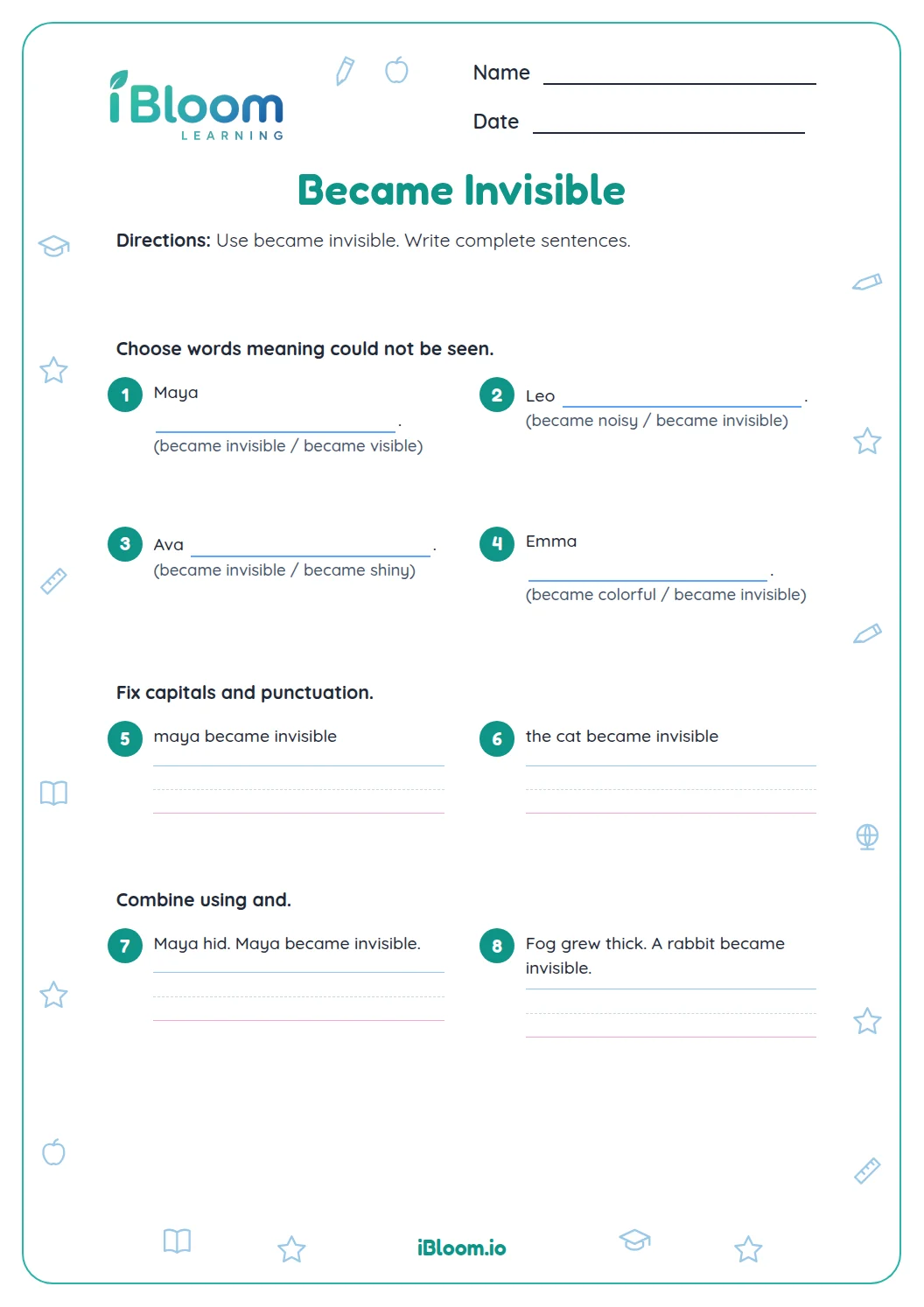
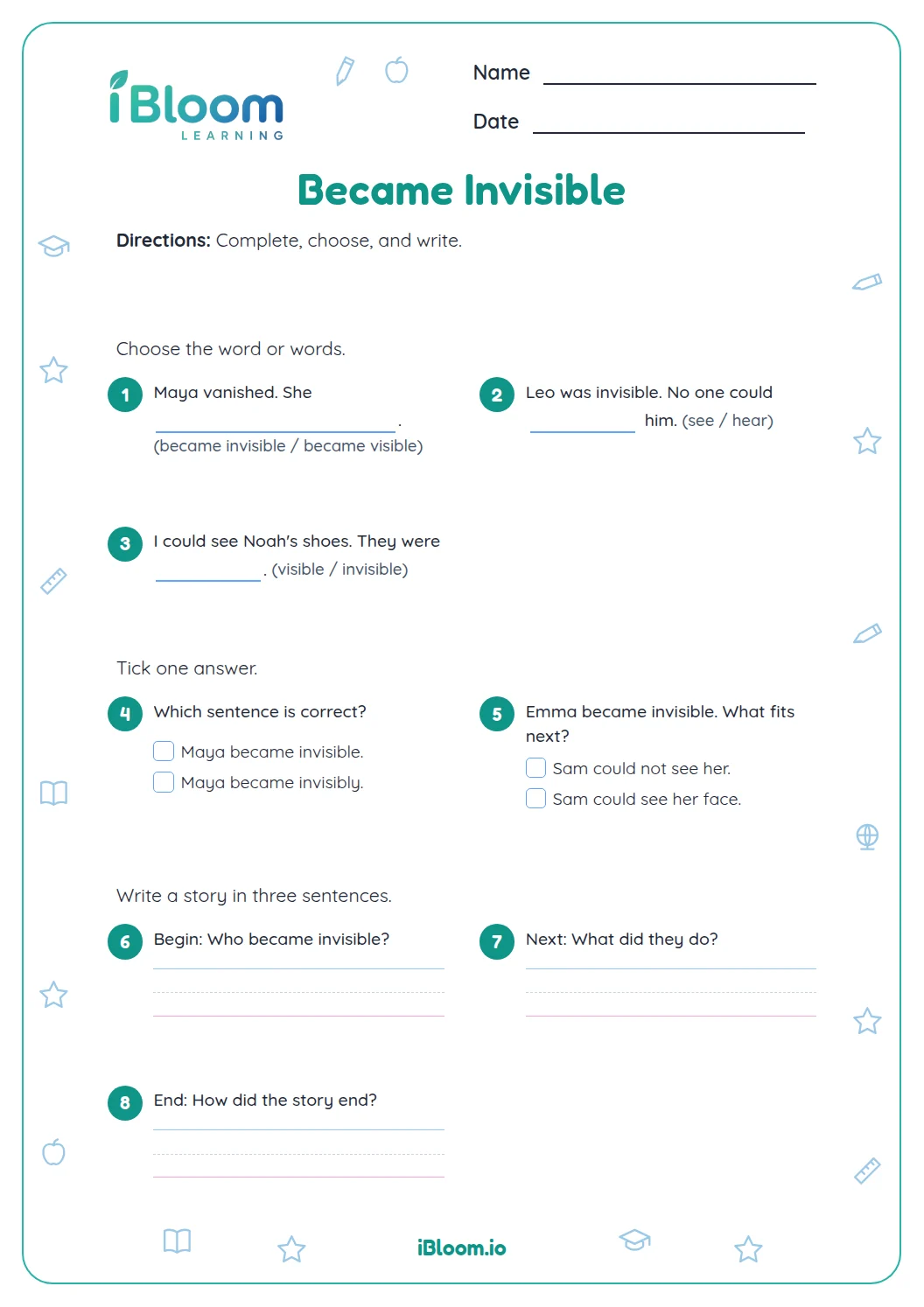


About this worksheet
This Grade 1 worksheet uses Sam’s magic-hat story to practice editing. Children correct spelling, past-tense verbs, capital letters, and end punctuation in short sentences. The first items focus on one correction at a time; later items combine corrections in story sentences. The answer key gives corrected forms for checking.
Aligned to L.1.2a
What is the story being edited?
Editing means checking whether words are spelled correctly and whether a sentence begins and ends the right way. In Sam’s story, “sam became invisable” needs a capital S and the spelling invisible.
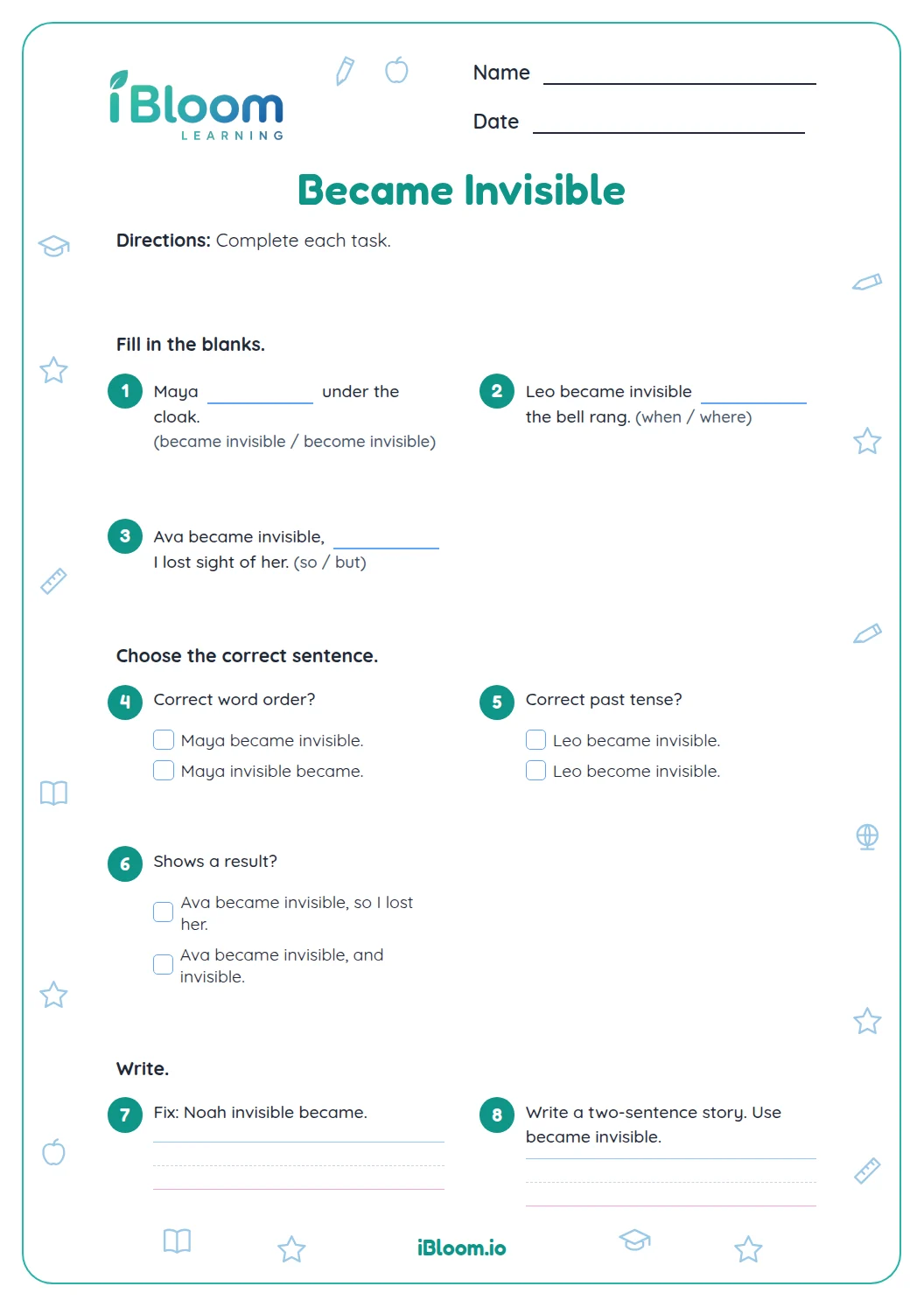
Question 8 asks children to rewrite that sentence with both corrections.
Which writing details do children correct?
The worksheet moves from single edits to longer story sentences. Children check spelling, the past-tense form became, capital letters, and end punctuation.
How does story order support editing?
Read each sentence carefully before choosing. “Sam put on the hat. His sister could not see him.” has two complete thoughts and preserves the story events.
How to use this worksheet
- 1Read the whole sentence before changing it.
- 2Check that the first word and names begin with capitals.
- 3Look closely at the spelling of the target word.
- 4Choose a verb that matches the story’s past events.
- 5Add an end mark, then reread the corrected sentence.
What should children check?
The mistake
Changing the word off to of.
The fix
Read the sentence with each choice: Sam takes the hat off; off tells where it goes.
The mistake
Forgetting to capitalize Sam or the first word.
The fix
Check the first letter of every sentence and the name Sam.
The mistake
Putting the story events in an order that breaks the cause and effect.
The fix
First Sam puts on the hat; then he is unseen; taking it off comes last.
Common Core alignment
The sentence editing in this worksheet includes first-word capitalization.
Capitalize the names of people and sentence beginnings.
On this sheet: Children correct the proper name Sam when it begins a sentence.
Show the official wordingHide the official wording
Capitalize dates and names of people.
What to practice next
Make more practice
Further reading
Questions parents and teachers ask
What is the story about?
Sam puts on a magic hat and becomes invisible. His sister cannot see him, so he takes the hat off. The questions reuse those events while children correct short sentences. Have the child reread the full sentence after the change.
What kinds of errors are included?
Children work on spelling, verb forms, capital letters, end punctuation, and story order. The second part uses longer lines from Sam’s narrative, so learners apply more than one editing clue together. Ask the learner to reread the corrected line, point to the clue, and explain why the new wording works.
How many questions are included?
There are 14 questions across two parts. The first part uses choices to focus attention on a specific correction, and the second part asks children to rewrite the story language. Check the spelling against the word in the story. Read the corrected version aloud together once more.
Should my child copy the answer exactly?
There are 14 questions across two parts. The first part asks children to recognize a correct spelling, verb, capital, or end mark. The second part combines editing clues in sentences from Sam’s story. An answer key accompanies all questions.
Can an adult read the prompts aloud?
Yes. An adult may read each sentence aloud while the child looks for the written error. The child should still decide which change makes the sentence correct. Check capitals and punctuation after rewriting. Read the corrected version aloud together once more.
What should children check after editing?
Reread the whole sentence and check that it begins with a capital, ends with the right mark, and keeps the intended story event. Then compare the edited wording with the key. Compare the edited line with the answer key. Read the corrected version aloud together once more.