




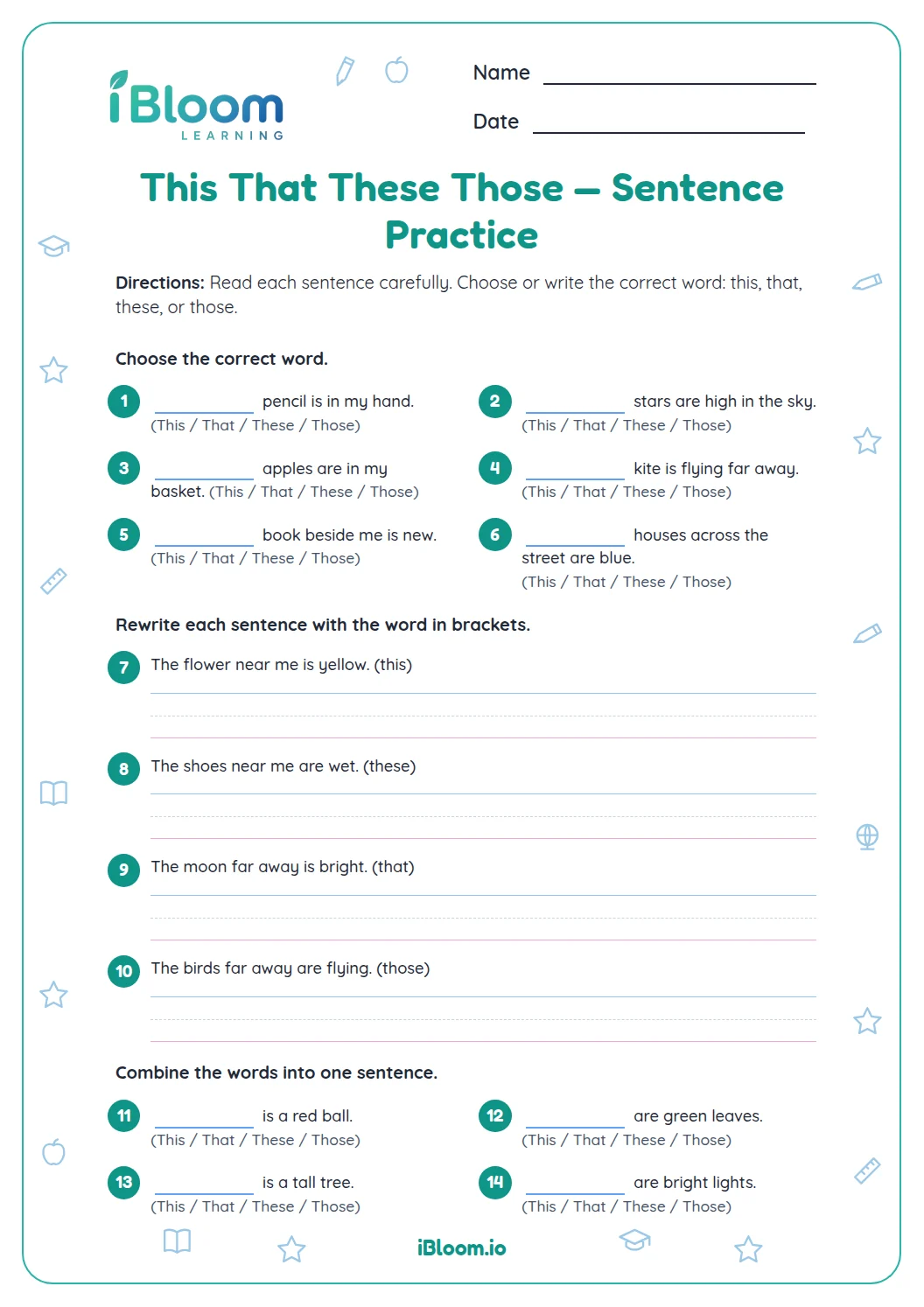
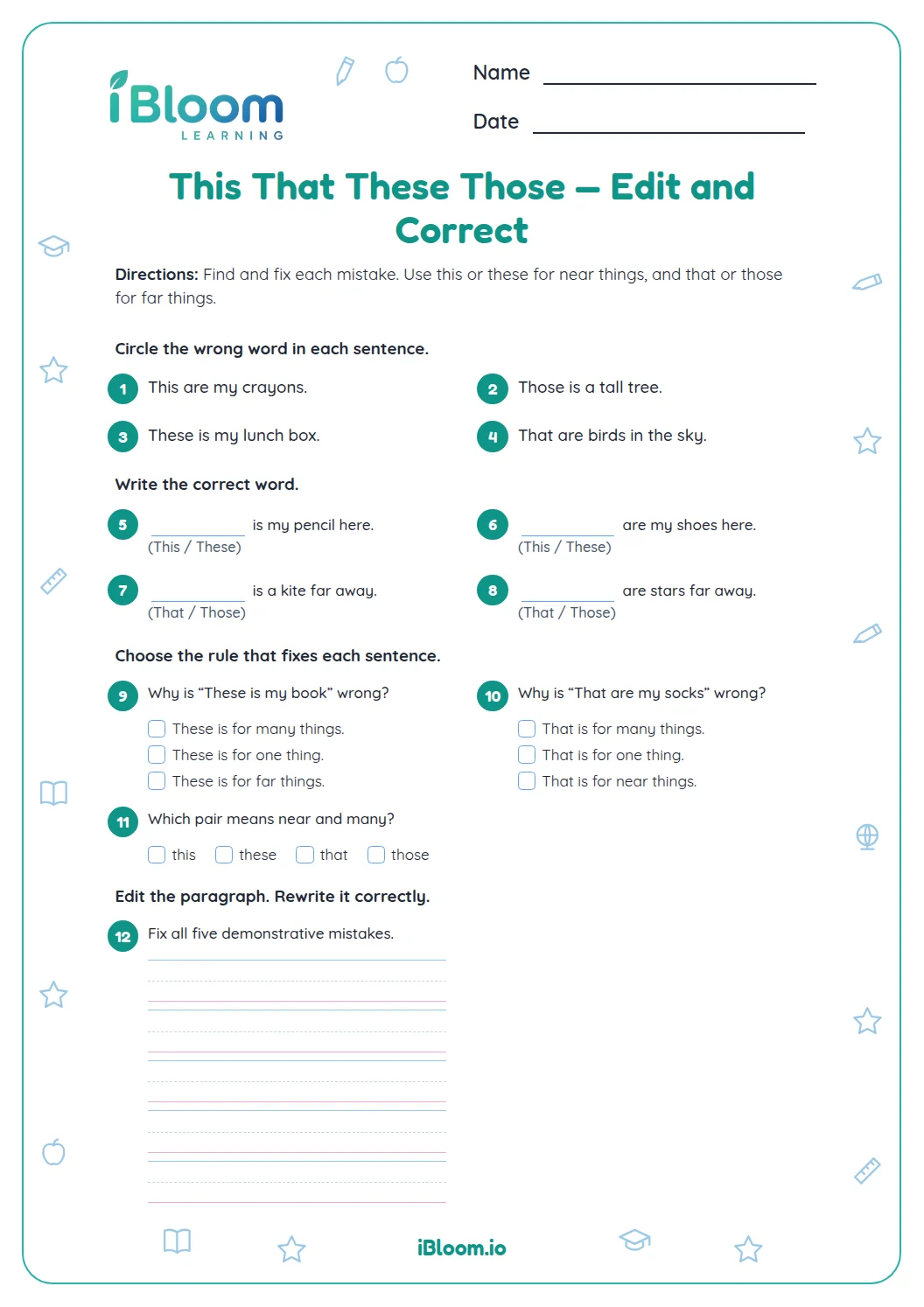
About this worksheet
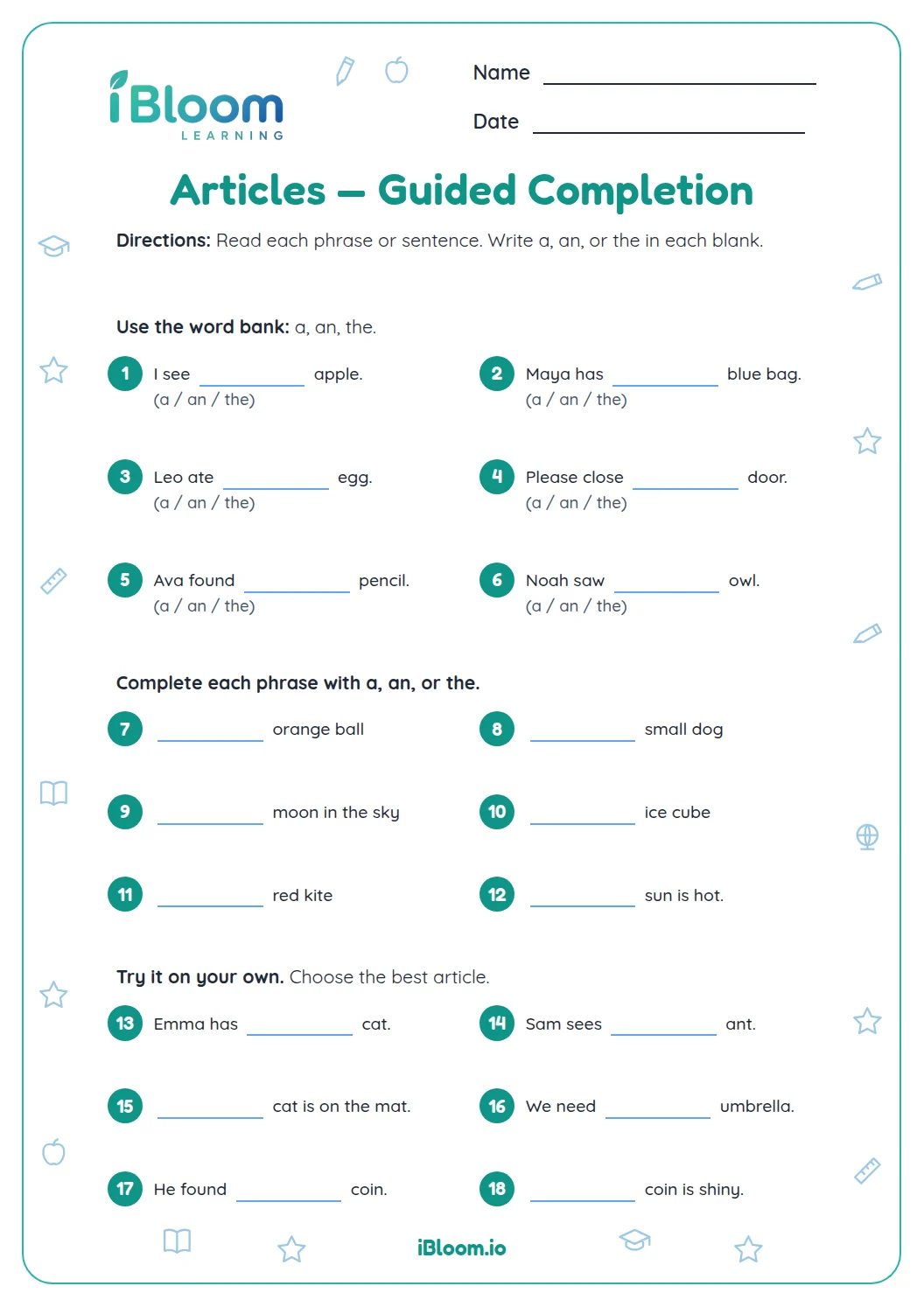
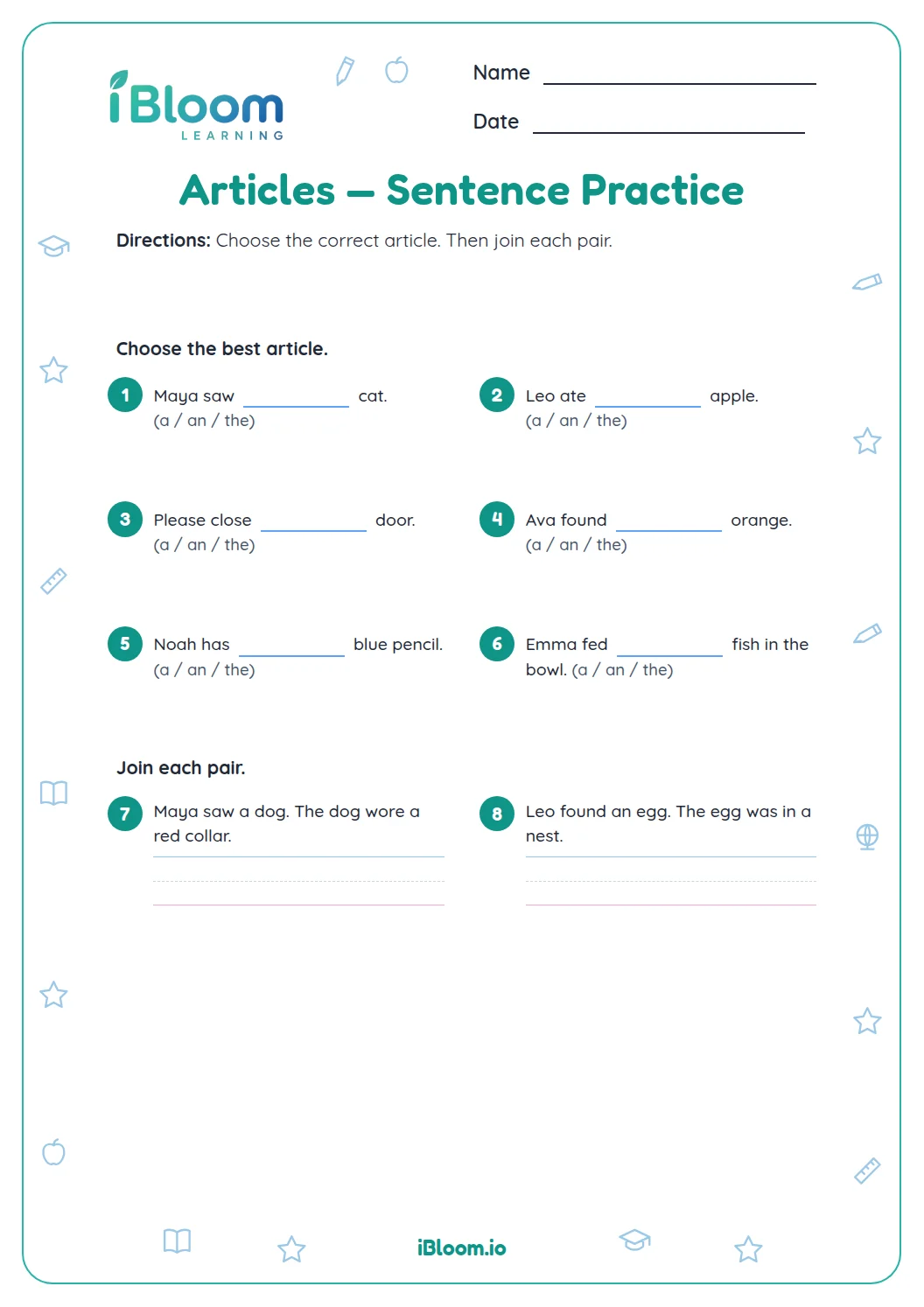
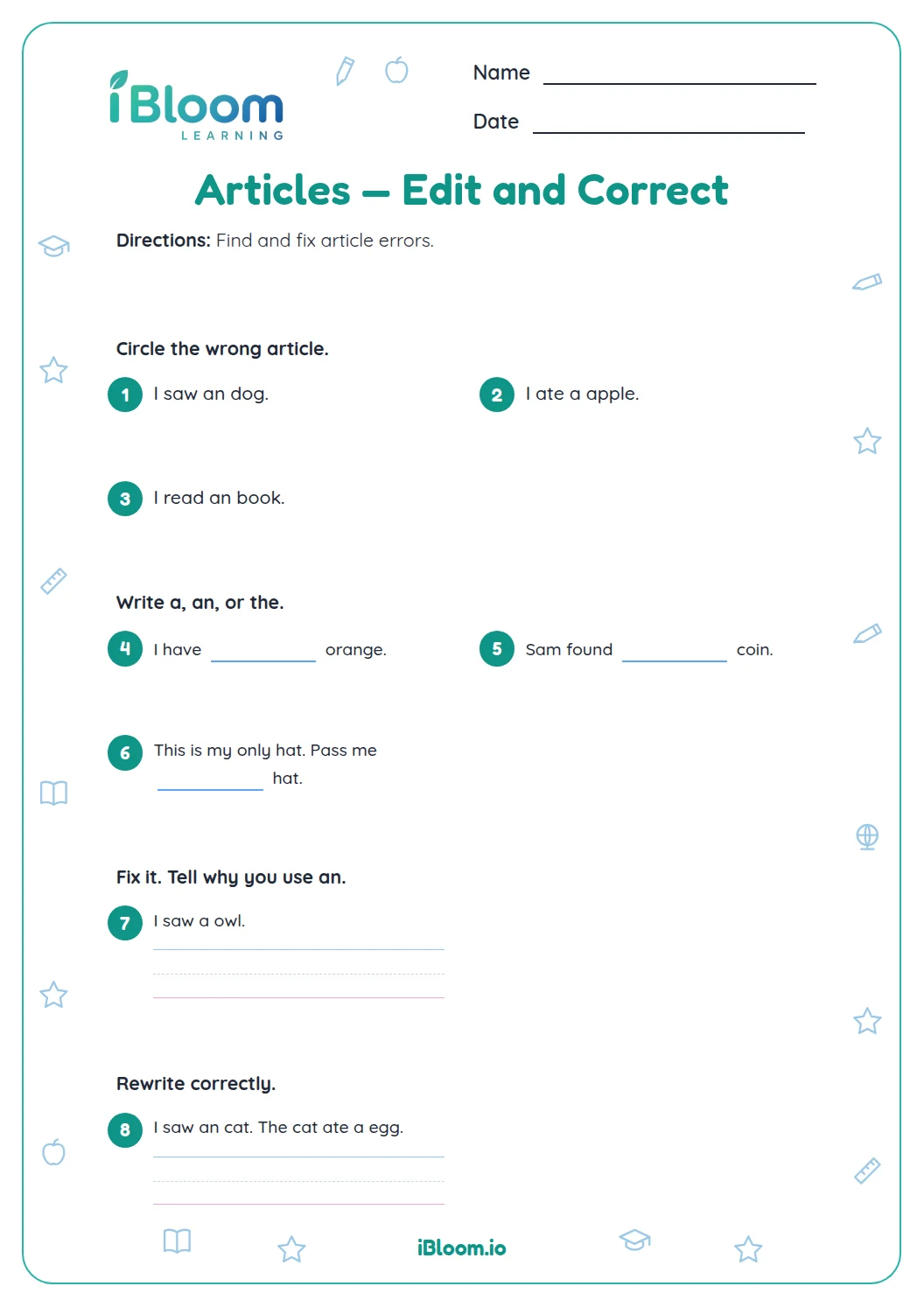
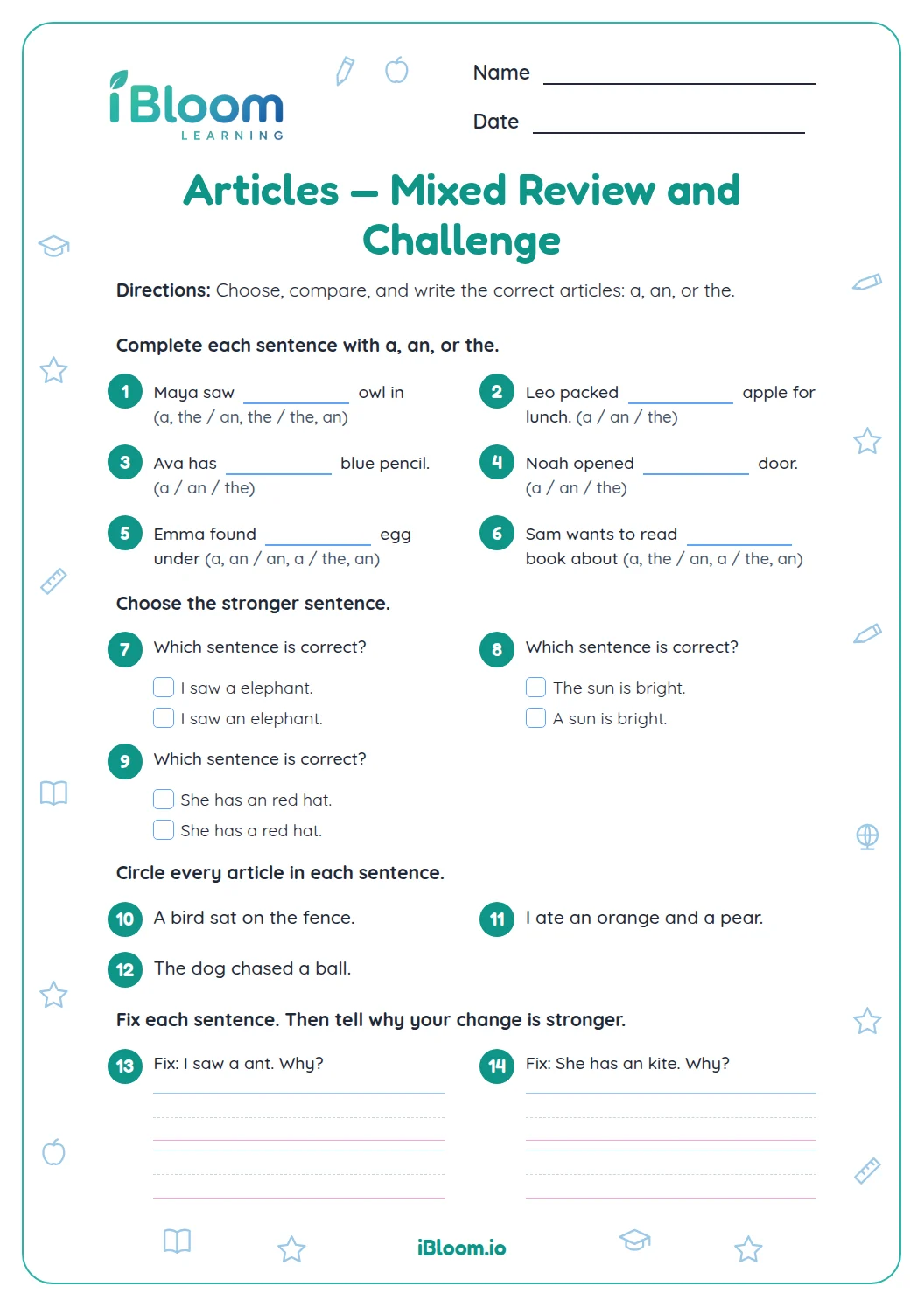
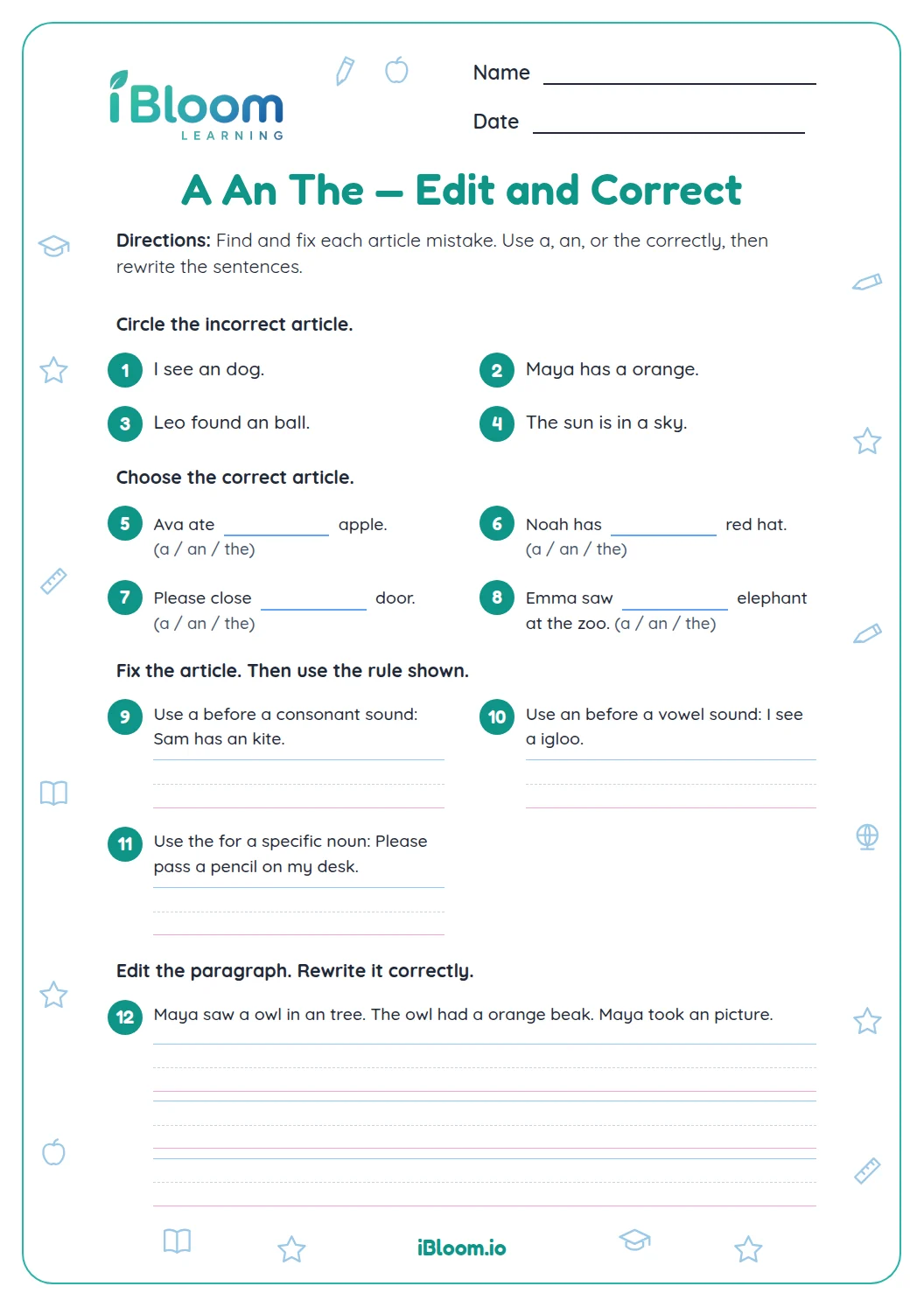
This free printable Grade 1 worksheet moves from choosing articles to using them in original writing. Part A has six a-or-an blanks, including a red apple and an old tree. Part B has four sentences that use The to refer back to a thing already named. Part C asks children to write four sentences using an egg, the box, a kite and a yellow bus. The work practices Common Core L.1.1h, using determiners such as articles. A separate answer key gives the ten articles and four sample sentences.
Aligned to L.1.1h
How do children choose between a and an?
Choose a or an by the first sound of the word immediately after the article. Cat and dog begin with consonant sounds; egg and umbrella begin with vowel sounds.
An adjective can come between the article and the noun. Question 5 needs a red apple because red begins with a consonant sound. Question 6 needs an old tree because old begins with a vowel sound.
Why does Part B use the?
The first sentence introduces one thing. The next sentence points back to that particular thing. Children write The with a capital because each blank starts a new sentence.
- 1I found an egg. ___ egg had a crack.
- 2The second sentence names the egg already found.
- 3Answer: The. Read: The egg had a crack.
What counts as a good sentence in Part C?
Question 11 asks for a complete sentence using an egg. Question 12 introduces a box and asks children to use the box in a sentence about that same box. The key gives models; other sensible sentences are welcome.
Questions 13 and 14 ask for sentences using a kite and a yellow bus. After writing all four, children check the article, the first sound of the following word, the capital letter and the end mark.
How to use this worksheet
- 1Say cat and egg aloud, emphasizing the first sound of each.
- 2Write a or an in Part A and read the completed phrases.
- 3Read both sentences in each Part B item before filling the blank.
- 4Explain that The starts with a capital because it begins the sentence.
- 5Have the child say and write all four Part C sentences, then check articles, capitals and end marks.
Mistakes to notice and fix
The mistake
Writing a egg because the child uses a for every noun.
The fix
Say egg slowly; its first sound is a vowel sound, so use an.
The mistake
Writing an red apple because apple begins with a vowel sound.
The fix
Listen to red, the word directly after the article. Its consonant sound calls for a.
The mistake
Writing lowercase the at the start of a Part B sentence.
The fix
Choose the article first, then give it a capital because a new sentence begins.
Common Core alignment
Use a, an and the before nouns in short sentences.
On this sheet: Children complete article blanks, use the for a known noun and write four sentences with a, an and the.
Show the official wordingHide the official wording
Use determiners (e.g., articles, demonstratives).
What to practice next
Make more practice
Further reading
Questions parents and teachers ask
Should my child choose a or an by the first letter?
The first sound of the next word determines a or an. This sheet includes a cat and an egg, then adds an adjective in a red apple and an old tree. Listen to red or old when it comes next; the article does not skip ahead to the noun.
Why is every Part B answer The?
Each Part B item introduces one thing and then names that same thing again. The identifies the thing already mentioned, such as the egg that was found or the kite that was made. Each blank also begins a sentence, so the answer needs a capital T.
Can my child write a different sentence from the key?
Yes, all four Part C answers are examples. Accept complete sentences using an egg, the box, a kite and a yellow bus as directed. The sentence about the box should refer to the box already introduced. Check each article, capital and end mark without requiring the exact sample wording.
How much writing is on this worksheet?
There are ten single-word blanks and four original sentence tasks. Children write a or an six times and The four times before using the given phrases in sentences of their own. Have them say each sentence aloud first, then reread the finished sentence to check the article and punctuation.
Can an adult read the worksheet aloud?
Yes, an adult can read the prompts while the child supplies each article. Pause at the blank and ask the child to say the phrase before writing. For Part B, read both sentences together so the child can hear that the second sentence is naming the same thing again.