


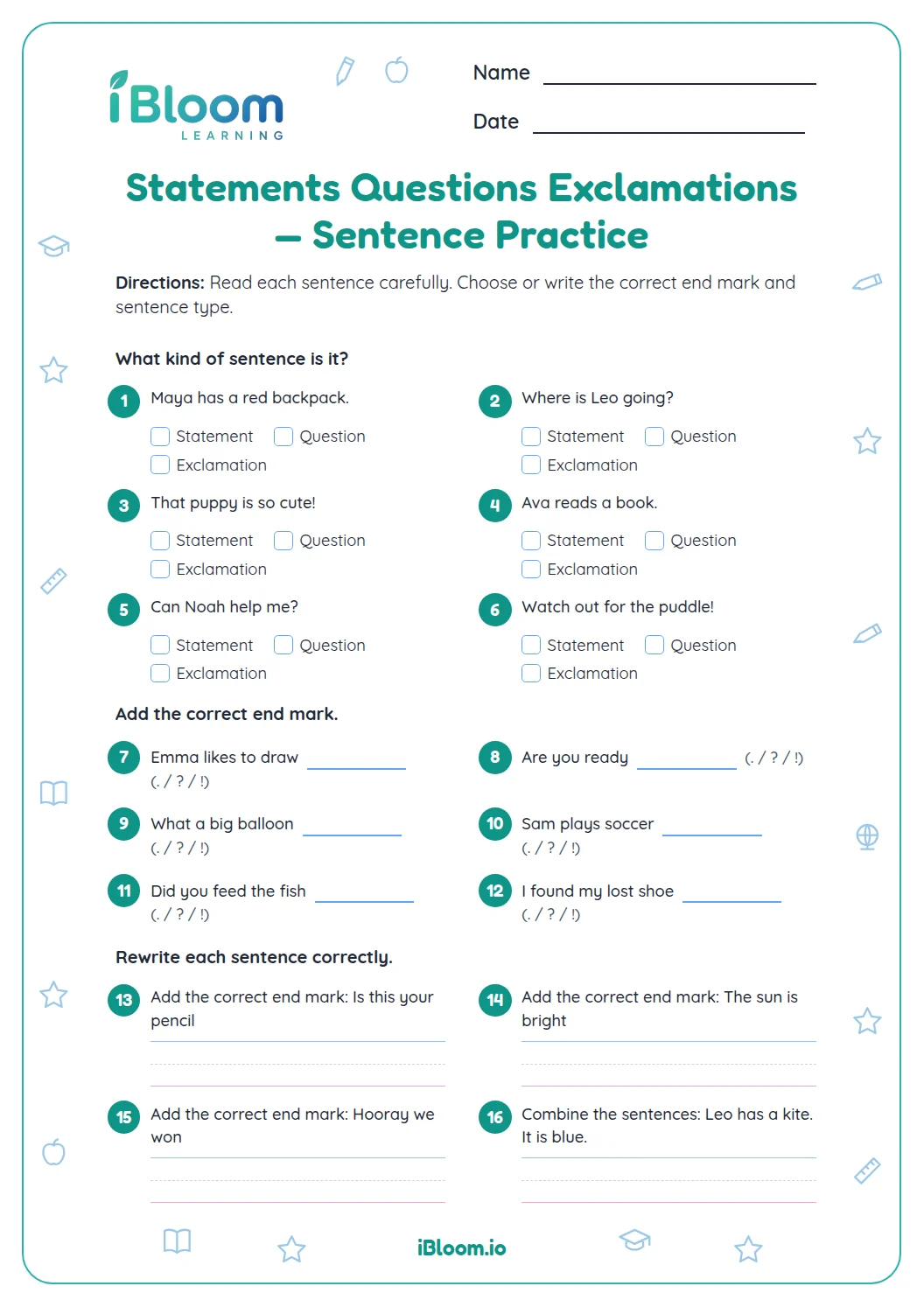
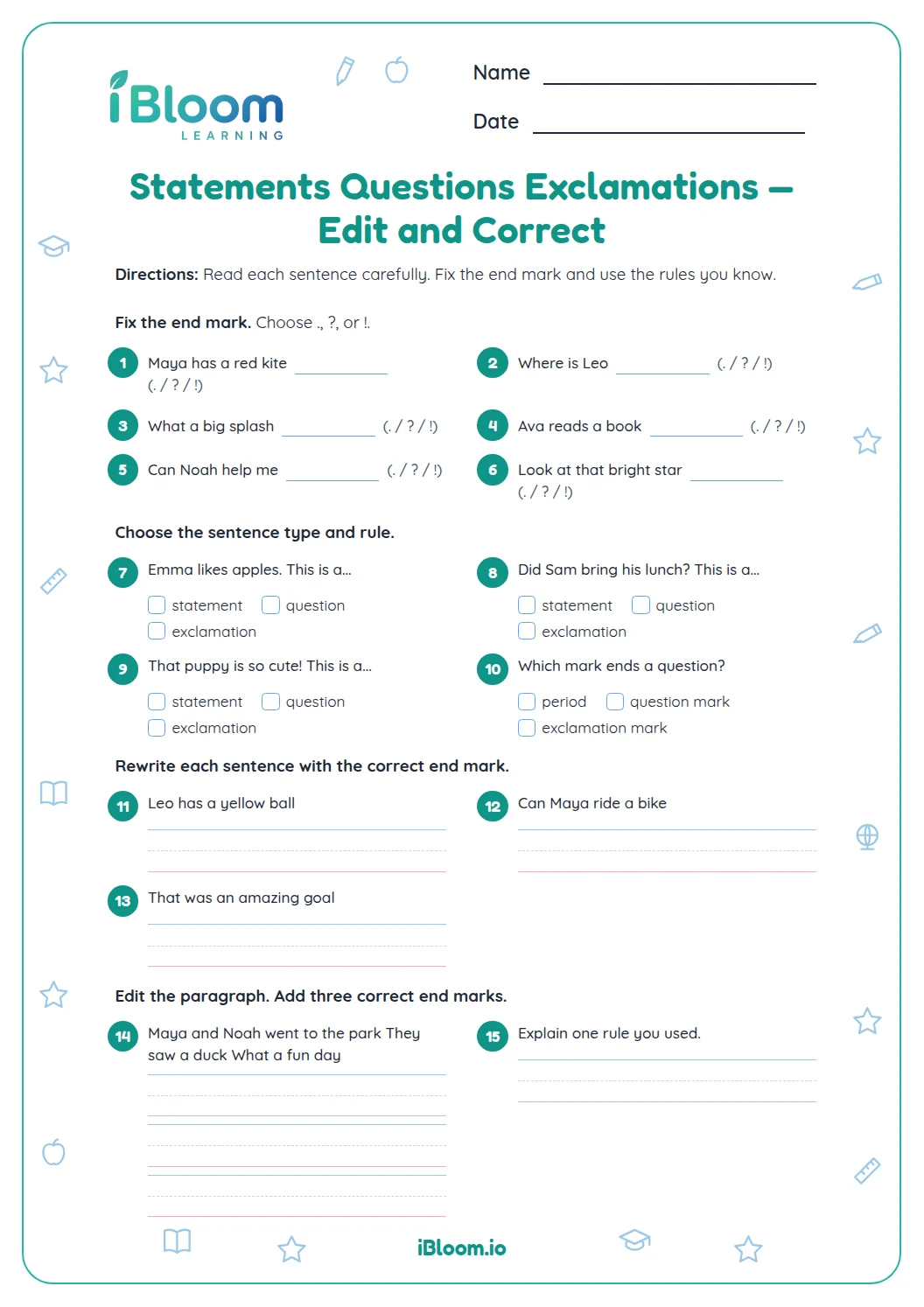
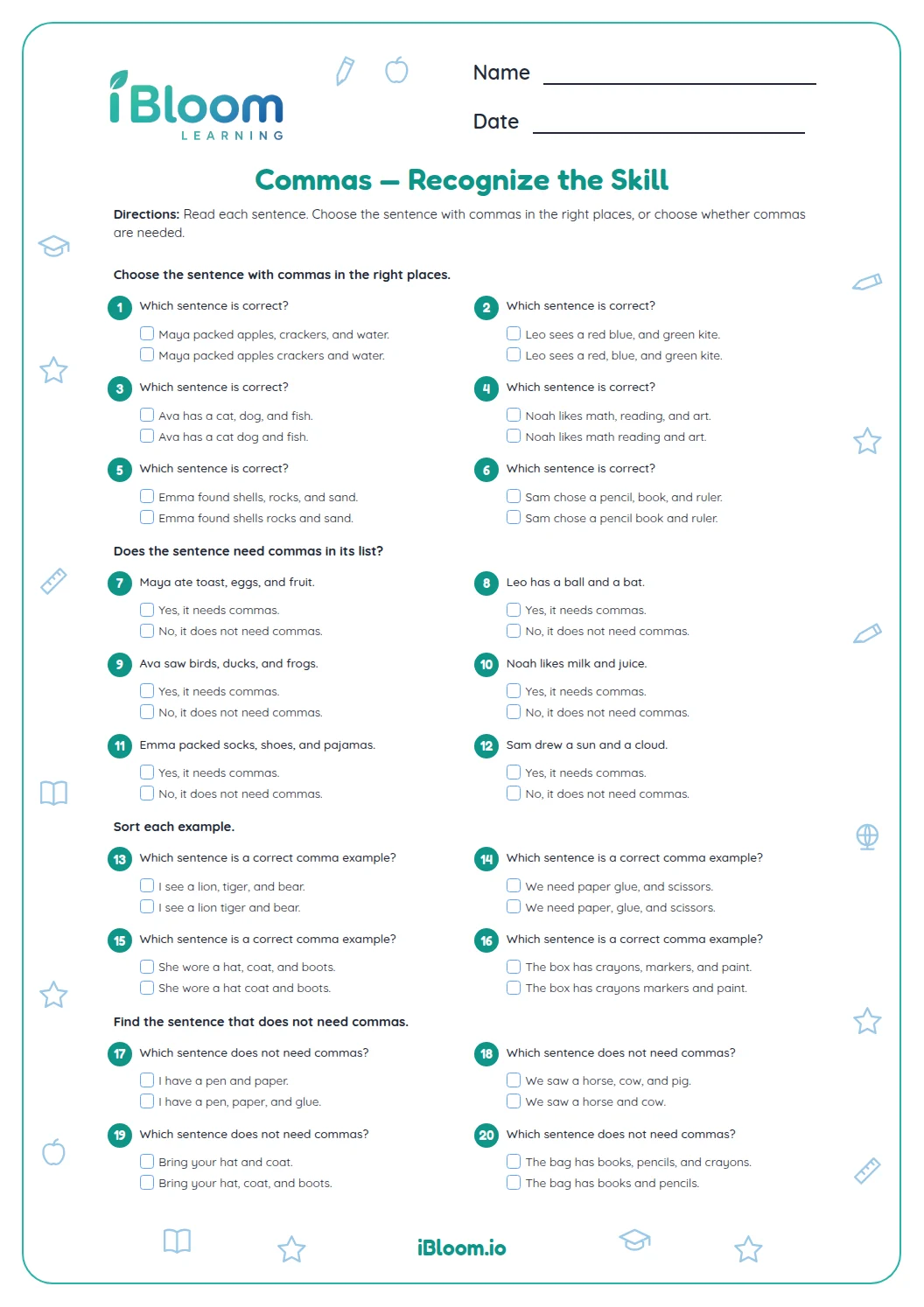
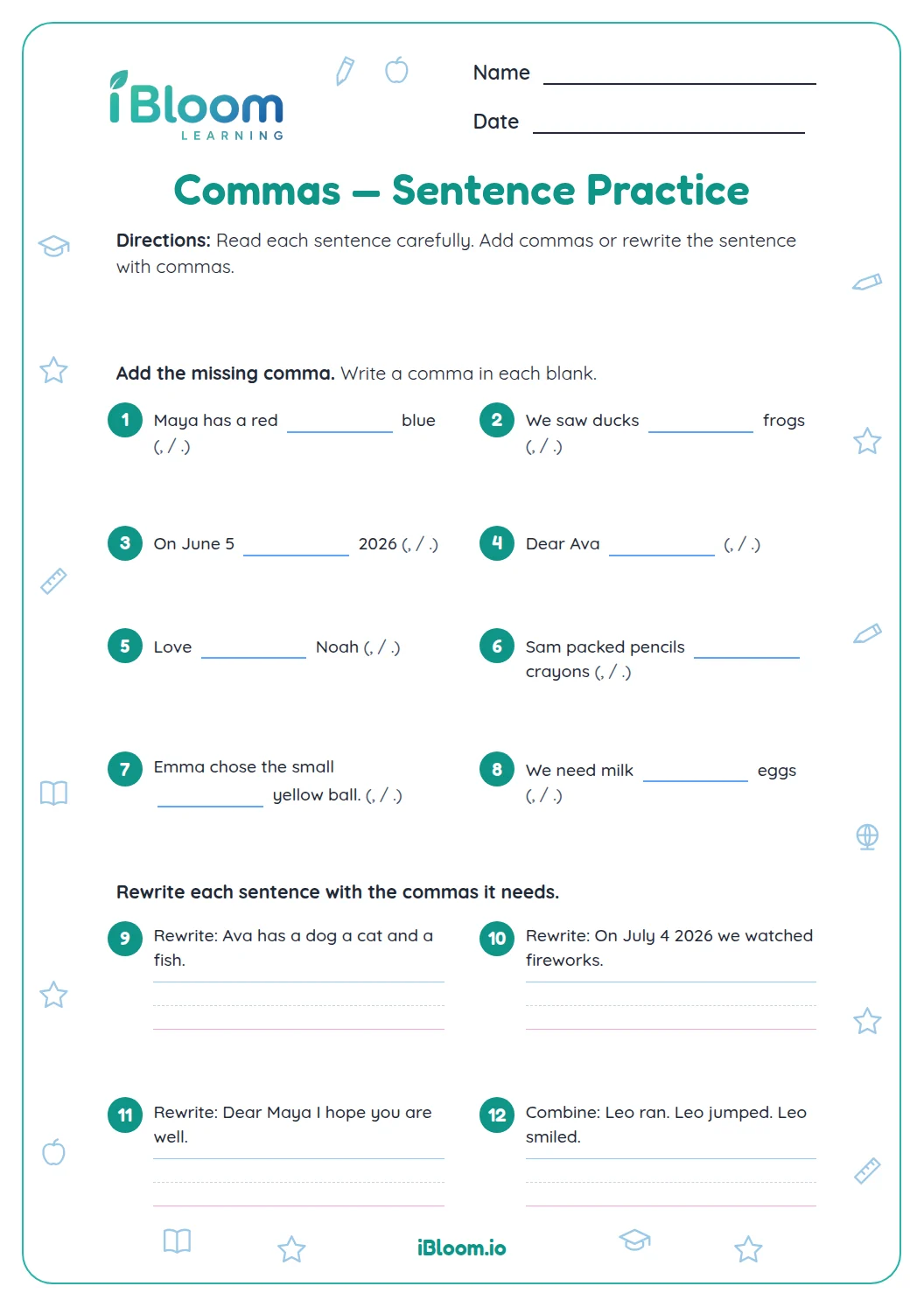
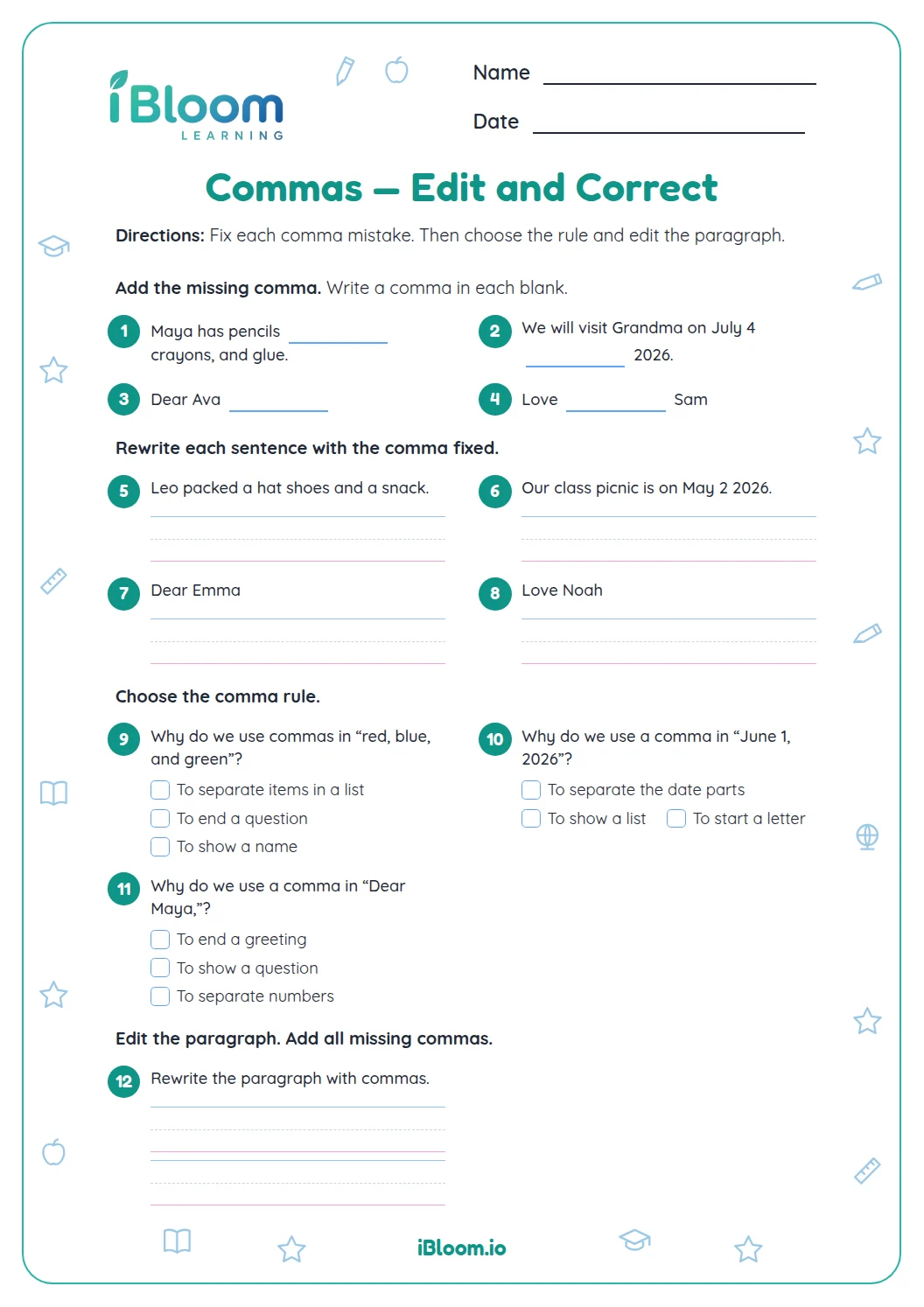
About this worksheet
This Grade 1 worksheet gives children practice correcting sentence capitals and end marks, writing month-and-day dates, and composing their own sentences. It aligns with Common Core L.1.2. The four parts move from selecting punctuation to editing sentences and applying the skill in original writing. An answer key includes sample responses for open-ended items.
Aligned to L.1.2
How do you choose an end mark?
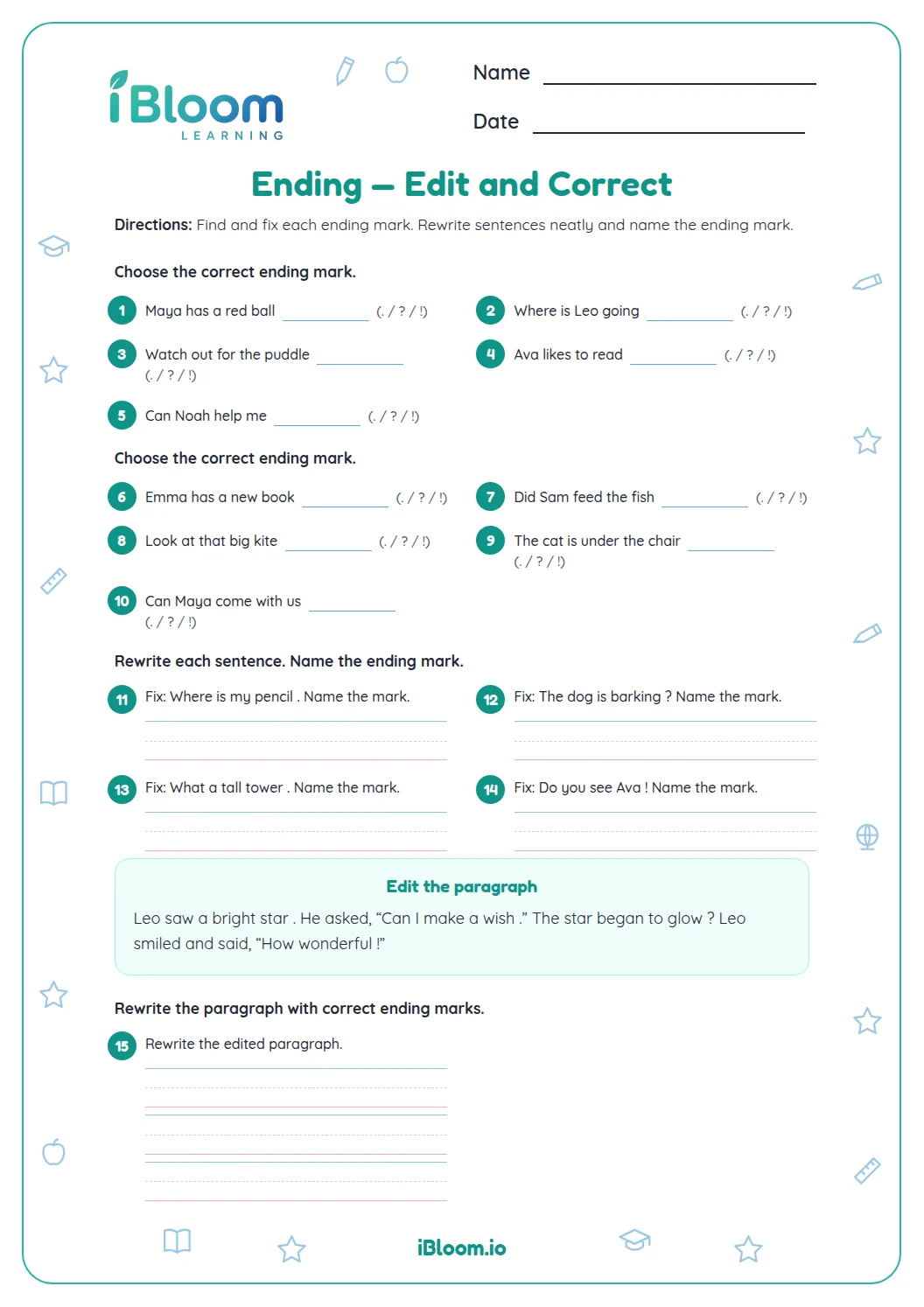
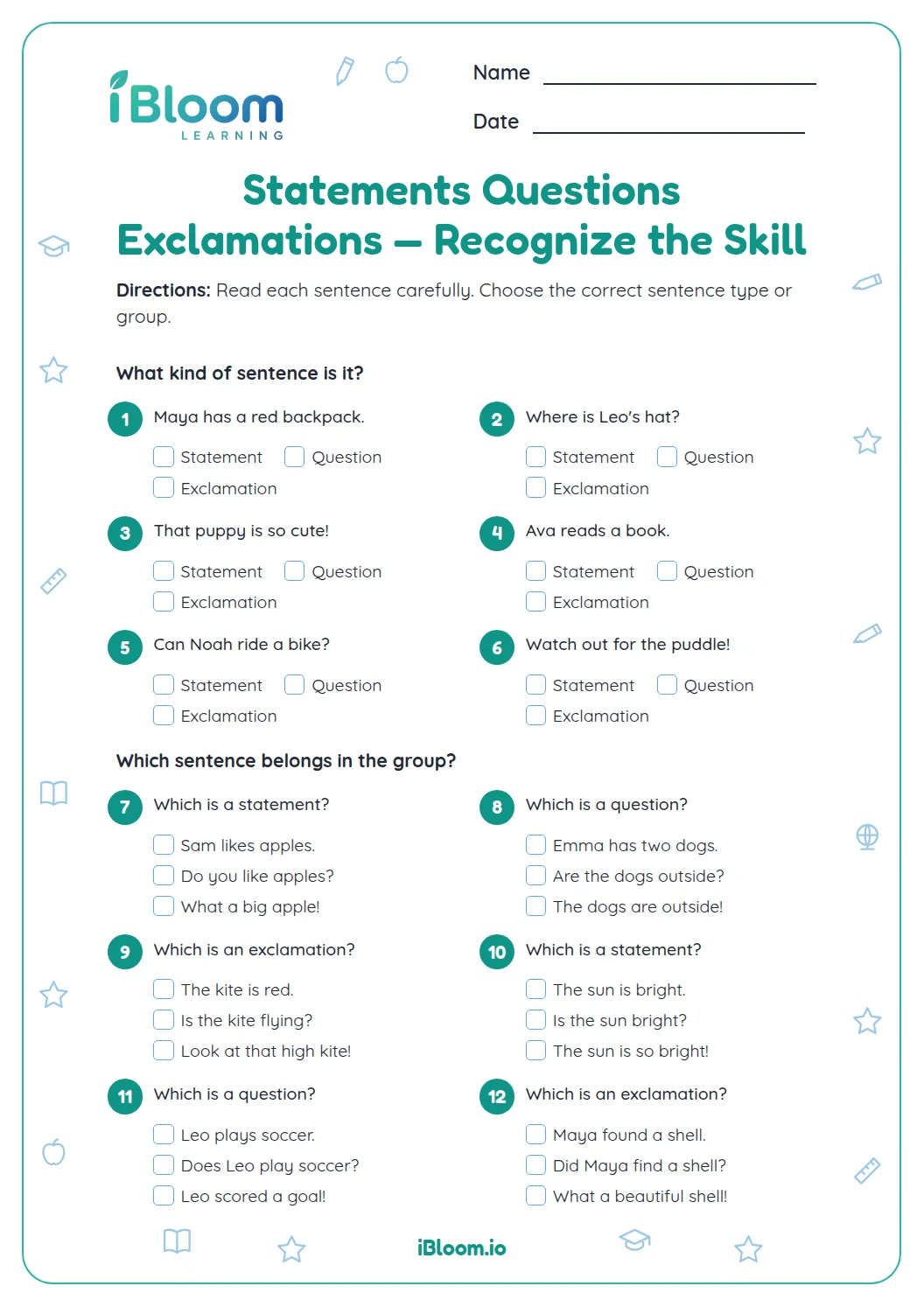
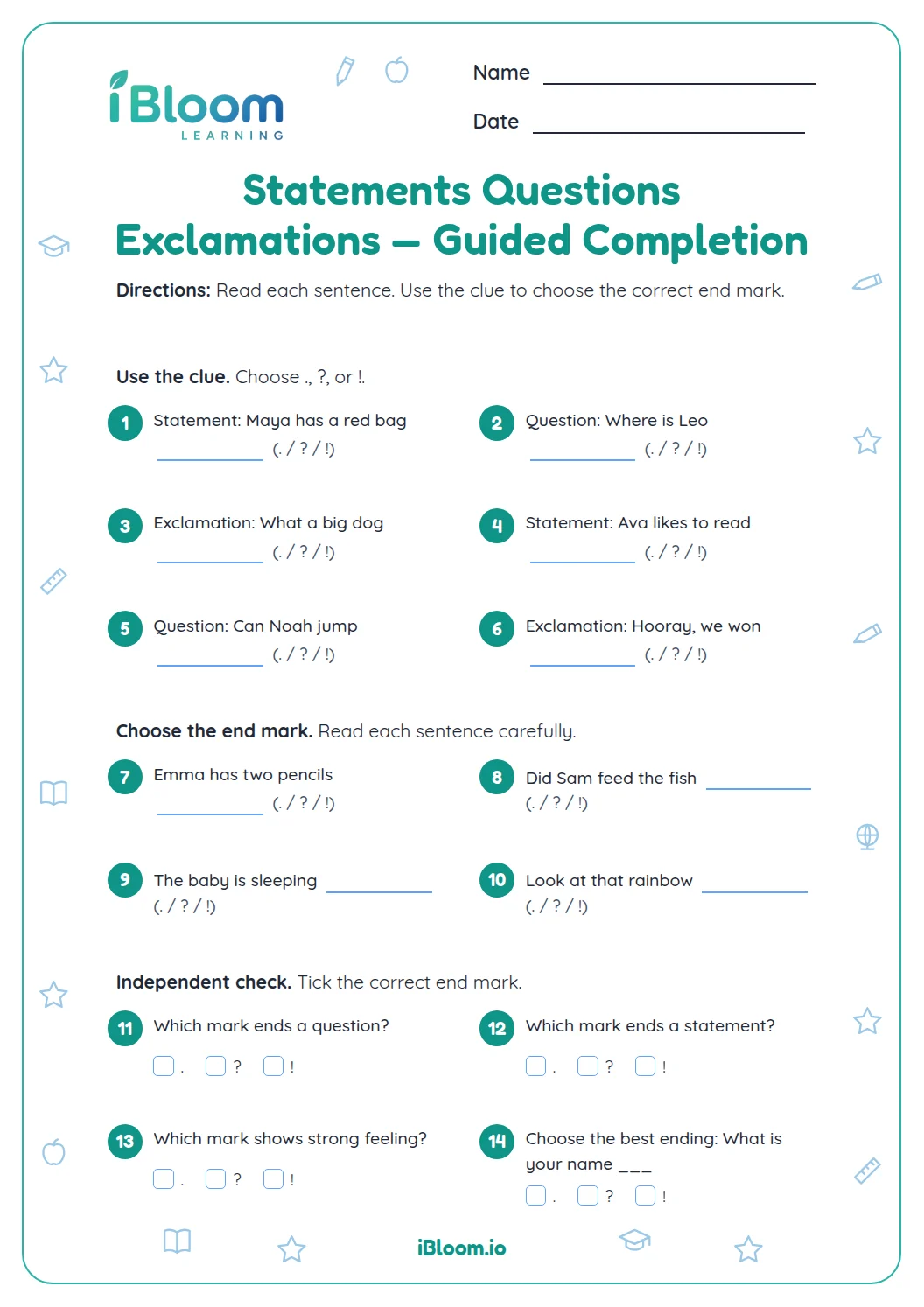
Read the sentence aloud and listen for what it does: tells, asks, or exclaims. A question ends with a question mark; a strong exclamation can end with an exclamation mark.
- 1What a huge red kite___ → !
Which words need capitals in a date?
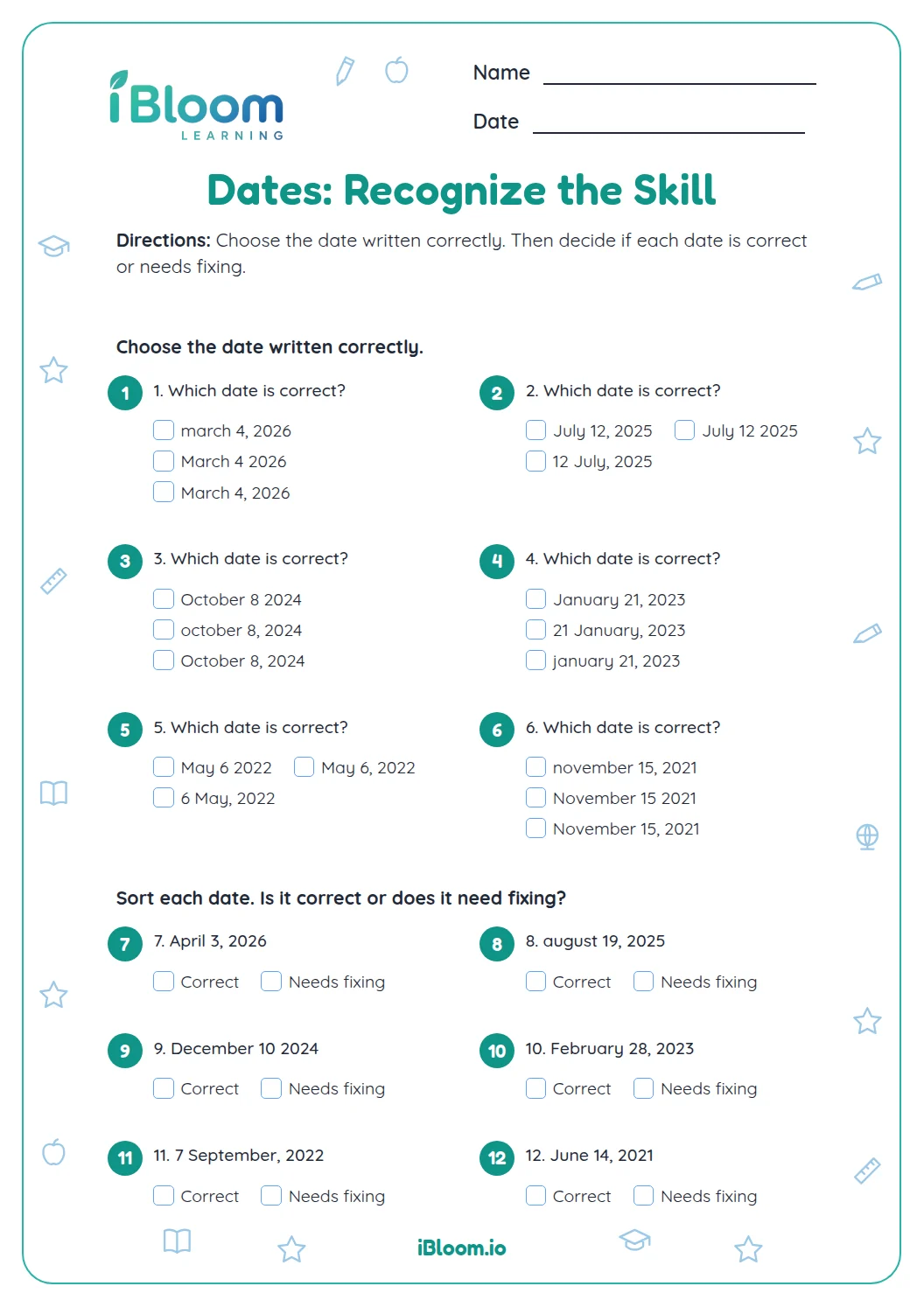
Capitalize the first word of a sentence and the names of months and days. Write the month name with its day number.
- 1Write the date with a capital month: march 4 → March 4
How can you check your own sentence?
Read it once for meaning, then check the first letter, names, month names, and final mark. The last part asks you to use all of those choices yourself.
- 1Write a question about a school day. → Sample: Do we have art today?
How to use this worksheet
- 1Read the whole sentence.
- 2Find its first word and any name or month.
- 3Capitalize the first letter and proper names.
- 4Choose an end mark that fits.
- 5Read it aloud to check.
Common mistakes and quick fixes
The mistake
Mistake.
The fix
Leaving a month lowercase. Fix: capitalize its first letter.
The mistake
Mistake.
The fix
Using a period after a question. Fix: ask whether the sentence asks something.
The mistake
Mistake.
The fix
Forgetting the first capital. Fix: check the first word last.
Common Core alignment
This page connects the worksheet practice to a Common Core skill.
Practice capitals, end marks, and month names in dates.
On this sheet:
Show the official wordingHide the official wording
Demonstrate command of the conventions of standard English capitalization, punctuation, and spelling when writing.
What to practice next
Further reading
Questions parents and teachers ask
What date format does this worksheet use?
The date items use a month name followed by a day number, such as March 4. Children also practice capitalizing month and day names when they appear in sentences. The page includes editing, date writing, and original sentence prompts.
How do I choose a period, question mark, or exclamation mark?
A statement usually ends with a period, a direct question with a question mark, and an excited exclamation with an exclamation mark. Read the sentence aloud and notice its purpose. Children can compare the date items with the capitalized month examples.
Does the answer key allow different sentences?
Yes. Items asking children to write their own sentences include sample answers. A different response works when it is a complete sentence and follows the requested punctuation and capitalization. The first section gives a quick way to hear the difference.
What does the child practice before writing independently?
The page begins with end marks and sentence corrections, then asks children to write dates and original sentences. This gives a short progression from editing examples to applying the same conventions. The separate key shows the expected punctuation and sample writing.
How can we check a corrected sentence?
Read it aloud, then look for a capital at the start, capitals in names and dates, and punctuation at the end. For a question, check that the words really ask something. The last section brings capitals and end marks together.