



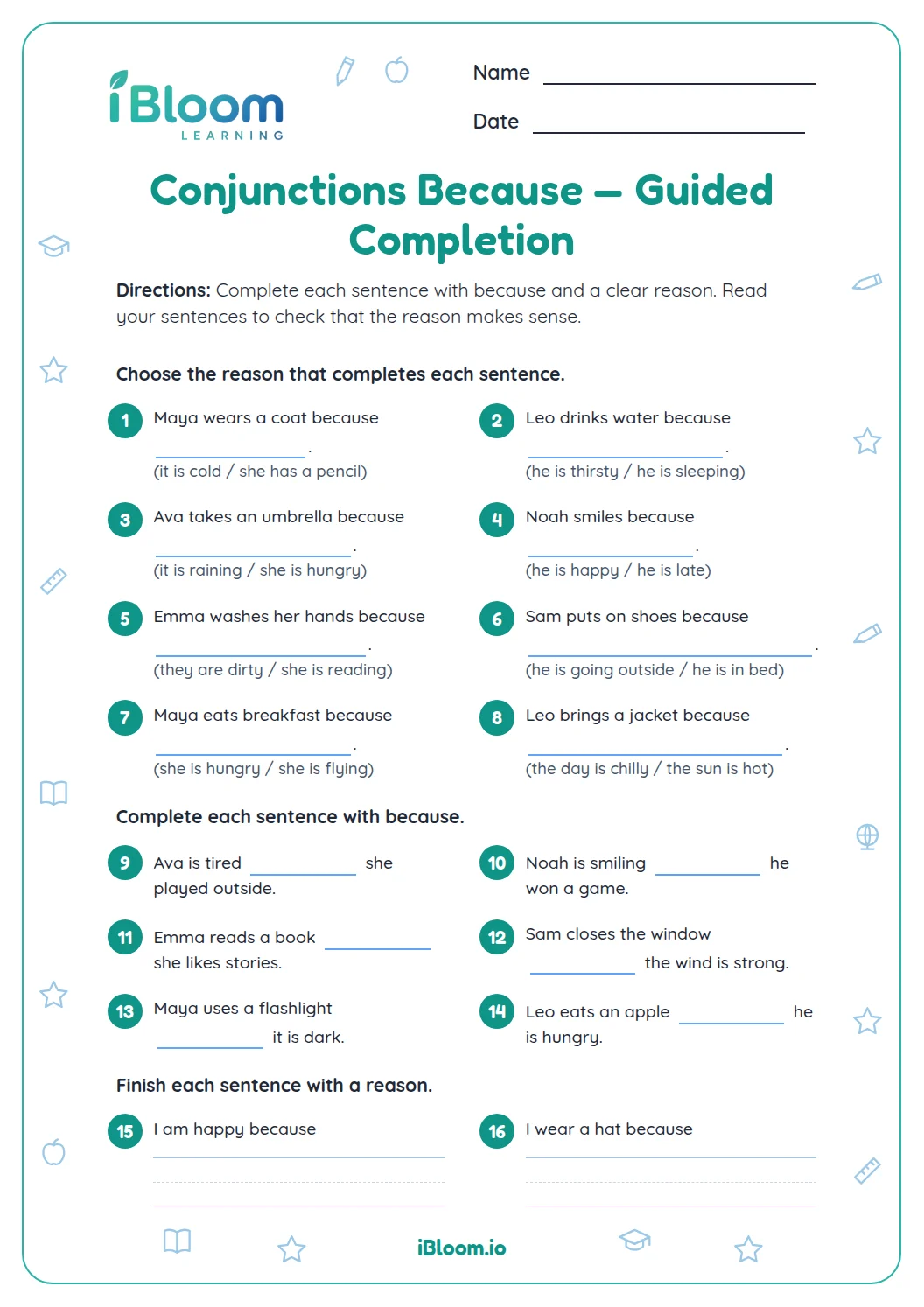

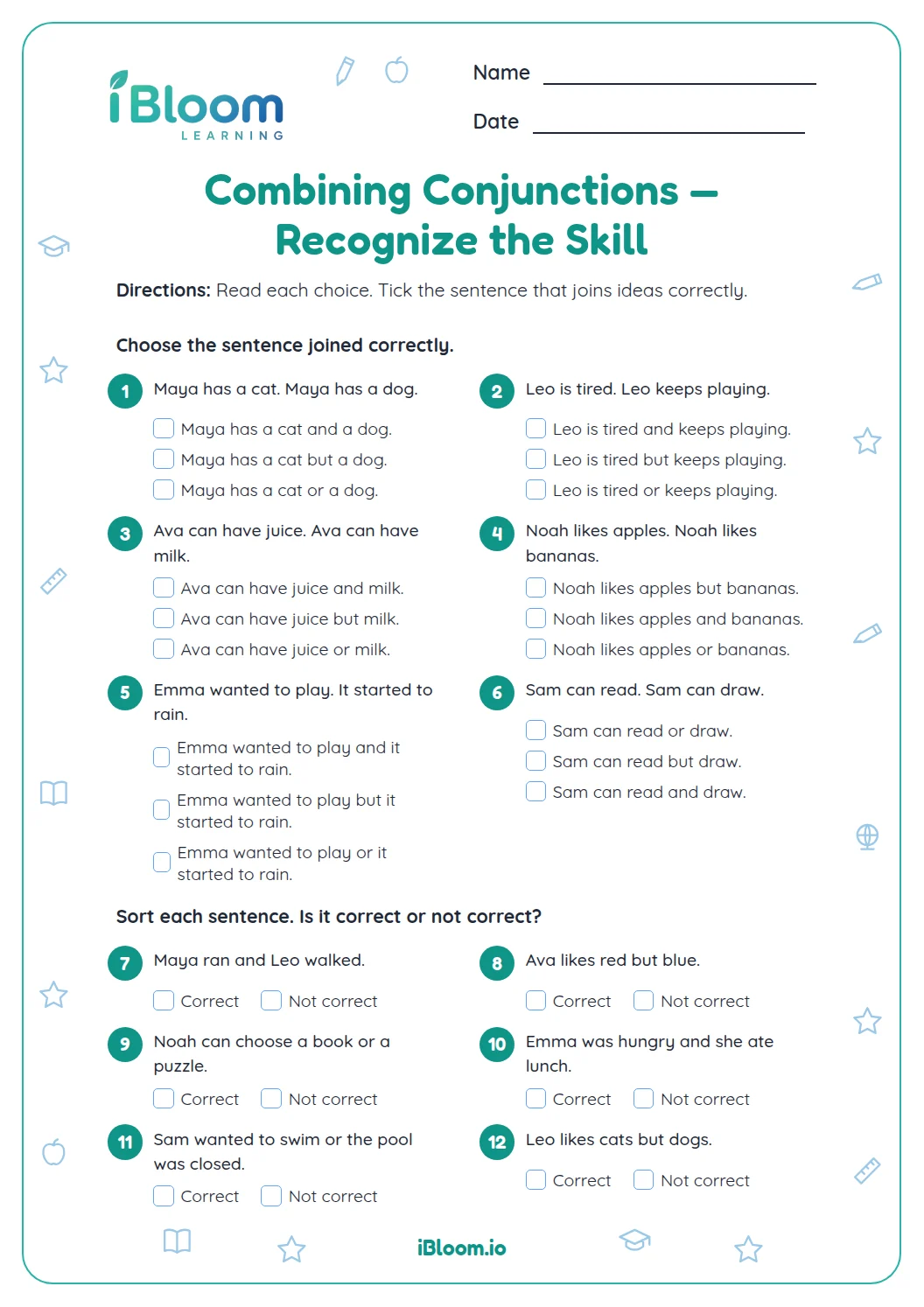
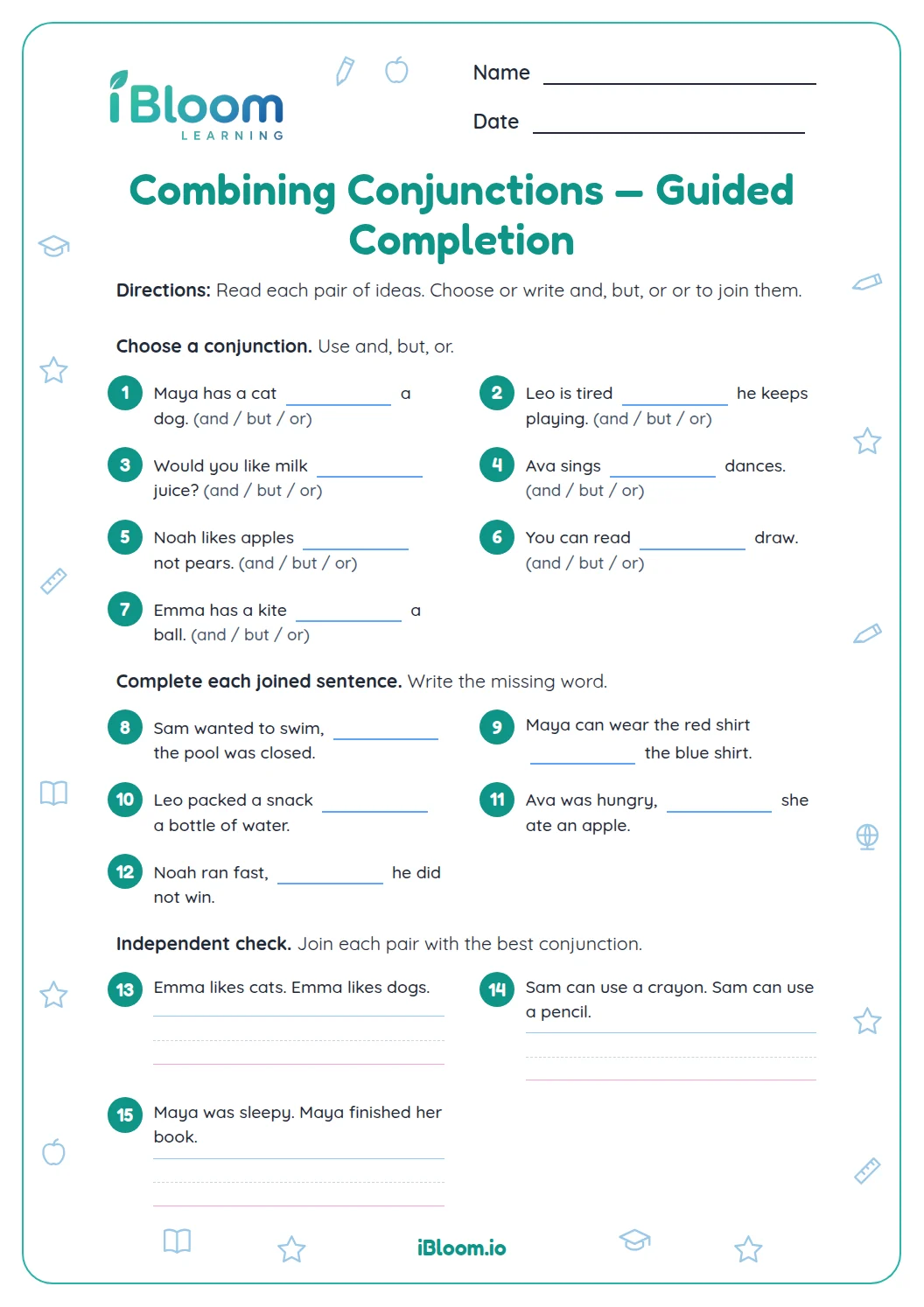


About this worksheet
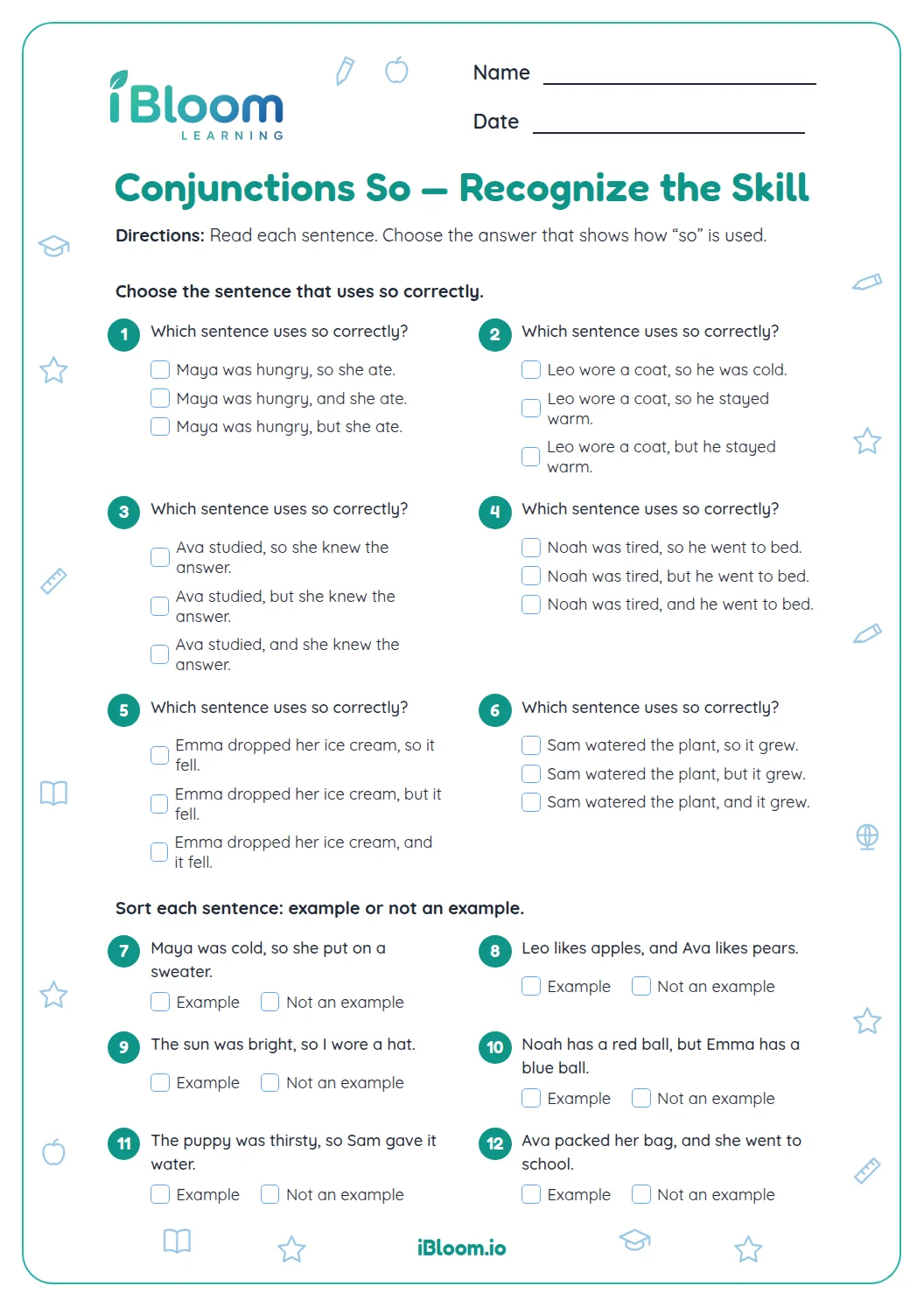
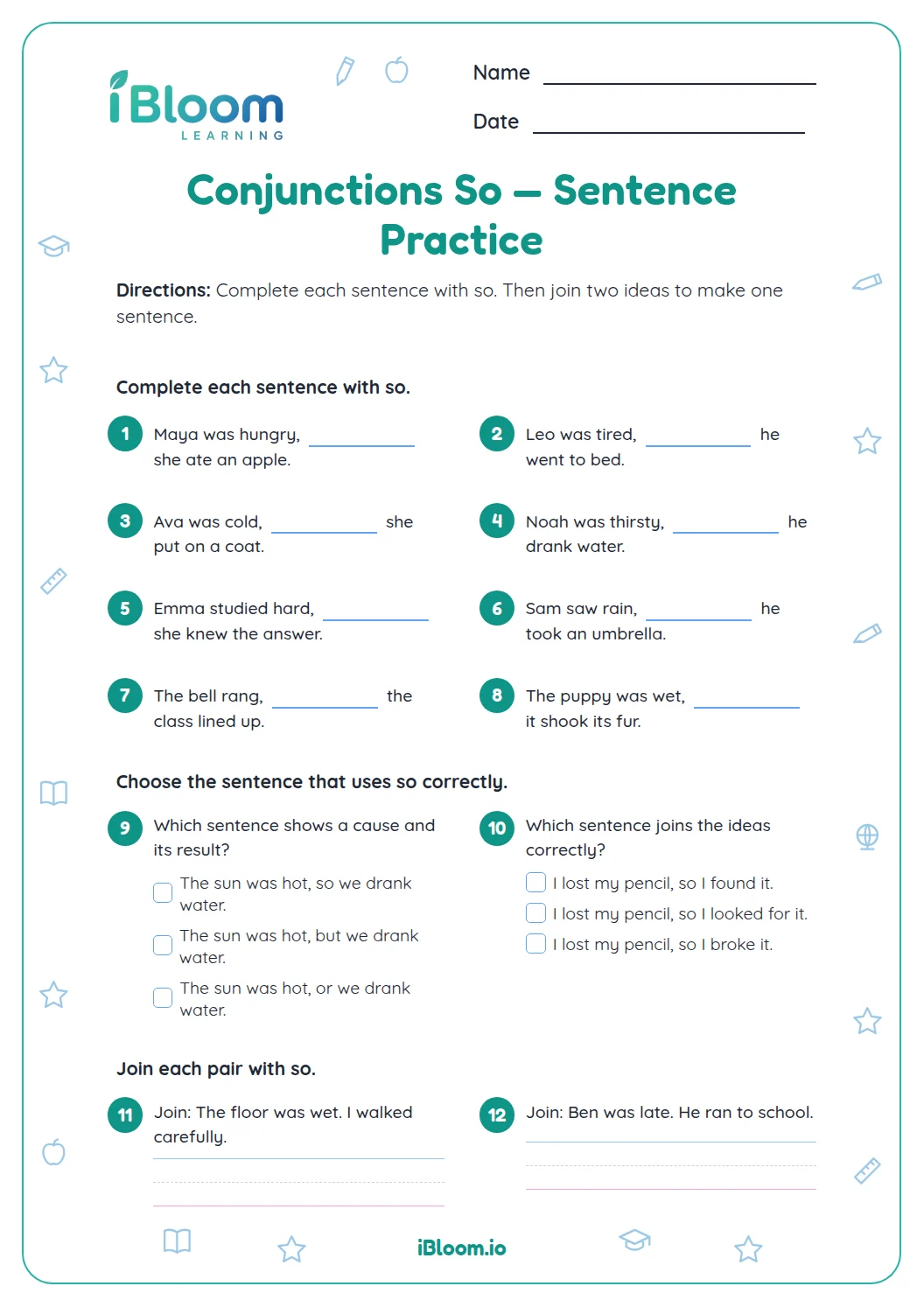
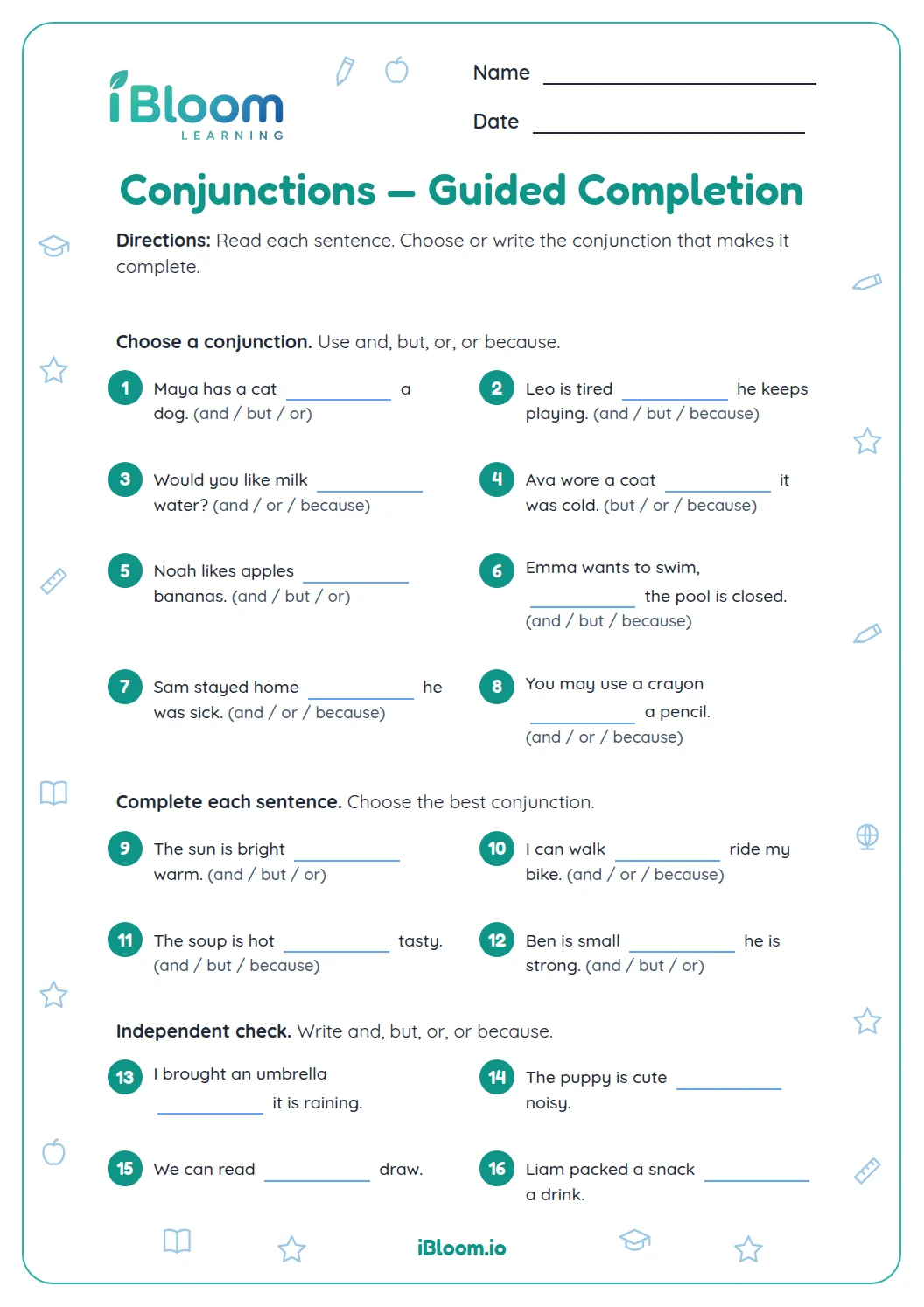
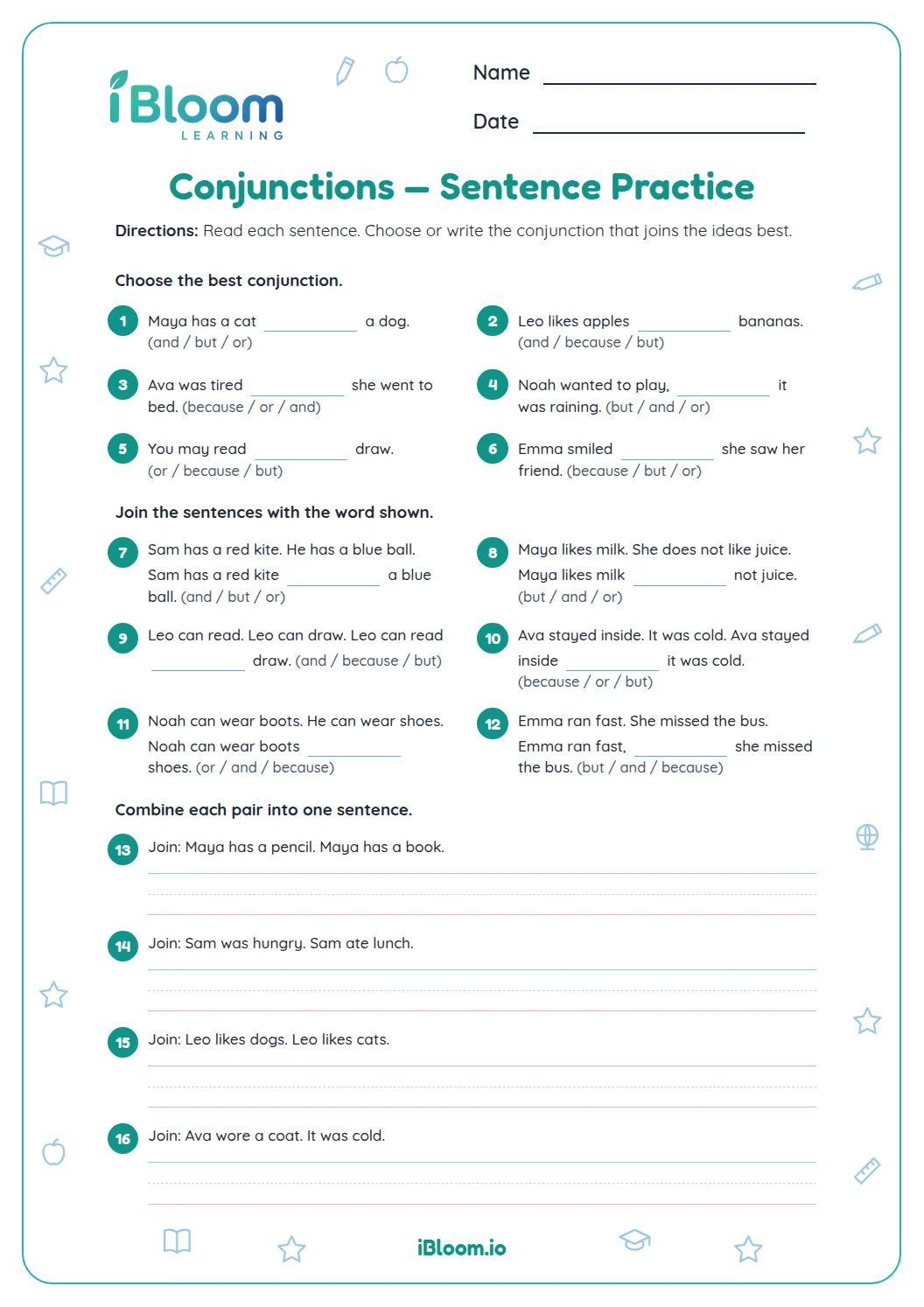
This free Grade 1 worksheet helps children use the conjunction so to connect two ideas when the second is a result of the first. Students choose so in sentences, complete sentence blanks, and combine pairs of ideas into compound sentences. The 15 prompts build from guided recognition to sentence writing and align with CCSS L.1.1.j on producing and expanding complete simple and compound sentences. An answer key includes sample wording for the open responses.
Aligned to L.1.1.j
What does “so” show between two ideas?
So often introduces a result. In “It began to rain, so we went inside,” the rain is the cause and going inside is the result. Questions 1–6 ask students to choose connectors by reading how each pair of ideas fits together.
- 1It began to rain, ___ we went inside.
- 2The rain caused the choice to go inside, so fits.
How can “so” complete a sentence?
Read both parts and ask whether the second follows from the first. “The bus was late, so we waited” makes a cause-and-result connection. Other items contrast results with ideas that simply add or contrast information.
How can a conjunction join two ideas?
Use a comma and so when one idea leads to a result. For example, “The floor was wet. We walked slowly.” becomes “The floor was wet, so we walked slowly.” The final four items ask students to complete sentences with a connector that fits the relationship between the ideas.
How can a student work through the page?
- 1Read both ideas in order.
- 2Decide whether the second idea is a result of the first.
- 3Choose or write so when that relationship fits.
- 4When joining sentences, place a comma before so.
- 5Reread to check that both ideas form a clear sentence.
What should students check?
The mistake
Using so when the ideas show a contrast.
The fix
Check whether the second idea happened as a result of the first.
The mistake
Leaving out the comma when joining two complete ideas.
The fix
Use a comma before so in the combined sentence.
The mistake
Changing the order so the result comes before its cause.
The fix
State the cause first, then the result introduced by so.
Students complete and combine simple ideas into compound sentences with so.
On this sheet:
Show the official wordingHide the official wording
Produce and expand complete simple and compound declarative, interrogative, imperative, and exclamatory sentences in response to prompts.
What to practice next
Make more practice
Further reading
Questions parents and teachers ask
What does the conjunction so mean?
So links an idea to a result that follows from it. In “The bell rang, so the class lined up,” the ringing bell leads to lining up. This sheet focuses on recognizing that result relationship and compares it with other ways ideas can connect.
How many questions are on the page?
There are 15 questions across two worksheet pages: six multiple-choice items, five fill-in items, and four short sentence completions. A separate answer key gives the conjunction for each. The page moves from selecting a connector to completing sentences with result and contrast clues.
Does every sentence need a comma before so?
On this worksheet, so joins two complete ideas, so students should place a comma before it when combining them. They should also reread to make sure the second idea is a result of the first. A comma before so helps separate the two complete ideas in these examples.
Can a different sentence be correct in the last part?
Yes. The last four items ask students to complete a sentence with a conjunction that connects the supplied ideas. Most use so to show a result; one uses but to show a contrast. Read both clauses to check that the joining word fits their relationship.
How can I explain cause and result?
Ask what happened first and what happened because of it. In “The plant needed water, so I filled the can,” needing water is the cause and filling the can is the response. Students can explain the cause-result link aloud before writing.
What can students study next?
Students can compare so with because, then practice other conjunctions that connect ideas. This helps them choose a joining word based on how the two ideas relate. Other conjunction practice can help students compare different relationships between ideas. Other conjunction practice can help students compare different relationships between ideas.