
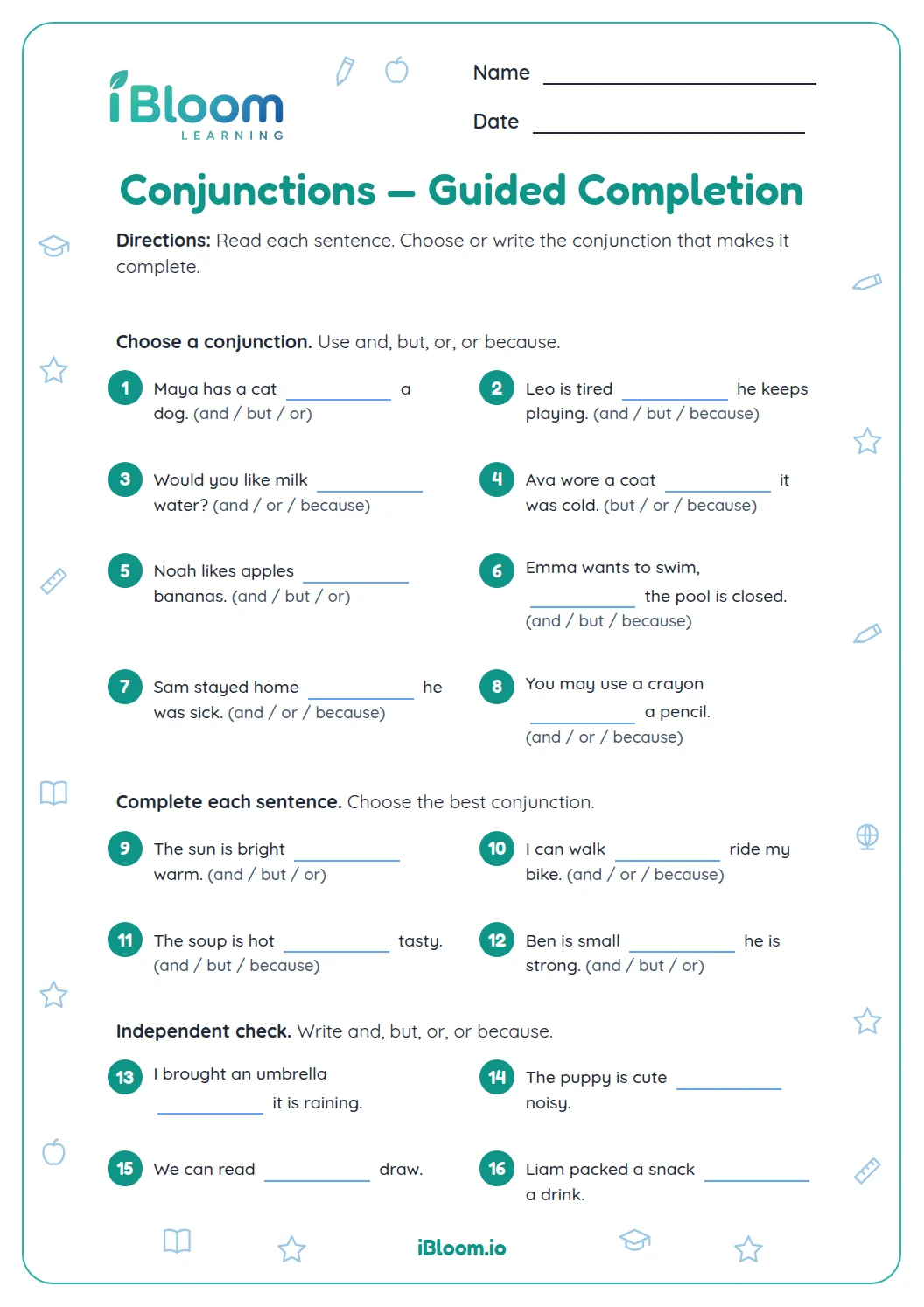
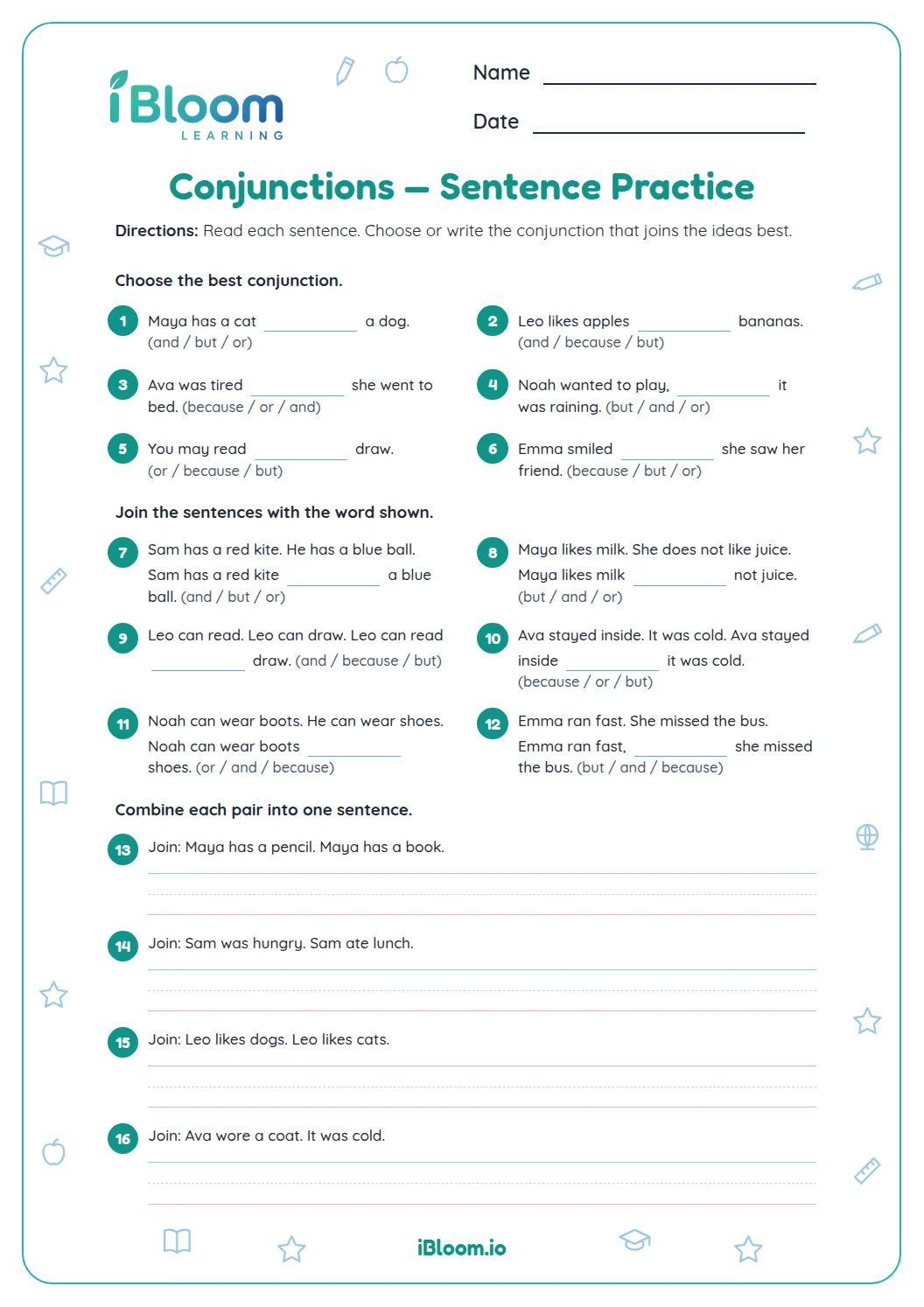


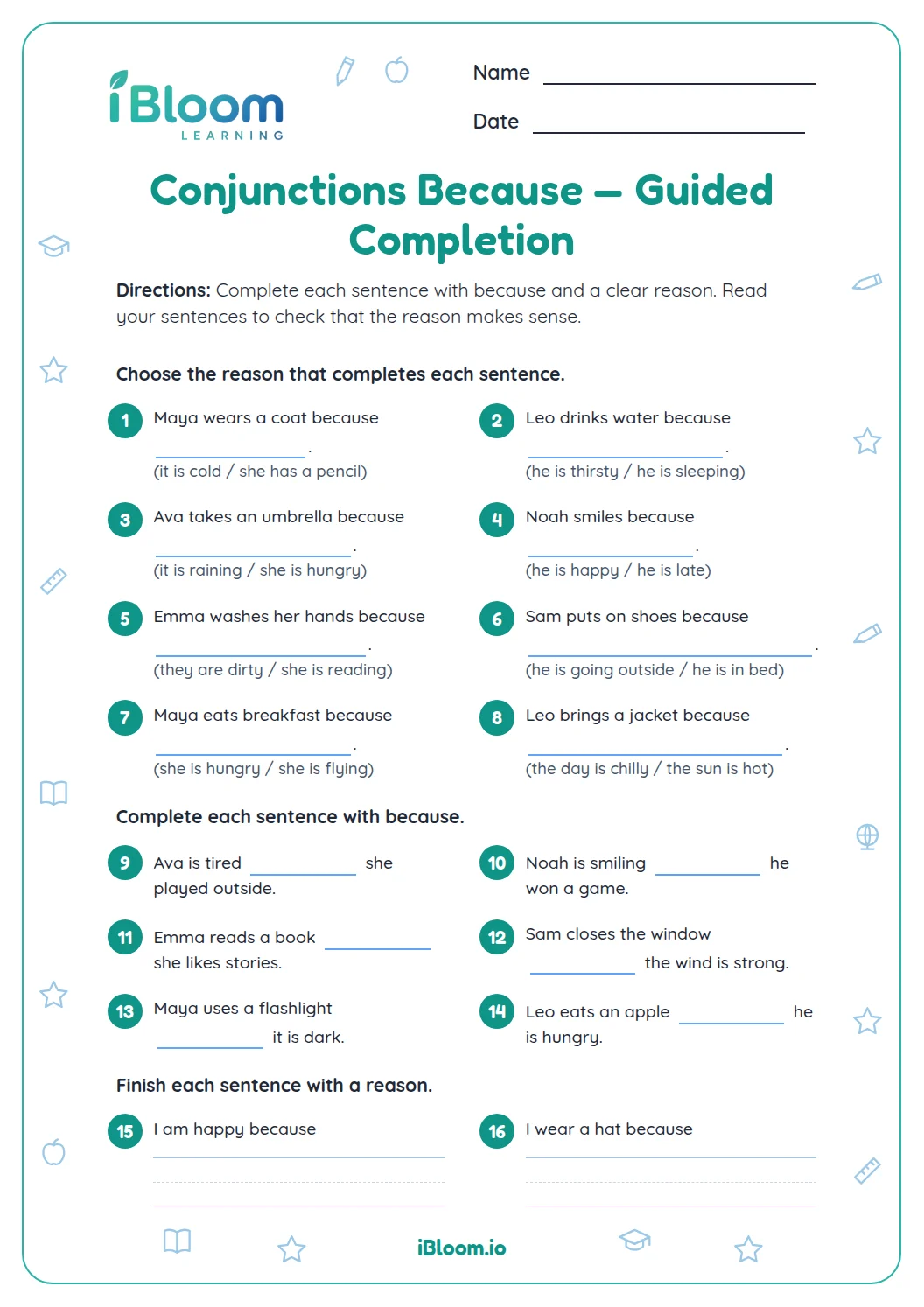

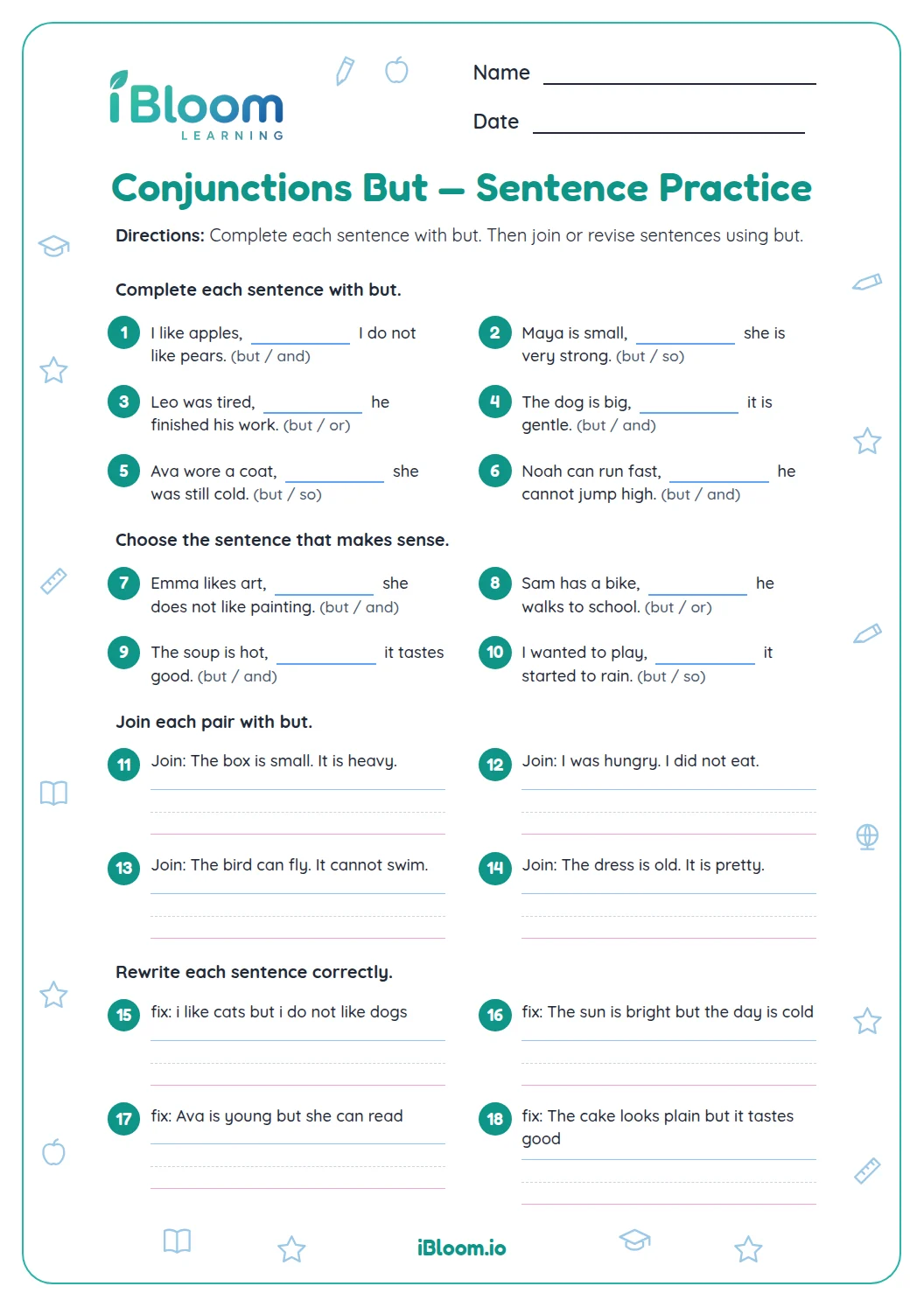


About this worksheet
This Grade 1 conjunctions worksheet gives children 16 short sentences to complete with and, but, or, because, or so. It practices recognizing how a joining word connects words or ideas, with four parts and a separate answer key. Children use the meaning of each sentence to choose a connector. It aligns with Common Core L.1.1.g.
Aligned to L.1.1.g
How does a conjunction join ideas?
A conjunction is a joining word. And adds something, or gives a choice, but shows a difference, because gives a reason, and so shows a result. The whole sentence helps the reader choose.
In question 3, “The puppy is small, ___ it can jump high,” the second idea contrasts with the first, so but fits.
- 1The puppy is small, ___ it can jump high.
- 2Small and able to jump high are contrasting ideas.
- 3Answer: but
What clues help choose the right word?
Read both sides of the blank. Ask whether the second idea adds information, offers a choice, contrasts, explains a reason, or tells a result. Then reread the sentence with your choice.
Question 9 says Tara smiled and then gives the reason: she saw her friend. Because introduces that reason.
How can children check a conjunction choice?
Read both sides of the blank. Ask whether the second idea adds information, offers a choice, contrasts, explains a reason, or tells a result. Then reread the sentence with your choice.
After choosing, read the sentence aloud and explain what the conjunction tells the reader.
How to use this worksheet
- 1Read the whole sentence before looking at the options.
- 2Name the relationship: adding, choosing, contrasting, giving a reason, or showing a result.
- 3Write a conjunction in the blank and reread the sentence.
- 4Check the answer key, then explain what the conjunction connects.
Common slips and helpful fixes
The mistake
Choosing “and” whenever there are two ideas.
The fix
Ask whether the ideas contrast, give a reason, or show a result instead.
The mistake
Mixing up because and so.
The fix
Because tells why; so tells what happened as a result.
The mistake
Picking or even when no choice is offered.
The fix
Check whether the sentence presents alternatives.
Common Core alignment
These activities practice the stated Common Core skill through the worksheet questions.
Use and recognize common conjunctions that connect words and ideas.
On this sheet: Children identify and choose and, but, or, so, and because in complete sentences.
Show the official wordingHide the official wording
Use frequently occurring conjunctions (e.g., and, but, or, so, because).
What to practice next
Make more practice
Further reading
Questions parents and teachers ask
Which conjunctions does this worksheet practice?
The sheet uses and, but, or, because, and so in short Grade 1 sentences. Children complete each blank, then reread both ideas to hear how the joining word connects them. Ask whether the word adds something, offers a choice, contrasts ideas, gives a reason, or shows a result.
How can a child tell because from so?
Because introduces the reason something happened; so introduces what happened as a result. In “I wore my coat because the wind was cold,” the wind explains the choice. In “The rain stopped, so we went outside,” going out follows from the change in weather.
Can more than one conjunction fit a sentence?
Some everyday sentences can be rewritten with a different conjunction and a slightly different meaning. Each prompt is designed to point to one best connector through its sentence clue. Have your child explain the relationship between the two ideas before checking the intended answer in the key.
How many questions and pages are included?
There are 16 sentence-completion questions arranged in four parts. Children practice joining words and ideas, then use sentence meaning to choose a connector. The separate answer key lists the intended conjunction for every item so adults and children can check their work.
What can we practice after finishing?
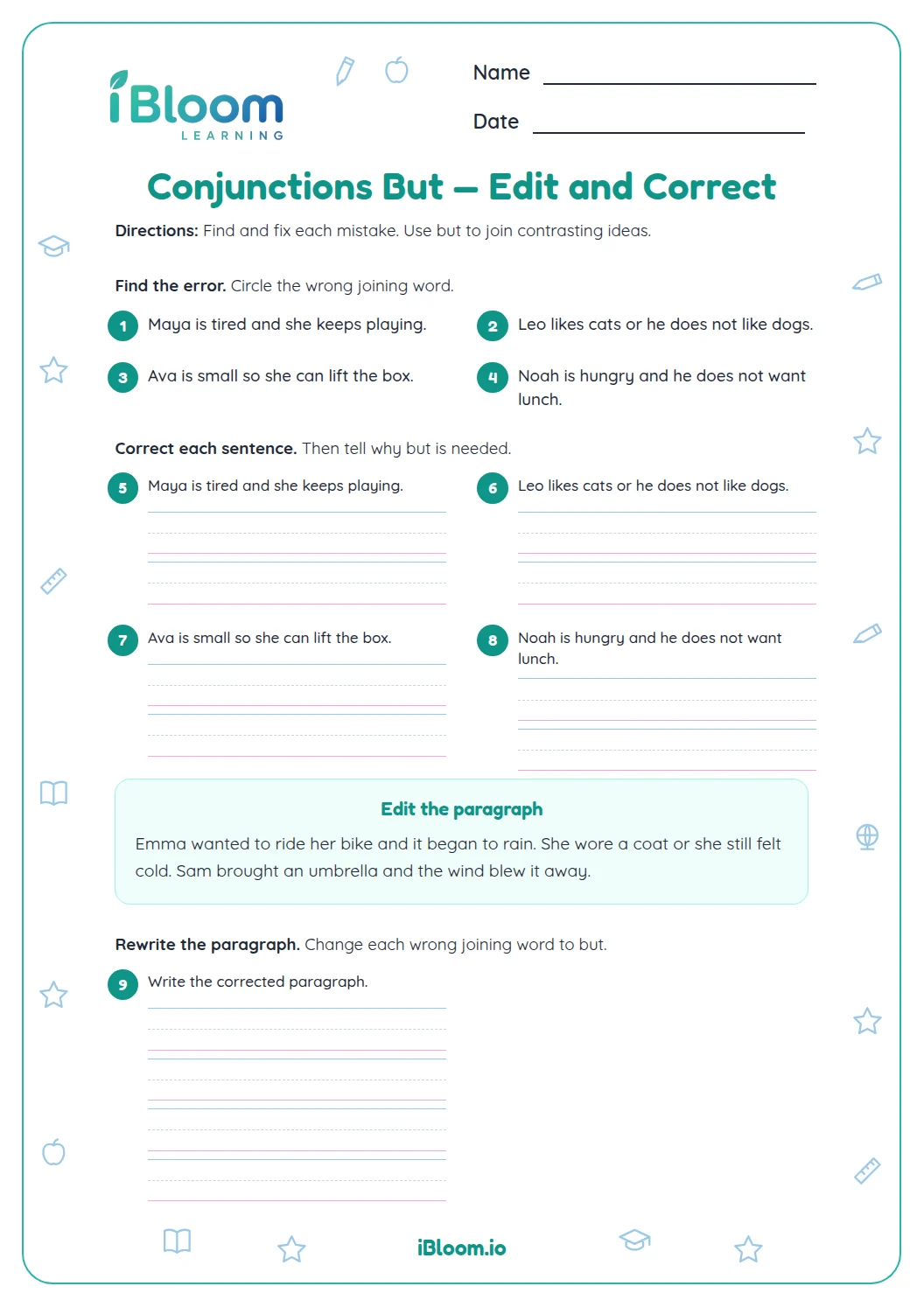
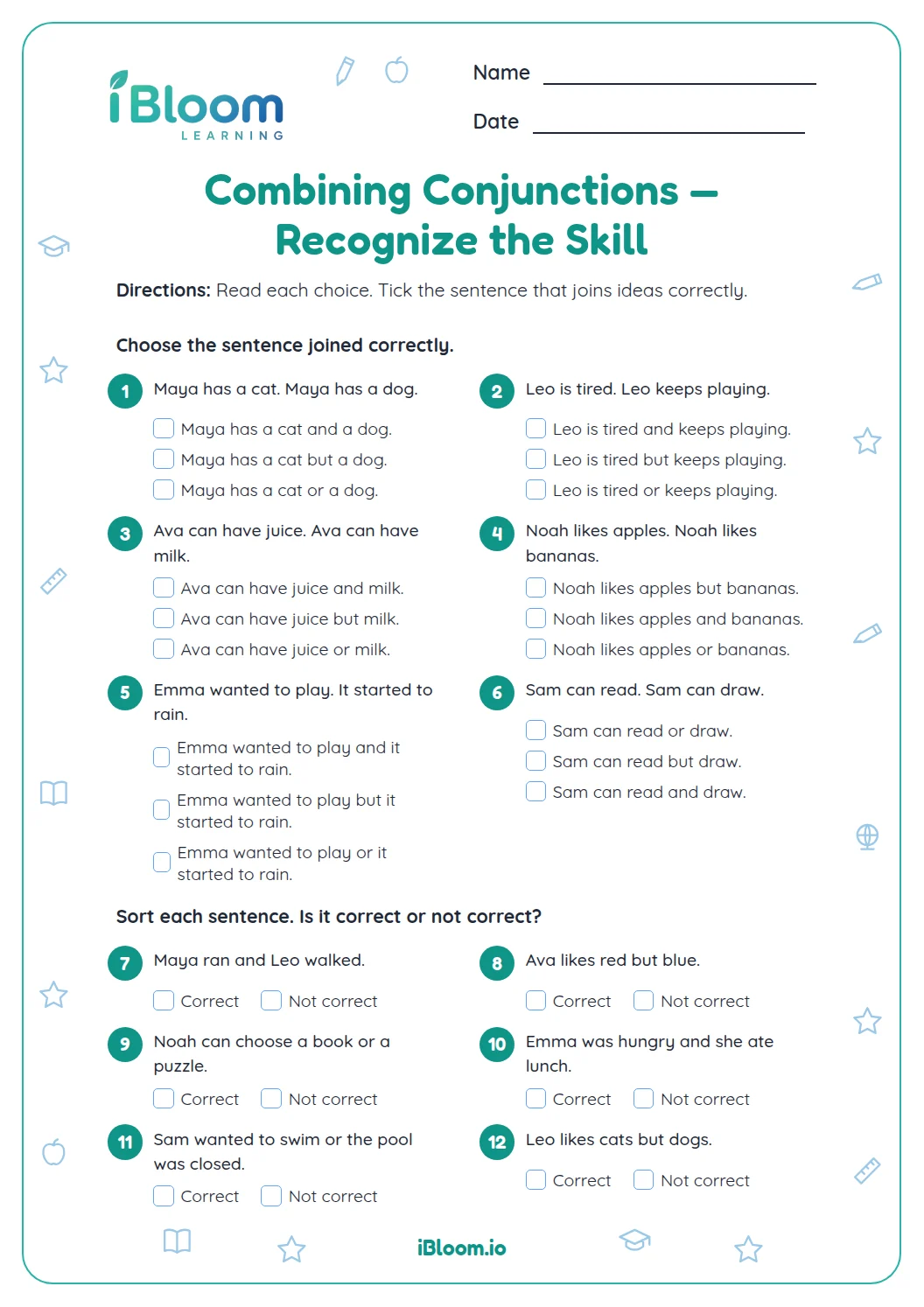
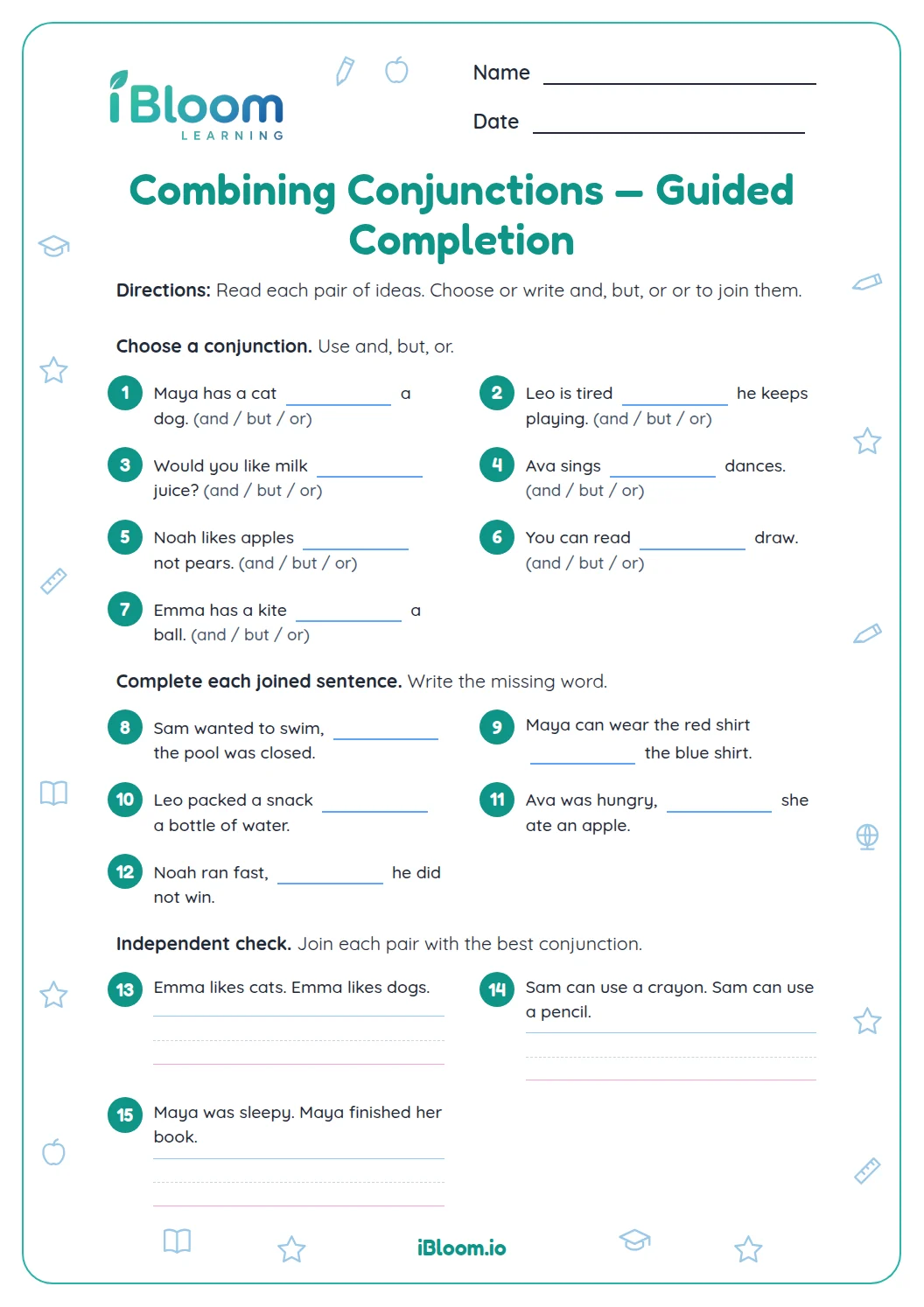
Ask your child to say a new sentence with one of the five conjunctions and explain what it joins. The related pages “Conjunctions Because,” “Conjunctions But,” and “Combining Conjunctions” offer another way to work with these joining words for focused follow-up practice.