


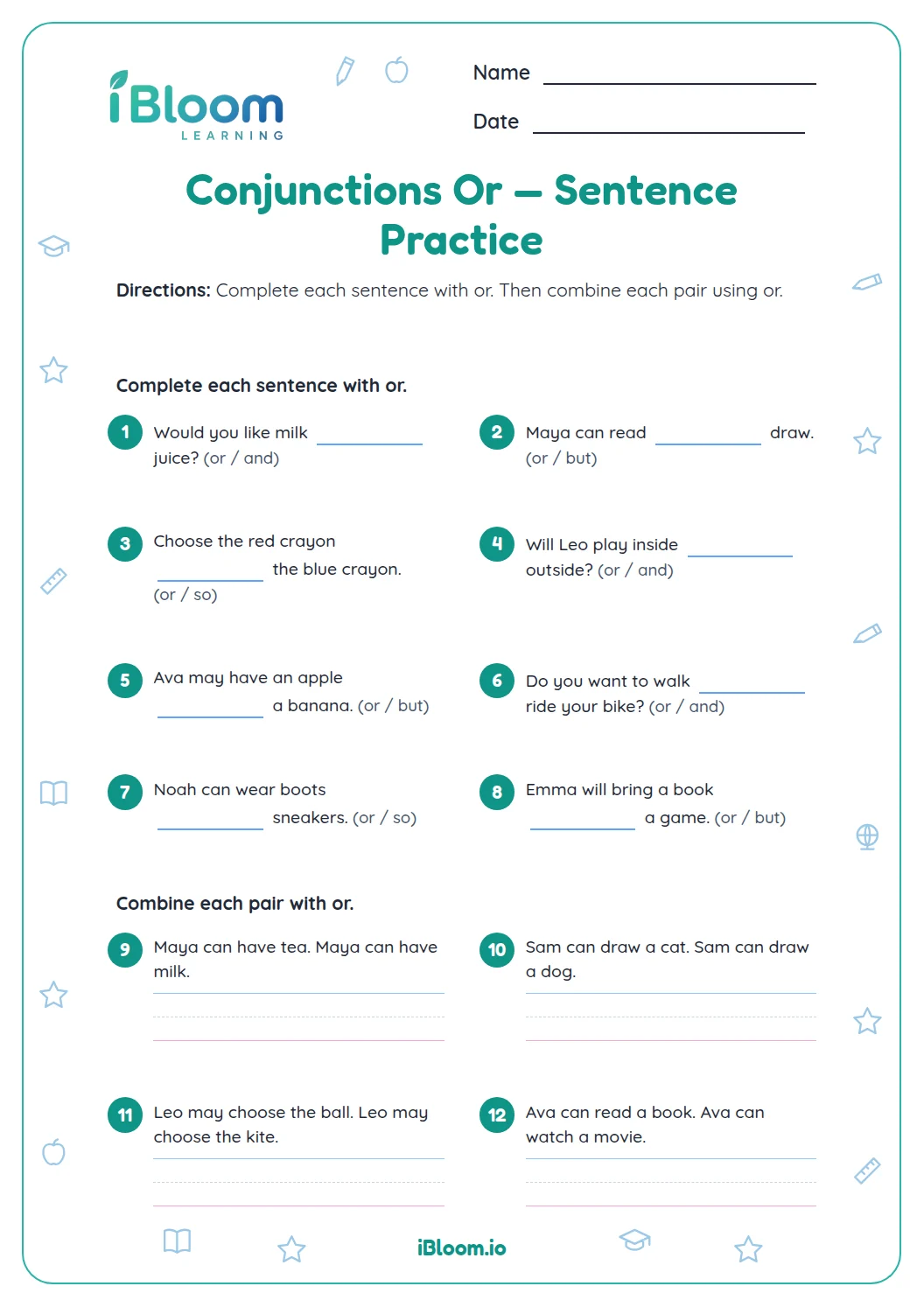
About this worksheet
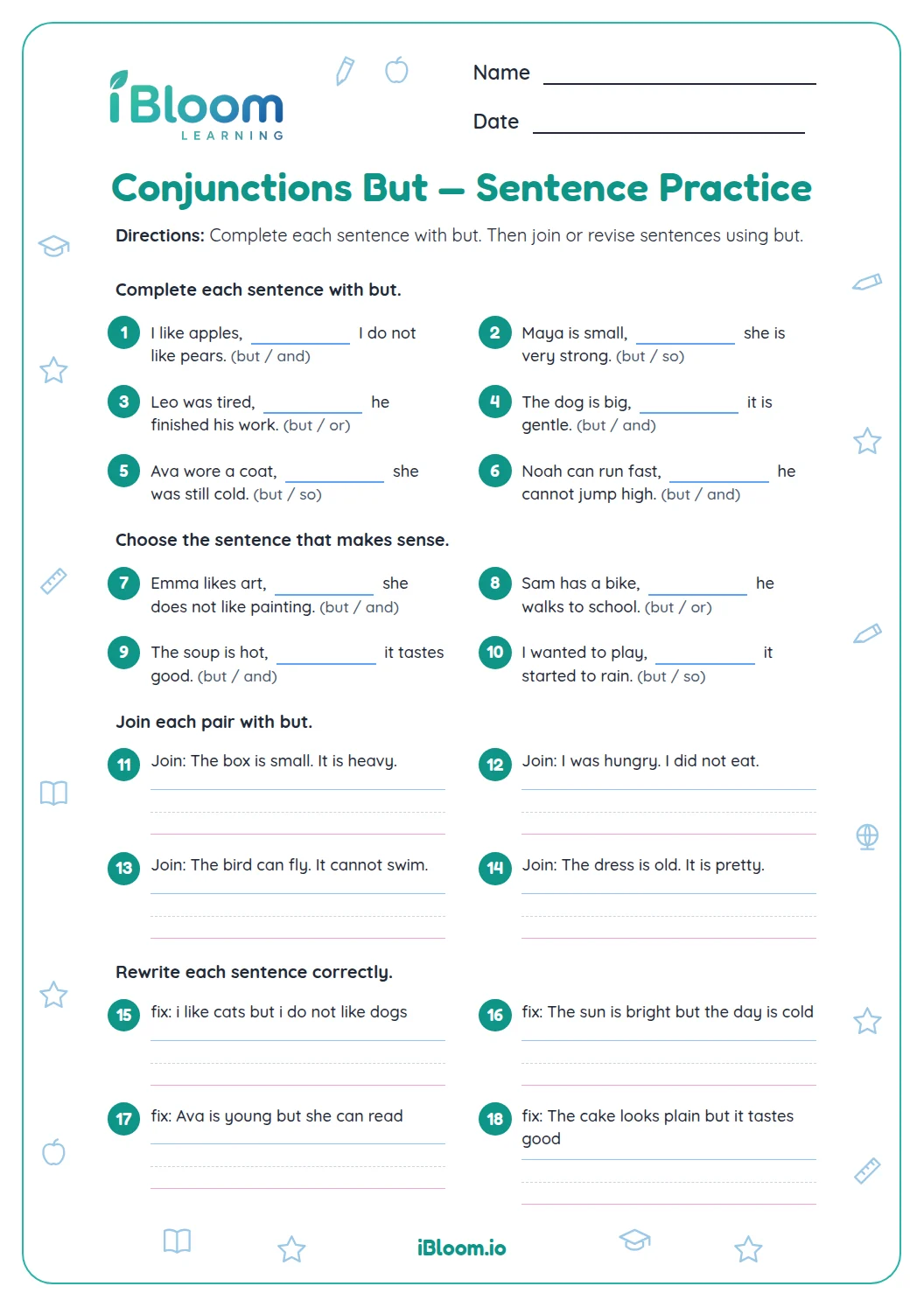
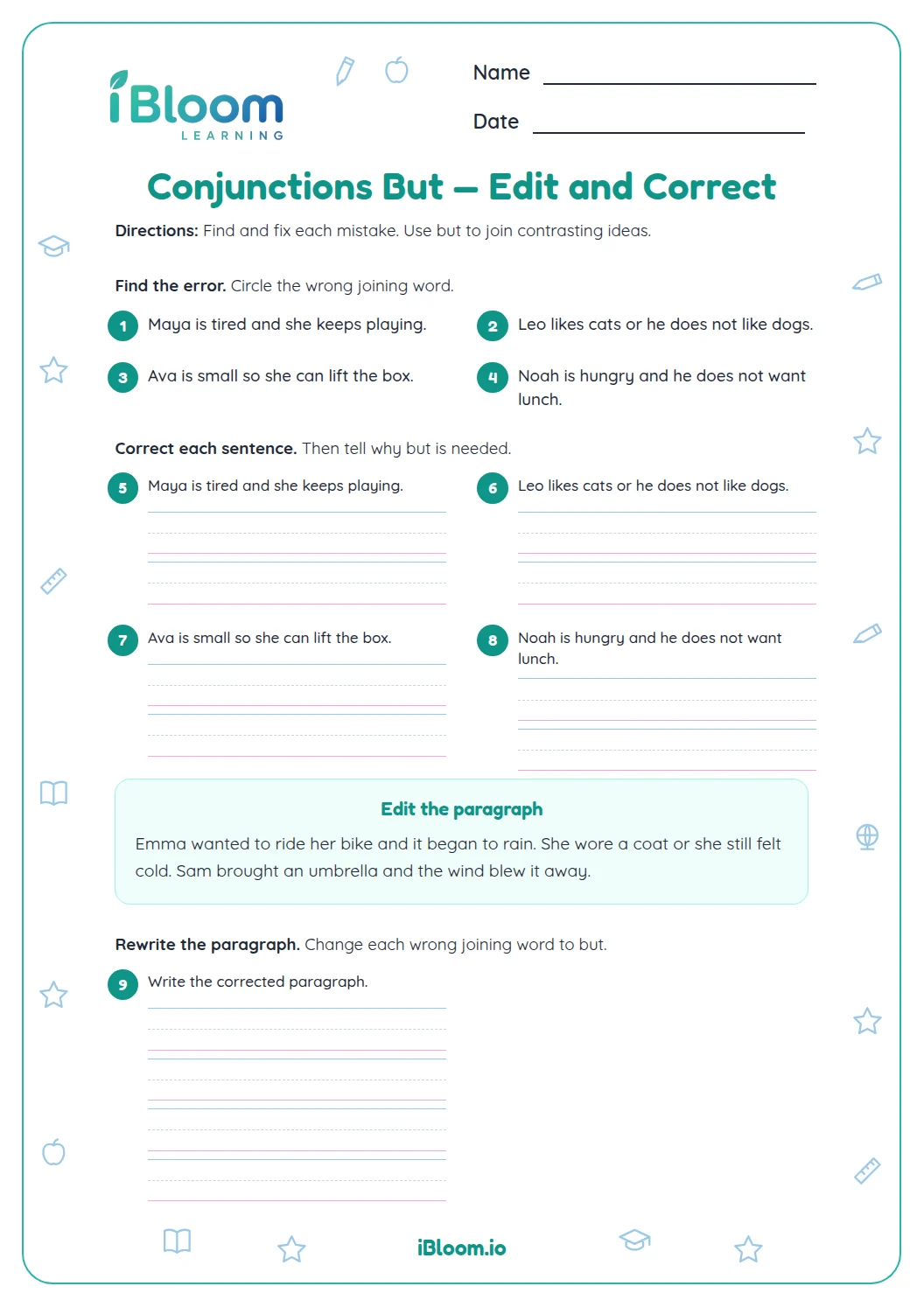
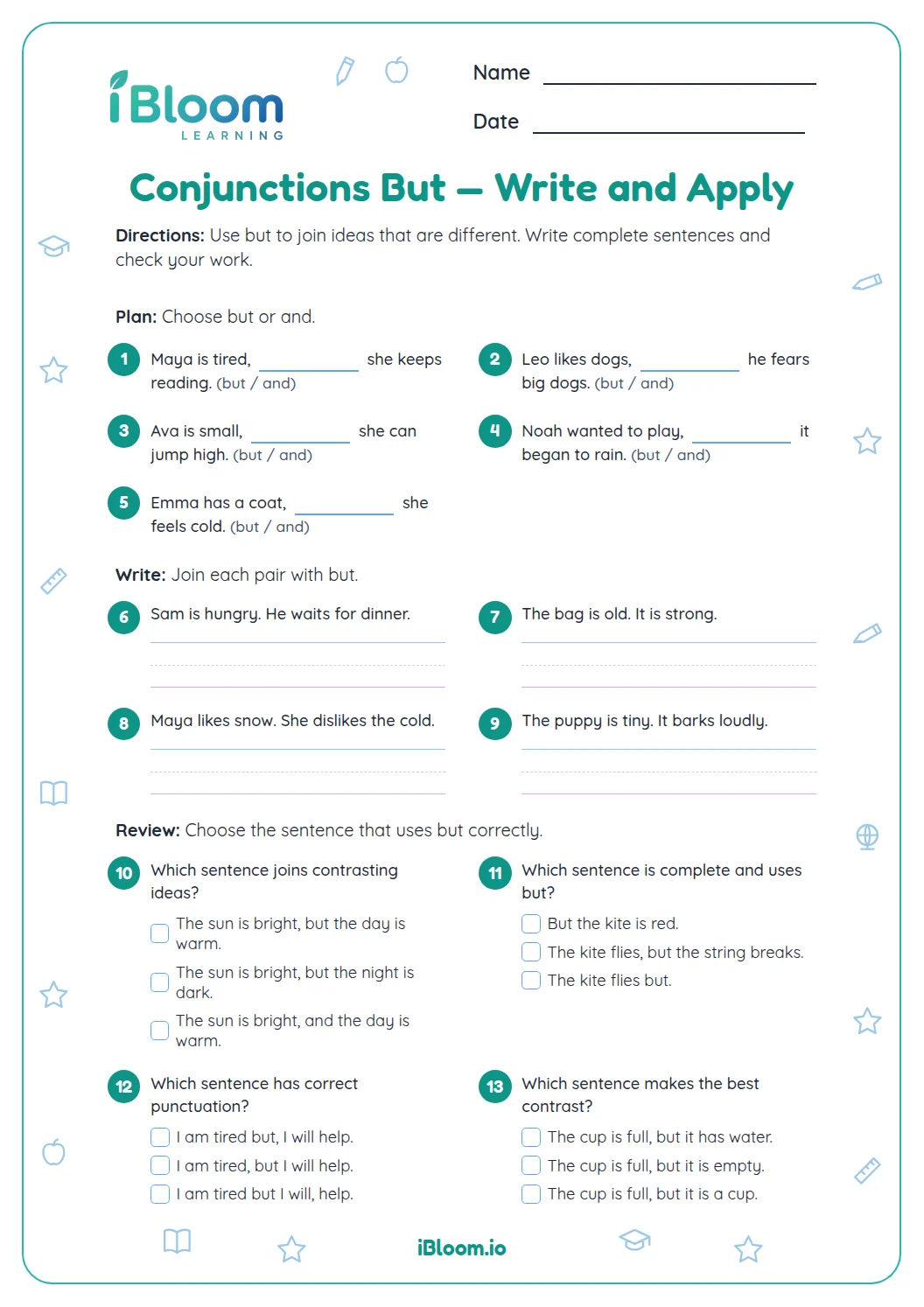
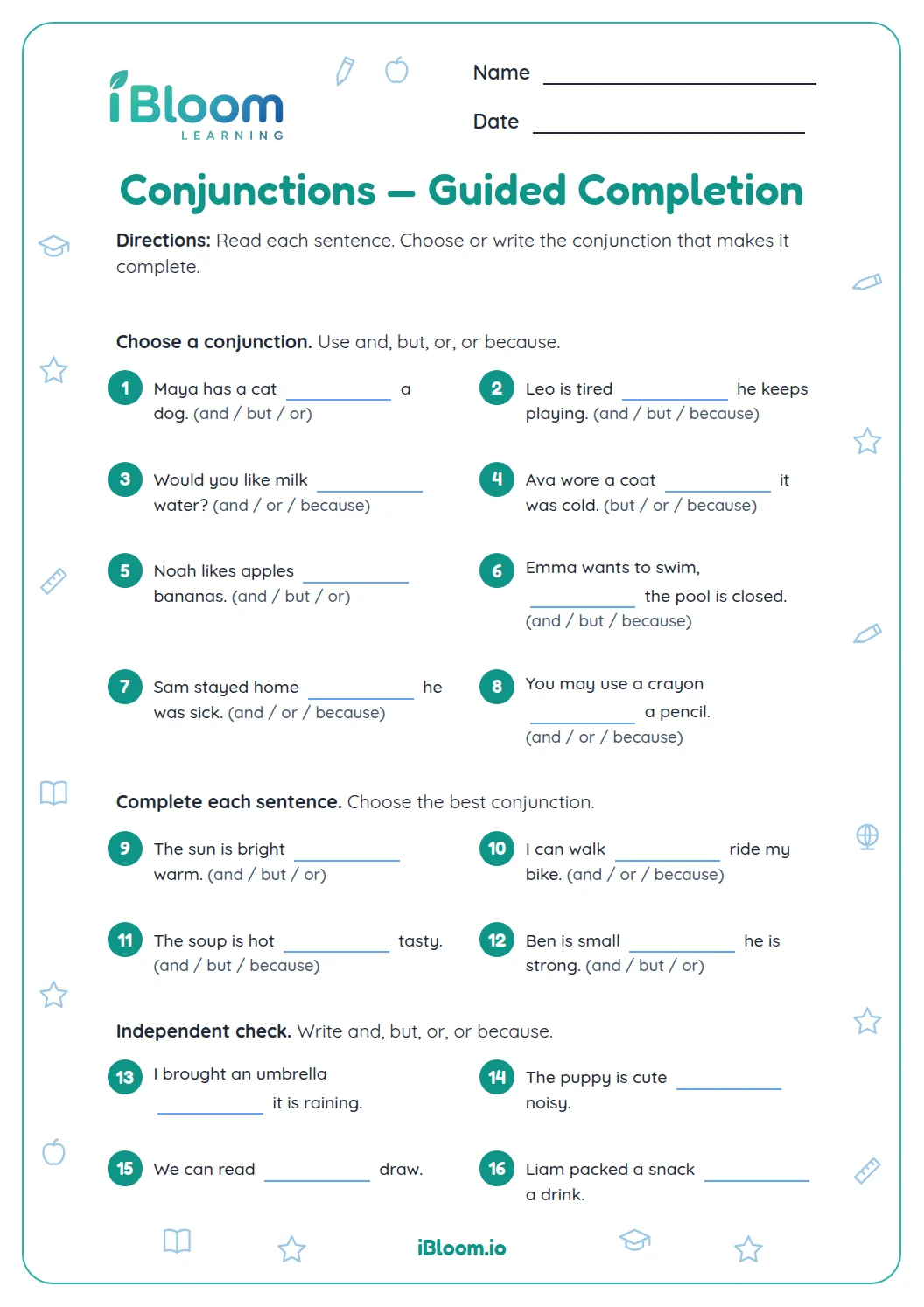
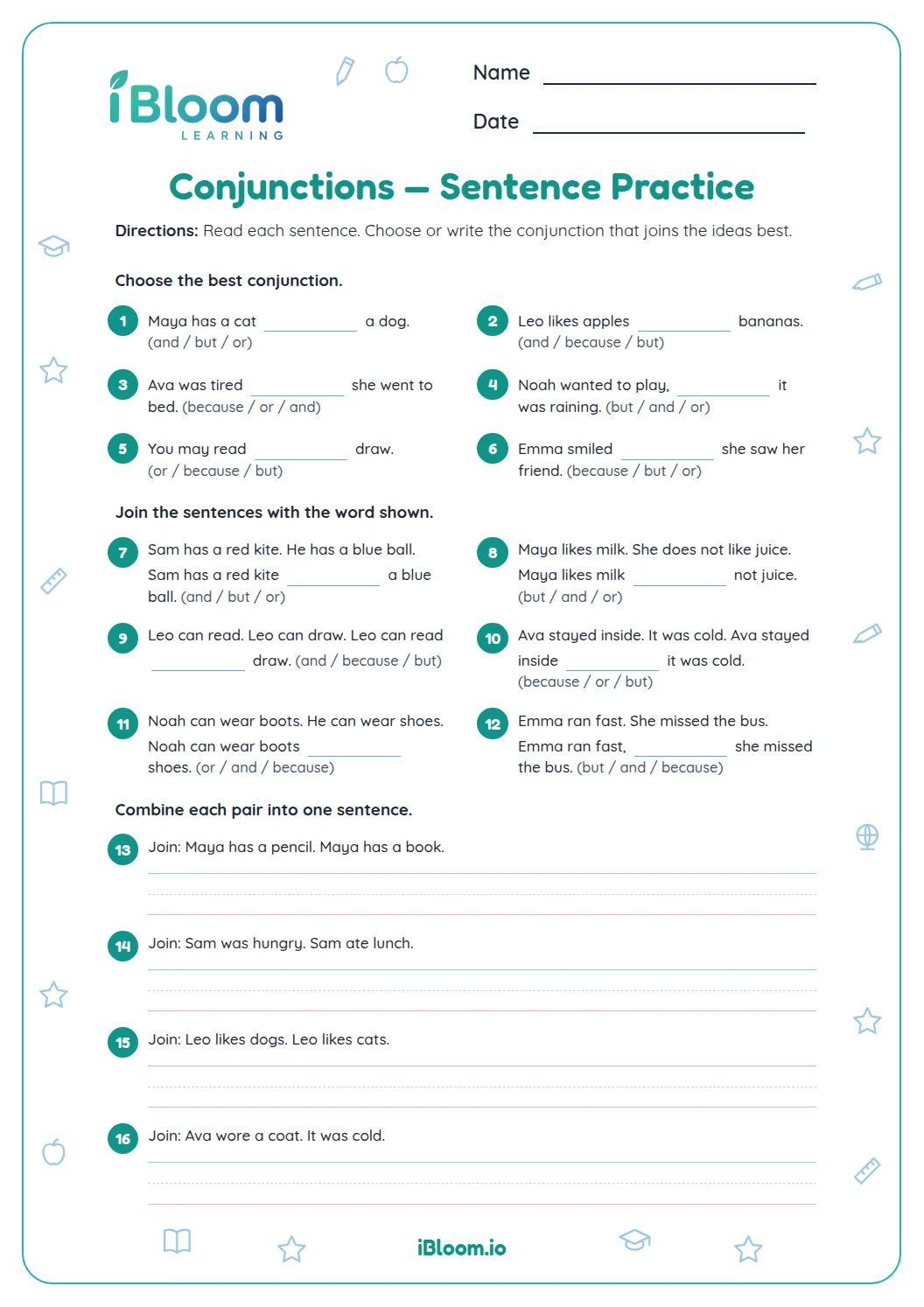
This Grade 1 printable helps children use the conjunction but. Eleven questions ask them to choose a joining word that completes a sentence, one prompt invites a sentence of their own using but, and two sentence starters ask them to finish the thought. The work practices Common Core Language standard L.1.1g, using frequently occurring conjunctions. A separate answer key includes sample responses for writing items.
Aligned to L.1.1g
What does but mean in a sentence?
But is a conjunction, a word that connects ideas. It often signals that the second idea differs from what a reader might expect: “The puppy is small, but very brave.” Small and brave can both be true, and but links them.
The worksheet asks children to choose a conjunction to complete each sentence, then write and finish their own sentences with but.
- 1I wanted to play, but it began to rain.
- 2The joining word is but.
- 3It links wanting to play with the change in weather.
How does this worksheet build the skill?
Part A has 11 sentences with conjunction choices. Students choose the word that connects the ideas. Part B asks for one complete sentence using but, and Part C gives two sentence starters to finish with a contrasting idea.
How can a first grader write a sentence with but?
Start with one idea, add but, then write a second idea that differs. For example: “I wanted to swim, but the pool was closed.” Read the whole sentence aloud to check that both parts make sense.
How to use this worksheet
- 1Read the whole sentence aloud.
- 2Find the word that connects the ideas.
- 3In Part B, test each choice in the blank.
- 4For Part C, say two related but different ideas first.
- 5Write a capital letter at the start and punctuation at the end.
Common mistakes and quick fixes
The mistake
Using and when the ideas contrast.
The fix
Ask whether the second idea differs from what the first one suggests.
The mistake
Writing but without a complete idea on one side.
The fix
Read both sides of but and make sure each says something understandable.
The mistake
Leaving off the comma before but in these compound sentences.
The fix
Use the model to check punctuation when but connects two complete ideas.
Common Core alignment
This worksheet gives children focused practice with a specific Common Core skill.
Use common conjunctions such as but to connect ideas.
On this sheet: Students choose and use but, and, and or to connect ideas in complete sentences.
Show the official wordingHide the official wording
Use frequently occurring conjunctions (e.g., and, but, or, so, because).
What to practice next
Make more practice
Further reading
Questions parents and teachers ask
What is a conjunction?
A conjunction is a joining word. Here, children focus on but, which links ideas that differ or seem unexpected, as in “The puppy is small, but very brave.” The second idea changes what a reader might expect. The joining word helps readers hear how the second idea relates to the first.
How is but different from and?
And usually adds an idea, while but often signals a difference. “I have a coat, but it is warm” links an expectation with a surprising detail; “I have a coat and a hat” simply adds another item to the sentence.
What should a sentence with but include?
A sentence with but should connect two understandable ideas. “I wanted to swim, but the pool was closed” tells what the speaker wanted and what happened instead. Read both sides to check they make sense together. This makes the contrast clear to the reader.
Are writing answers graded as exact matches?
No. The key gives sample sentences. Another response works if it is a complete sentence and uses but to connect two sensible ideas that differ. A child might write about a plan and an unexpected change. The key is a guide, not a requirement to copy the exact wording.
How many questions are on the worksheet?
There are 14 questions in three parts: 11 conjunction choices, one sentence-writing prompt, and two sentence completions. The separate key includes fixed answers and writing samples that show one possible response. The first part also includes and and or for comparison.