






About this worksheet
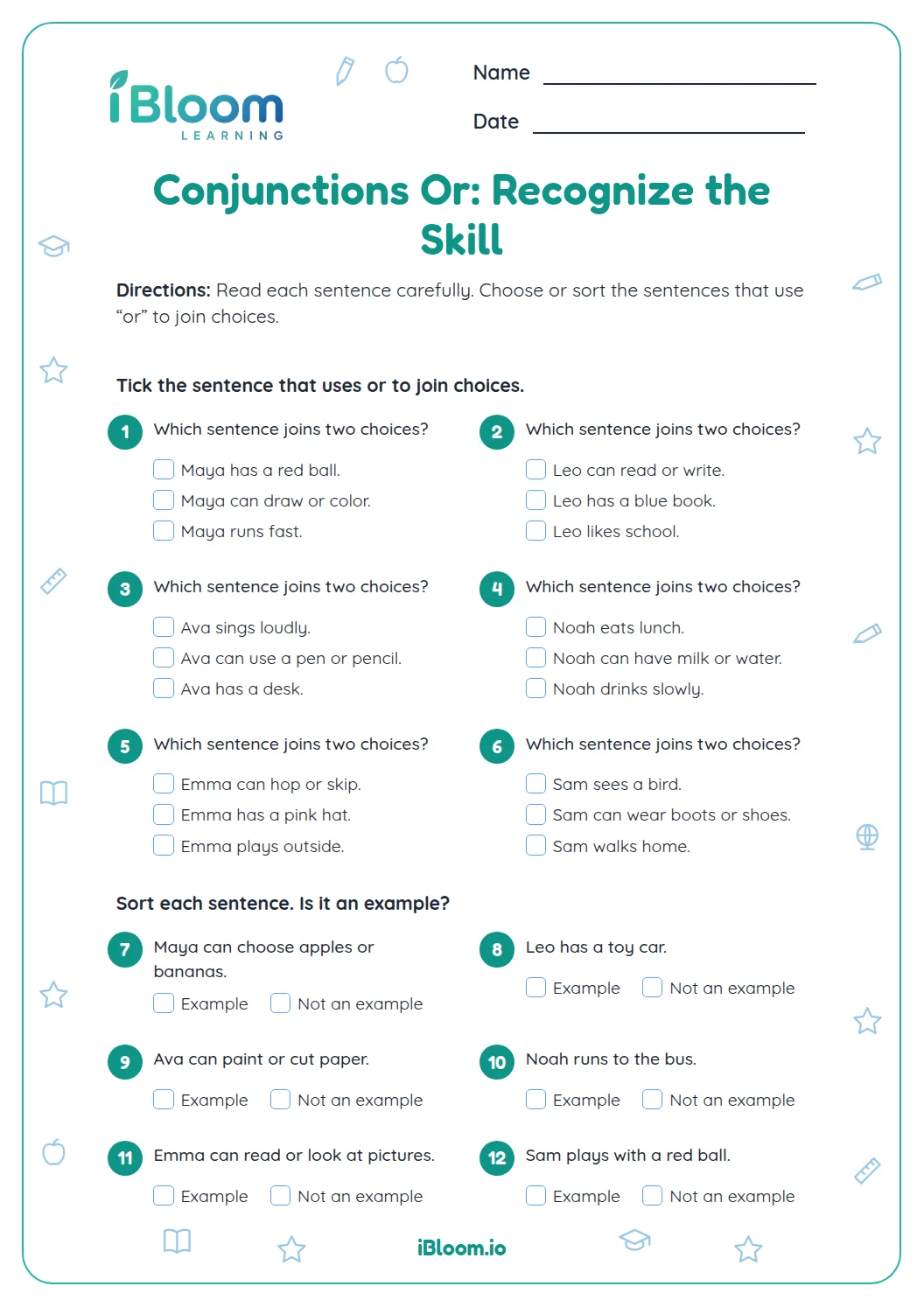
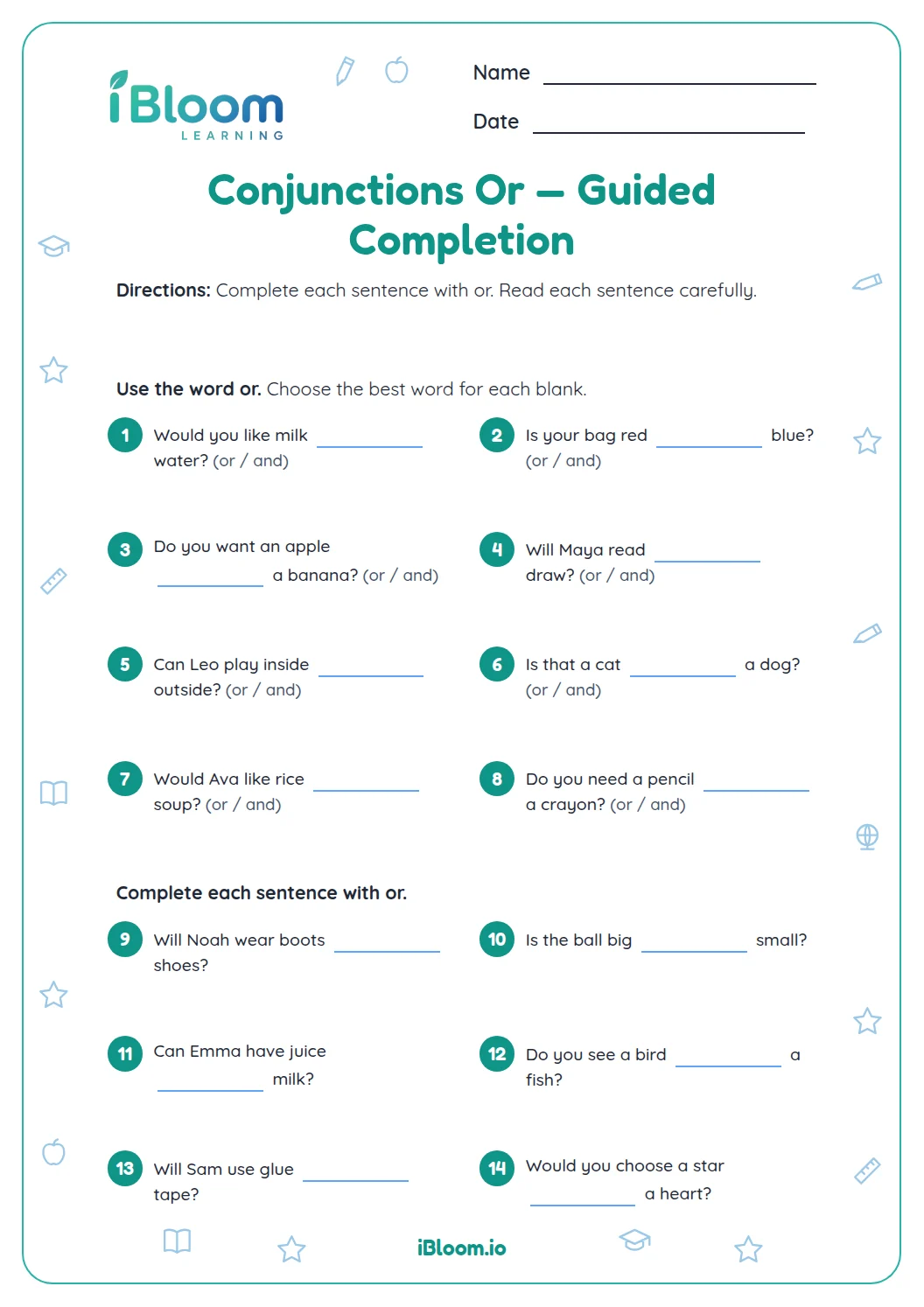
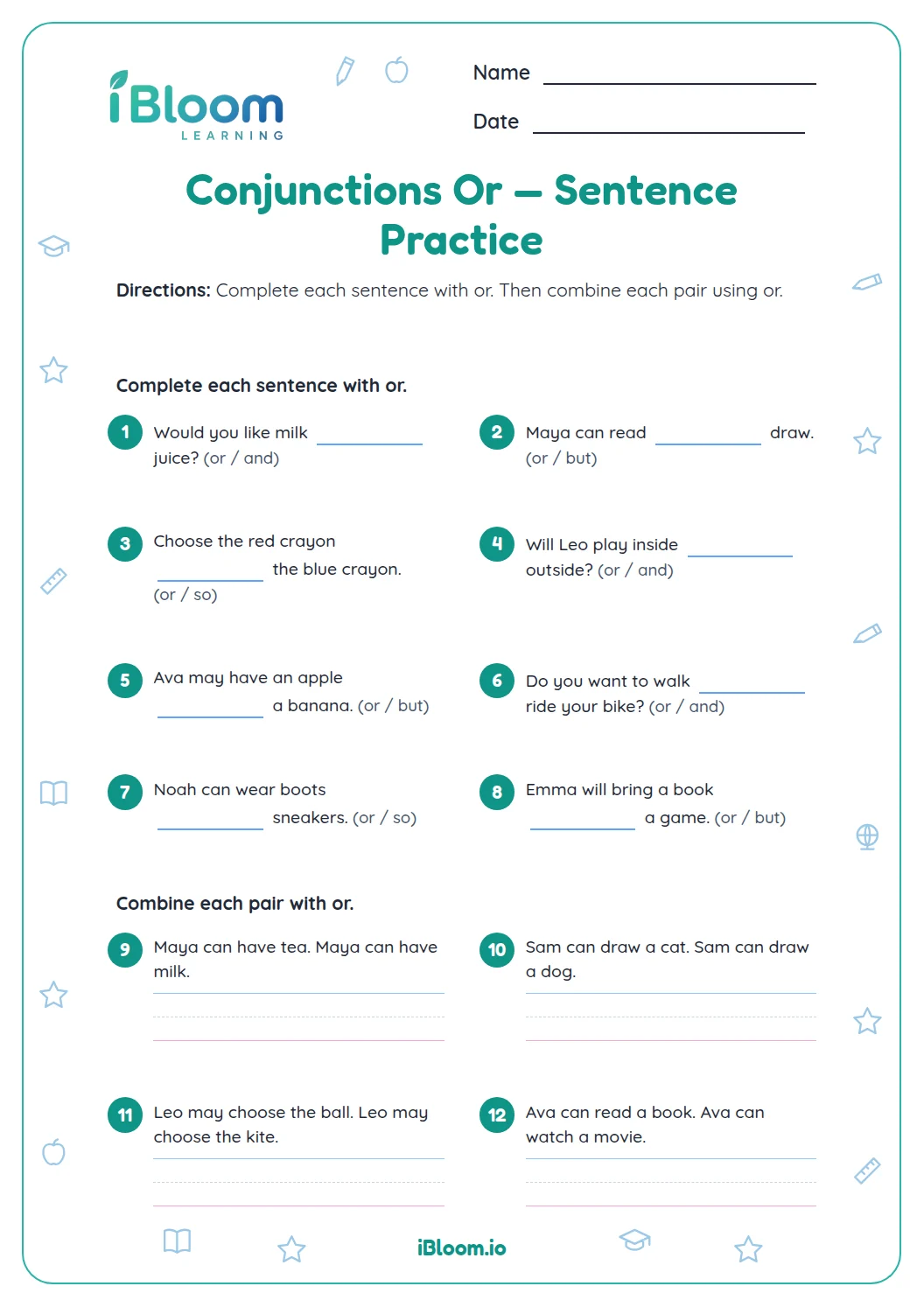
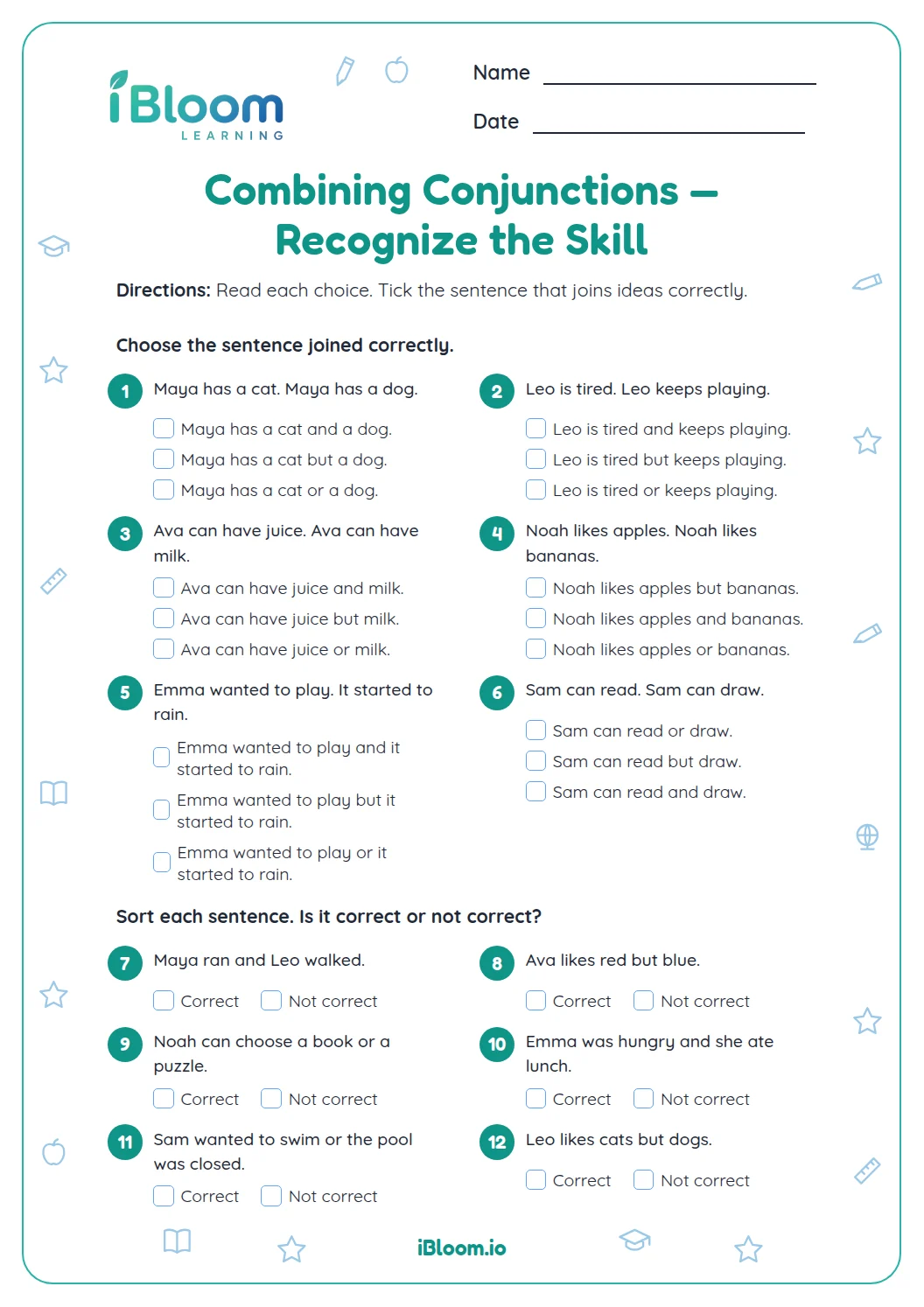
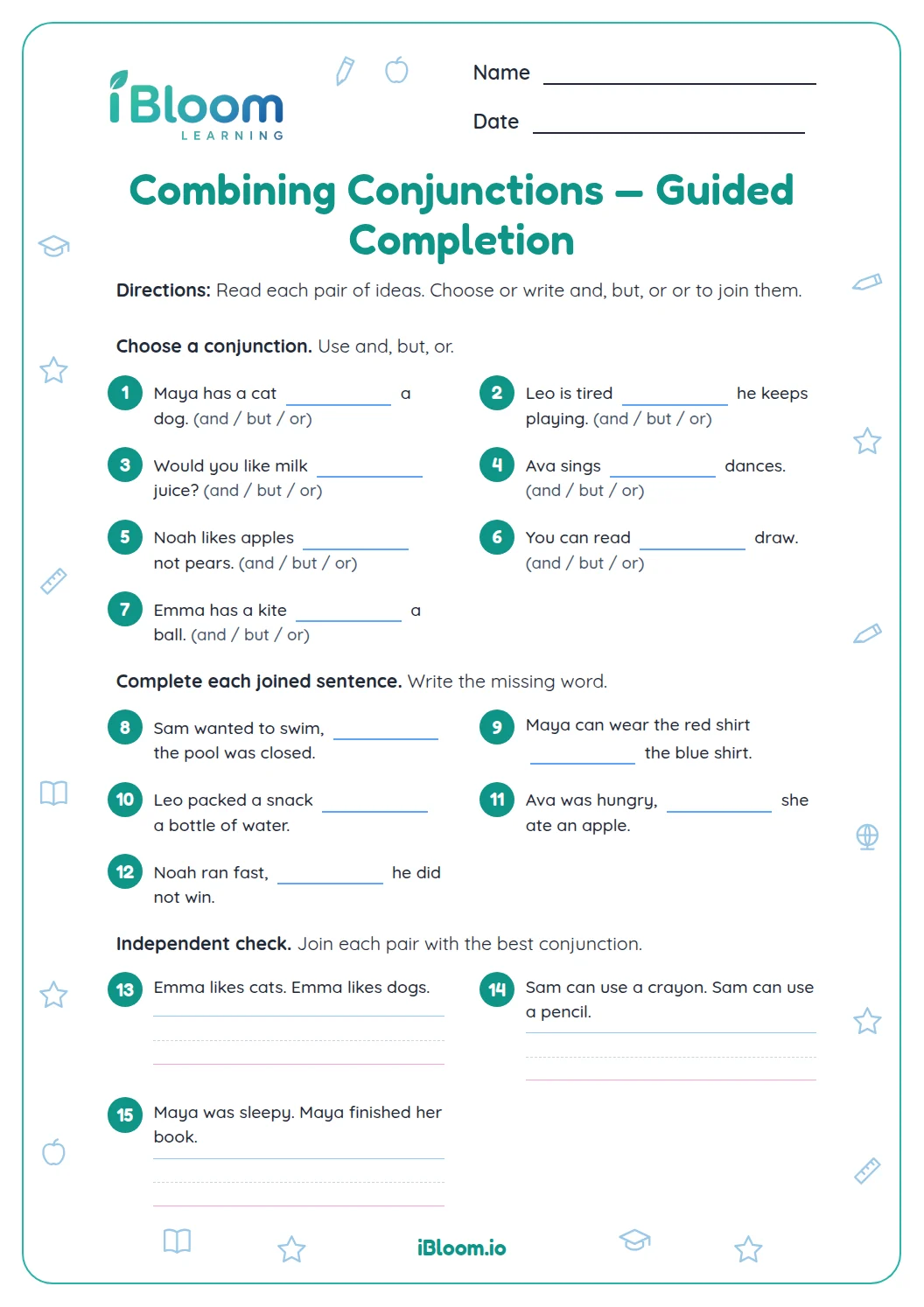
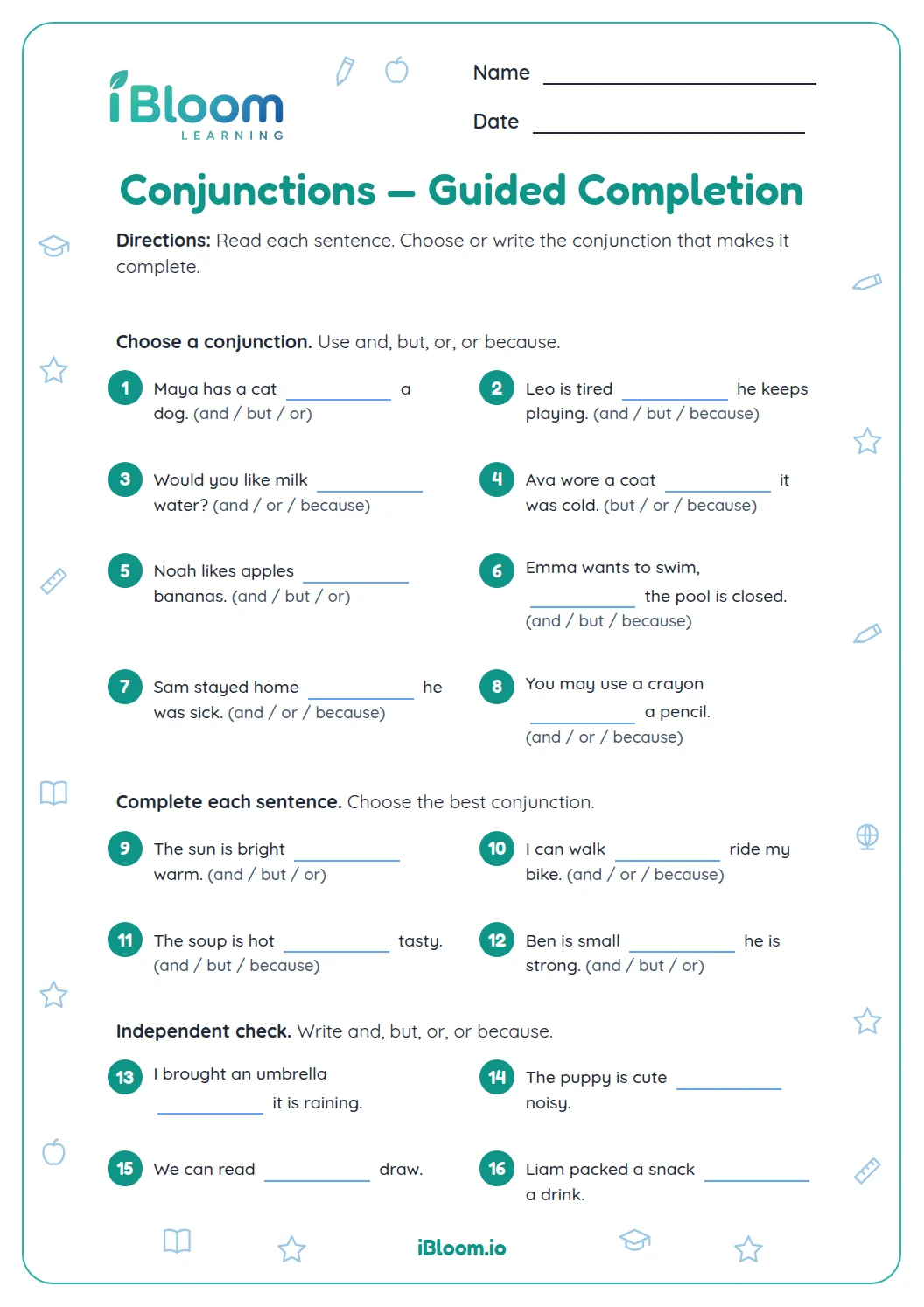
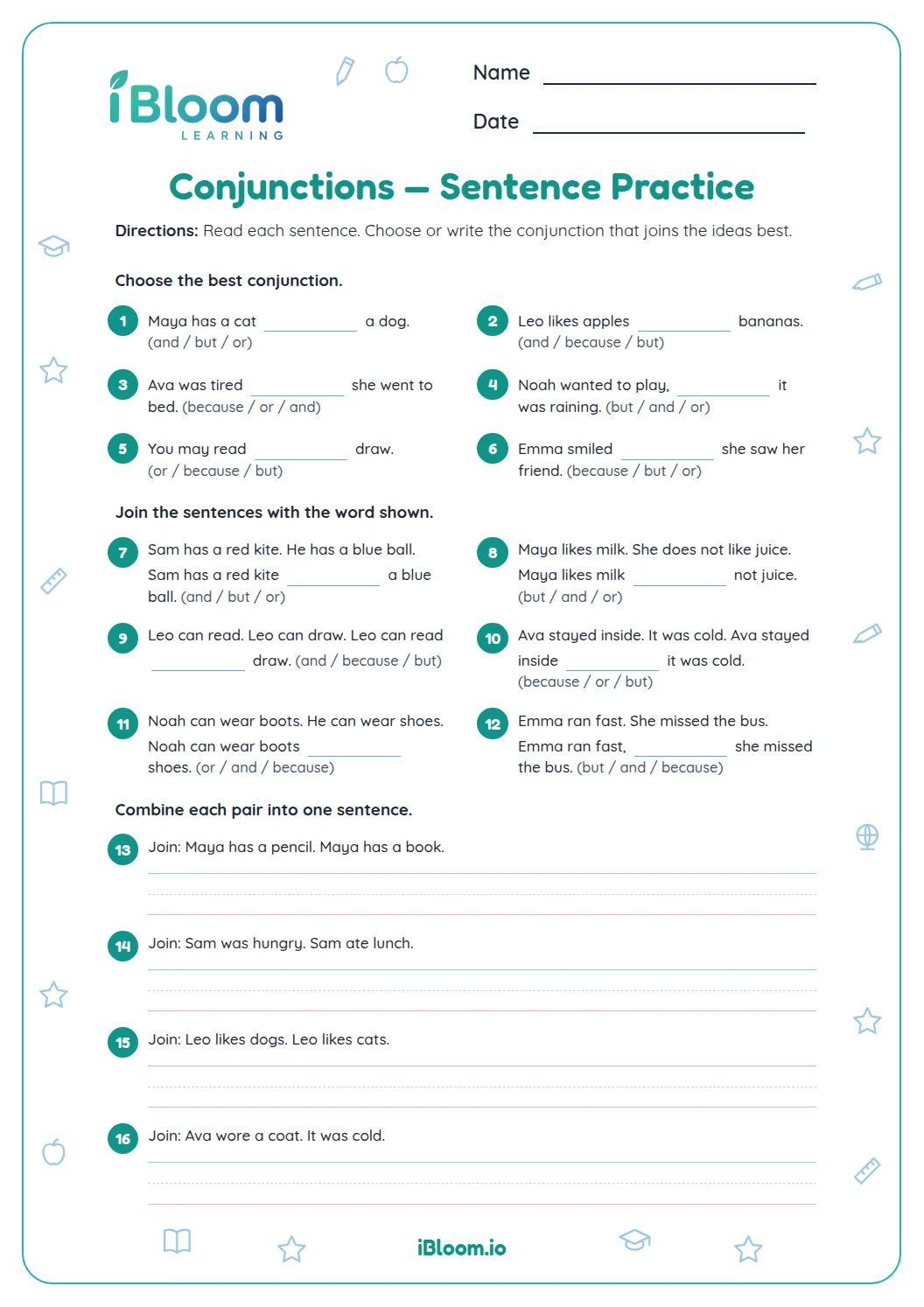
This Grade 1 grammar worksheet focuses on or as a word that joins choices. Students identify choice sentences, select a corrected sentence, and write or revise short sentences of their own. It practices producing and expanding complete sentences in response to prompts.
Aligned to L.1.1.j
What does this worksheet ask children to do?
Students first recognize how or connects alternatives, then choose complete examples and write or correct their own sentences. The last part gives room for sentence writing.
For example, “Do you want milk and juice?” can be revised to “Do you want milk or juice?” because the question offers a choice.
- 1Edit: Do you want milk and juice?
- 2Revised: Do you want milk or juice?
How can a child work through the questions?
Read each complete sentence or prompt carefully. Look for the word, detail, or relationship the question asks about.
For written responses, point back to a specific clue and say how it supports the answer.
How should we use the answer key?
Check each response after completing a part. When an answer differs, return to the words or details in the prompt and decide which clue settles it.
How to use this worksheet
- 1Read the sheet directions and the first part heading together.
- 2Complete the first question aloud to model the kind of clue to notice.
- 3Work through each part in order, rereading when a sentence feels tricky.
- 4Check the answers after finishing each part.
- 5For a missed item, point to the word or detail that supports the correct response.
Common mistakes and quick fixes
The mistake
Choosing an answer from a familiar idea instead of the printed words.
The fix
Reread the sentence or passage and point to the clue that supports the choice.
The mistake
Skipping a small word that changes how two ideas connect.
The fix
Read the whole sentence aloud and notice how the clauses fit together.
The mistake
Changing a written response without checking the prompt.
The fix
Underline what the question asks, then check that the response answers that exact question.
Common Core alignment
This practice aligns with the following Common Core English language arts standard.
Complete and expand sentences that connect two choices with or.
On this sheet: The questions ask children to practice this reading, language or writing skill directly.
Show the official wordingHide the official wording
Produce and expand complete simple and compound declarative, interrogative, imperative, and exclamatory sentences in response to prompts.
What to practice next
Make more practice
Further reading
Questions parents and teachers ask
Can children complete this worksheet independently?
Many children can work through the short prompts on their own after reading the directions together. An adult can support the first item, then let the child try the remaining questions and use the answer key to review any uncertain responses.
How should I use the answer key?
The answer key is for checking after a child has attempted the questions. When an answer differs, return to the specific printed clue and talk about why it supports the key response. Written answers may use different wording while keeping the same meaning.
How long does the worksheet take?
Plan for about 15 minutes, with time to read directions and review the key. Children who pause to reread a passage or revise a response may need a little longer. You can also complete one part at a time.
What should I do when an answer is wrong?
Ask the child to show where they looked for the answer. Reread that sentence or passage together, then identify the detail or word that resolves the question. This keeps the review focused on the skill rather than guessing.
Can I use this in a classroom?
Yes. The printable format works for individual practice, a literacy center, or a short small-group review. Read directions aloud if needed, then have students complete the parts, compare their responses with the key, and discuss which details or language choices support each answer.