






About this worksheet
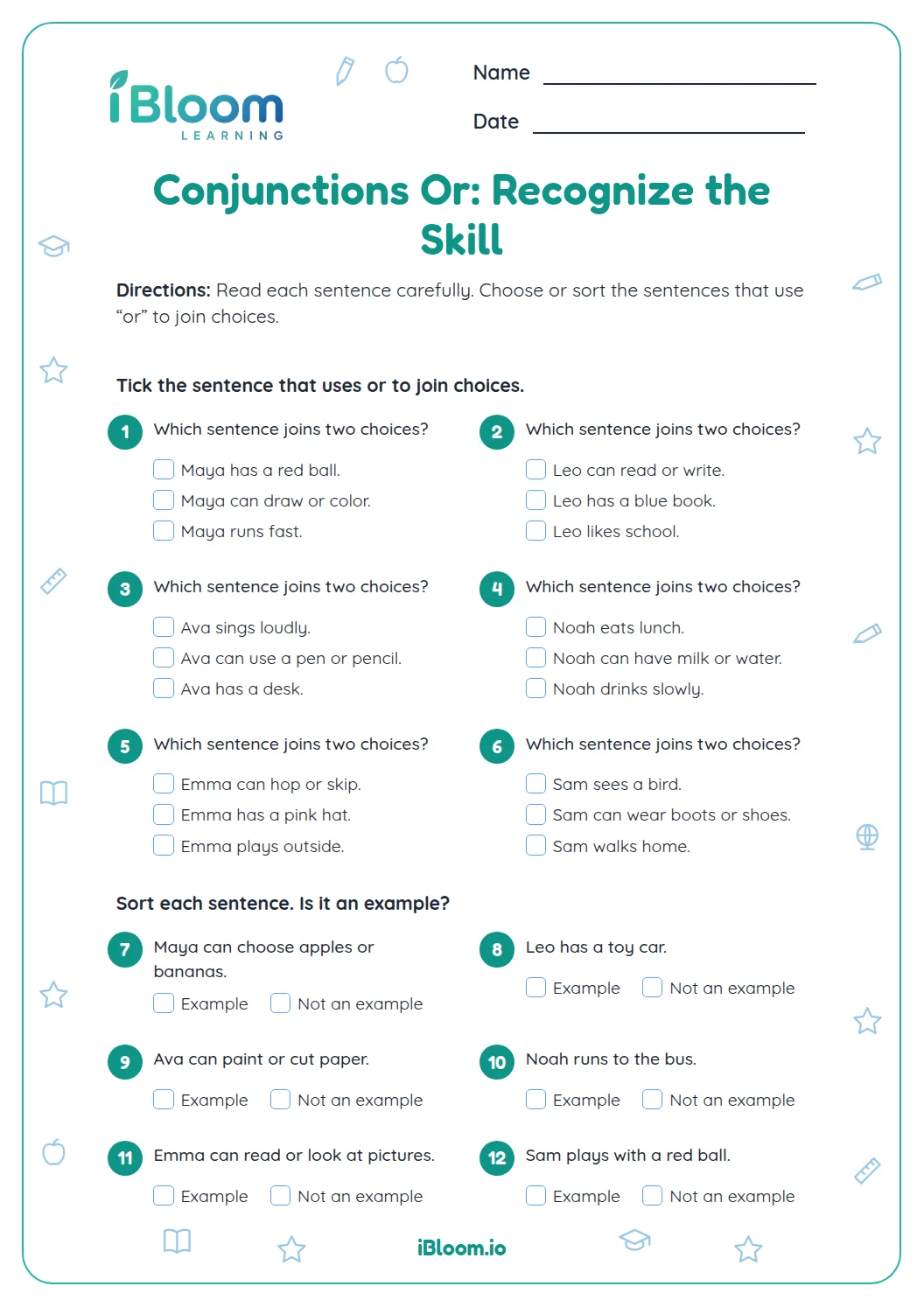
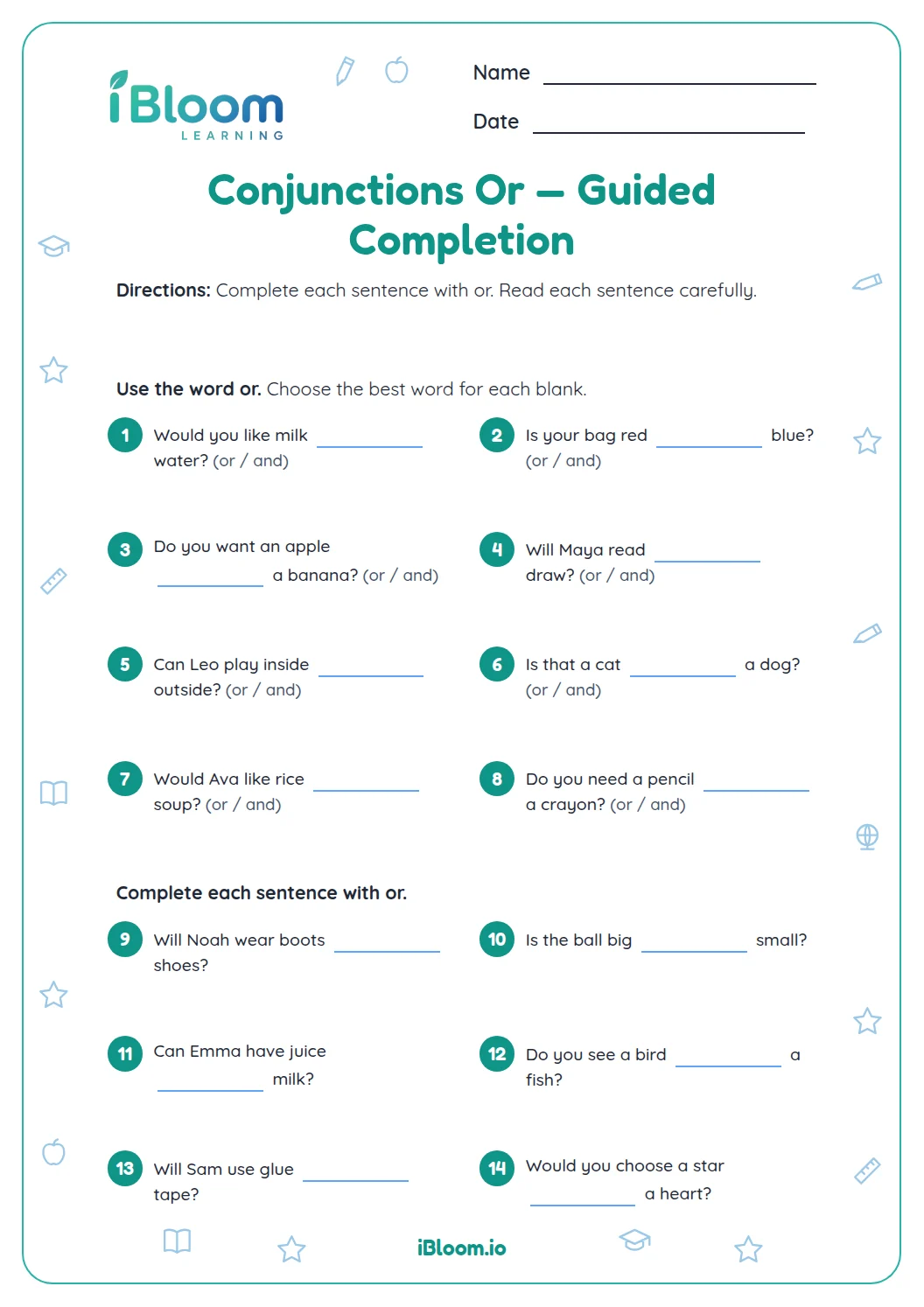
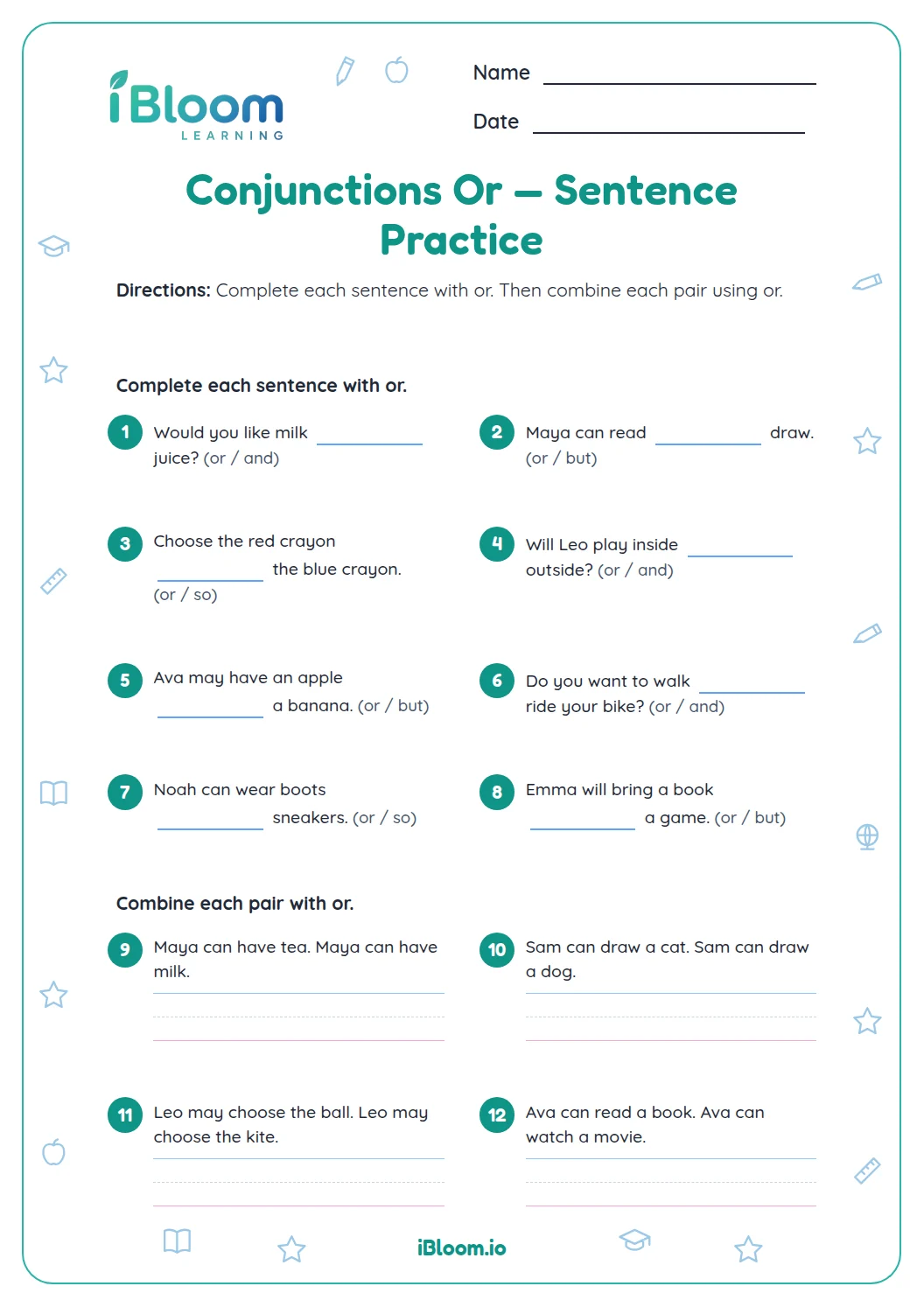
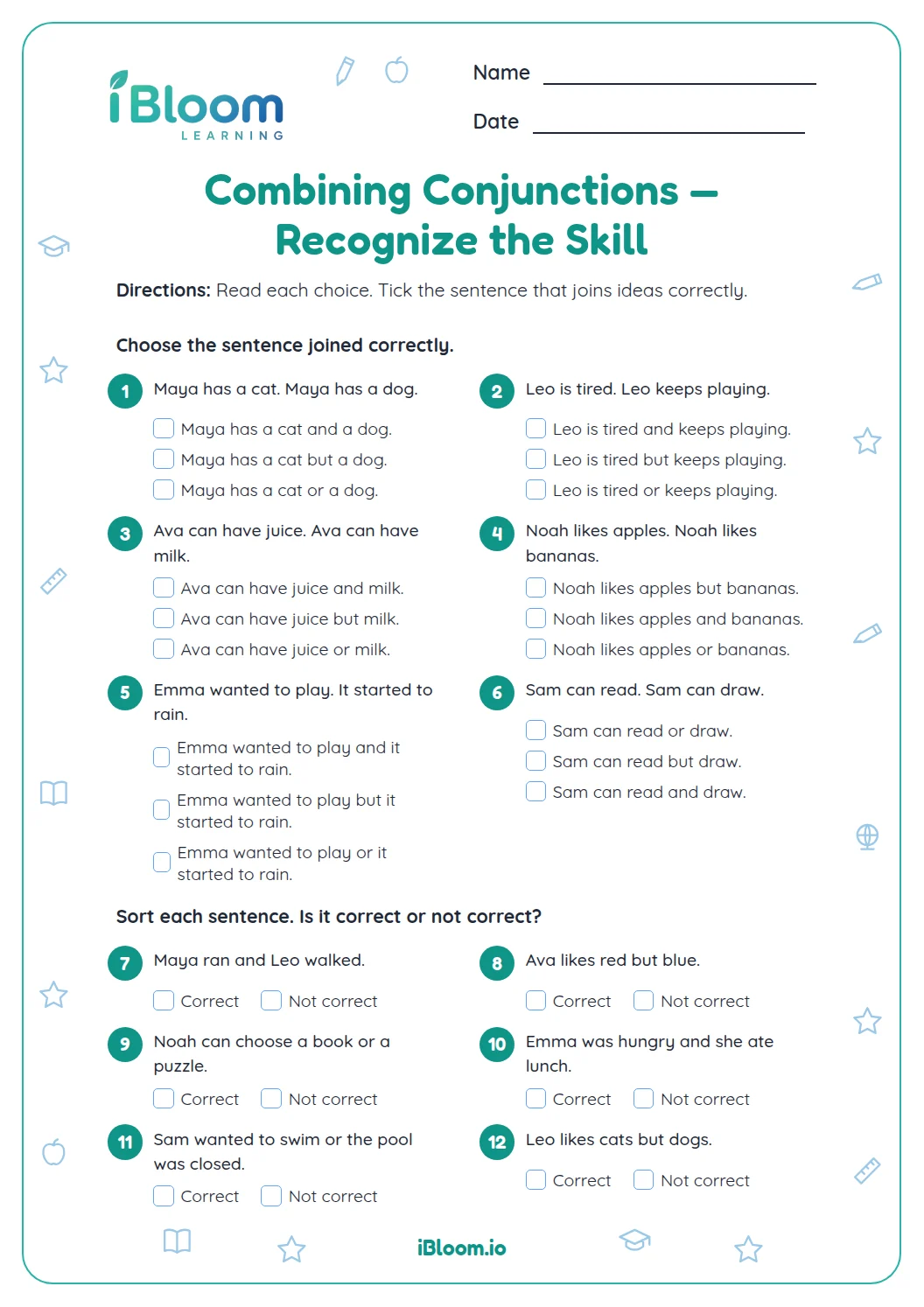
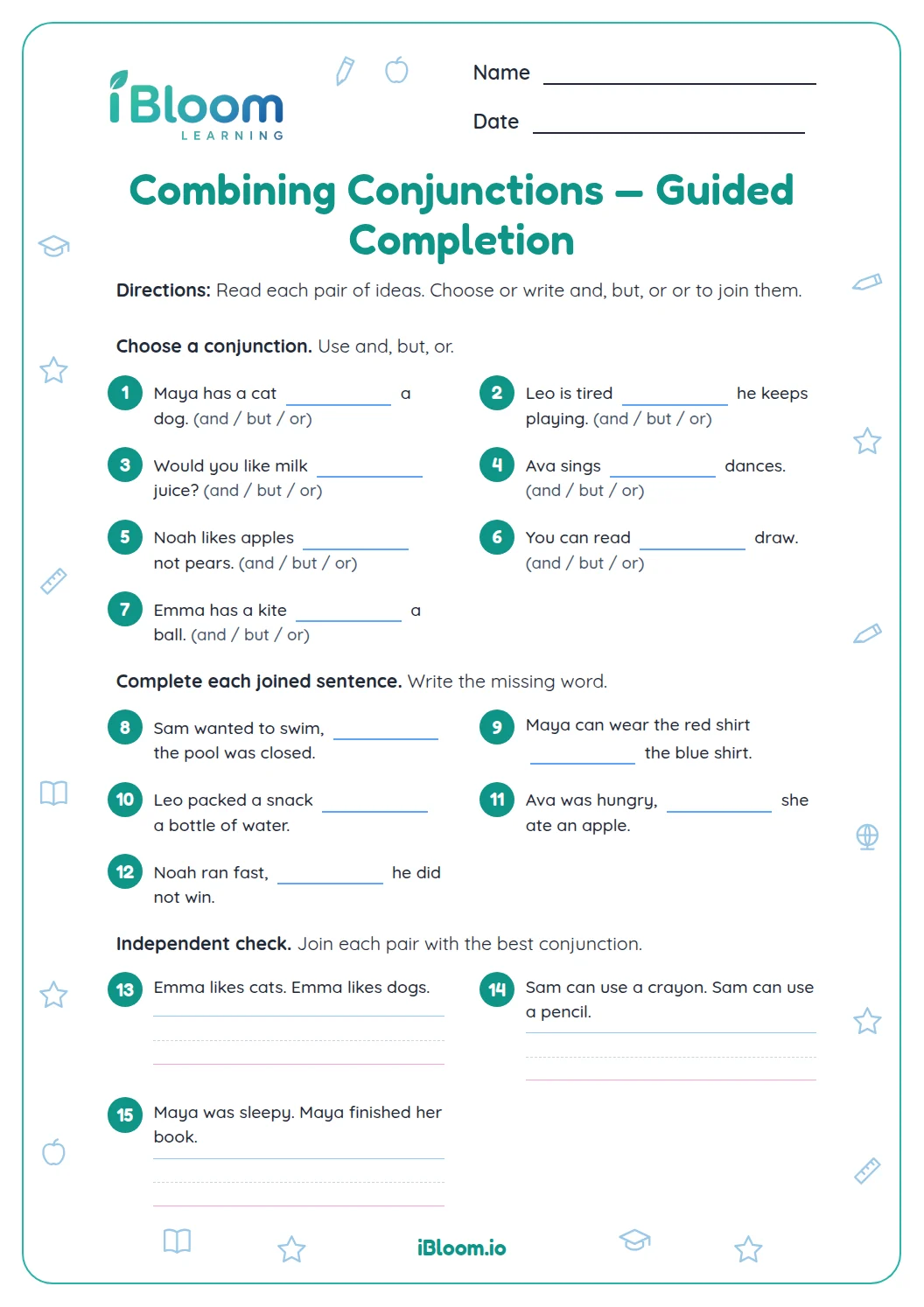
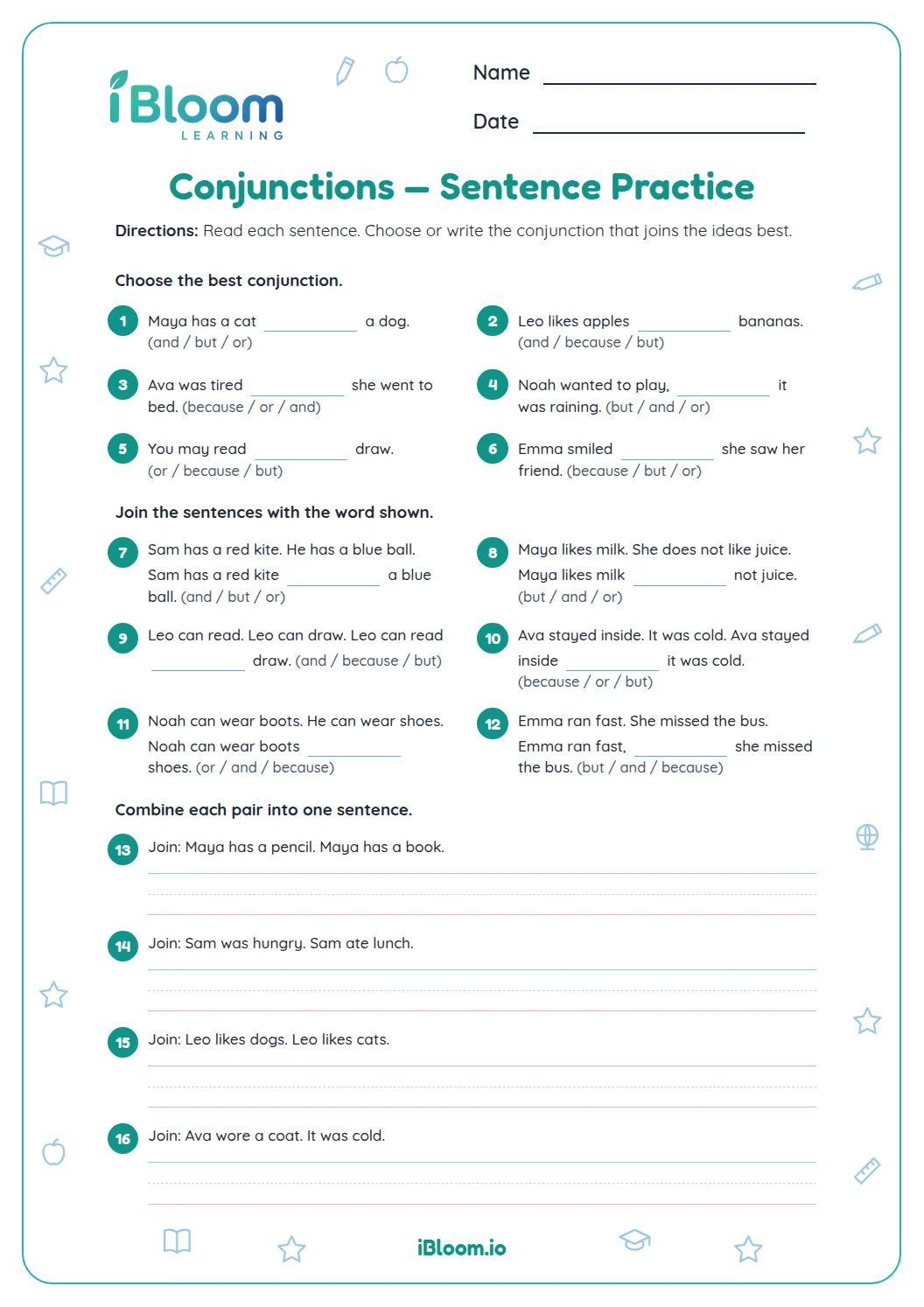
This free printable Grade 1 worksheet gives children focused practice with write and apply the conjunction or. It replaces the short earlier activity with varied questions that move from recognition to independent use. Clear part directions guide children through the skill, and a separate answer key supports review.
What will children practice?
This sheet has 16 questions in three parts. The prompts move from recognizing the skill to applying it independently.
How can children use a clue?
Reread the sentence or passage and point to the words that support the response.
- 1Would you like milk ___ water? → or
How should children check their work?
Compare each response with the answer key. For open responses, accept wording that expresses the same idea.
How to use this worksheet
- 1Read the directions for each part.
- 2Complete the first item together and name the clue.
- 3Finish the remaining questions independently.
- 4Use the answer key to review and revisit any missed clue.
Common mistakes and quick fixes
The mistake
Answering before reading the full prompt.
The fix
Read the whole sentence or passage, then find the supporting clue.
The mistake
Choosing an idea that is related but unsupported.
The fix
Point to the exact words that support the answer.
The mistake
Skipping the final review.
The fix
Reread each response and check that it follows the part direction.
What to practice next
Make more practice
Questions parents and teachers ask
What does this worksheet help children practice?
Children use the passage to work out word meanings, recall details, and make a simple inference. The questions follow the playground story, and the answer key includes direct answers plus sample wording for questions with more than one reasonable response.
How many questions are included?
The worksheet contains 14 questions grouped into three parts. Children begin with word meanings, then find story details and use clues to describe a character or explain an event. This order moves from vocabulary recall to closer reading.
Is an answer key included?
Yes. A separate answer key gives the selected answers and sample responses. For written questions, accept a response that accurately uses a detail from the passage, even if its wording differs from the sample. Ask the child to point to the supporting sentence.
What should children do when an answer is not stated directly?
Reread the nearby sentences and connect a clue to the question. For example, Nia lets a younger child go first and Ben holds the gate; those actions support the idea that the children are considerate. A good inference fits those details.
How can an adult support this reading practice?
Ask the child to point to the sentence that helped them answer before checking the key. This keeps the discussion anchored in the story and helps distinguish a supported inference from a guess. For vocabulary, reread the word in its sentence.