





About this worksheet
This free Grade 1 worksheet helps children recognize and change sentence types. It practices telling sentences, asking sentences, commands, and exclamations through clue questions, punctuation choices, and short rewrites. Children use the end mark and the sentence’s purpose together, then write their own examples. The sheet aligns with Common Core L.1.1 and includes an answer key with sample responses for open-ended writing.
Aligned to L.1.2.b
How can you tell what a sentence is doing?
A telling sentence shares information. An asking sentence asks something. A command tells someone to do something, and an exclamation shows strong feeling. Read the words and think about the speaker’s purpose.
Question 1 asks which kind tells something. The answer is a telling sentence because it gives information rather than asking or directing.
- 1Clue: What kind of sentence tells something?
- 2It shares information.
- 3Answer: telling sentence
Which end mark fits each sentence?
A period usually ends a telling sentence or command. A question mark ends a direct question. An exclamation point can show strong feeling. Match the mark to the whole sentence, not just one exciting word.
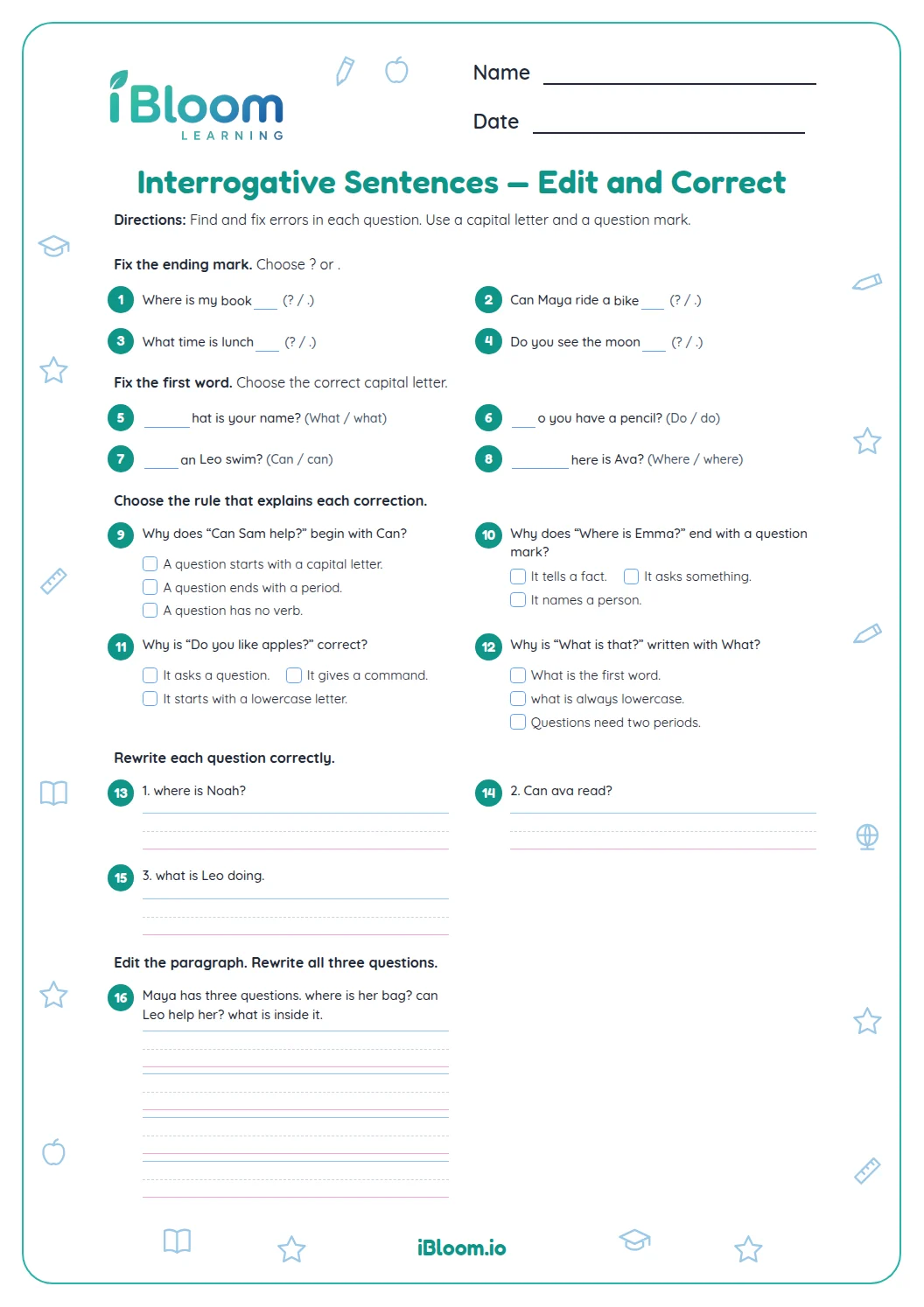
Question 5 asks about “Where is my hat.” It asks for information, so add a question mark.
How do you change a sentence’s purpose?
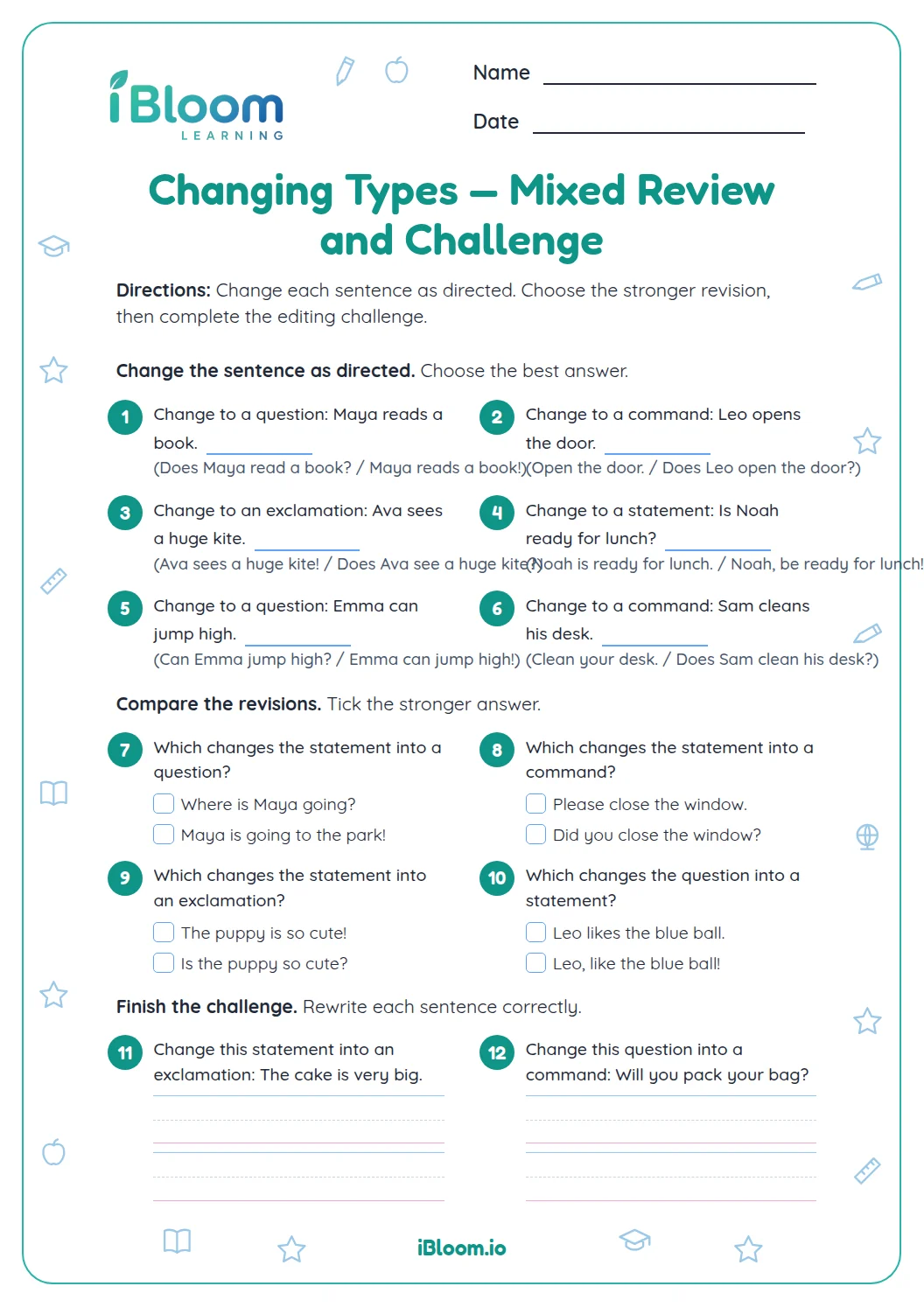
Keep the main idea when you can, but change the wording and punctuation to fit the new purpose. A statement such as “The cat naps.” can become “Does the cat nap?”
For open responses, more than one sentence may work. The key gives a sample; check that your sentence has the requested purpose and a fitting end mark.
How to use this worksheet
- 1Read the sentence or clue carefully.
- 2Name the purpose: tell, ask, direct, or show strong feeling.
- 3Choose words that make that purpose clear.
- 4Add the matching end mark.
- 5Reread to check that the words and punctuation agree.
Common mistakes and quick fixes
The mistake
Using a question mark on a sentence that only tells something.
The fix
Ask whether the speaker is actually asking for information.
The mistake
Changing only the end mark but not the sentence purpose.
The fix
Rewrite the words so they become a real question, command, or exclamation.
The mistake
Writing a command as a question.
The fix
Use an action word that directs someone, such as “Please sit.”
This sheet practices the following Common Core skill.
Children choose end marks and punctuate sentences with different purposes.
On this sheet:
Show the official wordingHide the official wording
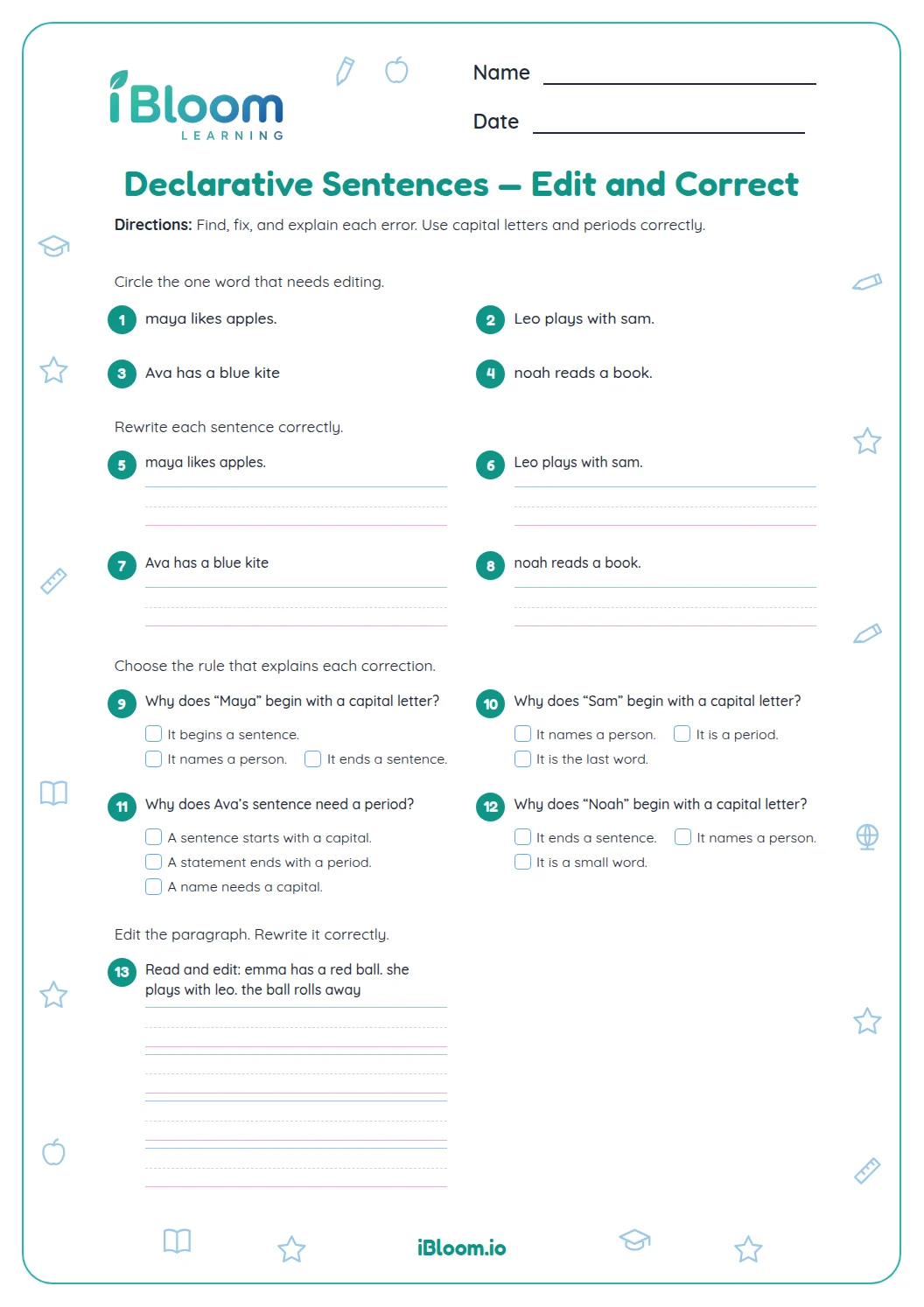
Use end punctuation for sentences.
What to practice next
Make more practice
Further reading
Questions parents and teachers ask
Which sentence purposes does the worksheet practice?
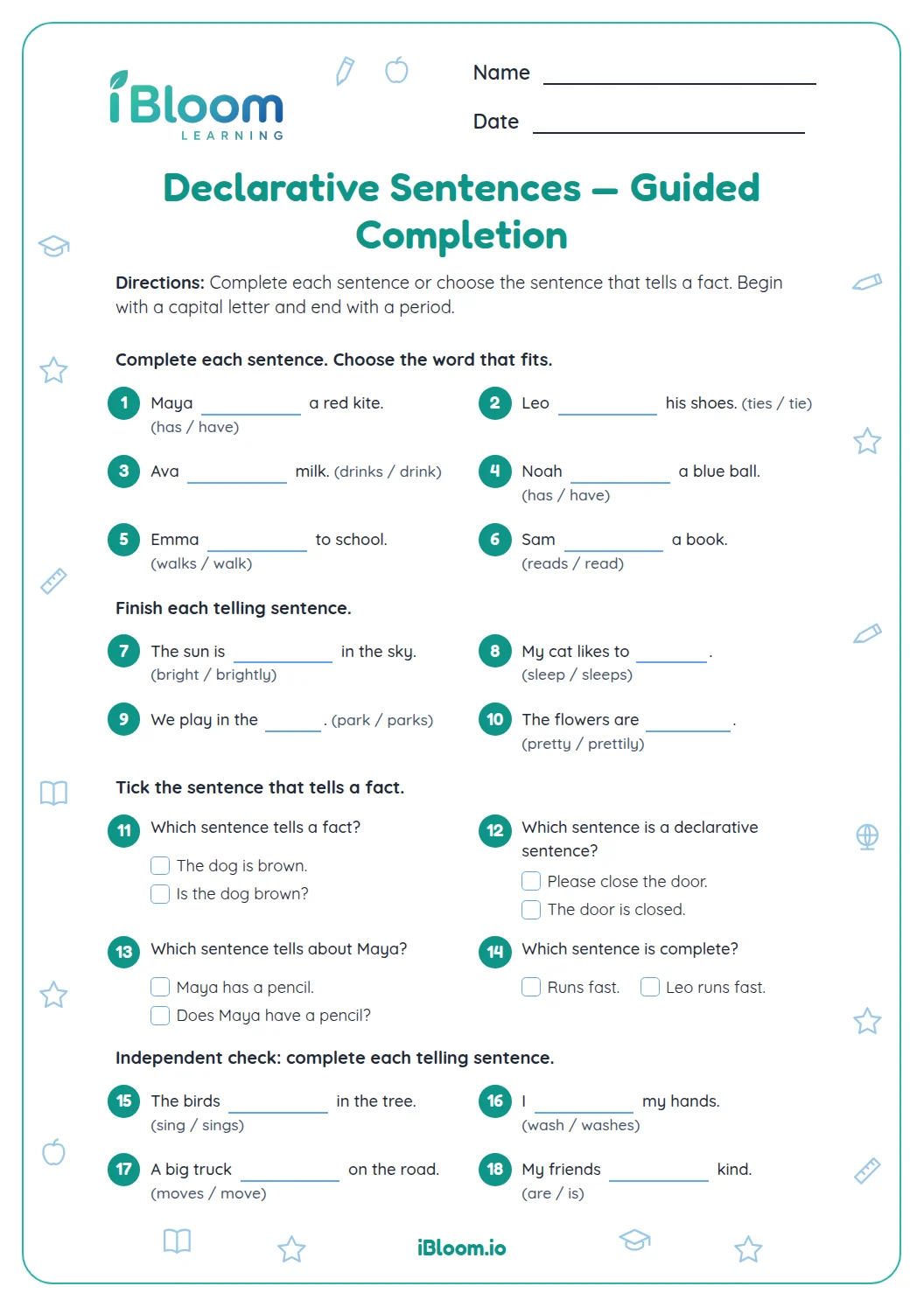
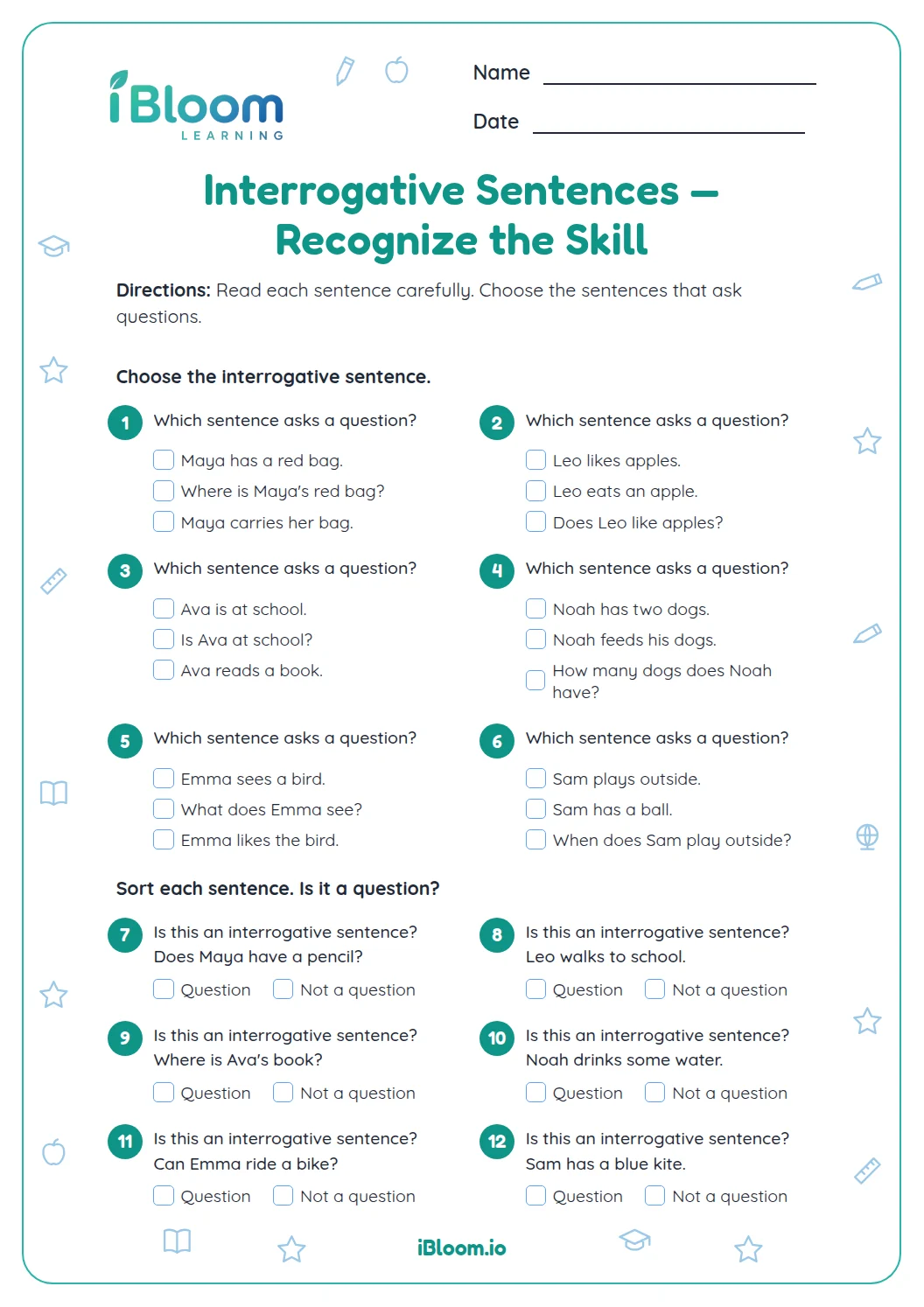
It practices telling, asking, giving a command, and showing strong feeling. Children identify the purpose, choose end punctuation, and change sentences to fit a new purpose across 16 questions. The examples use short, familiar language and give each purpose a clear cue.
Does every command need an exclamation point?
No. A calm command can end with a period, as in “Please shut the door.” An exclamation point can mark a forceful command, but the reader should use the wording and tone to choose. A period keeps a polite direction calm, while a strong tone can call for an exclamation point.
Can a rewrite have more than one correct answer?
Yes. The key gives sample wording for the open responses. A different answer works if it has the requested purpose, makes sense, and uses appropriate capitalization and end punctuation. A child can ask a question in more than one natural way.
What mark ends an asking sentence?
A direct question ends with a question mark. On question 5, “Where is my hat” asks for information, so the correct ending mark is ?. Read the words as a complete sentence before choosing. The worksheet also includes choices between end marks for short sentences.
How can an adult help without giving the answer?
Ask what the sentence does: tell something, ask, give a direction, or show strong feeling. Then invite the child to read it aloud and select wording or punctuation that matches that purpose. Offer two purposes first, then let the child explain the selected mark.