




About this worksheet
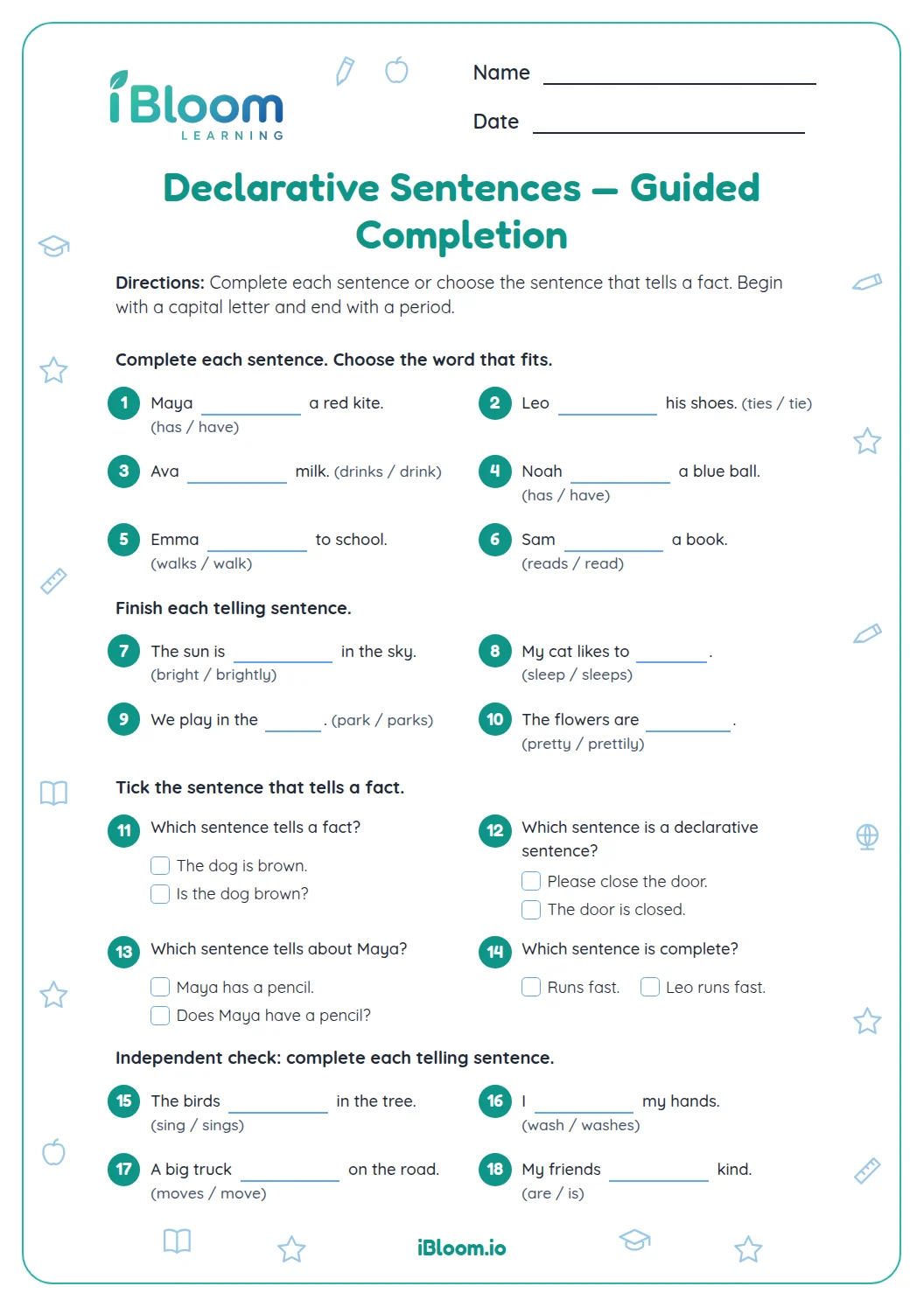
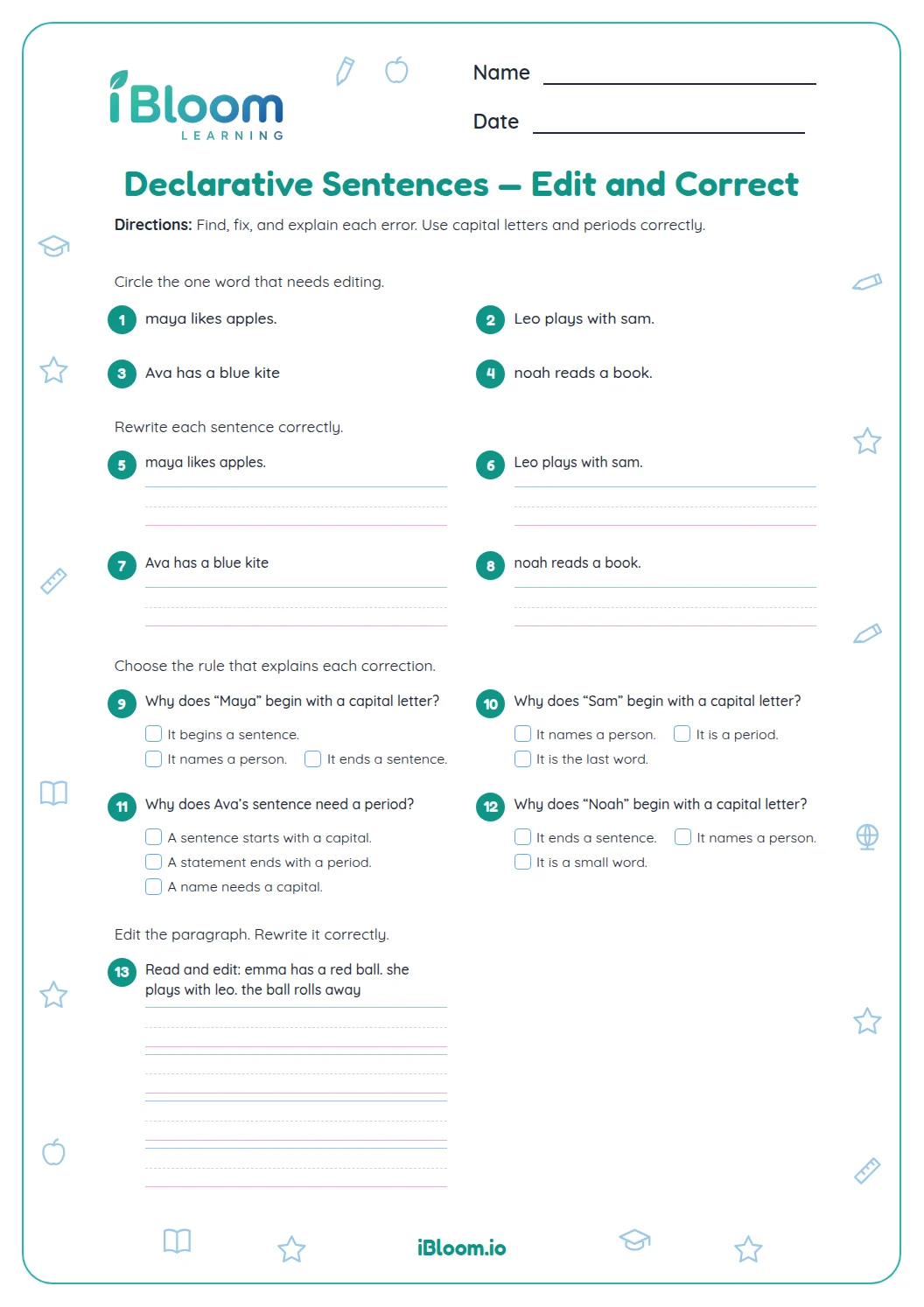
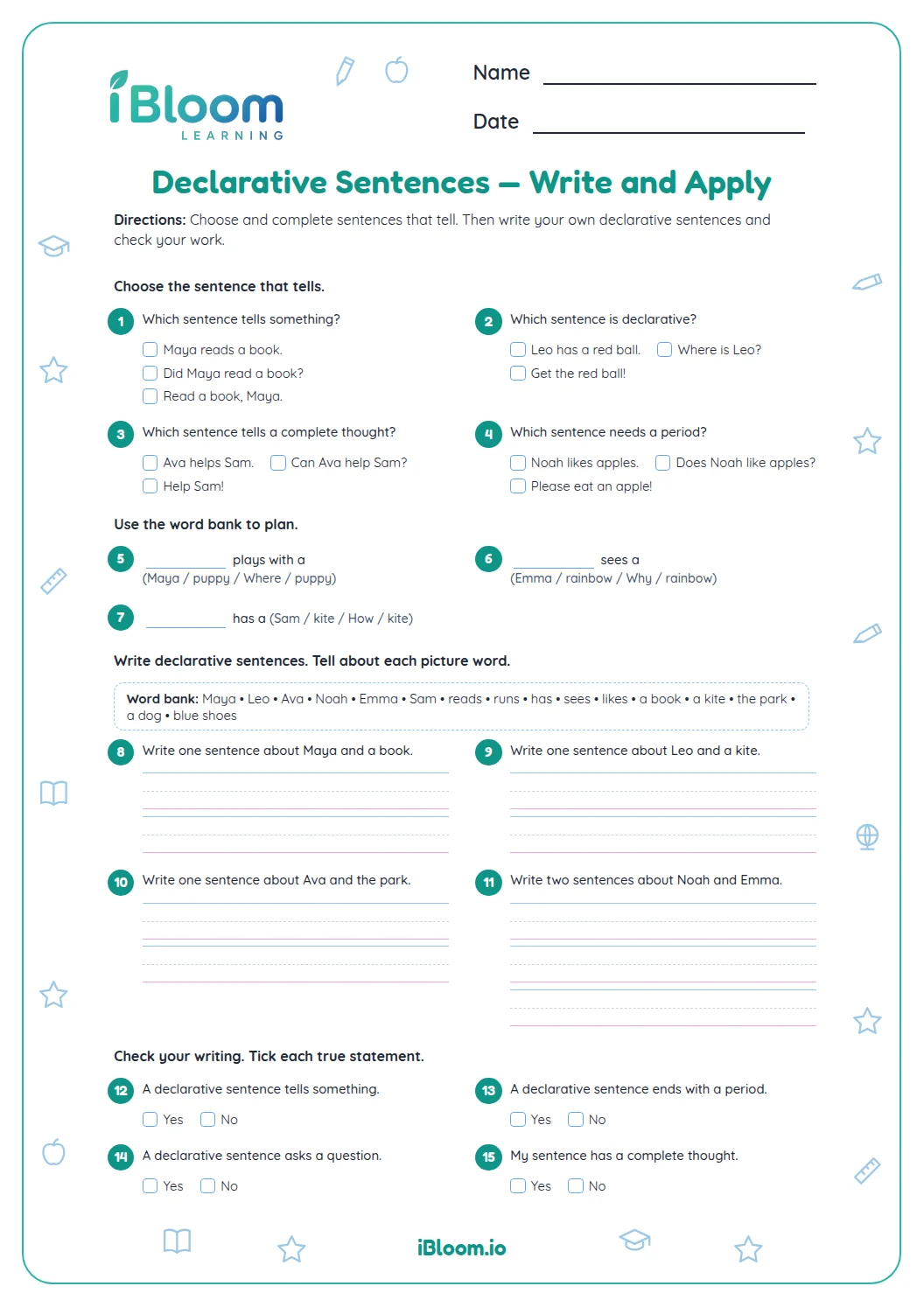
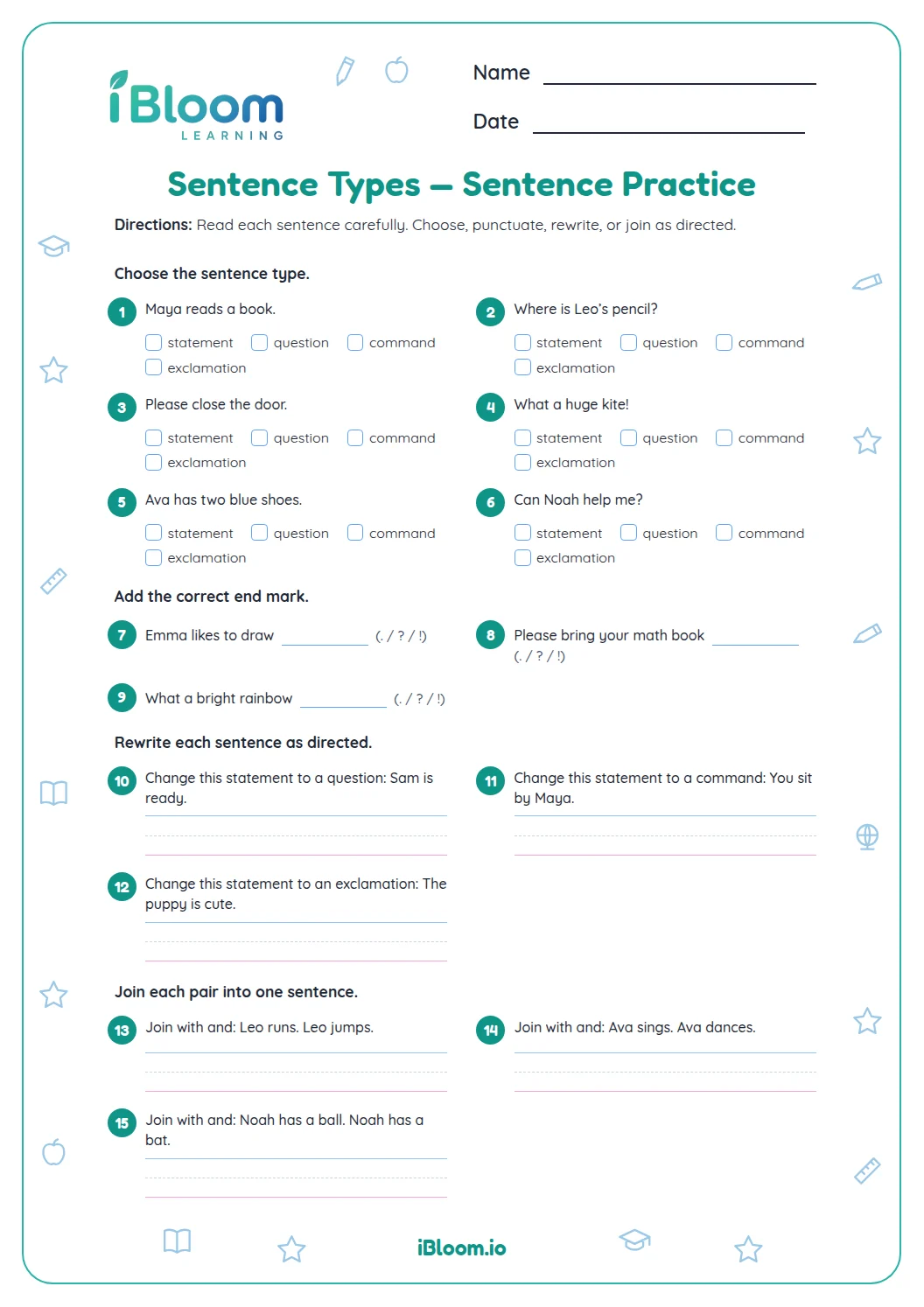
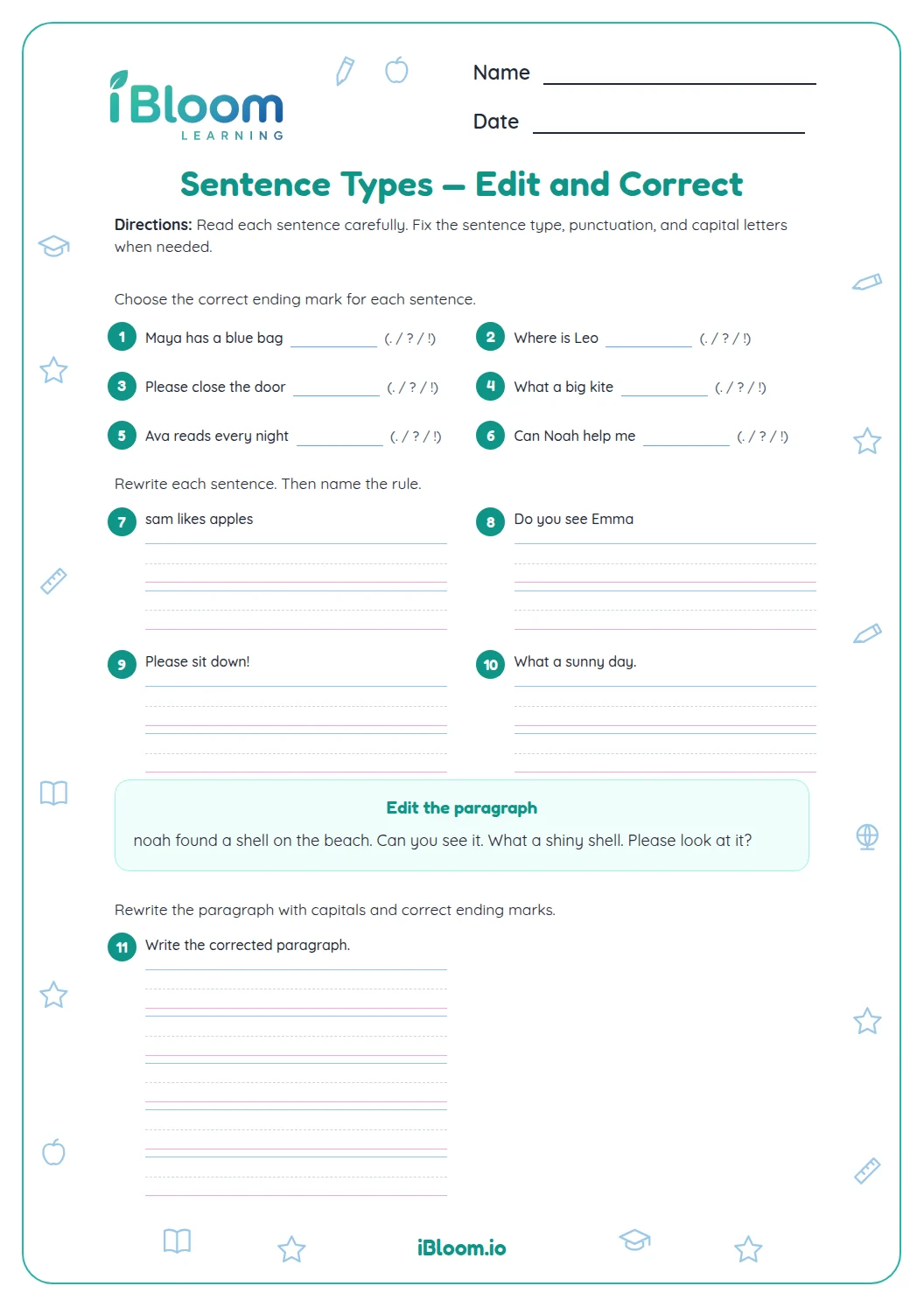
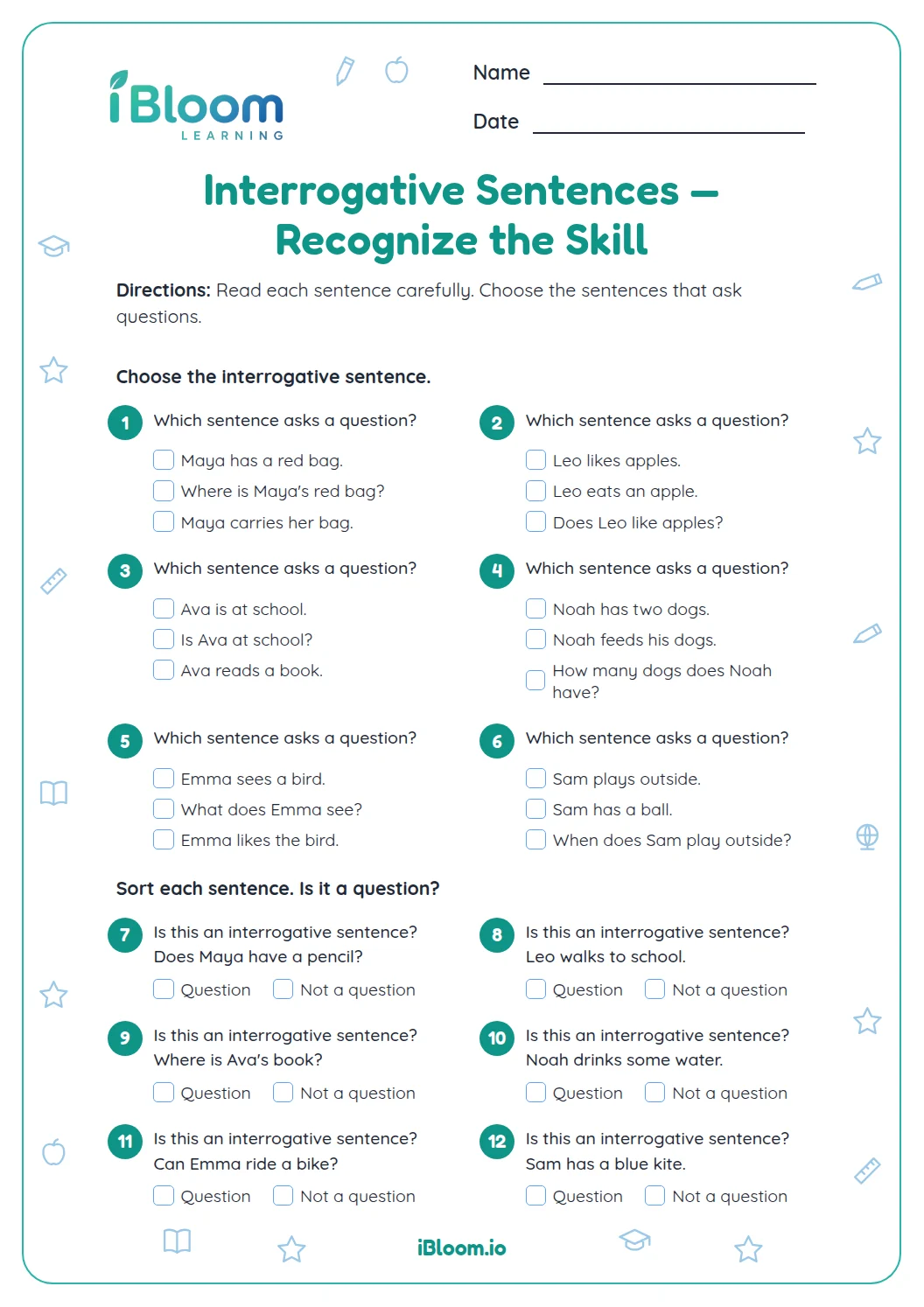
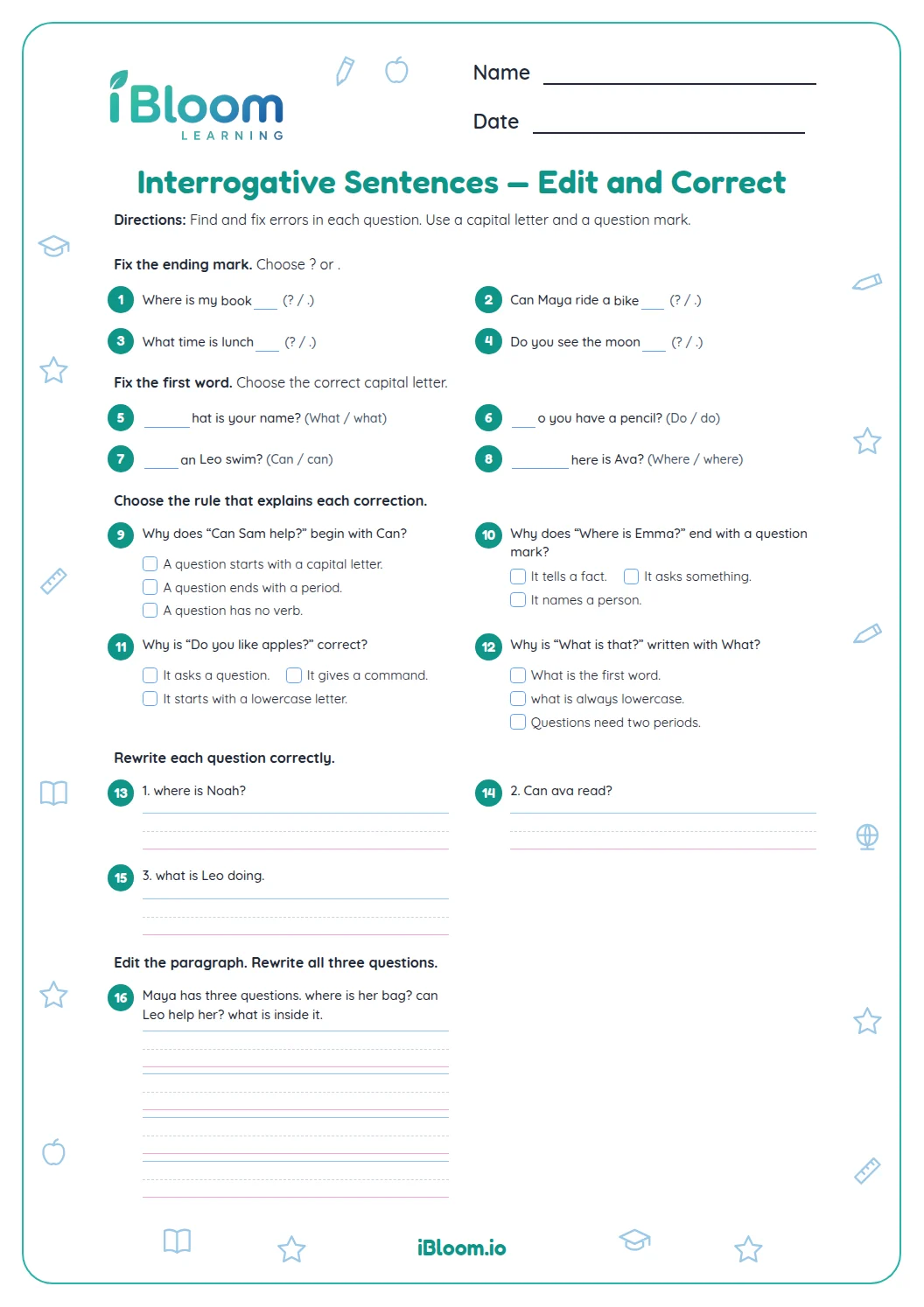
This Grade 1 grammar worksheet practices declarative sentences, statements that tell something. Children identify statements among different sentence types, then turn sentence ideas into complete statements with a capital letter and a period. The 16 questions build from recognition to writing and connect to CCSS L.1.1j. A separate answer key includes model sentence forms.
Aligned to L.1.1j
What does a declarative sentence do?
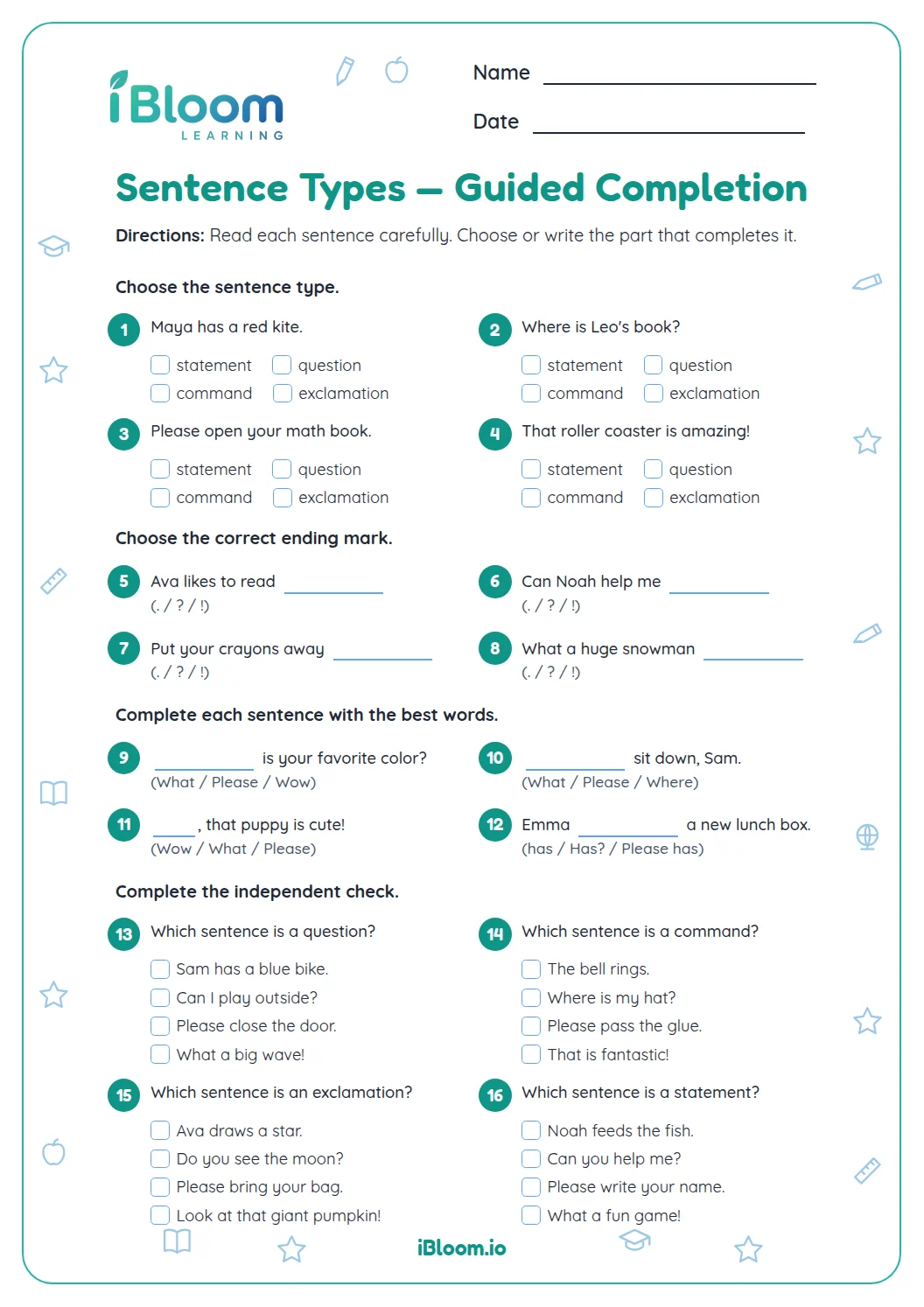
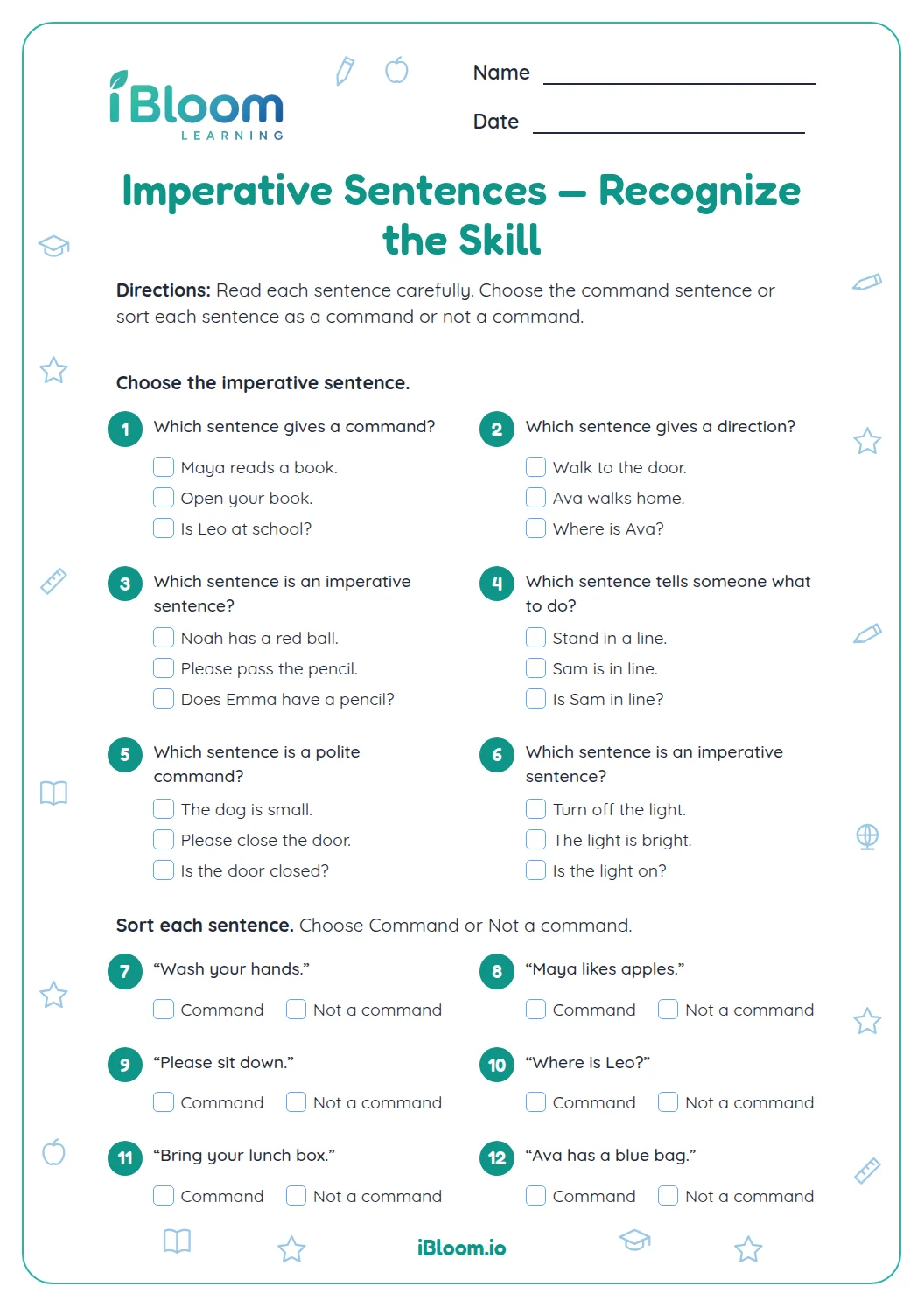
A declarative sentence tells or states something. “The puppy naps.” gives information and ends with a period. A question asks, and a command tells someone to do something.
How does this worksheet build the skill?
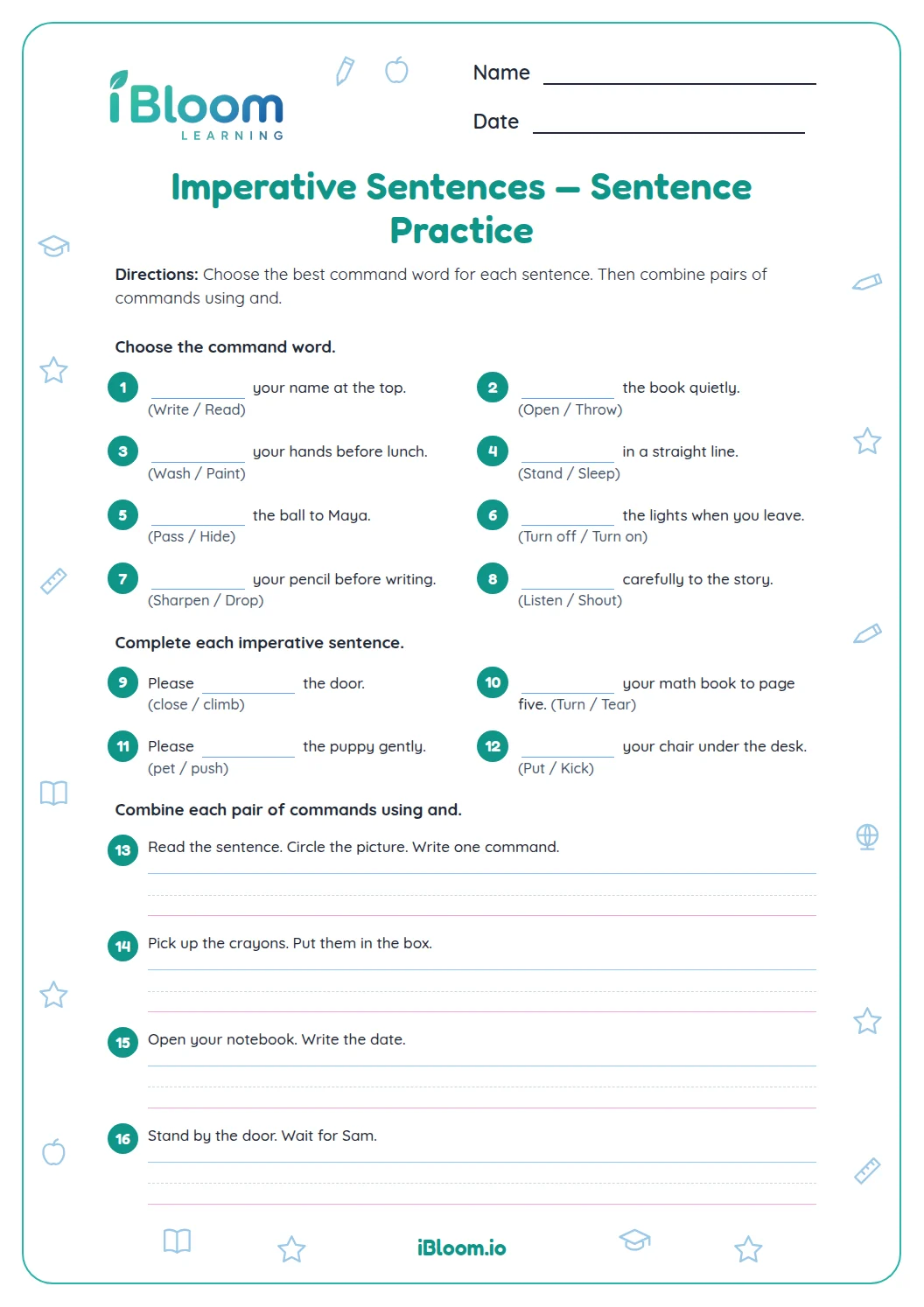
Part A contrasts statements with questions and commands. Part B gives a sentence idea in lowercase and asks children to rewrite it as a complete statement with correct capitalization and an ending period.
How do you fix a sentence idea?
For question 9, “the cat sleeps” becomes “The cat sleeps.” Begin with a capital letter, keep the words in statement order, and add a period.
How to use this worksheet
- 1Read each choice aloud and ask what it does.
- 2Look for a sentence that tells something.
- 3In Part B, read the idea and begin with a capital.
- 4End the statement with a period.
- 5Check each response with the answer key.
Common mistakes and quick fixes
The mistake
Choosing a question because it mentions a topic.
The fix
Listen for whether the sentence asks or tells.
The mistake
Forgetting the capital at the beginning.
The fix
Point to the first word and check its first letter.
The mistake
Using a question mark after a statement.
The fix
Read it aloud: if it tells something, use a period.
Common Core alignment
This practice connects each question to a specific grade-level reading or math skill.
Declarative sentences.
On this sheet: Declarative sentences is practiced throughout the worksheet.
Show the official wordingHide the official wording
Produce and expand complete simple and compound declarative, interrogative, imperative, and exclamatory sentences in response to prompts.
What to practice next
Make more practice
Further reading
Questions parents and teachers ask
What is a declarative sentence?
A declarative sentence tells something. “The puppy naps” is a statement, while “Where is the puppy?” asks a question. Children identify statements in Part A and practice writing them with capitals and periods in Part B. Ask them to say what the sentence does.
How many items are included?
There are 16 questions in two parts. The first eight ask children to choose a declarative sentence from three choices. The last eight give a sentence idea to rewrite as a complete statement. Together they move from recognition to writing.
Does a declarative sentence always end with a period?
In this early writing practice, each declarative sentence ends with a period. Other sentence types use different end marks, such as a question mark for a question. Encourage the child to read the sentence and decide what it does.
Should children copy or rewrite the sentence?
Part B asks children to rewrite each lowercase sentence idea as a complete statement. They begin with a capital letter and add a period while keeping the original words in a clear sentence. The key shows one possible correct form.
How can I help without giving the answer?
Read a sentence aloud and ask, “Is it telling, asking, or giving a direction?” For writing items, prompt the child to check the first letter and ending mark after finishing. The answer key provides a model for checking.