





About this worksheet
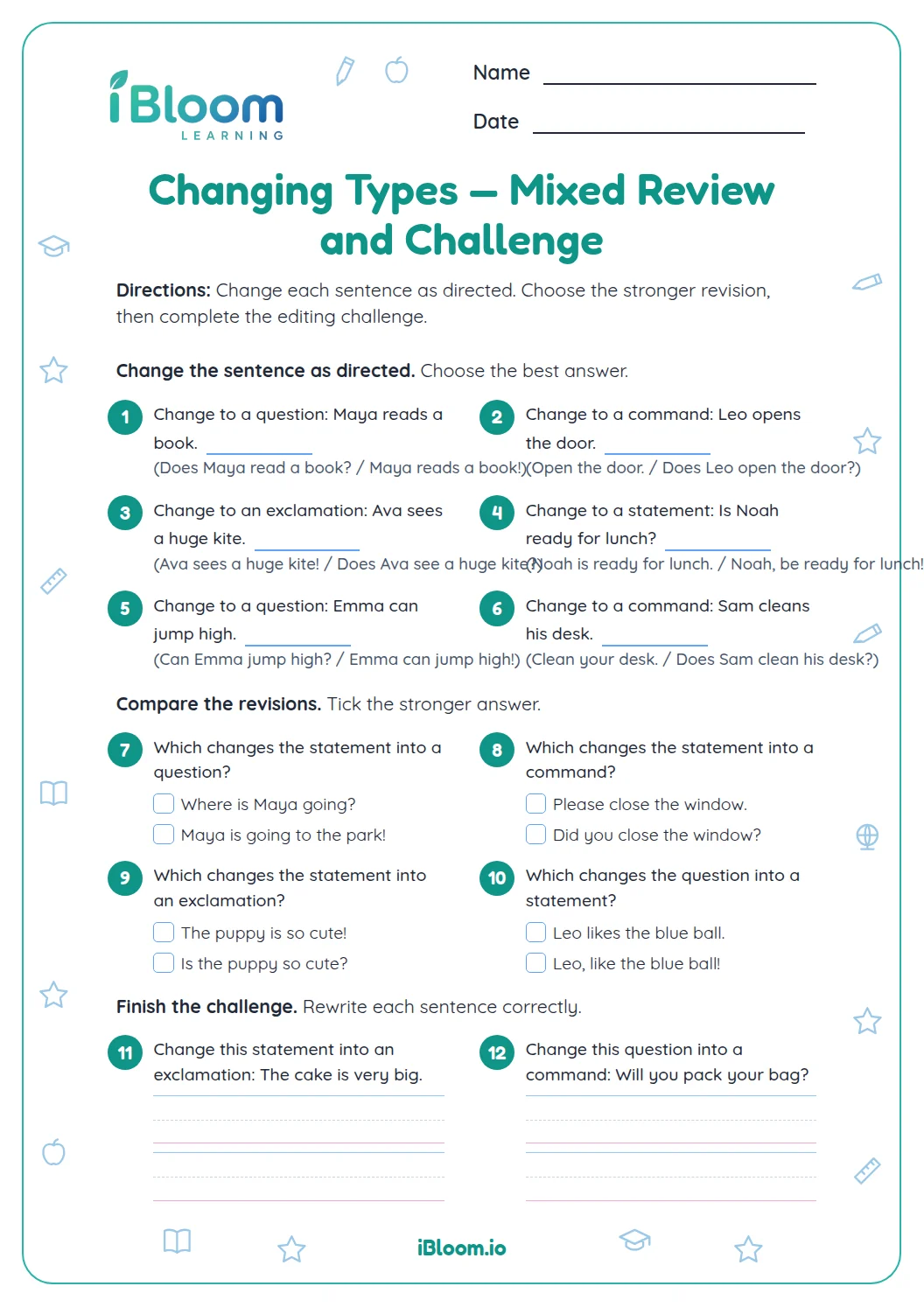
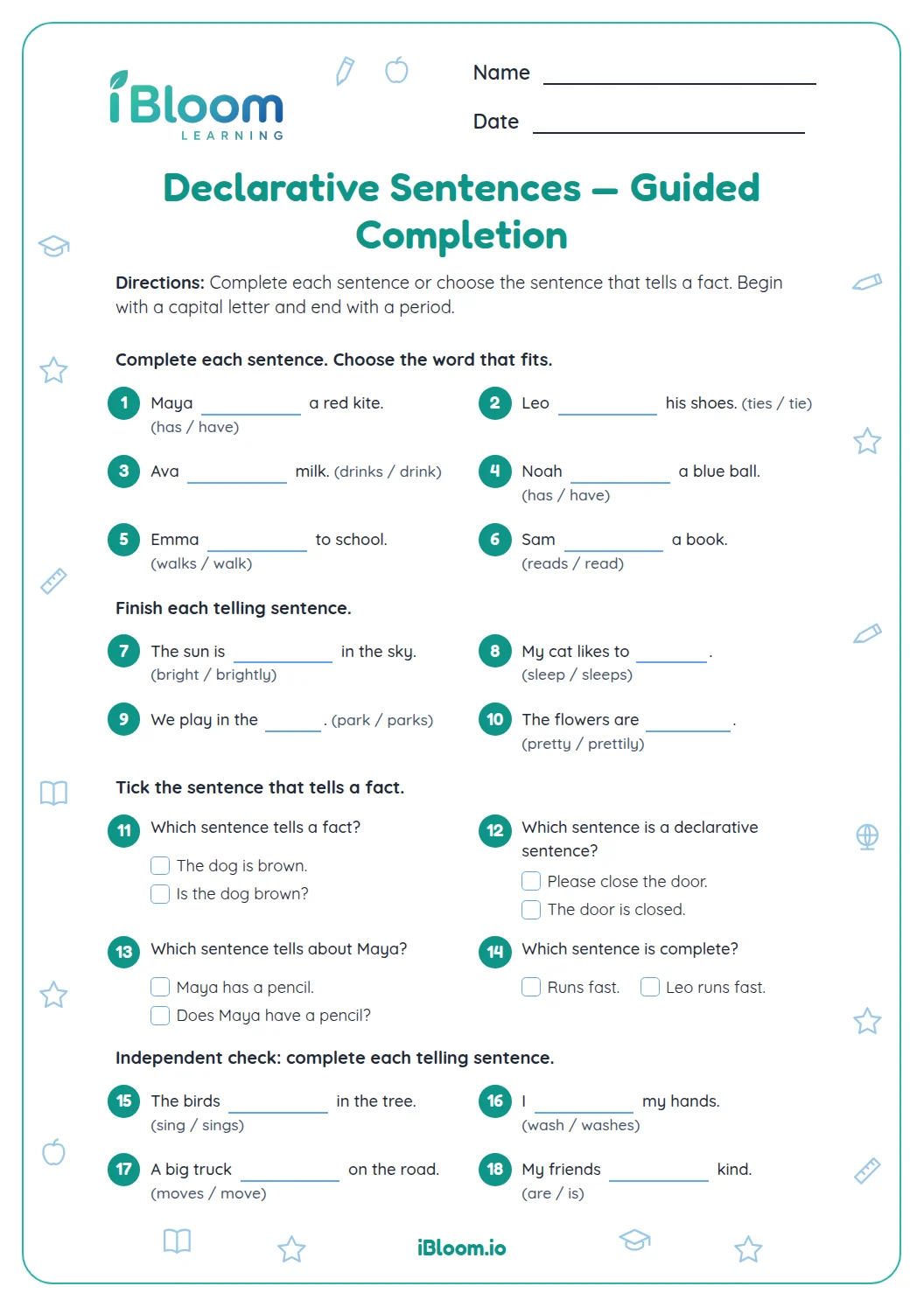
This Grade 1 worksheet guides students in changing sentence types. Children turn statements into questions, complete exclamations and commands, and finish four more transformations in guided frames. The 16 items draw attention to word order, capital letters, sentence meaning, and ending marks. This practice connects with CCSS L.1.1.j, which asks students to produce and expand declarative, interrogative, imperative, and exclamatory sentences.
Aligned to L.1.1.j
What does guided completion ask students to do?
Students change a sentence by adjusting its words, word order, or ending punctuation to match a new purpose. A statement tells; a question asks; a command directs; and an exclamation shows strong feeling. The guided items supply a starting pattern before students write their own changes.
- 1Statement: Maya likes apples. Question: Does Maya like apples?
- 2The helping word does moves to the front, and the verb changes to like.
How can students recognize the four sentence types?
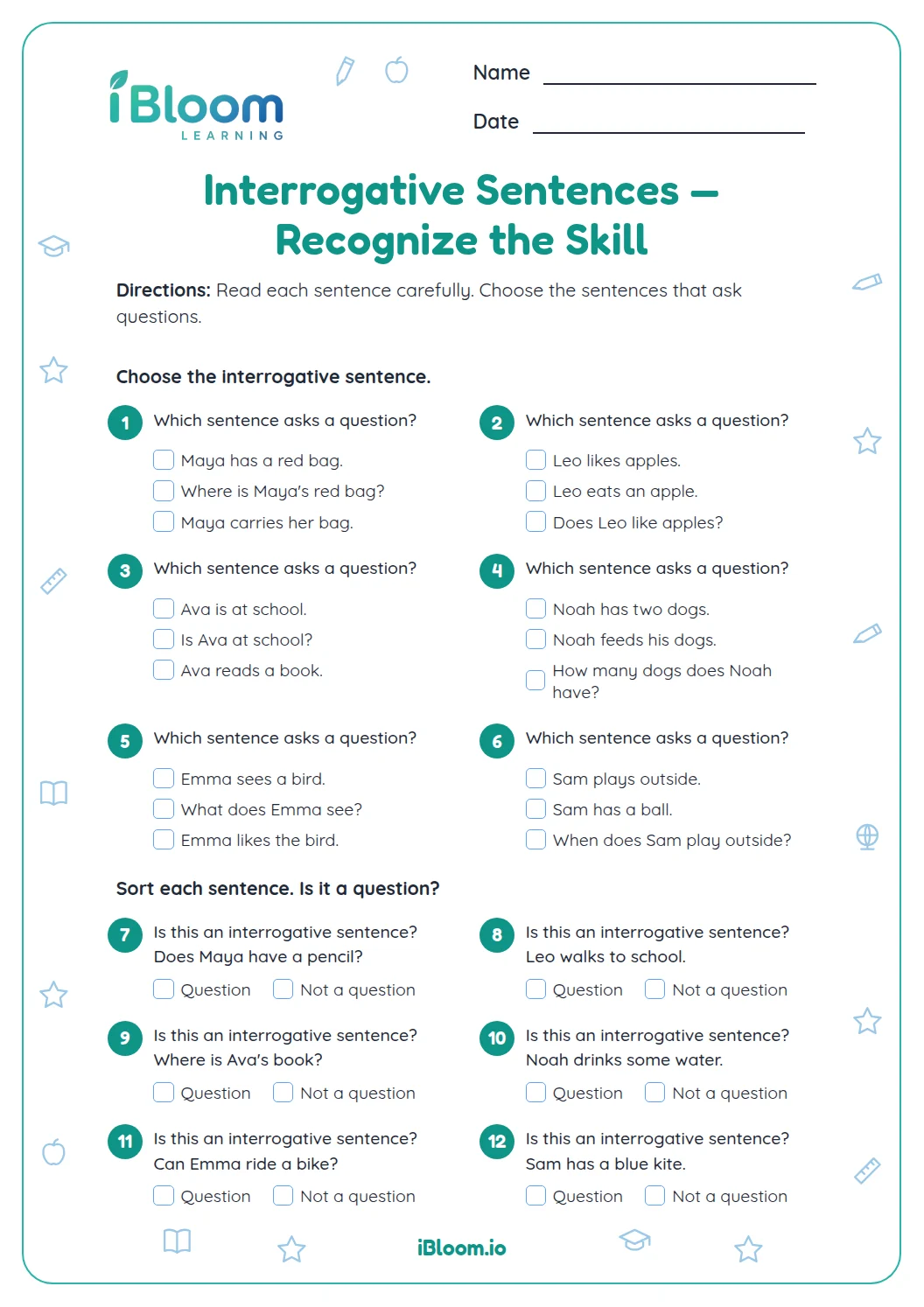
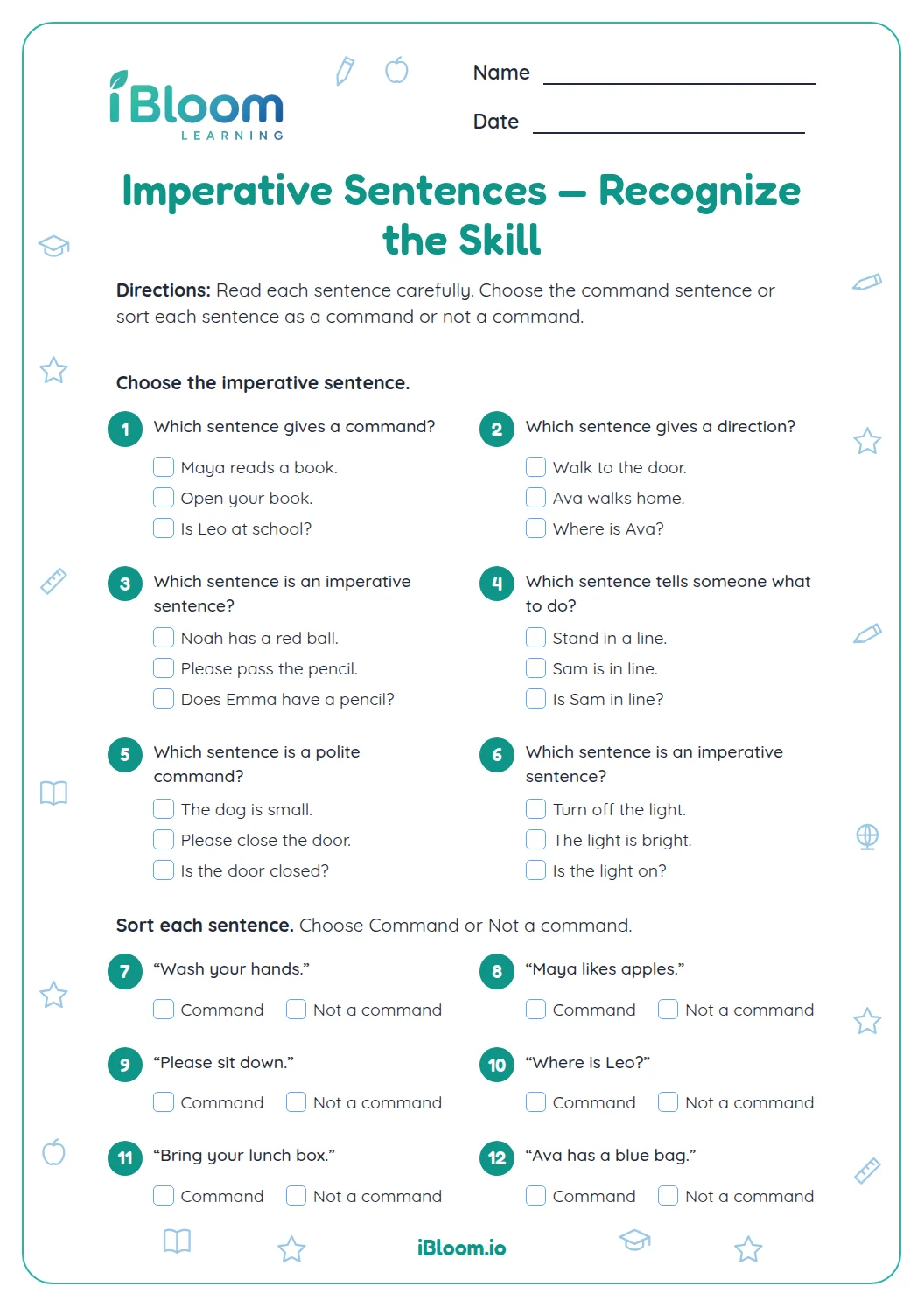
A statement tells something and ends with a period. A question asks and ends with a question mark. A command gives a direction, often with an understood you. An exclamation shows strong feeling and ends with an exclamation mark.
What should children check after filling a blank?
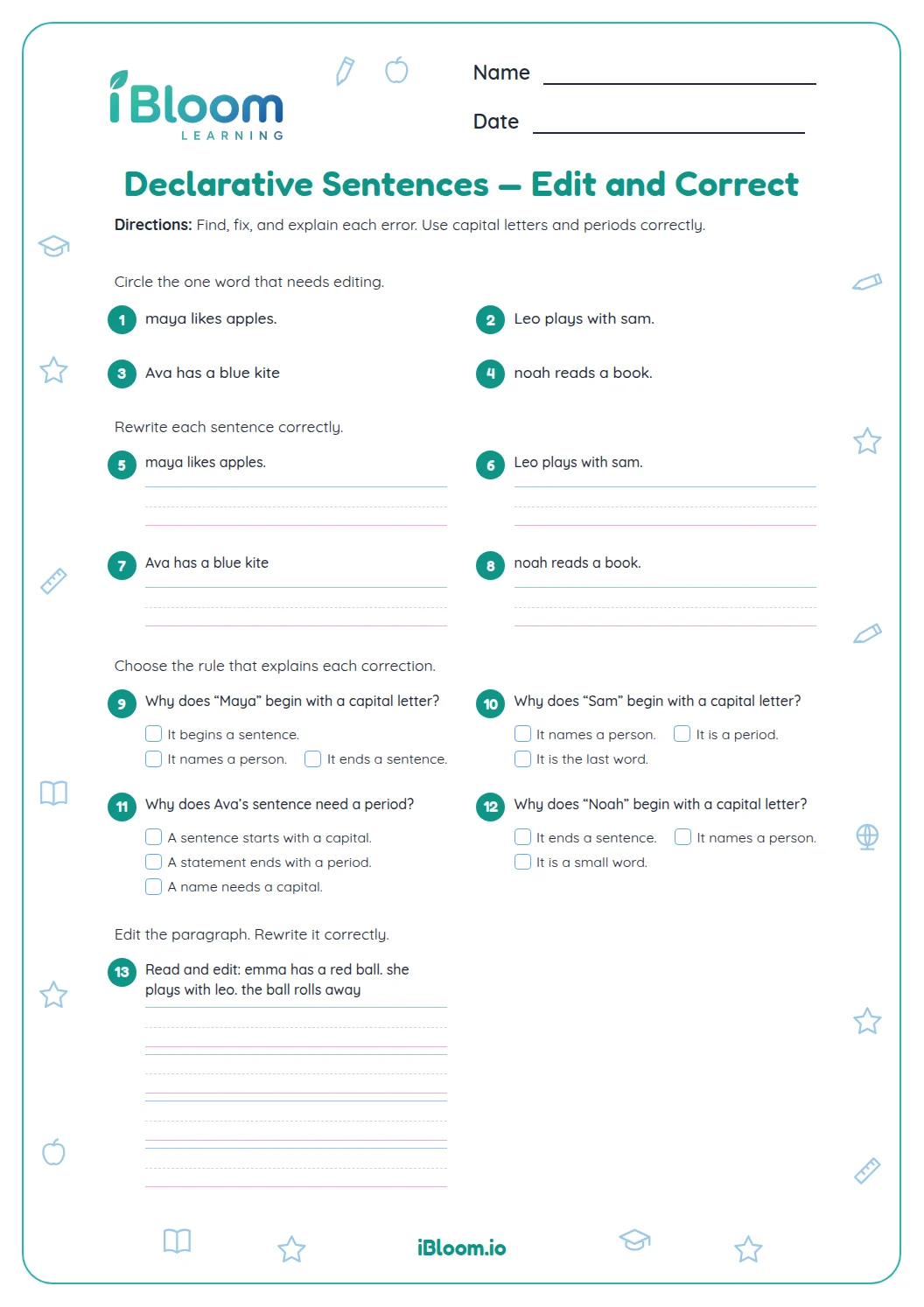
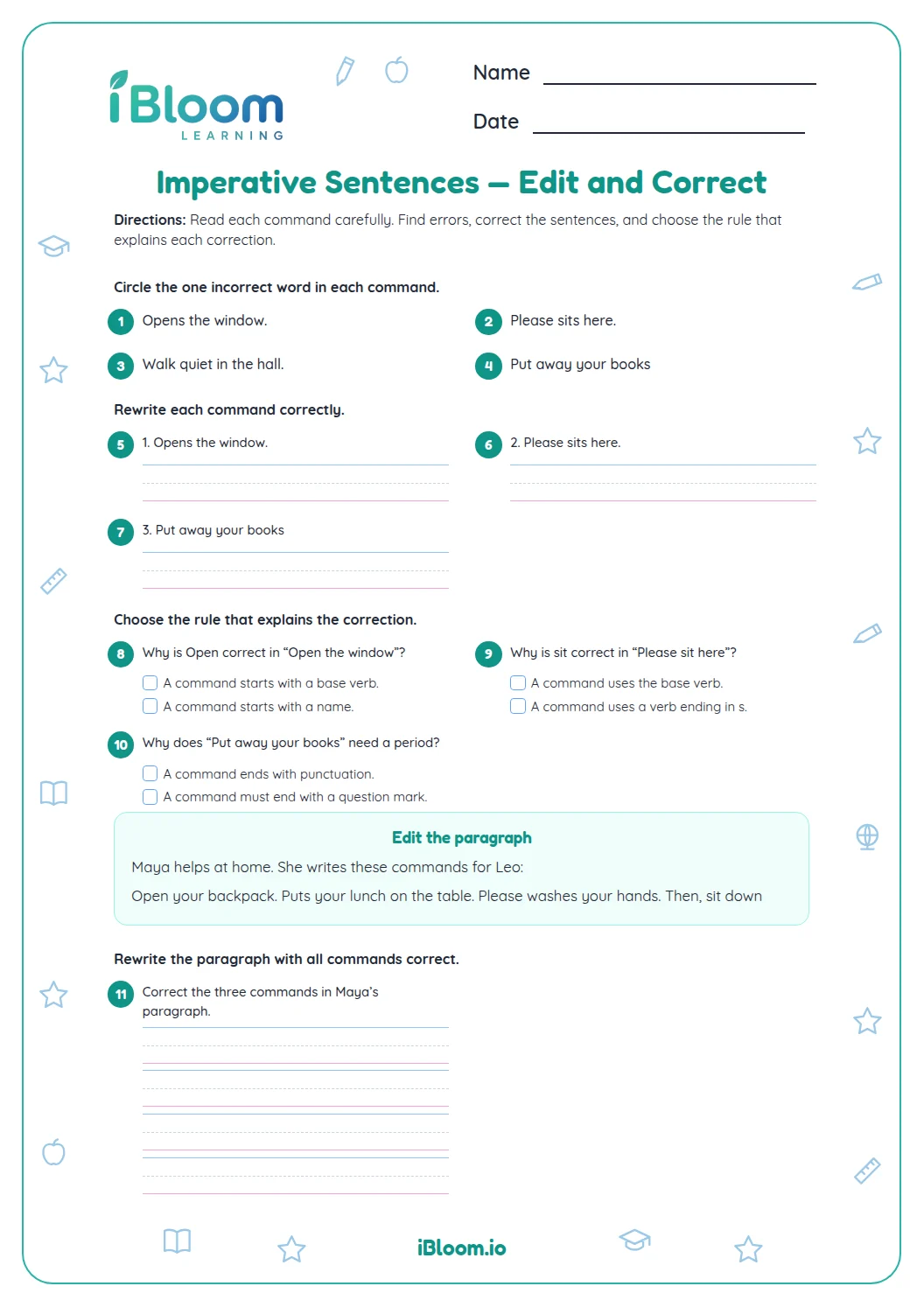
Read the new sentence aloud. Check that the words express the requested purpose, the first word is capitalized, and the final punctuation matches the sentence type.
How to use this worksheet
- 1Read the original sentence and the requested new type.
- 2Change word order or choose words that fit the new purpose.
- 3Capitalize the first word.
- 4Choose an ending mark that matches the sentence.
- 5Read the changed sentence aloud to check its meaning.
Common mistakes and quick fixes
The mistake
Keeping statement word order in a question
The fix
Try a helping word such as does or can at the start.
The mistake
Changing the words but keeping the old ending mark
The fix
Use a question mark for a question and an exclamation mark for strong feeling.
The mistake
Leaving out a needed word when changing a sentence
The fix
Read the new sentence aloud and check that it is complete.
Common Core alignment
Students complete declarative, interrogative, imperative, and exclamatory sentences.
On this sheet:
Show the official wordingHide the official wording
Produce and expand complete simple and compound declarative, interrogative, imperative, and exclamatory sentences in response to prompts.
What to practice next
Make more practice
Further reading
Questions parents and teachers ask
What sentence types does this worksheet practice?
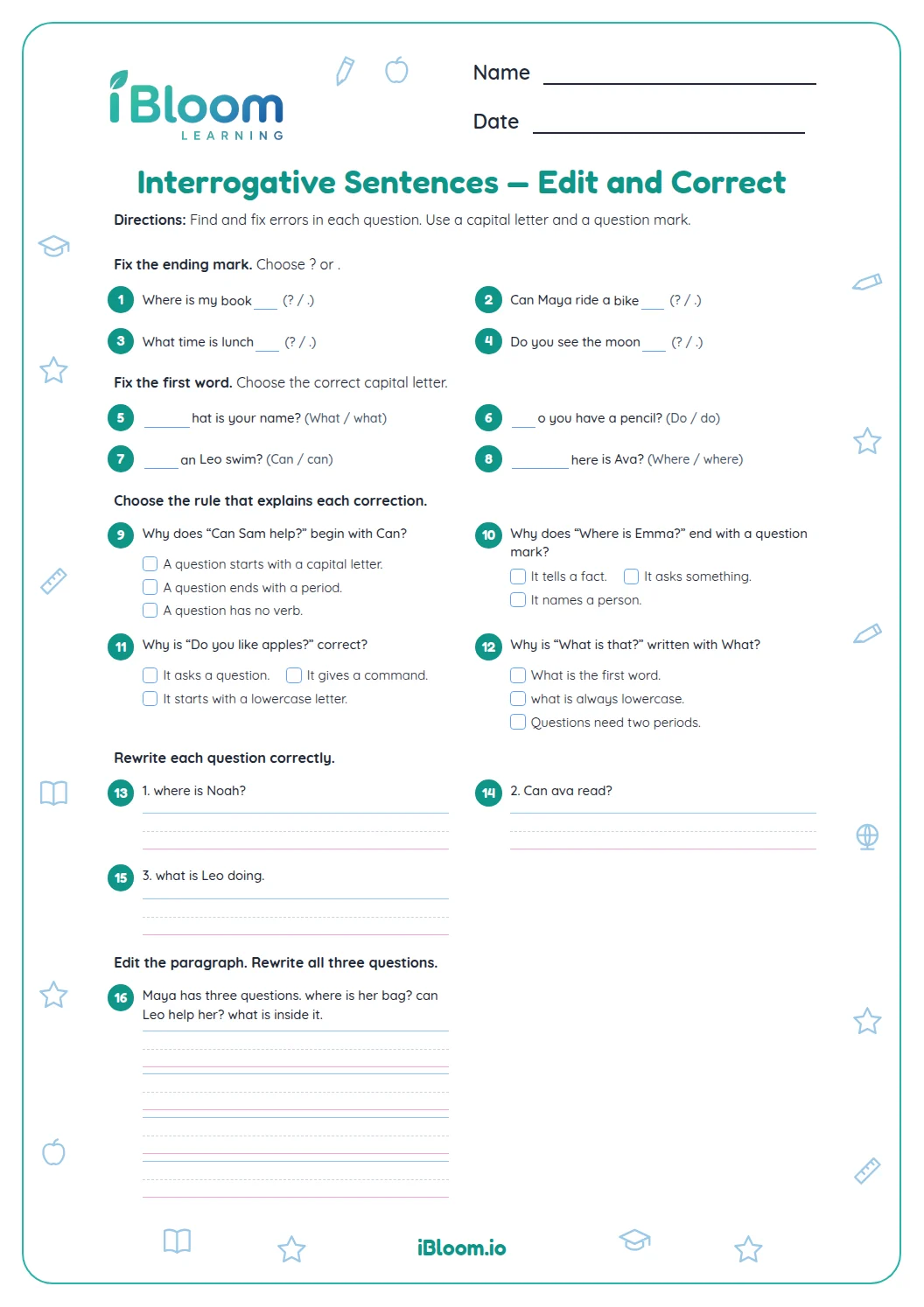
It practices statements, questions, commands, and exclamations. Students change statements into questions, complete command and exclamation patterns, and finish four sentence changes in guided frames. Word choice, word order, and ending punctuation help signal the new purpose in each sentence.
How do I change a statement into a question?
A helping word can move to the beginning, and the verb may change form. “Maya likes apples” becomes “Does Maya like apples?” The question ends with a question mark. Part A gives guided examples before the final written transformations, where students apply the pattern independently.
What is a command sentence?
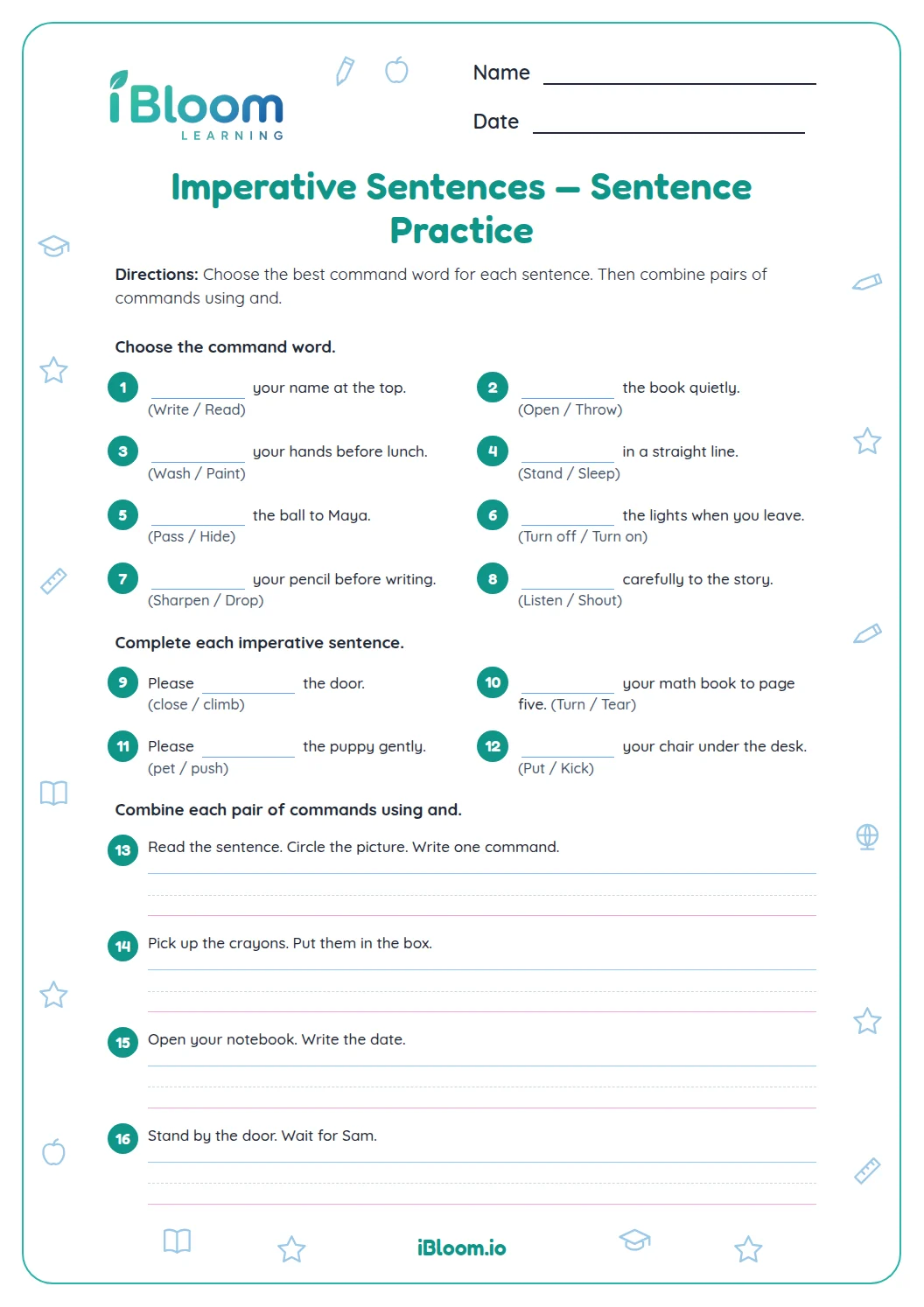
A command tells someone to do something, such as “Close the door, please.” The subject you is often understood rather than written. Commands commonly end with a period, though a strong command may use an exclamation mark. Students practice forming commands from statements.
How is an exclamation different from a statement?
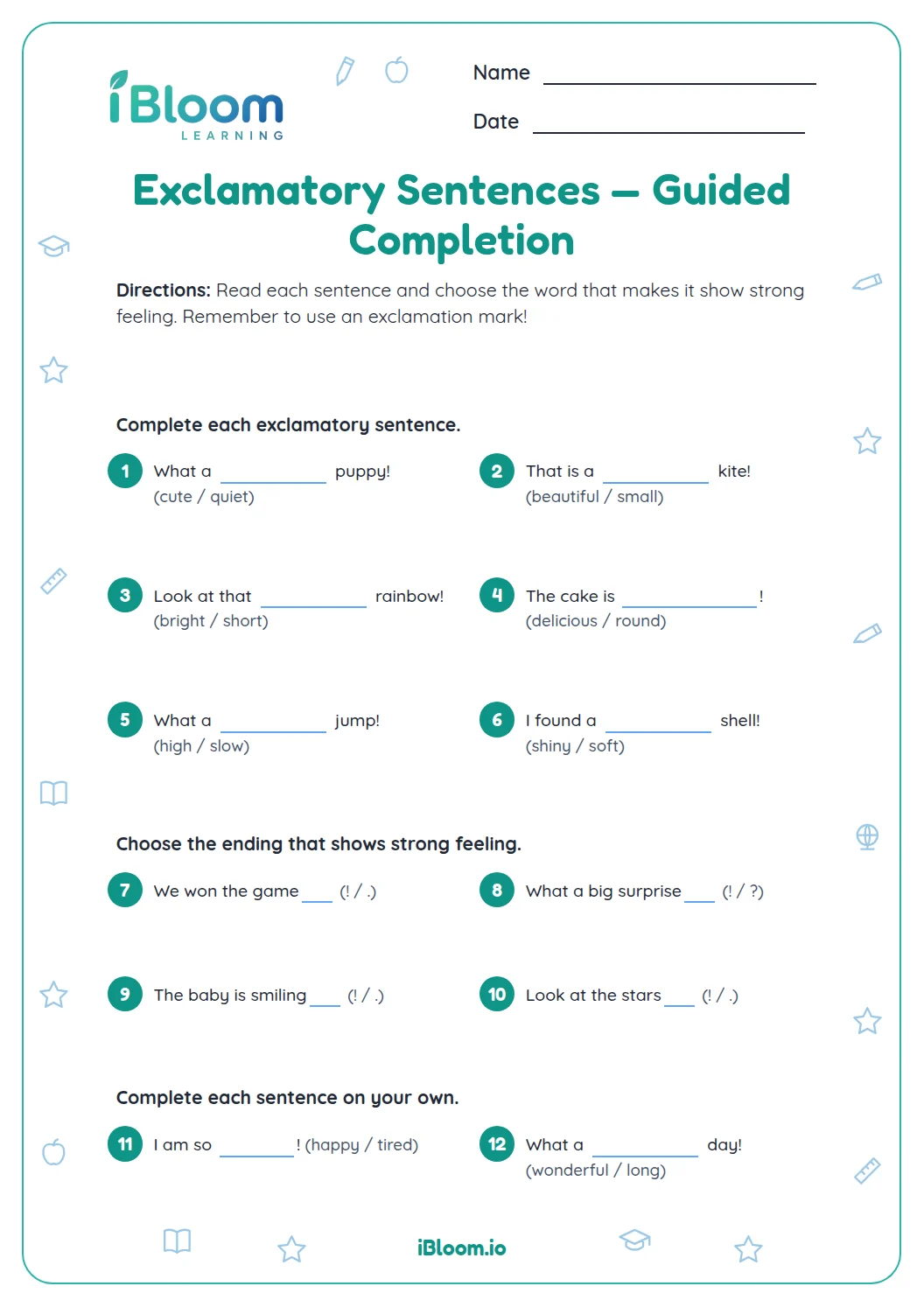
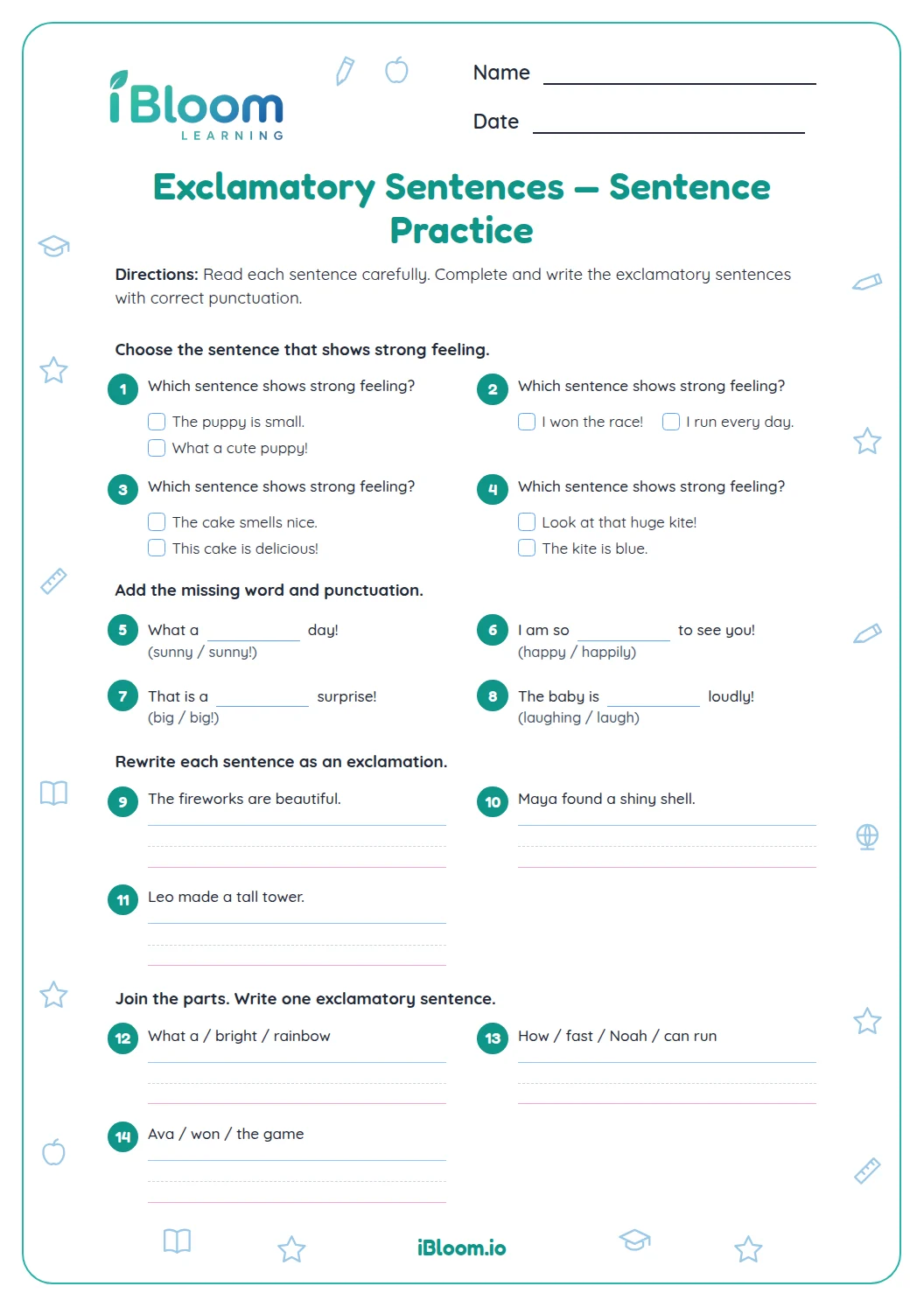
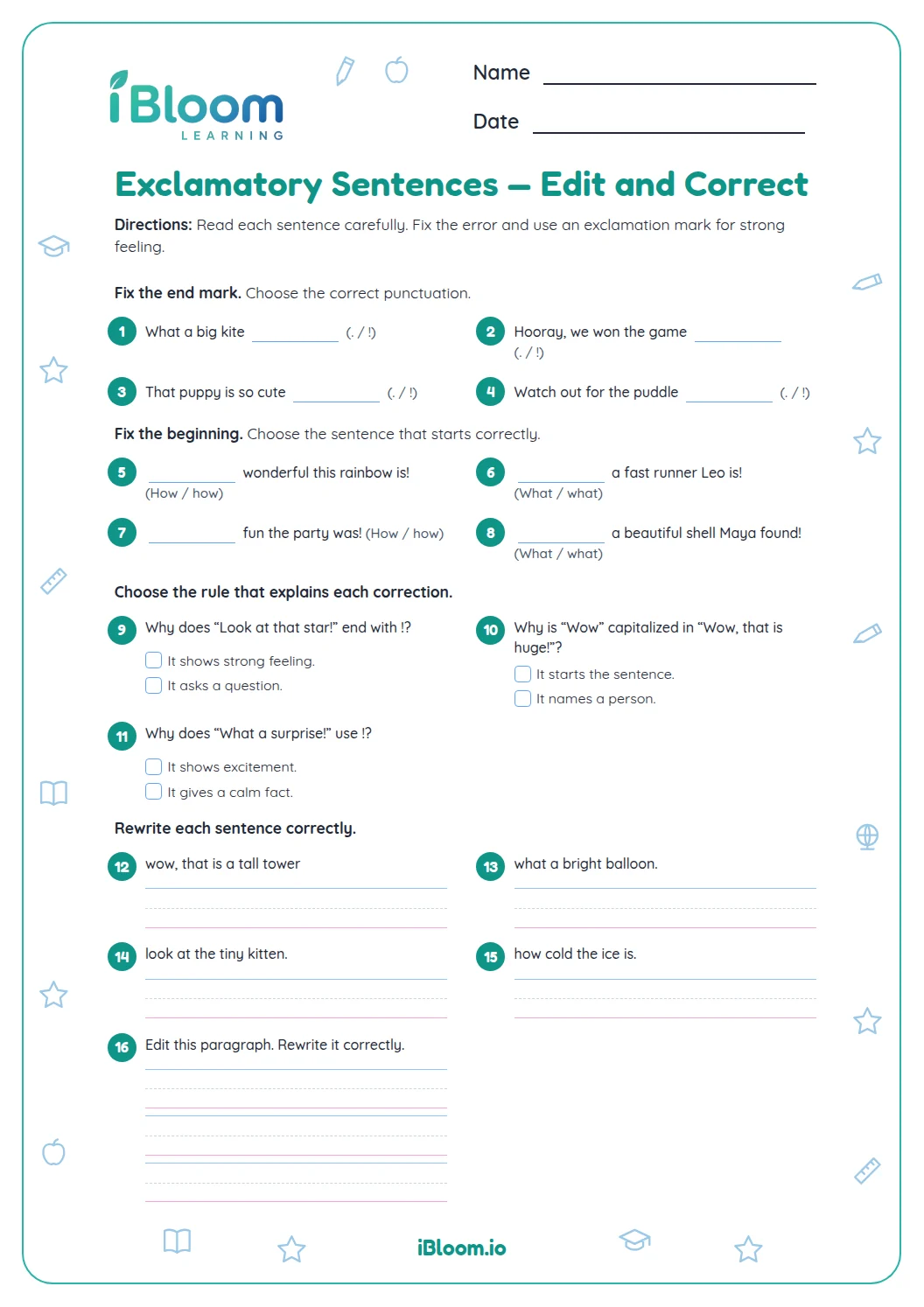
An exclamation shows strong feeling and ends with an exclamation mark. Question 15 asks children to turn “The puppy makes me smile” into an exclamation; “How cute the puppy is!” is one fitting answer. The blank gives a chance to choose a fitting describing word.
What should students check after changing a sentence?
Read the sentence aloud and check that its words express the requested purpose. Then check the capital letter and ending punctuation. A question needs a question mark, while a statement generally ends with a period. The final four items provide practice changing sentence types in writing.