


About this worksheet
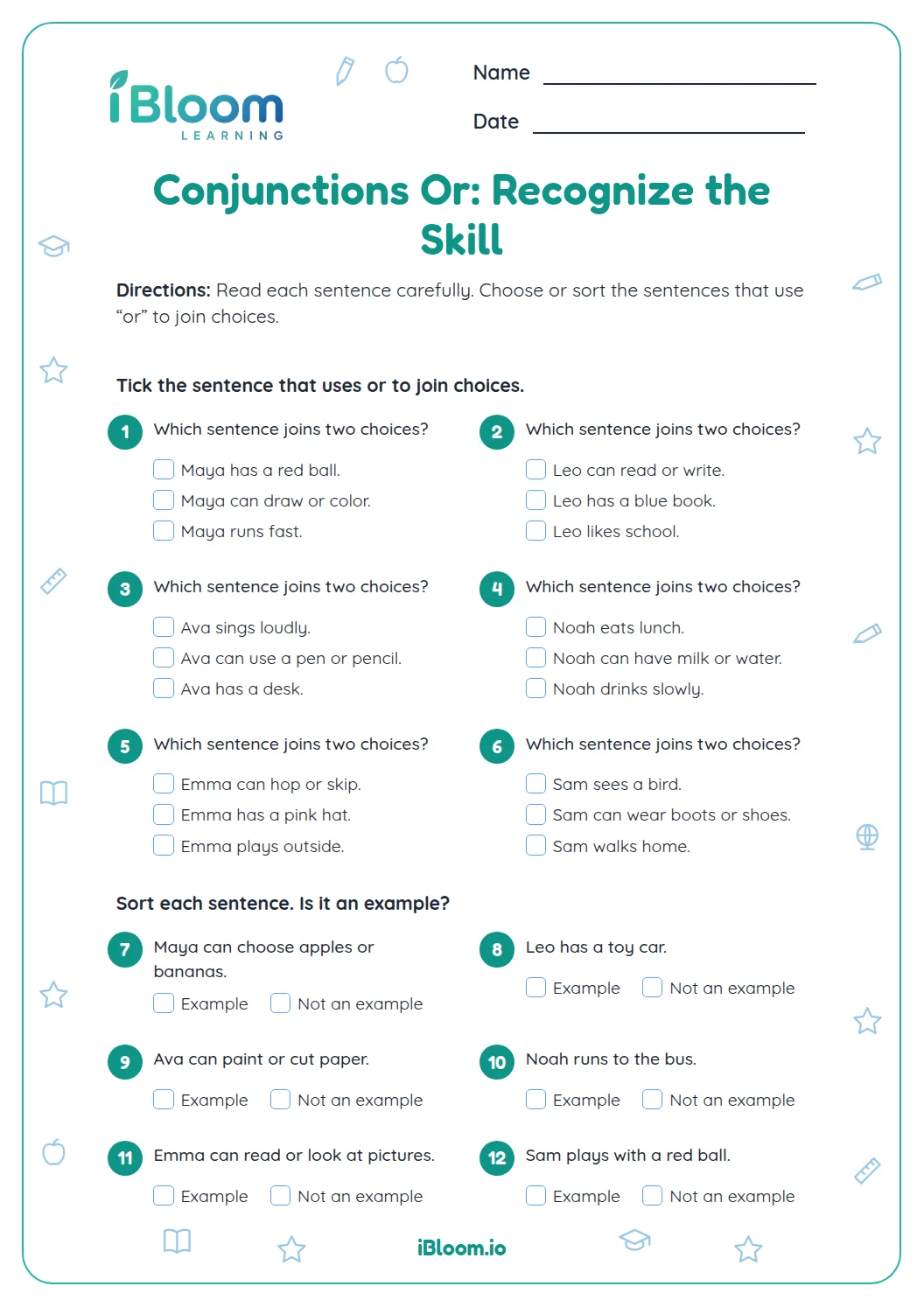
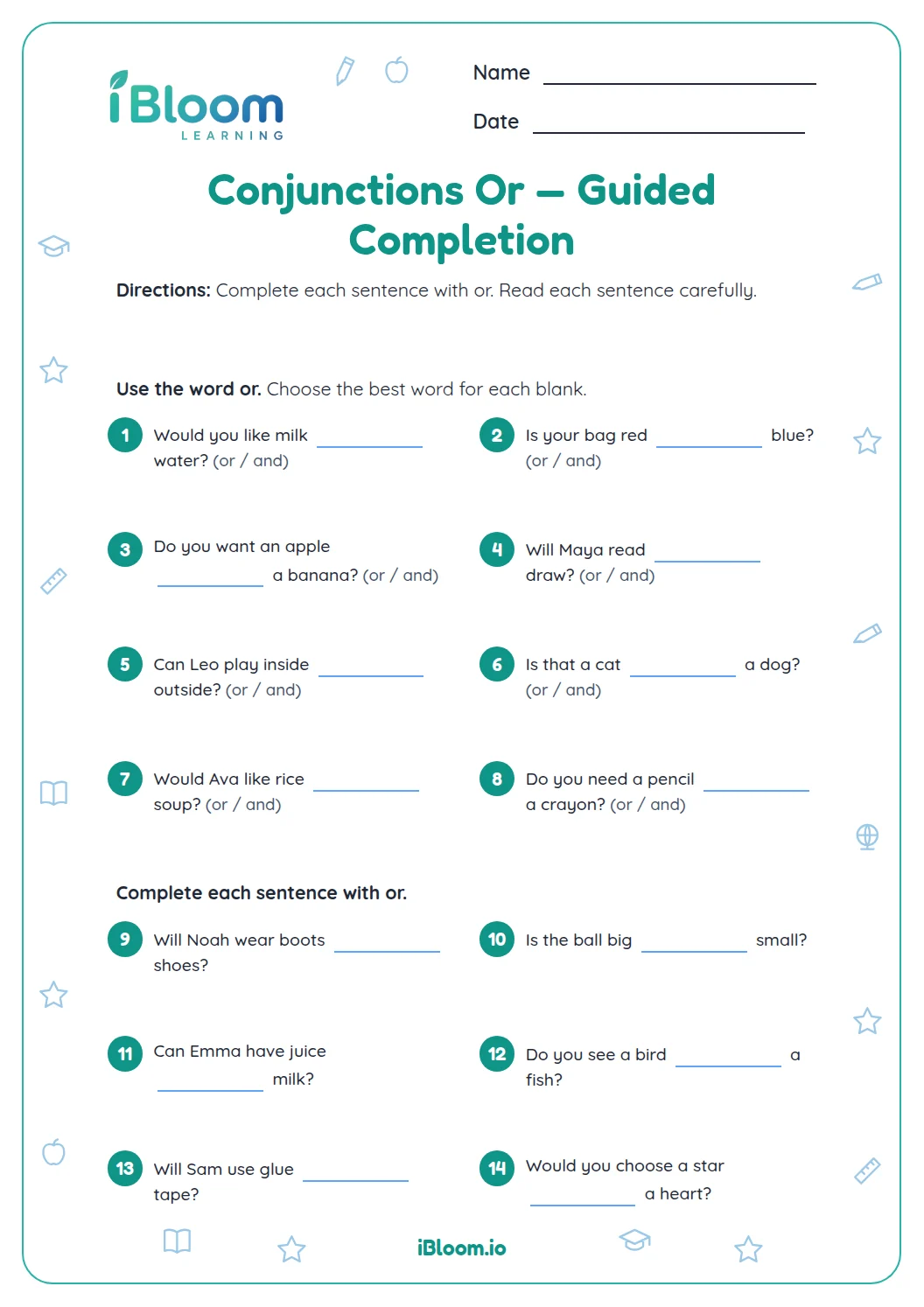
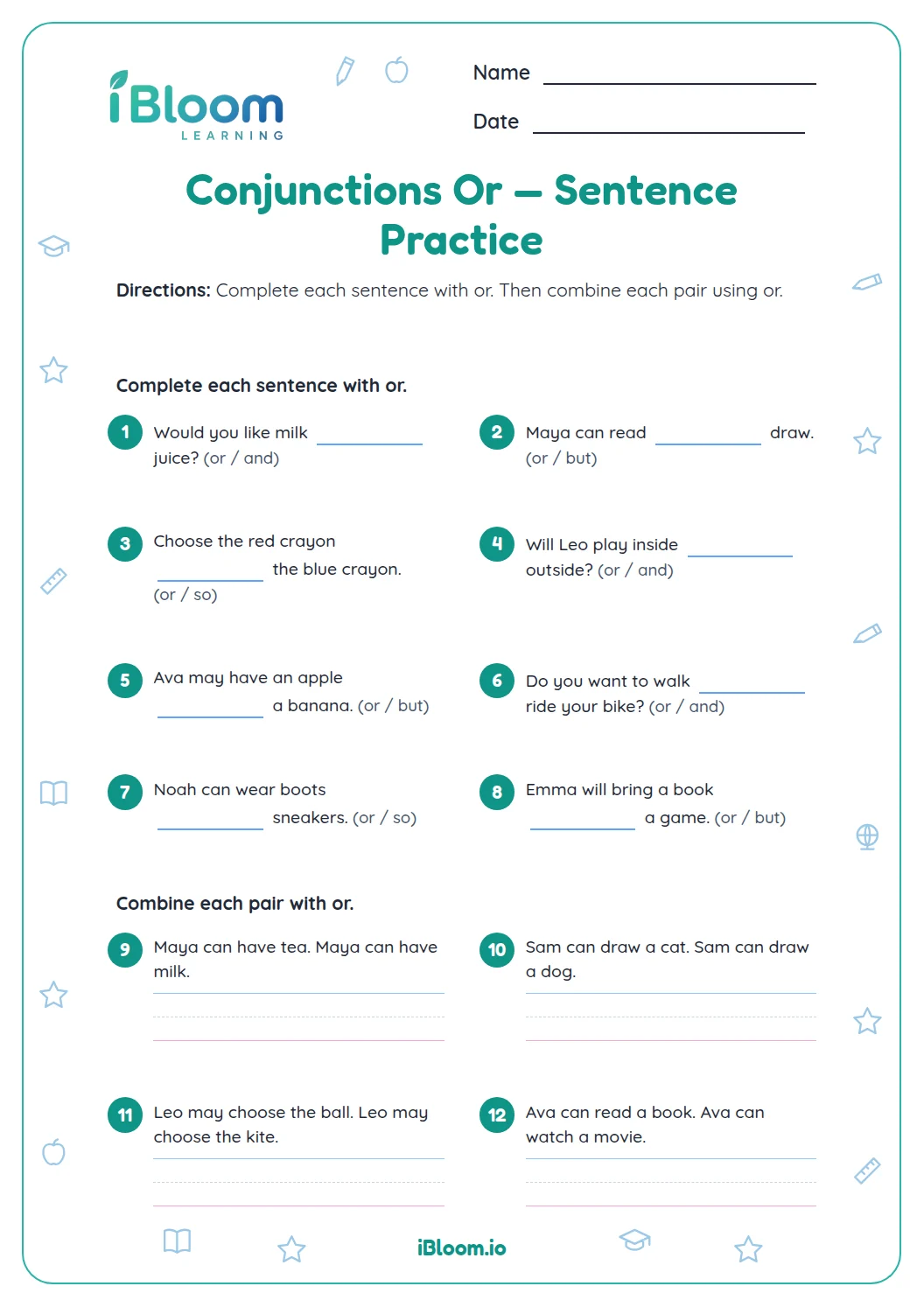
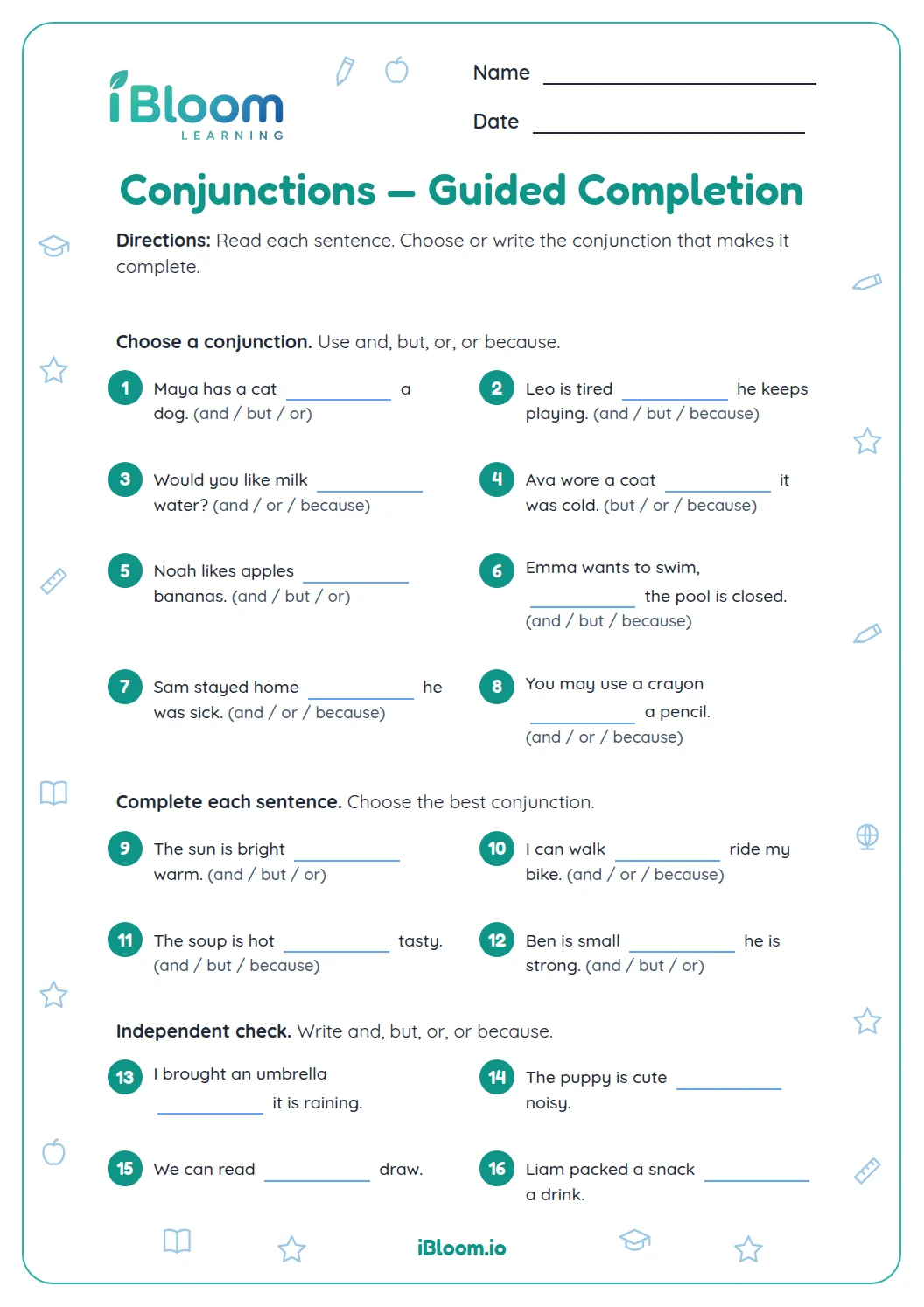
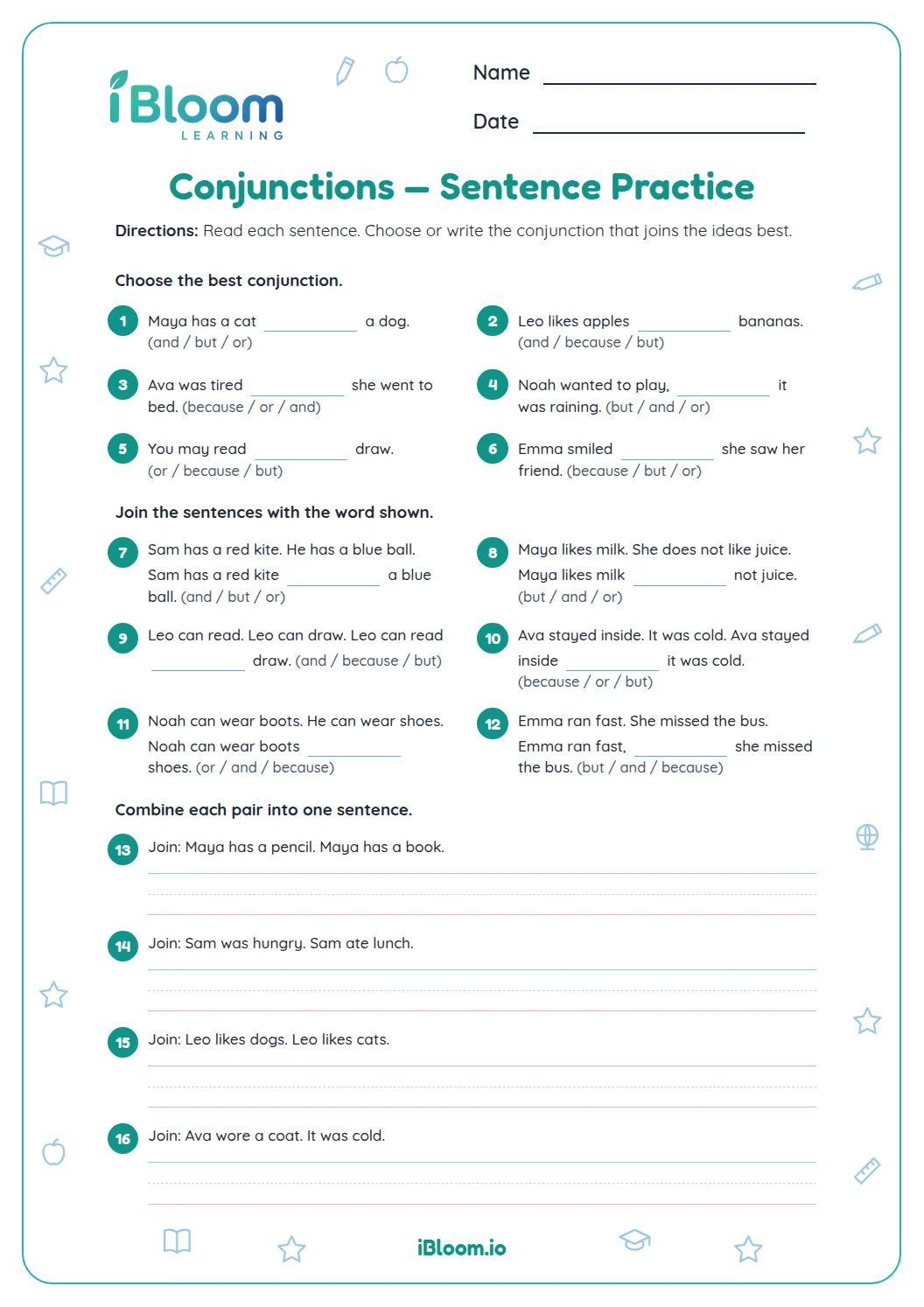
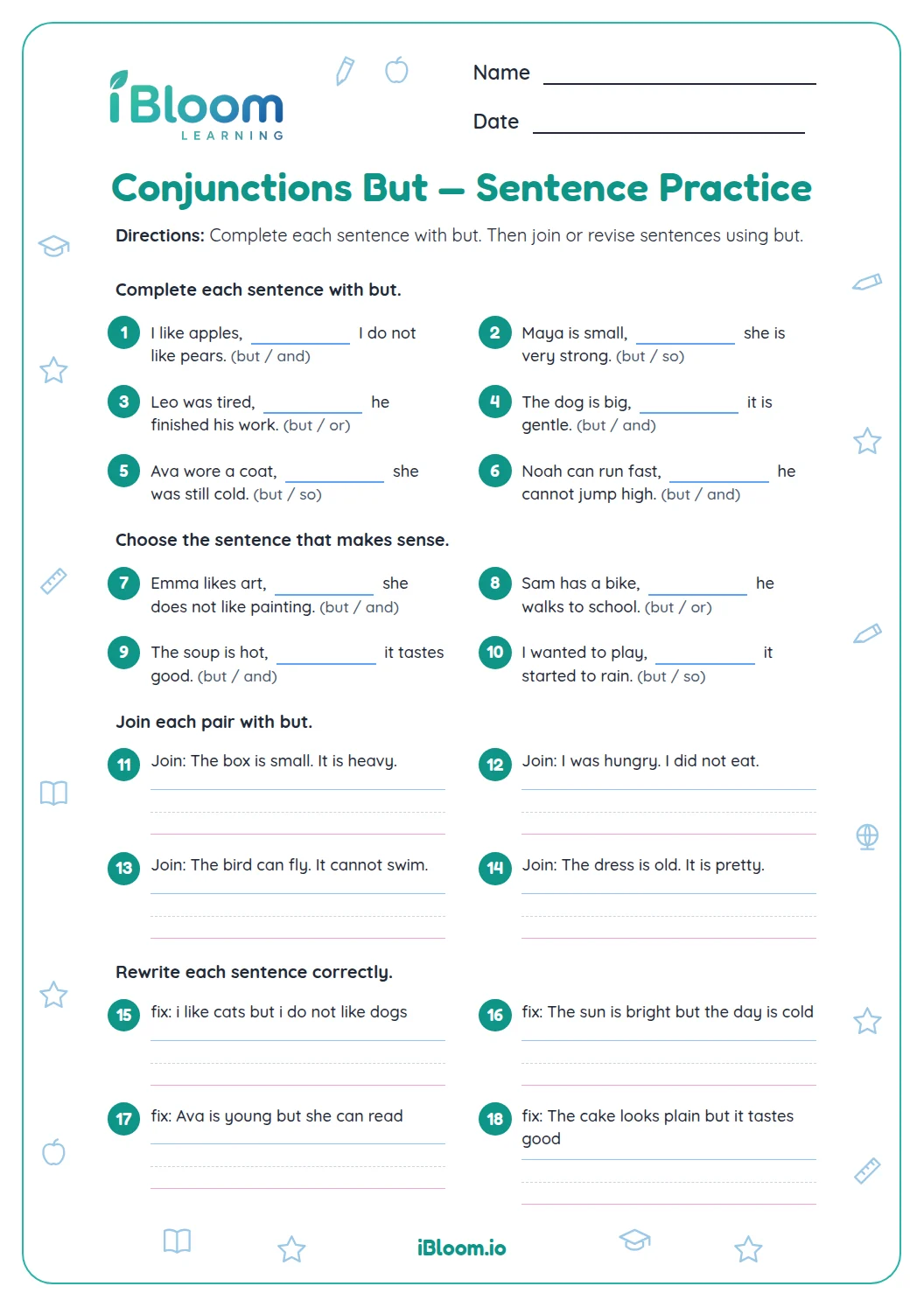
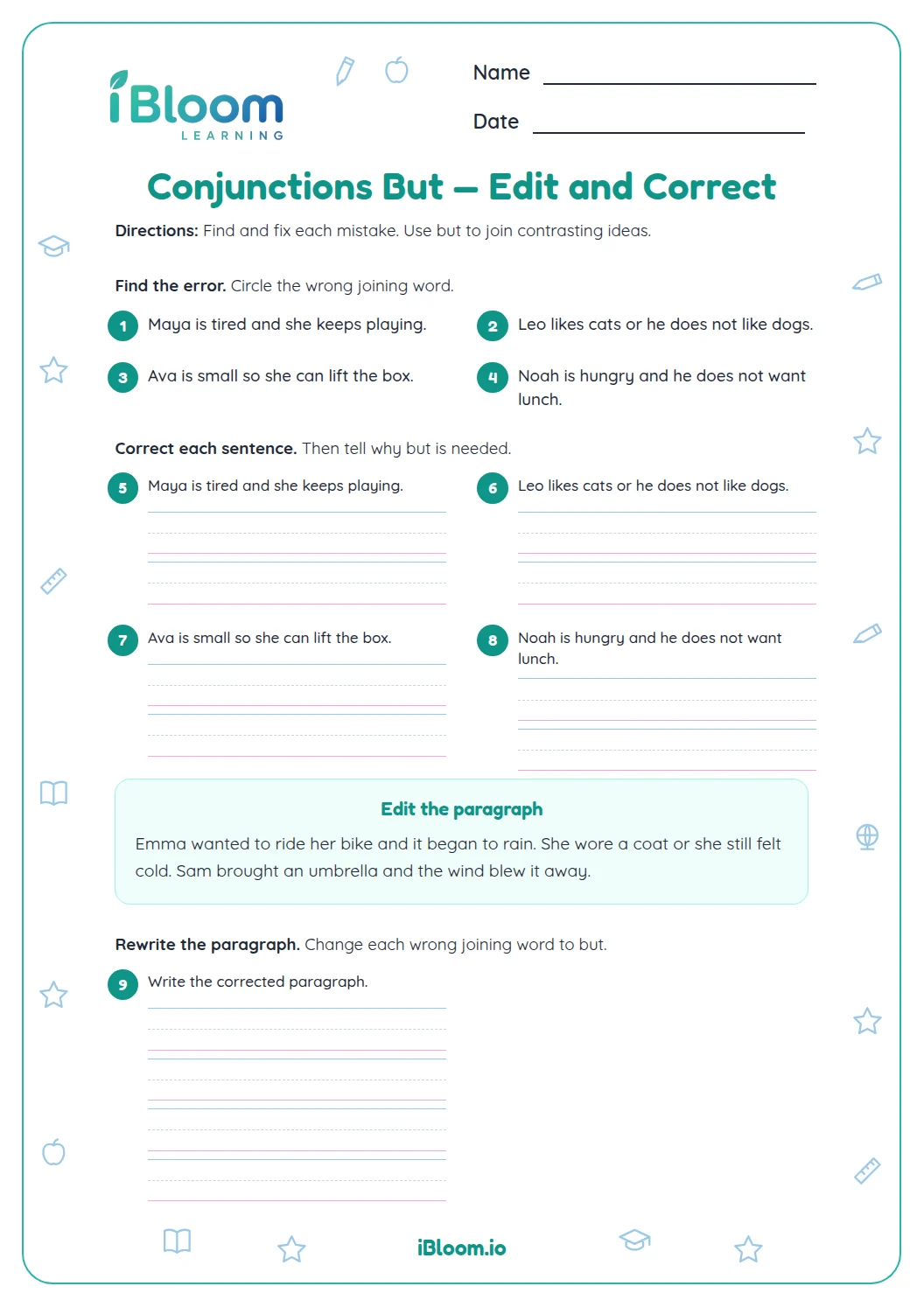
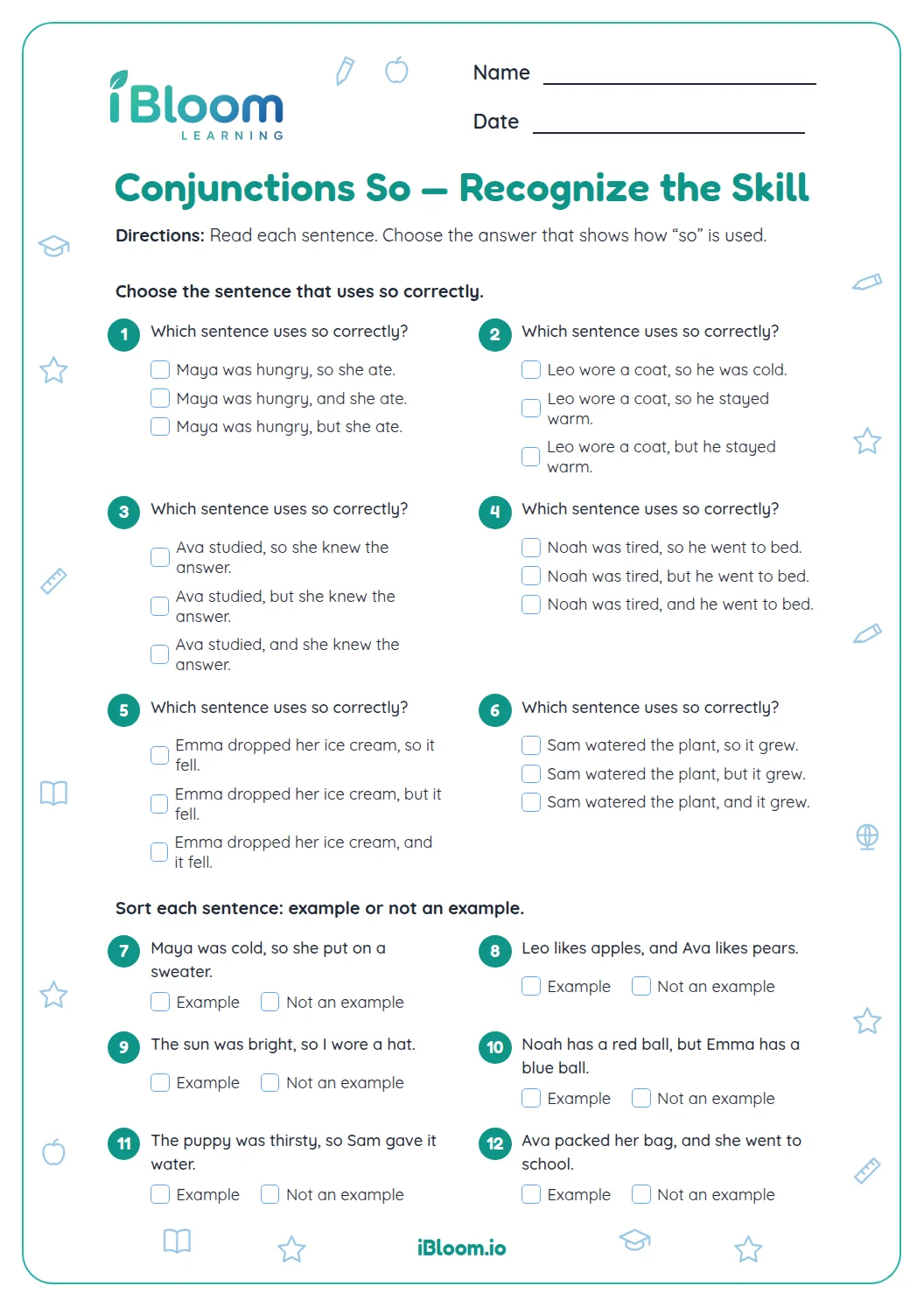
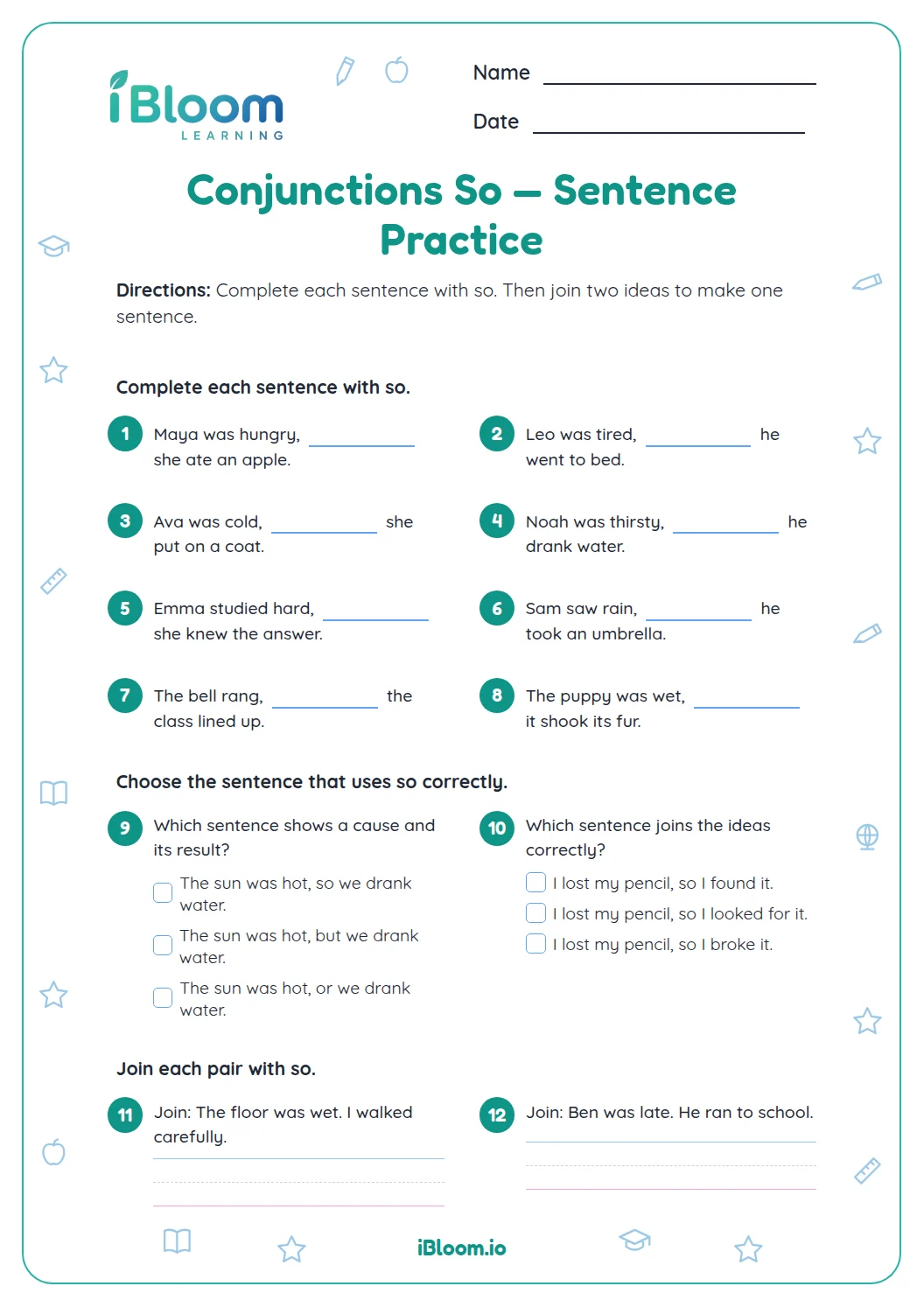
This free Grade 1 grammar printable helps children use or to join alternatives in a sentence. Eight questions ask them to choose the joining word, four ask them to complete sentences with common conjunctions, and four ask them to identify a sentence that offers choices. The worksheet practices the frequently occurring conjunction named in CCSS L.1.1.g. A separate key gives the answers and shows why each sentence offers alternatives.
Aligned to L.1.1.g
What does or mean in a sentence?
Or joins alternatives. A reader can choose one option, the other option, or sometimes either one. In this worksheet, the sentence usually signals a choice with a question such as “Would you like…?” or “Should we…?”
For example, “Would you like an apple or a pear?” gives two fruit choices. Both nouns fit the sentence, and or connects them.
- 1Would you like an apple ___ a pear?
- 2The sentence offers two choices.
- 3Answer: Would you like an apple or a pear?
How is or different from and?
And joins items that go together or are both included: “Bring a spoon and a fork.” Or offers alternatives: “Bring a spoon or a fork.” Listen for whether the sentence asks for both or gives a choice.
A sentence can join activities too. “We can read or draw” offers two actions, while “We can read and draw” says to do both.
How can children recognize a choice sentence?
Look for alternatives that someone may choose between. Or connects the alternatives, whether they are foods, places or actions.
Read both options in each sentence. If the sentence offers alternatives, it uses or; if both things happen or are included, and may fit instead.
How to use this worksheet at home or in class
- 1Read the complete sentence, not just the blank.
- 2Ask whether the sentence offers alternatives or includes both items.
- 3Write or between the two choices in Part B.
- 4In Part C, write a complete thought and reread it aloud.
Common mistakes and quick fixes
The mistake
Choosing and when the sentence offers one of two alternatives.
The fix
Ask whether the sentence means both or gives a choice; use or for the choice.
The mistake
Leaving out one of the two alternatives.
The fix
Check that there is a choice on each side of or.
The mistake
Writing only a list of words in the final part.
The fix
Make a full sentence that tells what someone can choose.
Curriculum alignment
This page practices a frequently used conjunction in complete sentences.
Use the conjunction or to join choices in sentences.
On this sheet: Every item practices or as a conjunction joining alternatives.
Show the official wordingHide the official wording
Use frequently occurring conjunctions (e.g., and, but, or, so, because).
What to practice next
Make more practice
Further reading
Questions parents and teachers ask
What does or tell a reader?
Or tells that a person may choose between alternatives. In “Would you like an apple or a pear?” the sentence offers two fruit choices. The first two parts let children recognize that meaning, supply or, and read the whole sentence.
How is or different from and?
And joins things that go together, while or usually presents a choice in these sentences. “Bring a spoon and a fork” asks for both; “a spoon or a fork” offers either one. The answer choices include and as a useful contrast.
What should a complete choice sentence include?
A choice sentence needs a complete thought and two alternatives connected by or. For example, “We can read a book or draw a map” tells what can happen and offers two activities. Part A asks children to recognize this meaning, then Part B gives more sentence practice.
How many questions are included?
There are 16 questions in two parts: eight word choices and eight conjunction blanks. The answer key gives the word that completes each sentence. Most items use or for alternatives, with and, but and so included for mixed review. The final set also asks children to distinguish a choice from doing both.
Can or join actions as well as things?
Yes. Or can join two things, places or actions when the sentence offers a choice. “Would you like to sing or dance?” joins two actions. Children can spot each kind of alternative in Part C by checking whether the sentence gives a choice.