





About this worksheet
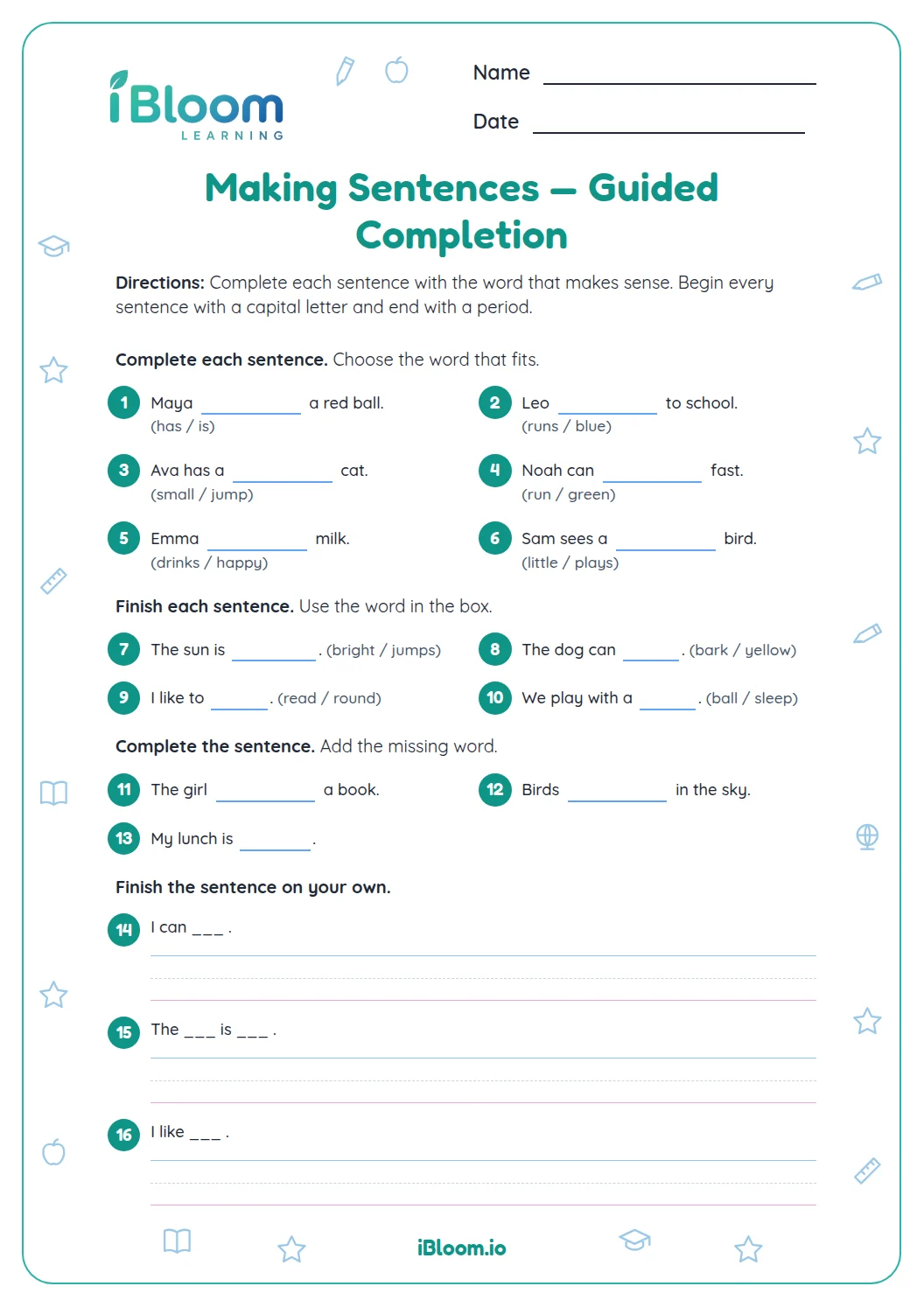
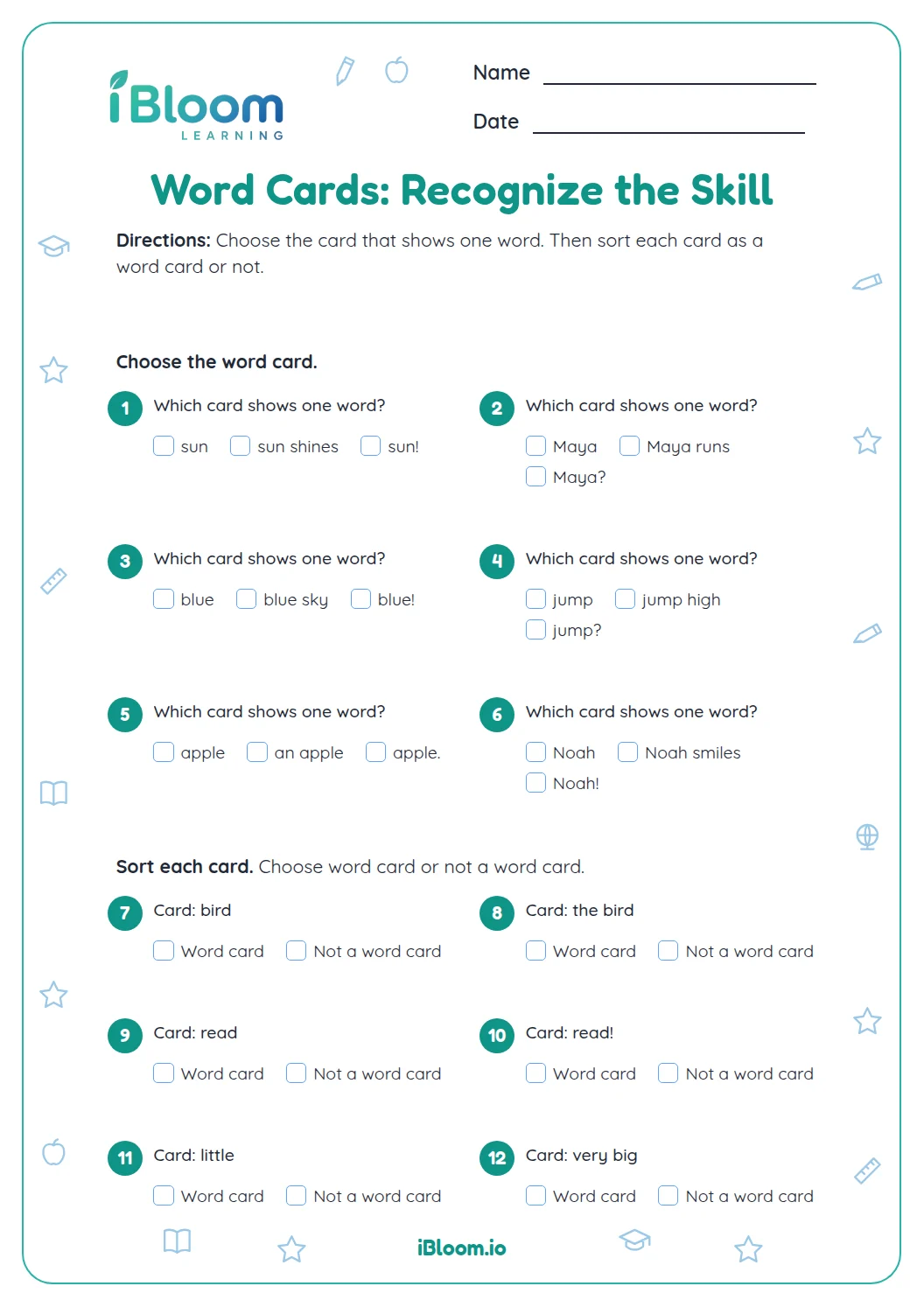
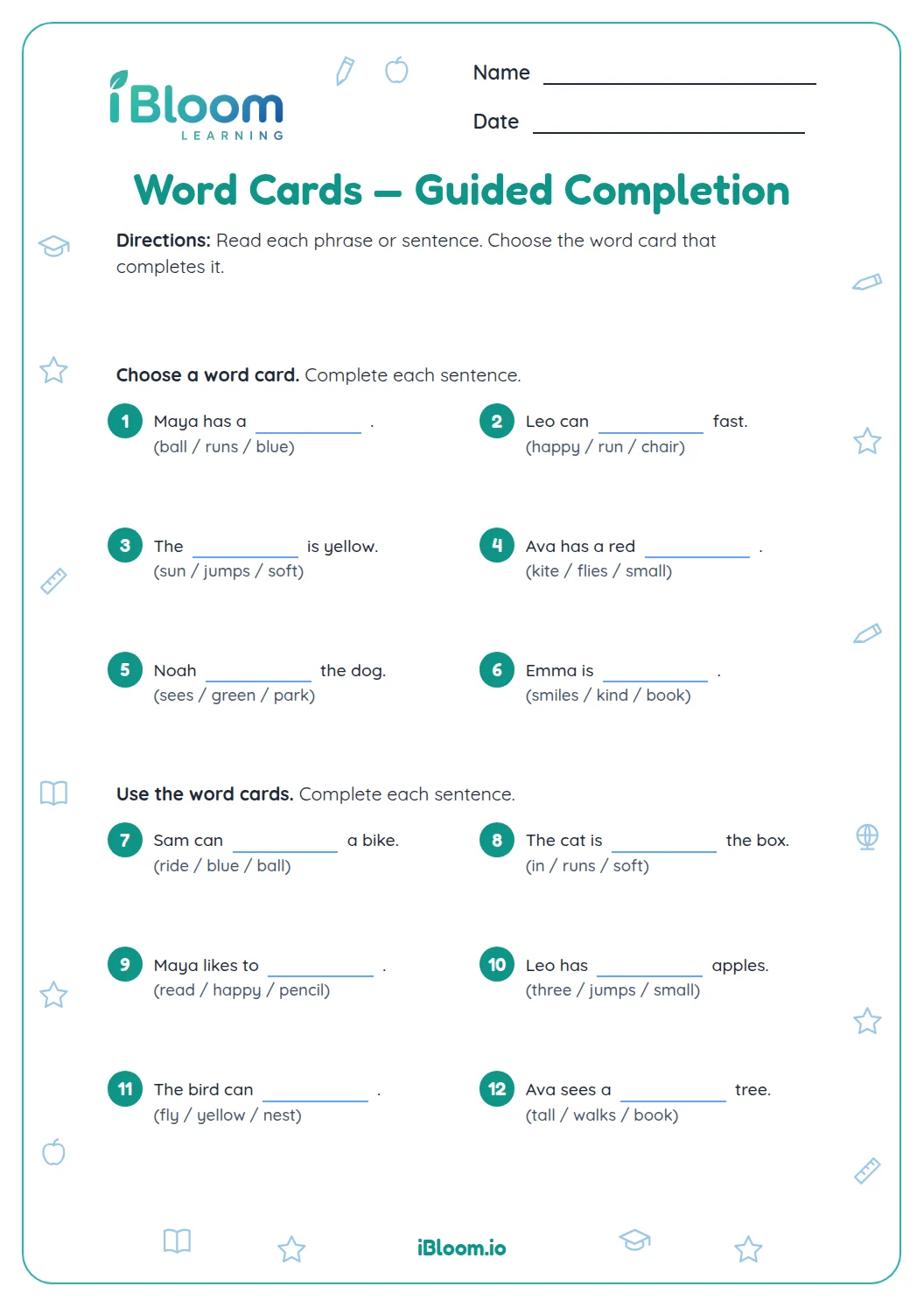
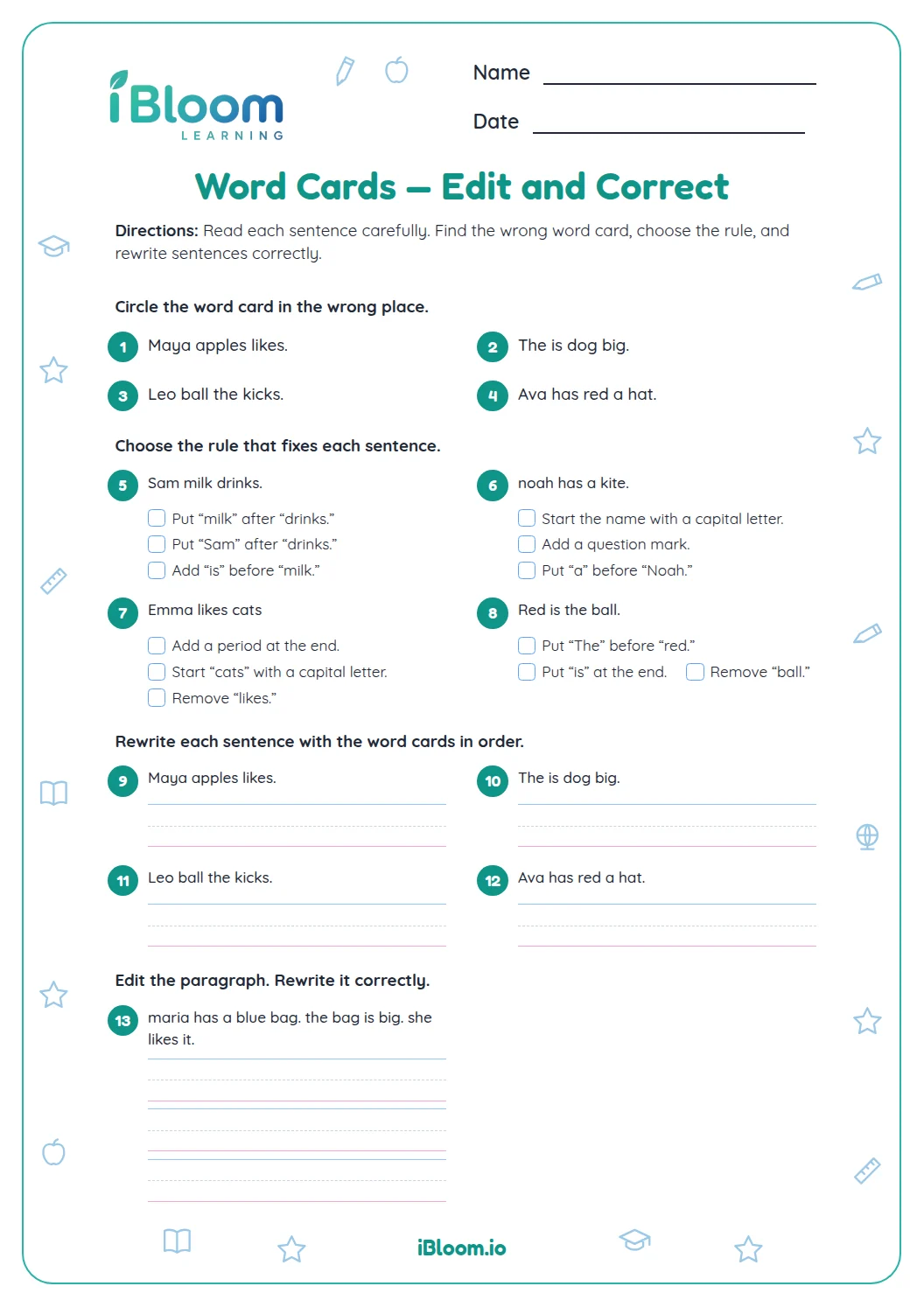
This Grade 1 sentence worksheet moves from recognizing a complete thought to writing one. Children choose complete sentences, match sentences to their purpose, add end punctuation, and finish or create sentences. The sequence gives learners a chance to notice how a sentence works before trying the same skill in their own words. It supports CCSS.ELA-Literacy.L.1.1.j and L.1.2.b. The printable includes a separate answer key with sample responses for open-ended items.
Aligned to L.1.1.j and L.1.2.b
How can a child spot a complete sentence?
A complete sentence tells a whole thought. Ask who or what the words are about and what that person, animal, or thing does. “The bird sings.” has both; “The bird” leaves the thought unfinished.
- 1The bird sings. → complete; it tells what the bird does.
How do sentence purpose and end marks work together?
A telling sentence usually ends with a period. A question asks and ends with a question mark. A command tells someone to do something; an excited sentence may end with an exclamation point. Read the words aloud to hear the purpose.
How can children build a sentence from a prompt?
Start with a person, place, animal, or thing. Add an action or a detail that completes the thought, then check the first letter and end mark. For open responses, more than one sentence can work.
How to use this worksheet
- 1Read each choice aloud and listen for a whole thought.
- 2Name whether the sentence tells, asks, commands, or exclaims.
- 3Say the sentence naturally before choosing its end mark.
- 4For a sentence starter, add words that complete its meaning.
- 5Reread original sentences for a capital letter and matching end mark.
Common mistakes and quick fixes
The mistake
Choosing “The puppy” as a complete sentence.
The fix
Ask what the puppy does; add an action to complete the idea.
The mistake
Using a period after a question.
The fix
Listen for asking words such as where, what, or can, then use a question mark.
The mistake
Writing a fragment after a starter.
The fix
Reread it and check that the subject does something or is described.
Common Core alignment
These Common Core standards describe the skills practiced on this worksheet.
Build and expand complete sentences for different purposes.
On this sheet: Students identify sentence purposes, complete thoughts, and write prompted sentences.
Show the official wordingHide the official wording
Produce and expand complete simple and compound declarative, interrogative, imperative, and exclamatory sentences in response to prompts.
Use end punctuation that matches each sentence.
On this sheet: Several items ask learners to choose a period, question mark, or exclamation point.
Show the official wordingHide the official wording
Use end punctuation for sentences.
What to practice next
Questions parents and teachers ask
What does a complete sentence need?
A complete sentence shares a whole thought. Look for who or what the sentence is about and what that person, animal, or thing does. In question 1, “The bird sings” is complete because it tells what the bird does; “The bird” leaves the thought unfinished.
Are the writing questions open-ended?
Yes. The final questions ask children to write their own sentences, so several answers can work. The answer key gives one sample for each prompt. Accept another answer when it is a complete thought, matches the requested purpose, and uses appropriate capitalization and end punctuation.
How should I use the answer key?
Use the key to check the multiple-choice and end-mark questions, then compare the written responses with the samples. For a child’s original sentence, check that it answers the prompt and reads as a complete thought. Invite the child to reread and revise one sentence.
What should children practice next?
After completing the review, ask the child to write a question, a telling sentence, and a command about a familiar topic. The Grade 1 sentence writing and word-card worksheets provide more ways to build and expand complete sentences. Use the key to review the choices together.
How can a child check a sentence they wrote?
Have the child read the words aloud and ask whether they tell a whole thought. Then check the first letter and choose an end mark that fits the sentence’s job. The key gives sample responses for open items, but another complete sentence can also be correct.