








About this worksheet
This Grade 1 worksheet builds the habit of recognizing a complete sentence by noticing who or what the sentence is about and what happens. Children choose complete sentences and spot groups that leave a thought unfinished. The two parts move from comparing sentence pairs to judging examples independently. A separate answer key makes checking straightforward.
What makes a group of words a complete sentence?
A complete sentence shares a whole idea. It usually names a person, animal, place or thing and tells something about it. “The puppy naps.” tells who and what happens. “The puppy” names something but leaves the thought unfinished.
- 1The puppy naps. → complete thought
- 2The puppy → unfinished thought
How can a reader spot an unfinished thought?
Read the words as if someone stopped speaking. A phrase like “After the rain” makes a reader ask what happened after the rain. The words are meaningful, but they do not finish the idea on their own.
- 1“Near the pond” → not complete
- 2“Frogs jump.” → complete
What does this worksheet ask children to do?
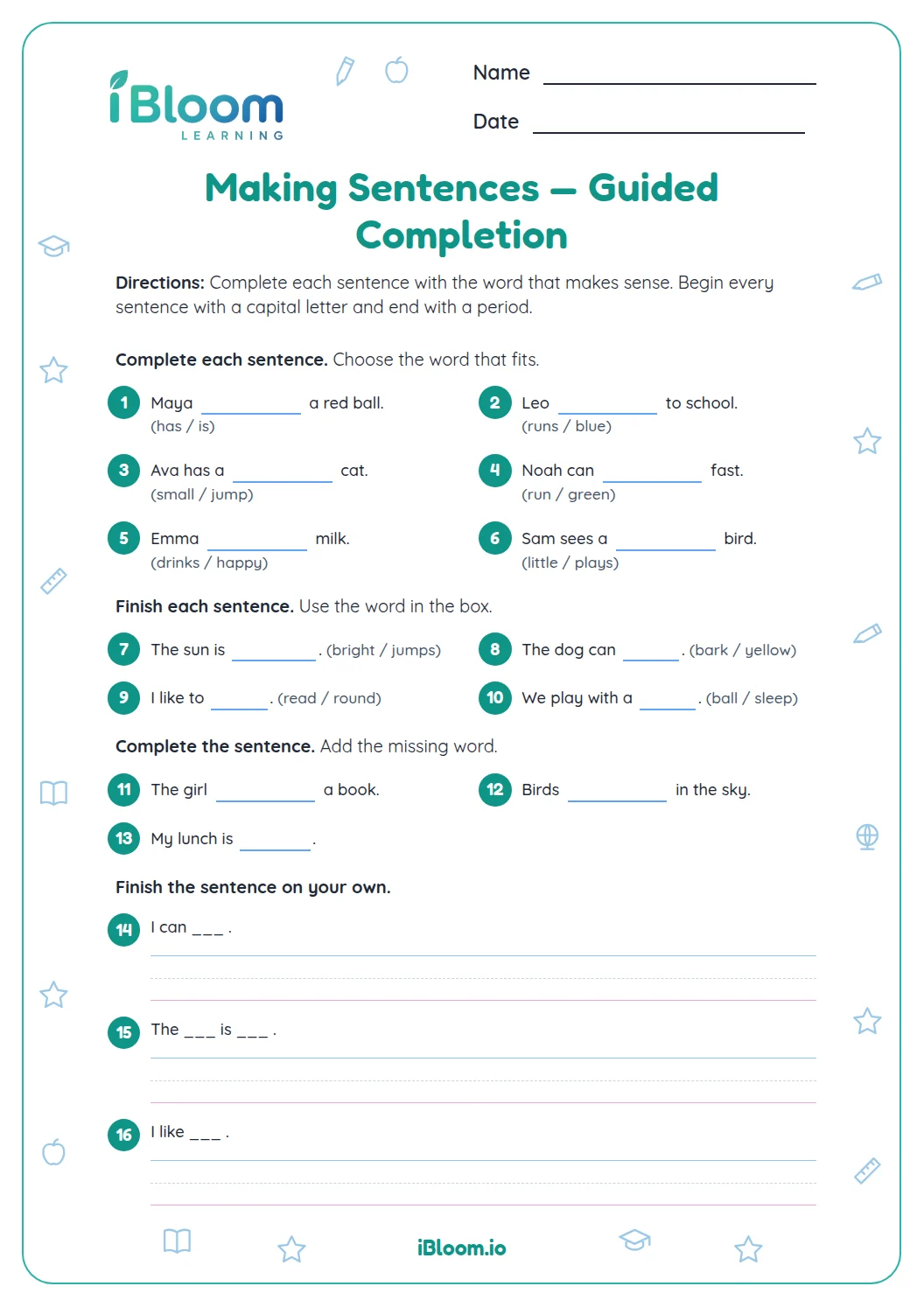
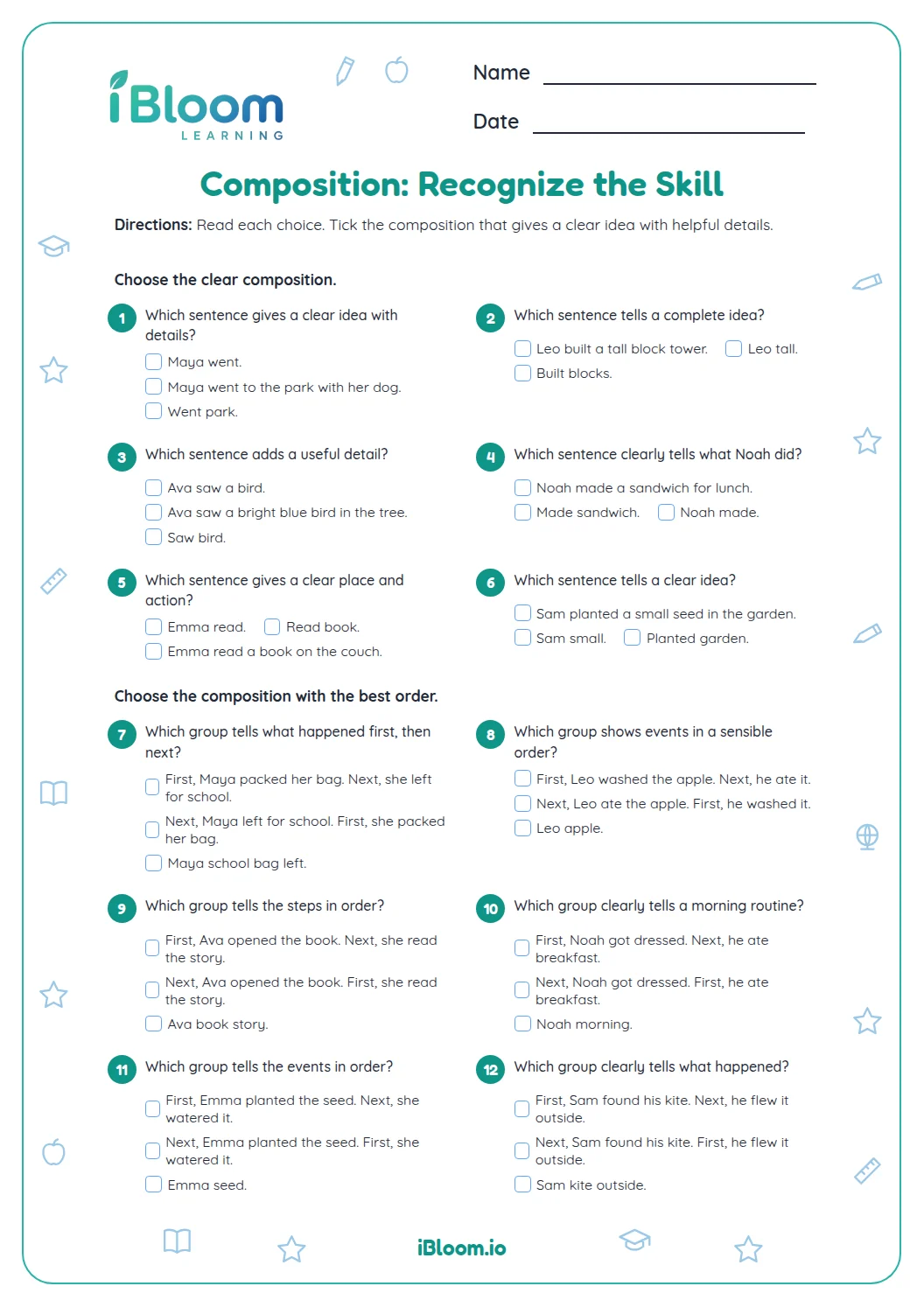
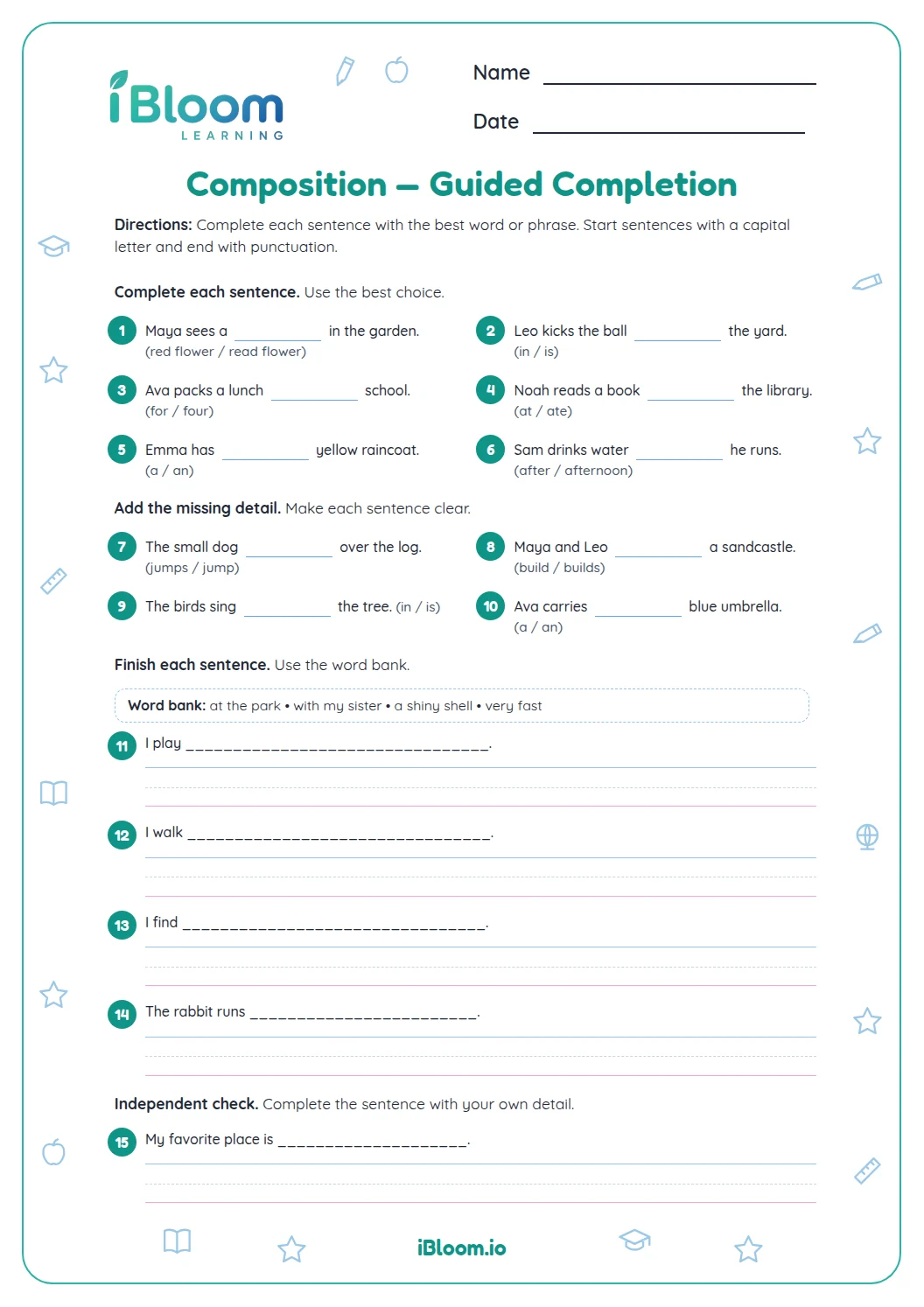
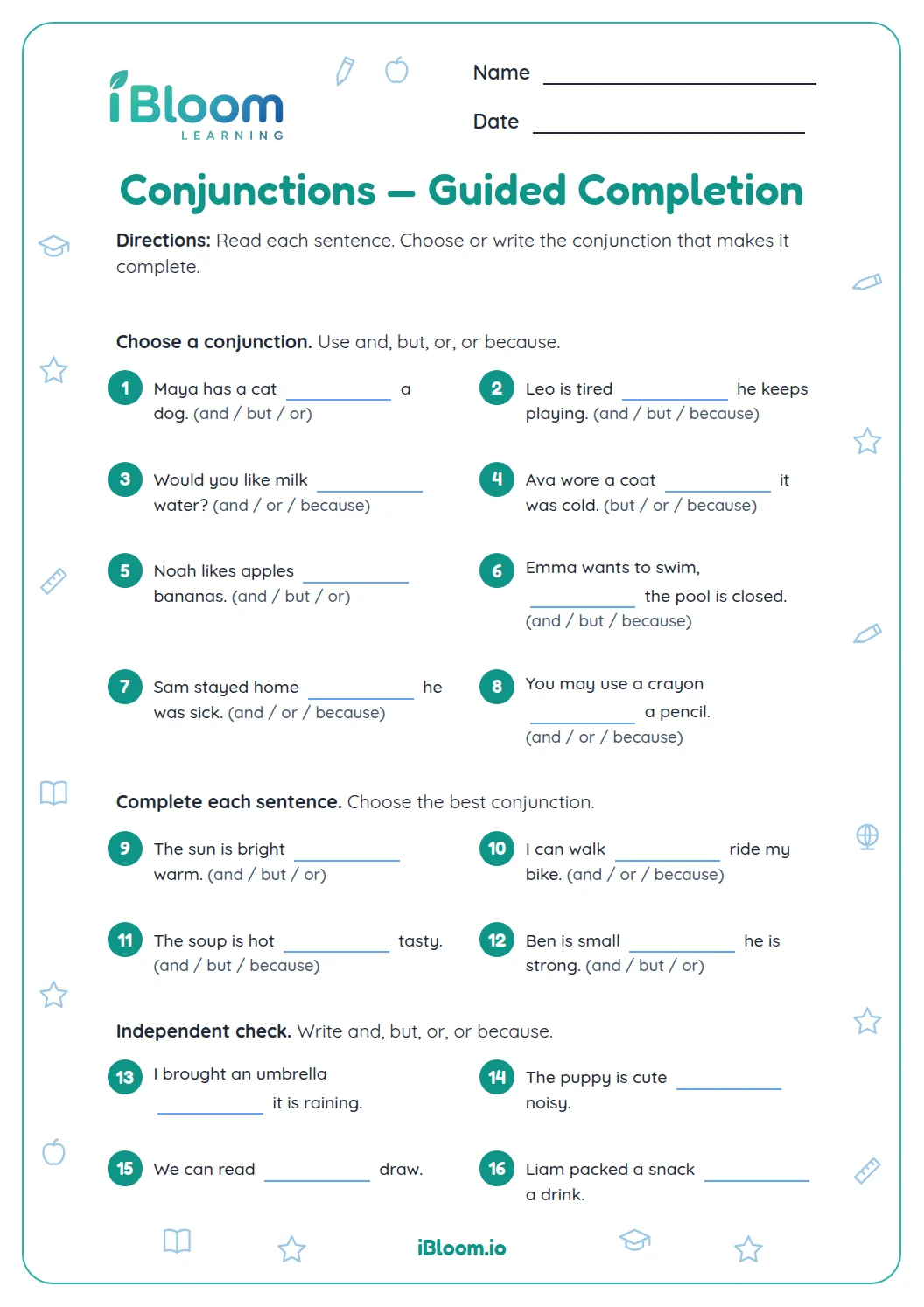
Part A compares short choices. Part B asks whether each quoted group is complete. Each item focuses on one group of words, so the student can think about the idea rather than punctuation rules.
How to use this worksheet
- 1Read each pair aloud once.
- 2Ask who or what the words name.
- 3Ask what happens or what the group says about it.
- 4Choose the answer that fits the whole thought.
- 5Check Part A and Part B with the answer key.
Common mistakes and quick fixes
The mistake
Choosing “The puppy” because it names an animal.
The fix
Look for the action or idea about the puppy; “naps” completes it.
The mistake
Calling “After the rain” complete because it makes sense.
The fix
Ask whether the words tell what happened after the rain.
The mistake
Using a capital letter as the only clue.
The fix
A capital can begin a fragment too; check whether the idea is finished.
What to practice next
Make more practice
Further reading
Questions parents and teachers ask
What is a complete sentence?
A complete sentence shares a finished idea. It usually tells who or what it is about and what happens. “The kite floats.” is complete; “A red kite” leaves the reader waiting for more. Reading aloud can help children hear whether the thought is finished.
What is a sentence fragment?
A fragment is a group of words that does not express a finished idea by itself. “Near the pond” gives a place but does not tell what is there. Add “Frogs jump” to make a complete thought. Ask what information the first group leaves out.
Does a complete sentence need a period?
A complete sentence usually begins with a capital and ends with punctuation. This page focuses on whether the words express a whole idea, so read for meaning as well as punctuation. A capital letter alone does not make an unfinished group complete.
How can a child check an answer?
Read the words aloud and ask, “Do I know who or what this is about, and what is happening?” If one part is missing, the thought may be unfinished. Then compare the response with the separate answer key and reread the example.
Which skills are practiced here?
Students distinguish simple complete sentences from unfinished word groups. Part A compares examples, and Part B applies the idea to a fresh set. Recognizing a whole thought helps children decide whether a group of words can stand as a sentence.