





About this worksheet
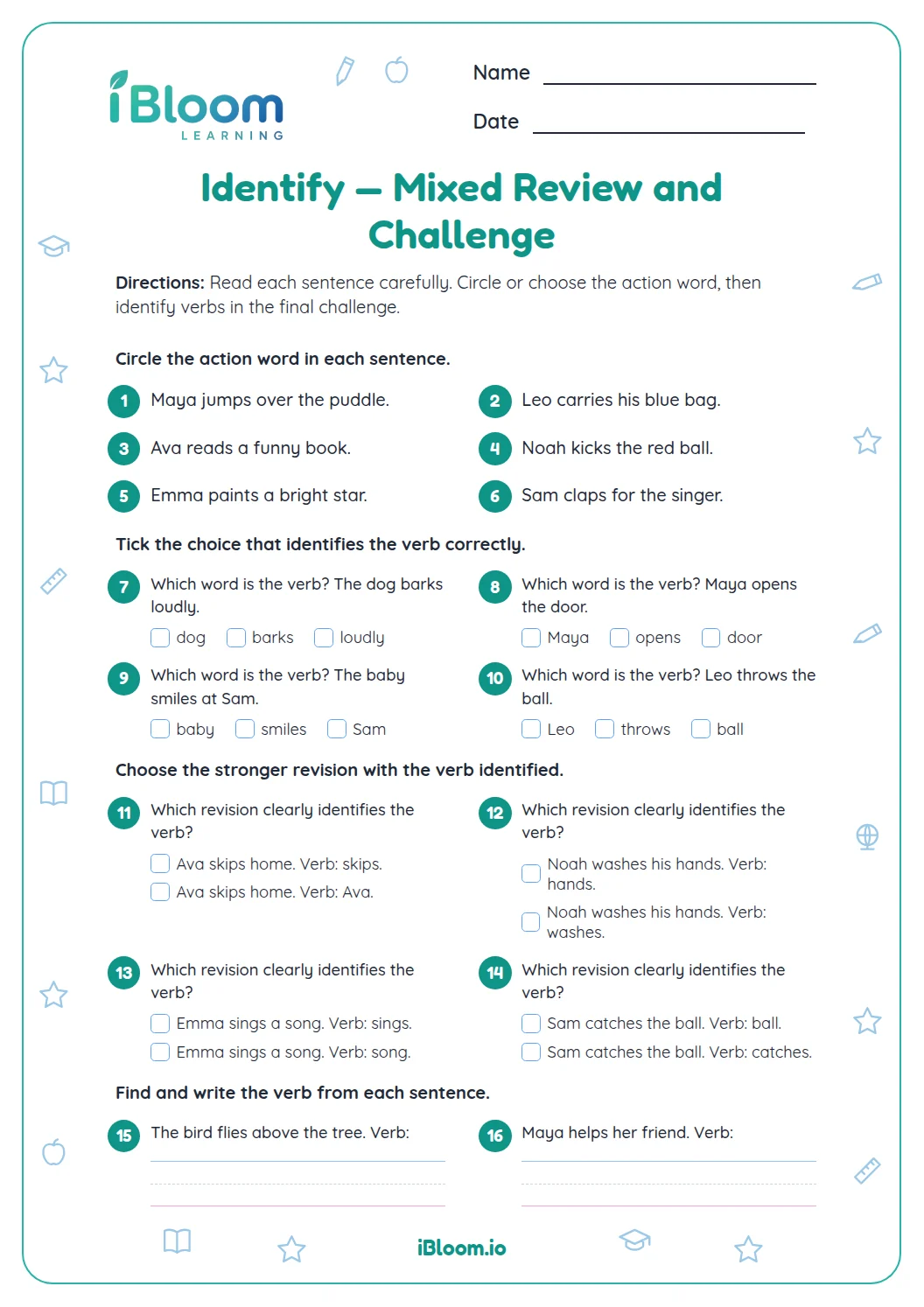
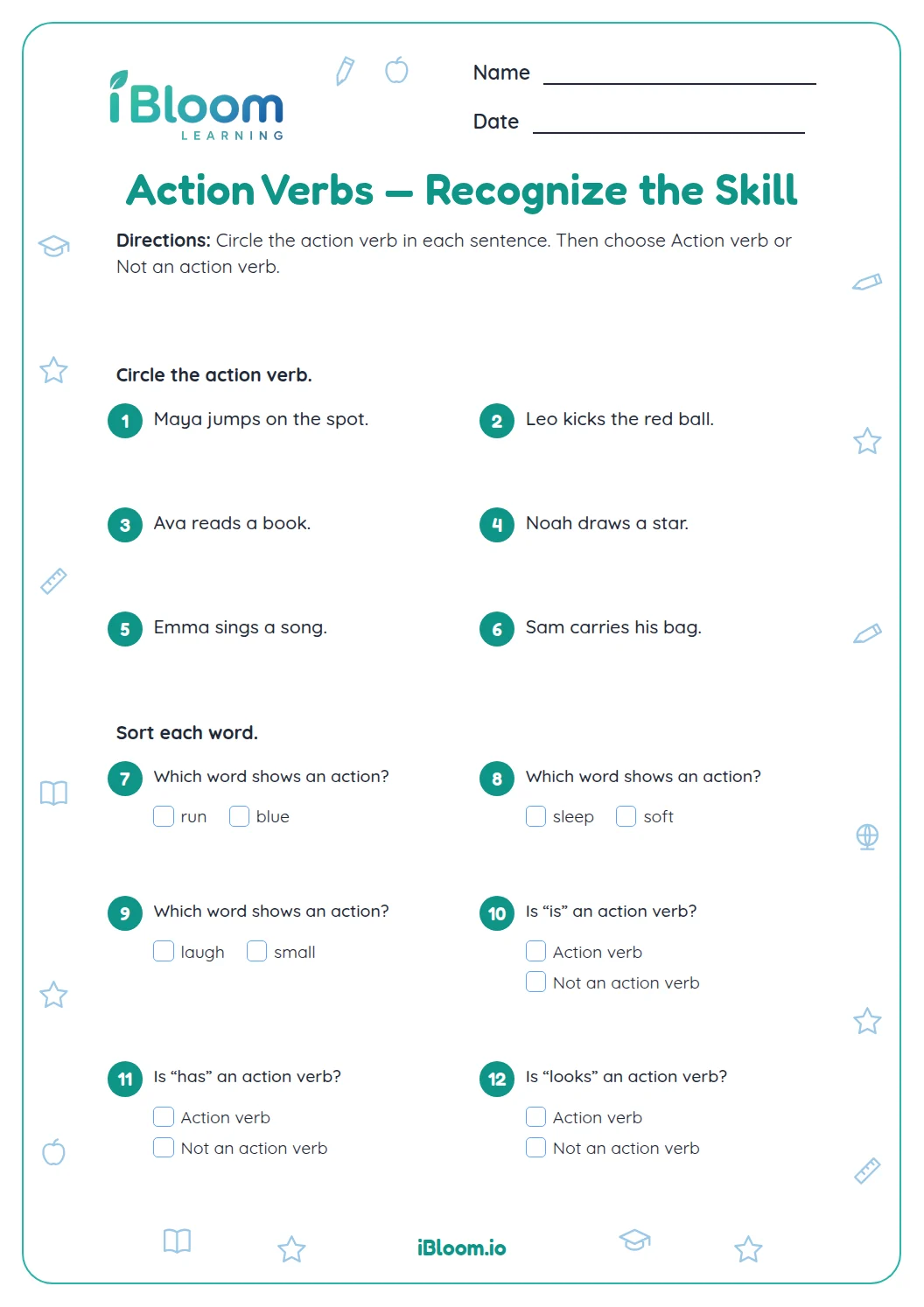
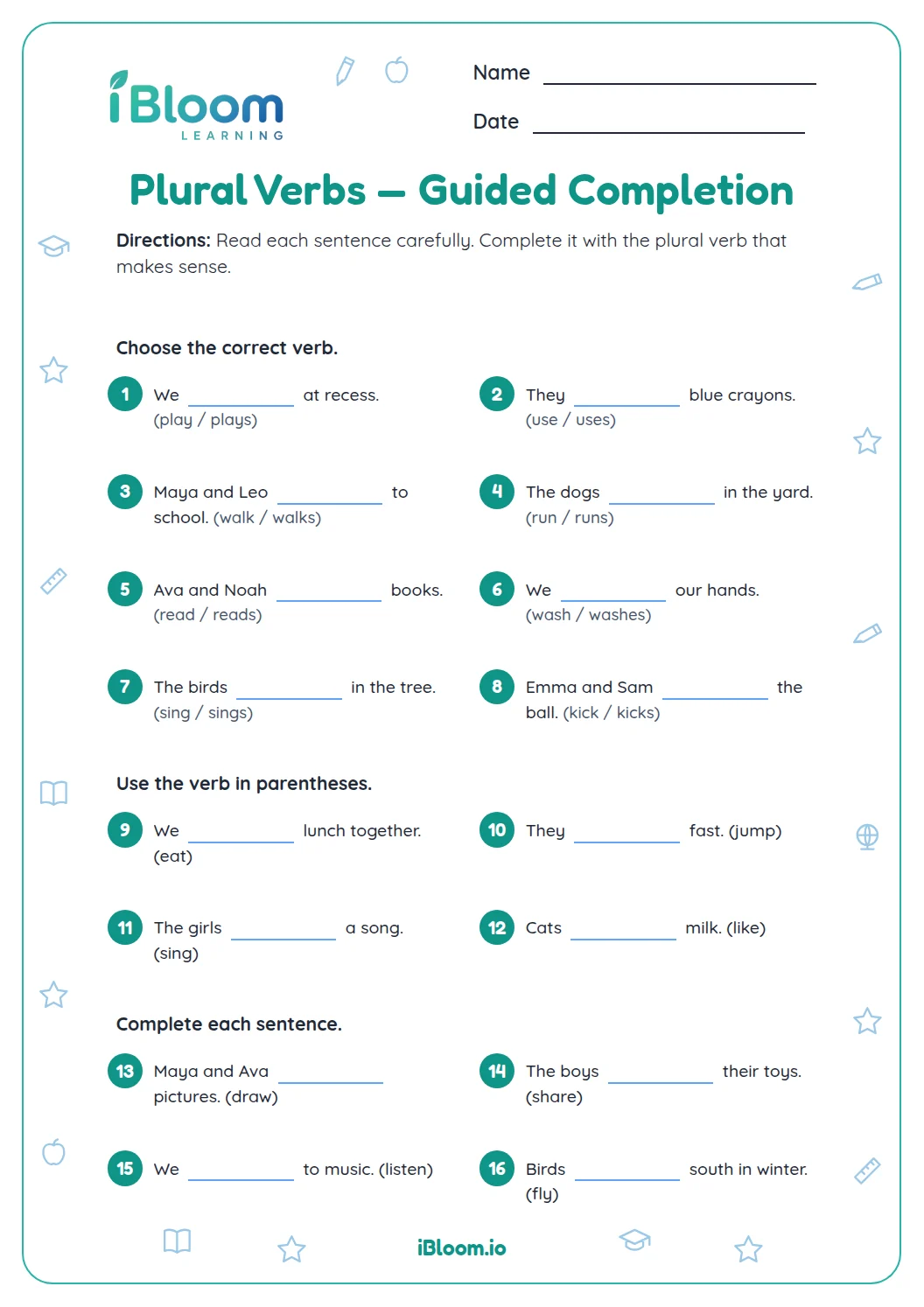
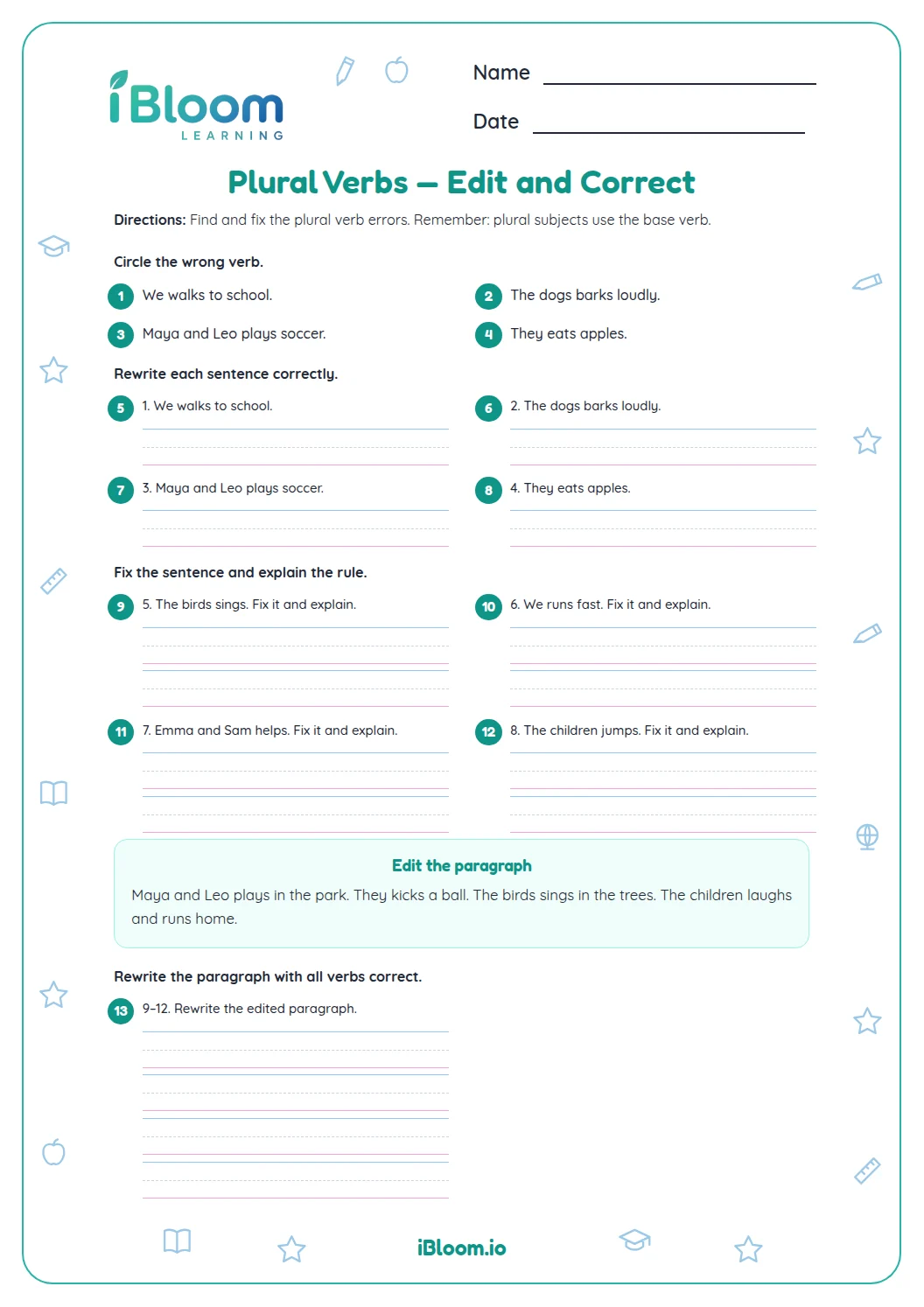
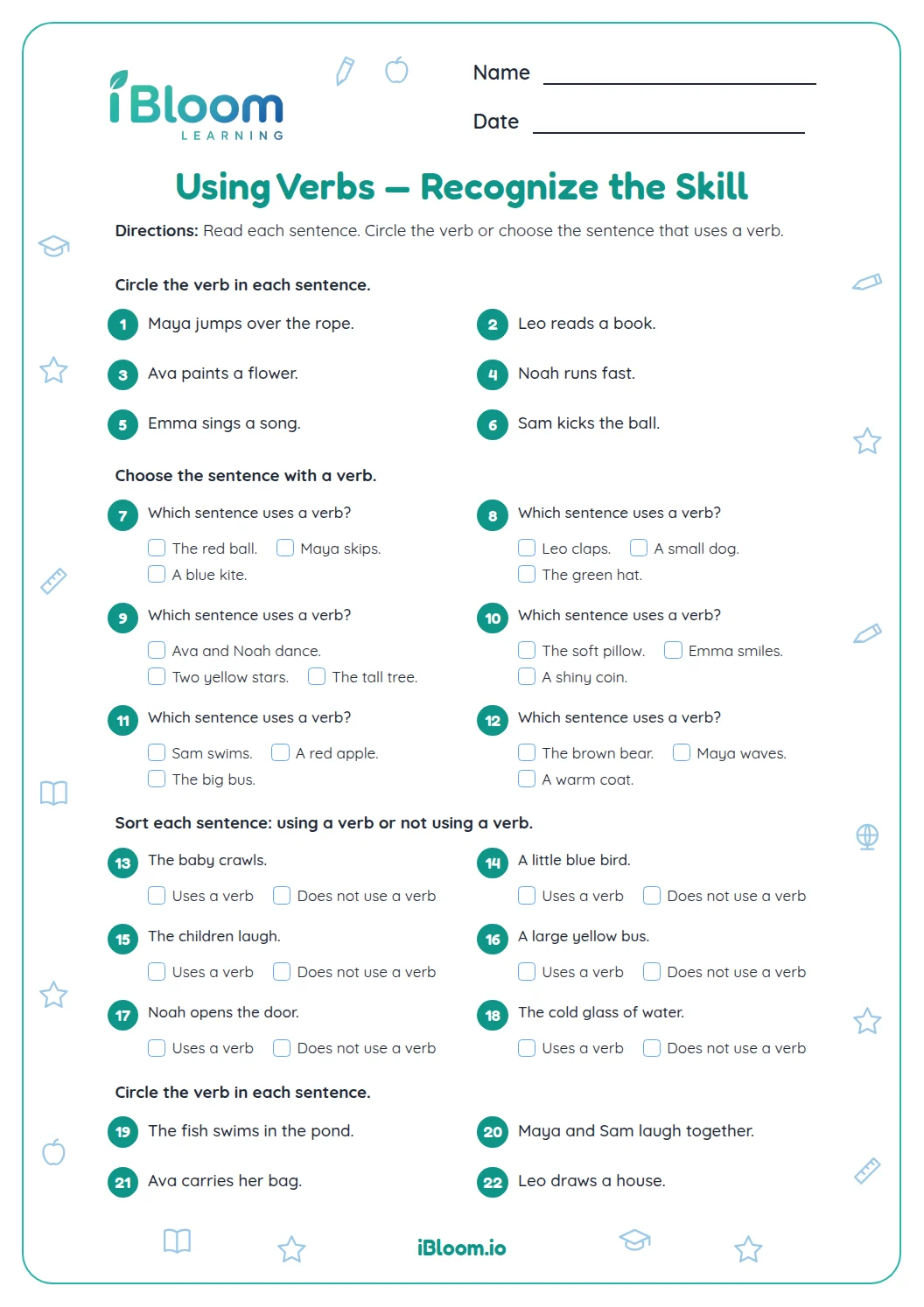
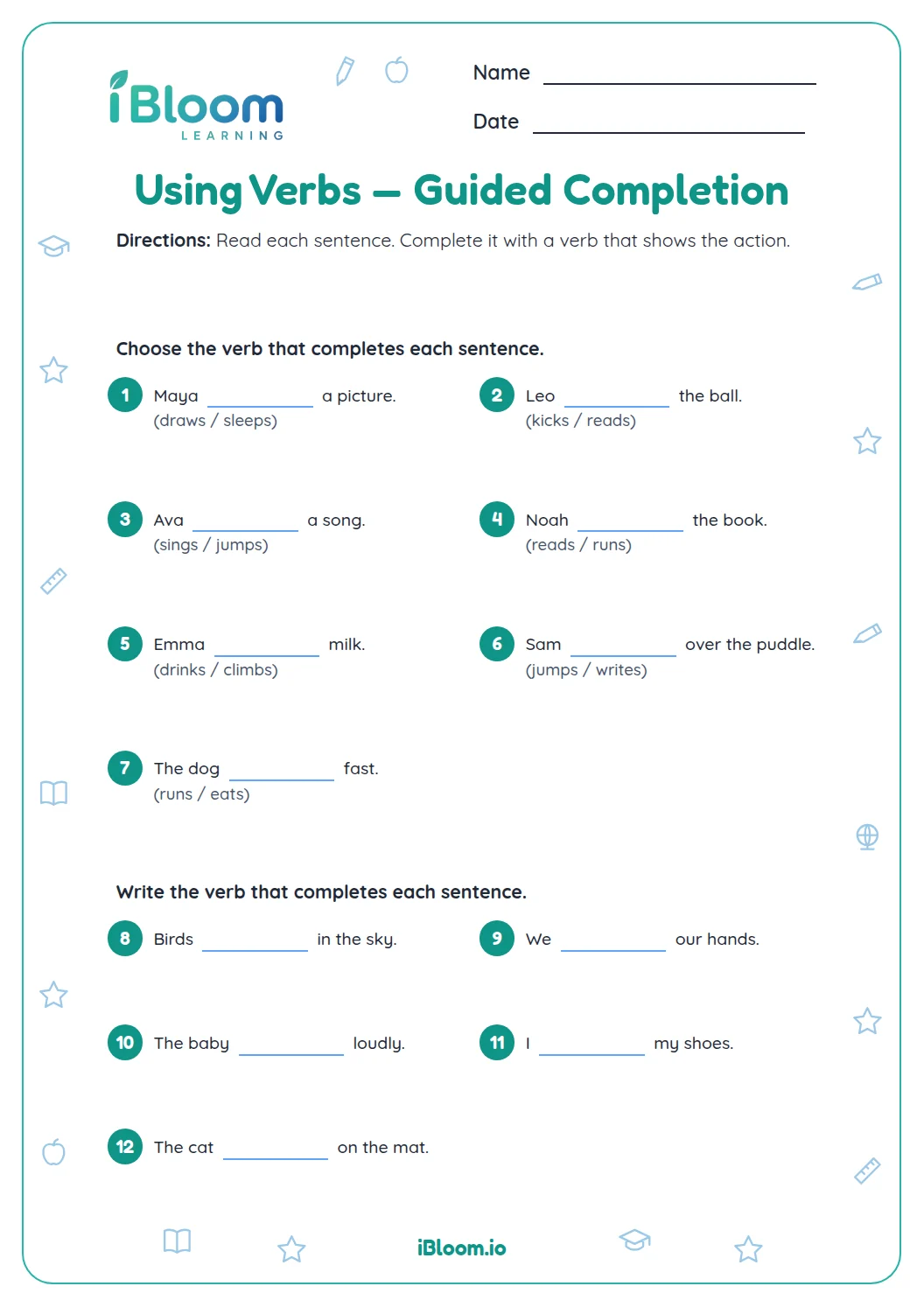
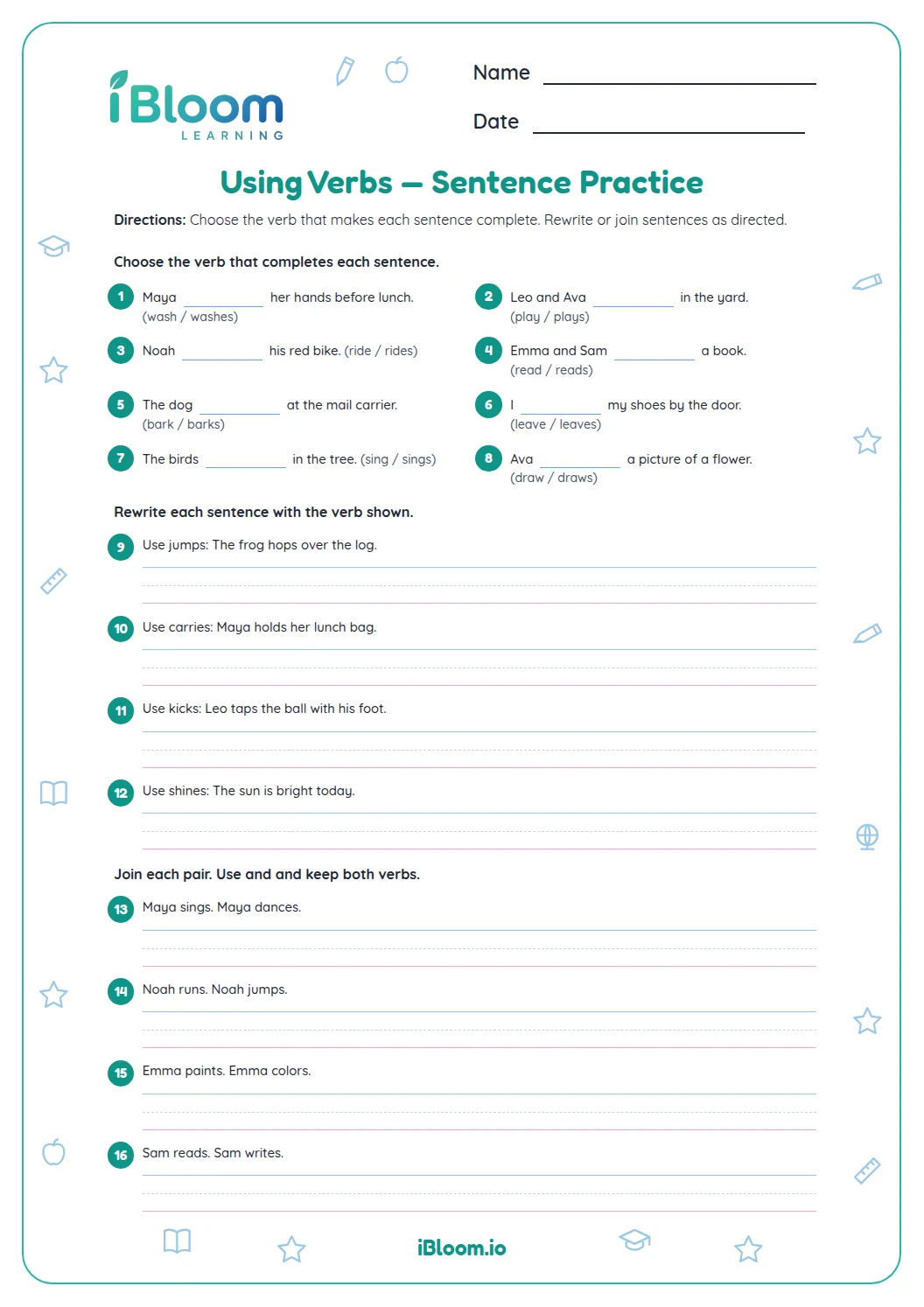
This Grade 1 worksheet practices verbs in short, familiar sentences. Children identify action words, choose verbs from options, correct a verb that does not match its subject, and write their own sentences. The editing questions include examples such as “The cat sleep,” where the present-tense verb needs to become sleeps. The answer key gives sample sentences for open responses. The work supports CCSS L.1.1.e by having learners use verbs to convey a sense of present time and choose a verb form that fits its subject.
Aligned to L.1.1.e
What does this worksheet practice?
Identify, edit, and use verbs. Children identify action words, choose verbs from options, correct a verb that does not match its subject, and write their own sentences
How can a learner solve one question?
Use the question as a model, then check each step against the words, numbers, or clues in the prompt.
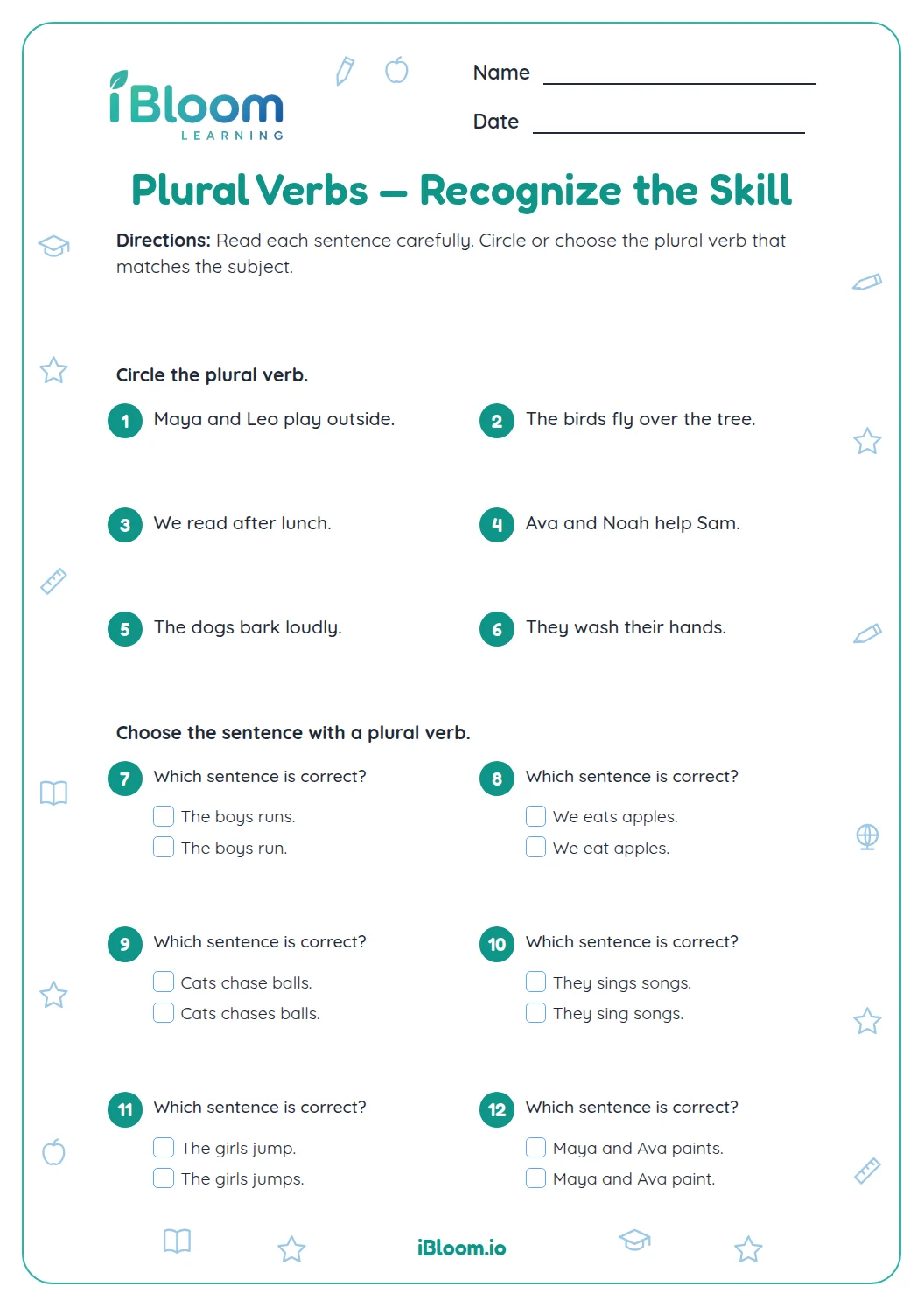
- 1The boys runs. → The boys run.
- 2Boys is a plural subject.
- 3Use run so the verb matches the subject.
How should an adult use the answer key?
Check the answer after the learner completes a part. For open responses, accept a different answer when it is clear and uses the target skill.
How to use this worksheet
- 1Read the instructions and the first part heading.
- 2Complete each question in order, showing a step when useful.
- 3Reread the prompt before choosing or writing an answer.
- 4Use the answer key after finishing a part.
- 5Review a missed answer by explaining the word, value, or clue that supports the correction.
Common mistakes and quick fixes
The mistake
Rereading only part of the prompt
The fix
Read the complete sentence or expression before responding.
The mistake
Using a familiar answer without checking the target skill
The fix
Point to the specific word, number, or clue that supports the answer.
The mistake
Leaving a question blank
The fix
Return to the question and write one clear answer before checking the key.
Common Core alignment
This worksheet practices the listed Common Core skill.
Use verb forms to show when an action happens.
On this sheet: Questions use present, past, and future verbs in sentences.
Show the official wordingHide the official wording
Use verbs to convey a sense of past, present, and future (e.g., Yesterday I walked home; Today I walk home; Tomorrow I will walk home).
What to practice next
Make more practice
Further reading
Questions parents and teachers ask
What is a verb?
A verb tells what someone or something does, or what happens. In “Birds chirp at dawn,” chirp is the verb because it names the birds’ action. Other action words can also work when they fit the subject and the sentence.
What does it mean for a verb to match its subject?
The verb form should work with the subject. For example, “The cat sleeps” uses sleeps with one cat, while “The boys run” uses run with more than one boy. Read the subject and verb aloud together to hear whether the sentence sounds right.
Does the worksheet include sentence editing?
Yes. Learners correct examples such as “The cat sleep” and “We walks to school.” The answer key shows “The cat sleeps” and “We walk to school,” keeping each sentence’s meaning. The questions keep the original idea while changing the verb form.
Can my child write a different answer from the key?
Yes. The last questions allow original sentences, so the key provides a sample rather than the only acceptable wording. Check that the given verb is used as a verb and that the sentence is complete. The supplied verb should keep its requested form in the learner’s sentence.
How does the worksheet connect to verb tense?
Several sentences use present or past forms, such as chirp, sleeps, and barked. The editing tasks focus on choosing a form that works in the sentence; the listed standard also describes using verbs to convey past, present, and future time.