





About this worksheet
This free printable worksheet is for Grade 1 learners practicing action verbs. It includes 14 questions in 3 parts, with an answer key. Children practice the skill through the specific questions and examples printed on the sheet.
Aligned to L.1.1.e
What is on this action verbs page?
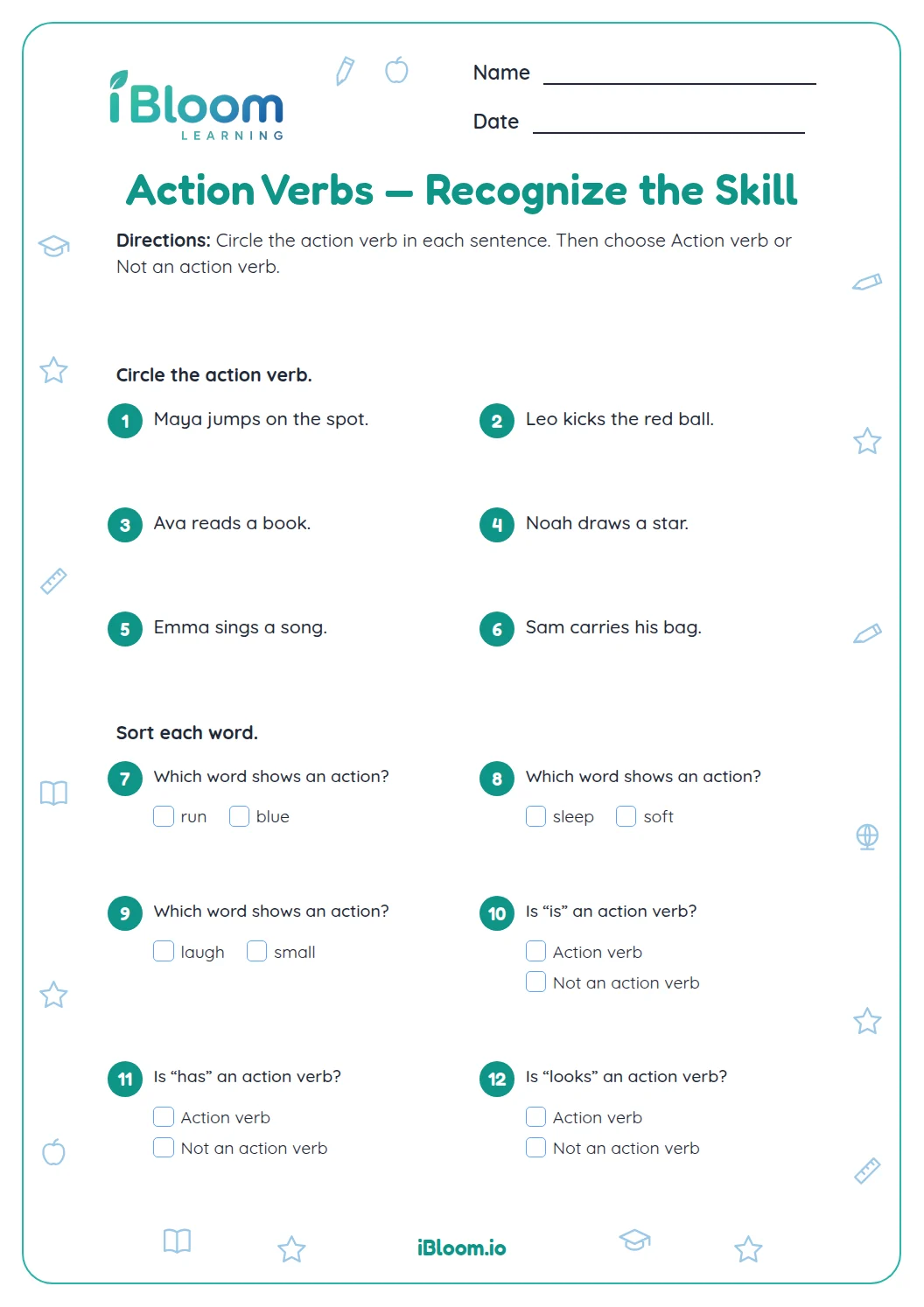
Children complete sentences with action verbs, then find the action word in a full sentence. The answer key includes each word or a model response.
The worksheet has 14 questions; the answer key follows the practice pages.
- Part A: Complete the Sentence
- Part B: Find the Action Word
- Part C: Choose a Verb
- Answer key included.
How should a child approach the questions?
This page practices choosing and identifying action verbs in simple Grade 1 sentences. Children use a word that names an action to complete each sentence, then find the action word in a complete sentence. An adult can point to the clue with the child before choosing an answer.
Have the child ask, “What is the person, animal, or thing doing?” The word that answers that question is the action verb; then reread the sentence to check that it sounds complete. An adult can point to the clue with the child before choosing an answer.
- 1The baby ___ in the crib.
- 2Key answer: sleeps
How can an adult support this practice?
Have the child ask, “What is the person, animal, or thing doing?” The word that answers that question is the action verb; then reread the sentence to check that it sounds complete. An adult can point to the clue with the child before choosing an answer.
Use the separate answer key to check the selected verb or the word named in each sentence. For an original response, compare the child’s word with the sentence to see whether it names an action and makes sense. An adult can point to the clue with the child before choosing an answer.
How to use this worksheet
- 1Read the direction at the start of each part.
- 2Answer each question using its wording and choices.
- 3Reread the completed response to check that it fits.
- 4Use the answer key to check the work and discuss an answer that needs another look.
Common mistakes and quick fixes
The mistake
Answering before reading the whole prompt.
The fix
Read the complete sentence or situation, then choose a response that fits.
The mistake
Confusing a word or digit with its role in the question.
The fix
Check the clue named in the prompt before answering.
The mistake
Skipping a final check.
The fix
Reread the response and compare it with the answer key.
Curriculum alignment
Children use verbs to complete sentences and identify action words.
On this sheet: Children use verbs to complete sentences and identify action words.
Show the official wordingHide the official wording
Use verbs to convey a sense of past, present, and future.
What to practice next
Make more practice
Further reading
Questions parents and teachers ask
What does this action verbs page practice?
Children choose verbs that complete simple sentences, find the action word in full sentences, and complete two more sentence frames. An action verb tells what a person, animal, or thing does. The sentence context helps children decide which action makes sense.
How many questions are included?
There are 14 questions in three parts: eight sentence choices, four action-word identification items, and two more sentence choices. Each item has one intended action word. The answer key identifies the intended verb in each item. Each section uses a different way to notice or choose an action verb.
How can I help a child find the verb?
Ask what the person, animal, or thing is doing. The word that names that action is the verb; reread the whole sentence to check that the word fits and the sentence sounds complete. Say the subject and action together to hear the complete thought.
How should I use the answer key?
Use the key to check the selected verb or the action word identified in a sentence. For the choice items, read both options in the full sentence and notice which one names an action and makes sense. The choices contrast an action word with a word that does not name an action.
Can a child complete this worksheet independently?
A child can try the items after hearing the directions. Reading a sentence aloud can help the child hear whether a word names an action, such as running, reading, or swimming. Start with an action the child can act out or describe.
What could we practice next?
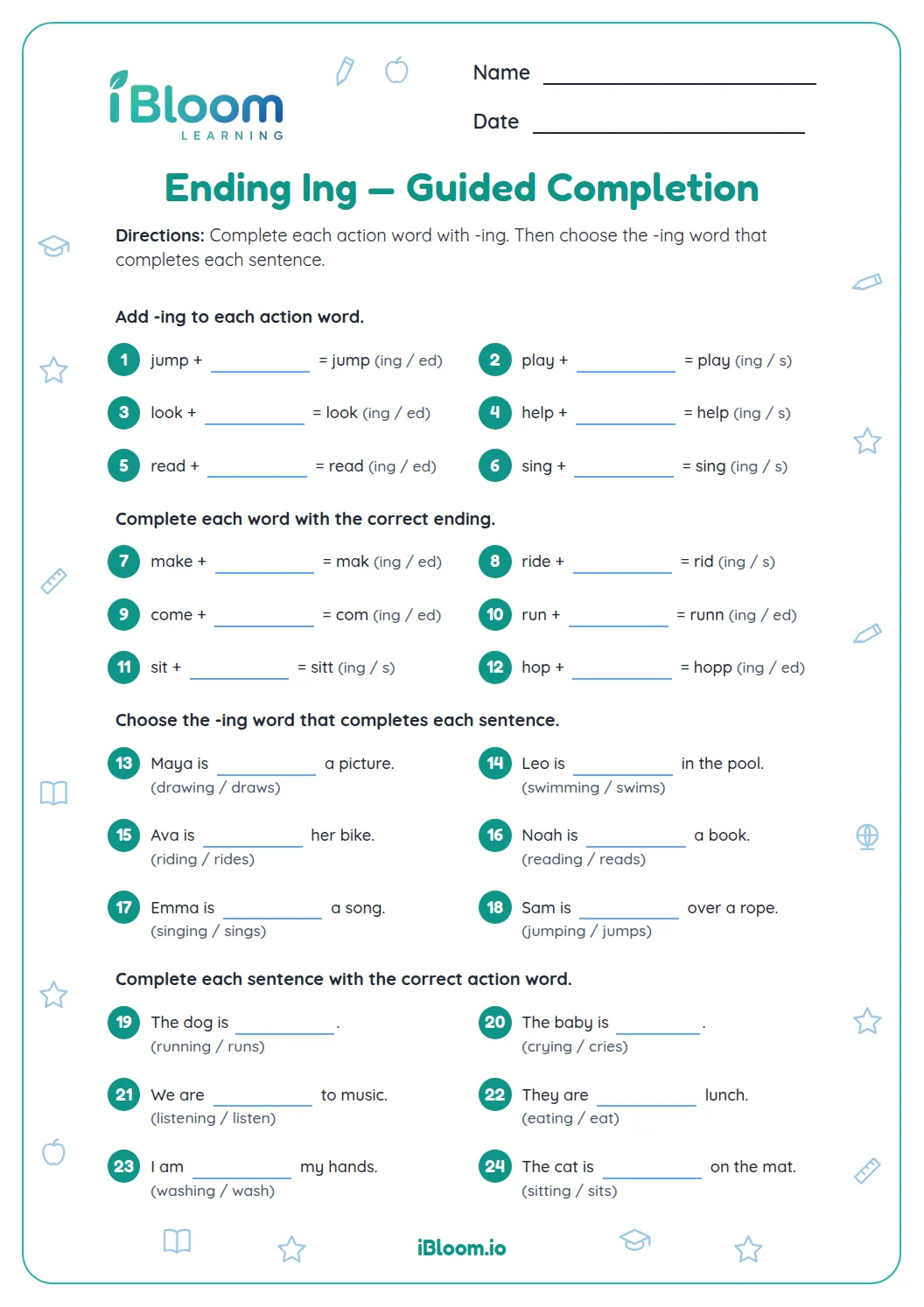
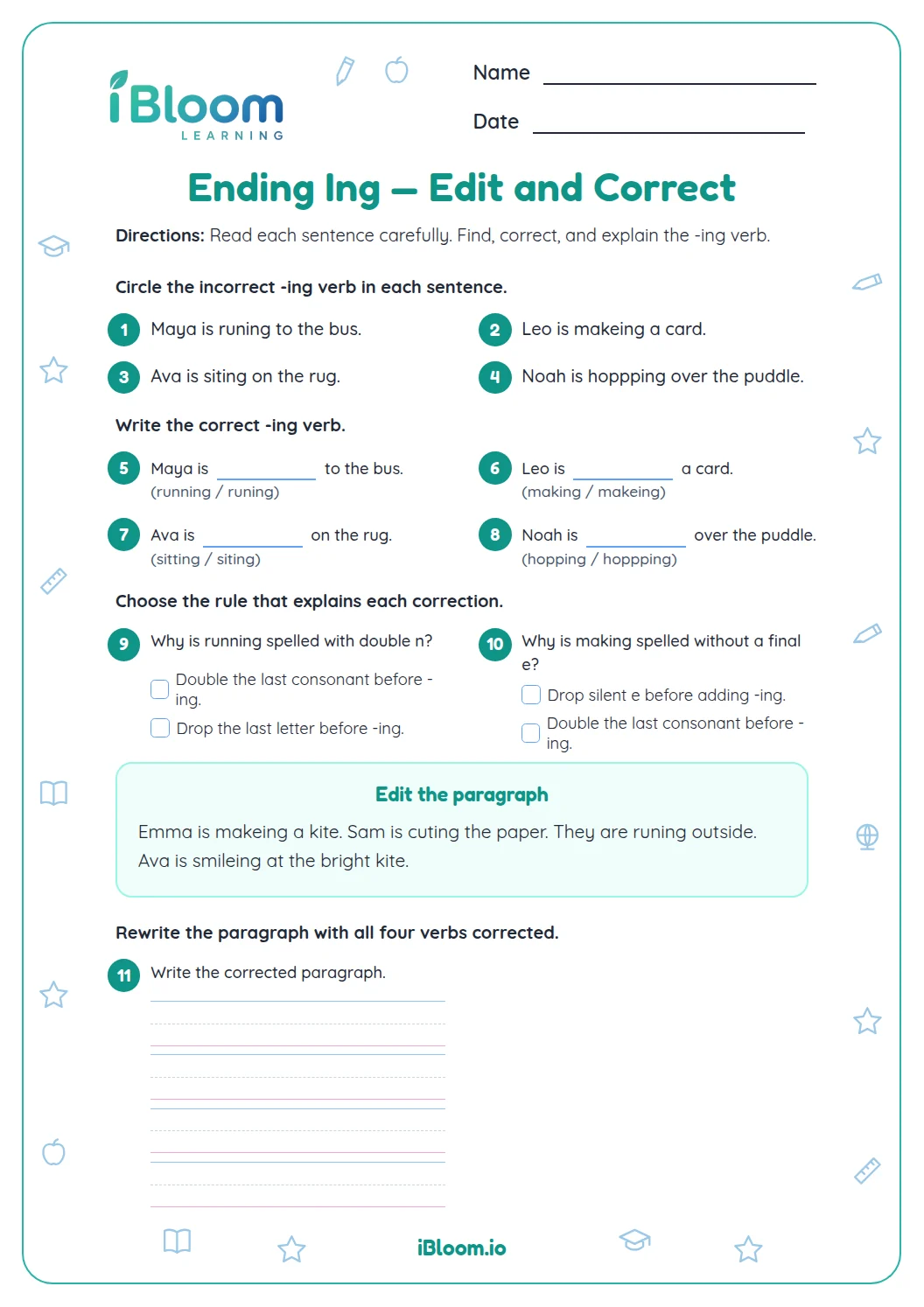
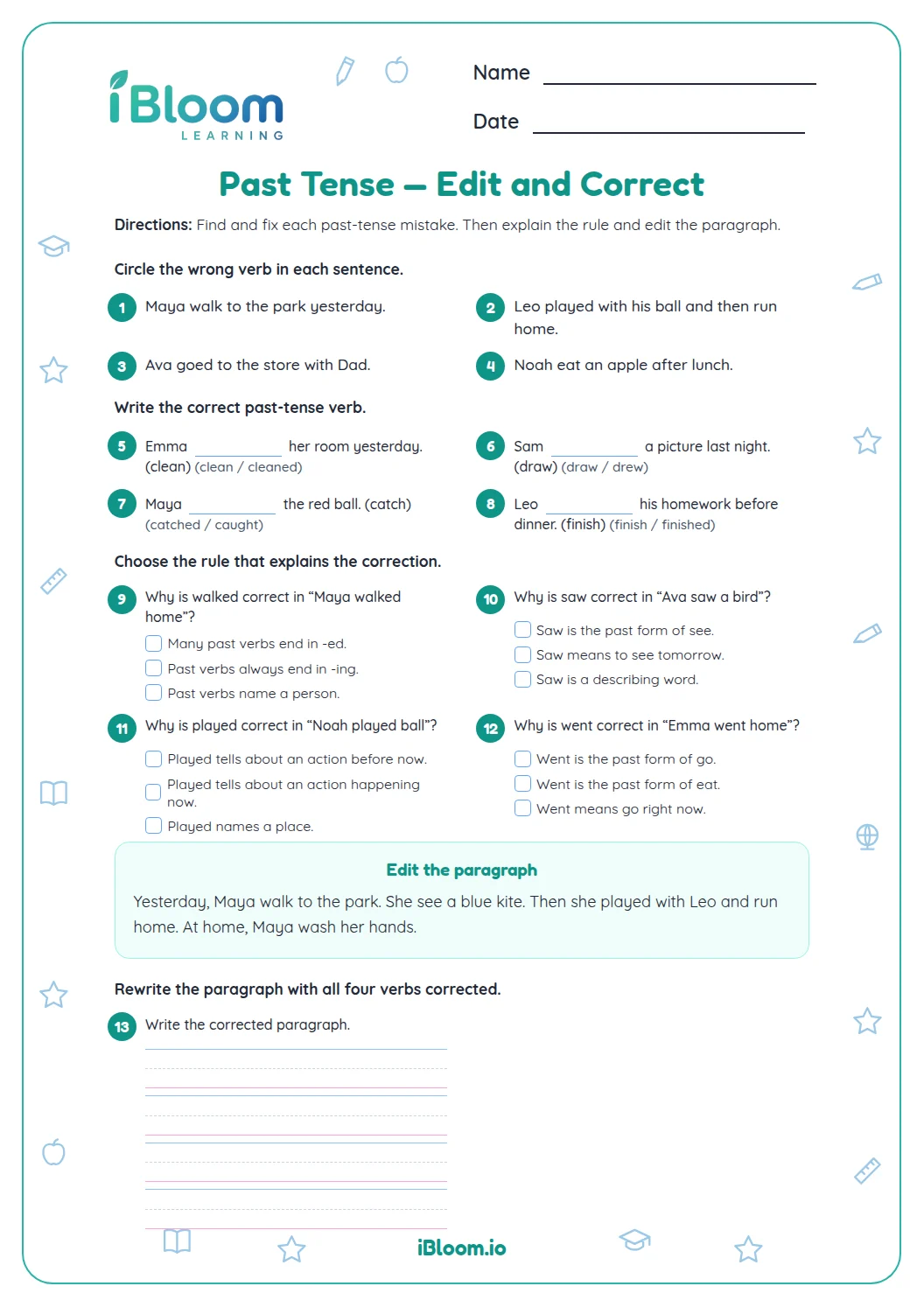
The related pages on using verbs, past tense, and verbs ending in -ing build on recognizing action words. Invite the child to use a verb in a new sentence and say when the action happens. These related skills extend practice with verbs in complete sentences.