






About this worksheet
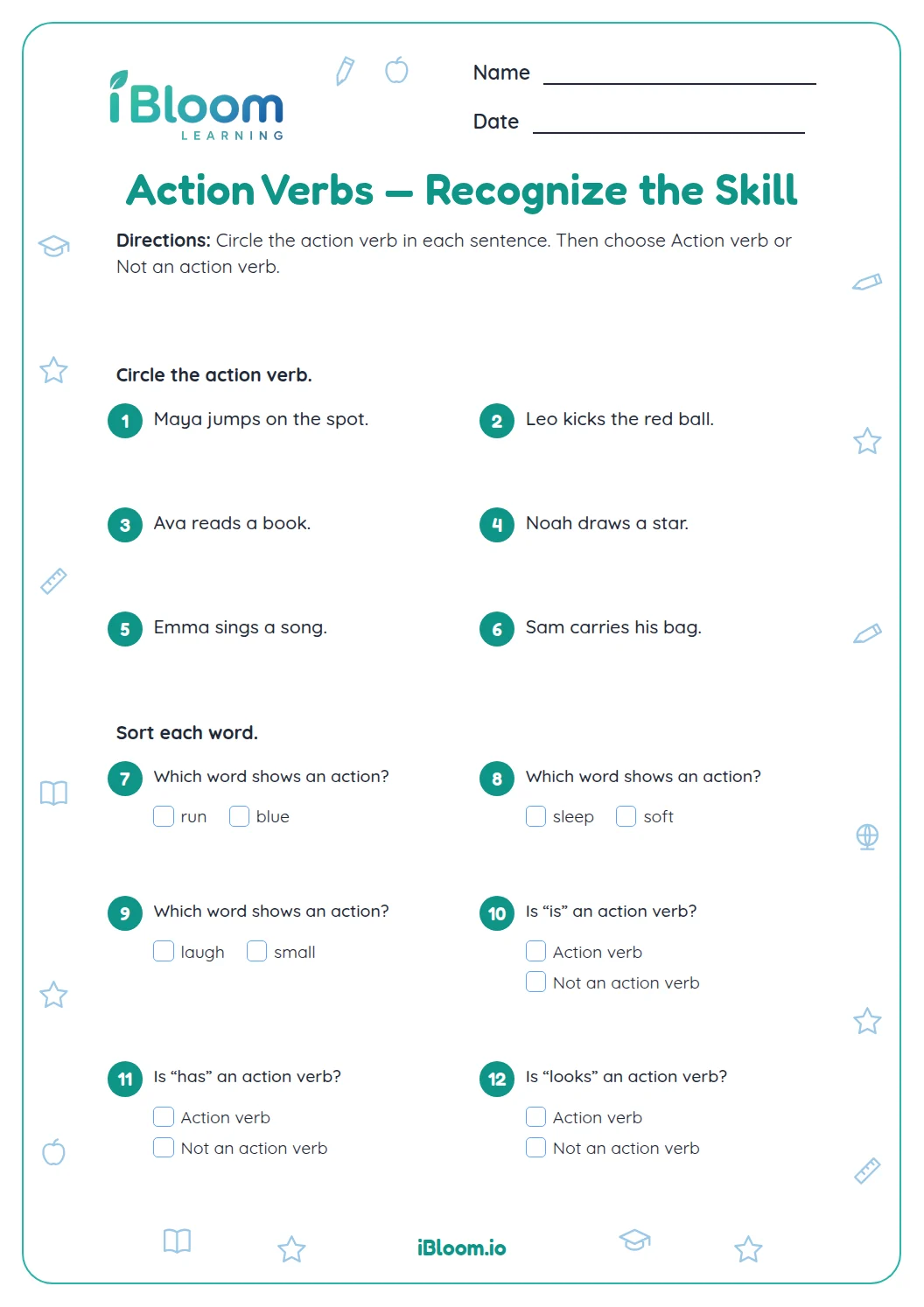
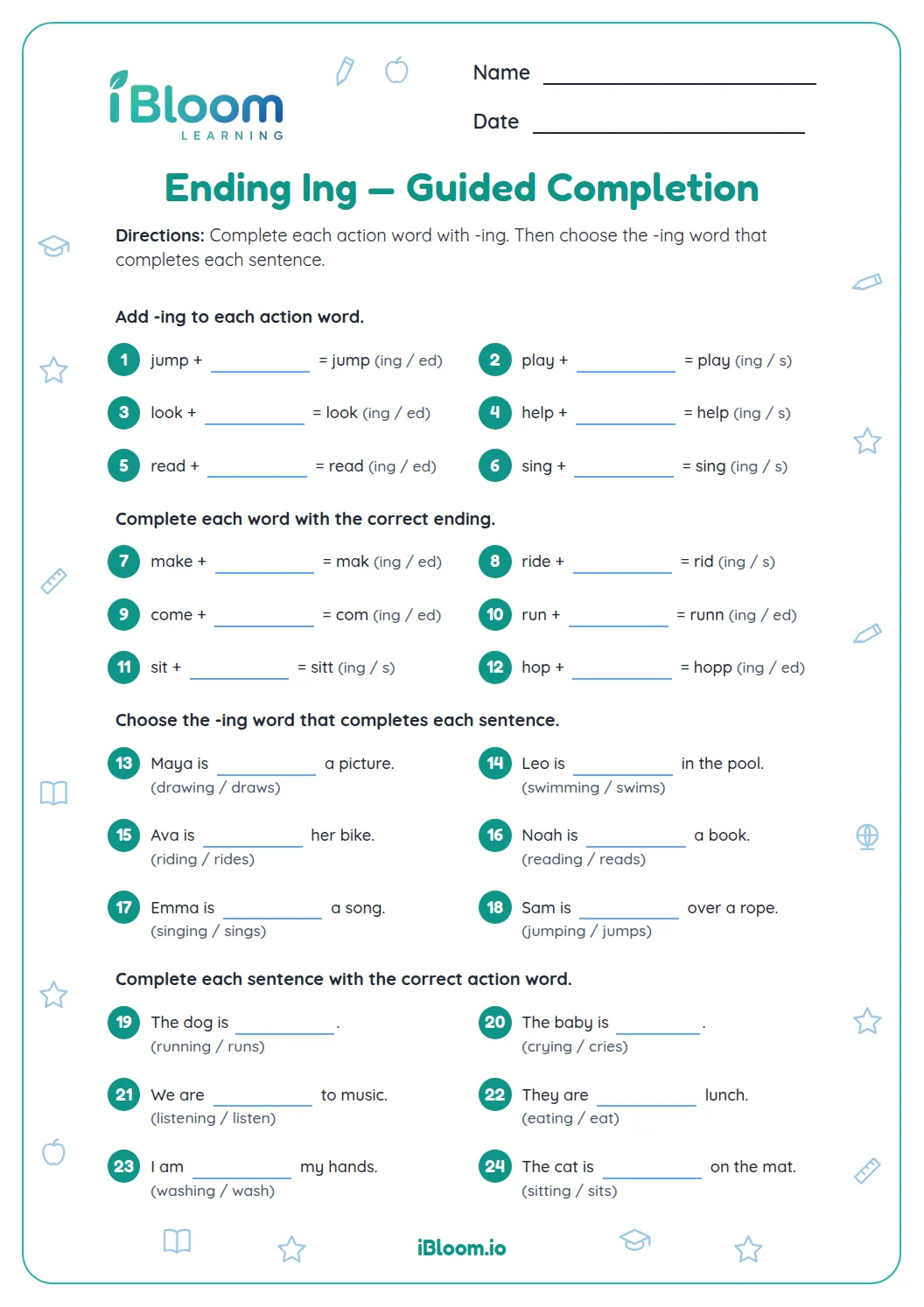
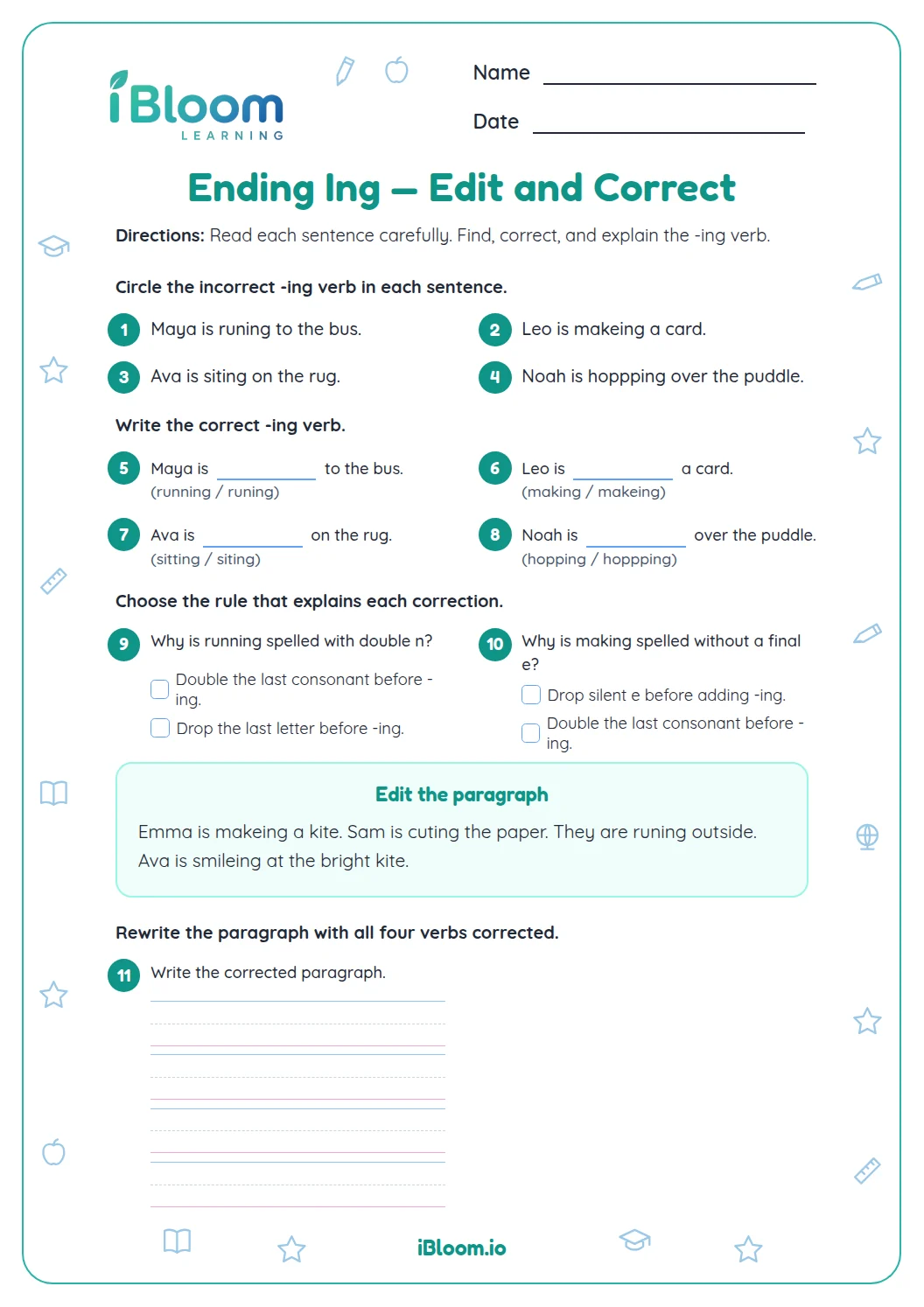
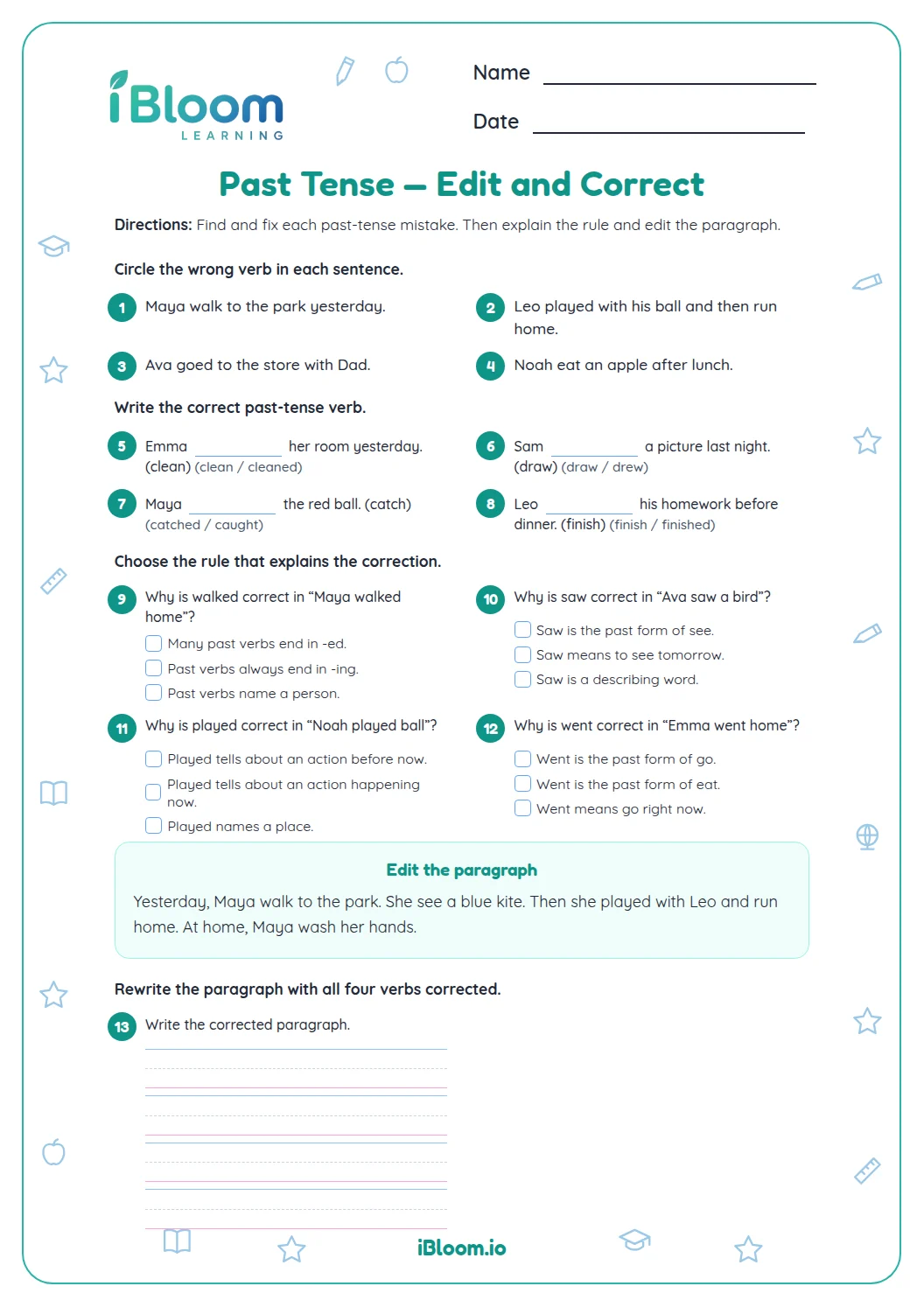
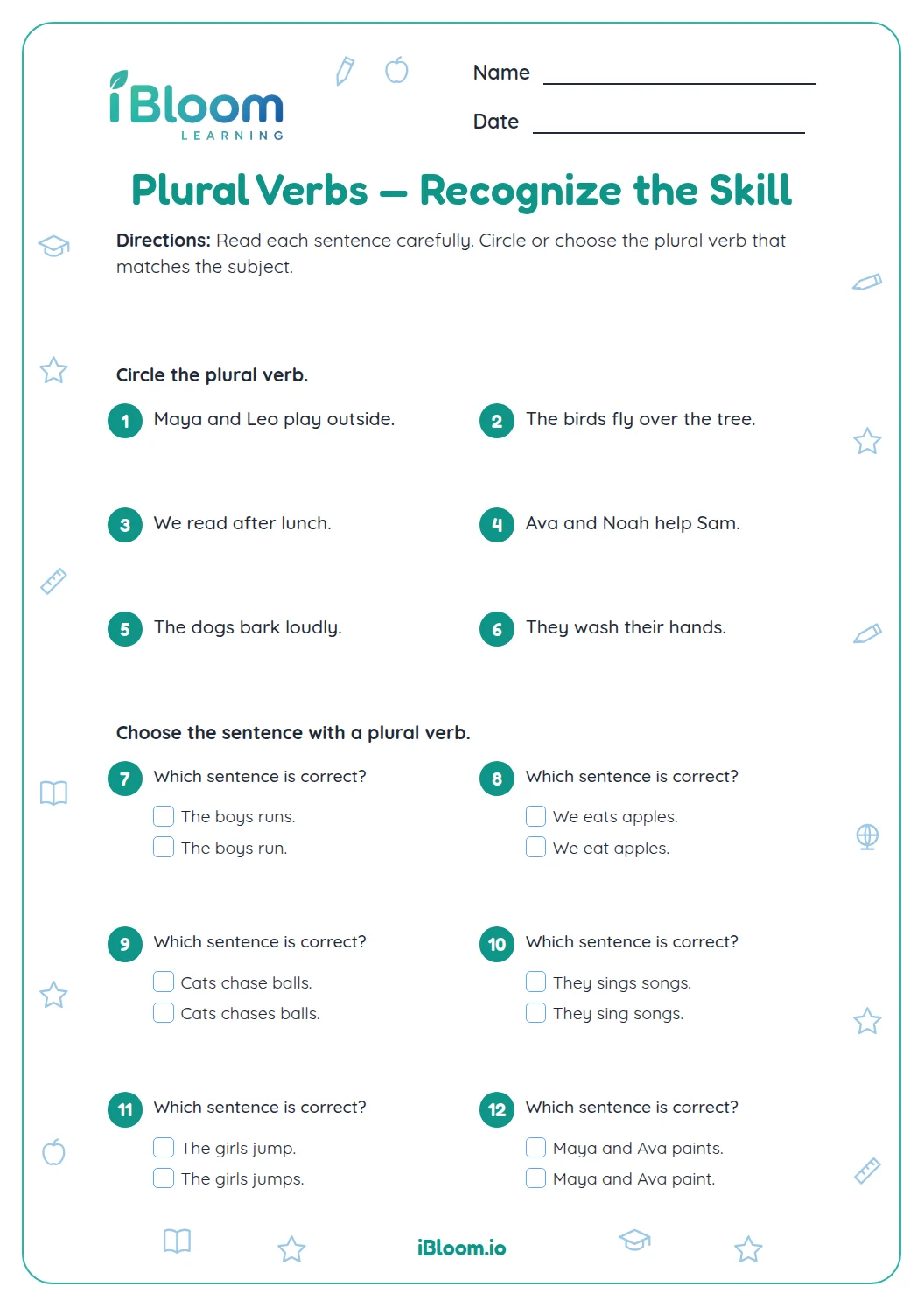
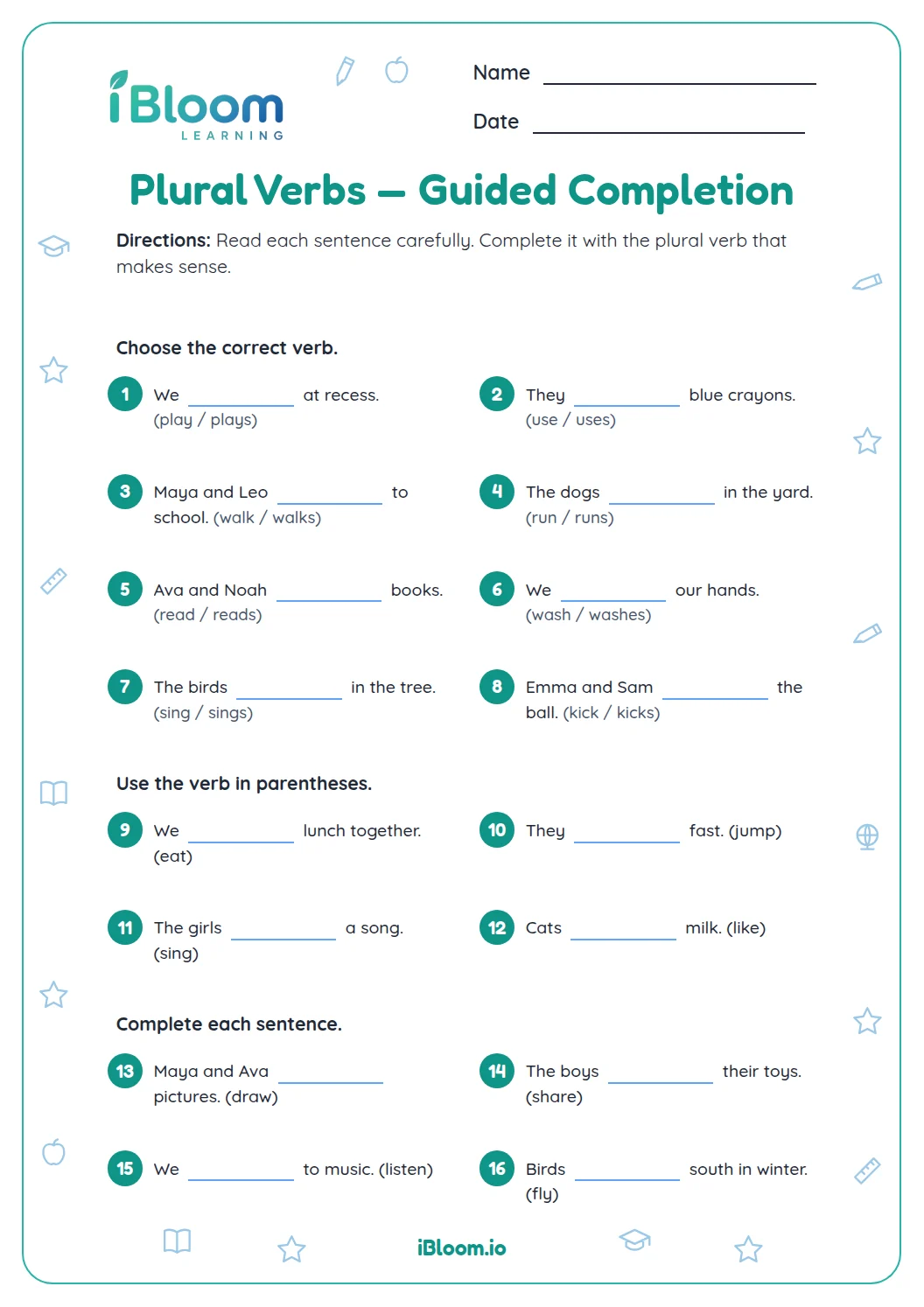
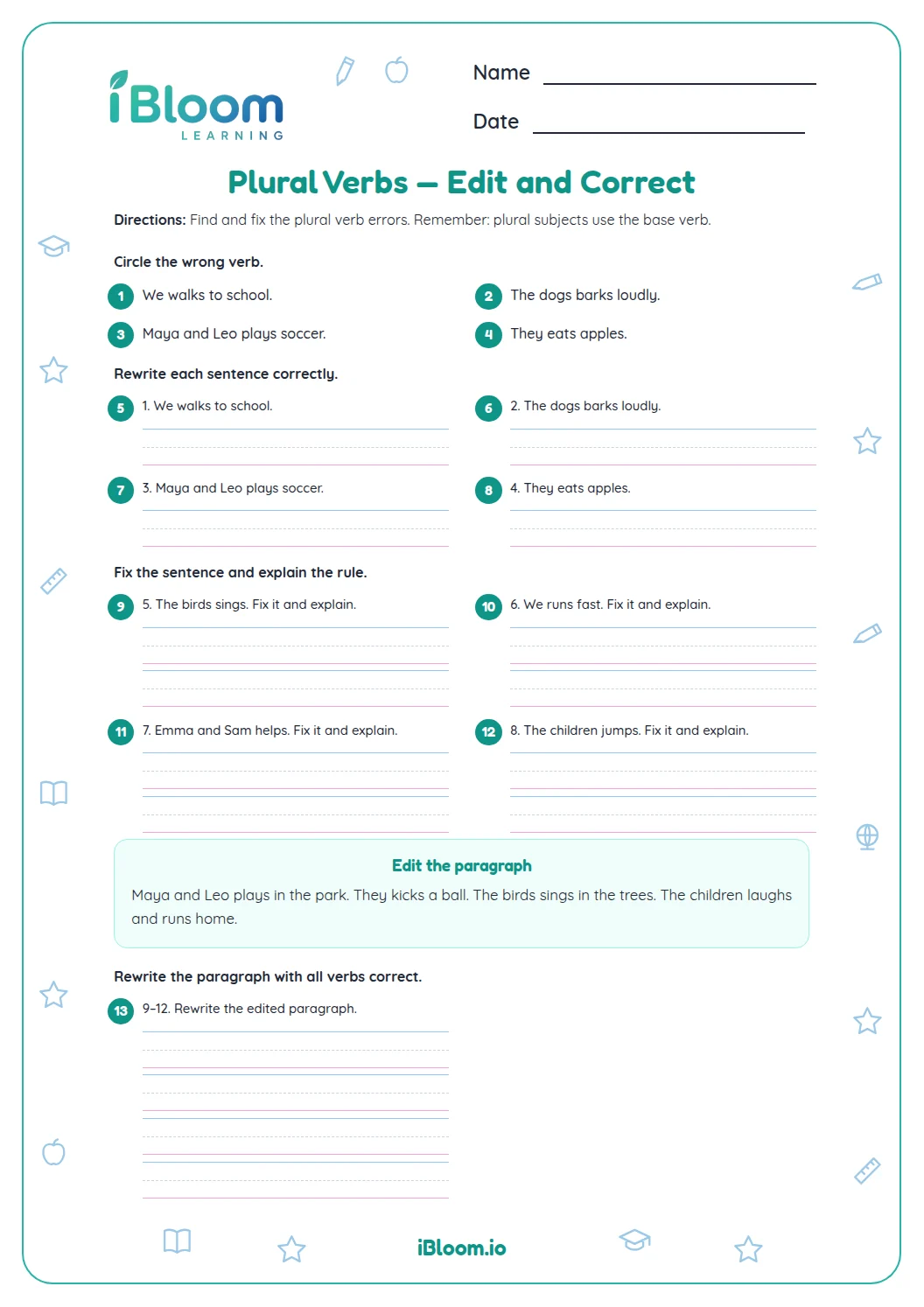
This Grade 1 printable helps children recognize action verbs and use them in simple sentences. They identify verbs in short examples, choose an action word that completes a sentence, compare sentence meaning, and write their own examples. The 15 questions fill two worksheet pages, and a separate two-page answer key supplies target choices and sample writing. The sentence-writing practice aligns with CCSS L.1.1.j.
Aligned to L.1.1.j
Which action verb tasks are on the page?
Part A asks students to spot an action word or choose one that completes a sentence. Part B continues with verbs in sentences and asks which sentence expresses an action or gives a clearer action. Part C asks students to write a verb and a sentence of their own.
Questions 14 and 15 are open responses. The answer key shows examples, and other clear sentences with an action verb are acceptable.
How can you find the action word?
Read the sentence and ask what the subject does. The action word often appears after the person or thing doing it.
- 1Question 1: Action word: The dog runs fast.
- 2What does the dog do? It runs.
- 3Answer: runs
How do you choose a verb that fits?
Try the choices in the sentence and read it aloud. In “Mia ___ a picture,” draws names an action that makes sense with picture. Words such as blue or paper do not tell what Mia does.
What makes a sentence answer complete?
A complete response names who or what acts and includes an action verb. “The puppy chases a ball” is a complete sentence; “chases” is its action verb.
How to use this worksheet
- 1Read the whole sentence before choosing a word.
- 2Ask what the person, animal, or thing does.
- 3Try each choice in context and keep the action word that makes sense.
- 4When comparing sentences, notice whether the verb tells a clear action.
- 5For a writing prompt, include a subject and an action verb in a complete sentence.
Common mistakes and quick fixes
The mistake
Choosing a naming word instead of an action word.
The fix
Ask what the subject does; the answer is the verb.
The mistake
Picking a verb that does not fit the rest of the sentence.
The fix
Read the completed sentence aloud and check that it makes sense.
The mistake
Writing only a verb when the prompt asks for a sentence.
The fix
Add who or what does the action and finish the thought.
Curriculum alignment
This page practices find and use action verbs through grade-appropriate examples.
Use simple sentences to show an action clearly.
On this sheet: Students identify verbs in complete sentences and write simple sentences using an action verb.
Show the official wordingHide the official wording
Produce and expand complete simple and compound declarative, interrogative, imperative, and exclamatory sentences in response to prompts.
What to practice next
Make more practice
Further reading
Questions parents and teachers ask
How many action verb questions are there?
There are 15 questions in three parts across two worksheet pages. Children find verbs, choose a verb that fits a sentence, and write their own examples. A separate two-page answer key includes answers and sample sentences. This gives children a concrete chance to practice the idea and explain their choices.
What is an action verb?
An action verb tells what someone or something does, such as runs, draws, or opens. On this sheet, children use the rest of each sentence to identify or select the action word. This gives children a concrete chance to practice the idea and explain their choices.
Are there multiple correct answers for the writing prompts?
Yes. A sentence can use many different action verbs and still be correct. The key gives sample responses; accept another complete, sensible sentence that includes an action verb. This gives children a concrete chance to practice the idea and explain their choices.
How can I help a child find a verb?
Read the sentence together and ask, “What does the person, animal, or thing do?” Then point to the word that names that action. For a blank, read the sentence again with each answer choice. This gives children a concrete chance to practice the idea and explain their choices.
Which standard does this worksheet practice?
It aligns with CCSS L.1.1.j, which asks students to produce and expand simple and compound sentences in response to prompts. The final writing questions ask children to produce simple sentences with action verbs. This gives children a concrete chance to practice the idea and explain their choices.