



About this worksheet
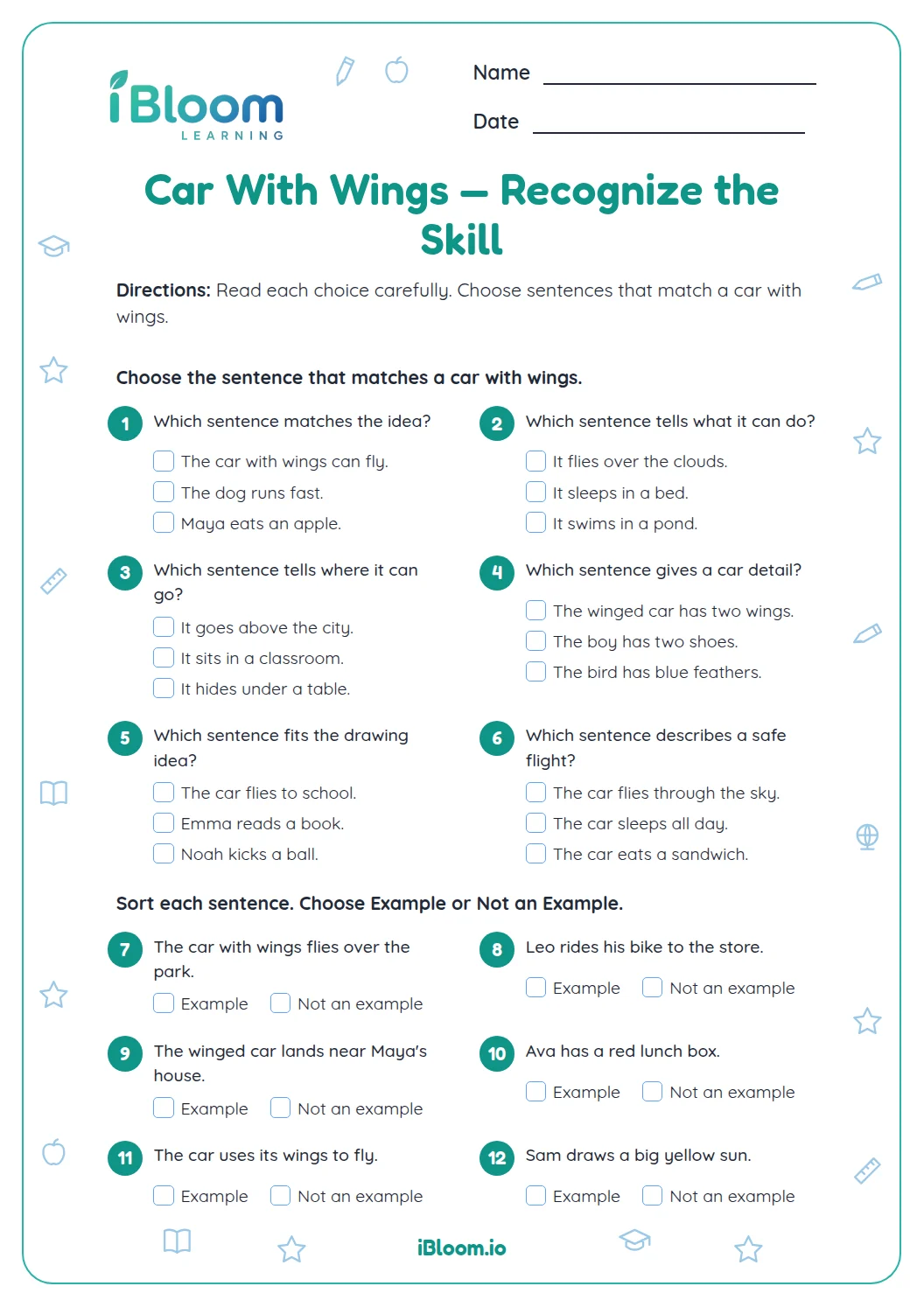
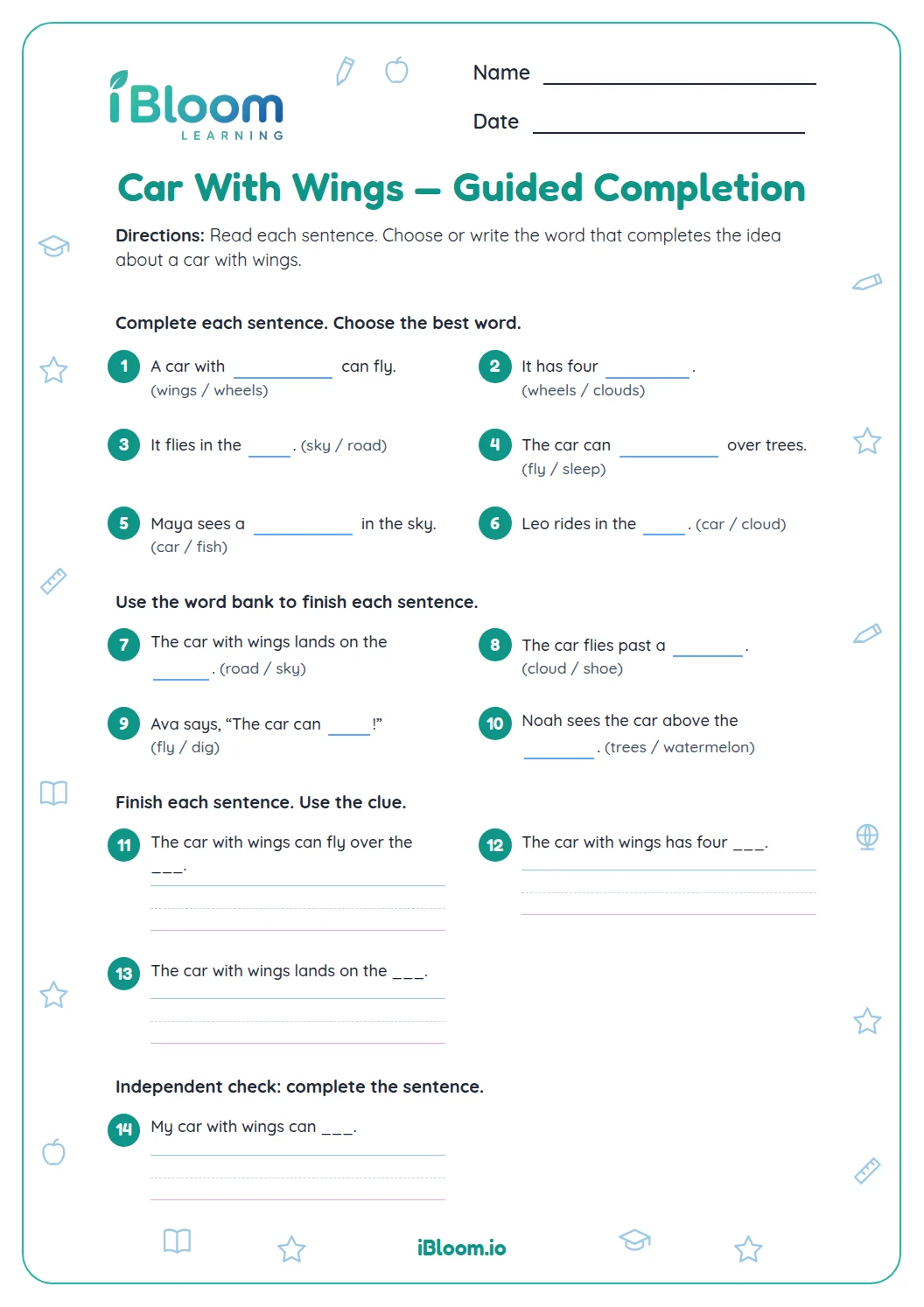
This Grade 1 worksheet starts with a drawing of a car with wings, then gives students guided sentence completions about its trip. Children add details about its route, rider, and landing place before writing two connected sentences. The separate answer key offers sample ideas for the open-ended drawing and final response.
What can students plan in a drawing?
Students draw their flying car, including two wings, and later draw a landing place and something the car sees. The pictures give them details to use in their sentences.
Which writing skills get practice?
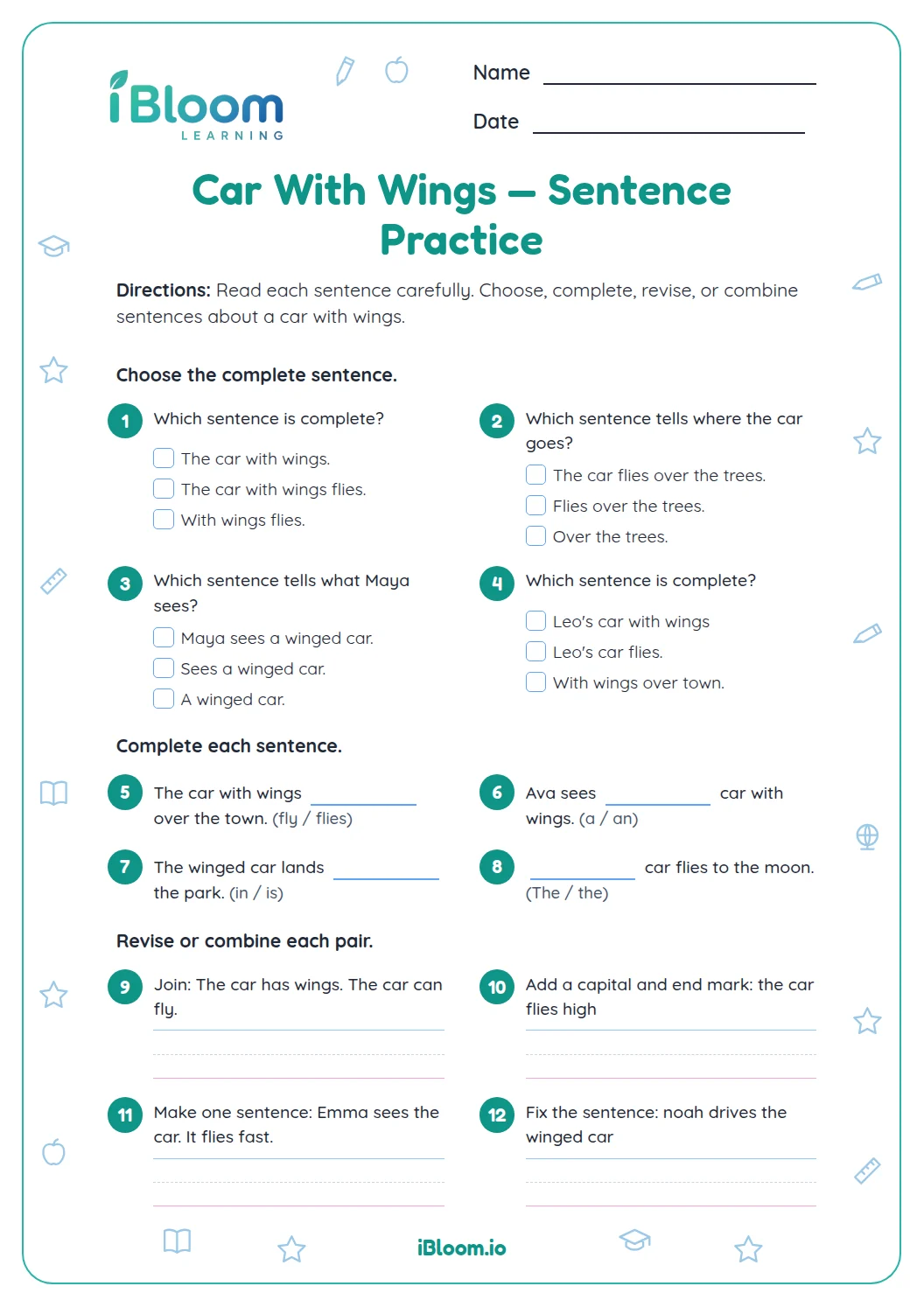
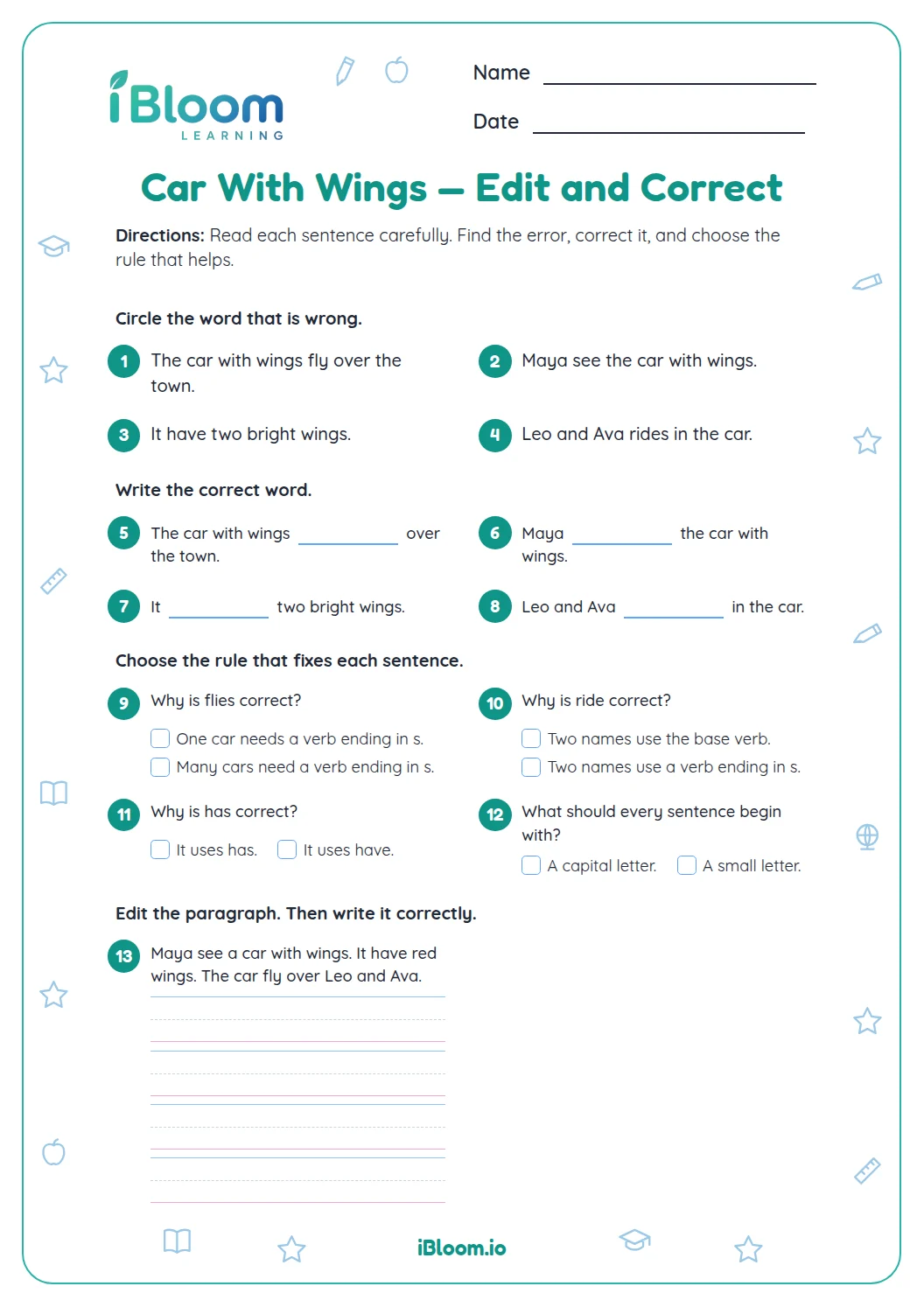
Prompts ask for complete sentences, a describing word, an ending mark, and a short two-sentence trip. The answer key gives sample ideas rather than a single required story.
How can a drawing become a sentence?
After drawing a car above a river, a student might write, “My car flies across the sky.” A detail from the picture helps make the sentence specific.
How to use this worksheet
- 1Draw the car and add two wings.
- 2Write a sentence for each prompt.
- 3Use details from the drawings in your sentences.
- 4Add an ending mark where needed.
- 5Reread the two-sentence trip aloud.
Writing checks
The mistake
Writing a phrase without who or what it is about.
The fix
Name the person or thing in a complete sentence.
The mistake
Forgetting an ending mark.
The fix
Reread the sentence and add a period or exclamation point.
The mistake
Leaving out a detail from the drawing.
The fix
Choose one drawn detail and name it in the sentence.
What to practice next
Make more practice
Questions parents and teachers ask
What will a student draw?
The worksheet asks students to draw a car with two wings, a landing place, and one thing the car sees. These drawings supply ideas for the writing prompts, so students can use details they invented in their sentences. This gives the student a clear way to practice the skill and review the work with an adult or independently.
How many prompts are on the page?
There are 15 prompts across three parts. They mix drawing and writing, including complete sentences about the car’s route, rider, wings, and trip. The separate answer key gives sample ideas for each drawing and written response. This gives the student a clear way to practice the skill and review the work with an adult or independently.
Does every student need the same answer?
No. The prompts invite children to imagine their own flying car and trip. The answer key gives sample responses to show one way to answer; a different response can work if it follows the prompt and forms a sensible sentence.
What writing details does the worksheet practice?
Students practice writing complete sentences, adding a describing word, using an ending mark, and connecting a picture detail with a sentence. The final prompt asks them to write two sentences about one trip and reread the result. This gives the student a clear way to practice the skill and review the work with an adult or independently.
What is included in the answer key?
The separate answer key gives sample drawings and sentences for each prompt. Since the writing is imaginative, students can compare the kind of detail in a sample while keeping their own ideas and checking that they followed each direction. This gives the student a clear way to practice the skill and review the work with an adult or independently.