






About this worksheet
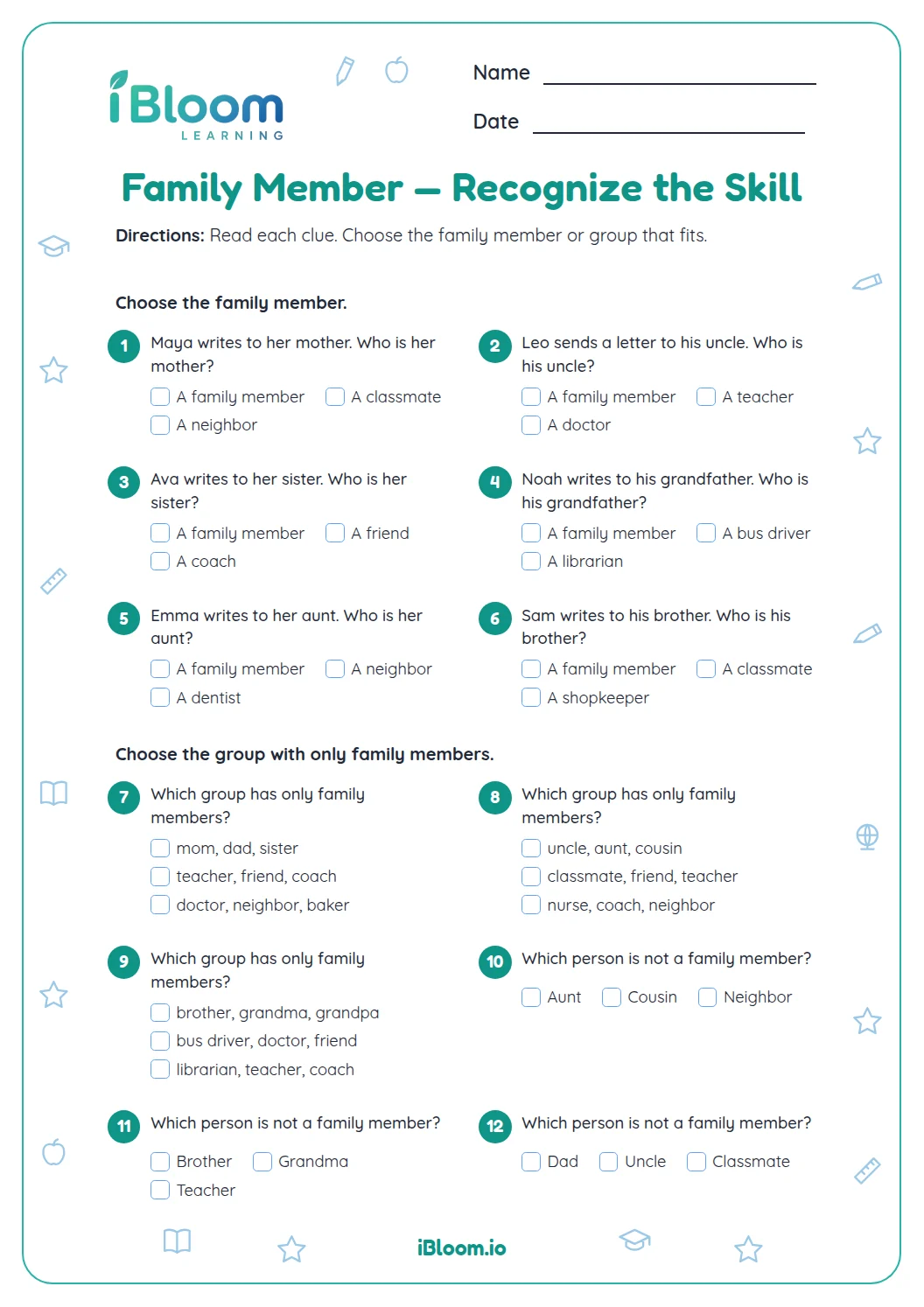
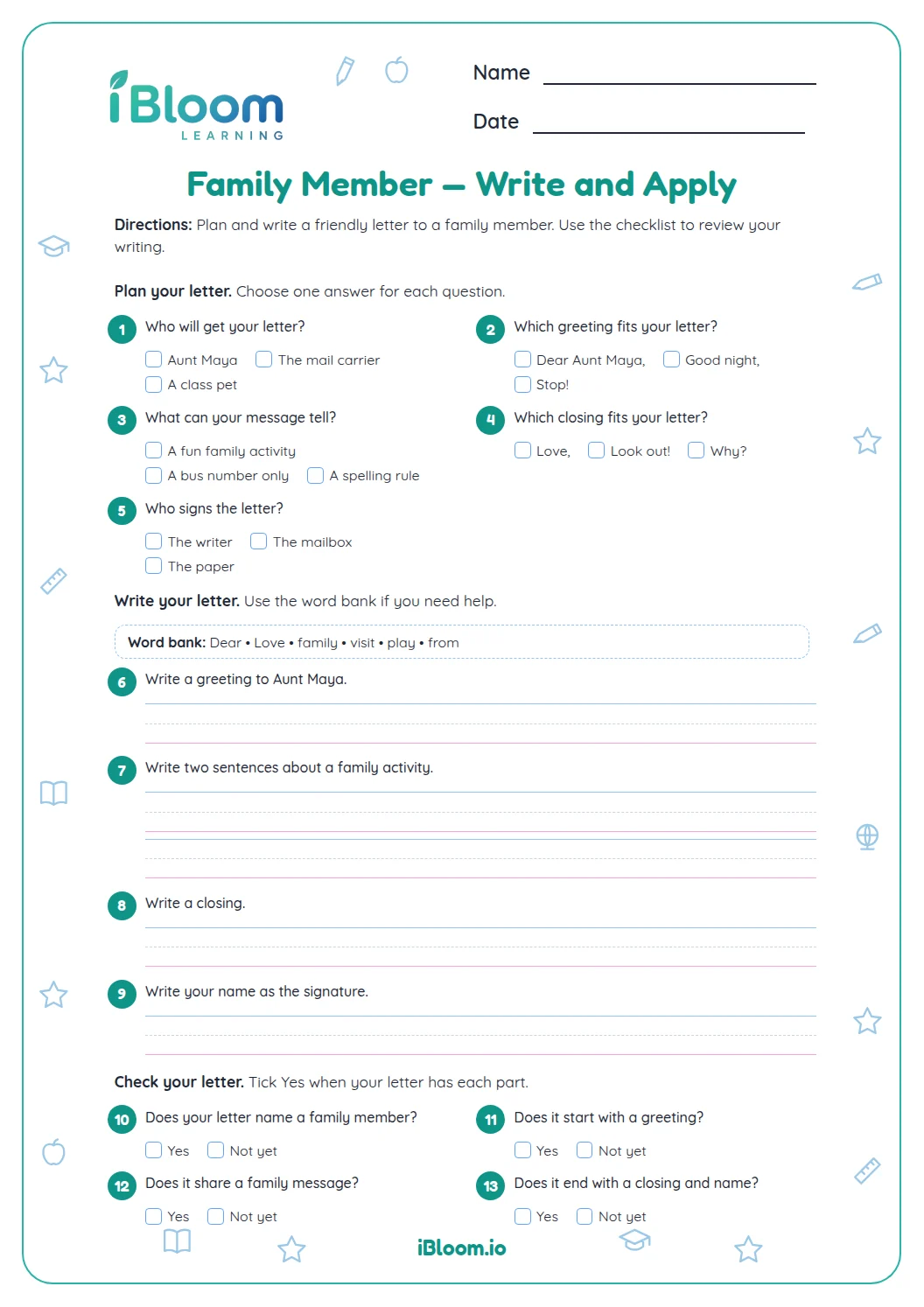
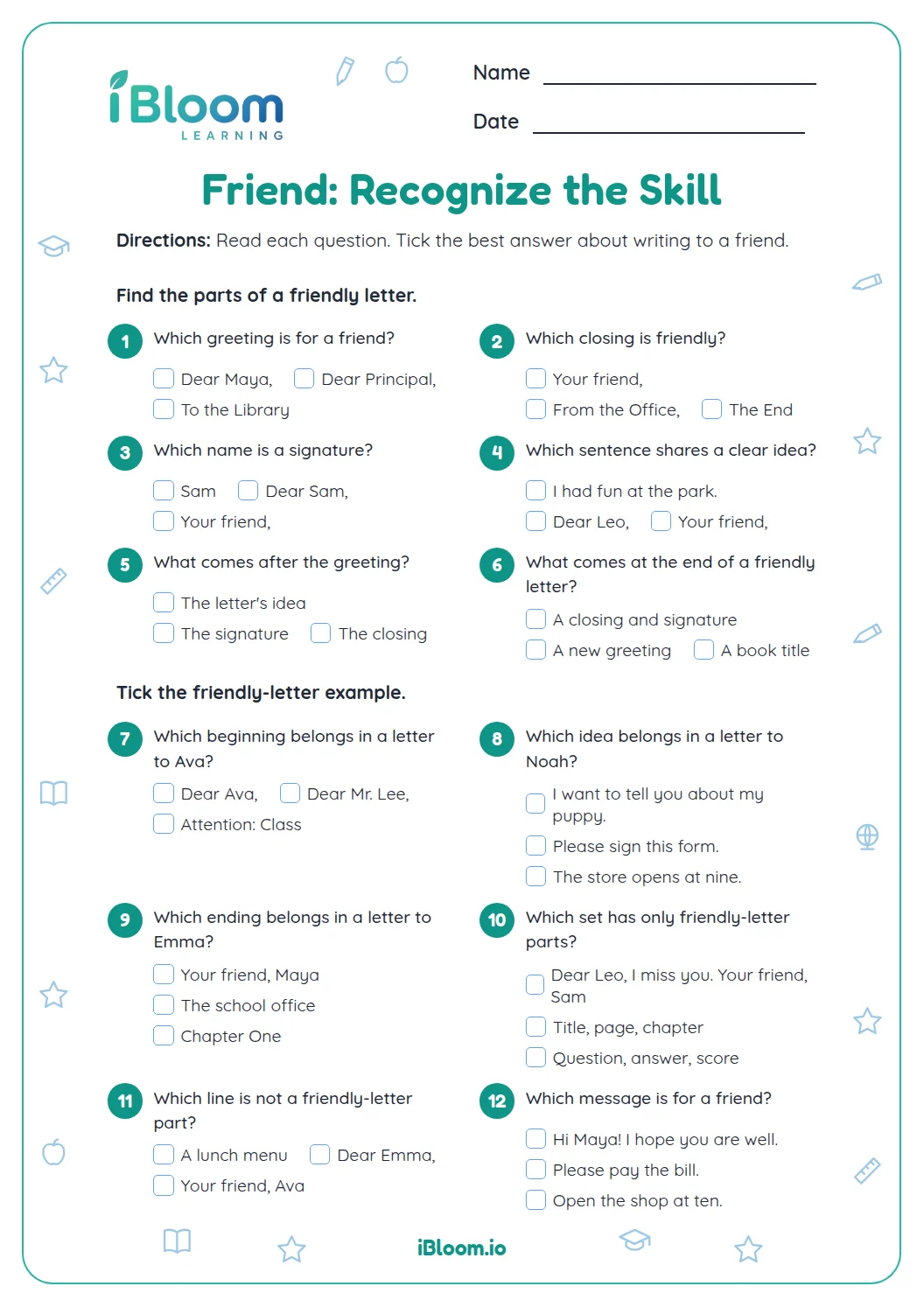
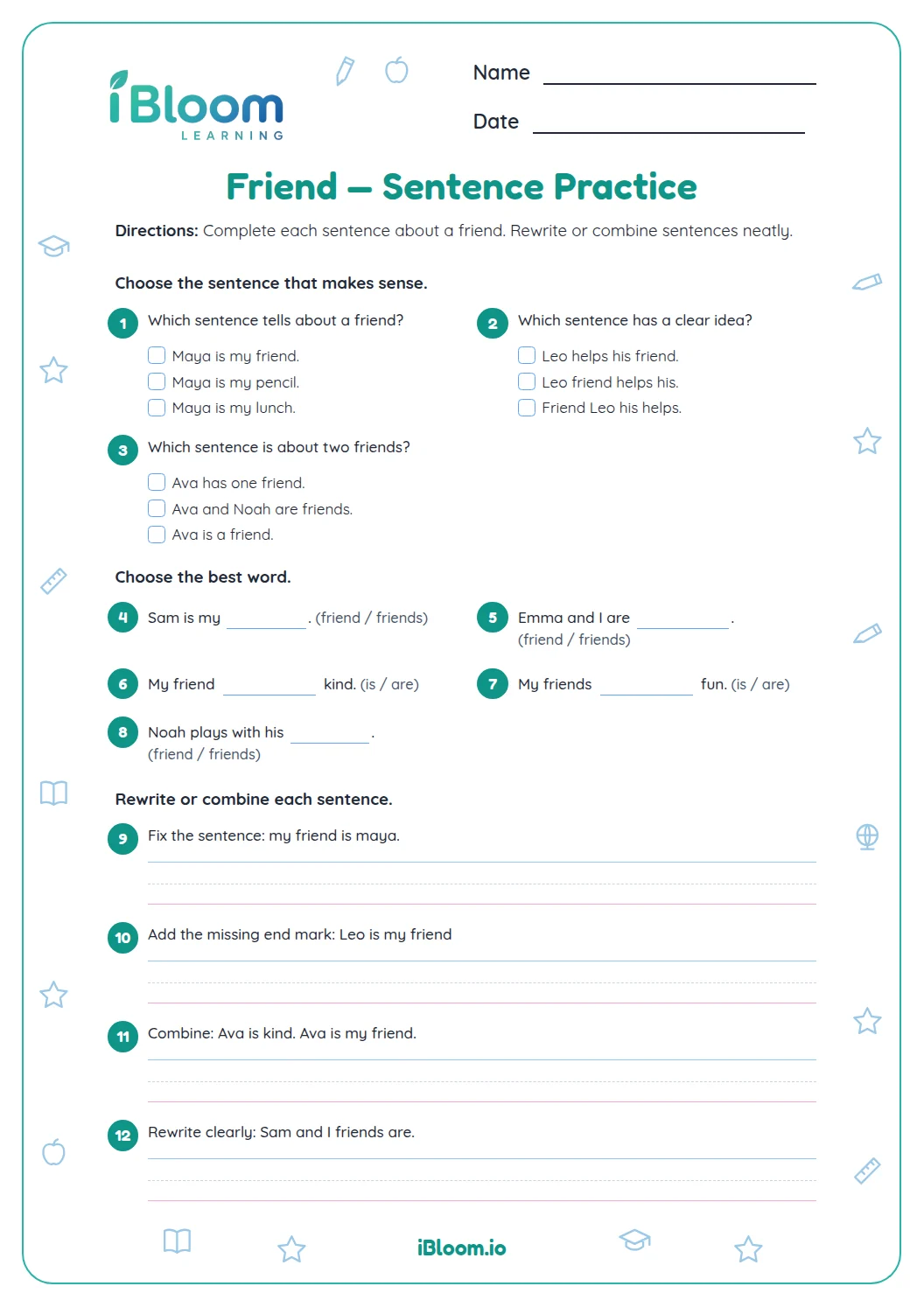
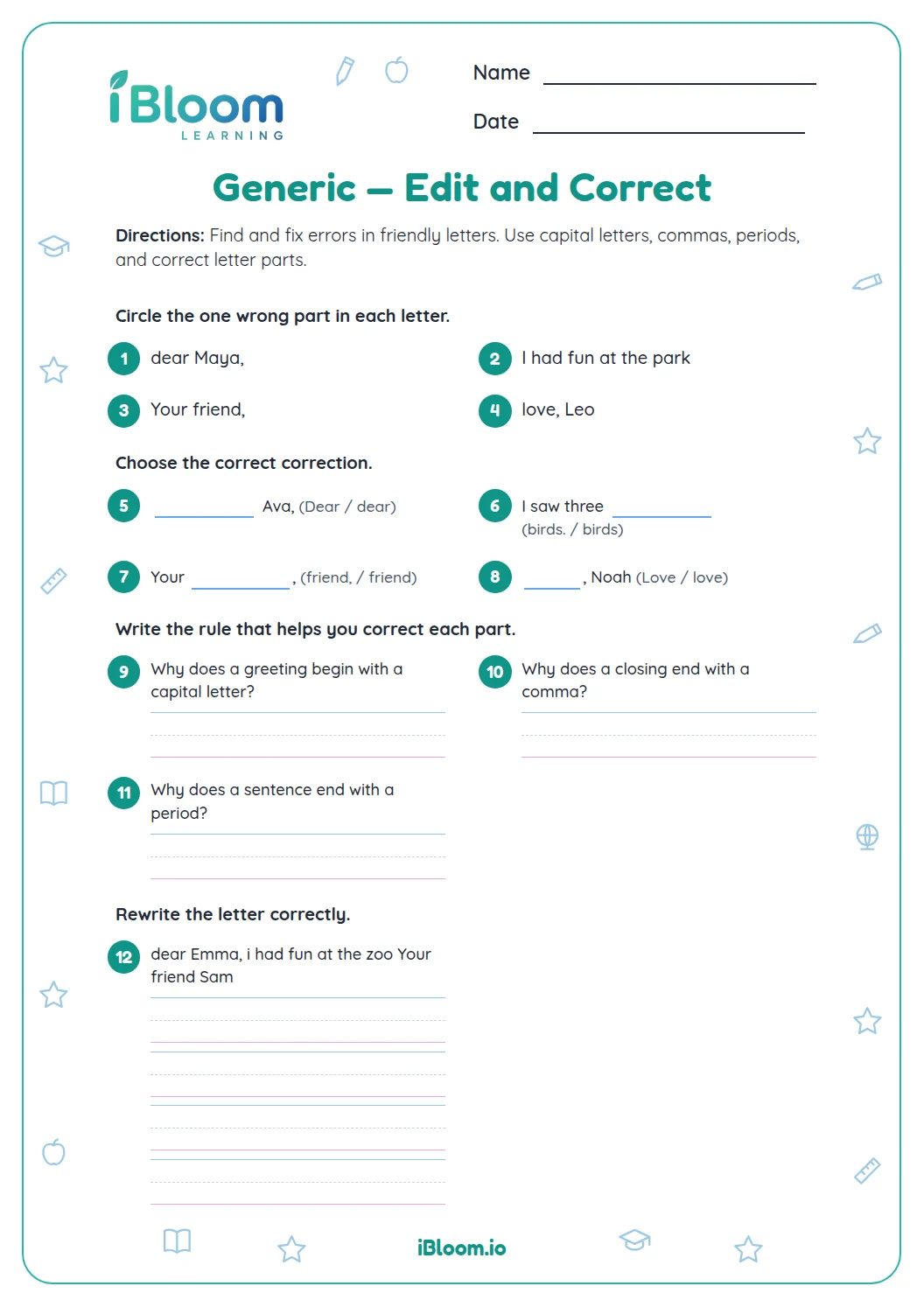
This Grade 1 printable worksheet helps children edit a friendly family letter. Students complete greetings and sentences with capital letters and end marks, put letter parts in order, and write one kind sentence for a family member. The questions practice CCSS L.1.2.a and L.1.2.b. A separate answer key provides corrected words and a sample response.
Aligned to L.1.2.a and L.1.2.b
Which words need capital letters in a family letter?
Capitalize the first word of a sentence and people’s names. A greeting such as “Dear Grandma,” begins with a capital, and Grandma is capitalized when used as the family member’s name.
Question 4 begins “i miss you.” Change the first letter to uppercase: “I miss you.”
- 1i miss you.
- 2Capitalize the sentence’s first word
- 3I miss you.
How do you choose an end mark?
A comma follows a greeting such as “Dear Grandpa,” and a closing such as “Love,”. A period can end a statement. A question mark ends a question. Read each line and choose the punctuation that fits its purpose.
What order do the parts of a friendly letter follow?
A simple family letter begins with a greeting, continues with a message and ends with a closing and the writer’s name. The final questions put the parts in order and invite a kind sentence.
How can you use this worksheet?
- 1Read the whole sentence before editing.
- 2Capitalize the first word and each person’s name.
- 3Ask whether the sentence tells or asks before choosing punctuation.
- 4Put greeting before message and closing.
- 5Read your corrected letter aloud to check it sounds clear.
What errors should children check?
The mistake
Forgetting to capitalize “I.”
The fix
Use uppercase I when writing about yourself.
The mistake
Using a period after a direct question.
The fix
If the sentence asks for an answer, finish it with a question mark.
The mistake
Capitalizing every word in a sentence.
The fix
Capitalize the sentence’s first word and names; keep other words lowercase unless needed.
Common Core alignment
This page practices the listed Common Core skills through the worksheet questions.
Capitalize names of people in the greeting and family message.
On this sheet: The worksheet capitalizes family names in greetings and sentences.
Show the official wordingHide the official wording
Capitalize dates and names of people.
Use periods and question marks to punctuate the family letter.
On this sheet: Children choose a period or question mark to finish each letter sentence.
Show the official wordingHide the official wording
Use end punctuation for sentences.
What to practice next
Make more practice
Further reading
Questions parents and teachers ask
What parts of a friendly letter do children edit?
Children complete greetings, family names, and message sentences. They add capital letters, choose commas for a greeting or closing, select end punctuation, put the letter parts in order, and write a short kind sentence. The answer key provides corrected punctuation and a sample response.
When should a sentence end with a question mark?
Use a question mark when the sentence asks something, such as “How are you?” A statement such as “We planted seeds” ends with a period. Questions 6 and 10 ask children to add question marks; other message sentences end with periods.
Should Grandma be capitalized in a greeting?
Yes. Grandma is capitalized when it names the person being addressed, as in “Dear Grandma,”. The worksheet also asks children to add commas after a greeting and a closing. The answer key shows the corrected punctuation and capital letters for these letter lines.
Does the answer key give one exact answer for the writing prompts?
The key gives sample responses for the open-ended writing question. A child may write a different kind sentence and still answer correctly if it begins with a capital and ends with suitable punctuation. The other questions have specific answers for family names, commas, periods, question marks, and letter-part order.
How can I help my child check a corrected letter?
Ask your child to read the letter aloud from greeting through closing. Pause at each sentence to check its first capital and end mark, then check that family names are capitalized. Use the answer key to compare the editing items, while accepting a suitable original kind sentence.