




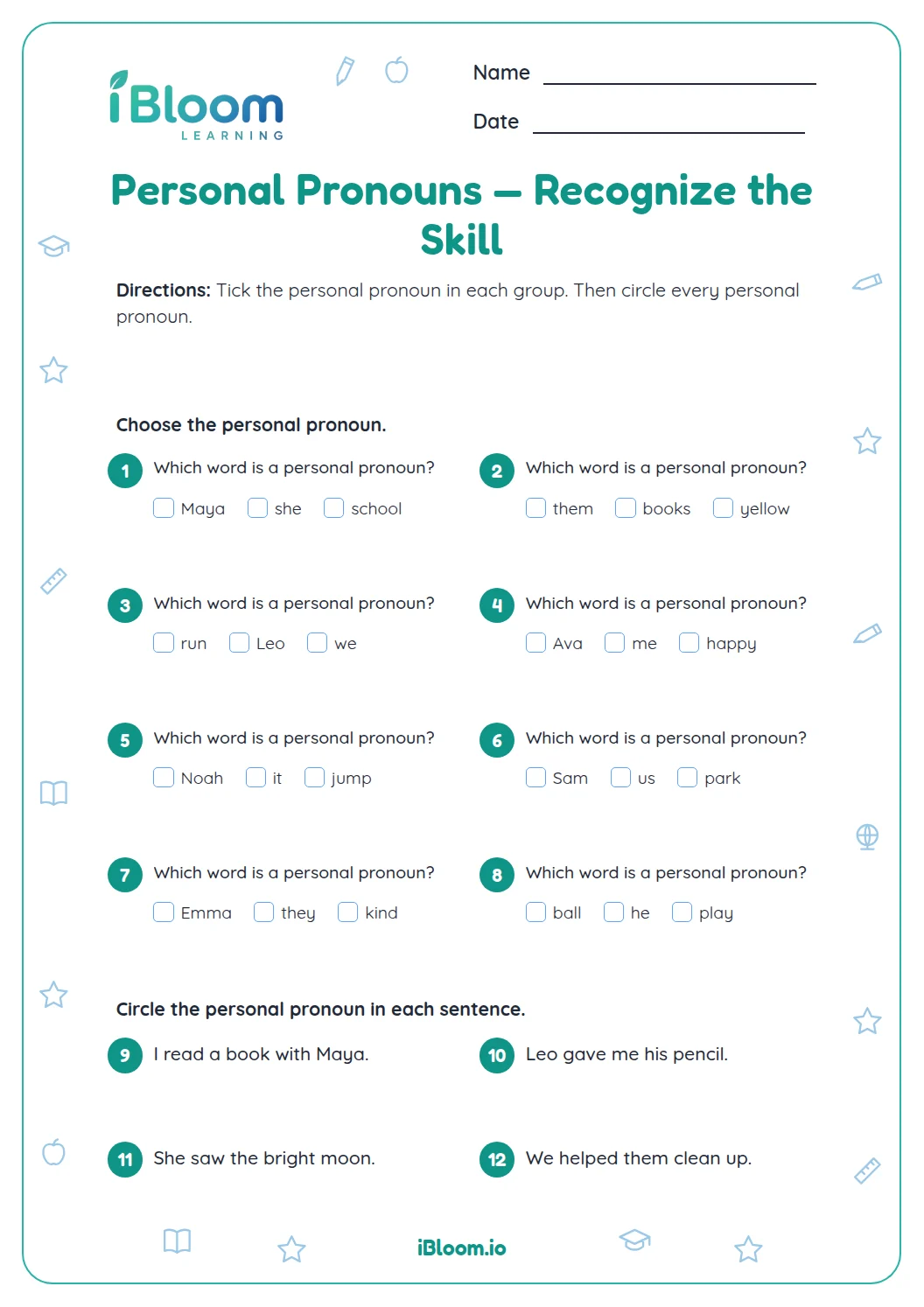
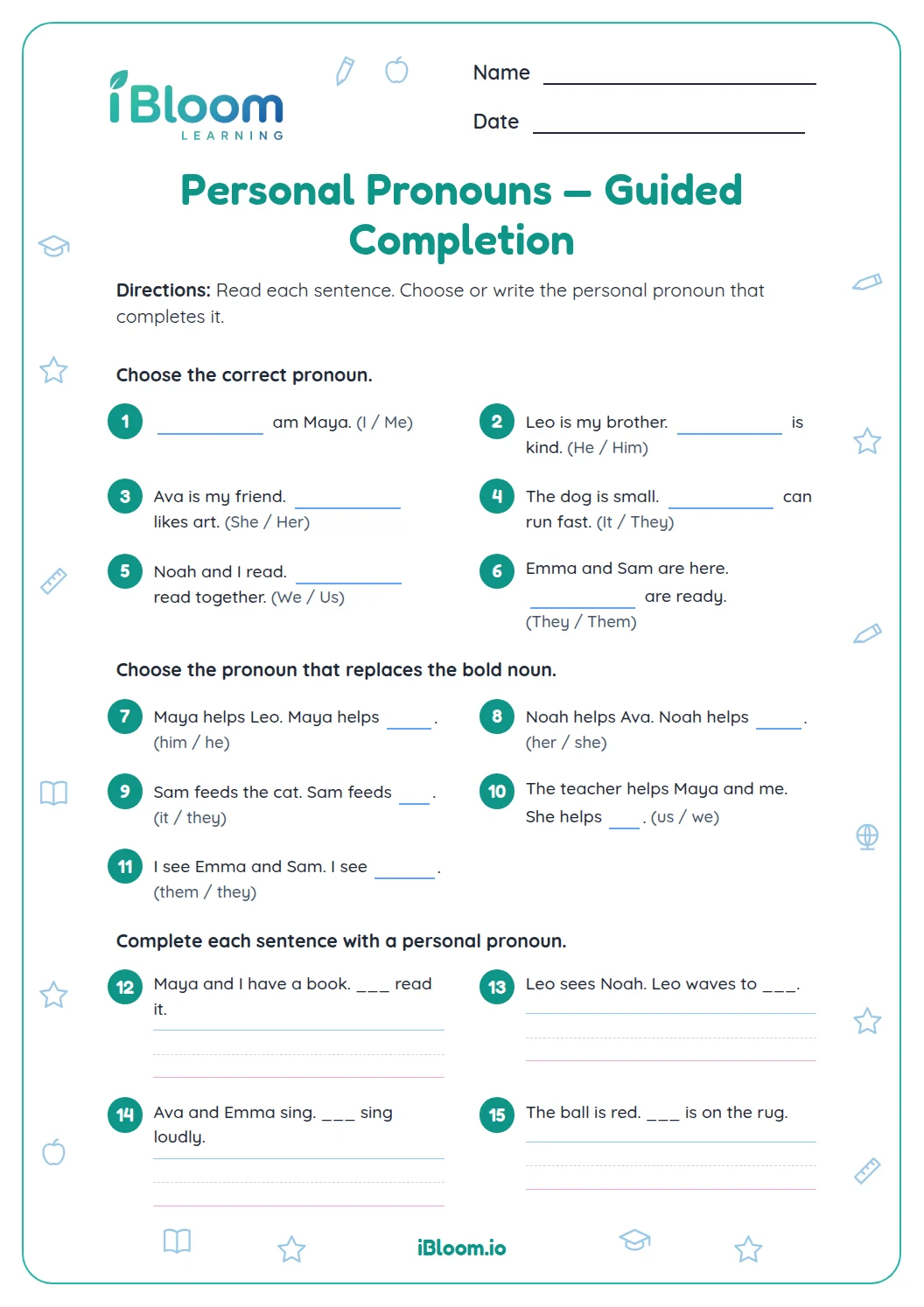


About this worksheet
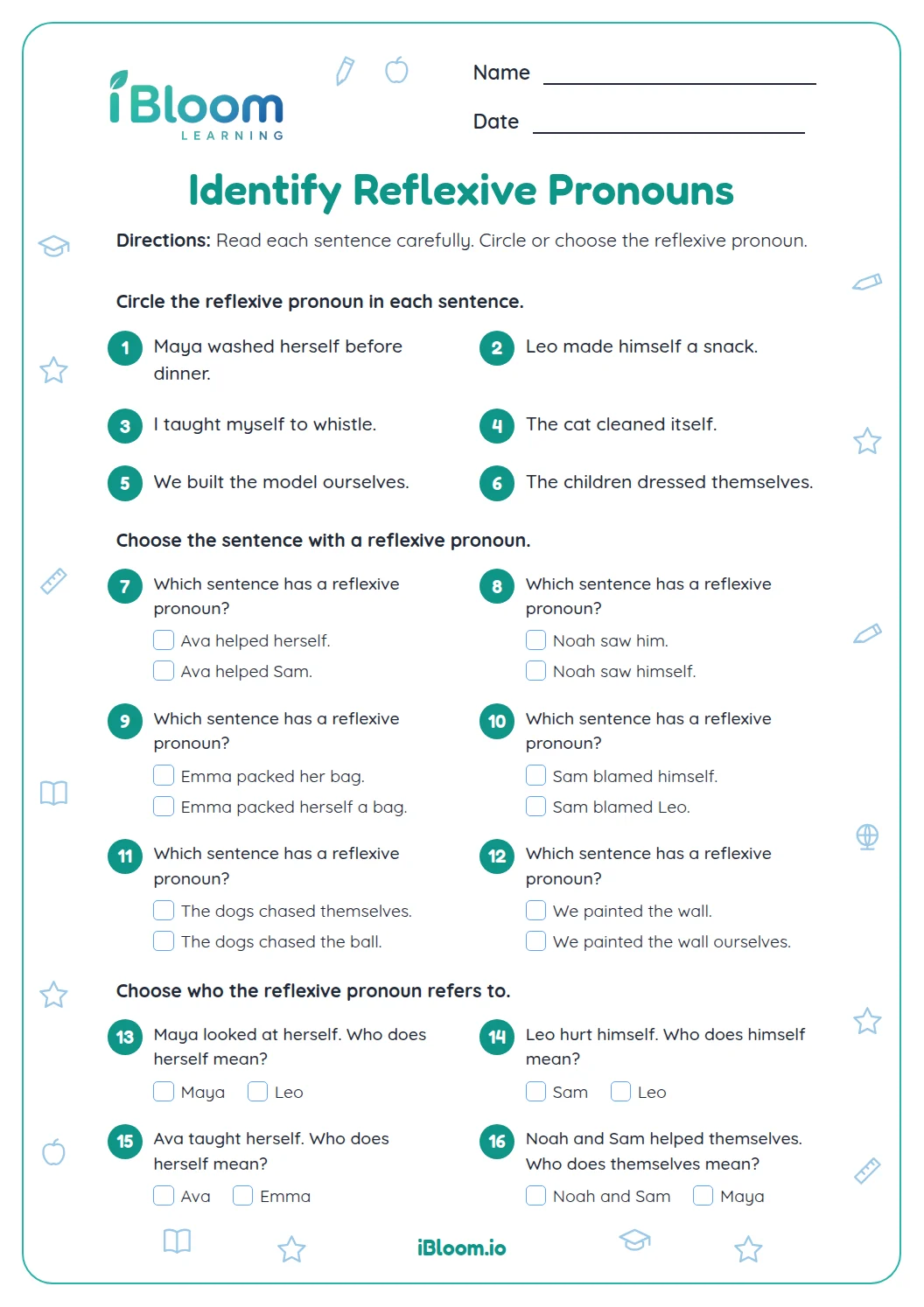
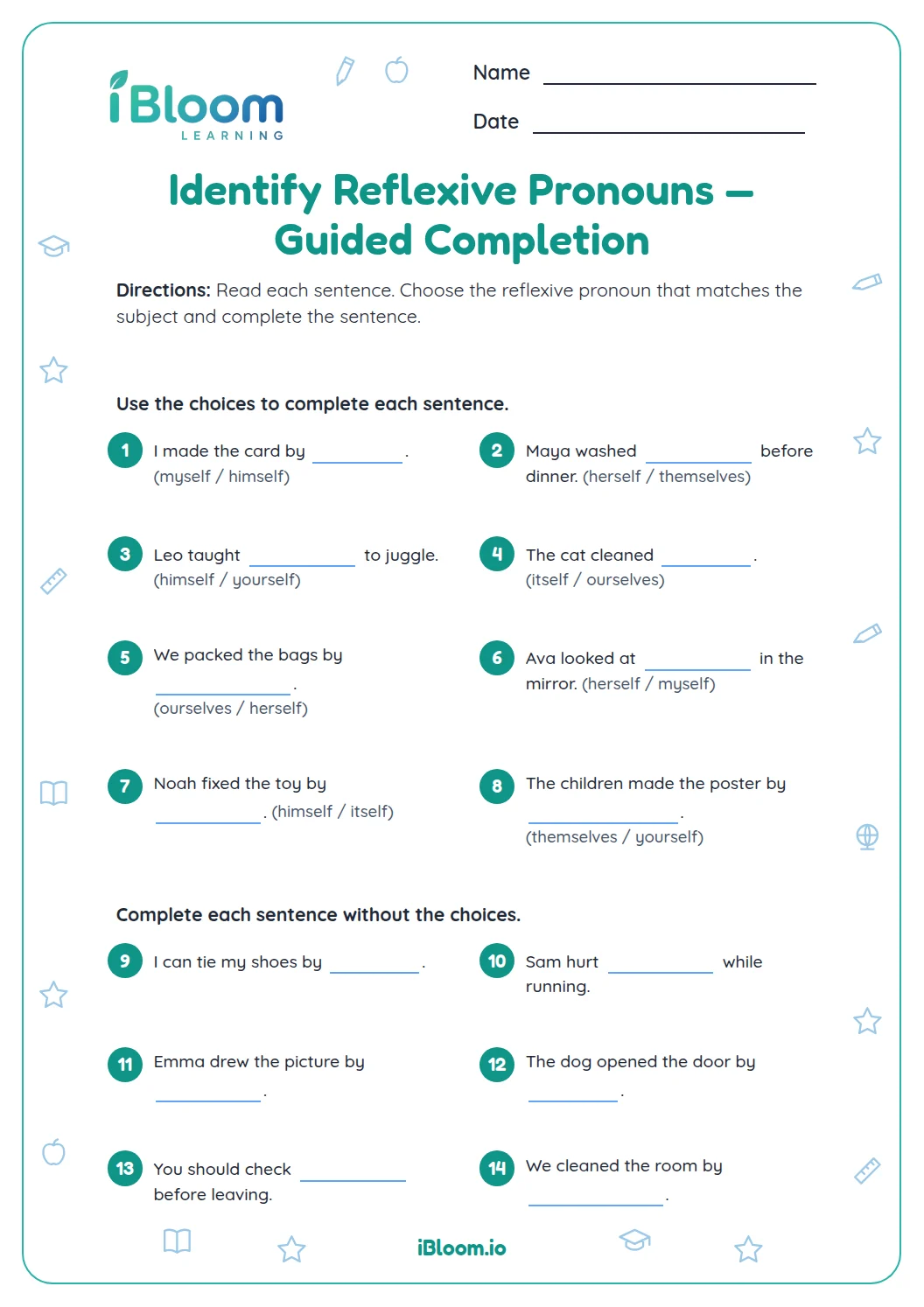
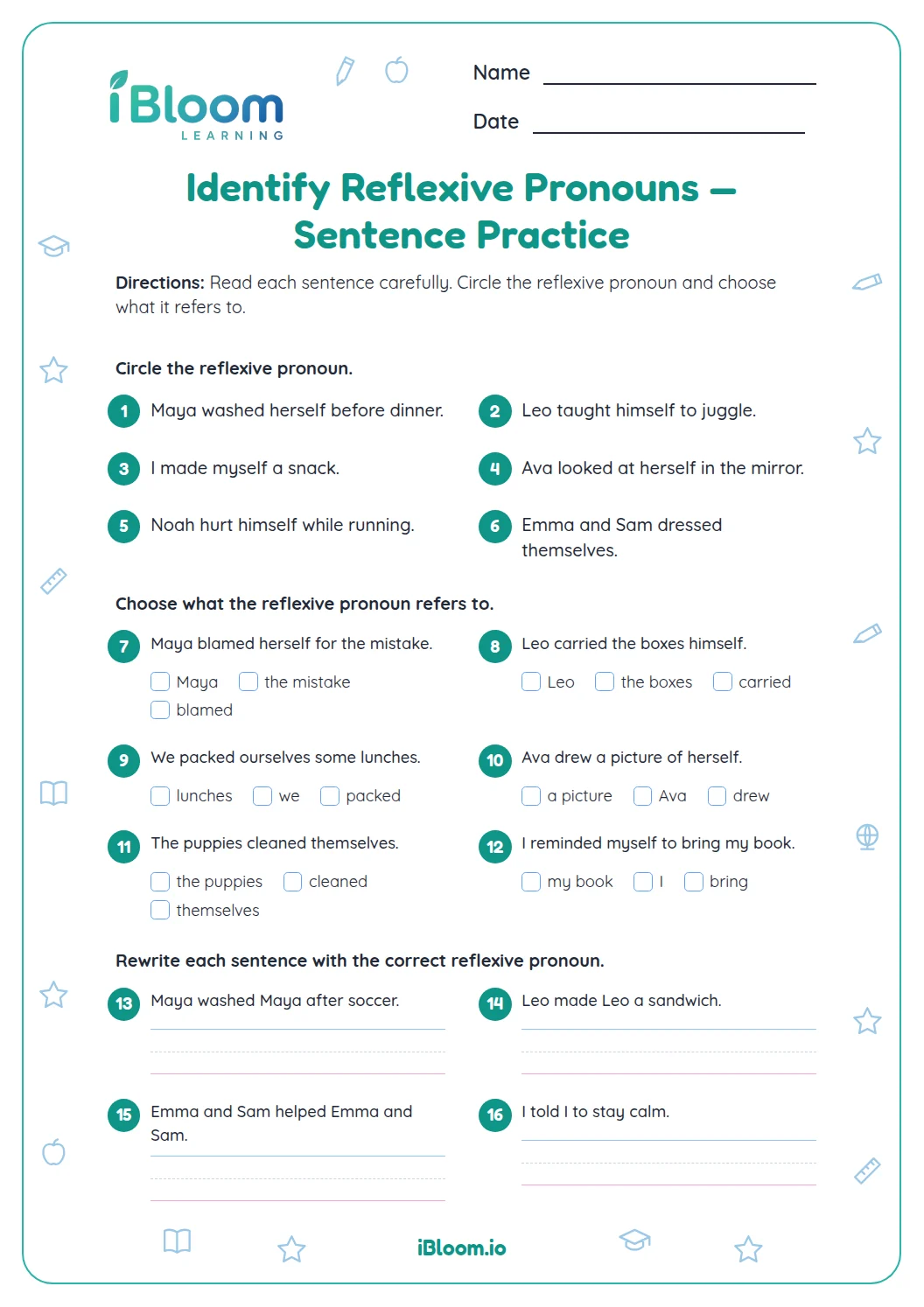
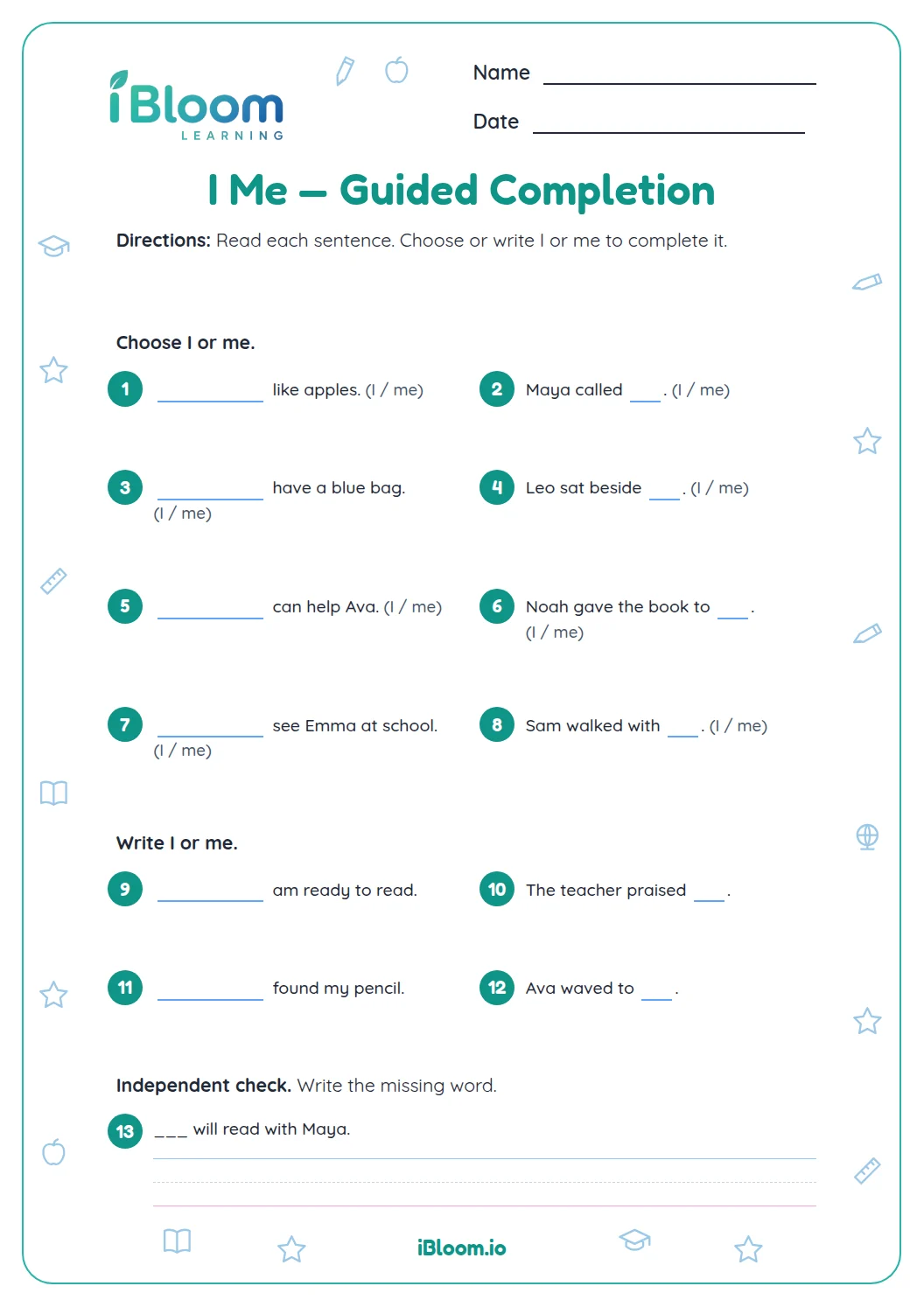
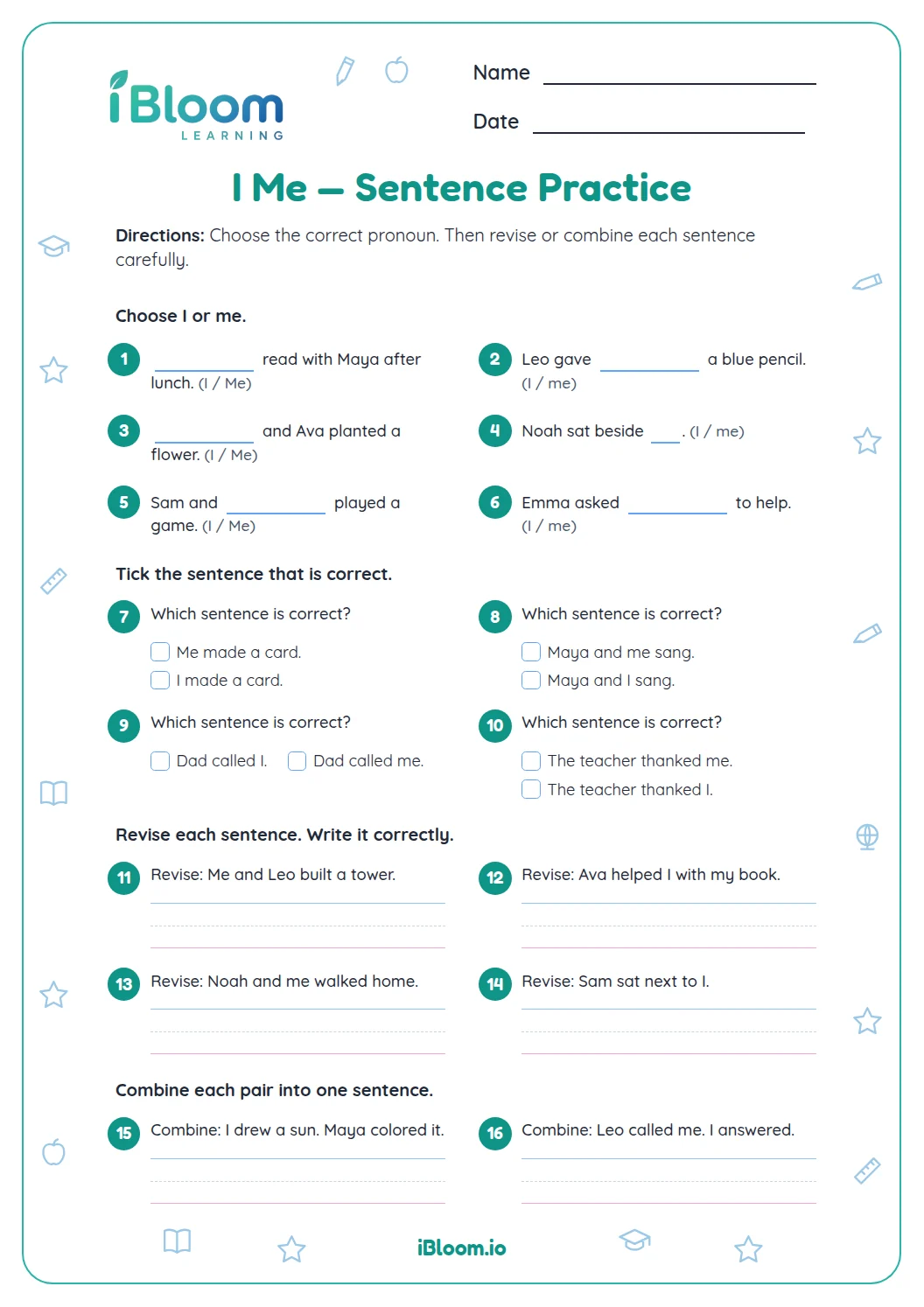
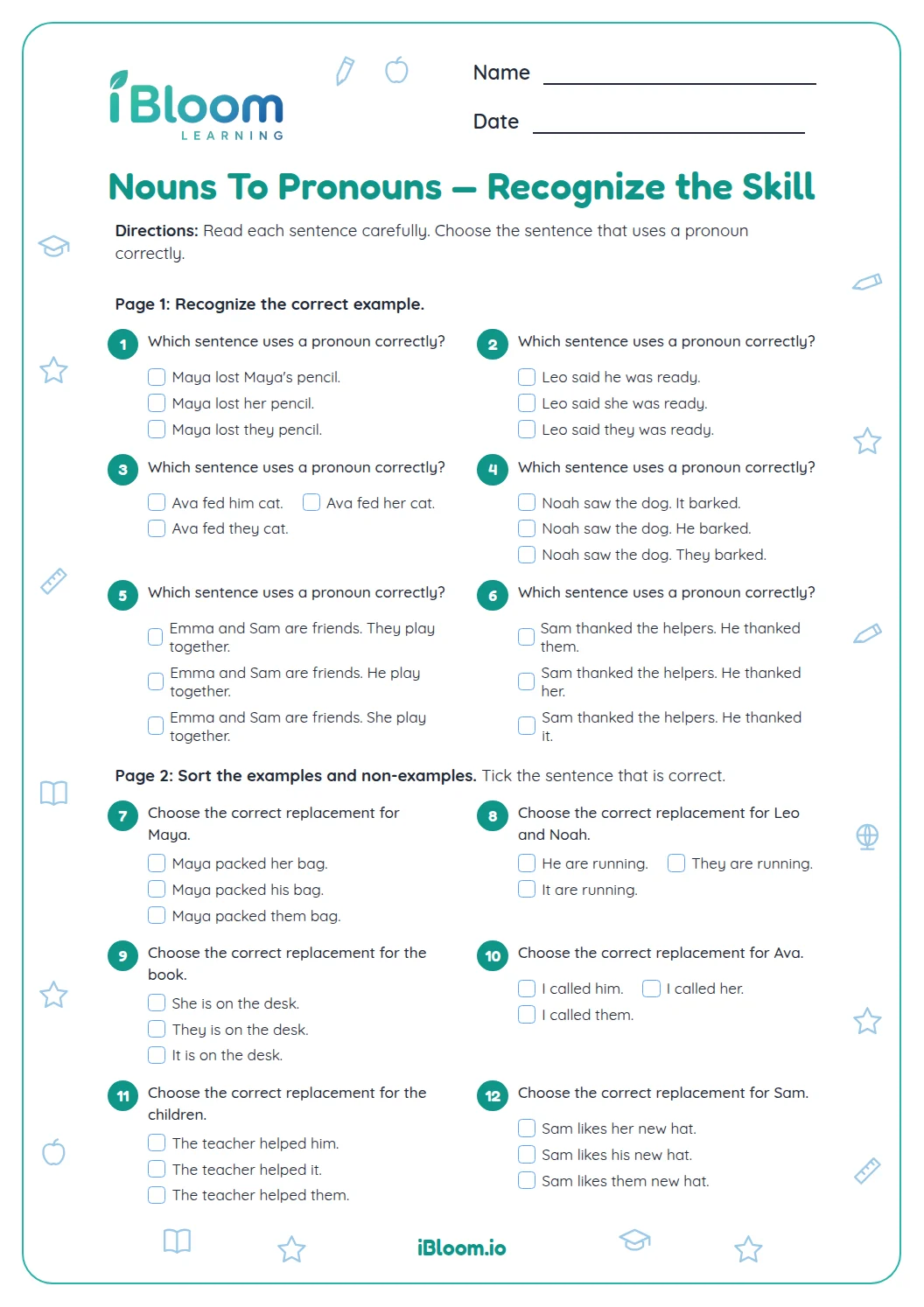
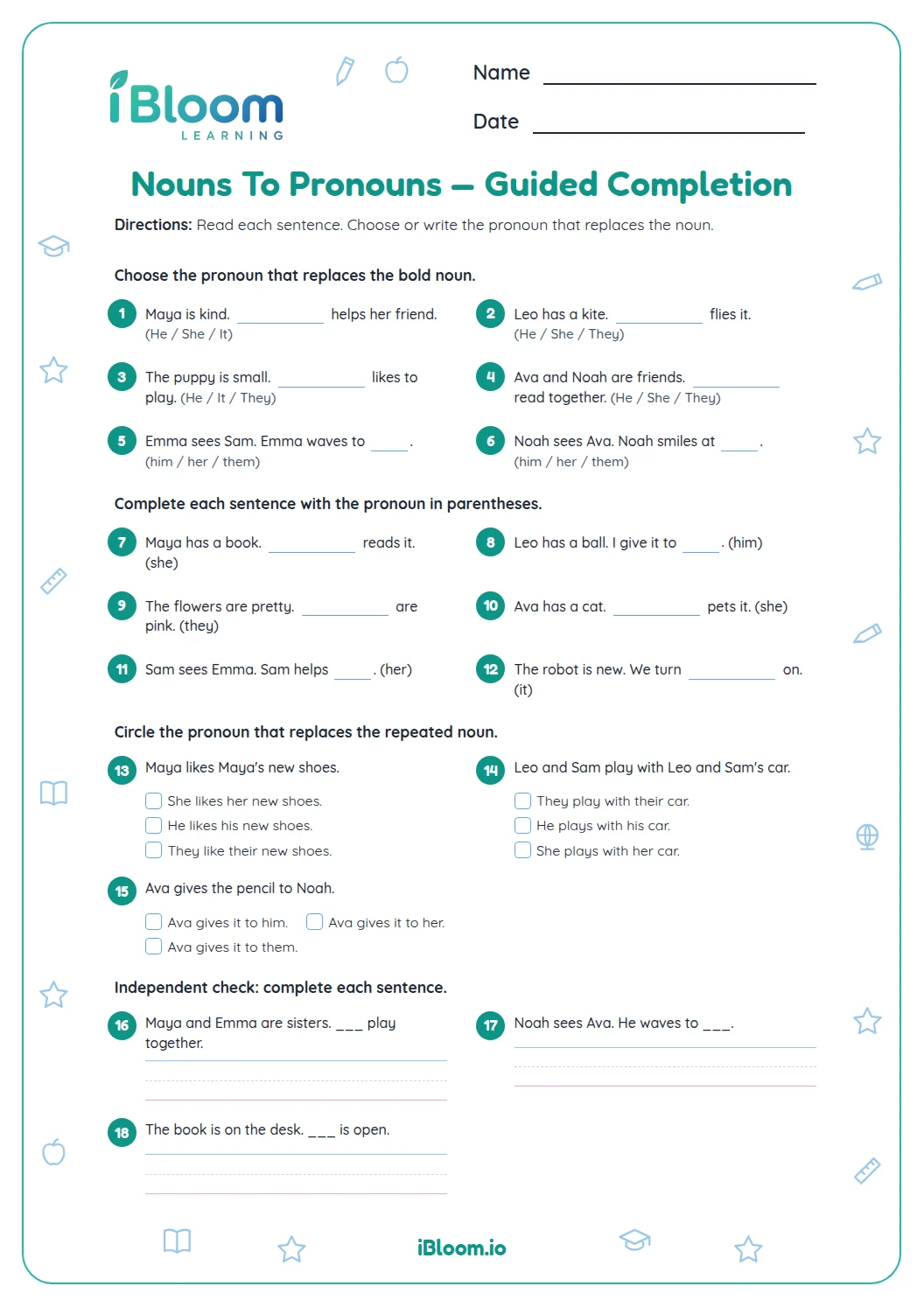
Fourteen questions help grade 2 learners choose reflexive pronouns that refer back to the sentence subject. The separate answer key supports checking after the learner has tried each question.
Aligned to L.2.1.c
What does a reflexive pronoun do?
It refers back to the subject. In “I made the card myself,” myself refers to I.
How do you choose the right form?
Find who or what acts in the sentence. Match the ending to that subject: one person, a group, or one thing.
How can you check a sentence?
Read it again and make sure the reflexive pronoun points back to the subject. In “The kittens cleaned themselves,” themselves refers to kittens.
How to use this worksheet
- 1Find the subject.
- 2Ask who or what the reflexive pronoun refers back to.
- 3Choose the matching form: myself, yourself, itself, or themselves.
- 4Read the whole sentence to check it.
Common mistakes and quick fixes
The mistake
Using itself for a plural subject.
The fix
Use themselves for a group such as kittens or players.
The mistake
Using myself with the subject you.
The fix
Match you with yourself.
The mistake
Choosing a pronoun before finding the subject.
The fix
Underline the subject first, then choose the reflexive form.
Common Core alignment
This worksheet practices the standard below through its questions.
Use reflexive pronouns such as myself and ourselves.
On this sheet:
Show the official wordingHide the official wording
Use reflexive pronouns (e.g., myself, ourselves).
What to practice next
Make more practice
Further reading
Questions parents and teachers ask
What is a reflexive pronoun?
A reflexive pronoun refers back to the subject of the sentence. In “I made the card myself,” the word myself points back to I. The pronoun form changes with the subject, so readers should find who or what acts before choosing the ending.
Which reflexive pronoun goes with we?
Use ourselves with the subject we. For example, “We made the snack ourselves” means the people included in we made it. Read the whole sentence and check that the pronoun points back to the same group named as the subject.
Which reflexive pronoun goes with a group of people?
Use themselves for a plural subject such as the players or the kittens. In “The players cheered themselves,” themselves points back to players. A singular subject such as one bird takes itself. Check whether the subject names one or more than one.
Is an answer key included?
Yes. The answer key lists all 14 correct forms. After completing the sentences, compare each reflexive pronoun with its subject. Check whether the subject names one person, a group, or a thing, then reread the sentence to hear whether the pronoun sounds right.