Free printable practice
Commas Clauses Practice Activities
Grade 2 students practise using commas to make clauses in longer sentences clearer and easier to read.
Free printable worksheet PDFs
Preview every available page, then download the free worksheet PDF for home, homeschool, tutoring, or classroom practice.
Preview the exact activity before downloading it.
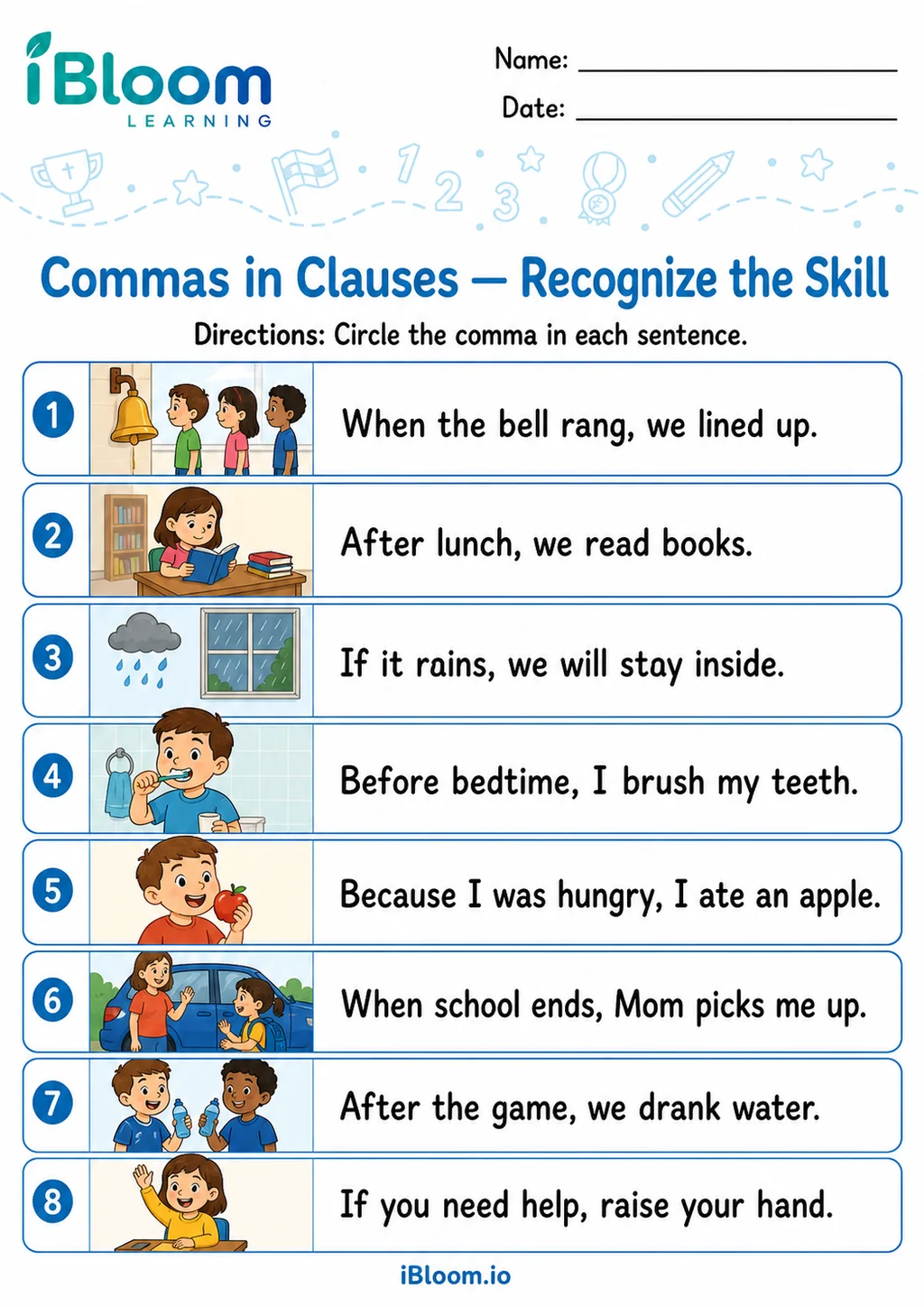 Commas Clauses — Recognize the SkillGrade 2 students practise using commas to make clauses in longer sentences clearer and easier to read. This recognize the skill worksheet provides a distinct, age-appropriate way to practise the same lesson.Grade 2Free PDF preview
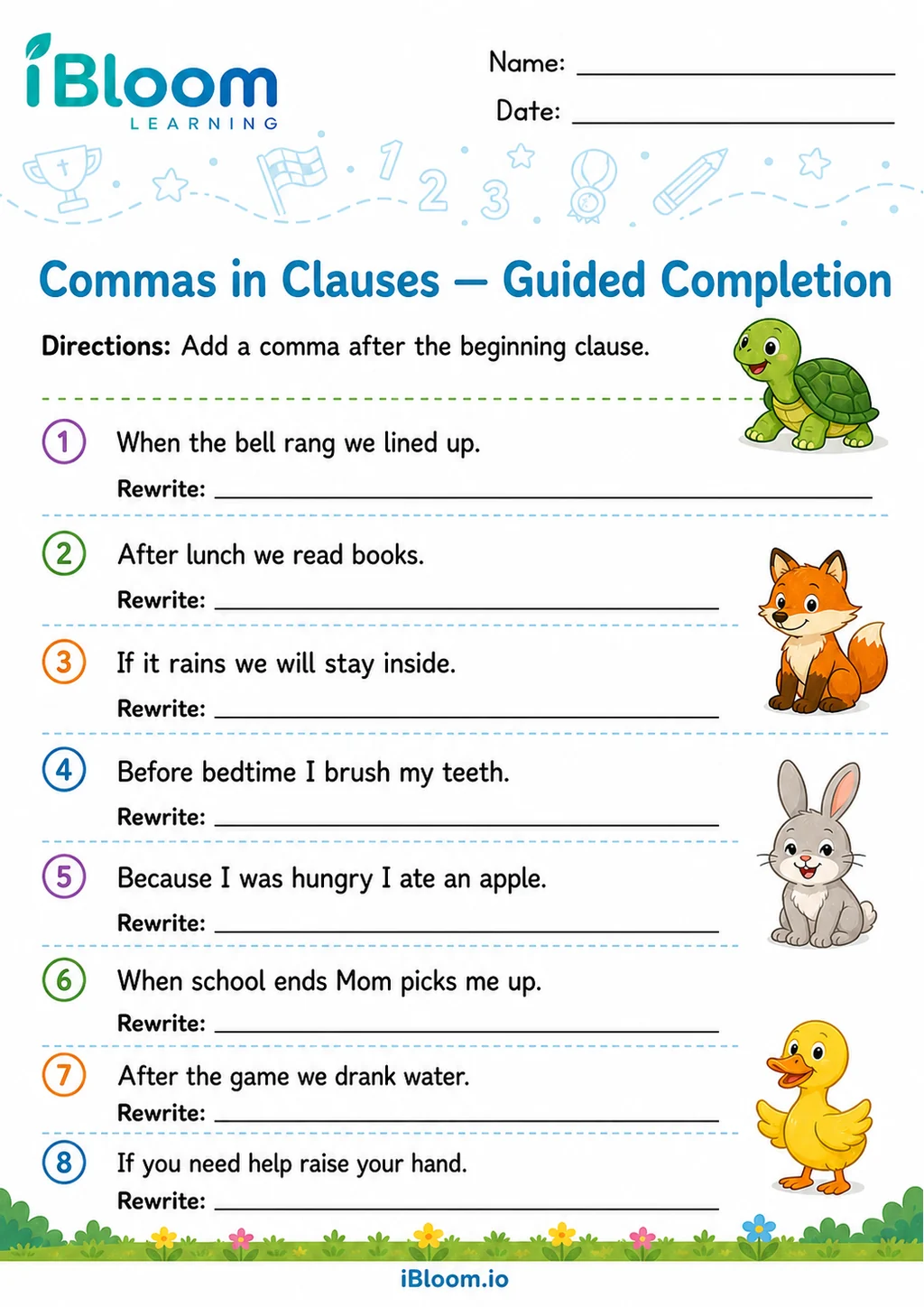 Commas Clauses — Guided CompletionGrade 2 students practise using commas to make clauses in longer sentences clearer and easier to read. This guided completion worksheet provides a distinct, age-appropriate way to practise the same lesson.Grade 2Free PDF preview
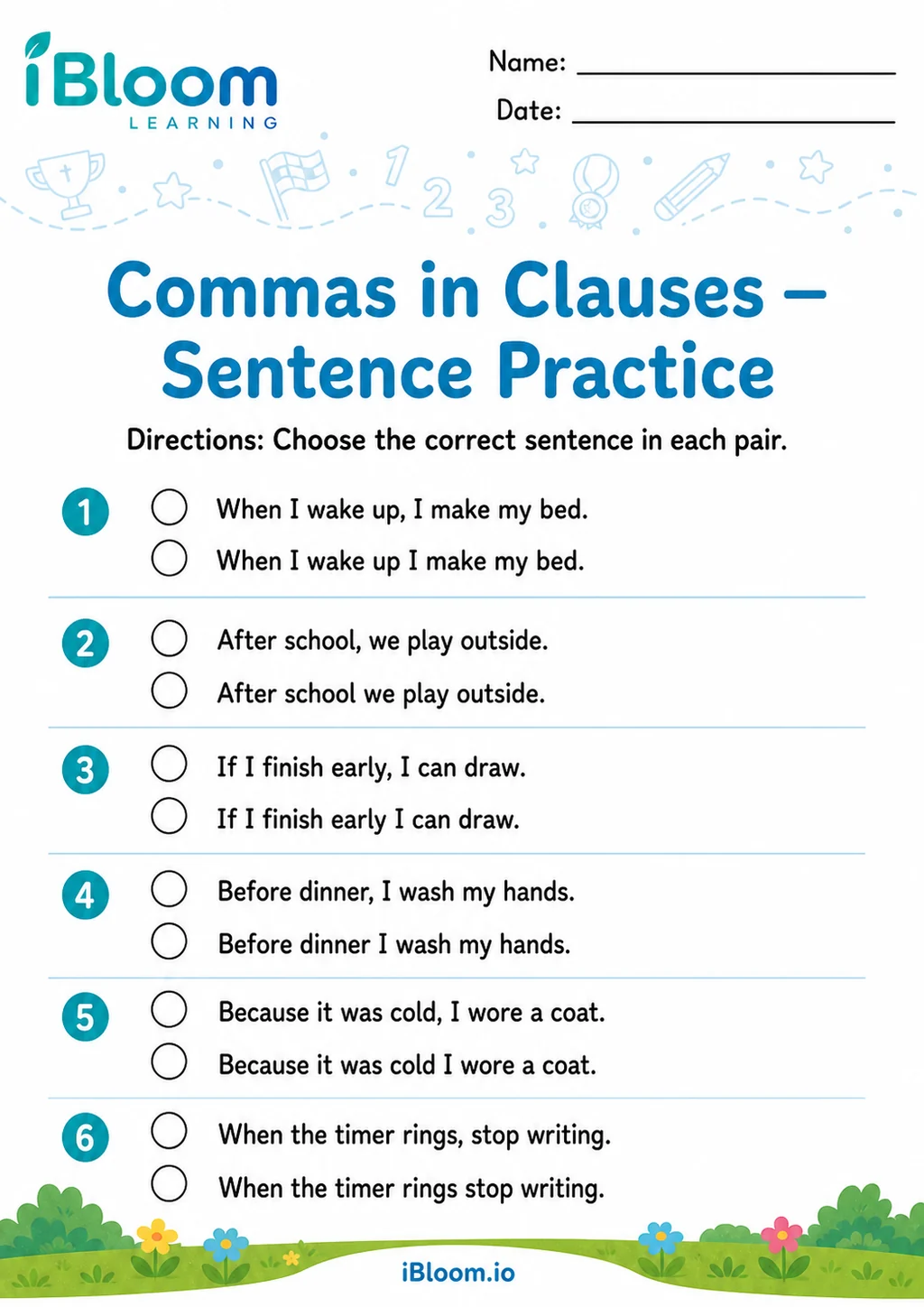 Commas Clauses — Sentence PracticeGrade 2 students practise using commas to make clauses in longer sentences clearer and easier to read. This sentence practice worksheet provides a distinct, age-appropriate way to practise the same lesson.Grade 2Free PDF preview
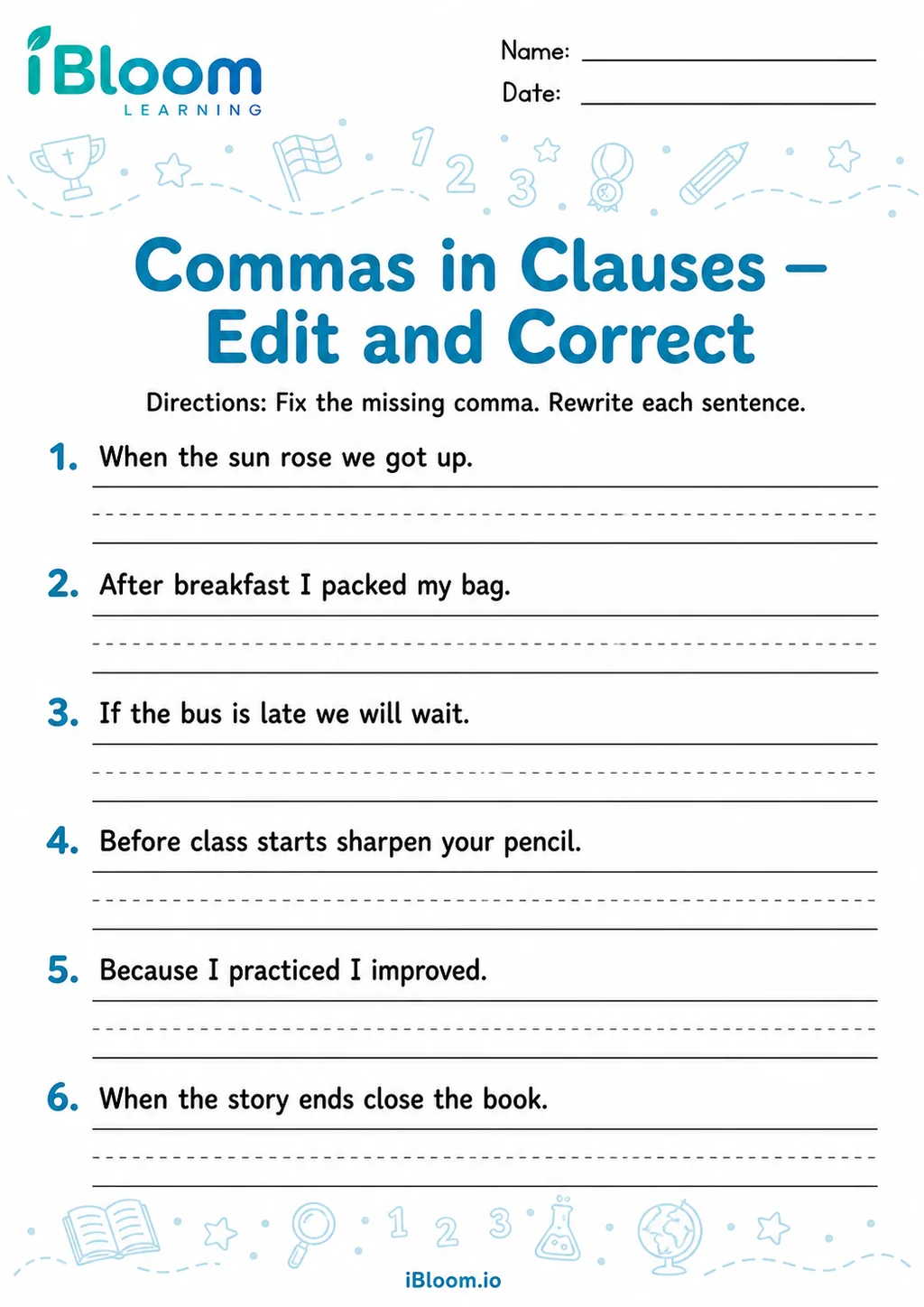 Commas Clauses — Edit and CorrectGrade 2 students practise using commas to make clauses in longer sentences clearer and easier to read. This edit and correct worksheet provides a distinct, age-appropriate way to practise the same lesson.Grade 2Free PDF preview
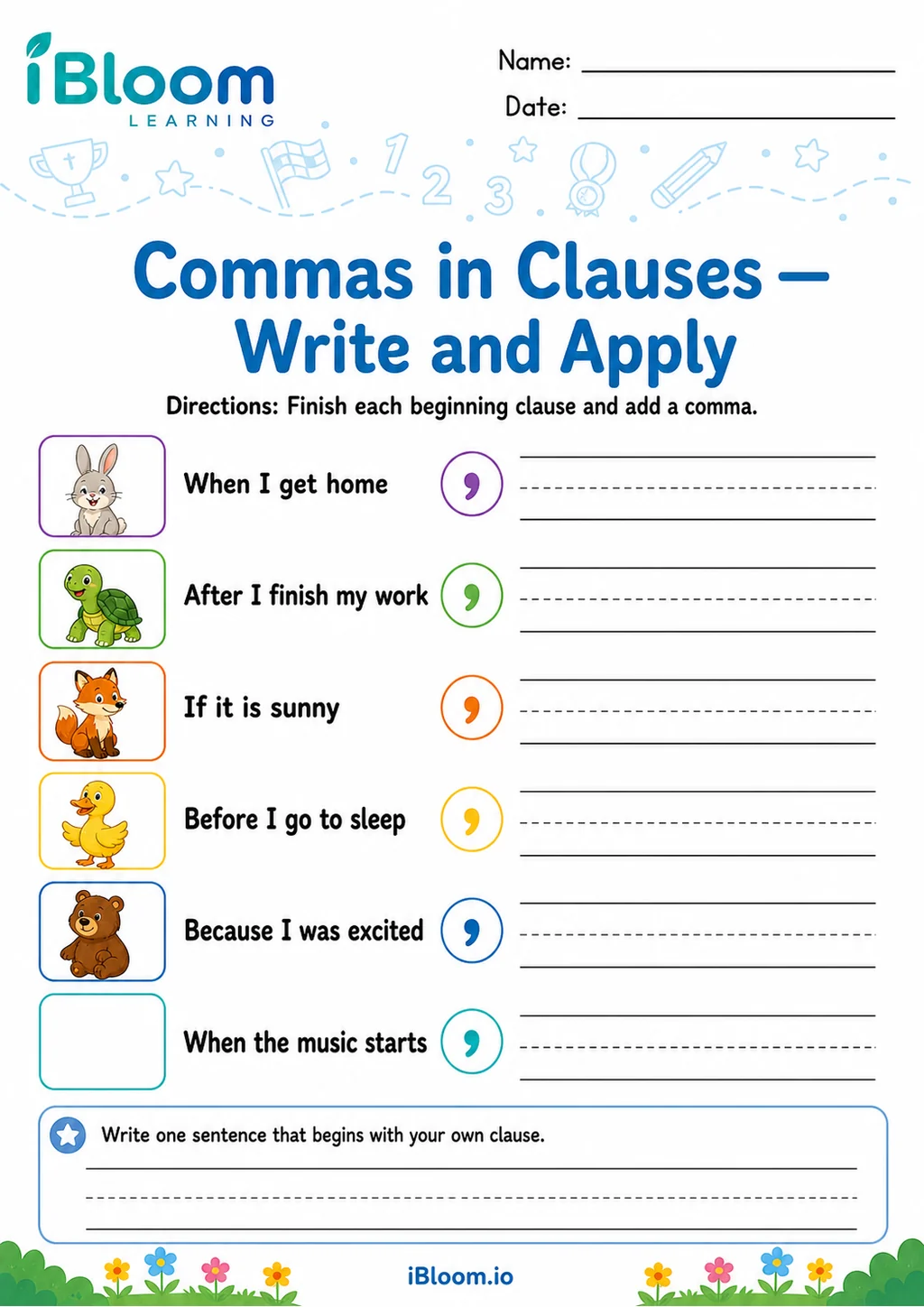 Commas Clauses — Write and ApplyGrade 2 students practise using commas to make clauses in longer sentences clearer and easier to read. This write and apply worksheet provides a distinct, age-appropriate way to practise the same lesson.Grade 2Free PDF preview
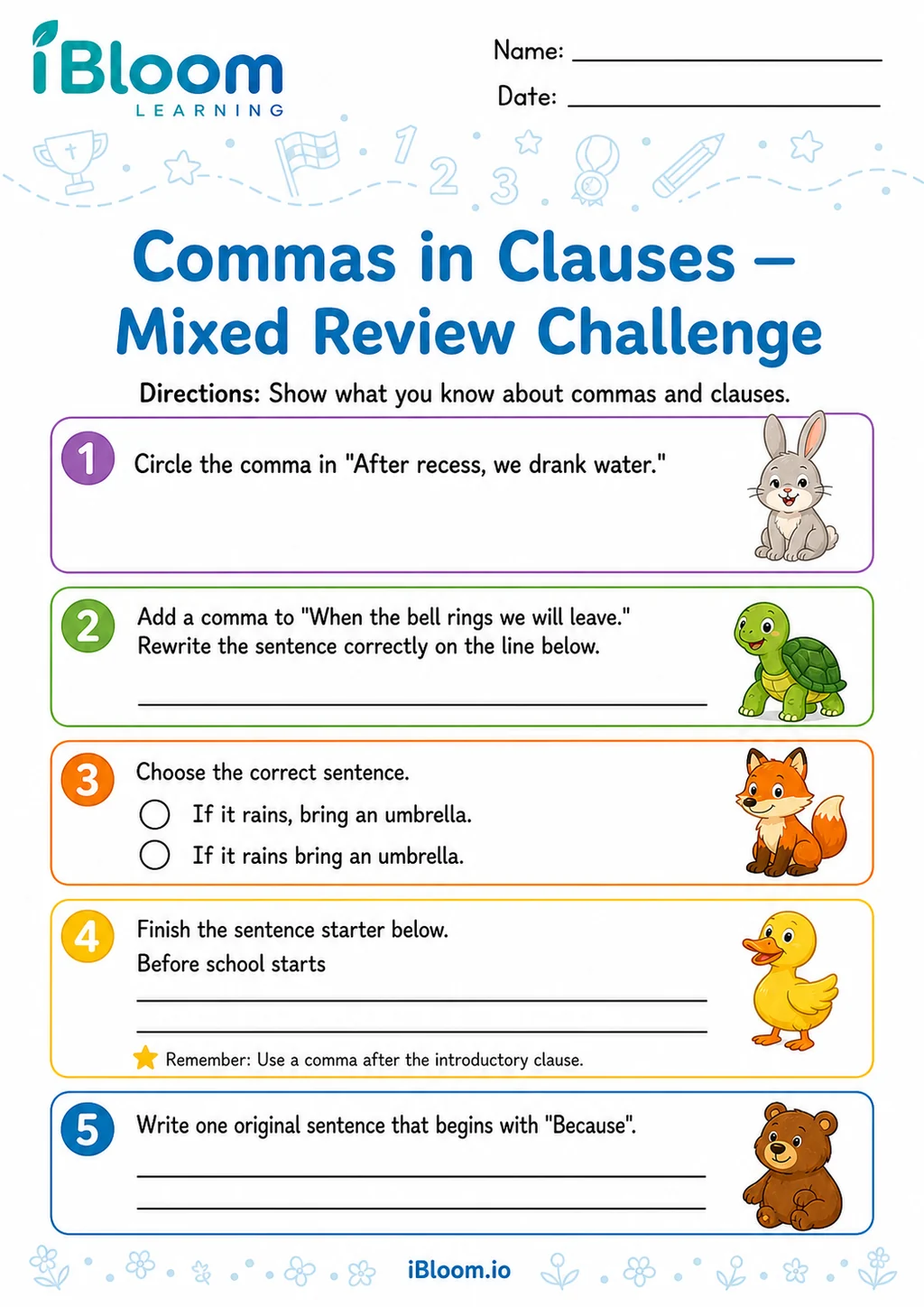 Commas Clauses — Mixed Review and ChallengeGrade 2 students practise using commas to make clauses in longer sentences clearer and easier to read. This mixed review and challenge worksheet provides a distinct, age-appropriate way to practise the same lesson.Grade 2Free PDF preview
Practice that builds confidence
Building from sentences to clauses
These Grade 2 comma worksheets help children notice how clauses work inside longer sentences. Students read sentence parts, decide whether each part tells a complete thought, and practise adding a comma when a clause needs to be separated for clearer meaning.
The printable activities include sentence fixing, matching clauses, rewriting short paragraphs, and choosing the sentence with correct punctuation. Each page keeps the language familiar so students can focus on punctuation, meaning, and sentence flow.
Second graders are often ready to move beyond short sentences such as “I packed my bag.” These worksheets show how a sentence can have more than one part, or clause, and how punctuation helps the reader follow the ideas. Children work with complete thoughts, sentence parts, joining words, and commas in sentences that sound like everyday writing.

What the practice includes
Activities may ask students to add a missing comma, choose the better-punctuated sentence, join two related ideas, or rewrite a sentence so it reads smoothly. Examples use familiar patterns, such as a beginning clause followed by a main idea, or two connected thoughts with a joining word. The focus is not memorizing a rule in isolation; it is learning to hear where the sentence changes direction or needs a pause.
A simple parent routine
At home, read one sentence aloud without the comma, then read it again with the comma pause. Ask, “What is the first part telling us?” and “What is the main idea?” Have your child point to the two parts before writing the comma. Finish by asking them to read the completed sentence aloud, because oral reading helps them check whether the punctuation matches the meaning.

Classroom uses for teachers
Teachers can use these printables during punctuation lessons, writing centers, morning work, or small-group grammar review. They also work well after a mini-lesson on complete thoughts and sentence combining. For quick assessment, have students underline each clause and circle the comma they added, then explain their choice to a partner.

Common errors to watch for
Some children place a comma anywhere they hear a tiny pause, while others forget the comma when the sentence begins with a longer starter clause. Students may also split one complete thought into pieces or add commas between words that simply belong together. Encourage them to ask whether each part has a subject and an action, and whether the comma helps the reader understand the relationship between ideas.
Free printable PDF download
Use this Grade 2 commas clauses worksheet page to preview the activity, print it, or download it as a PDF for quick practice. It works well for homework, homeschool lessons, tutoring, morning work, revision, and classroom centers.
Answers and answer key support
After the child completes the worksheet independently, parents and teachers can use the answer support or answer key information to check the work, review mistakes, and choose the next practice step.
Why iBloom worksheets help
The pages move from noticing sentence parts to editing full sentences, so students build confidence step by step. A child-friendly strategy is: read it, find the two ideas, pause where the idea shifts, then place the comma. This gives young writers a practical habit they can use in their own stories, responses, and daily writing.
Helpful answers
Frequently asked questions
What does “commas with clauses” mean for Grade 2 students?
It means learning that longer sentences can have more than one meaningful part, and that a comma can help separate those parts so the sentence is easier to read.
Do children need to know advanced grammar terms before using these worksheets?
No. The activities use simple language such as sentence part, complete thought, joining word, and pause so second graders can understand the idea before learning more formal terms later.
How can I help my child decide where the comma belongs?
Ask your child to read the sentence aloud, find the two ideas, and notice where the idea shifts. Then have them reread the sentence with a short pause at the comma.
Are these worksheets mainly for editing or writing?
They support both. Children edit sentences with missing or incorrect commas, and they also practise rewriting or joining sentence parts to make clearer sentences.
What mistakes should I expect at first?
Many students either leave commas out or add too many. Remind them that a comma should help the reader understand how the sentence parts fit together, not appear after every pause.
Is this Grade 2 commas clauses worksheet free?
Yes. You can preview it for free and use the printable worksheet for home or classroom practice.
Can I download this Grade 2 commas clauses worksheet as a PDF?
Yes. Use the worksheet download option to save a printable PDF, or print the worksheet directly from the page.
Does this Grade 2 commas clauses worksheet include answers or an answer key?
When the activity has fixed answers, iBloom includes answer support so parents and teachers can check the completed worksheet.