Free printable practice
Commas Names Practice Activities
Grade 2 worksheets help children place commas before or after names when a sentence directly speaks to someone.
Free printable worksheet PDFs
Preview every available page, then download the free worksheet PDF for home, homeschool, tutoring, or classroom practice.
Preview the exact activity before downloading it.
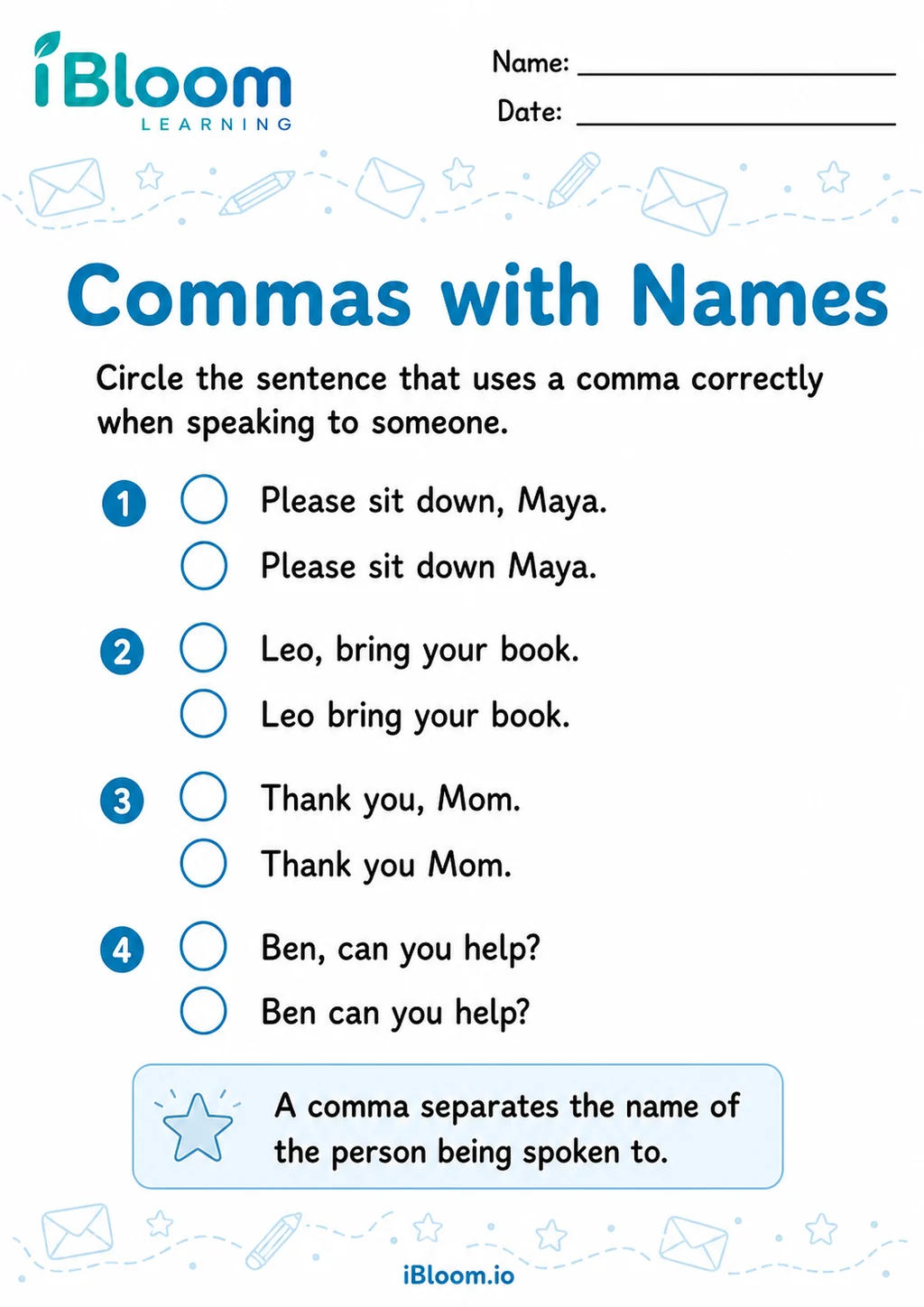 Commas Names — Recognize the SkillGrade 2 worksheets help children place commas before or after names when a sentence directly speaks to someone. This recognize the skill worksheet provides a distinct, age-appropriate way to practise the same lesson.Grade 2Free PDF preview
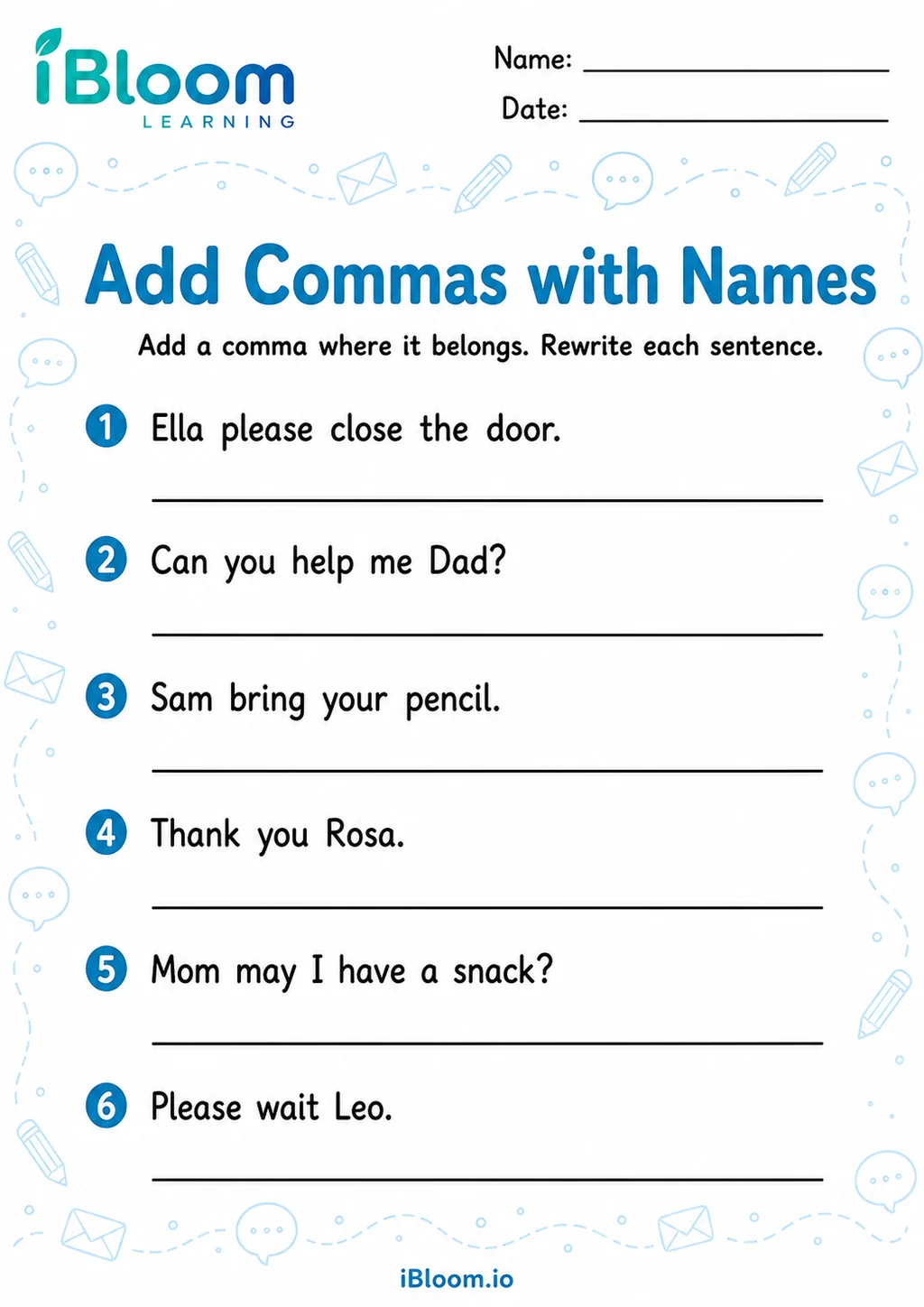 Commas Names — Guided CompletionGrade 2 worksheets help children place commas before or after names when a sentence directly speaks to someone. This guided completion worksheet provides a distinct, age-appropriate way to practise the same lesson.Grade 2Free PDF preview
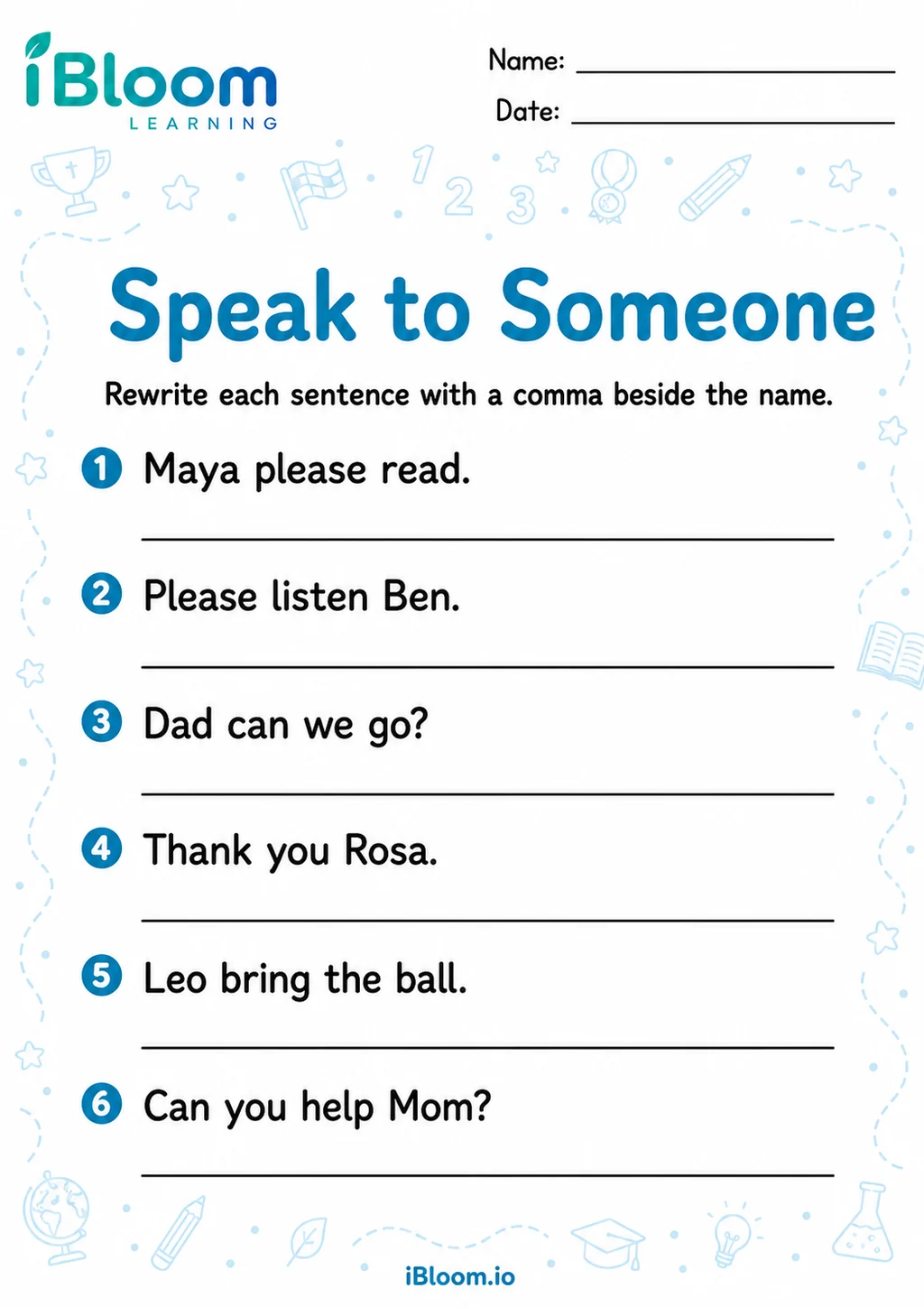 Commas Names — Sentence PracticeGrade 2 worksheets help children place commas before or after names when a sentence directly speaks to someone. This sentence practice worksheet provides a distinct, age-appropriate way to practise the same lesson.Grade 2Free PDF preview
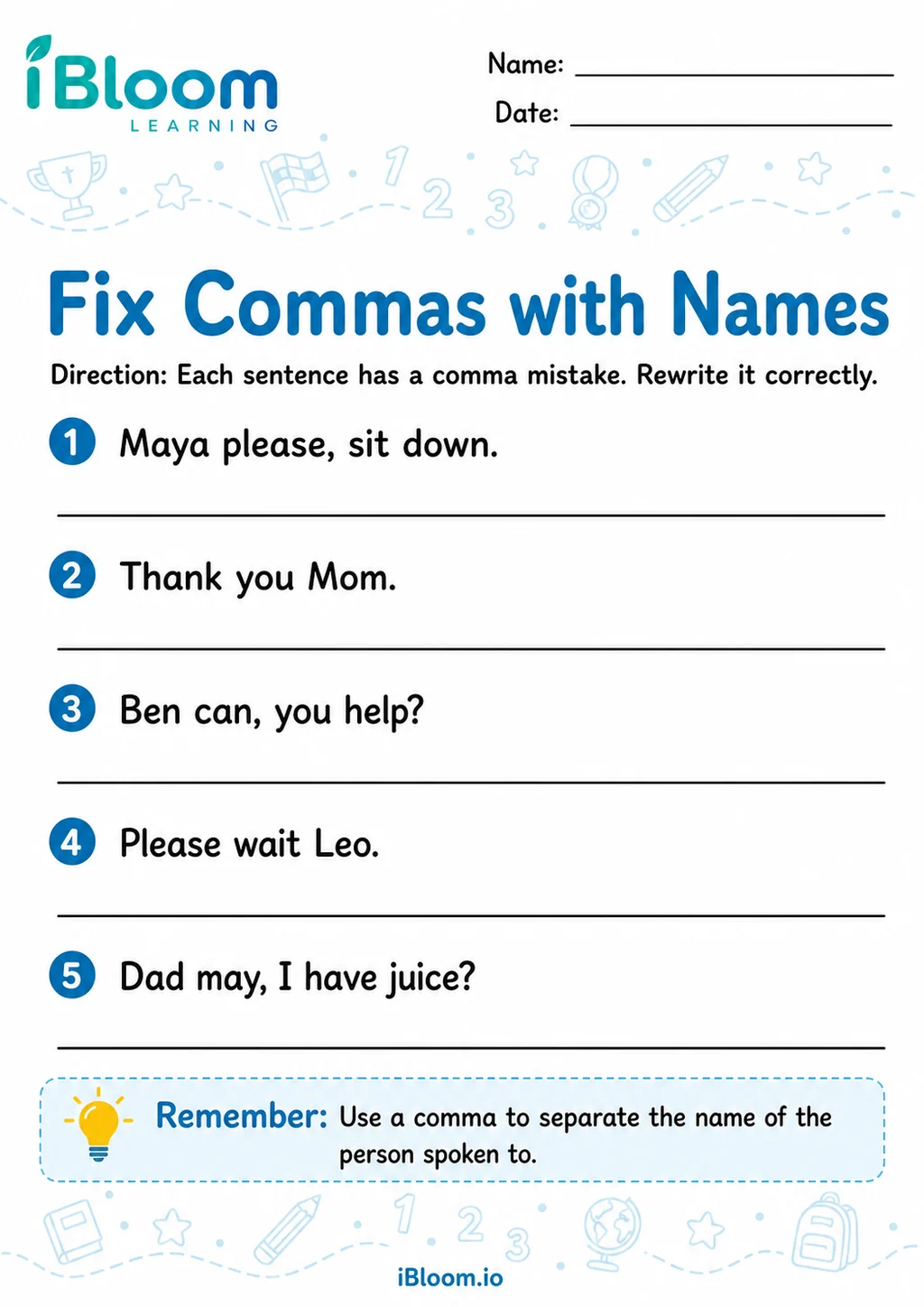 Commas Names — Edit and CorrectGrade 2 worksheets help children place commas before or after names when a sentence directly speaks to someone. This edit and correct worksheet provides a distinct, age-appropriate way to practise the same lesson.Grade 2Free PDF preview
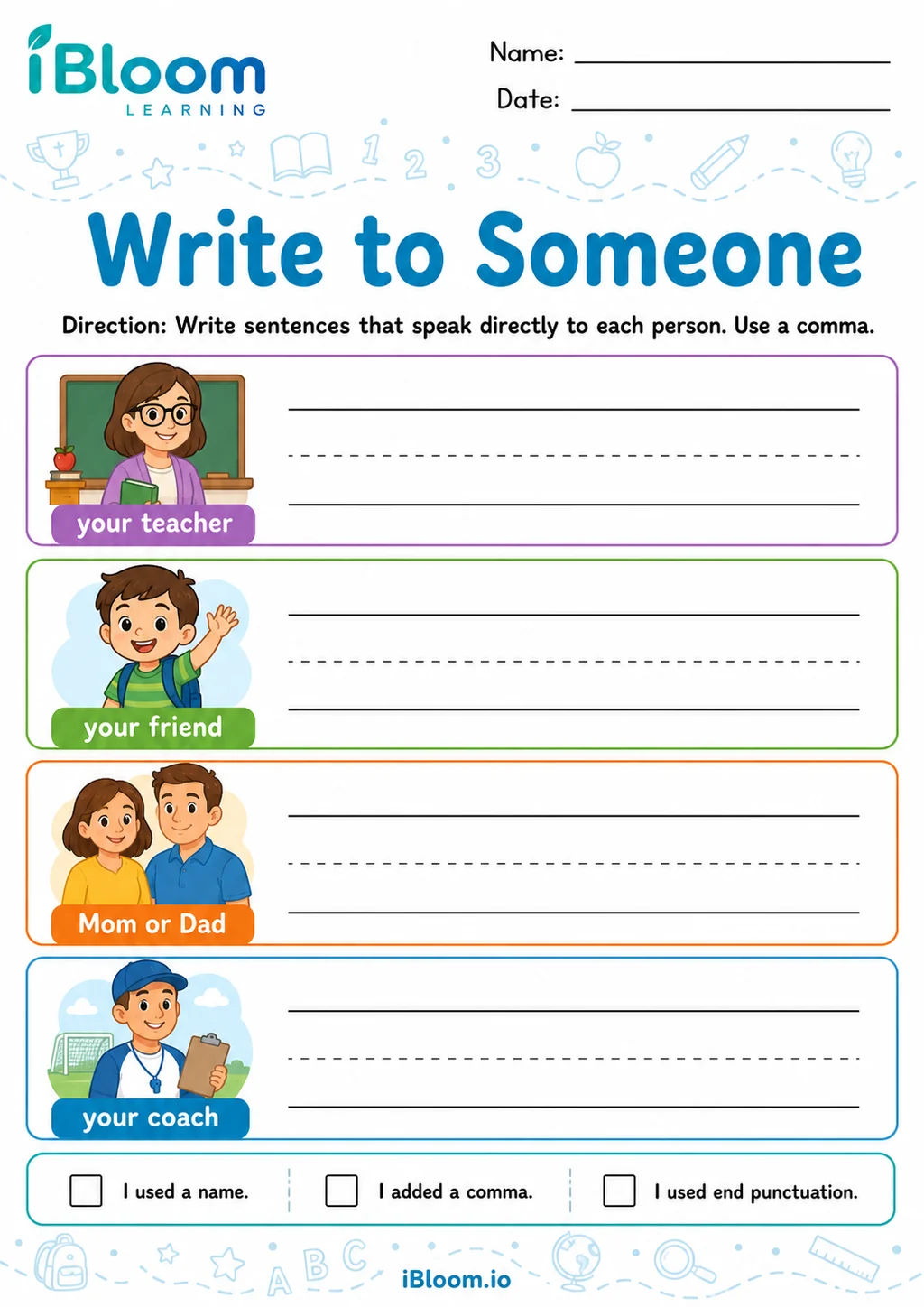 Commas Names — Write and ApplyGrade 2 worksheets help children place commas before or after names when a sentence directly speaks to someone. This write and apply worksheet provides a distinct, age-appropriate way to practise the same lesson.Grade 2Free PDF preview
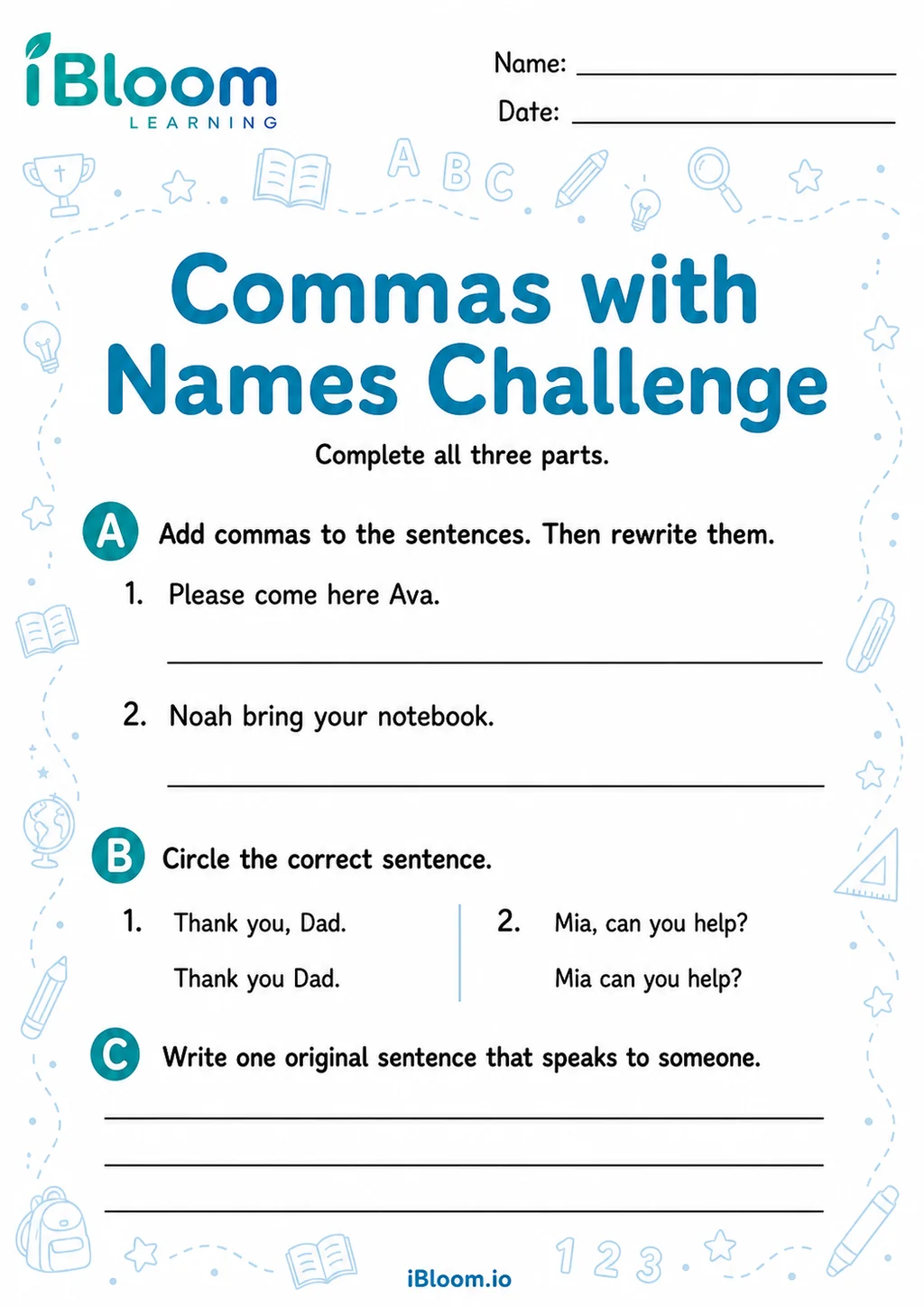 Commas Names — Mixed Review and ChallengeGrade 2 worksheets help children place commas before or after names when a sentence directly speaks to someone. This mixed review and challenge worksheet provides a distinct, age-appropriate way to practise the same lesson.Grade 2Free PDF preview
Practice that builds confidence
What this punctuation skill means
These Grade 2 punctuation worksheets focus on using commas with names in direct address, such as “Ben, please pass the crayons” or “Thank you, Mom.” Children learn that the name of the person being spoken to is set off from the rest of the sentence.
The printable activities include short sentences, editing practice, and rewrite tasks that ask students to notice where the name appears—at the beginning or end of the sentence—and add the correct comma.
Commas with names help readers hear who is being spoken to. In “Lena, close the door,” the comma shows that Lena is the listener. In “Good morning, Mr. Hill,” the comma separates the greeting from the name. Grade 2 students are not just memorizing a mark; they are learning how punctuation changes meaning and voice in a sentence.

How the practice progresses
The worksheets begin with clear examples where the name comes first, such as “Dad, look at my picture.” Students then work with names at the end of sentences, such as “I found your pencil, Ava.” Some items ask children to rewrite sentences with the comma in the right place, while others ask them to choose whether a comma is needed. This steady movement from noticing to editing builds independence.
A simple parent routine
Read one sentence aloud without the comma pause, then read it again with a small pause before or after the name. Ask, “Who is being spoken to?” Have your child circle the name, tap where the pause belongs, and then write the comma. For extra practice, use real family sentences: “Sam, put on your shoes” or “Great job, Maya.” Keep the focus on meaning, not speed.

Classroom uses for teachers
Teachers can use these pages during a punctuation mini-lesson, grammar centers, morning work, or quick review before writing workshop. They also work well after students draft dialogue, notes, or friendly messages, because children can transfer the same idea to their own writing: when you speak to a person by name, set the name apart with a comma.

Common errors to watch for
Many second graders place the comma after every name they see. Remind them that the comma is needed when the sentence is talking to the person, not just talking about the person. Compare “Jake likes soccer” with “Jake, do you like soccer?” Another common error is forgetting the comma when the name comes at the end, as in “Come here, Ella.”
Free printable PDF download
Use this grade 2 commas with names worksheet page to preview the activity, print it, or download it as a PDF for quick practice. It works well for homework, homeschool lessons, tutoring, morning work, revision, and classroom centers.
Answers and answer key support
After the child completes the worksheet independently, parents and teachers can use the answer support or answer key information to check the work, review mistakes, and choose the next practice step.
Why iBloom worksheets help
The practice is short, focused, and built around sentences children can understand. Visual spacing, repeated sentence patterns, and editing tasks help students connect the comma to the spoken pause. A child-friendly strategy is: find the name, ask “Am I talking to this person?”, then add a comma to show the pause.
Helpful answers
Frequently asked questions
What does “commas with names” mean in Grade 2 grammar?
It means using a comma to separate the name of the person being spoken to from the rest of the sentence, such as “Mia, please sit down” or “Thank you, Dad.”
How can my child tell if a comma is needed before or after a name?
Ask whether the sentence is speaking directly to that person. If it is, the name should be set off with a comma. If the sentence is only about the person, a comma may not be needed.
Do these worksheets include names at the beginning and end of sentences?
Yes. Students practice sentences where the name appears first, such as “Ava, come here,” and sentences where the name appears last, such as “Come here, Ava.”
What is a common mistake children make with this skill?
A common mistake is adding a comma after every name. Children need to learn that the comma is for direct address, not for every sentence that contains a name.
How can teachers use these comma worksheets in class?
They can be used for a punctuation mini-lesson, grammar centers, independent editing practice, morning work, or review before students write notes, dialogue, or short messages.
Is this grade 2 commas with names worksheet free?
Yes. You can preview it for free and use the printable worksheet for home or classroom practice.
Can I download this grade 2 commas with names worksheet as a PDF?
Yes. Use the worksheet download option to save a printable PDF, or print the worksheet directly from the page.
Does this grade 2 commas with names worksheet include answers or an answer key?
When the activity has fixed answers, iBloom includes answer support so parents and teachers can check the completed worksheet.