Free printable practice
Commas Letters Practice Activities
Grade 2 worksheets for practising commas in friendly letters, especially after greetings and closings.
Free printable worksheet PDFs
Preview every available page, then download the free worksheet PDF for home, homeschool, tutoring, or classroom practice.
Preview the exact activity before downloading it.
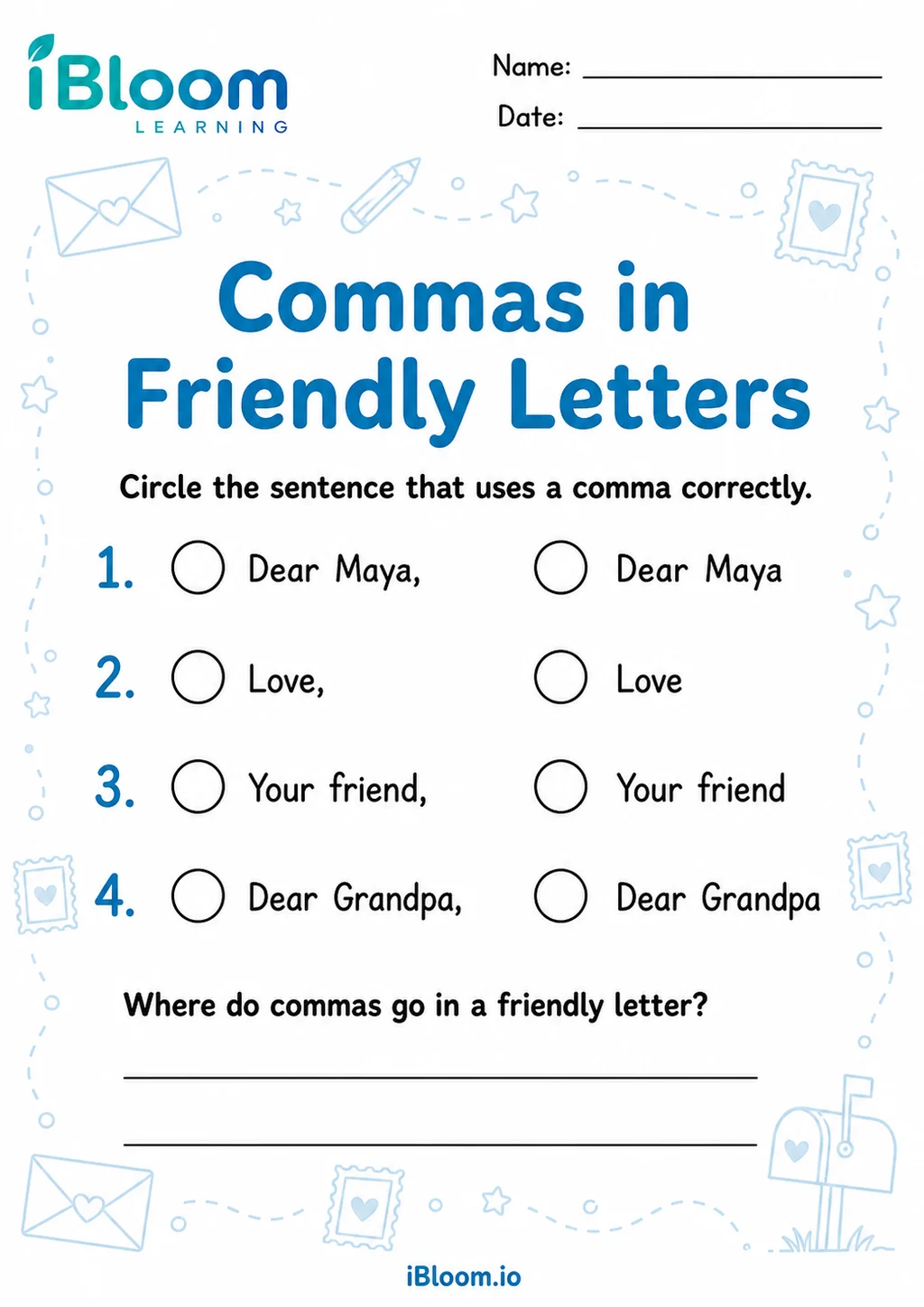 Commas Letters — Recognize the SkillGrade 2 worksheets for practising commas in friendly letters, especially after greetings and closings. This recognize the skill worksheet provides a distinct, age-appropriate way to practise the same lesson.Grade 2Free PDF preview
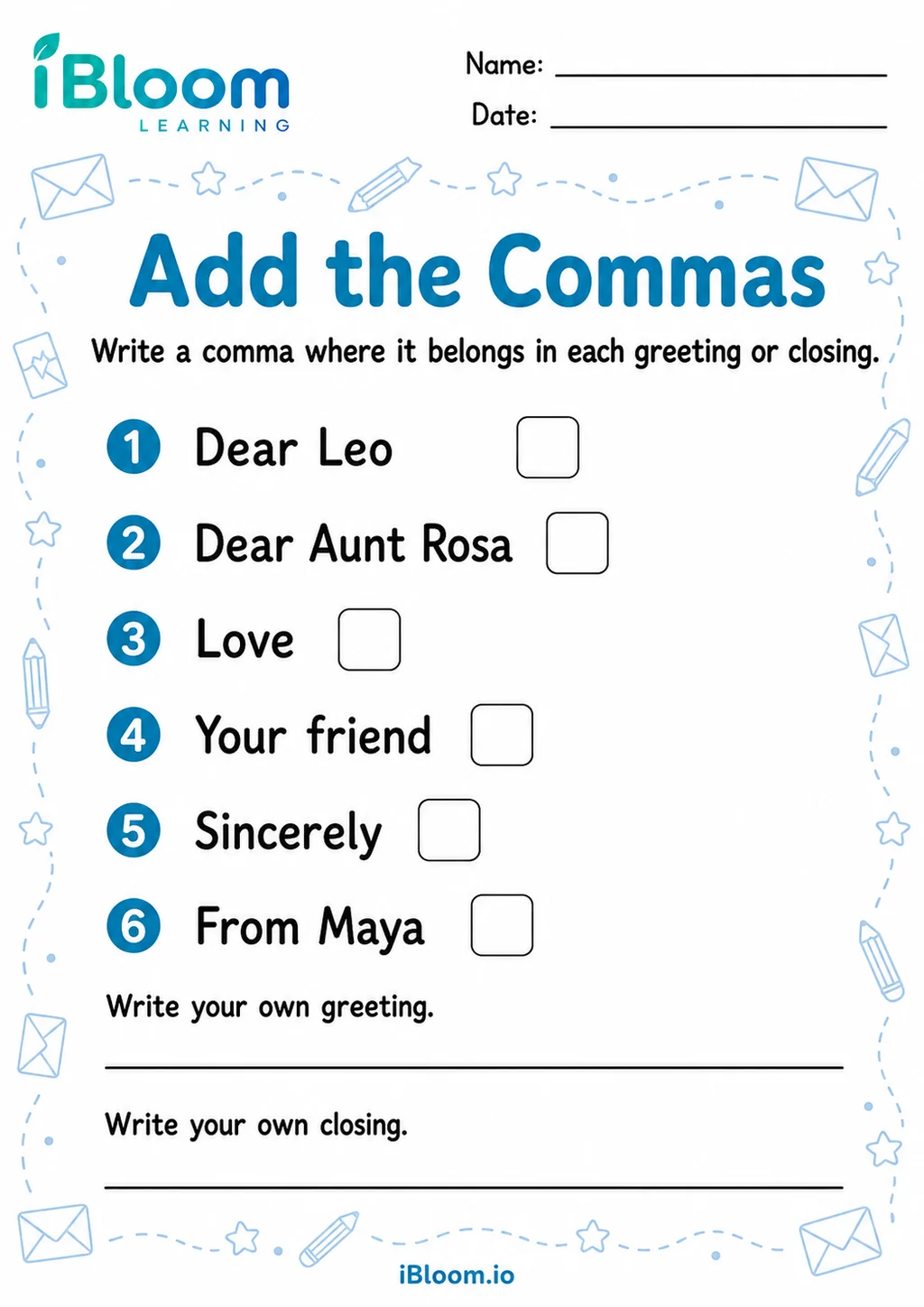 Commas Letters — Guided CompletionGrade 2 worksheets for practising commas in friendly letters, especially after greetings and closings. This guided completion worksheet provides a distinct, age-appropriate way to practise the same lesson.Grade 2Free PDF preview
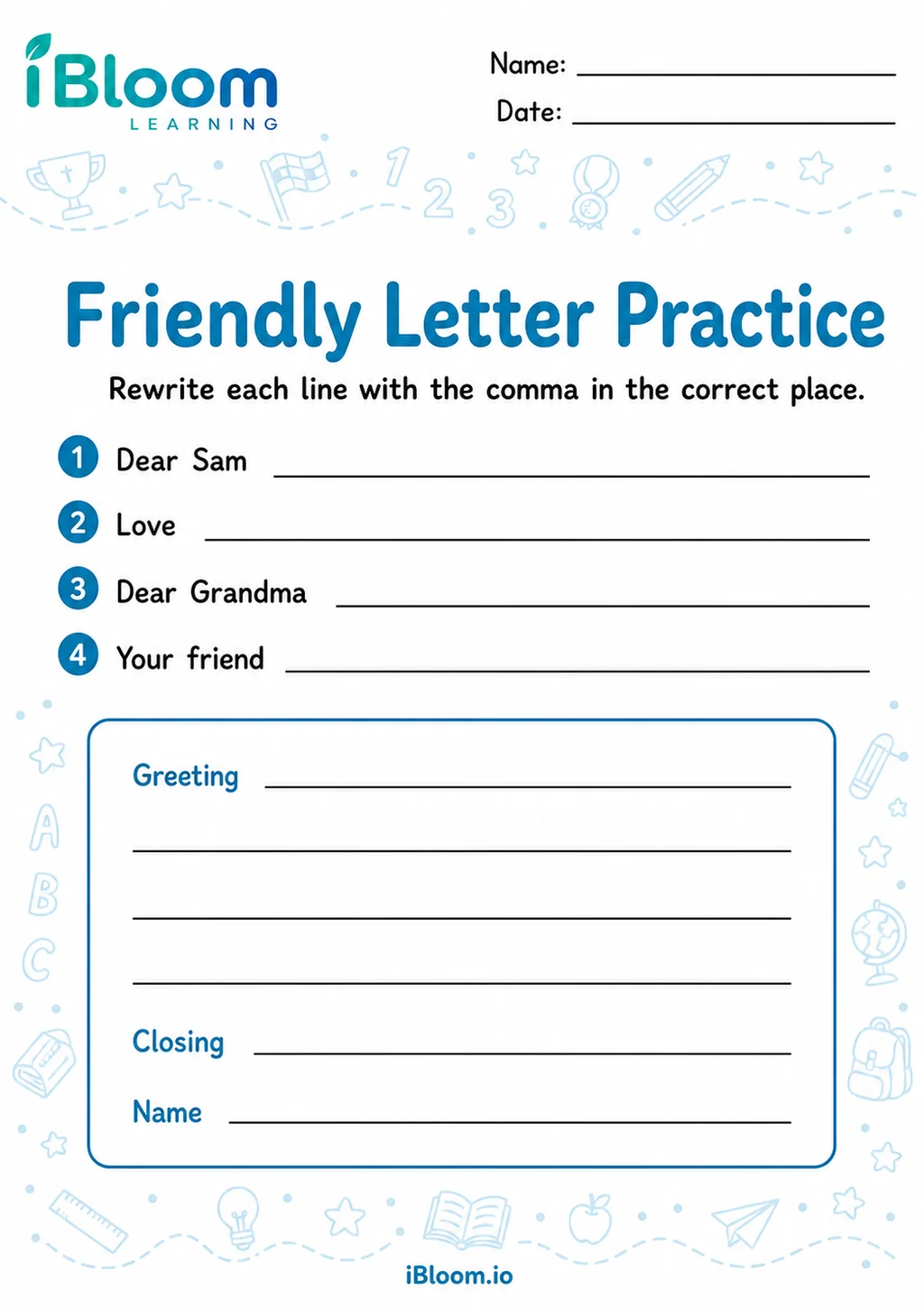 Commas Letters — Sentence PracticeGrade 2 worksheets for practising commas in friendly letters, especially after greetings and closings. This sentence practice worksheet provides a distinct, age-appropriate way to practise the same lesson.Grade 2Free PDF preview
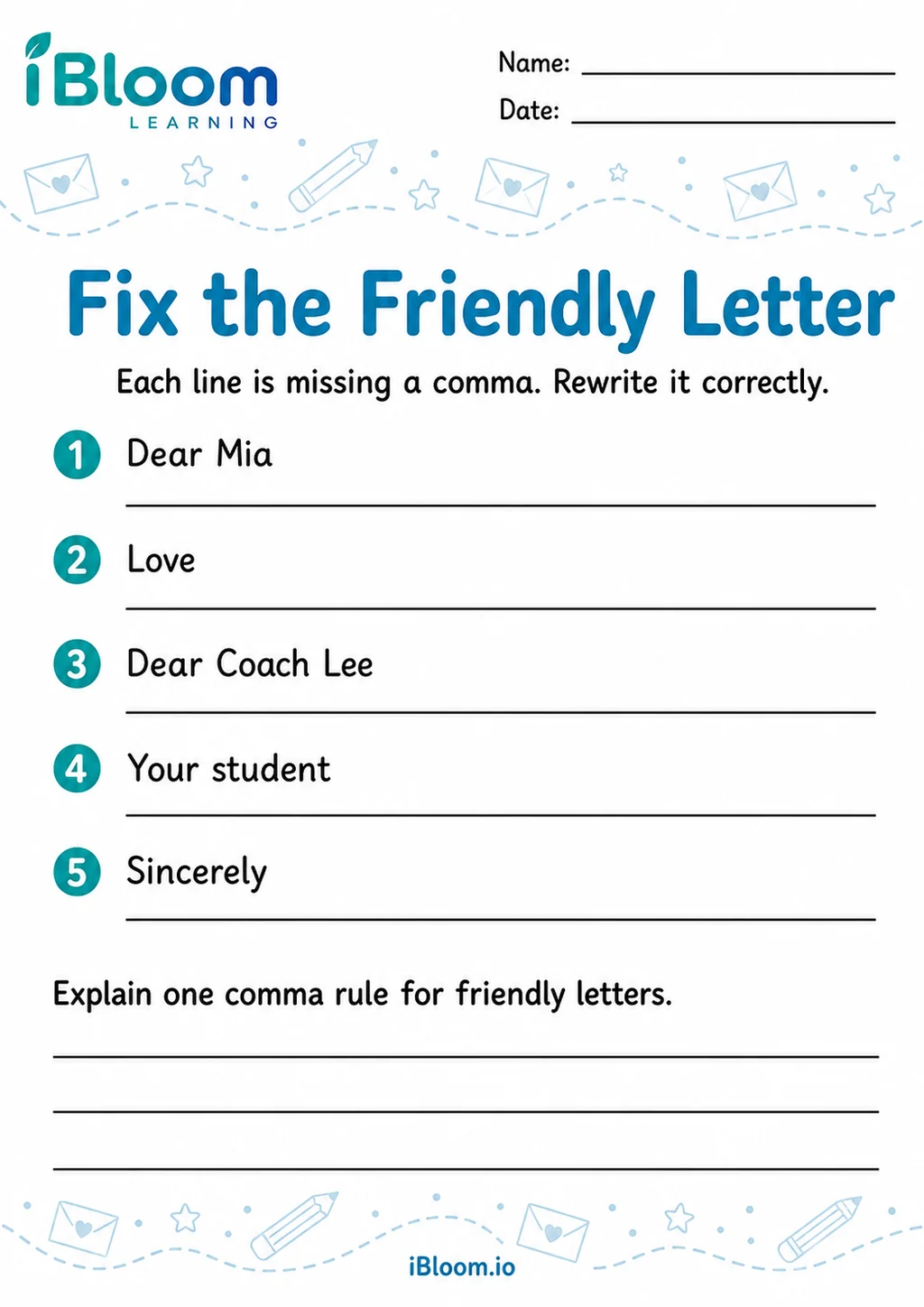 Commas Letters — Edit and CorrectGrade 2 worksheets for practising commas in friendly letters, especially after greetings and closings. This edit and correct worksheet provides a distinct, age-appropriate way to practise the same lesson.Grade 2Free PDF preview
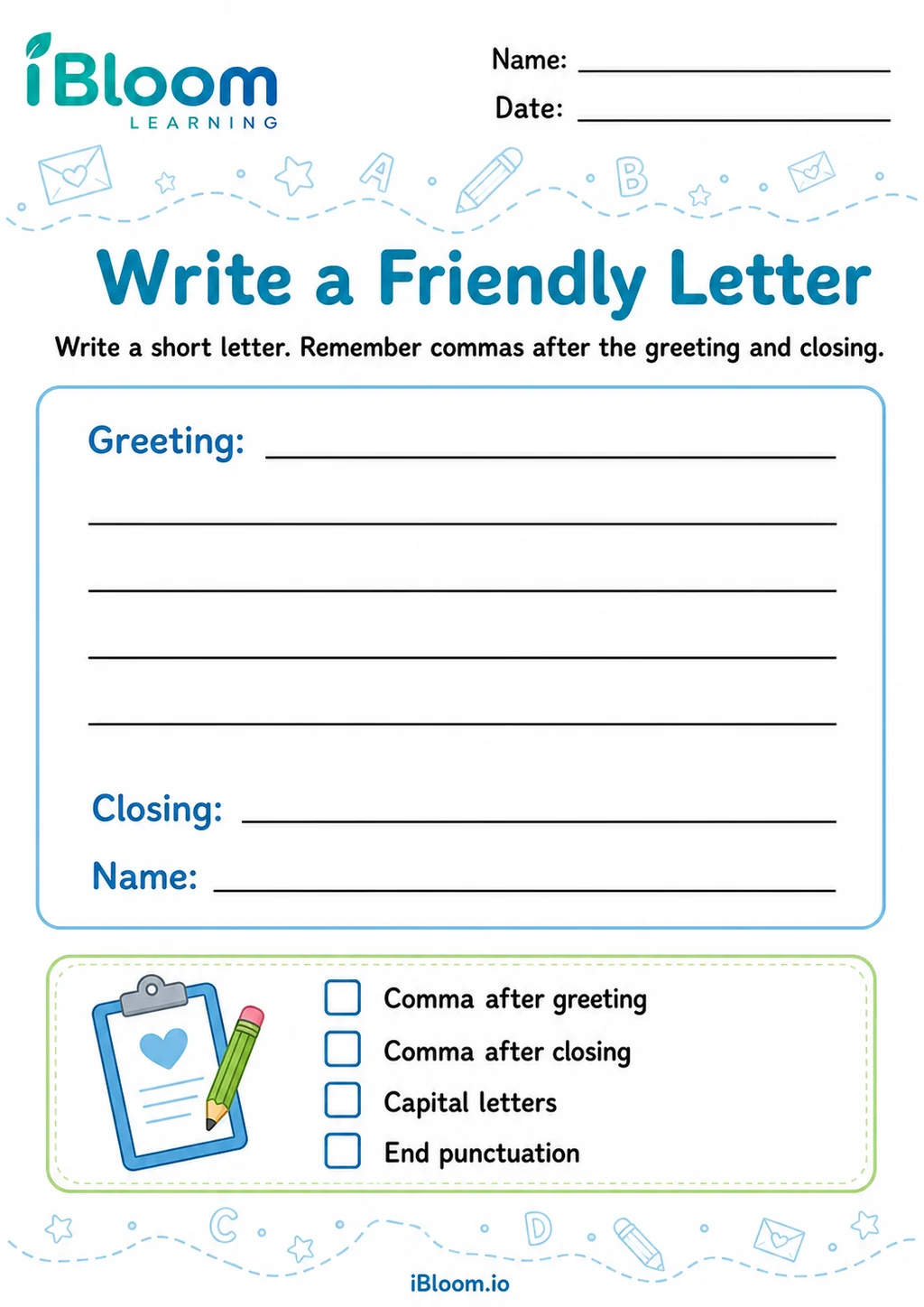 Commas Letters — Write and ApplyGrade 2 worksheets for practising commas in friendly letters, especially after greetings and closings. This write and apply worksheet provides a distinct, age-appropriate way to practise the same lesson.Grade 2Free PDF preview
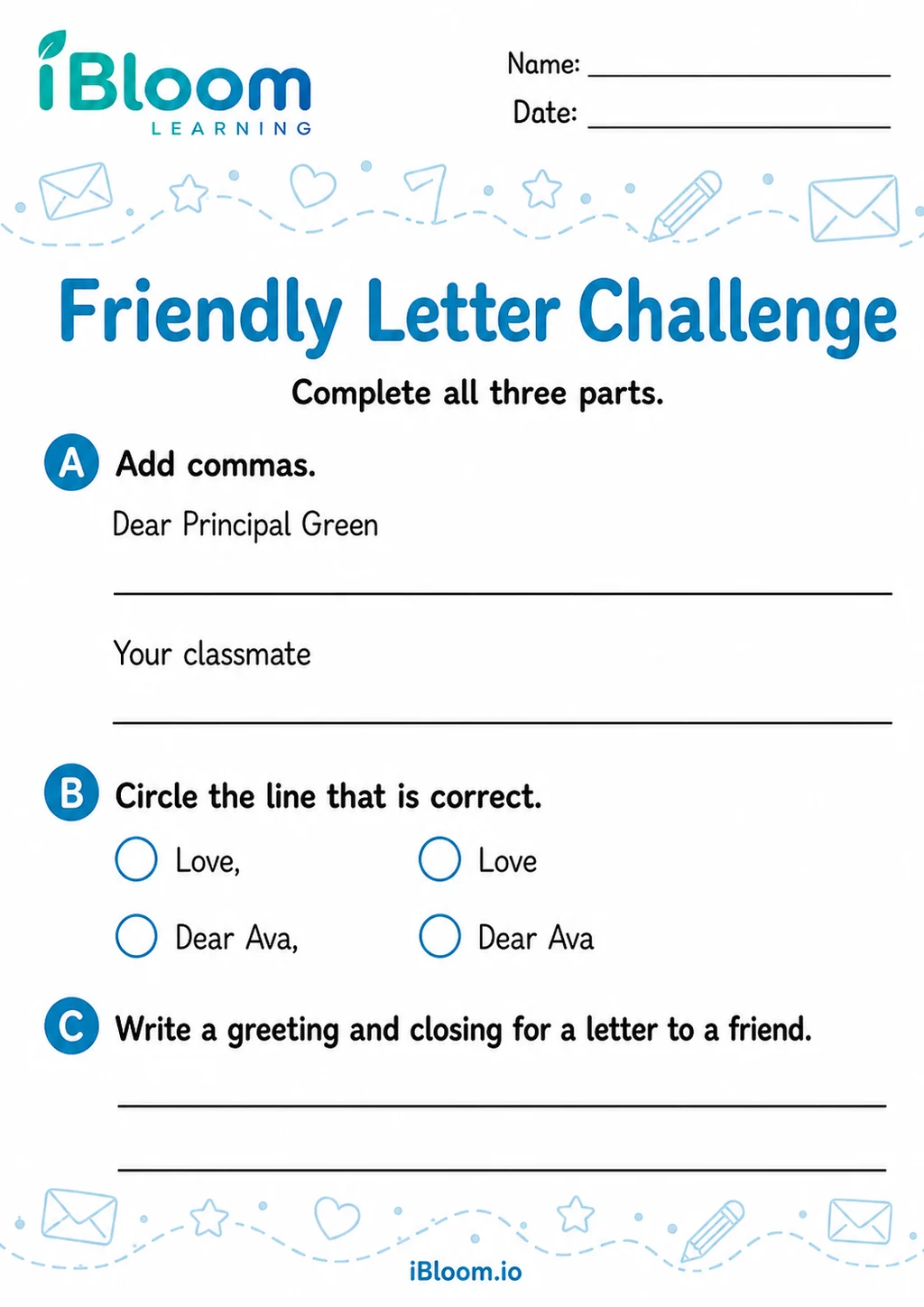 Commas Letters — Mixed Review and ChallengeGrade 2 worksheets for practising commas in friendly letters, especially after greetings and closings. This mixed review and challenge worksheet provides a distinct, age-appropriate way to practise the same lesson.Grade 2Free PDF preview
Practice that builds confidence
What this comma skill covers
These Grade 2 punctuation worksheets help children practise using commas in friendly letters. Students learn where a comma belongs in a greeting such as “Dear Grandma,” and in a closing such as “Your friend,” before signing a name.
The printable activities include letter parts to read, edit, complete, and rewrite. Children build accuracy by spotting missing commas, fixing punctuation, and writing short letter openings and endings correctly.
In friendly letters, commas help readers hear the pause after the greeting and closing. Grade 2 students practise the common letter pattern: a greeting, a short message, a closing, and a signature. The key punctuation targets are the comma after the greeting, as in “Dear Sam,” and the comma after the closing, as in “Love,” or “Your friend,”.

How the practice progresses
The worksheets move from recognition to independent writing. Children may first identify the correctly punctuated letter part, then add a missing comma, then rewrite a greeting or closing with correct punctuation. This progression keeps the focus narrow so students are not trying to fix every part of a letter at once.
Parent routine for at-home practice
Read one short friendly letter together and ask, “Who is the letter to?” Point to the greeting and have your child circle the comma. Then ask, “Who wrote it?” and underline the closing and signature. Next, dictate two examples: “Dear Dad,” and “From Mia,”. Let your child write them, check for the comma, and say the pause aloud.

Classroom uses for teachers
These pages work well for punctuation review, writing centers, morning work, or a mini-lesson before students write thank-you notes or classroom letters. Teachers can model one example on the board, then have students edit a letter part independently or with a partner. Finished work can be connected to a real writing task, such as writing to a classmate, family member, or book character.

Common errors to watch for
Many children place the comma at the end of the signature instead of after the closing. Others forget the comma after “Dear” phrases or use a period instead. Watch also for commas placed after every word, such as “Dear, Mom,”. The comma belongs after the whole greeting: “Dear Mom,”.
Free printable PDF download
Use this grade 2 commas in letters worksheet page to preview the activity, print it, or download it as a PDF for quick practice. It works well for homework, homeschool lessons, tutoring, morning work, revision, and classroom centers.
Answers and answer key support
After the child completes the worksheet independently, parents and teachers can use the answer support or answer key information to check the work, review mistakes, and choose the next practice step.
Why iBloom worksheets help
The activities give children repeated, clear examples of the same punctuation pattern in meaningful letter parts. A helpful child-friendly strategy is: “Greet, comma. Close, comma. Sign your name.” This simple chant supports accuracy when students write their own friendly letters.
Helpful answers
Frequently asked questions
What comma rule do these worksheets teach?
They focus on using a comma after the greeting in a friendly letter, such as “Dear Maya,” and after the closing, such as “Your friend,” before the writer signs a name.
Are these worksheets suitable for Grade 2 students who are new to letter writing?
Yes. The practice is limited to clear friendly letter parts, so children can learn the punctuation pattern without needing to write a full long letter first.
What is a common mistake with commas in letter closings?
A common mistake is putting the comma after the signature instead of after the closing. The correct form is “Love,” on one line and the name on the next line.
How can I help my child remember where the comma goes?
Use the phrase “Greet, comma. Close, comma. Sign your name.” Have your child say it while pointing to the greeting, closing, and signature.
Can teachers use these pages before a writing activity?
Yes. They are useful before students write thank-you notes, friendly letters, or messages to classmates because they review the punctuation needed in the greeting and closing.
Is this grade 2 commas in letters worksheet free?
Yes. You can preview it for free and use the printable worksheet for home or classroom practice.
Can I download this grade 2 commas in letters worksheet as a PDF?
Yes. Use the worksheet download option to save a printable PDF, or print the worksheet directly from the page.
Does this grade 2 commas in letters worksheet include answers or an answer key?
When the activity has fixed answers, iBloom includes answer support so parents and teachers can check the completed worksheet.