



About this worksheet
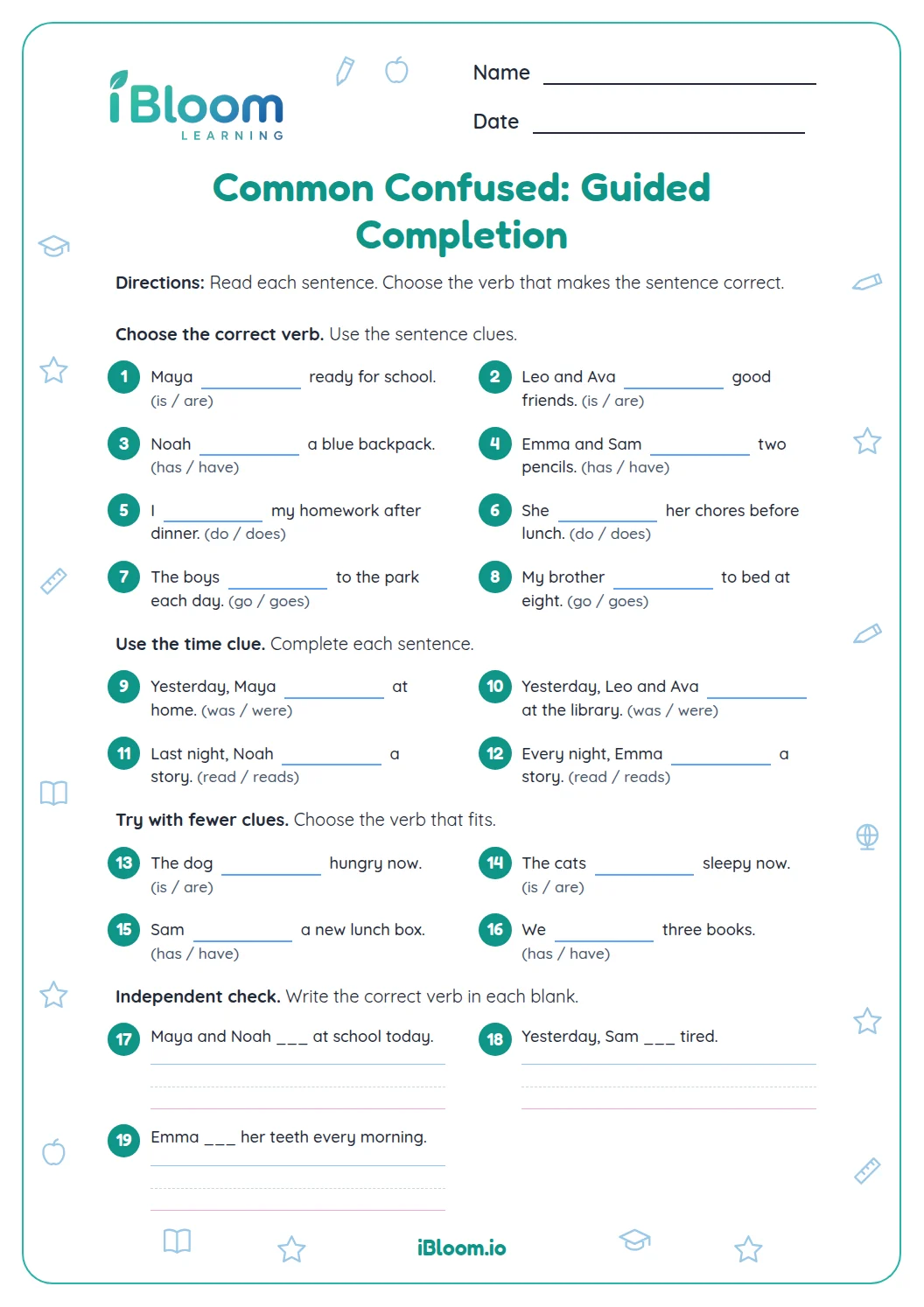
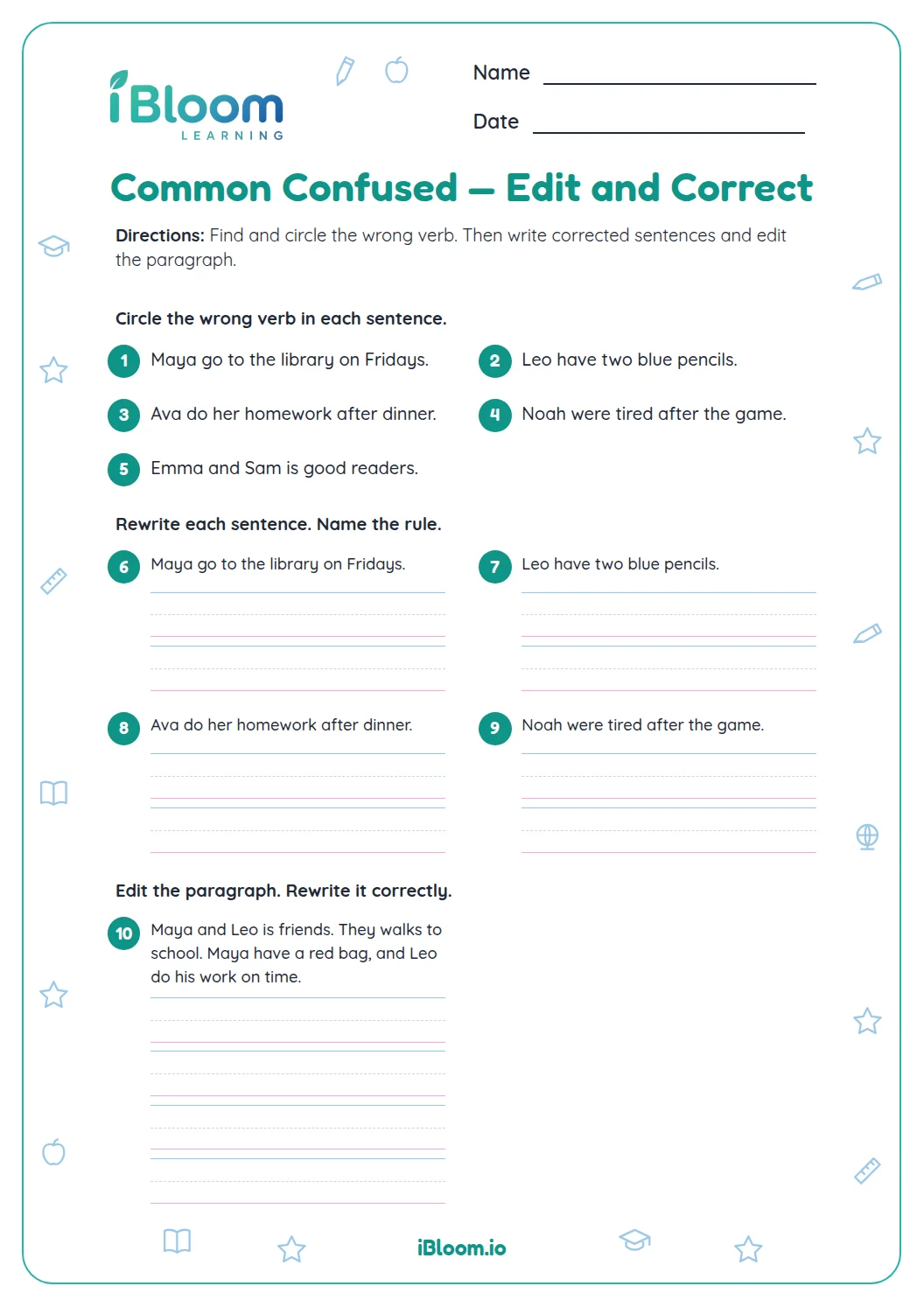
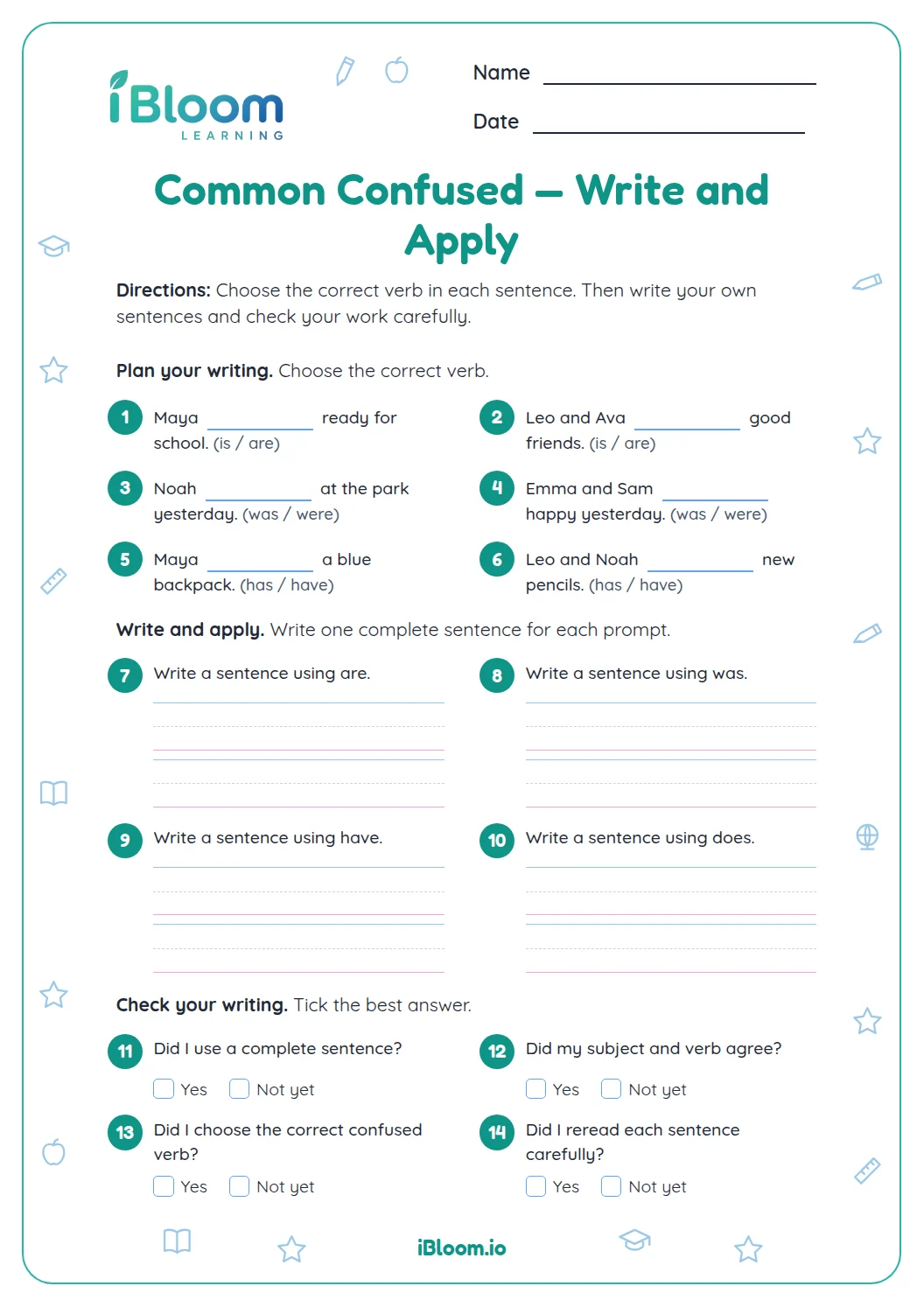
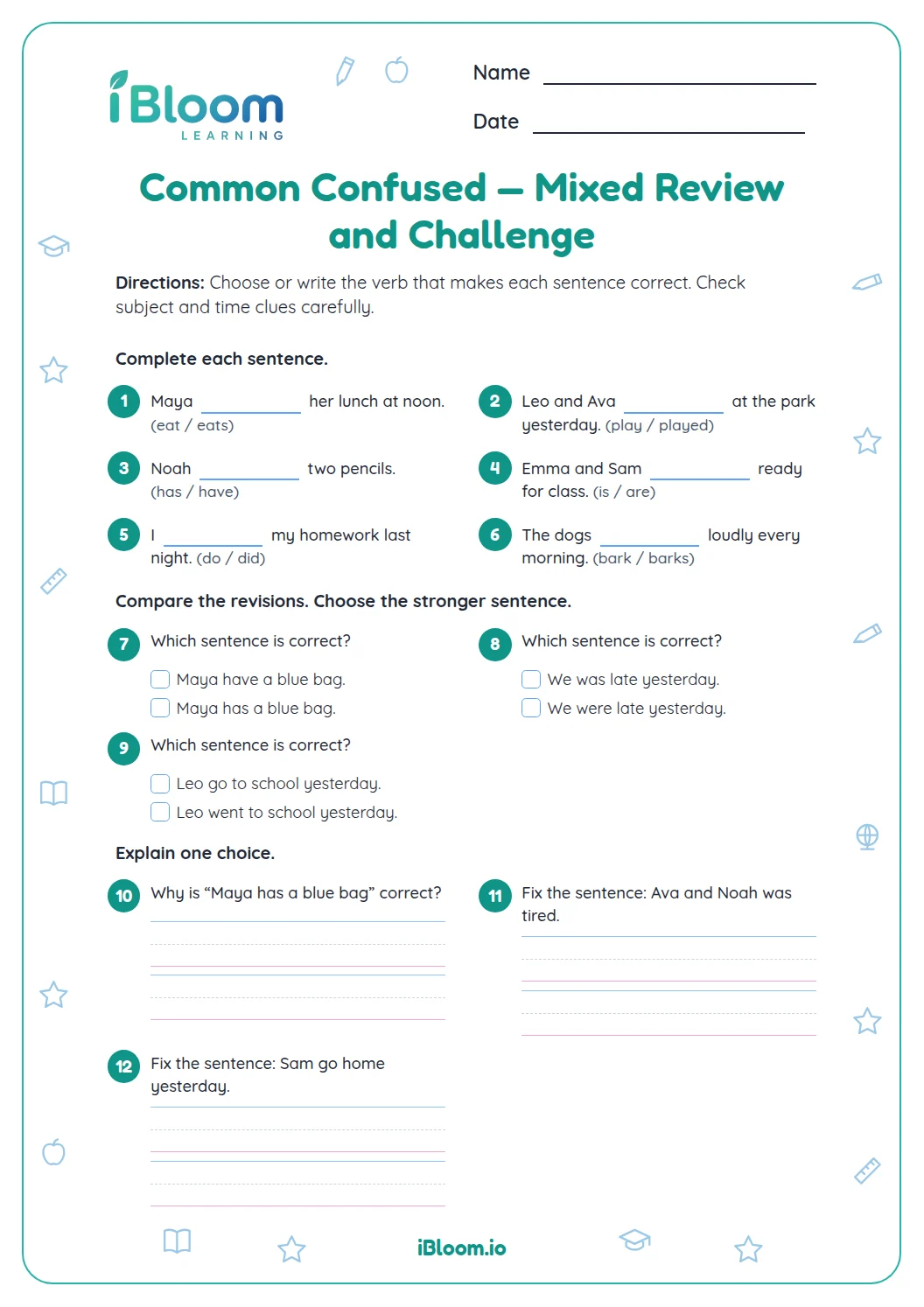
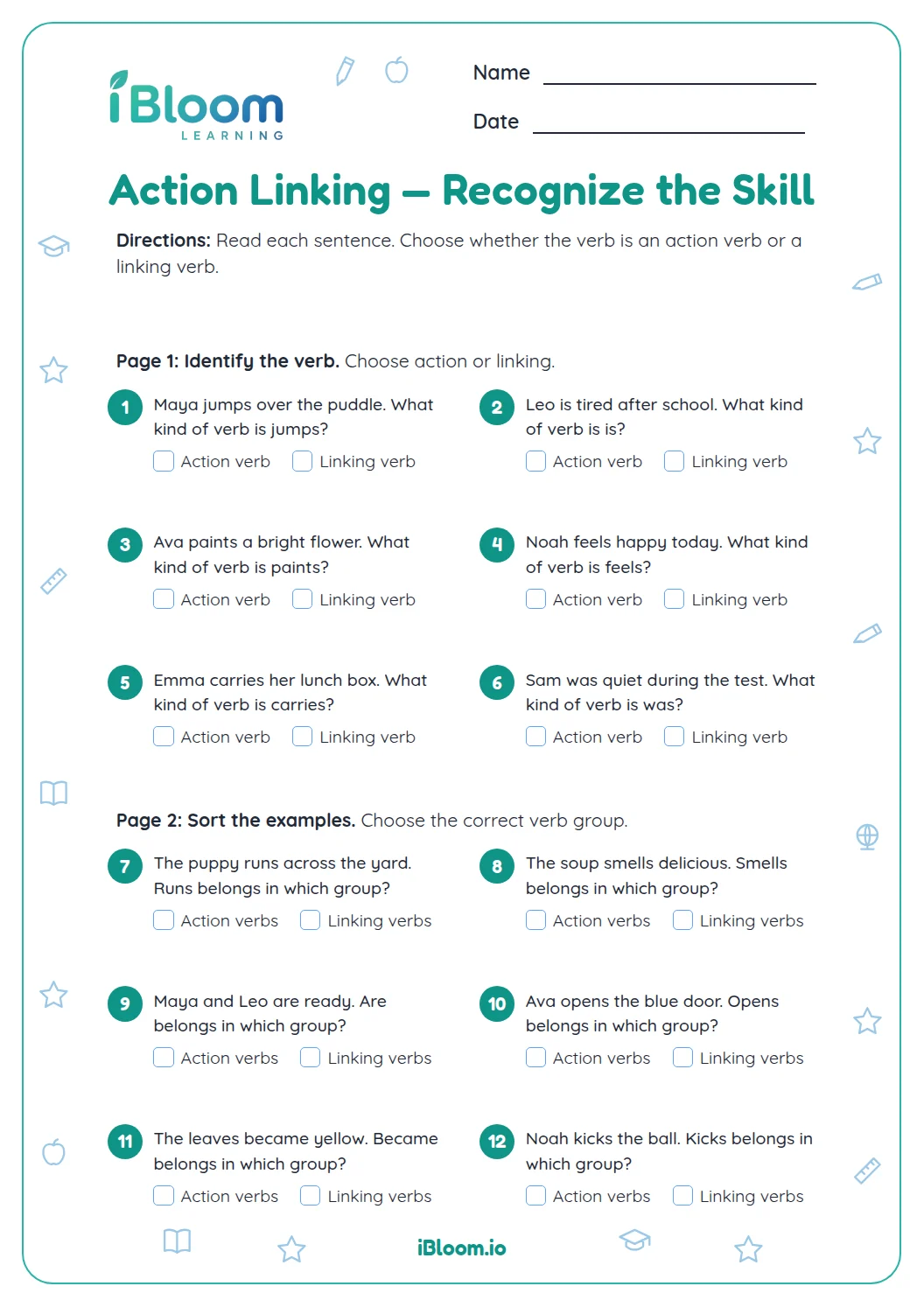
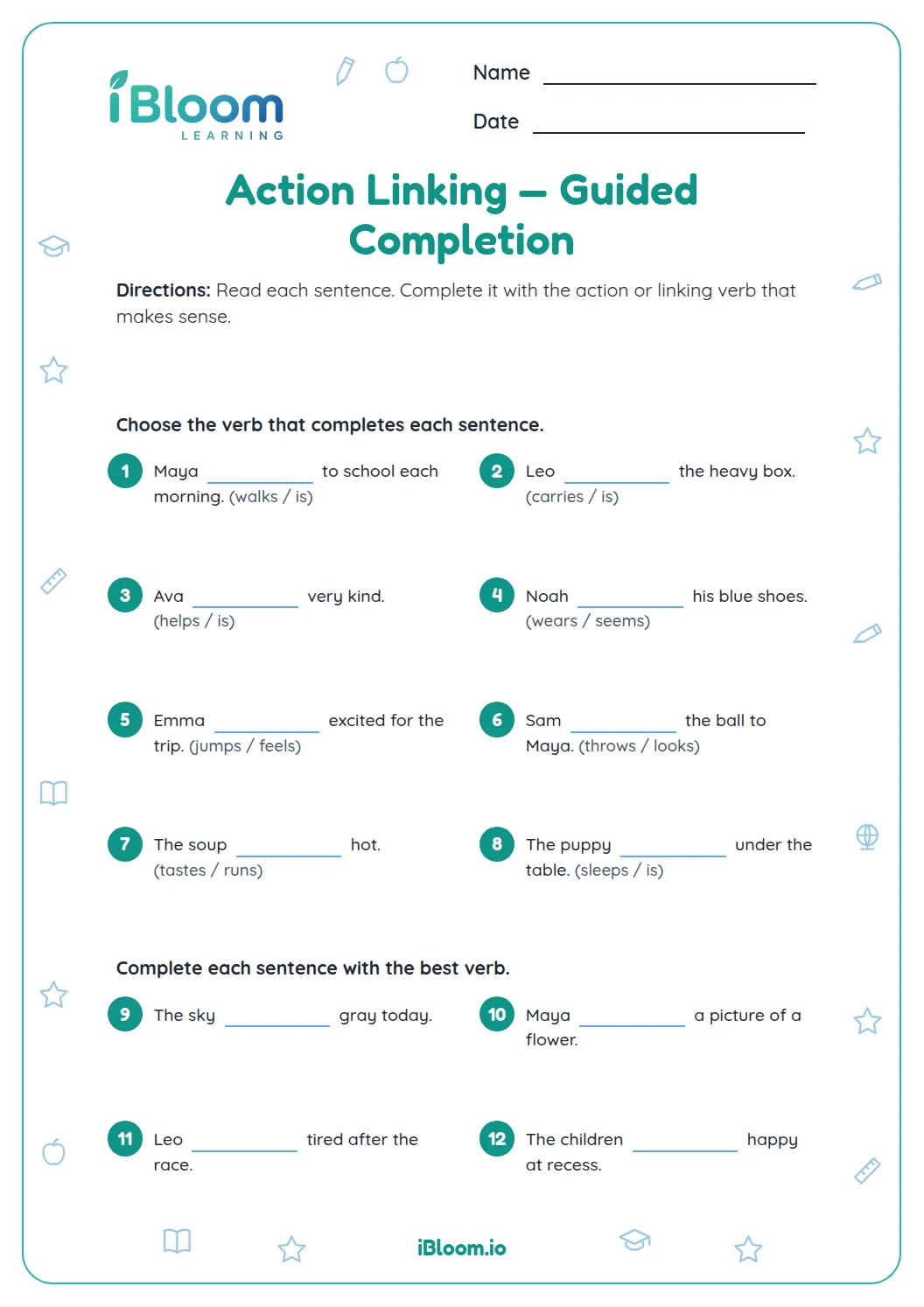
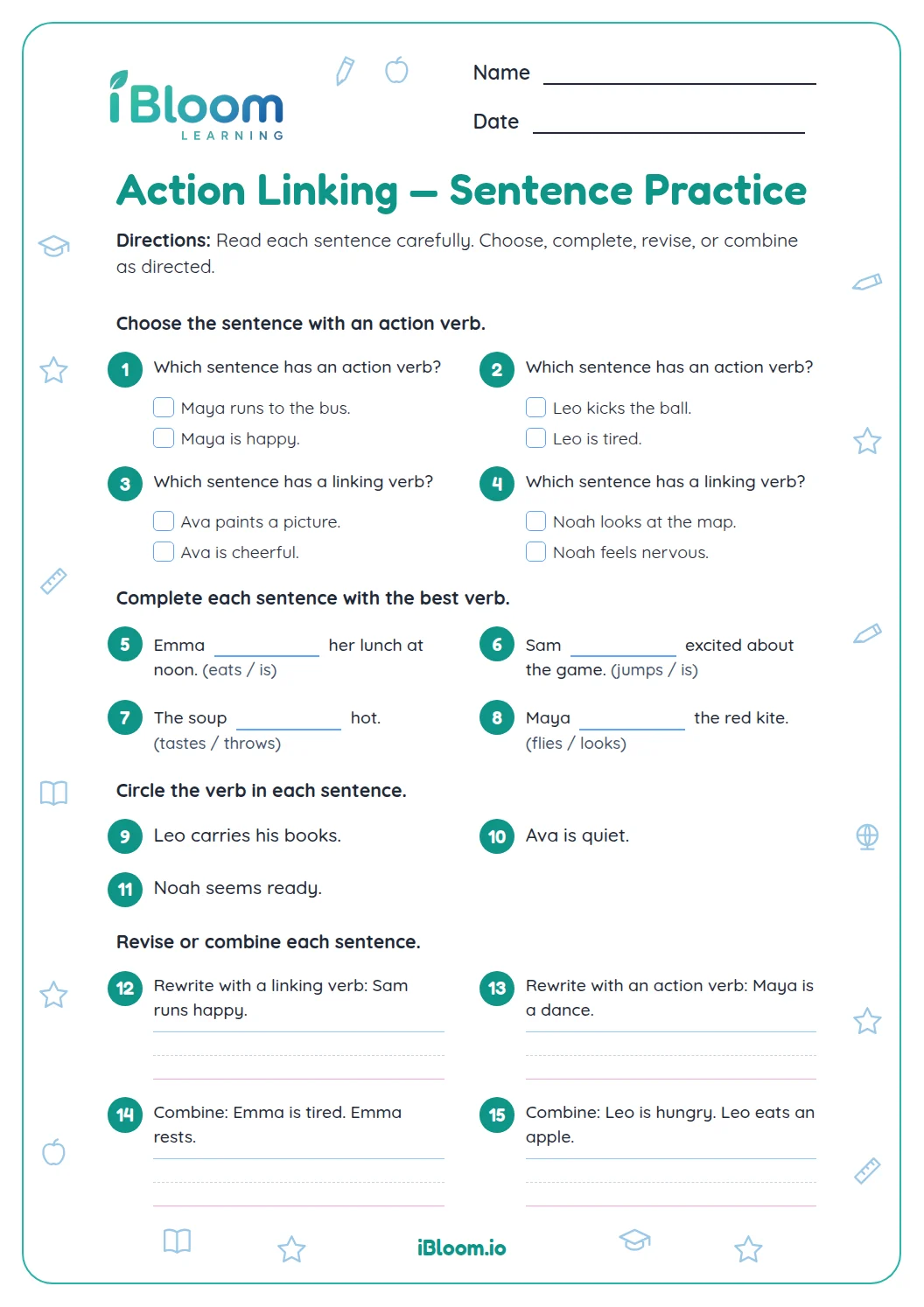
The sentences practice is/are, has/have, do/does, and familiar present and past forms.
What does this worksheet practice?
The sentences practice is/are, has/have, do/does, and familiar present and past forms.
Choose verbs that agree with the subject and fit sentence meaning.
- Subject and verb agreement
- Do/does in questions
- Common past tense verbs
- Sentence meaning clues
How can students approach the questions?
Find the person or thing the sentence is about.
Notice if the subject is one or more than one; look for a time clue.
How can students check their work?
Reread the sentence aloud to check that the verb fits.
How to use this worksheet at home or in class
- 1Find the person or thing the sentence is about.
- 2Notice if the subject is one or more than one; look for a time clue.
- 3Reread the sentence aloud to check that the verb fits.
Common mistakes and quick fixes
The mistake
Choosing a verb from the nearest noun instead of the subject.
The fix
Underline the sentence subject before selecting the verb.
The mistake
Using present tense after yesterday.
The fix
Notice the time clue and choose the past form.
The mistake
Choosing does with a plural subject.
The fix
One person takes does; a group takes do.
What to practice next
Questions parents and teachers ask
What does this verb worksheet cover?
The sentences practice commonly confused verb forms, including is and are, has and have, and do and does. Students also use familiar present and past-tense verbs. Each item asks children to read the complete sentence and use its subject or time clue before choosing.
What grade is it for?
This sentence practice is written for Grade 2. It uses familiar, short sentence contexts to help children notice subjects, time clues, and verb forms. Students choose or supply a verb, then reread the complete sentence to check that it makes sense.
How can I help if my child is unsure?
Ask your child to underline the subject first. Then decide whether it means one person or more than one, and notice words such as yesterday or last Friday. Read the whole sentence with the selected verb to check that it sounds right and keeps the intended meaning.
Does the worksheet include an answer key?
Yes. A separate key lists the verb for every item. For questions with choices, children can explain which sentence clue helped them decide. For the final completion items, accept the printed verb when it forms a clear and grammatically correct sentence.