




About this worksheet
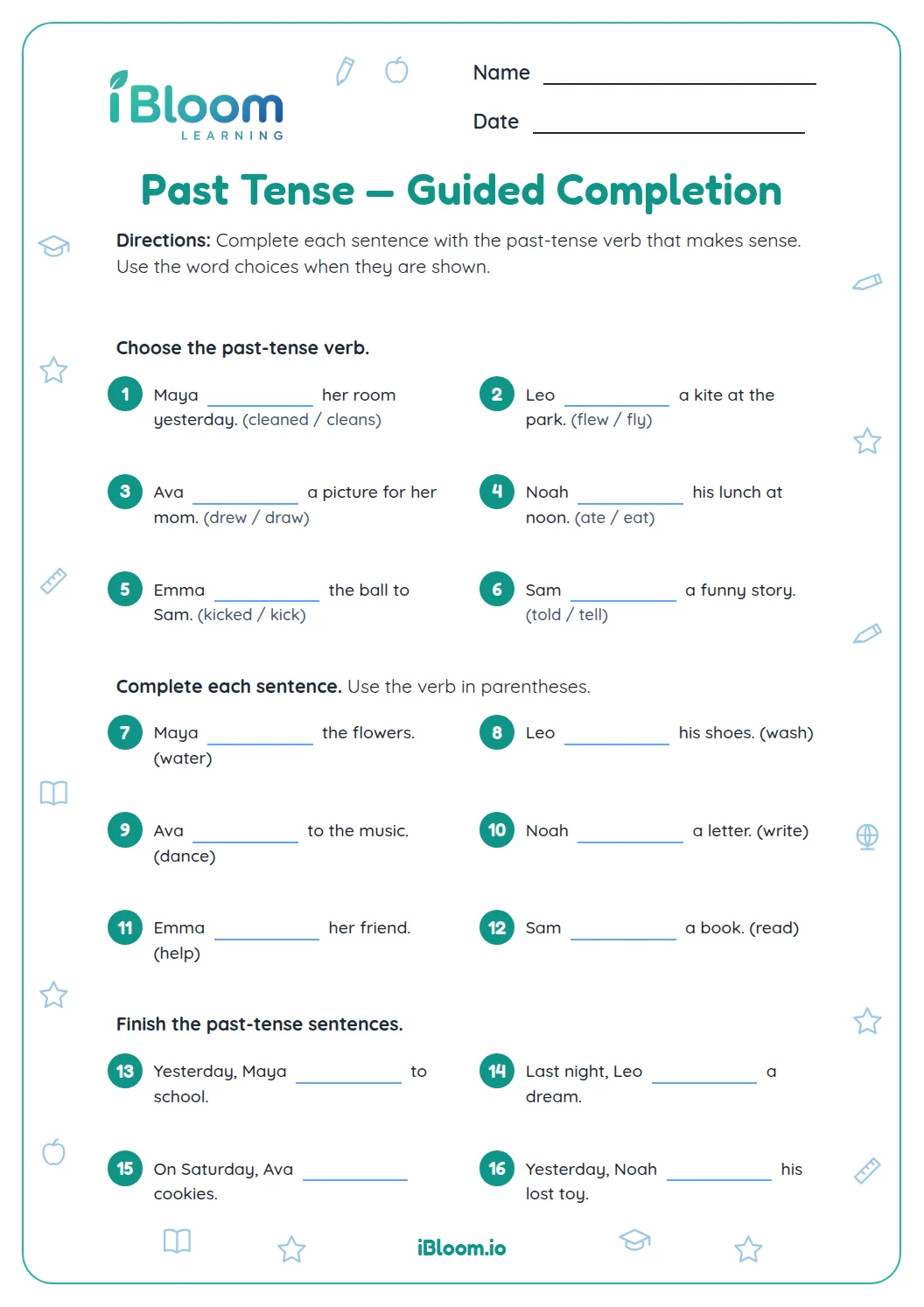
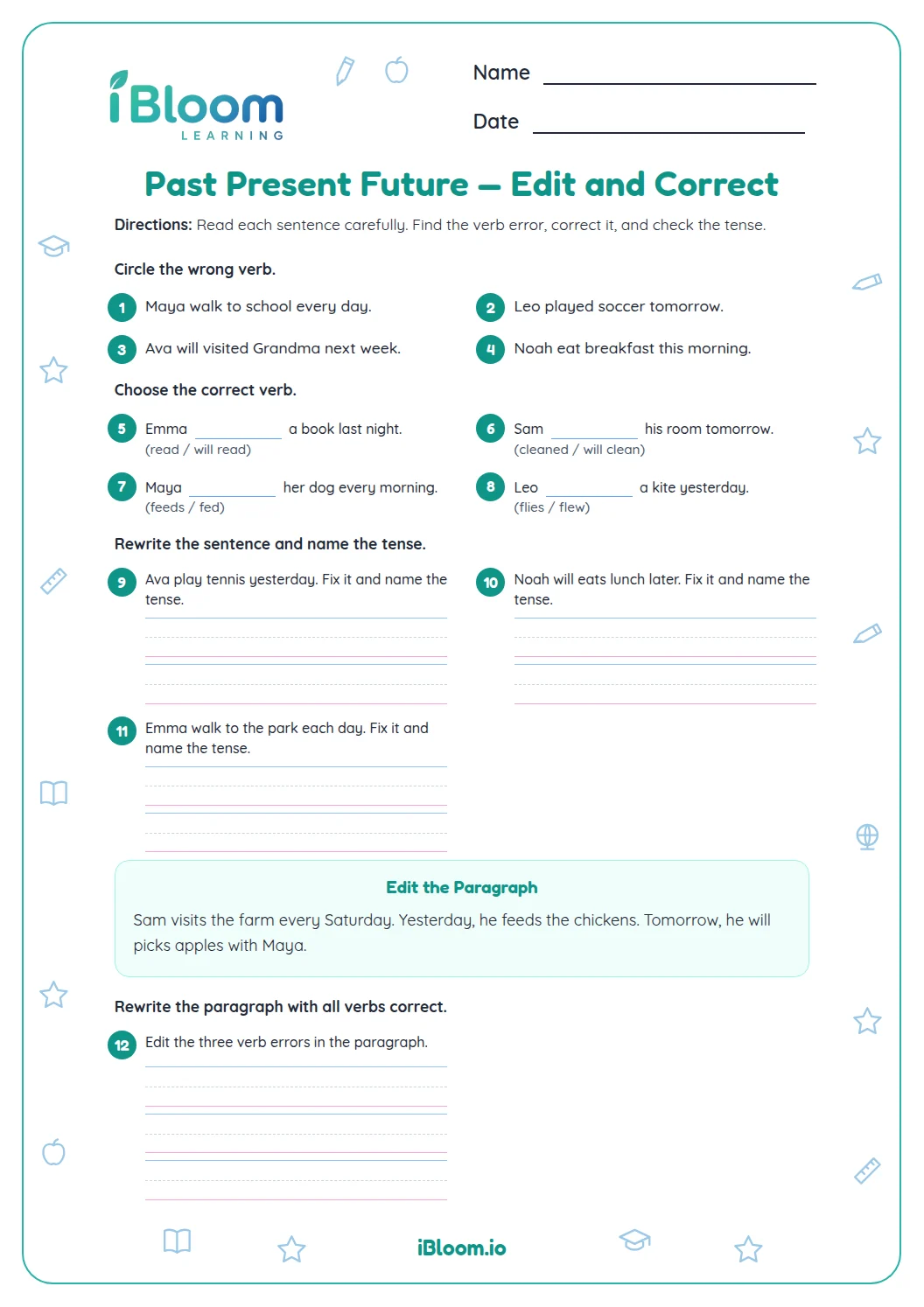
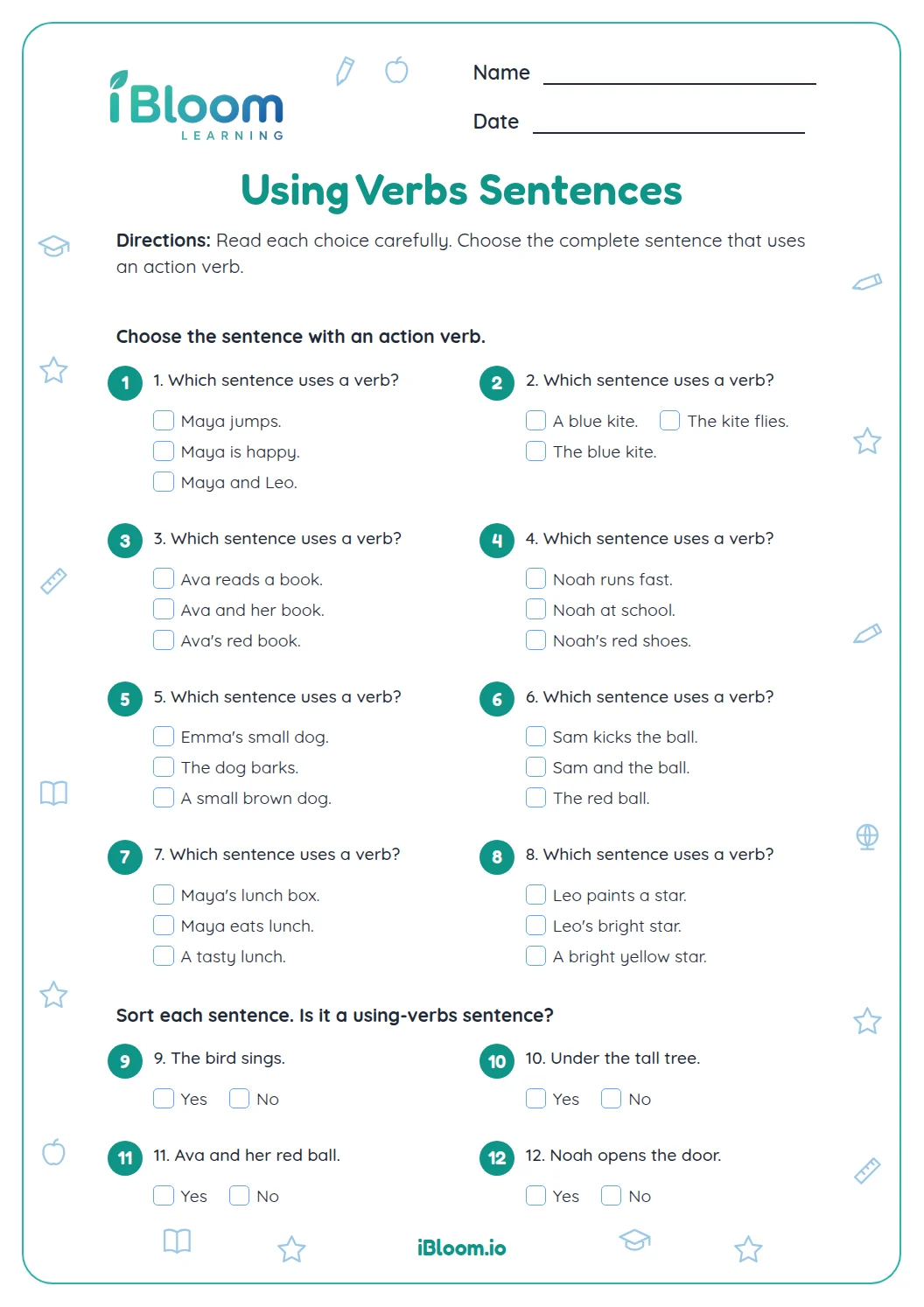
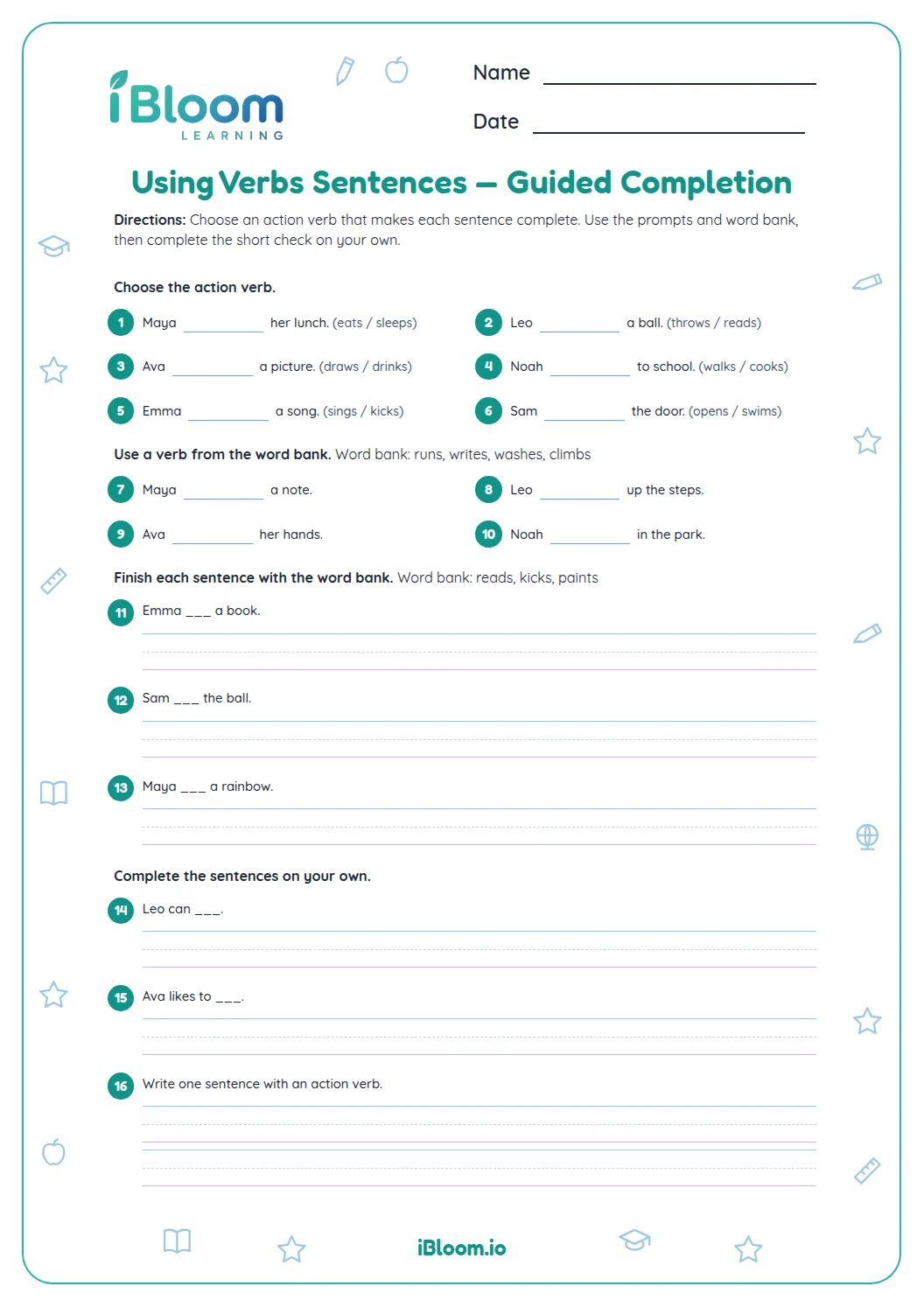
This Grade 2 printable helps learners recognize irregular past-tense verbs in context. Part A completes five sentences with forms such as went, found, made, and slept. Part B pairs present-time sentences with yesterday to practice forms including ate, saw, had, took, and came. Part C checks correct forms in complete sentences. The 15 questions span two worksheet pages and practice CCSS L.2.1d; the separate answer key is also two pages.
Aligned to L.2.1d
Which verb forms appear on the page?
The first five items use sentence clues such as yesterday or a familiar event. The next five pair a present-time sentence with a yesterday sentence, making the change in verb form visible. The final five ask learners to select the correctly written sentence.
The examples include common irregular forms: go/went, find/found, eat/ate, see/saw, take/took, and bring/brought.
How do you choose the past form?
Use the time clue and read the sentence aloud with each choice. Many irregular verbs change form instead of adding -ed. Check that the chosen word agrees with the subject and completes the sentence.
- 1“Yesterday, we ___ to the park.”
- 2Yesterday signals past time. Went is the past form of go, so “Yesterday, we went to the park” is correct.
Why check the whole sentence?
A verb may look like a past form on its own, but it still needs to fit the sentence. In Part C, read both choices all the way through and listen for the familiar irregular form.
How to use this worksheet
- 1Find a time clue such as yesterday.
- 2Recall the verb form that tells about the past.
- 3Read the complete sentence with the choice.
- 4Check that the verb fits the subject and meaning.
Common mistakes and quick fixes
The mistake
Adding -ed to an irregular verb.
The fix
Use the remembered form went, saw, or took.
The mistake
Choosing the present form after yesterday.
The fix
Match the verb to the time clue.
The mistake
Stopping after checking the verb alone.
The fix
Reread the complete sentence.
Common Core alignment
Form and use the past tense of frequently occurring irregular verbs.
On this sheet: Parts A–C choose and use frequent irregular past-tense forms.
Show the official wordingHide the official wording
Form and use the past tense of frequently occurring irregular verbs (e.g., sat, hid, told).
What to practice next
Make more practice
Further reading
Questions parents and teachers ask
What is an irregular past-tense verb?
An irregular past-tense verb changes in a way that does not follow the usual -ed pattern. Go becomes went, see becomes saw, and bring becomes brought. This worksheet uses those forms in sentences so learners can match the verb to a past-time clue.
Which verbs are practiced on this worksheet?
The 15 items include go/went, find/found, make/made, sleep/slept, bring/brought, eat/ate, see/saw, have/had, take/took, and come/came. The last part asks learners to recognize correct forms in full sentences, including common incorrect spellings. Learners also see common incorrect forms such as goed and eated.
How does “yesterday” help?
Yesterday tells the reader that an action happened in the past, so the sentence needs a past-tense verb. It does not tell you which form to use by itself; learners still need to recall that eat becomes ate and see becomes saw.
How many questions and pages are there?
There are 15 questions on two printable worksheet pages and a separate two-page answer key. Five items choose a past form, five connect present and past sentences, and five check a whole sentence. The page practices CCSS L.2.1d.
What should I do if a learner writes “goed”?
Treat it as a useful chance to recall the irregular form. Ask the learner to say “go, went” and reread the sentence with went. This page includes “goed” as an incorrect choice so learners can distinguish a familiar irregular form from adding -ed.