
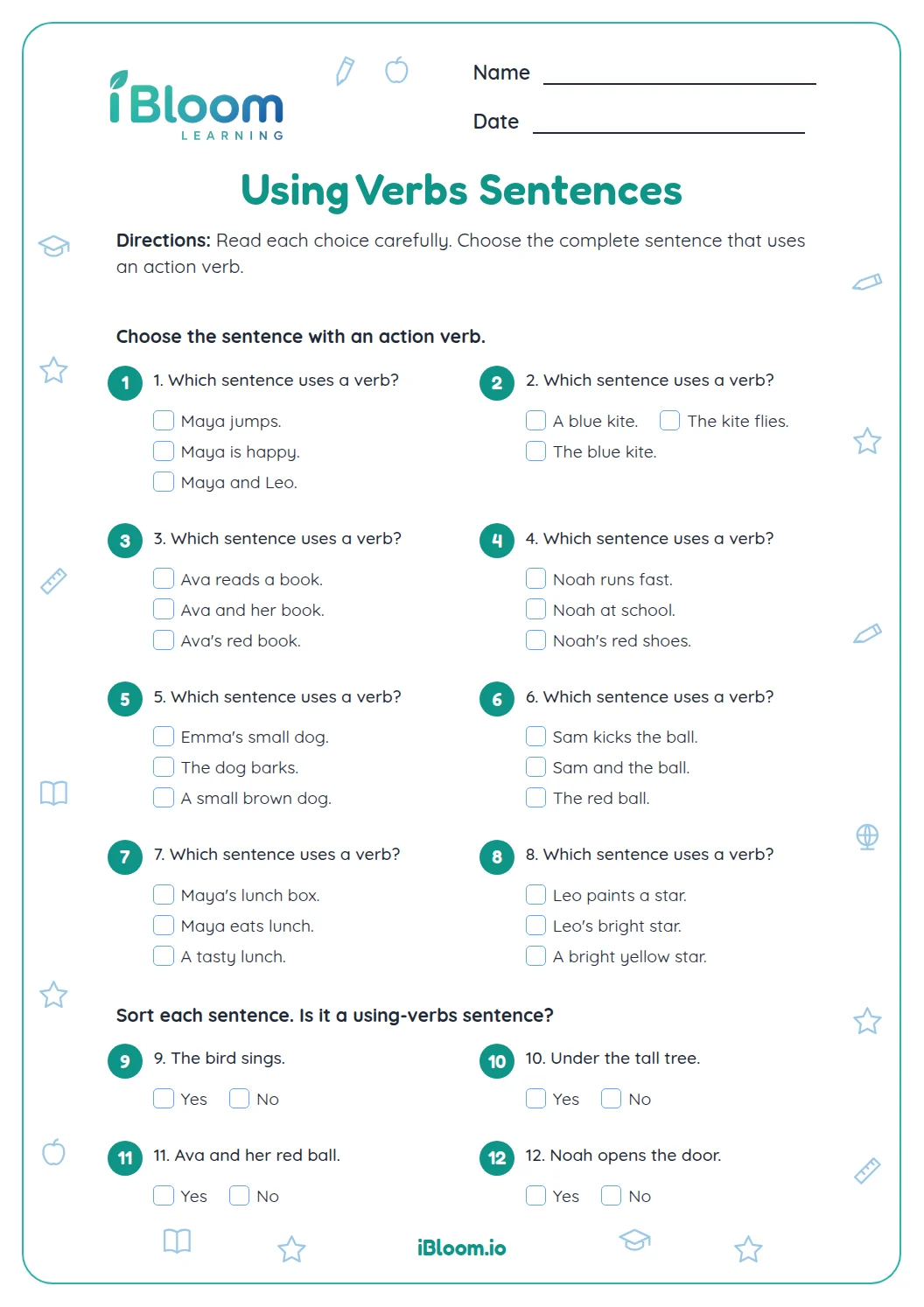
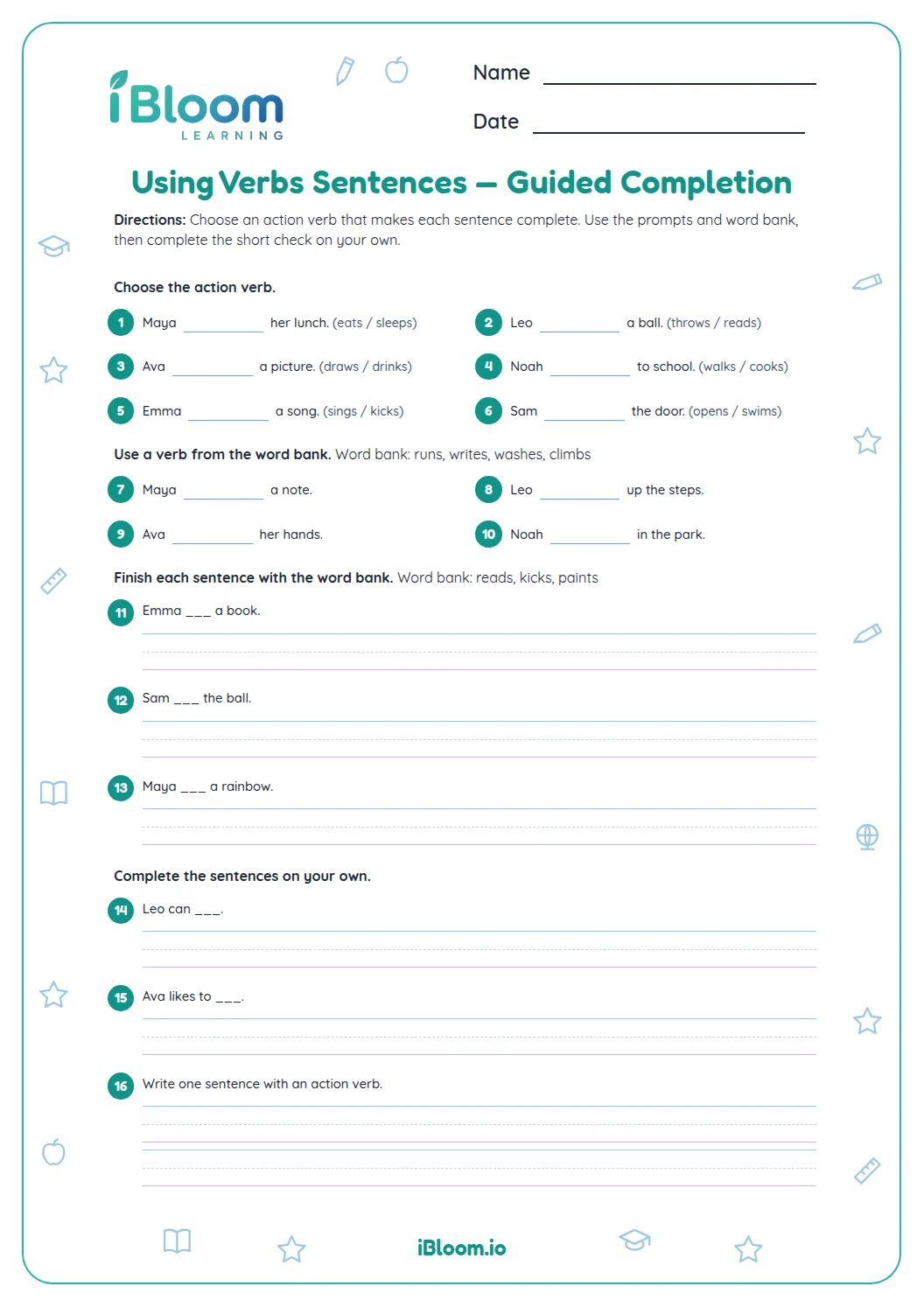
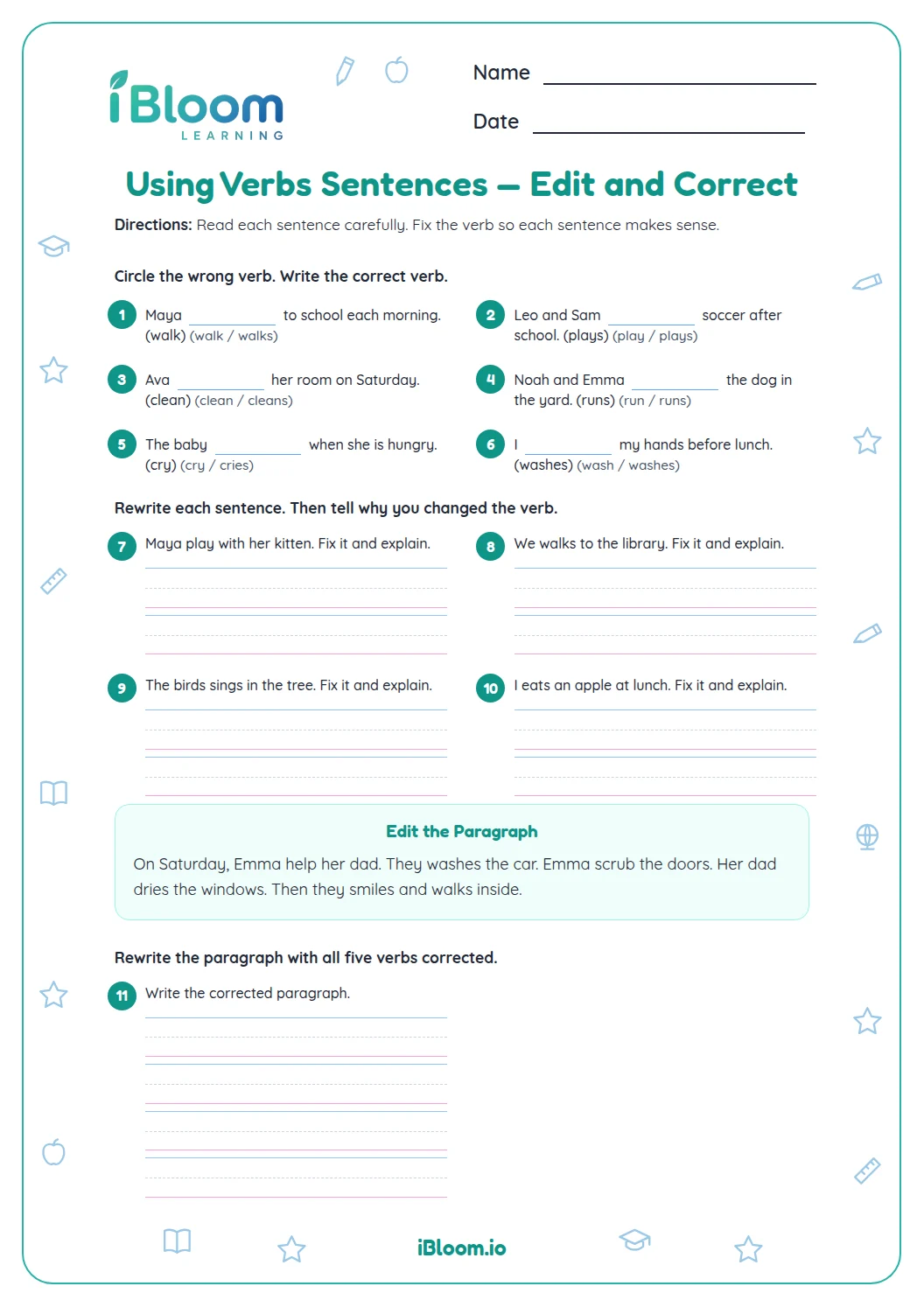
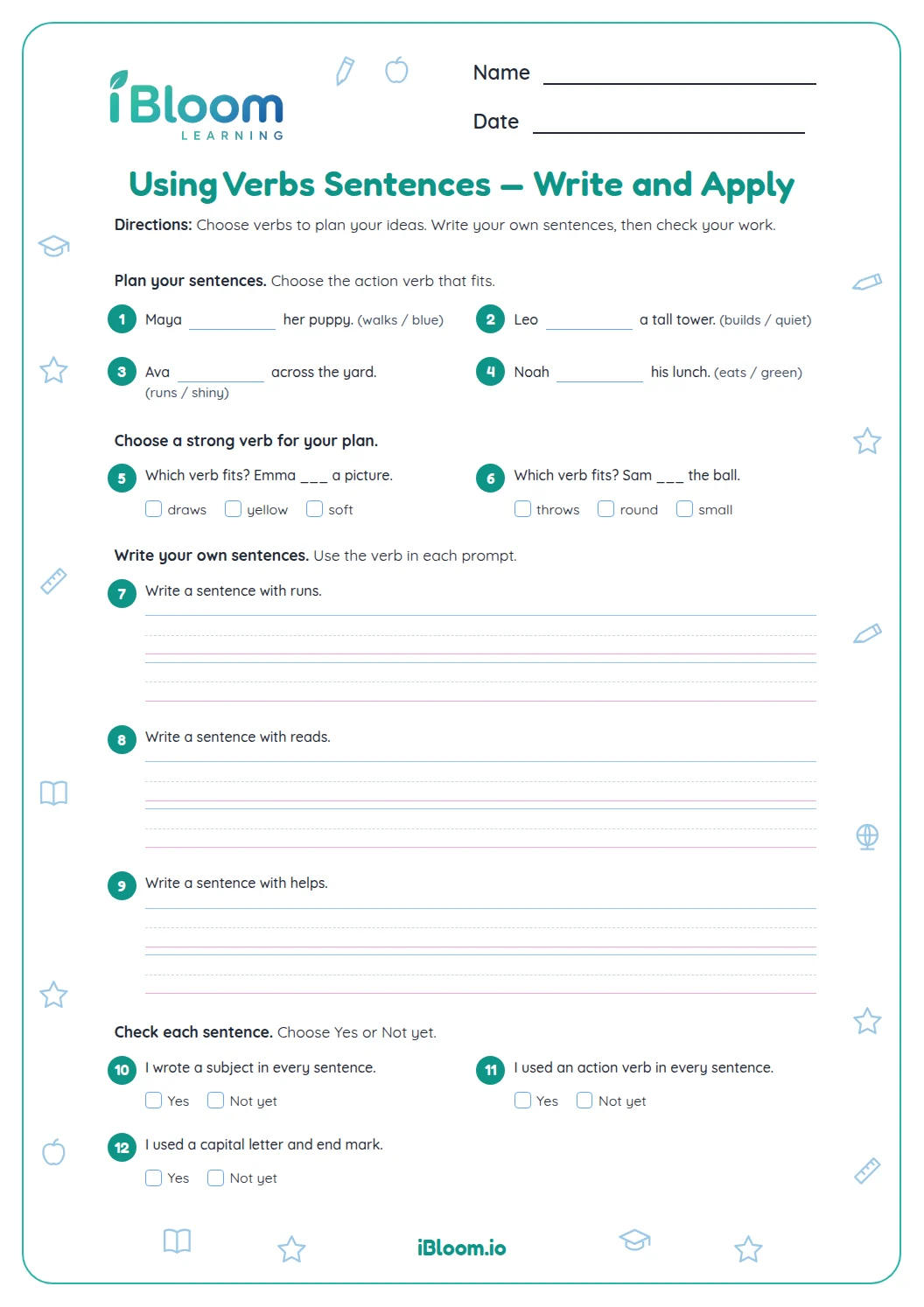




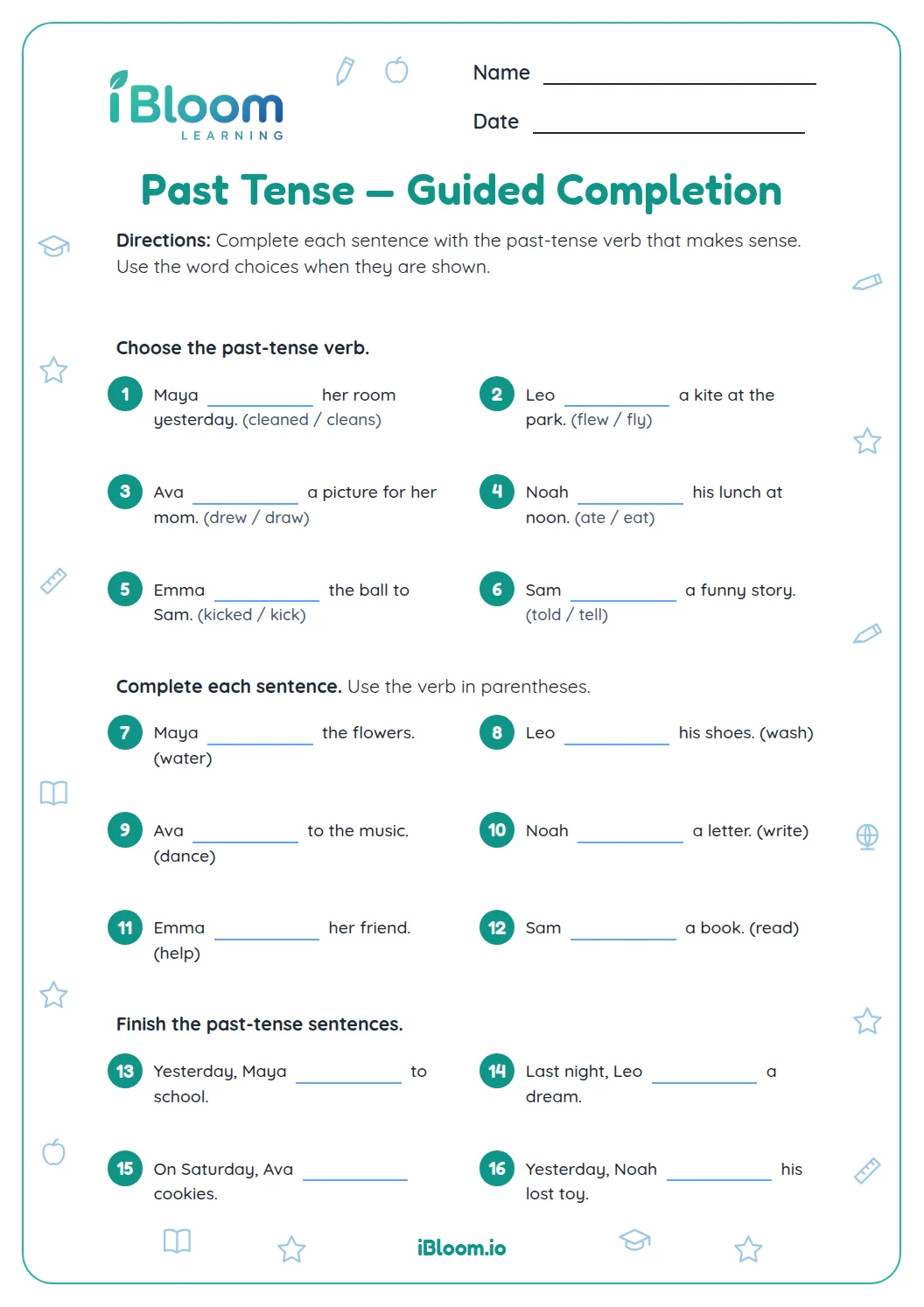

About this worksheet
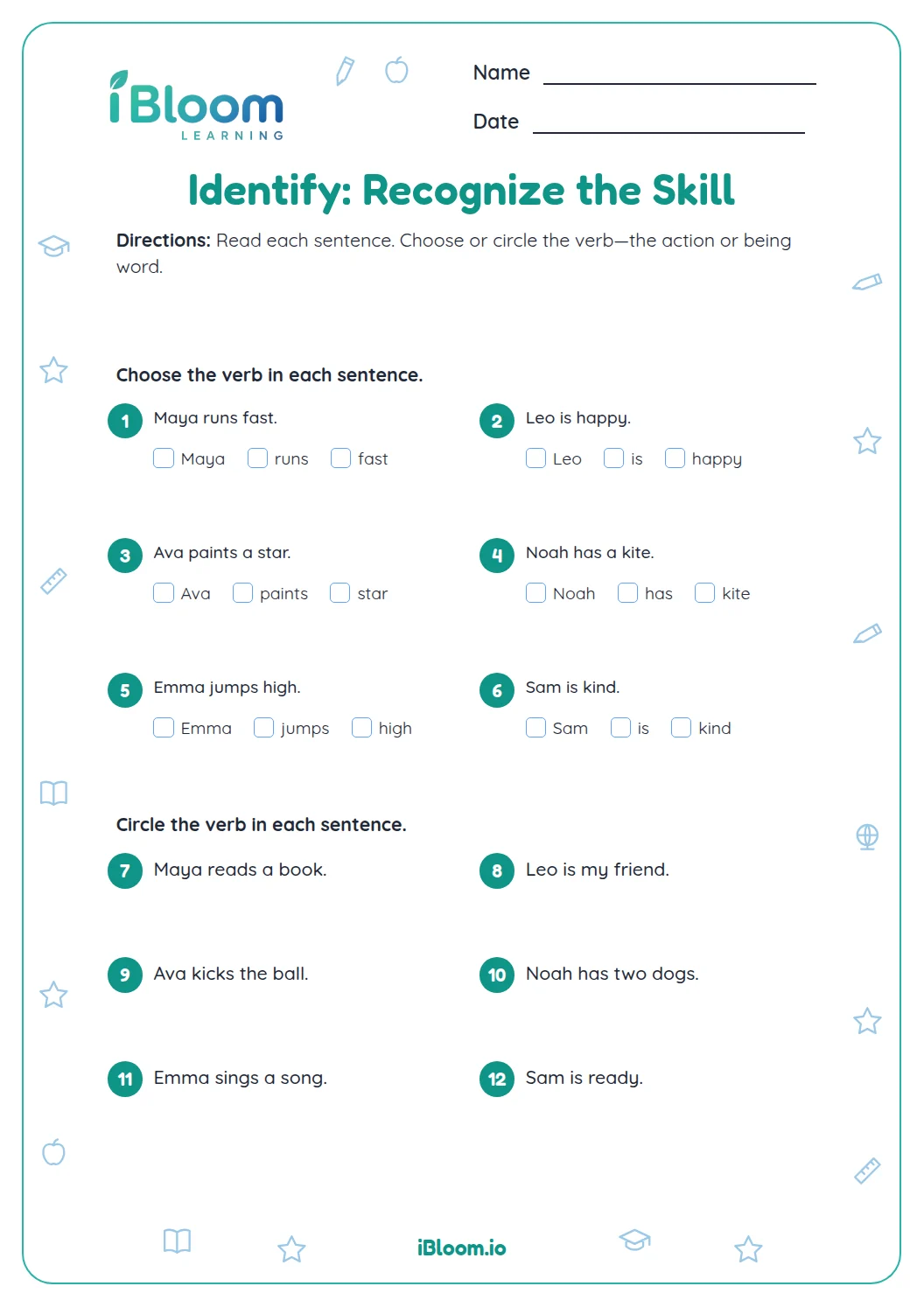
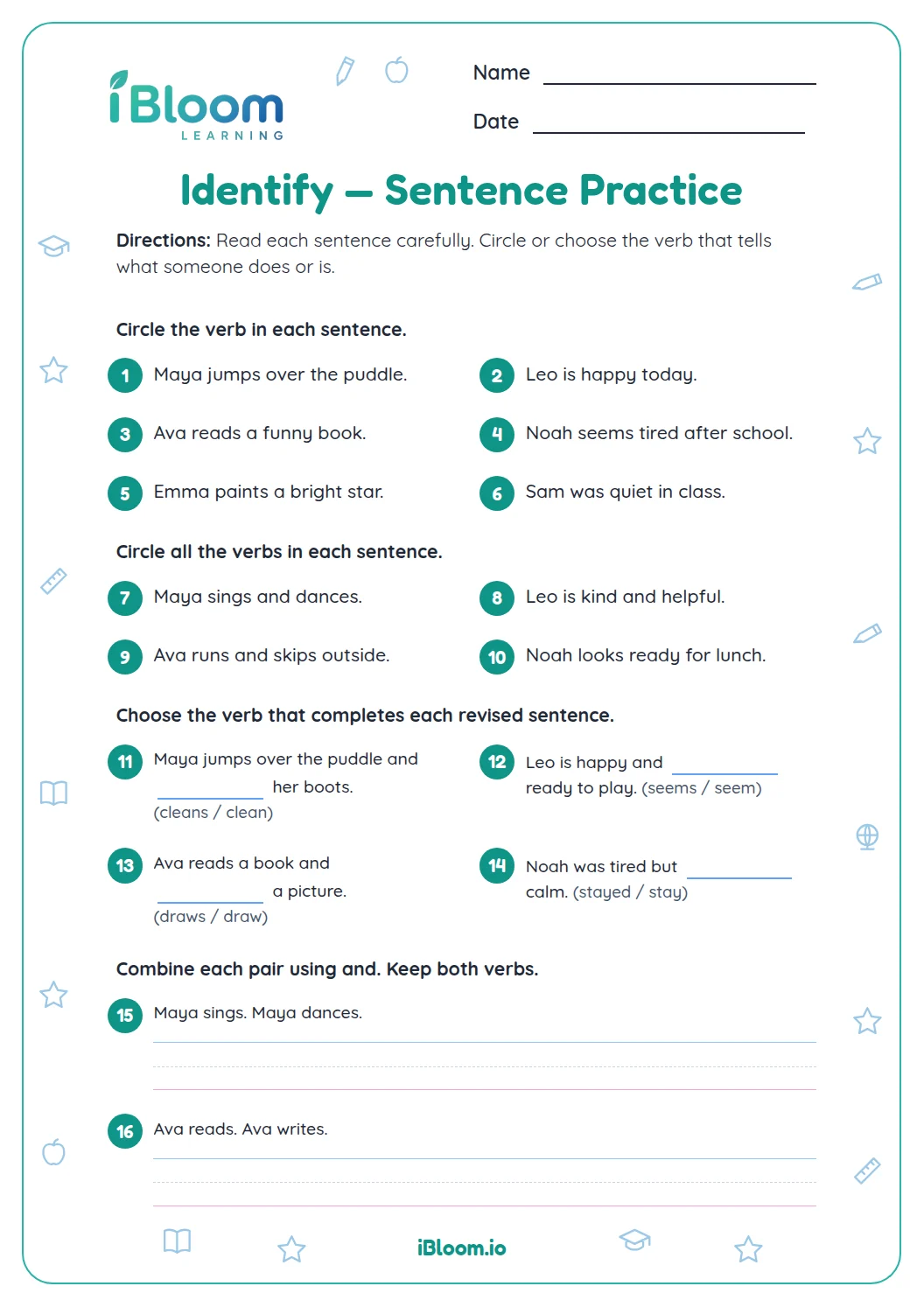
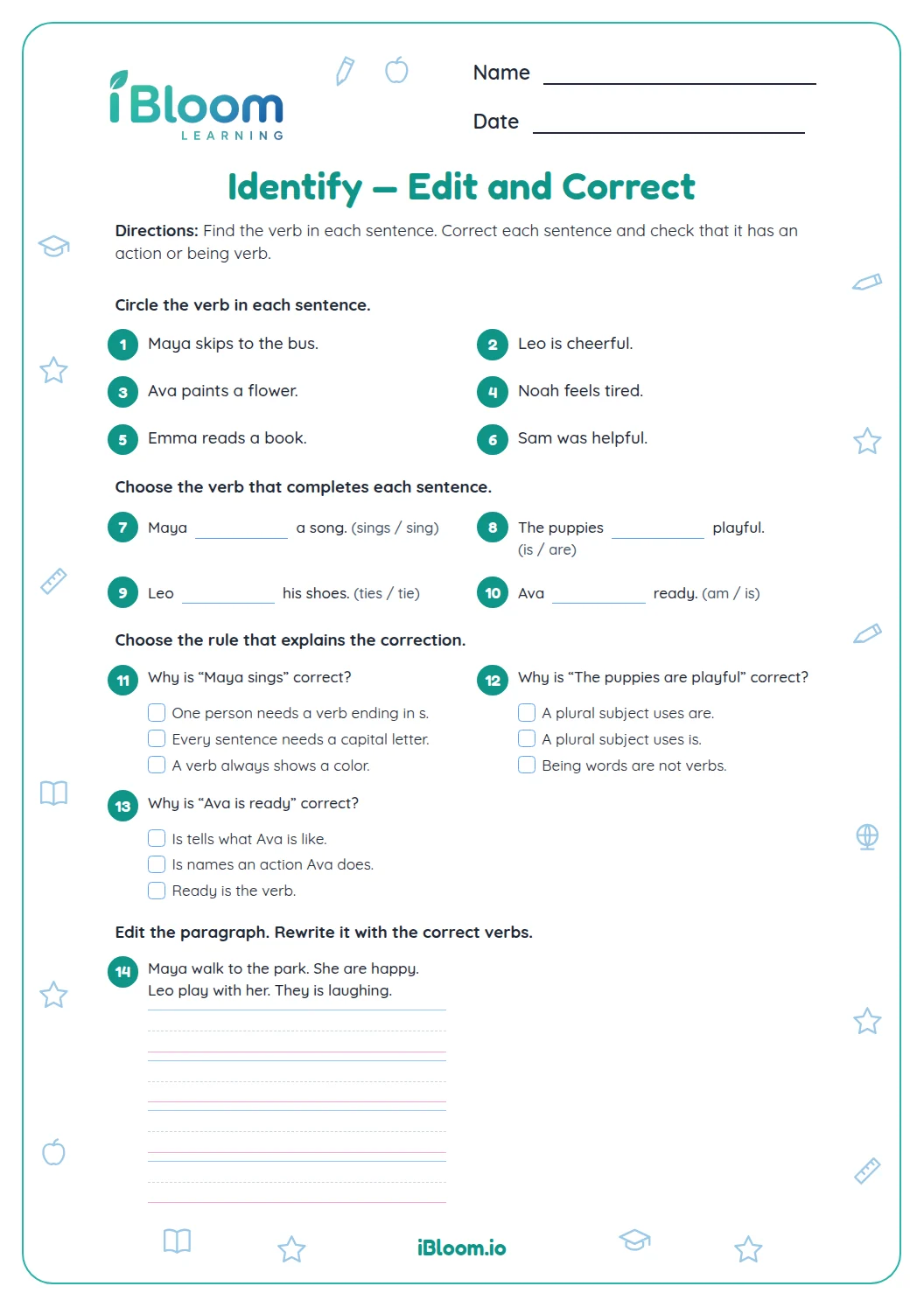
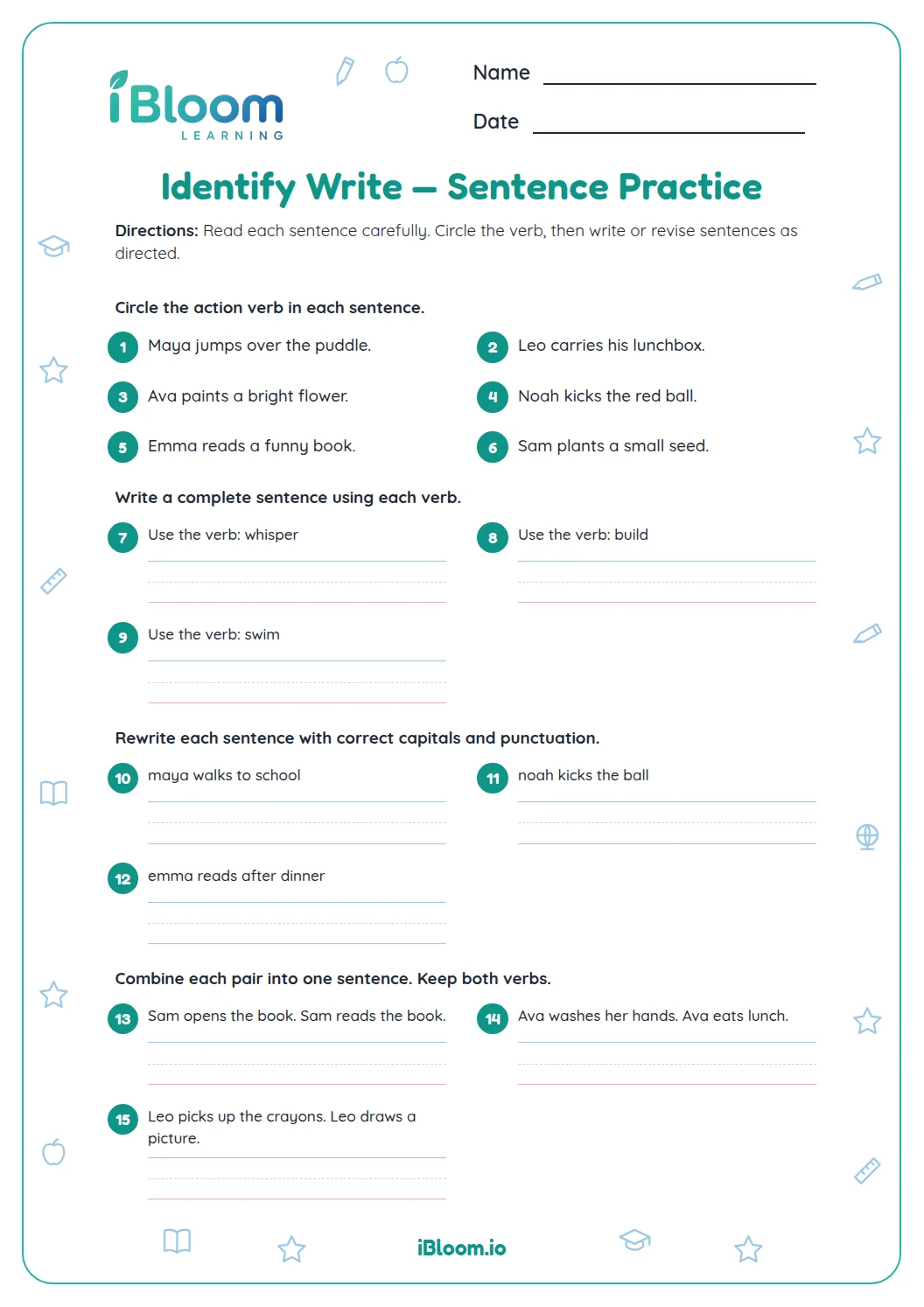
This free Grade 2 worksheet gives students practice using action and linking verbs in complete sentences. It starts with verb choices and sentence clues, then moves to missing verbs and sentence writing. The activities support CCSS L.2.1.d by helping students use verbs to convey a sense of past, present, and future in context. A separate answer key includes sample responses for open writing prompts.
Aligned to L.2.1.d
What will students practice?
Part A chooses verbs and identifies action words. Part B completes sentences with verbs. Part C revises sentences and writes original examples.
How does a verb complete a sentence?
A verb tells what a person, animal, or thing does, or how it is. In “The puppies run across the yard,” run tells the action and agrees with the plural subject puppies.
- 1The puppies ___ across the yard.
- 2Puppies names more than one puppy, so use run.
- 3The puppies run across the yard.
How can students check a sentence?
Read the whole sentence aloud after choosing a verb. Check that the verb fits the subject: one bird sings, while two birds sing. Then check that the thought is complete and ends with punctuation.
How to use this worksheet
- 1Read each sentence before choosing or adding a verb.
- 2In Part A, say the subject and verb together to hear if they fit.
- 3In Part B, reread each sentence with its verb in place.
- 4In Part C, capitalize the first word and add end punctuation.
- 5Compare written responses with the sample key; other complete answers may work.
Verb slips to watch for
The mistake
Using “runs” with “puppies.”
The fix
Check whether the subject names one or more than one. Use run with puppies.
The mistake
Writing a verb ending in -ing without a helper word.
The fix
Read the whole thought. “The baby crying” needs a verb such as cries to be complete.
The mistake
Forgetting to change the verb after a singular subject.
The fix
Read the subject and verb together: “Sam kicks,” not “Sam kick.”
Common Core alignment
This worksheet builds sentence-level verb use through choices, revision, and original writing.
Form and use frequently occurring irregular past-tense verbs.
On this sheet: Use the past-tense verb rode in Part B, alongside present-tense verb choices.
Show the official wordingHide the official wording
Form and use the past tense of frequently occurring irregular verbs (e.g., sat, hid, told).
What to practice next
Make more practice
Further reading
Questions parents and teachers ask
What is a verb?
A verb tells what someone or something does or is. In “Mia eats her lunch,” eats is the verb because it tells what Mia does. The worksheet asks students to choose, supply, revise, and write verbs in complete sentences. Students can pause after each part and use the key to review both the answer and the reasoning.
How many questions are on the worksheet?
There are 16 questions in three parts. Students choose verbs and identify actions, fill four blanks, and then revise or write sentences. The answer key gives direct answers and sample responses for the open-ended writing items. Students can pause after each part and use the key to review both the answer and the reasoning.
Is this worksheet right for Grade 2?
Yes. The sentences use familiar subjects and actions, and students focus on fitting verbs into complete thoughts. A few questions also ask them to notice how the verb form changes with one subject or more than one subject. Students can pause after each part and use the key to review both the answer and the reasoning.
How should a student check a verb choice?
Read the whole sentence with the chosen word in place. Check that it sounds complete and that the verb fits its subject. For example, one bird sings, while several birds sing. Students can pause after each part and use the key to review both the answer and the reasoning.
Can students write different answers for the last questions?
Yes. The last two prompts ask students to create their own complete sentences. The answer key shows one sample for each; another response is correct if it follows the prompt, includes a suitable verb, and forms a complete sentence. Students can pause after each part and use the key to review both the answer and the reasoning.