



About this worksheet
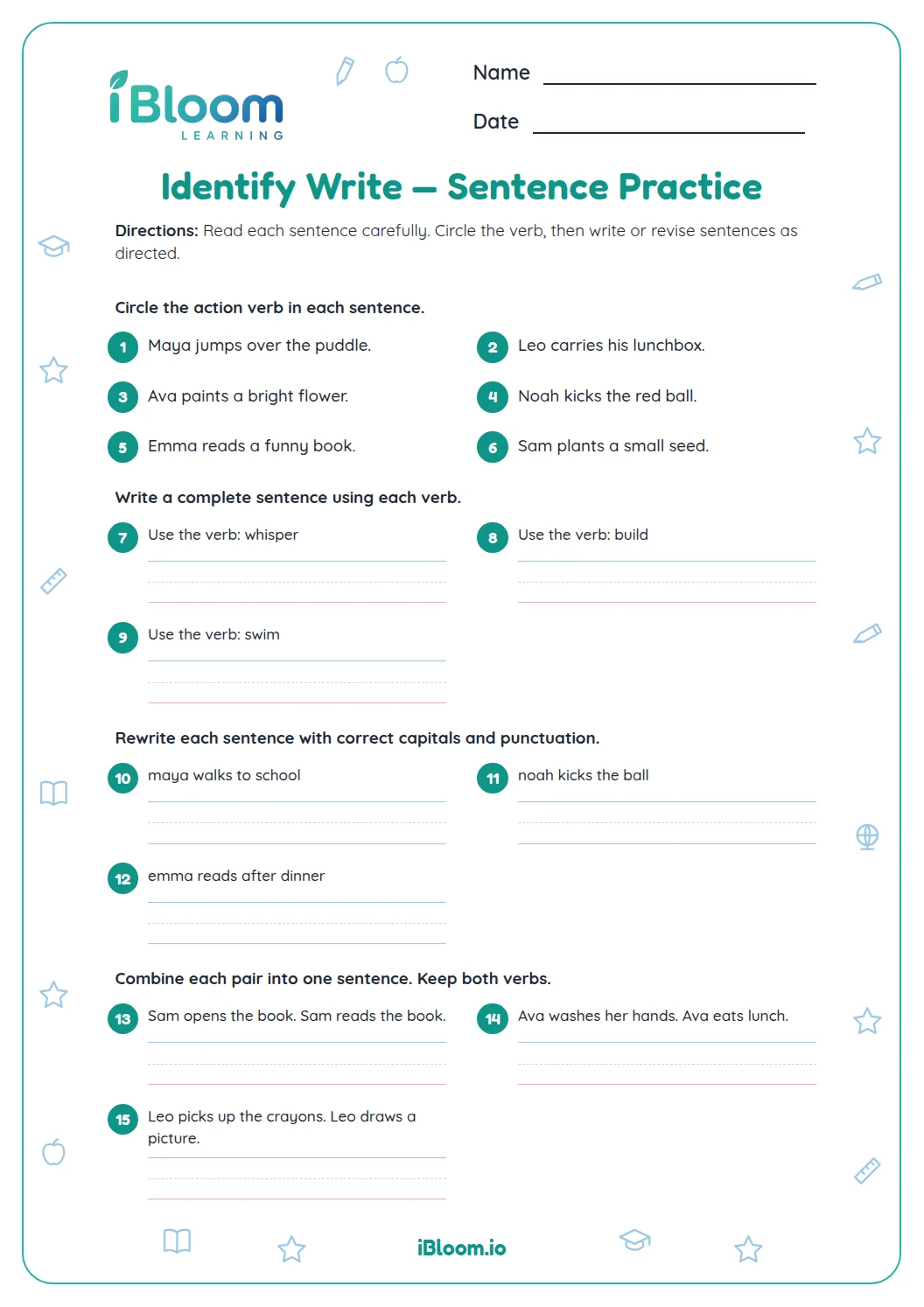
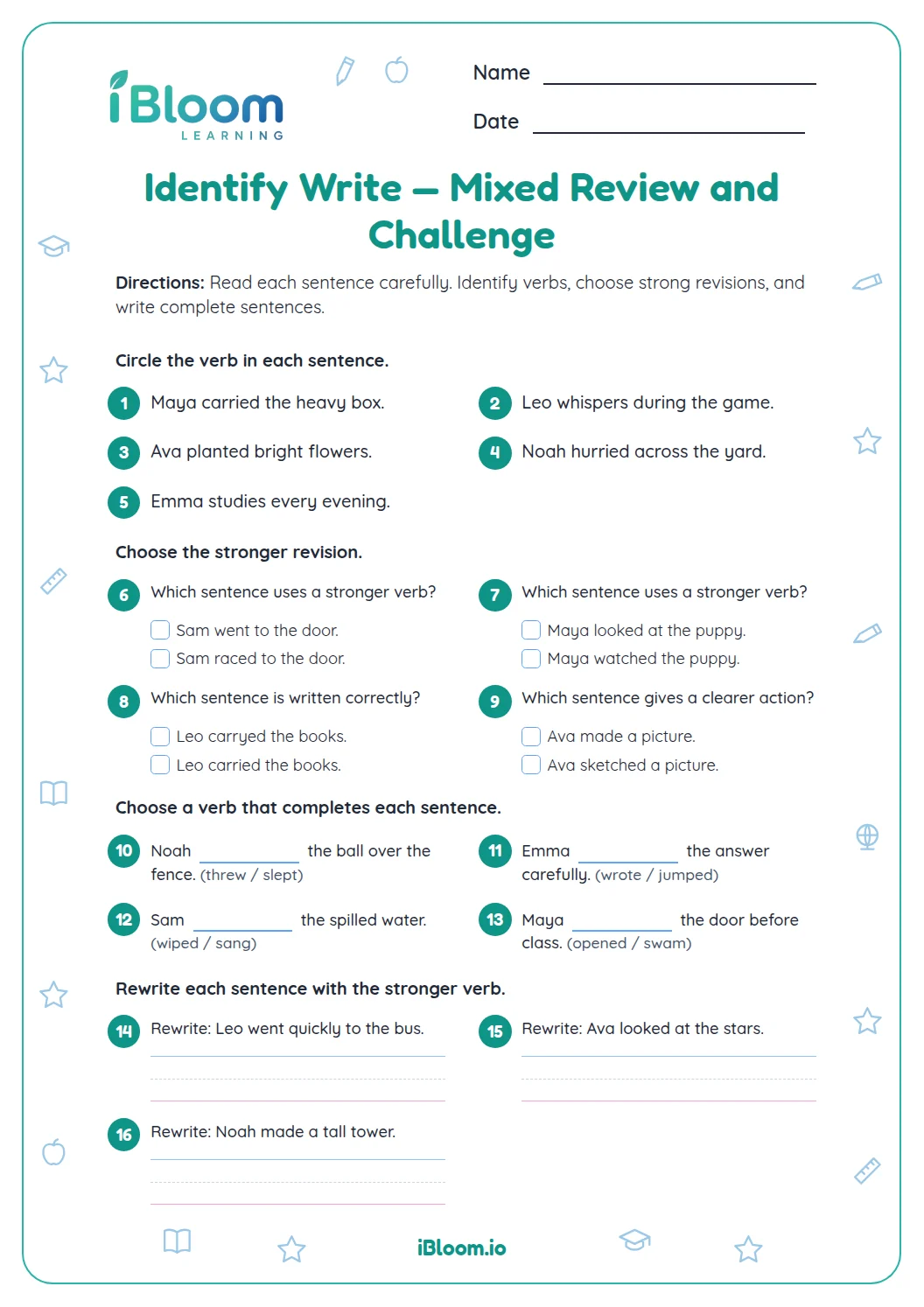
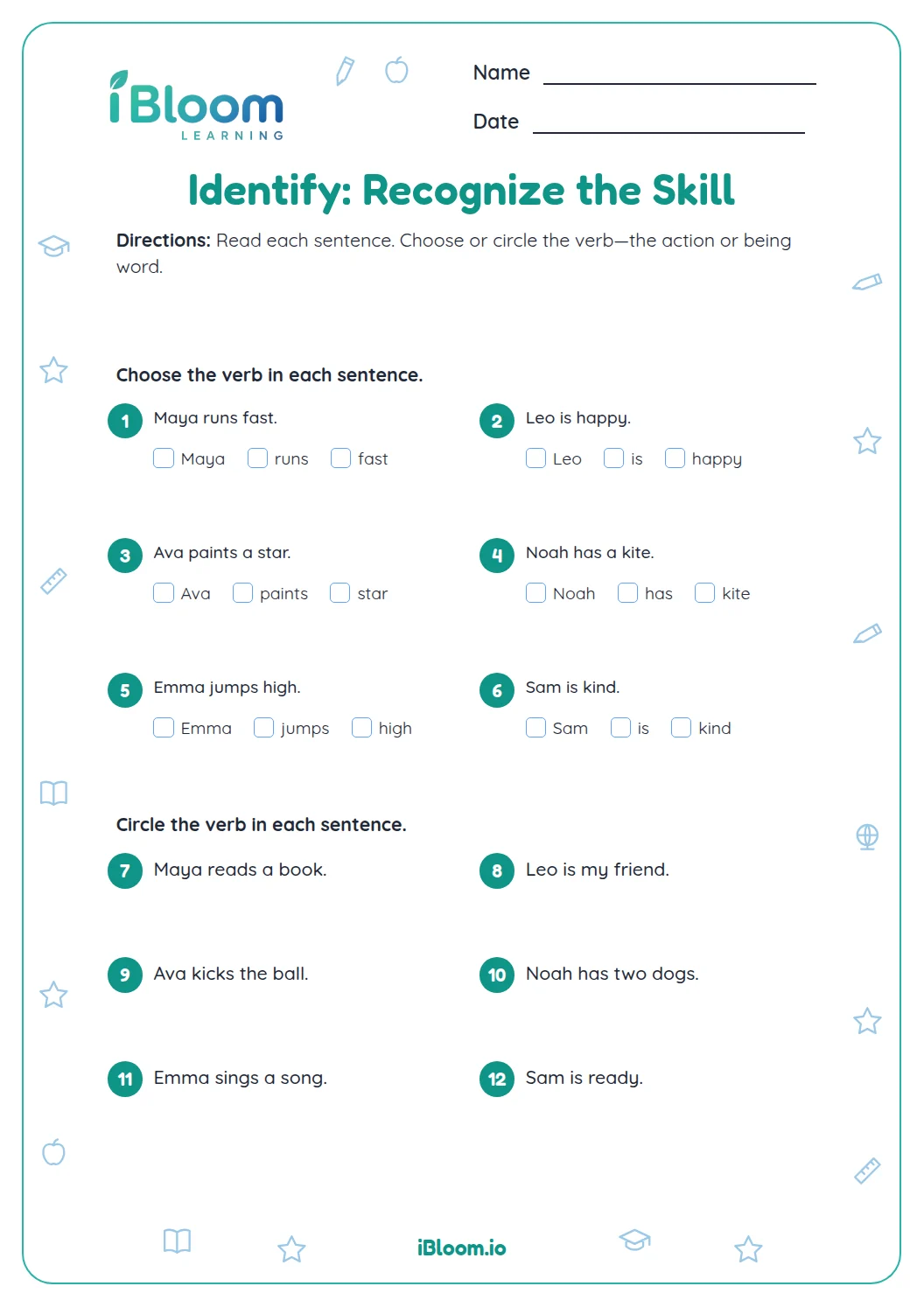
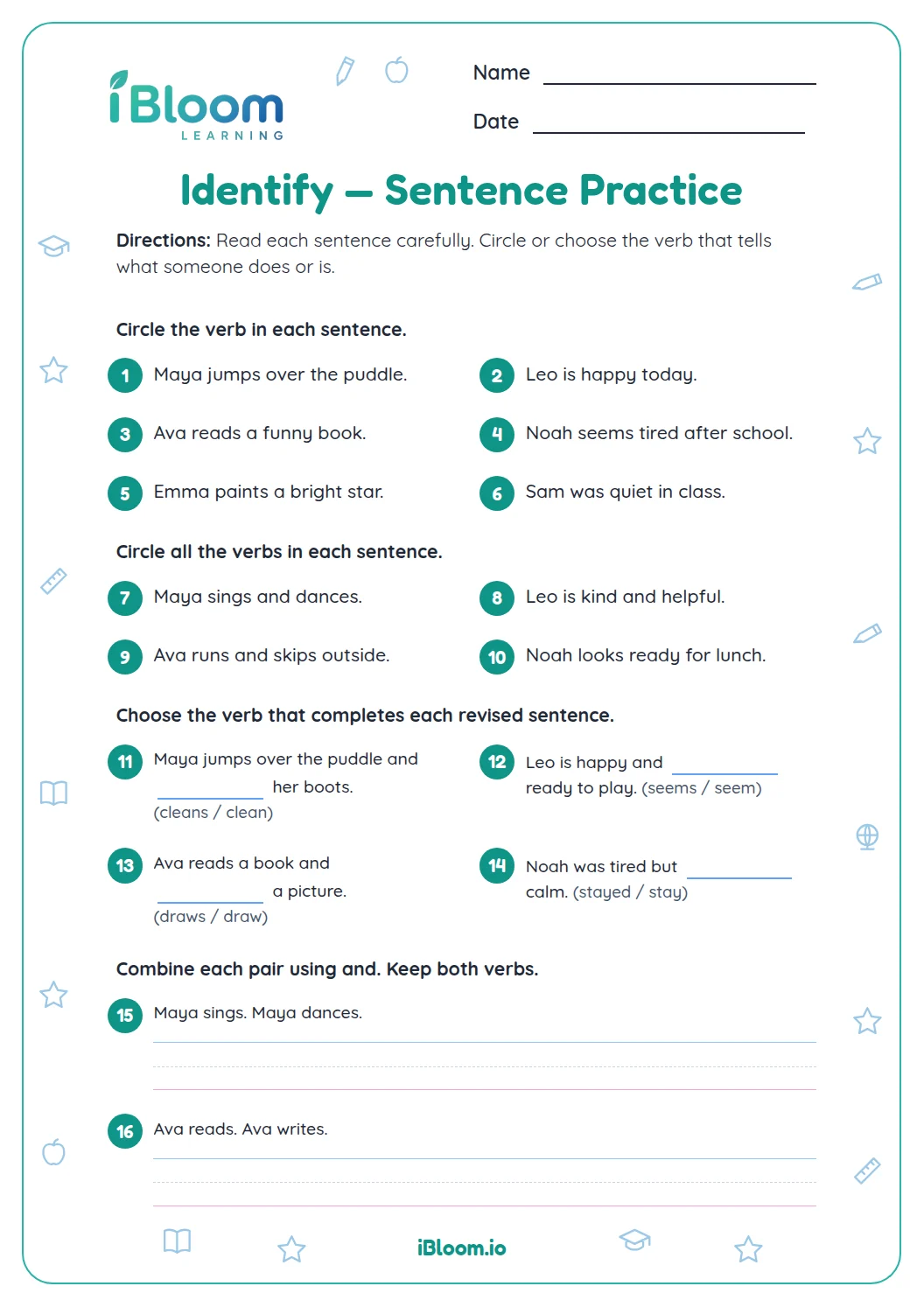
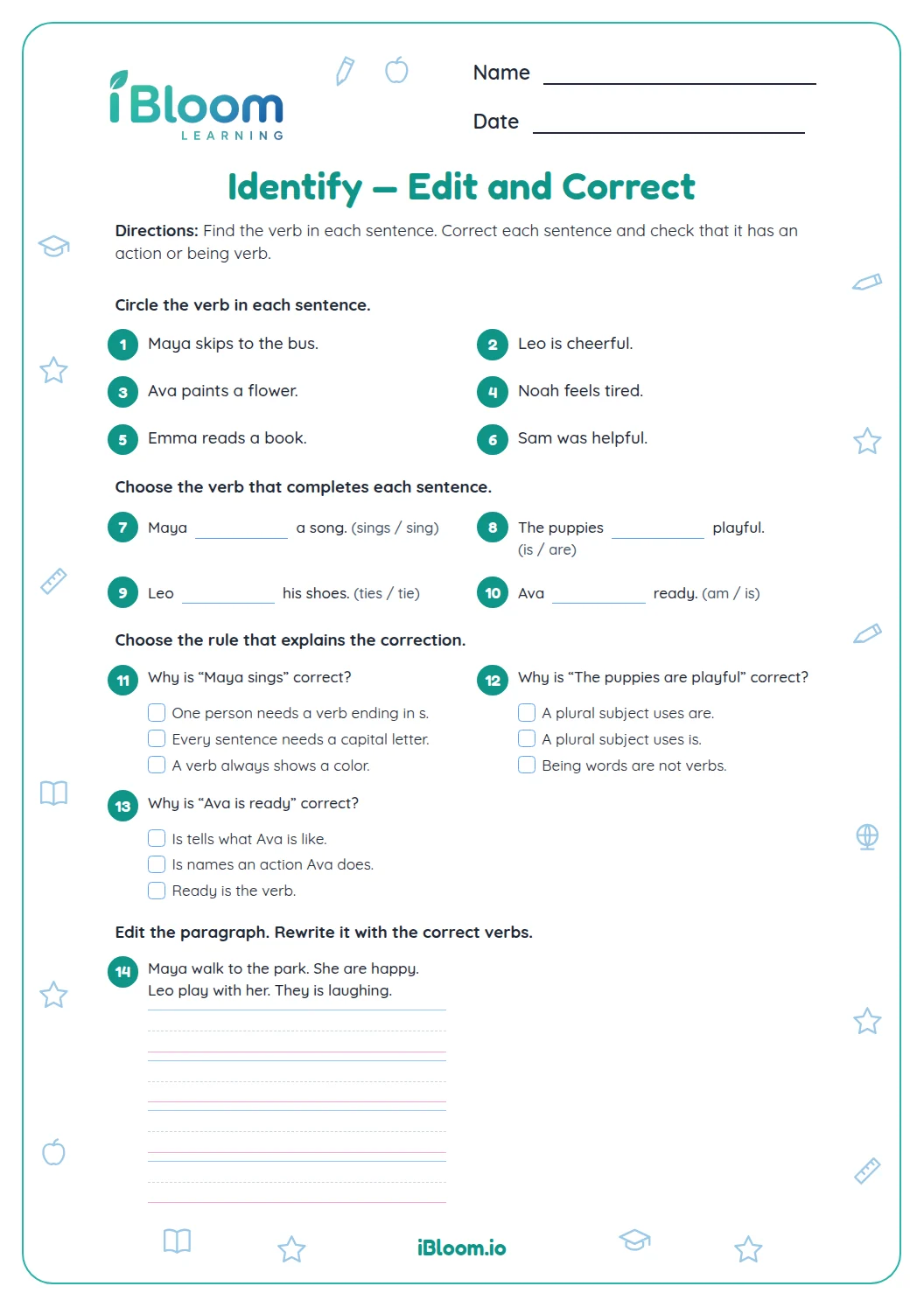
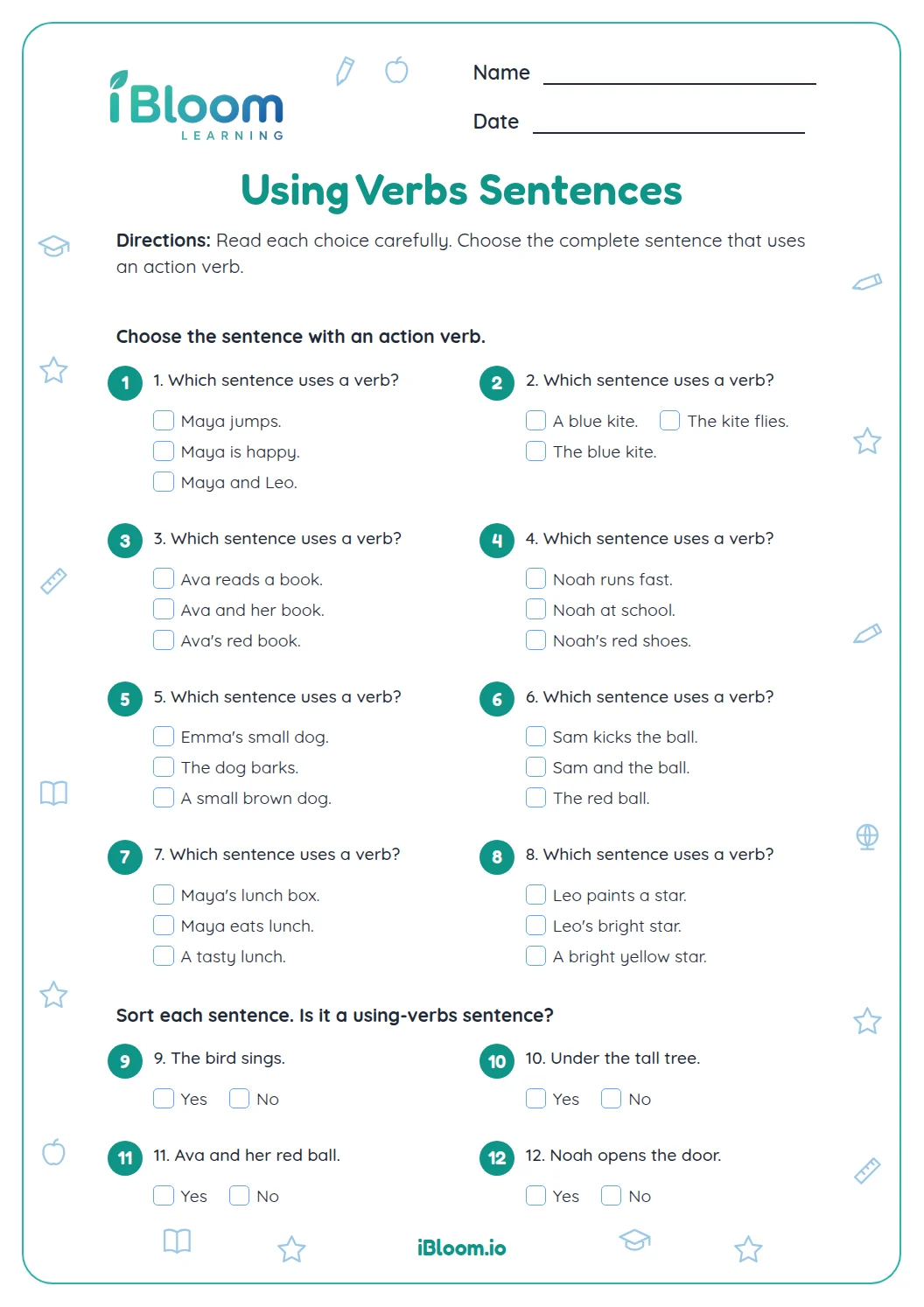
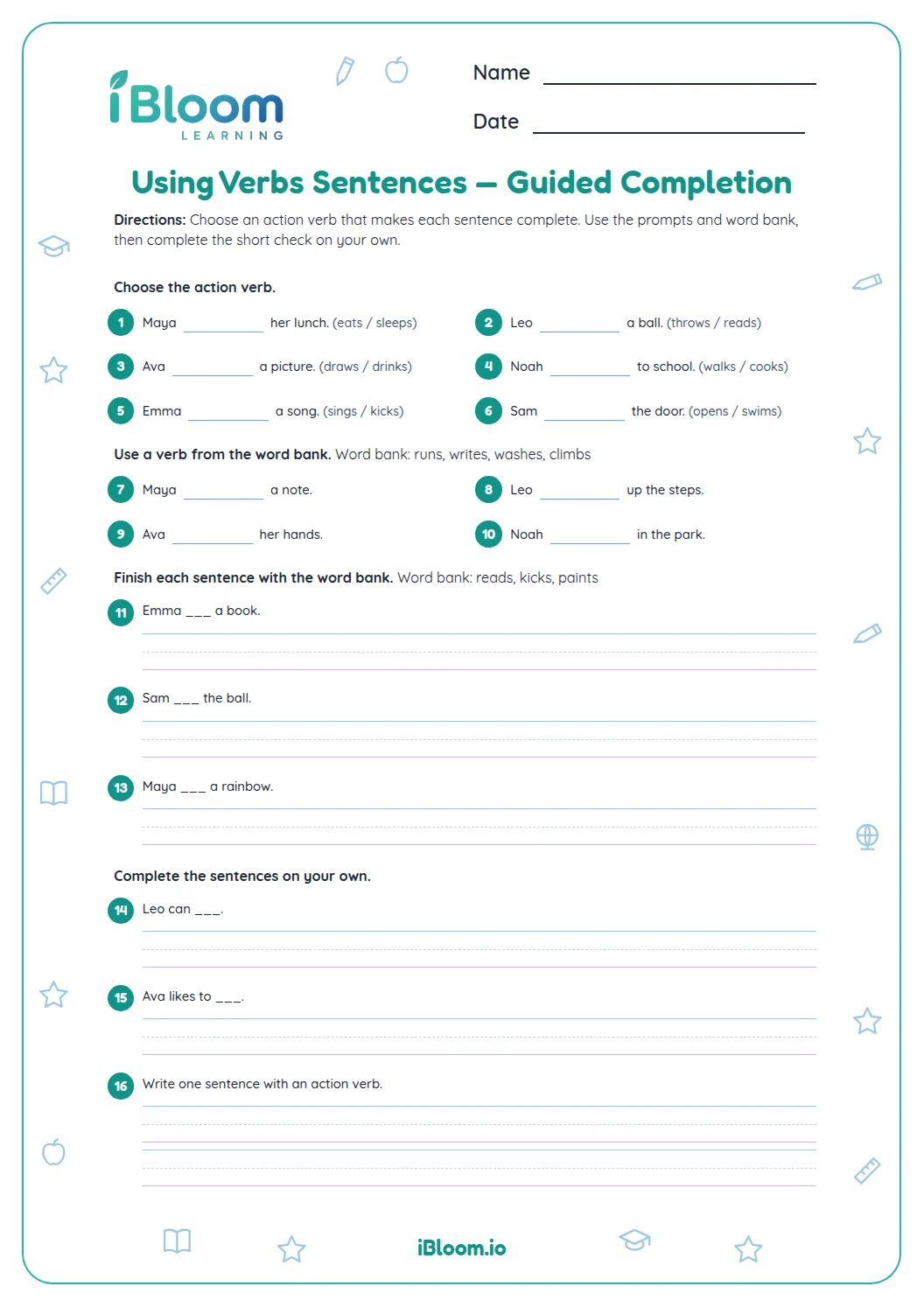
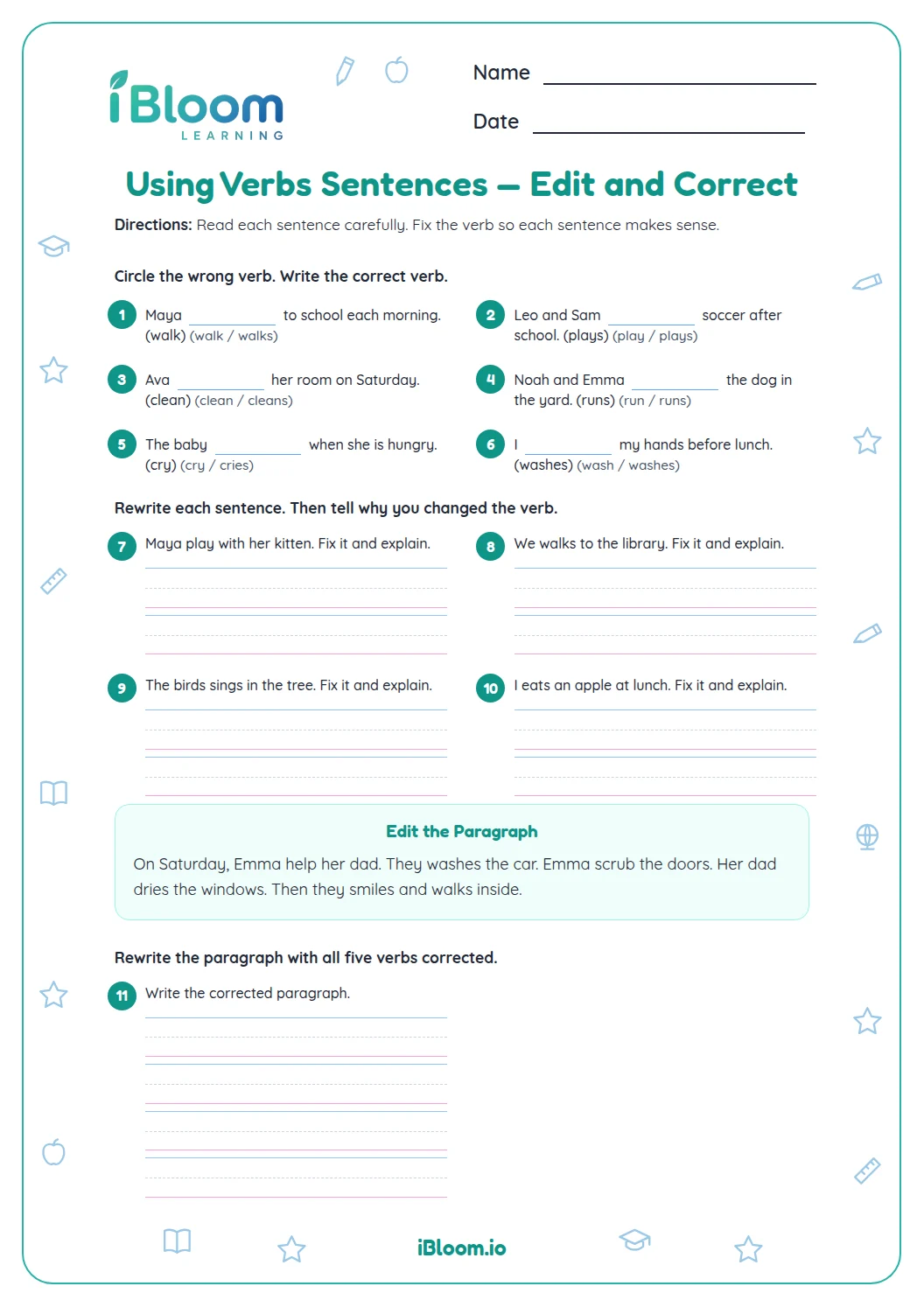
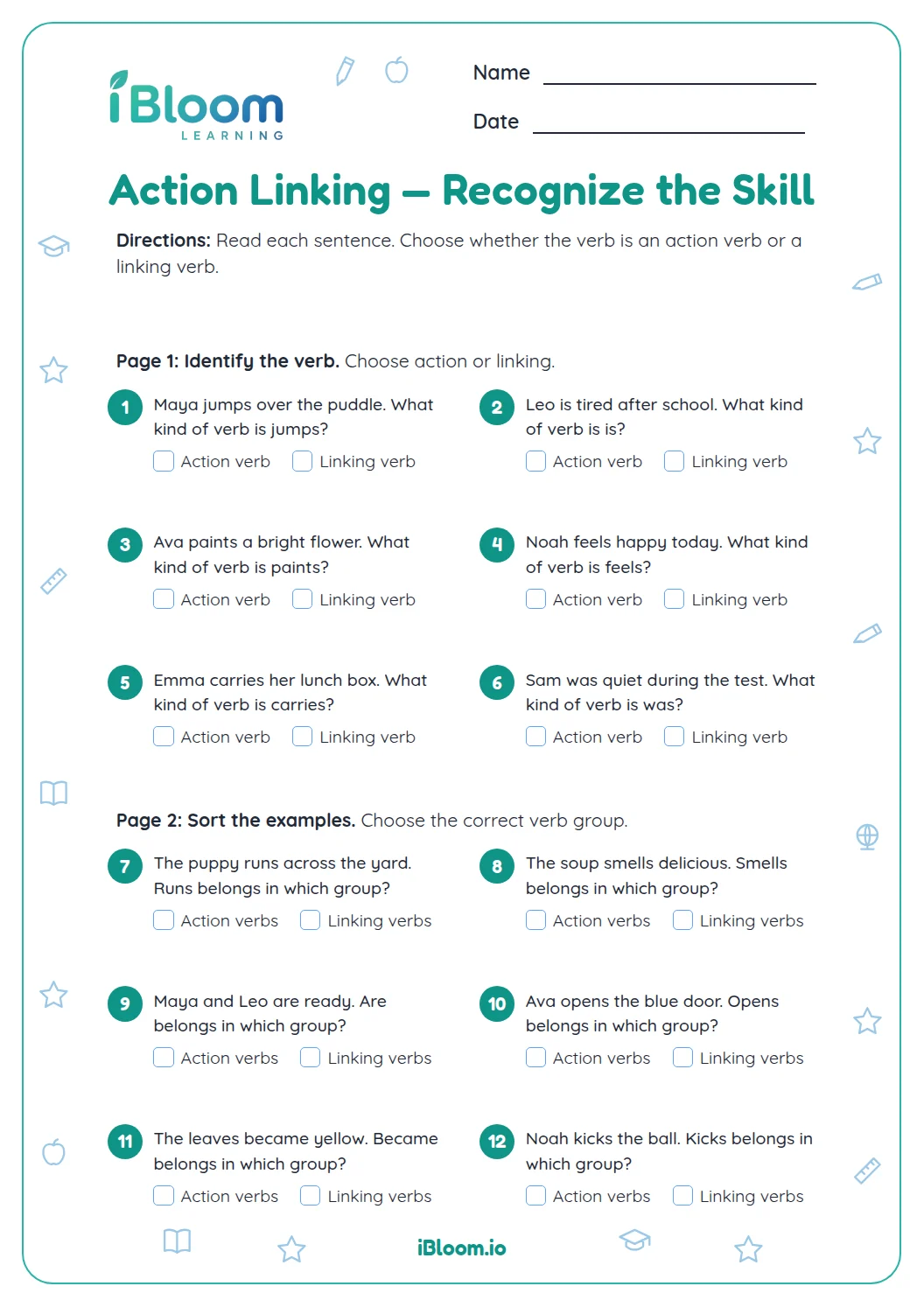
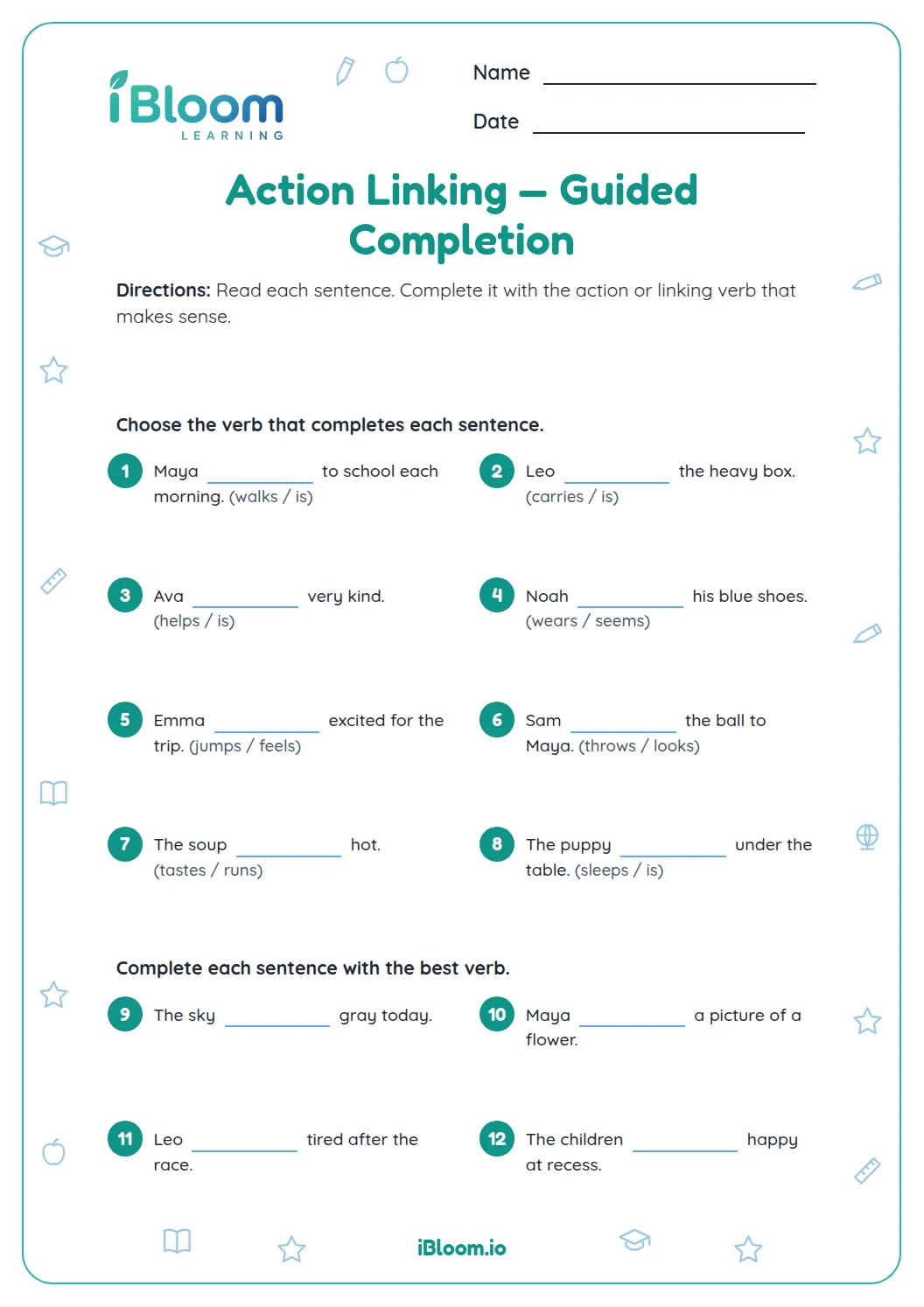
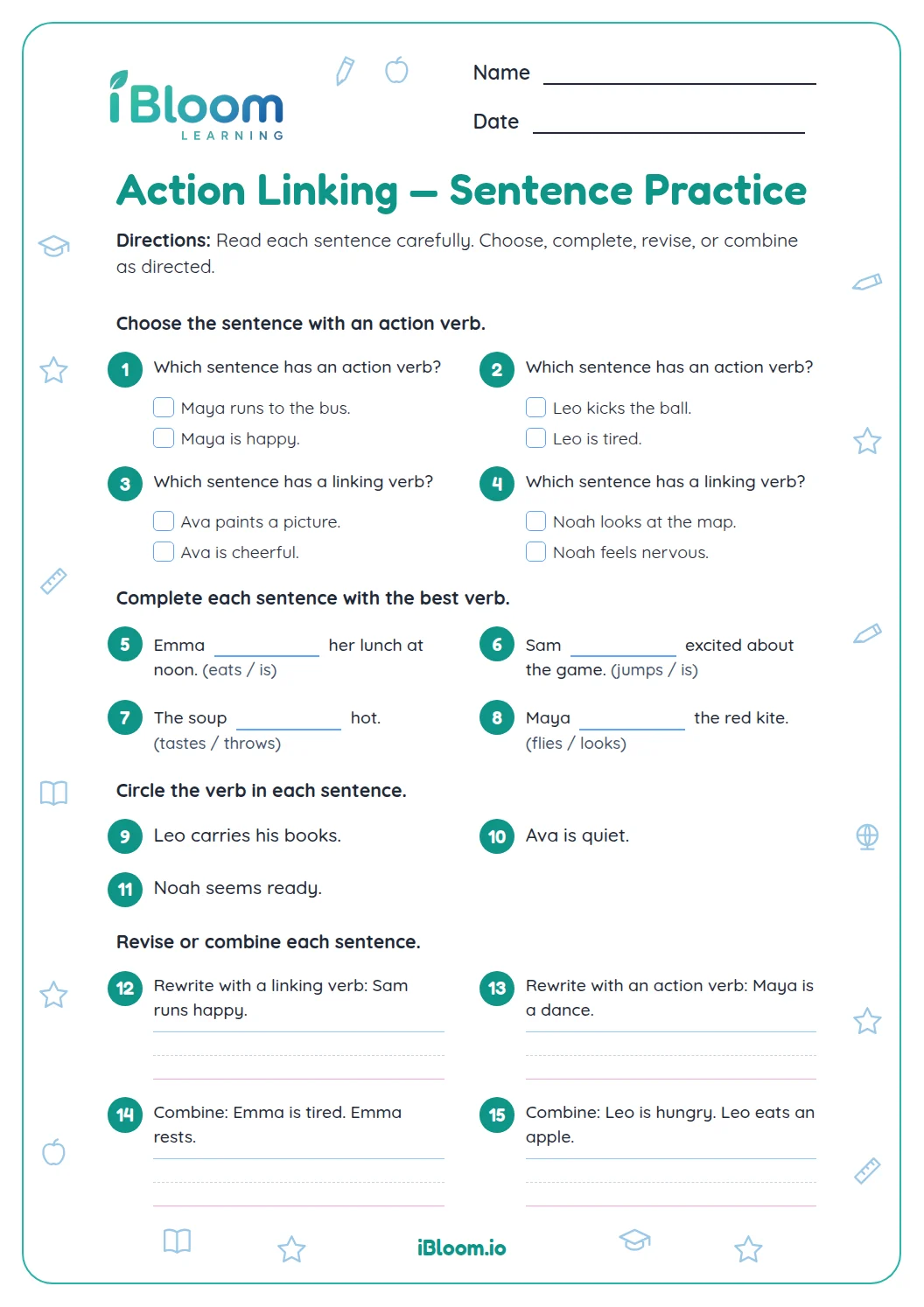
This Grade 2 grammar printable guides students to write verbs that complete sentences and identify verbs in context. The questions include action verbs, linking verbs, subject-verb agreement, and a time clue. A separate answer key lists the target verbs.
How can you spot a verb?
A verb tells what someone or something does, or links a subject to a description. In “The puppy runs,” runs tells what the puppy does. In “The soup is hot,” is links soup and hot.
Question 1 asks for a word that completes “The puppy ___ to the gate.” Runs fits the subject and meaning. Read the full sentence after choosing.
- 1The puppy ___ the ball.
- 2Choose fetches.
- 3The puppy fetches the ball.
How do students use verbs in their own sentences?
After identifying verbs in context, students write a fitting verb and give a short action verb example. Read each response aloud and check that it names an action or completes the sentence.
How to use this worksheet
- 1Read the whole sentence first.
- 2Notice who or what the sentence is about.
- 3Choose a verb that matches the subject and meaning.
- 4Reread the completed sentence aloud.
- 5For writing prompts, include a subject and a verb.
Common mistakes and quick fixes
The mistake
Choosing a verb that does not fit the sentence meaning.
The fix
Read the completed sentence and check that it makes sense.
The mistake
Pairing a plural subject with is.
The fix
For a plural subject such as children, use are in a present-tense sentence.
The mistake
Treating a describing word as the verb.
The fix
Find the action or the linking word; in “The soup is hot,” is is the verb.
What to practice next
Make more practice
Questions parents and teachers ask
What is a verb?
A verb tells what the subject does or links the subject to a description. Fetches is the action verb in “The puppy fetches the ball,” while is links soup and hot in “The soup is hot.” Students practice both patterns here.
How does a time clue help choose a verb?
A time word gives a clue about when an action happens. In “Mia ___ over the puddle yesterday,” the clue yesterday points to jumped. Read the whole sentence after choosing to check that its time and verb form agree. Invite the learner to underline the time word.
Why are some answers action verbs and others linking verbs?
Action verbs tell what a subject does, such as swims or painted. Linking verbs connect a subject with a description, as is does in “The soup is hot.” This worksheet includes both so students can notice the verb’s job in context.
What should a complete sentence include?
A complete sentence expresses a whole thought and includes a subject and a verb. The prompts ask students to recognize verbs inside complete sentences and complete sentences with a fitting verb. Read each finished sentence aloud as a check. Each example is short enough to reread aloud.
Is there an answer key?
Yes. A separate key lists the selected verbs and gives sample responses for the open-ended writing prompts. Other sensible sentences that use the target verb are also correct. This gives families a concrete way to review the skill together after the worksheet is finished.