




About this worksheet
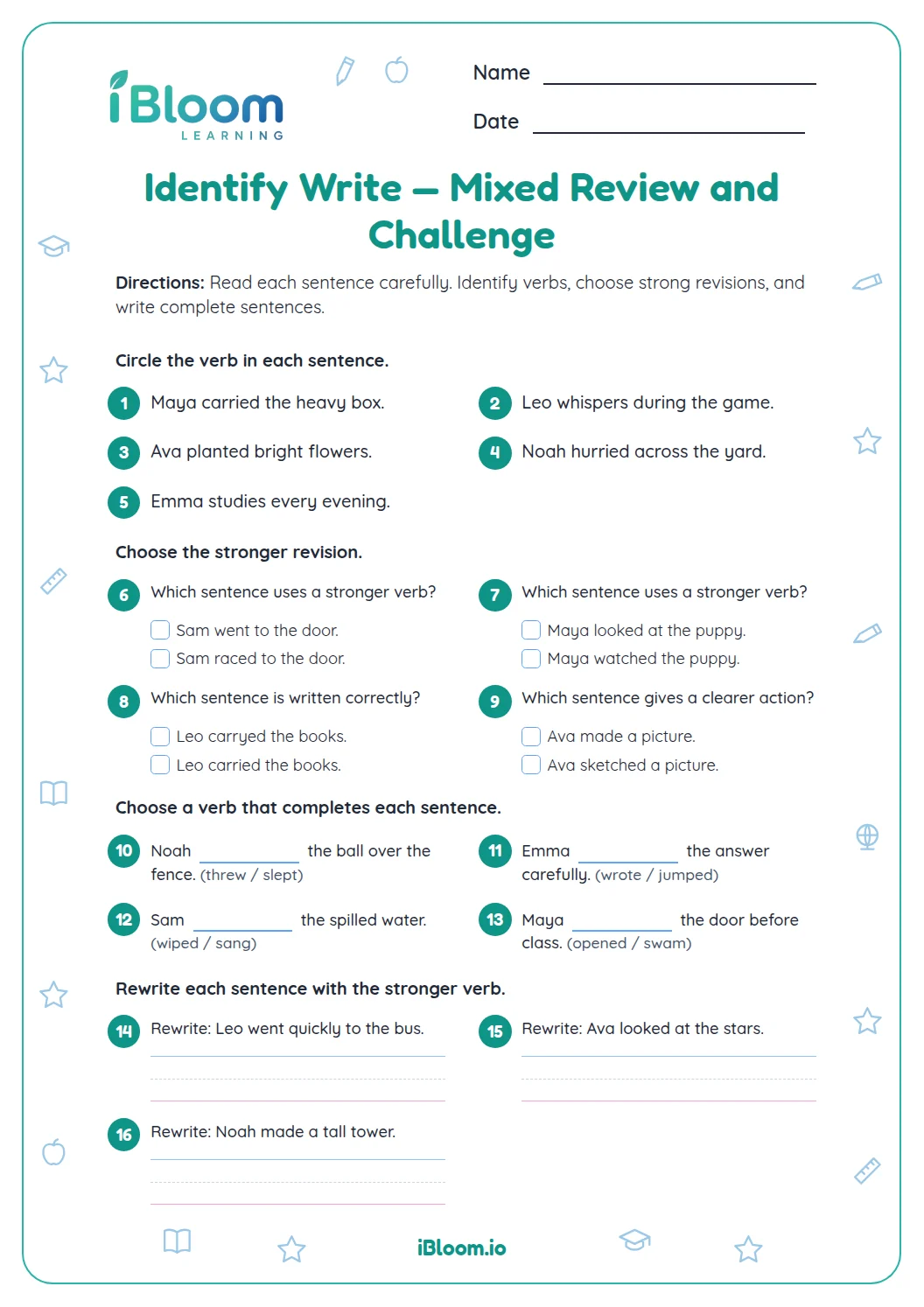
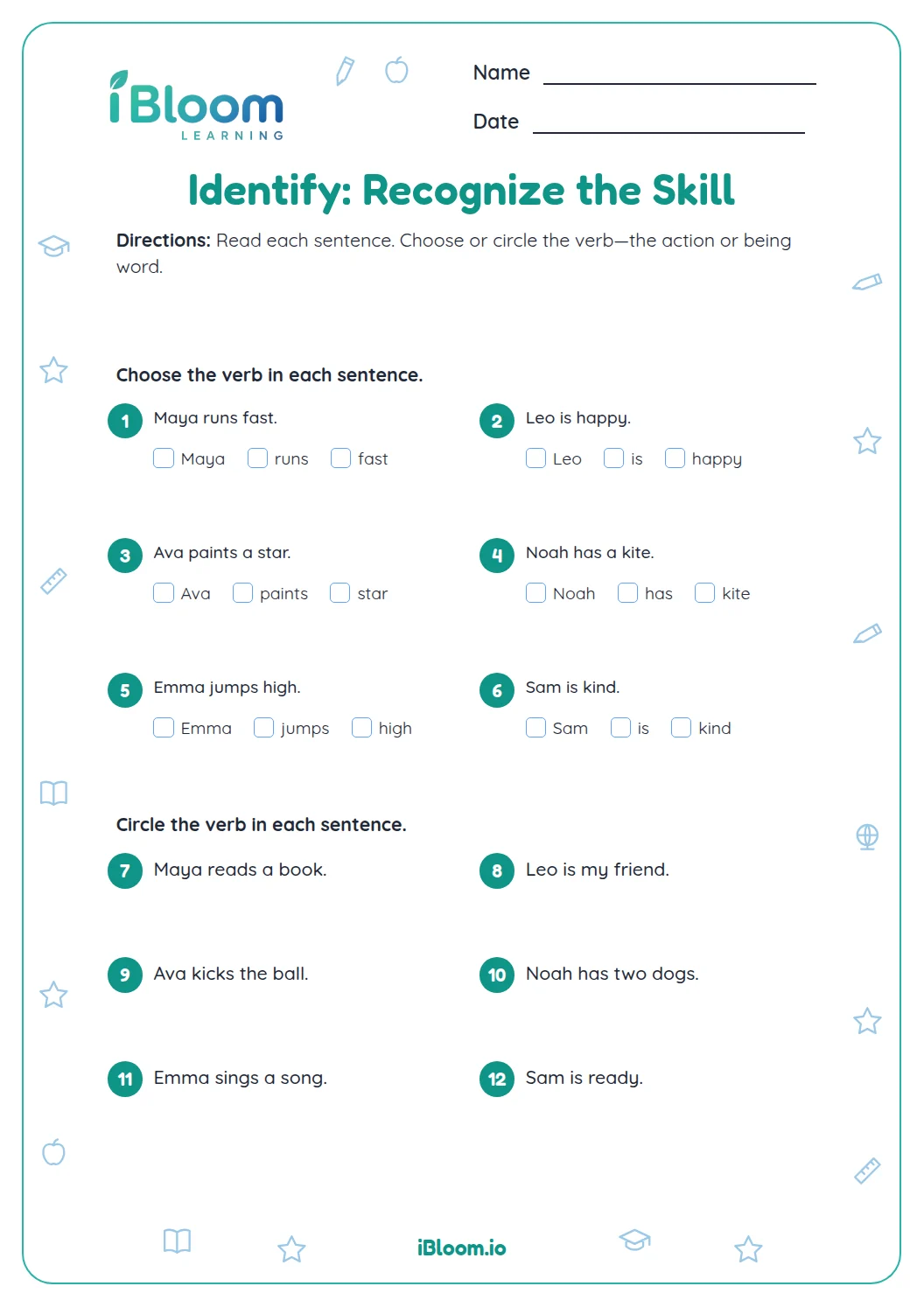
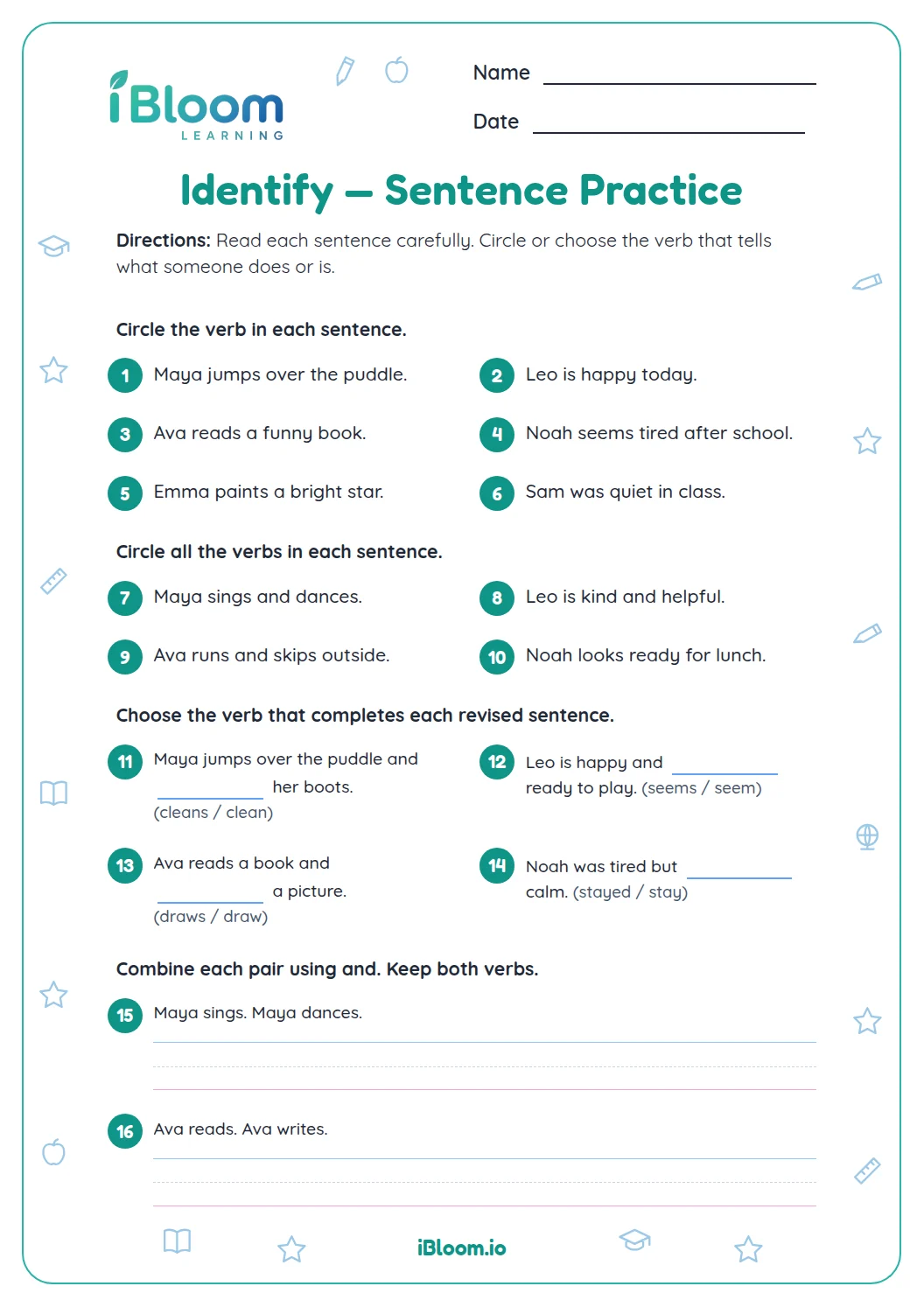
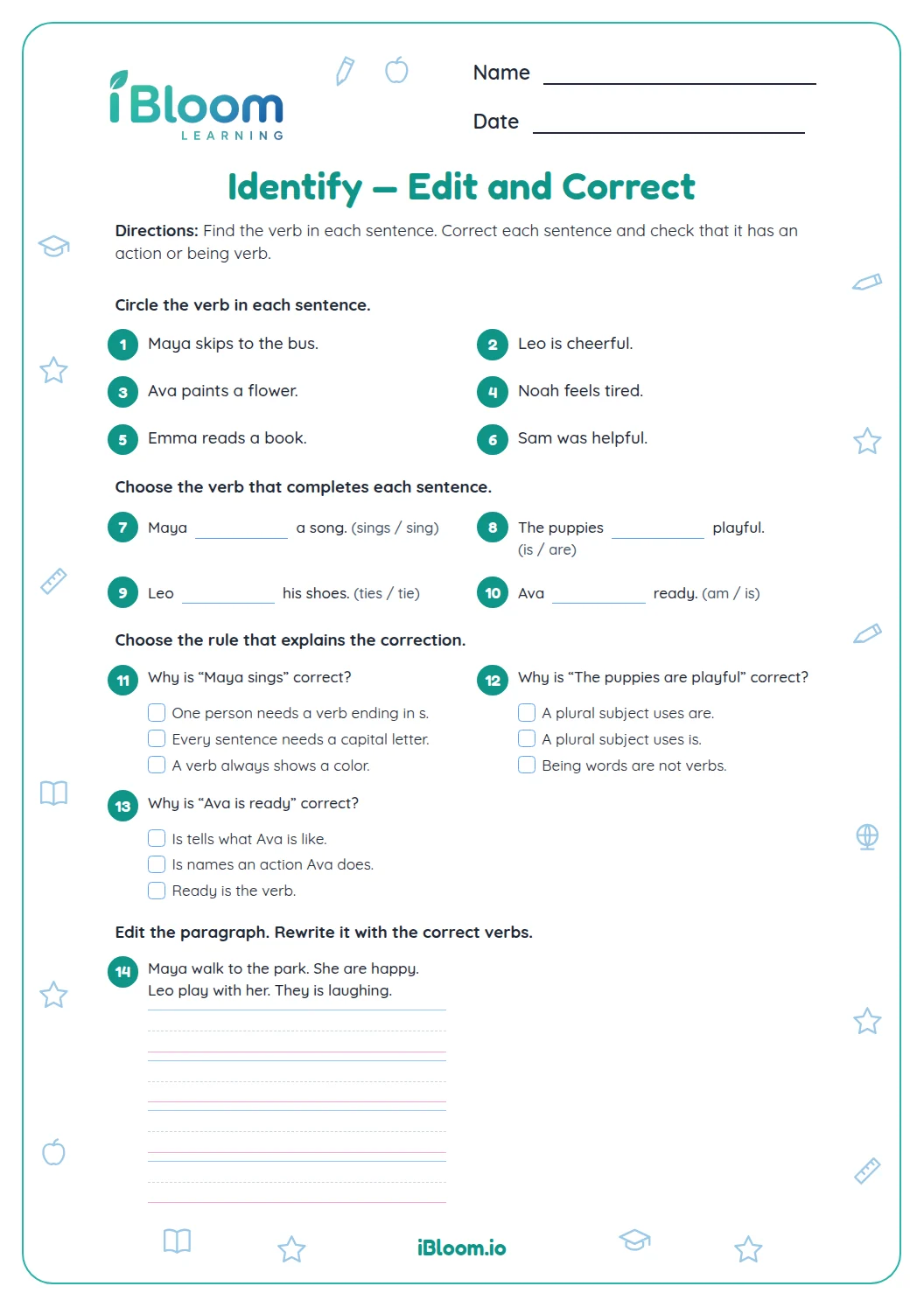
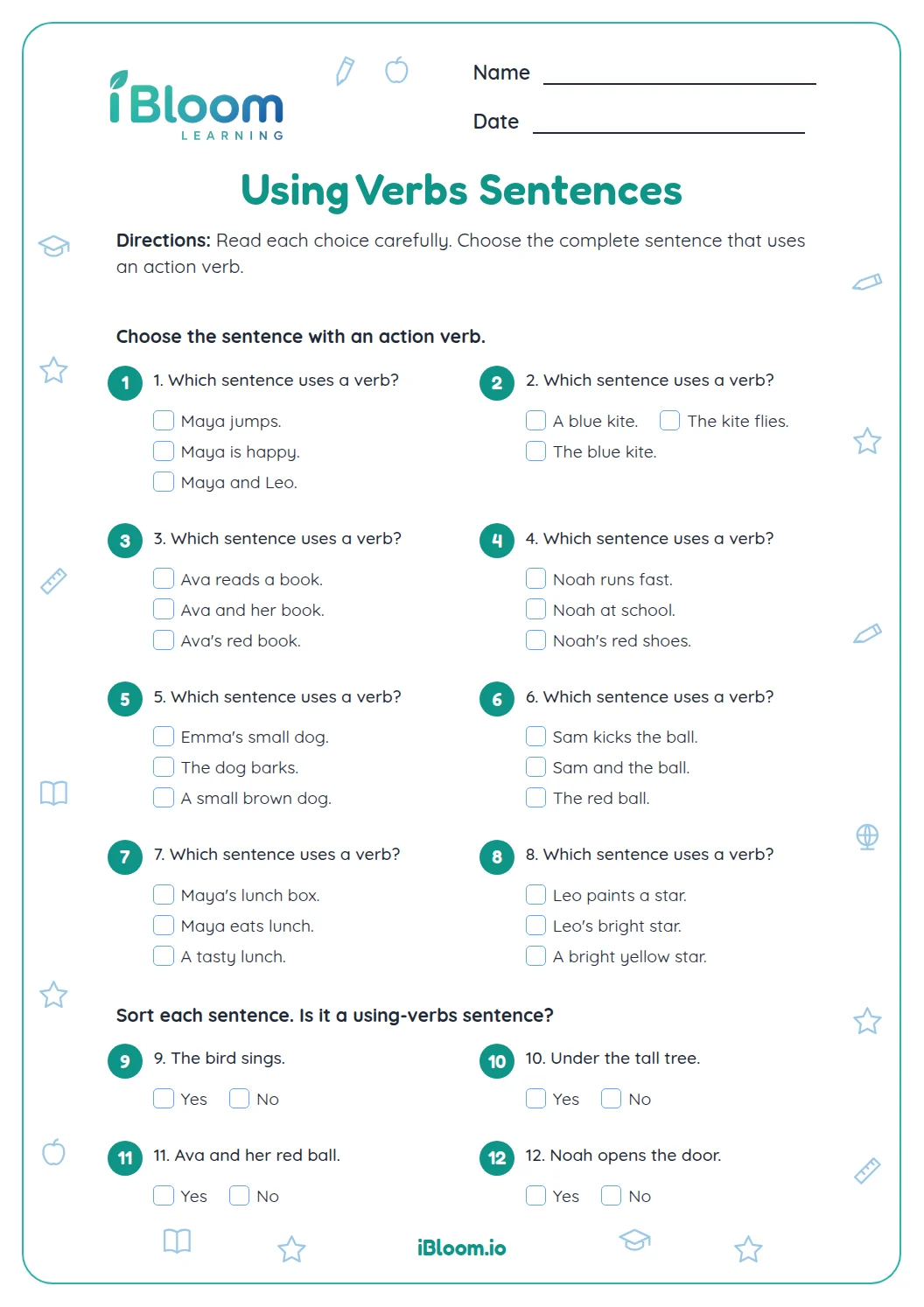
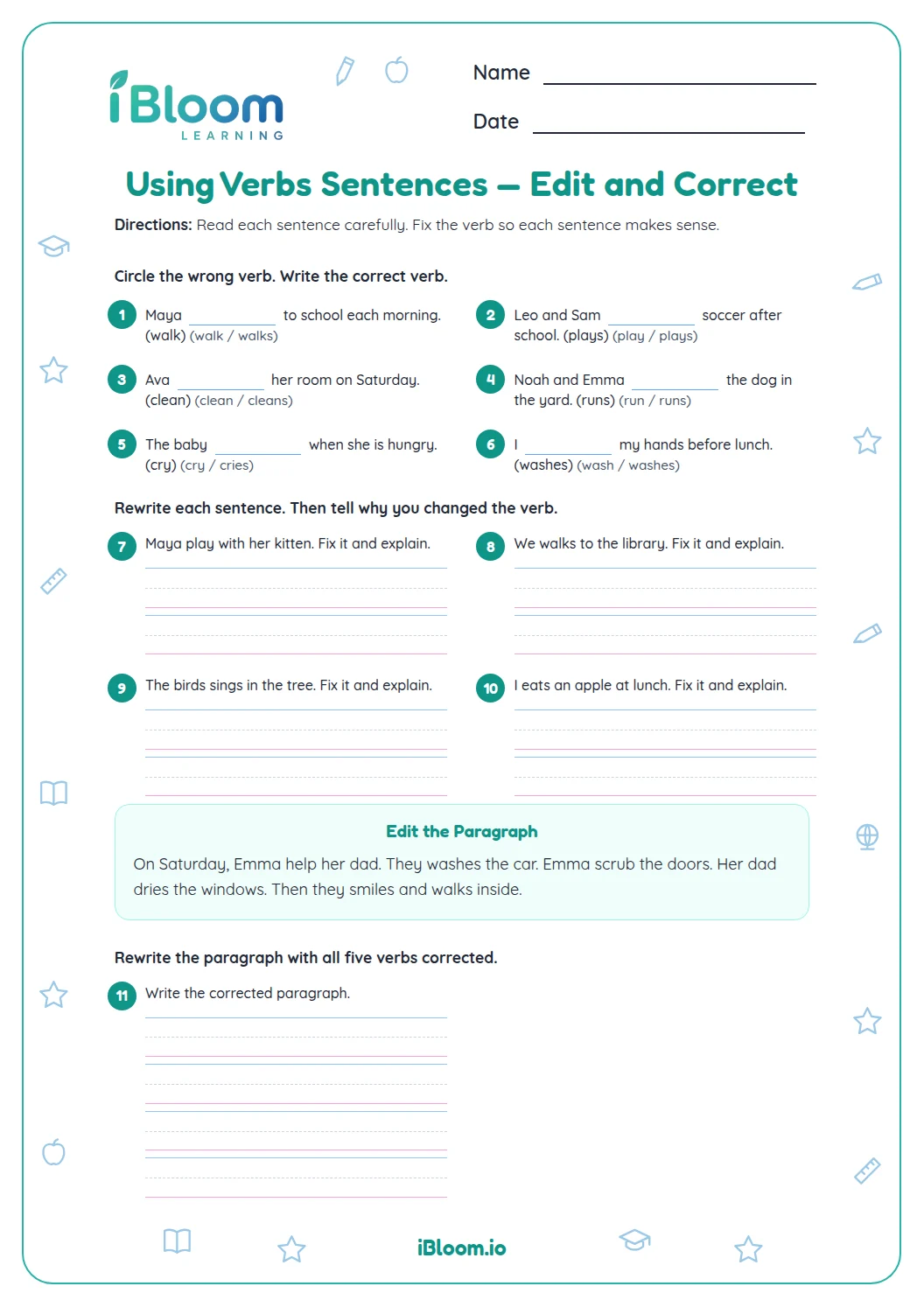
This Grade 2 printable focuses on action verbs, matching the Identify, Write, and Apply skill. Children circle verbs in short sentences, choose an action verb that completes a sentence, and write original sentences with a clear subject and action. The final writing prompts practice CCSS L.2.1f by asking children to produce complete simple sentences. A separate answer key gives the intended verbs and sample sentences.
Aligned to L.2.1f
How can a child spot an action verb?
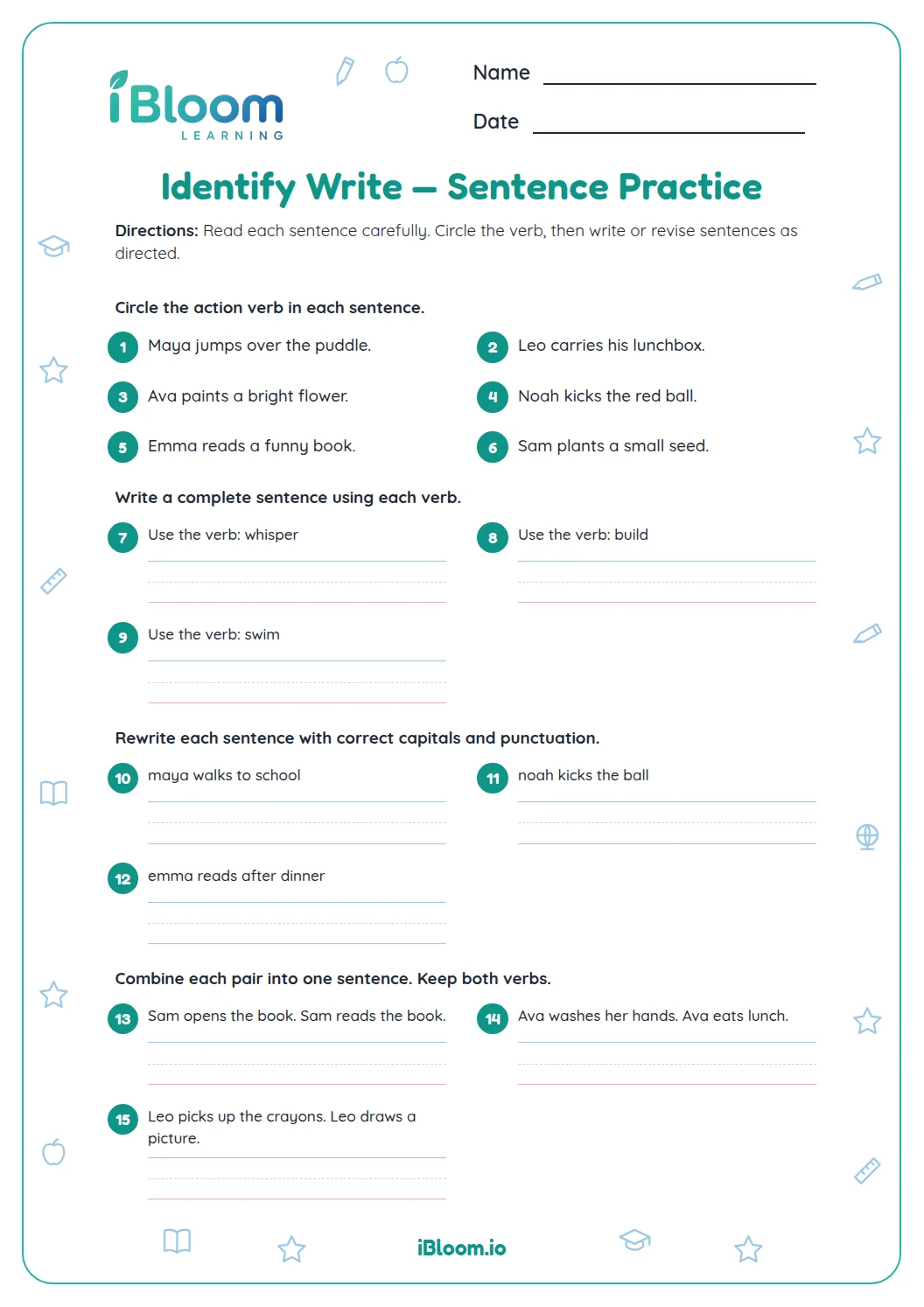
An action verb tells what someone or something does. Read the whole sentence and ask, “What is the action?” In question 1, Maya jumps over the puddle. Jumps tells what Maya does, so it is the action verb.
- 1Maya jumps over the puddle.
- 2Ask: What does Maya do?
- 3Answer: jumps
How does a verb make a sentence complete?
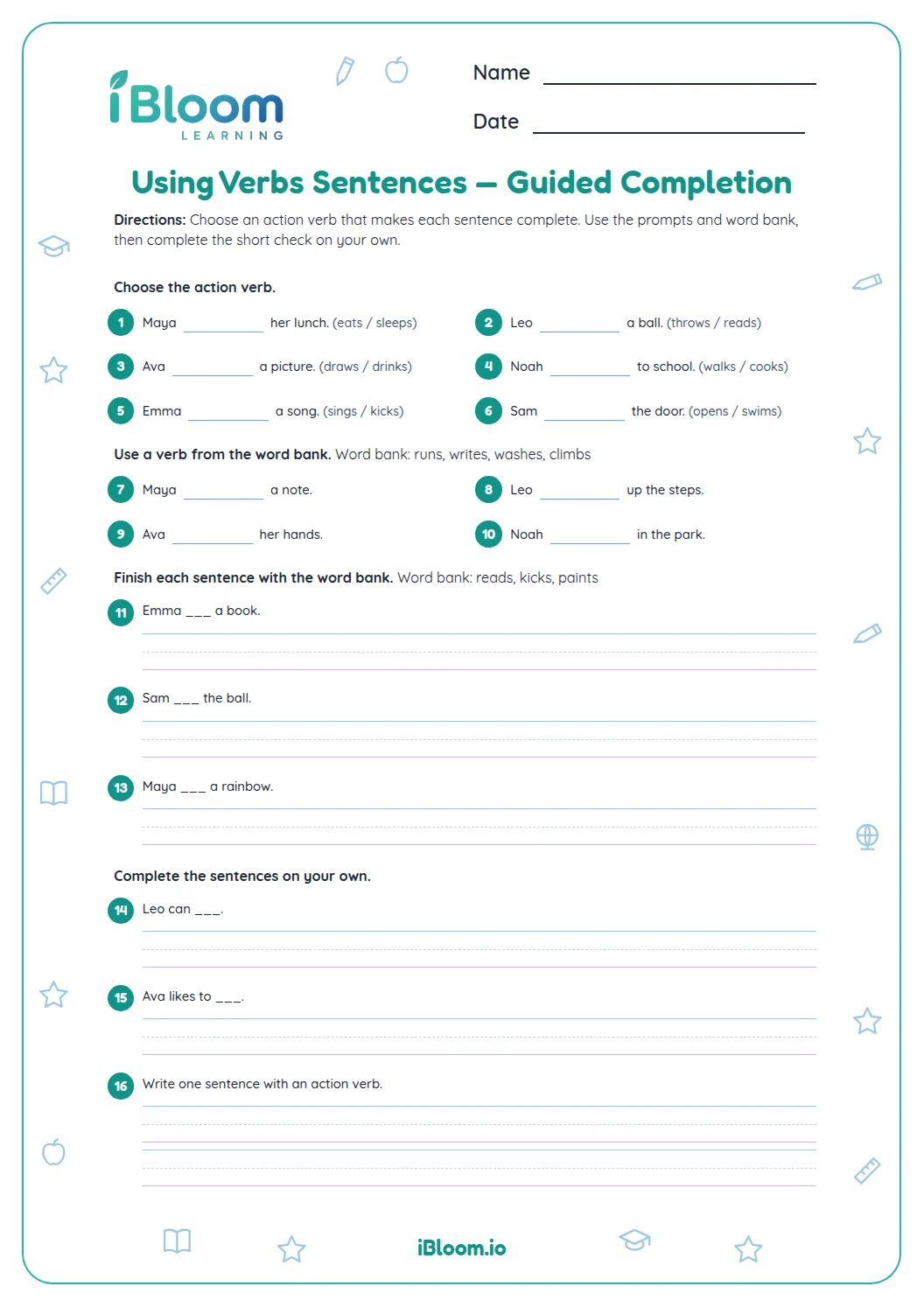
A verb needs to fit the subject and the action in the sentence. For “Maya ___ a sandwich at lunch,” eats makes sense because it tells what Maya does with a sandwich. Try each choice in the blank and read the sentence aloud.
How can children use action verbs in their own writing?
A complete sentence names who or what acts and tells what happens. The final four prompts invite sentences about a child at a park, a kind friend, a pet, and an after-school activity. The key shows samples; other complete sentences with action verbs are also correct.
How to use this worksheet at home or in class
- 1Read each sentence and ask what action is happening.
- 2Circle one action verb in each of the first eight sentences.
- 3For a blank, try each choice and read the sentence to see which action fits.
- 4For the last four prompts, name who or what acts and tell what it does.
- 5Begin each sentence with a capital letter and finish it with punctuation.
- 6Check the key, then read your sentences aloud and find their action verbs.
Common mistakes and quick fixes
The mistake
Circling a naming word, such as Maya, instead of the action.
The fix
Ask what Maya does in the sentence; the verb names that action.
The mistake
Choosing a verb that does not make sense with the sentence’s subject or idea.
The fix
Try each option in the sentence and read the whole sentence aloud.
The mistake
Writing a group of words without a subject or an action.
The fix
Name who or what acts, then tell what that subject does.
Curriculum alignment
The final prompts ask children to write complete sentences that include action verbs.
Write complete simple sentences that include action verbs.
On this sheet: The final four prompts ask children to produce complete sentences with action verbs.
Show the official wordingHide the official wording
Produce, expand, and rearrange complete simple and compound sentences (e.g., The boy watched the movie; The little boy watched the movie; The action movie was watched by the little boy).
What to practice next
Make more practice
Further reading
Questions parents and teachers ask
What is an action verb?
An action verb tells what a person, animal, or thing does. In “Maya jumps over the puddle,” jumps is the action because it tells what Maya does. Children practice finding action verbs in eight short sentences on this worksheet.
How can a child find the verb in a sentence?
Read the sentence and ask what the subject does. In “Leo carries his blue backpack,” Leo is the person and carries is the action. The first part asks children to circle one action verb in each sentence. The same routine works with the other sentences too.
What is the difference between a verb and a noun?
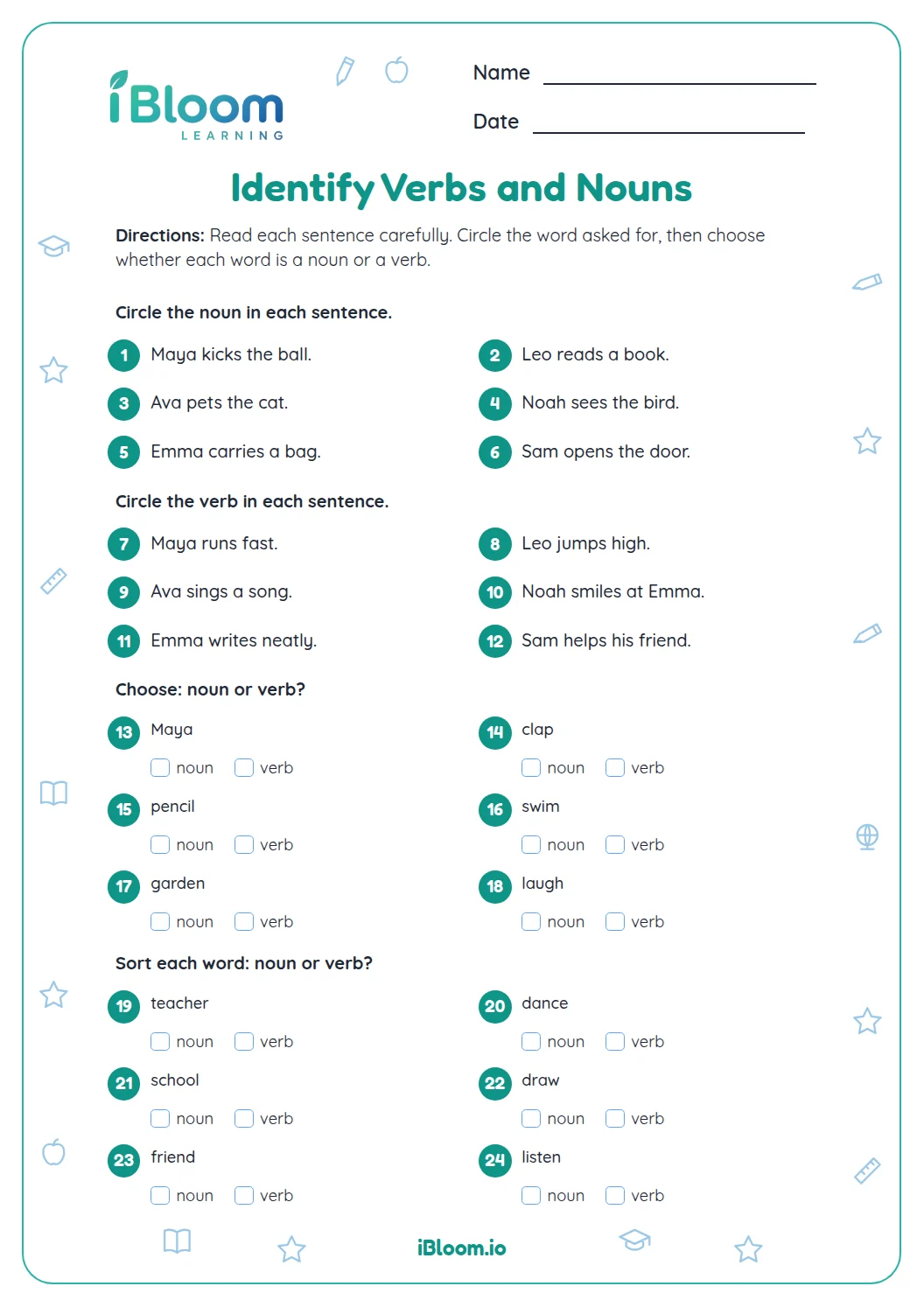
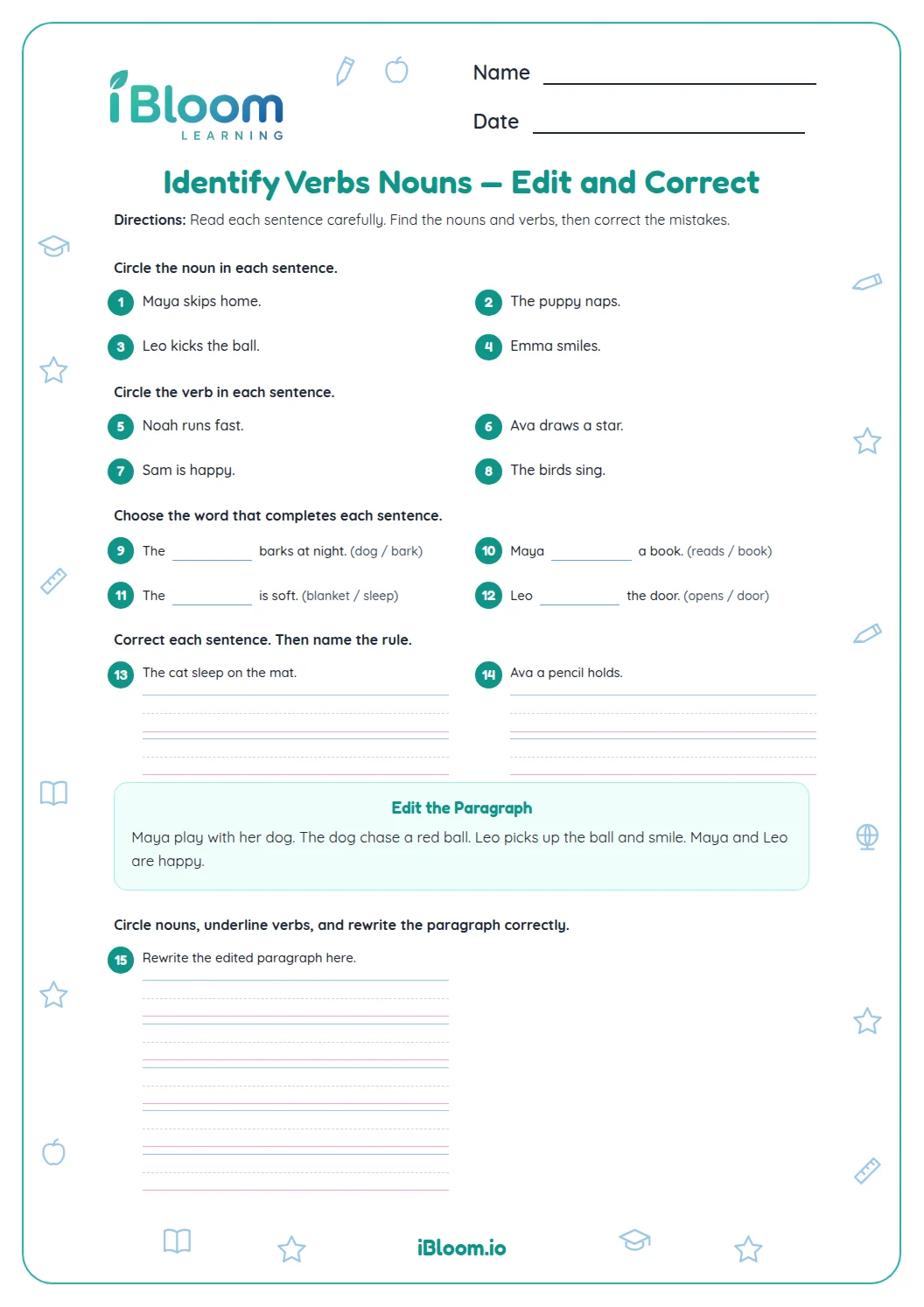
A noun names a person, place, animal, or thing, while a verb tells an action or state. In “The puppy splashes,” puppy names the animal and splashes tells what it does. Children can compare the naming and action words in a sentence, though this sheet focuses on verbs.
Can my child write a different sentence from the answer key?
Yes. The key gives a sample for each writing prompt, and other complete sentences are welcome when they fit the topic and include an action verb. Ask your child to point to the subject and action in the sentence they wrote.
How long does this worksheet take?
Plan for about 20 minutes for the 16 questions. The first items are brief; the final four ask children to write original sentences and may take longer. Reading the sentences aloud can help children hear whether each verb fits.