


About this worksheet
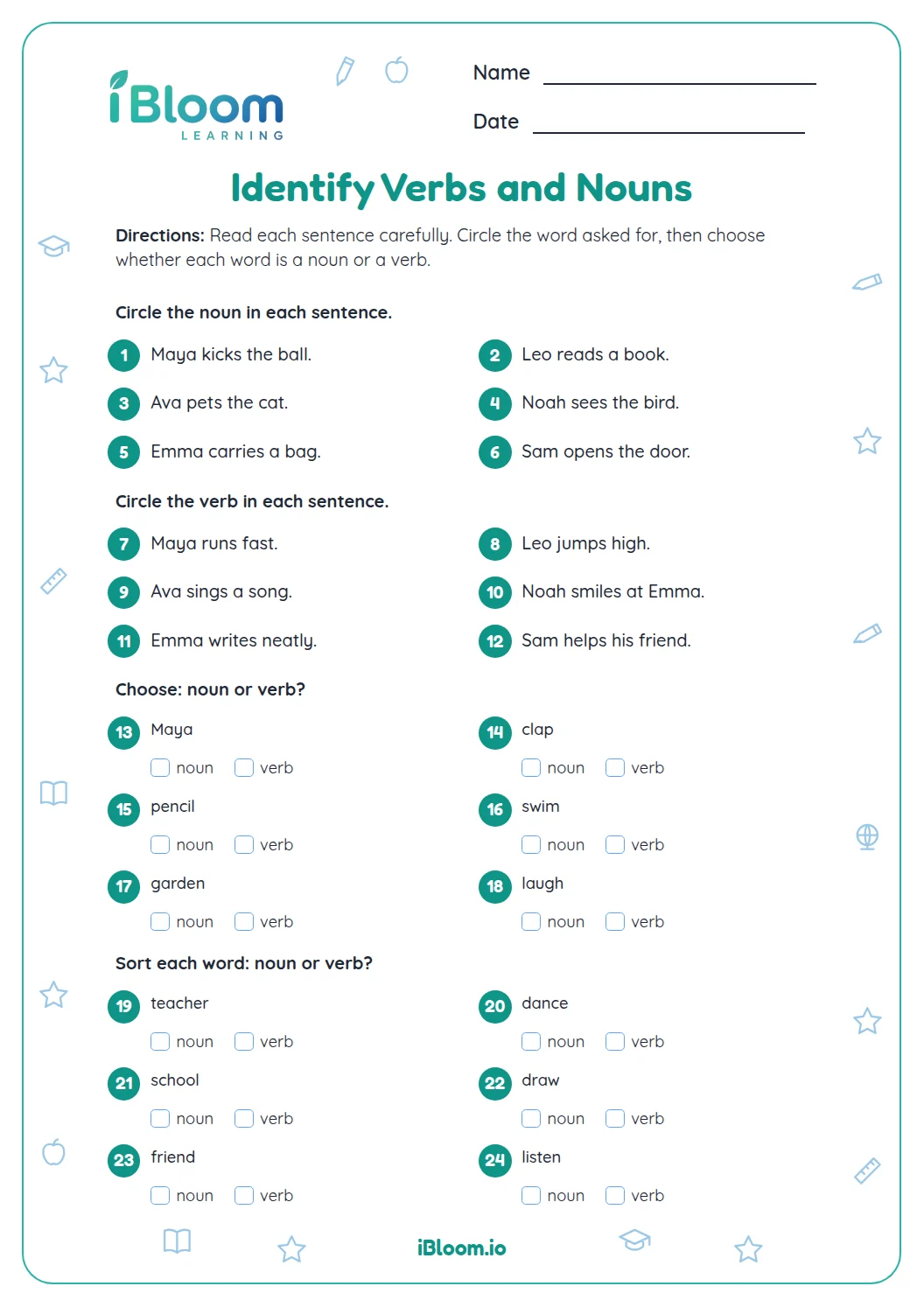
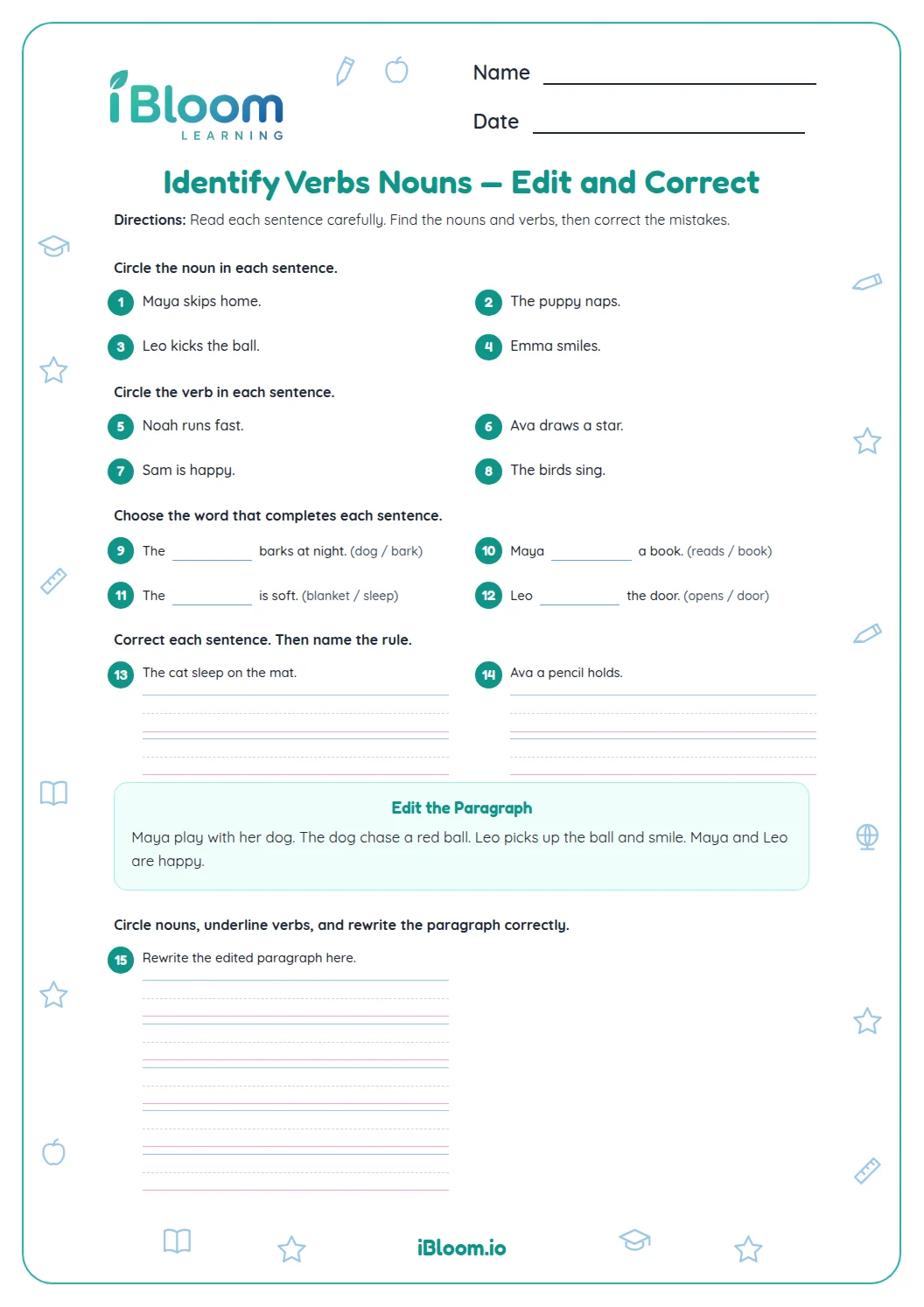
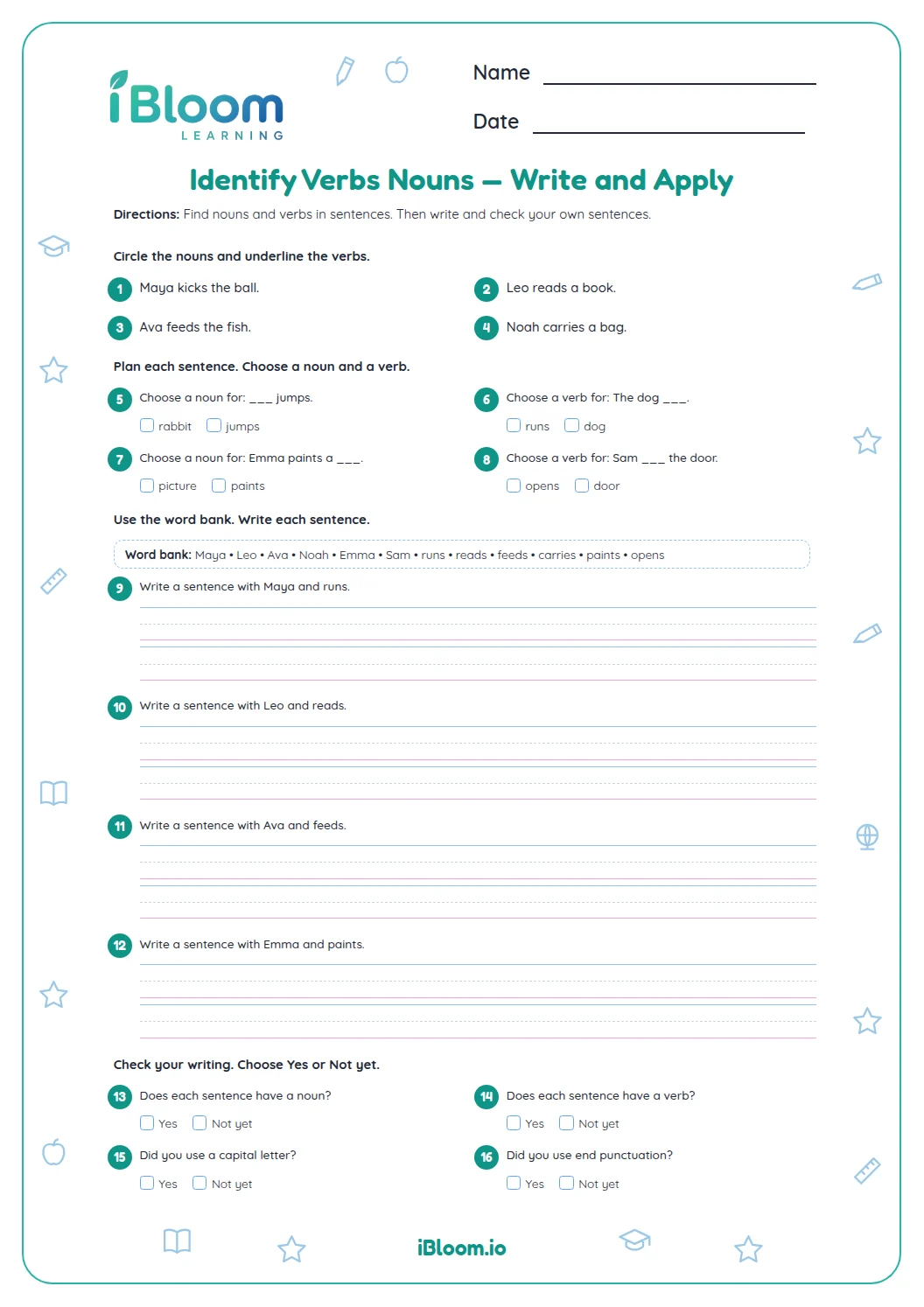
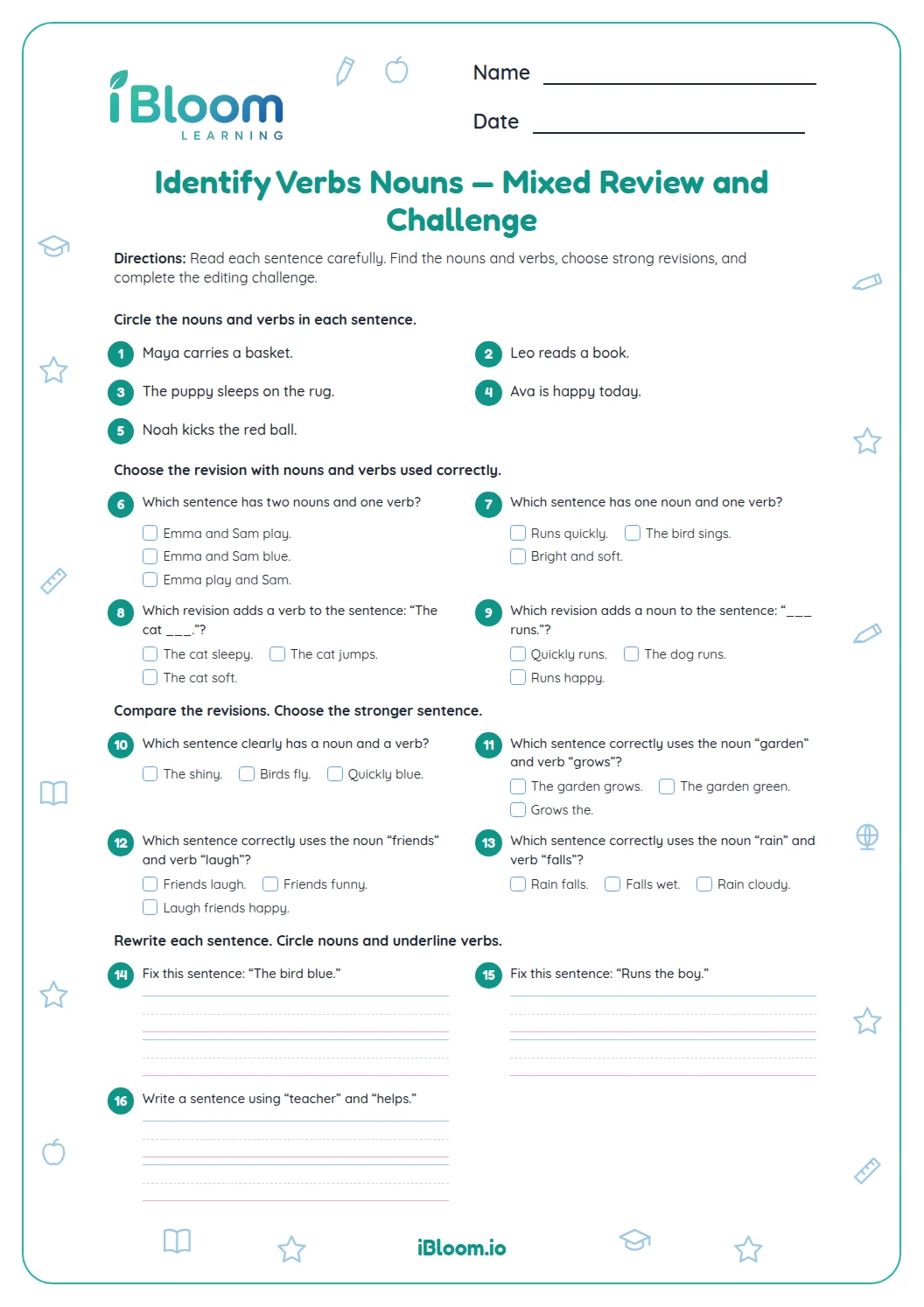
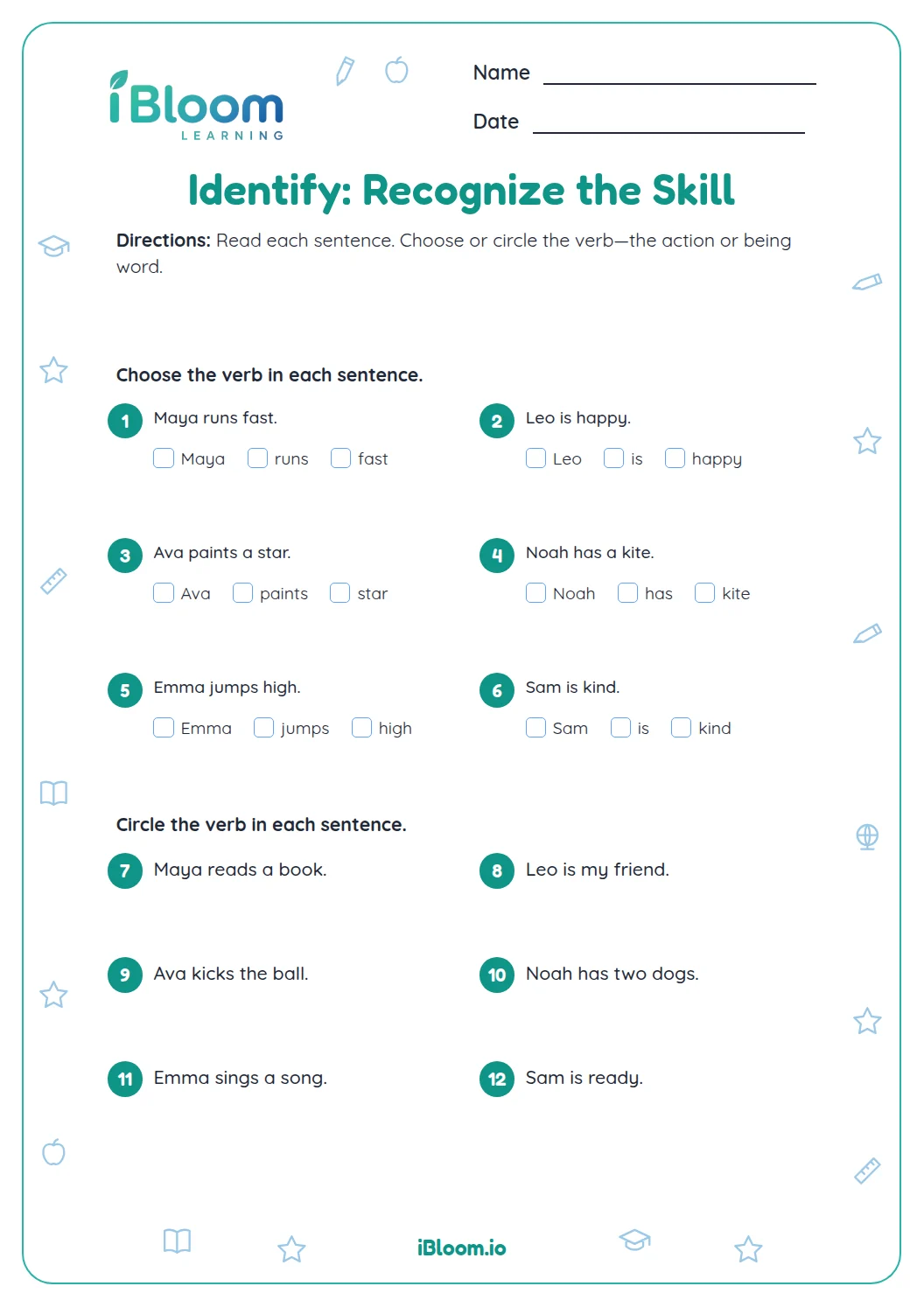
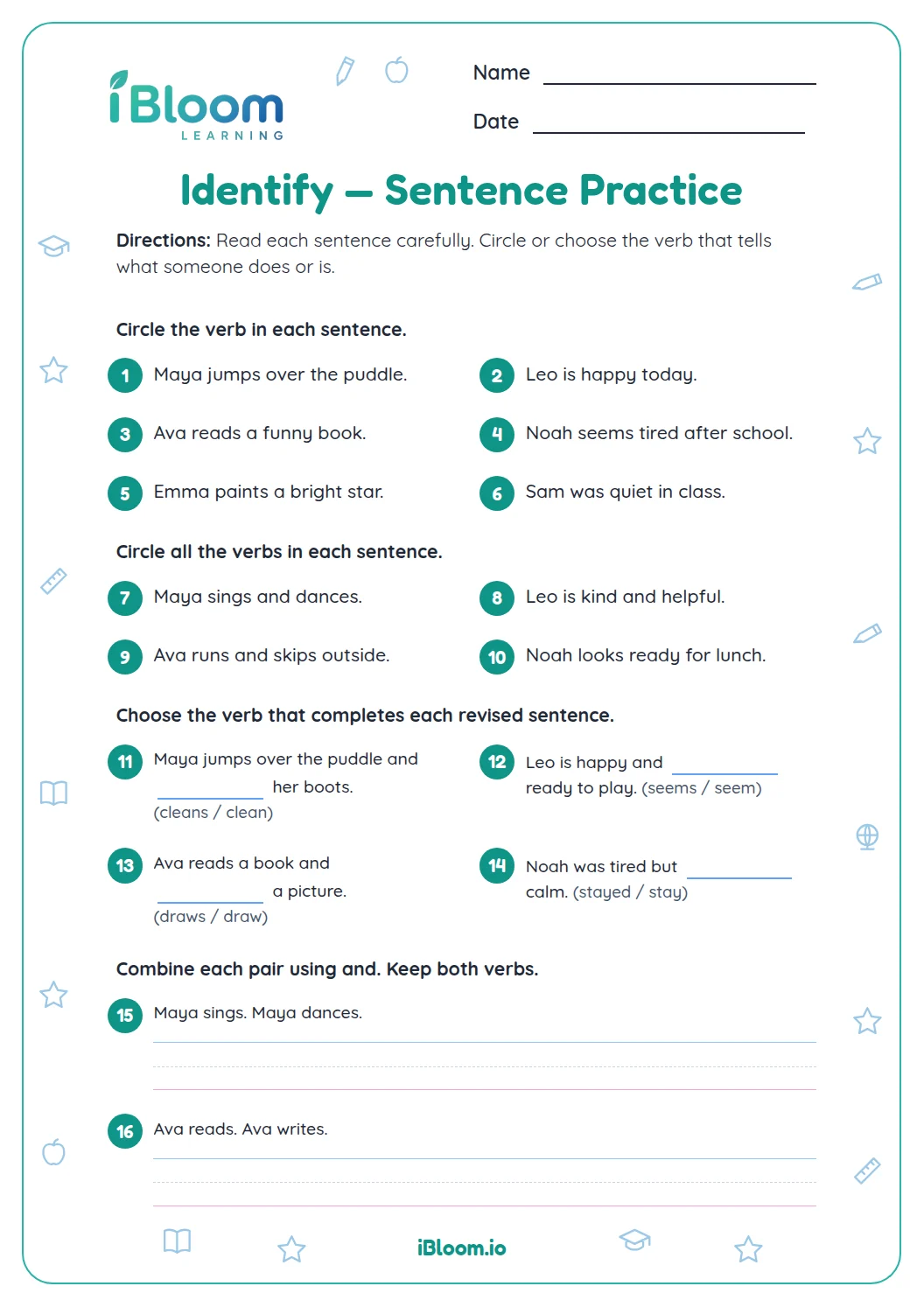
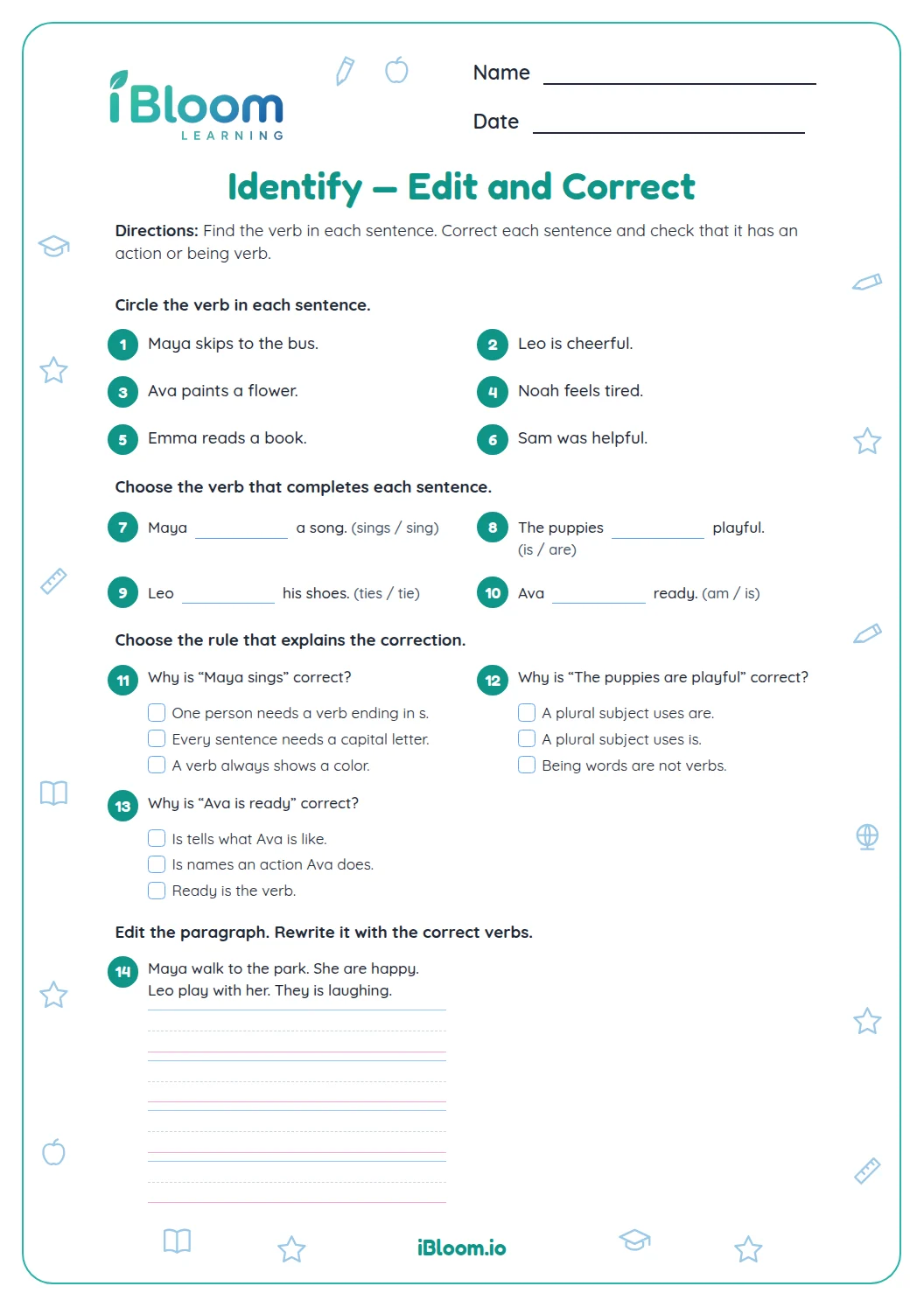
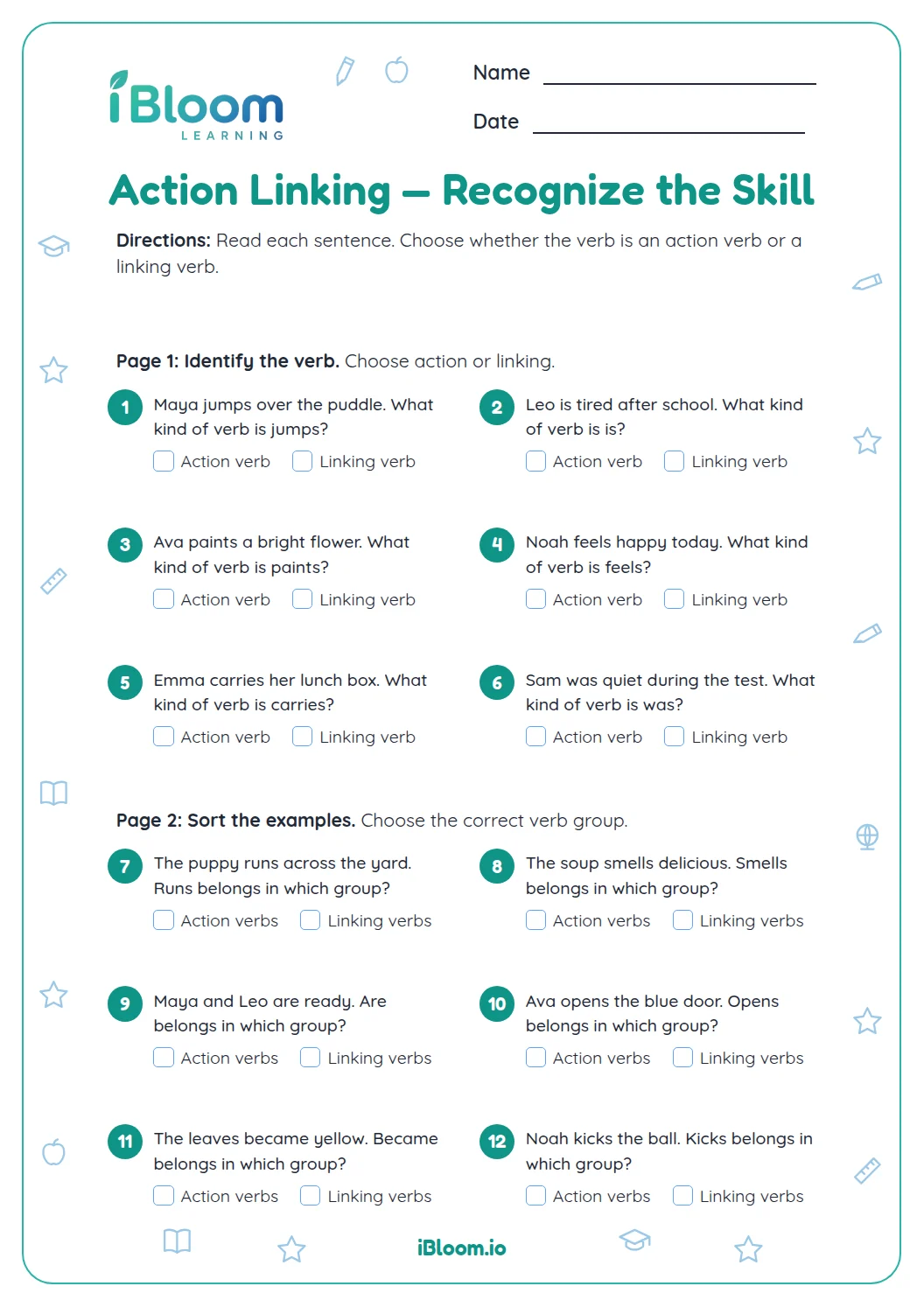
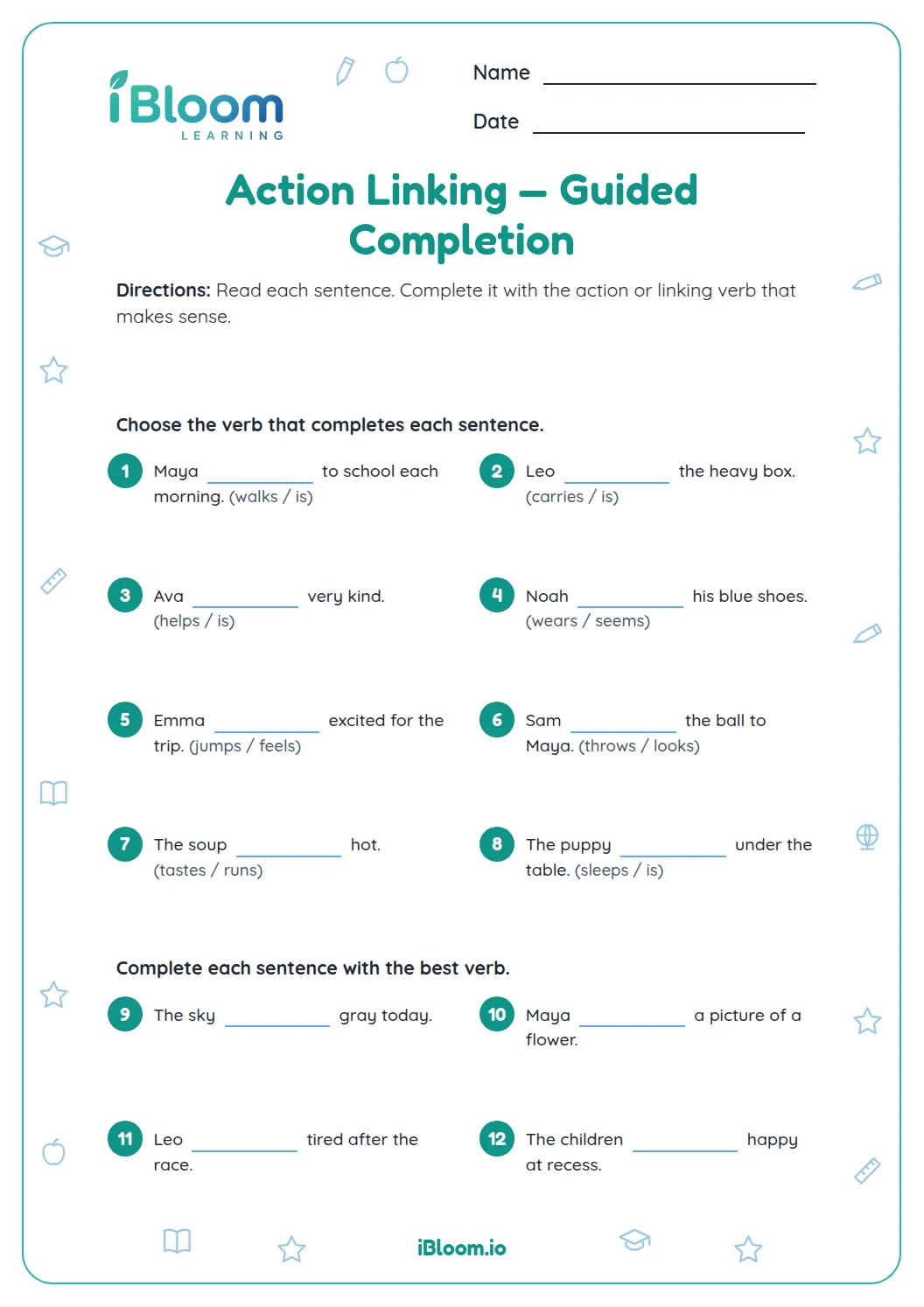
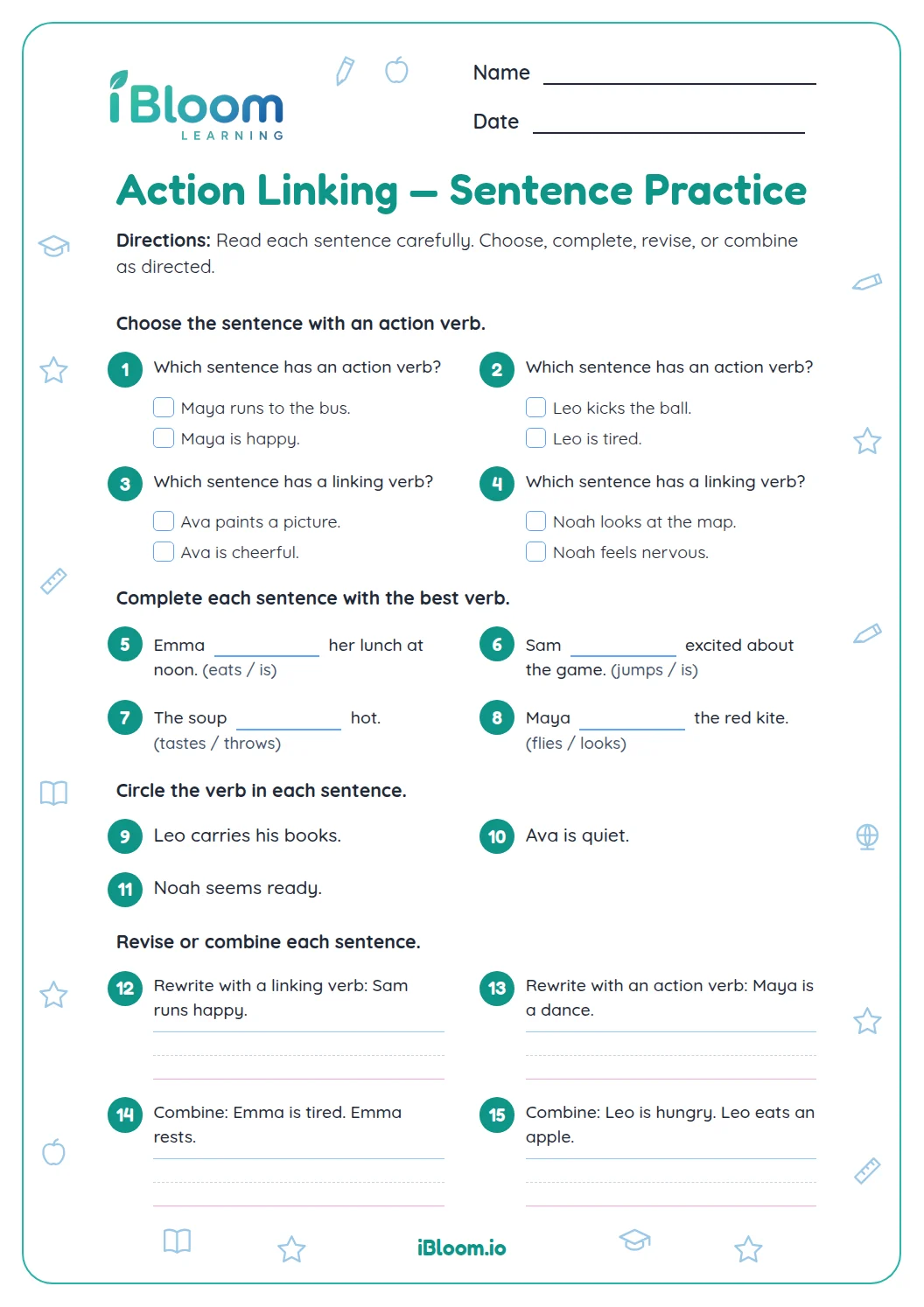
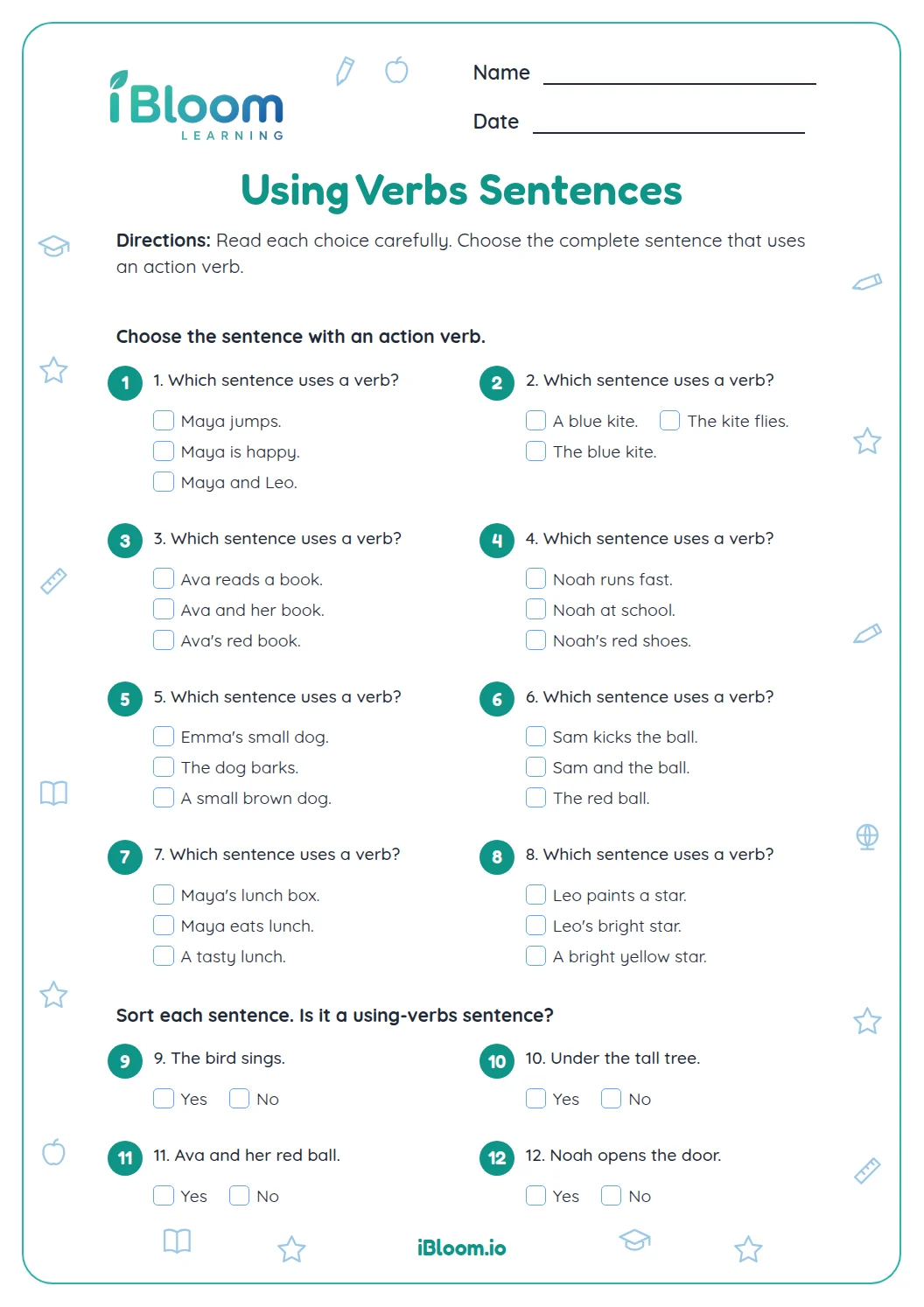
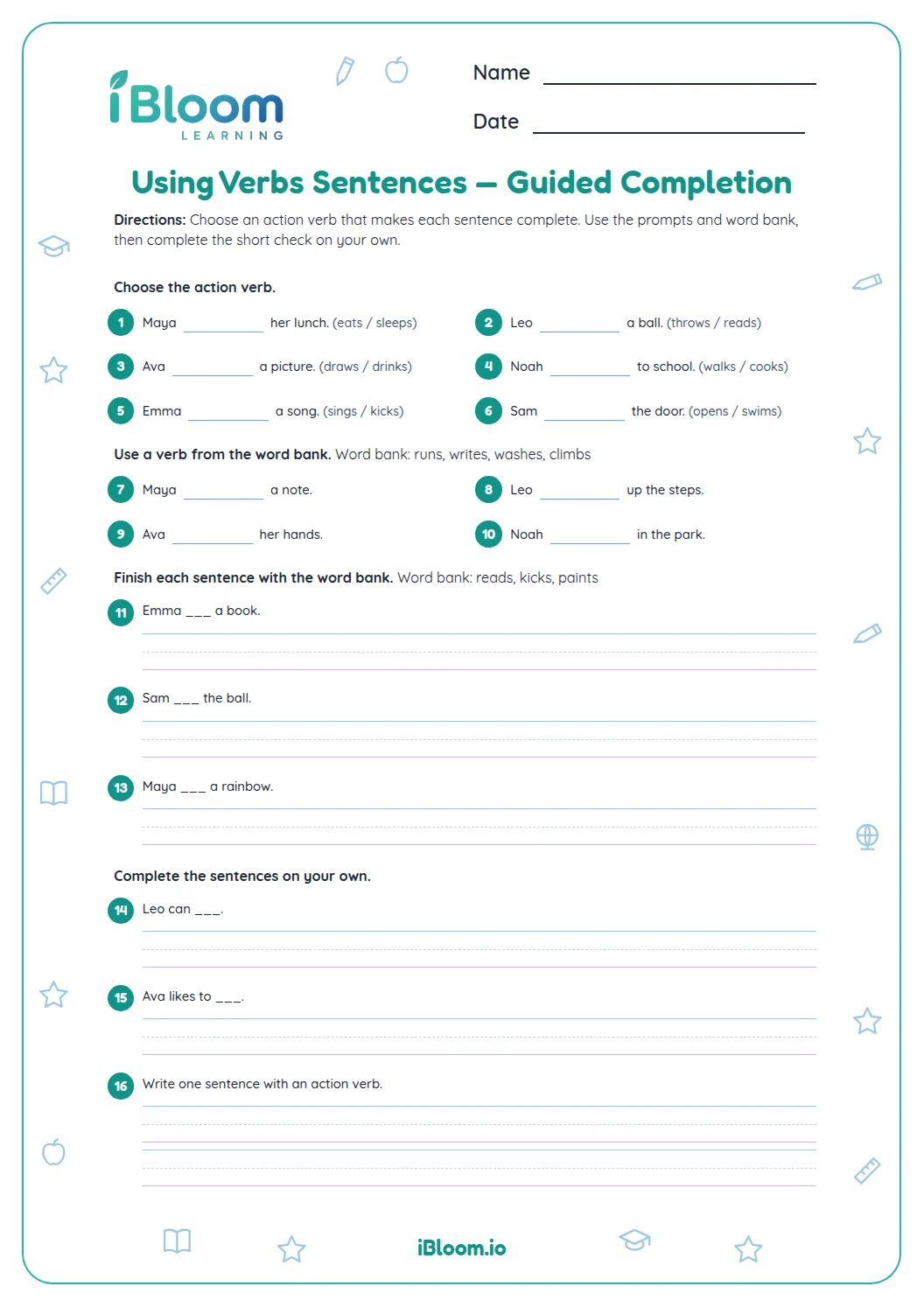
This free Grade 2 sentence-practice worksheet helps children distinguish nouns from action verbs. They identify words in short sentences, name both parts, replace an action verb, and write sentences of their own. The 14 questions progress from selecting a word to applying nouns and verbs in writing. A separate key gives answers and sample sentences.
How can you spot a noun and a verb?
A noun names a person, animal, place or thing. A verb tells an action. In “The puppy chases a ball,” puppy and ball are nouns; chases is the action verb.
For question 1, the prompt asks which word names an action. Chases is the only action; puppy and ball name things.
- 1The puppy chases a ball.
- 2Nouns: puppy, ball
- 3Action verb: chases
How do nouns and verbs work together?
A complete simple sentence can put a noun with a verb: “Birds sing.” Adding details gives more information, as in “Birds sing in the tree.” Question 14 asks students to use teacher and reads together.
How can children check their own sentence?
Underline the noun that tells who or what the sentence is about. Then find the action verb. Read the sentence aloud and check that the noun does the action.
How to use this worksheet
- 1Read the complete sentence first.
- 2Ask who or what the sentence is about to find a noun.
- 3Ask what the person or thing does to find an action verb.
- 4For questions asking for two words, label each noun and the verb.
- 5Use all requested words in a complete sentence for writing items.
- 6Compare with the answer key; your own sentence can differ and still be correct.
Common mistakes and quick fixes
The mistake
Choosing any interesting word instead of the word that names or acts.
The fix
Use the question clue: “who or what?” for a noun and “what action?” for a verb.
The mistake
Calling a describing word such as “loudly” a verb.
The fix
Find the action word; “laugh” is the verb in “Children laugh loudly.”
The mistake
Writing a fragment instead of a sentence.
The fix
Include a subject noun and an action verb, then reread the sentence.
What to practice next
Make more practice
Questions parents and teachers ask
What is a noun?
A noun names a person, animal, place, or thing. In “The horse drinks water,” horse and water are nouns. The first part of this worksheet asks children to pick or name nouns in short sentences, then use nouns in their own sentences.
What is a verb?
A verb tells what happens or what someone or something does. In “The puppy chases a ball,” chases is the verb. Children identify verbs such as chases, hops, sings, and paints, then use verbs while writing their own sentences.
Can a sentence have more than one noun?
Yes. “The horse drinks water” has two nouns: horse and water. Some questions ask for one noun, while others ask for the noun and verb or for two nouns and one verb. Read each prompt closely to see which words to name.
What should a complete sentence include?
For this practice, write a complete thought with a noun and a verb. “The dog runs” tells who does what. A response such as “Runs quickly” is missing the noun that tells who runs. The writing questions specify which words to include.
Are there sample answers for writing questions?
Yes. The key gives sample sentences, including “The fish glides” and “The teacher reads.” Other wording can work when it makes sense and includes the requested noun or verb. For identification items, check that the named word appears in the sentence.