




About this worksheet
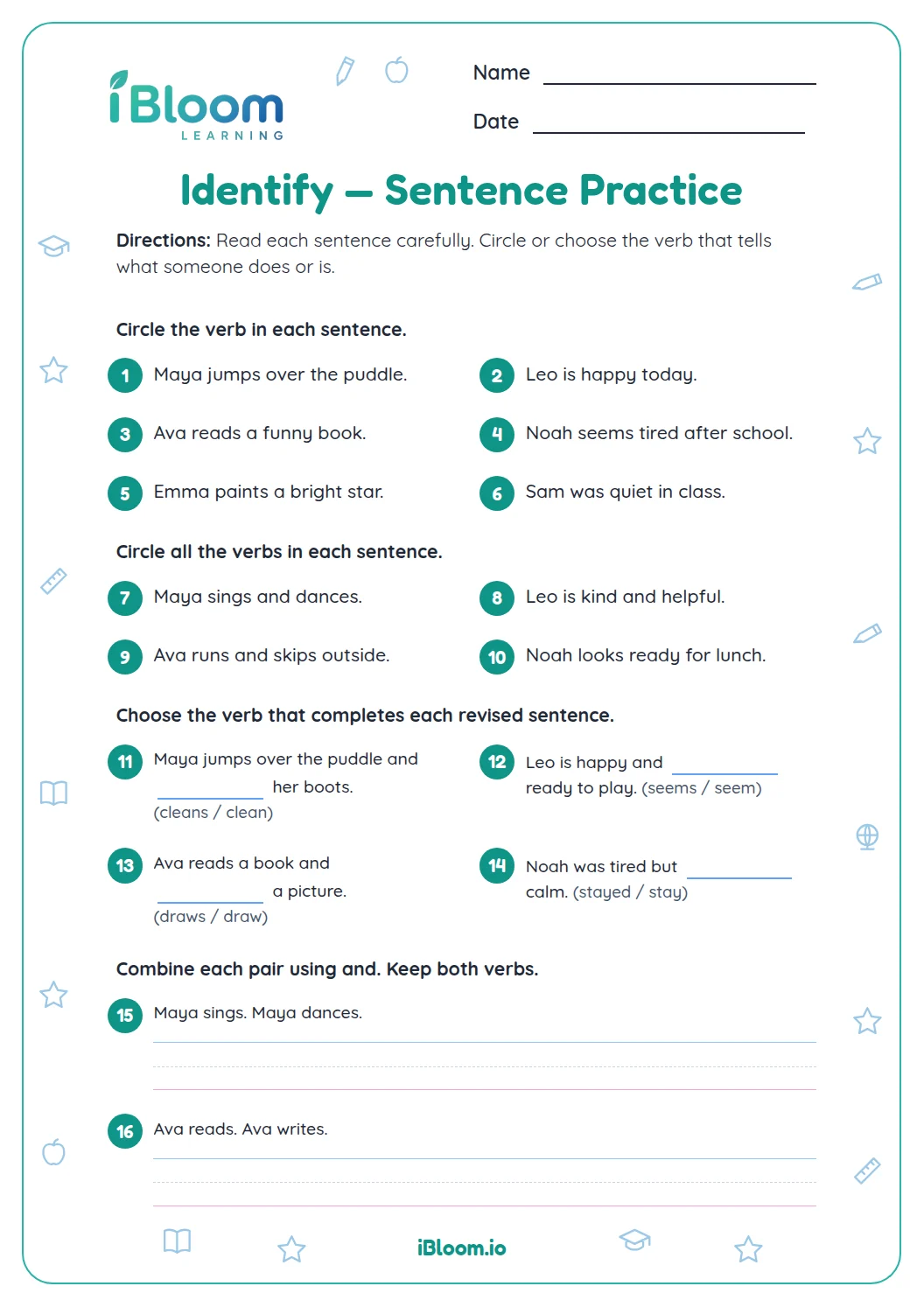
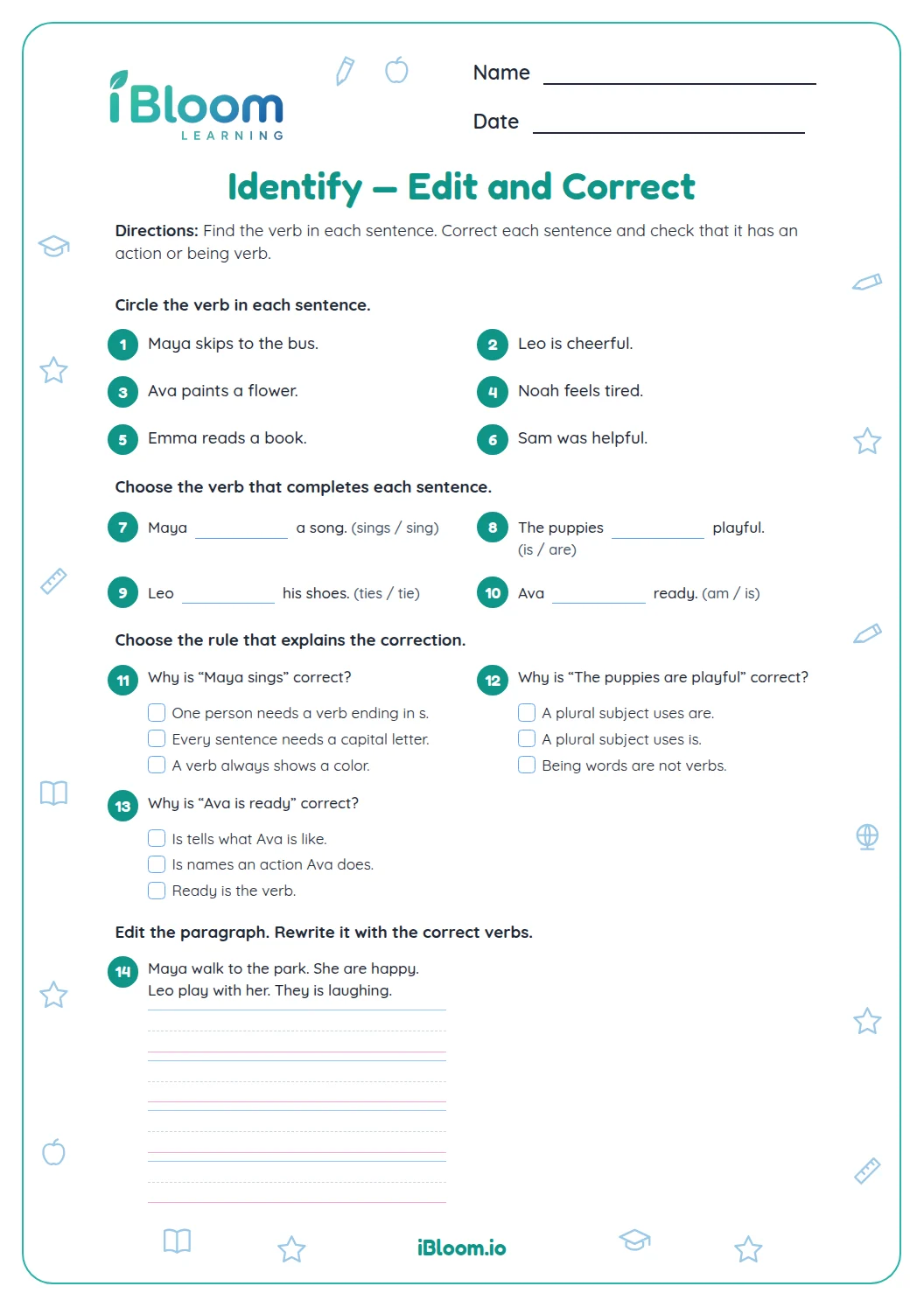
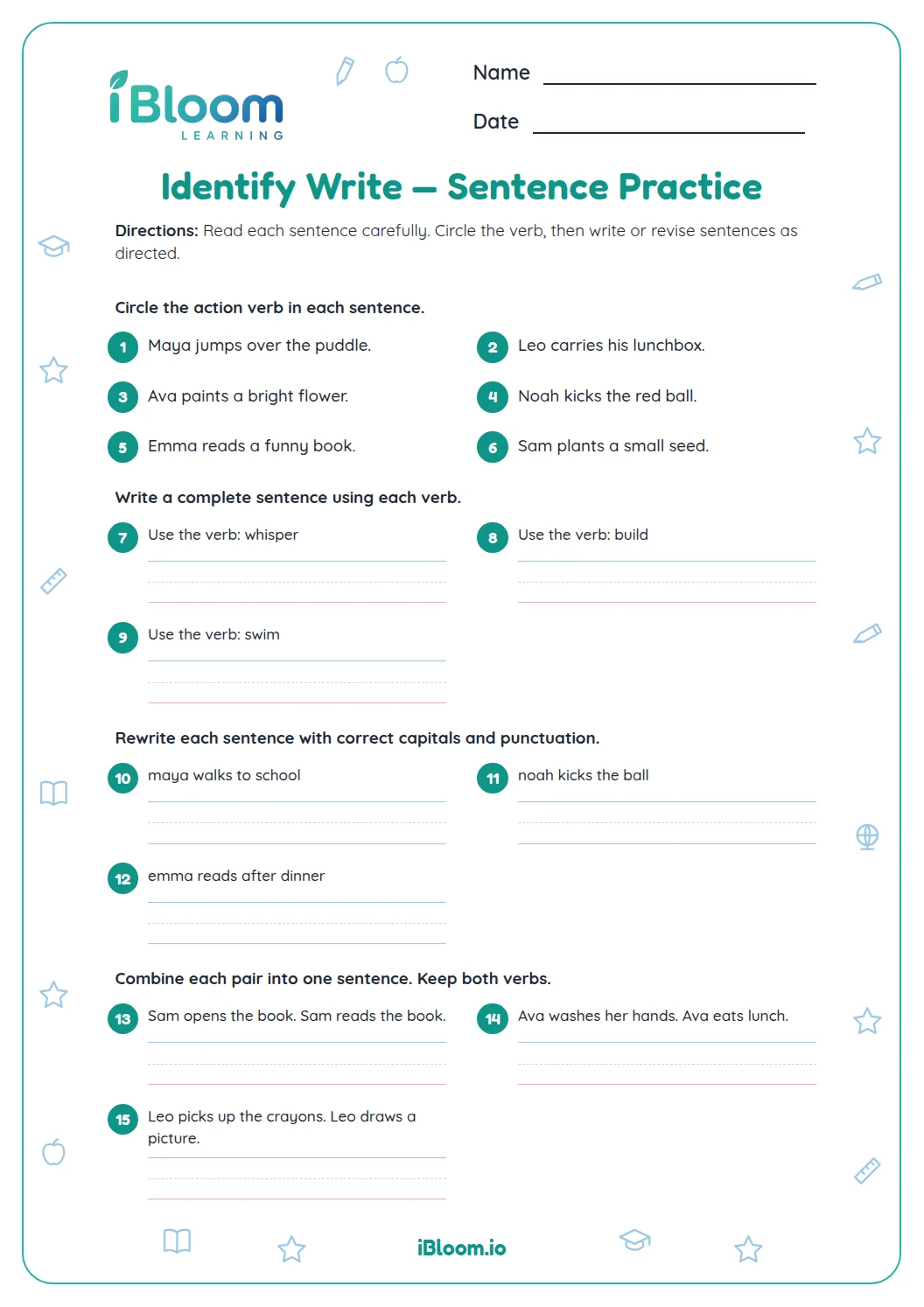
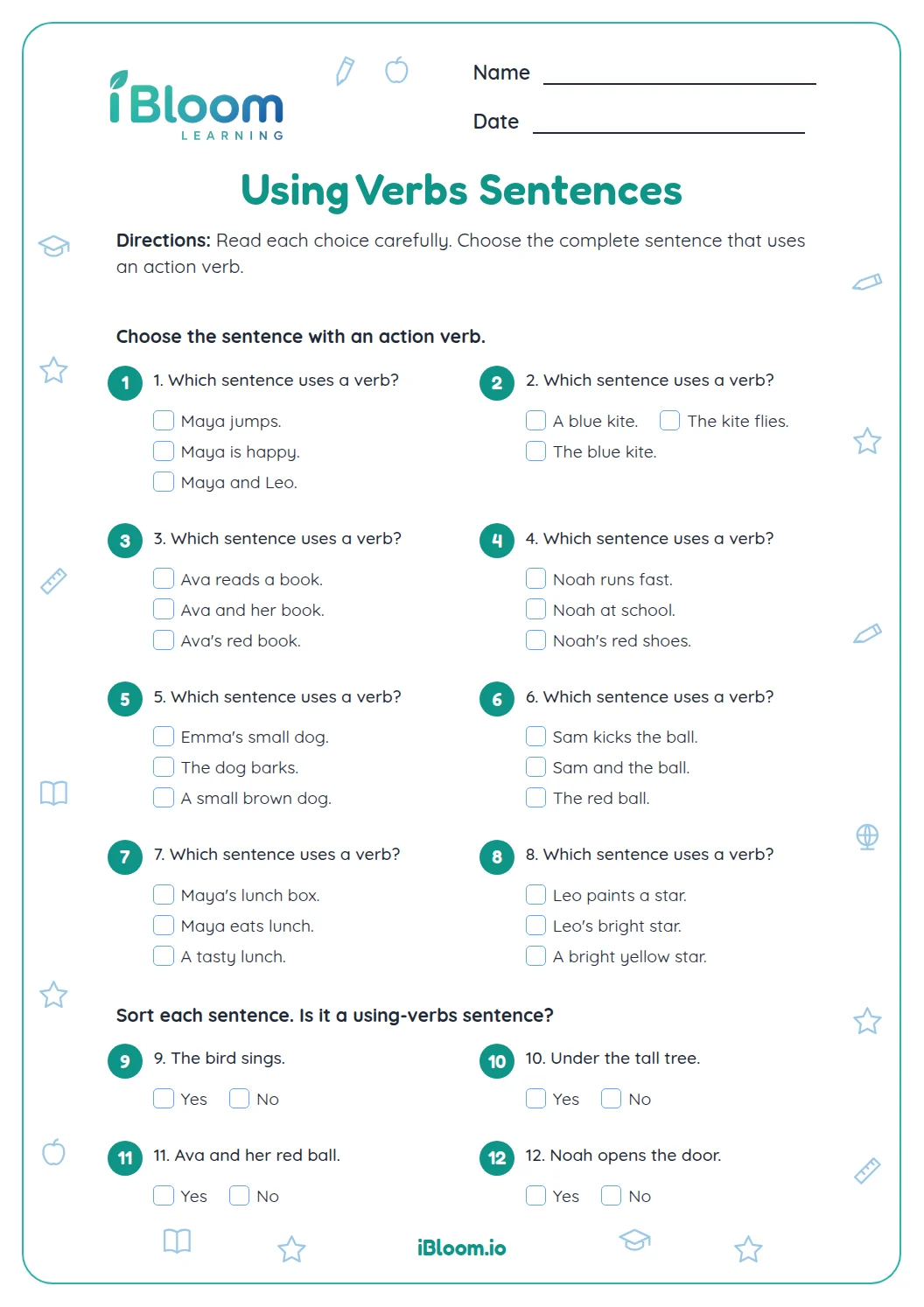
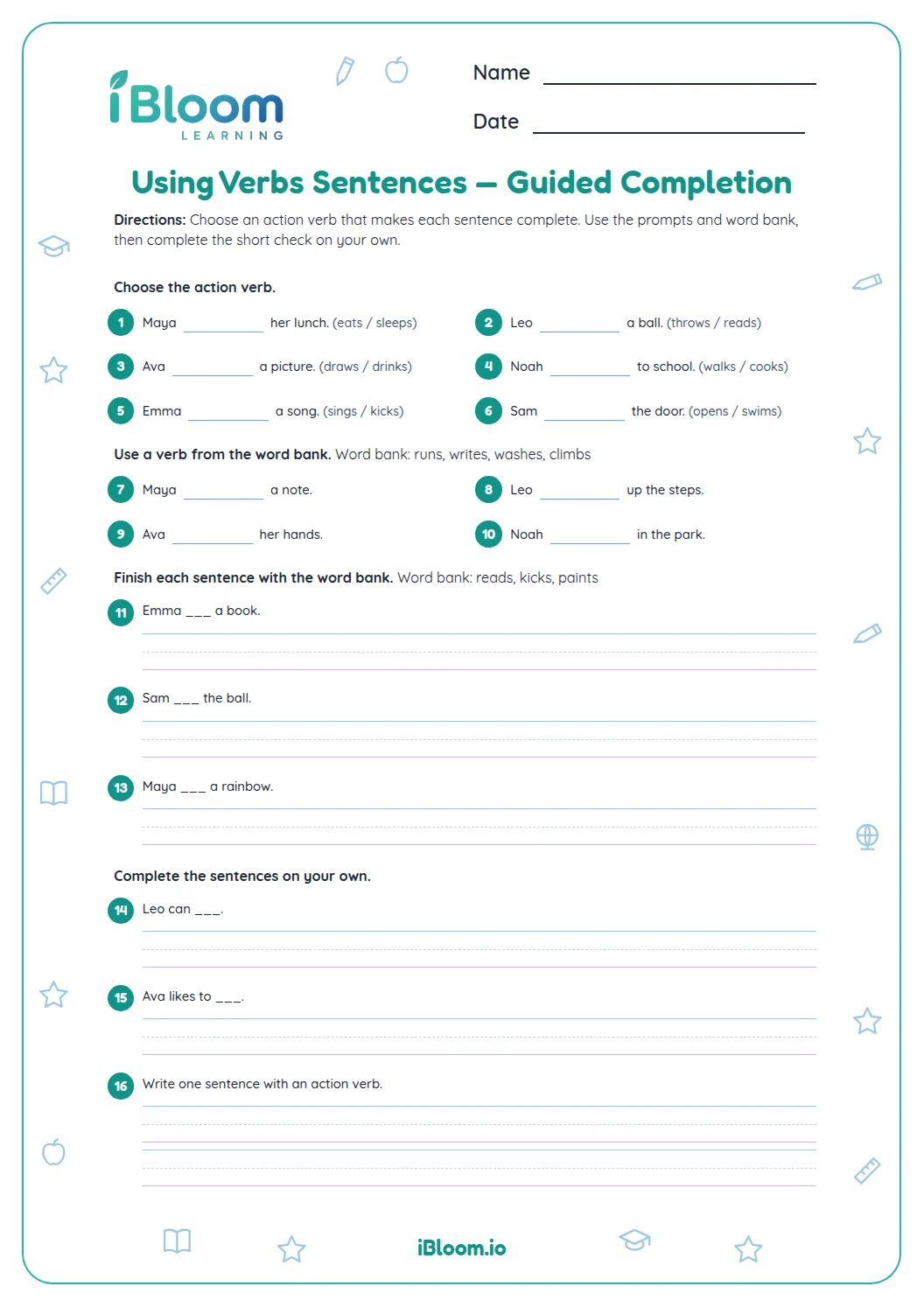
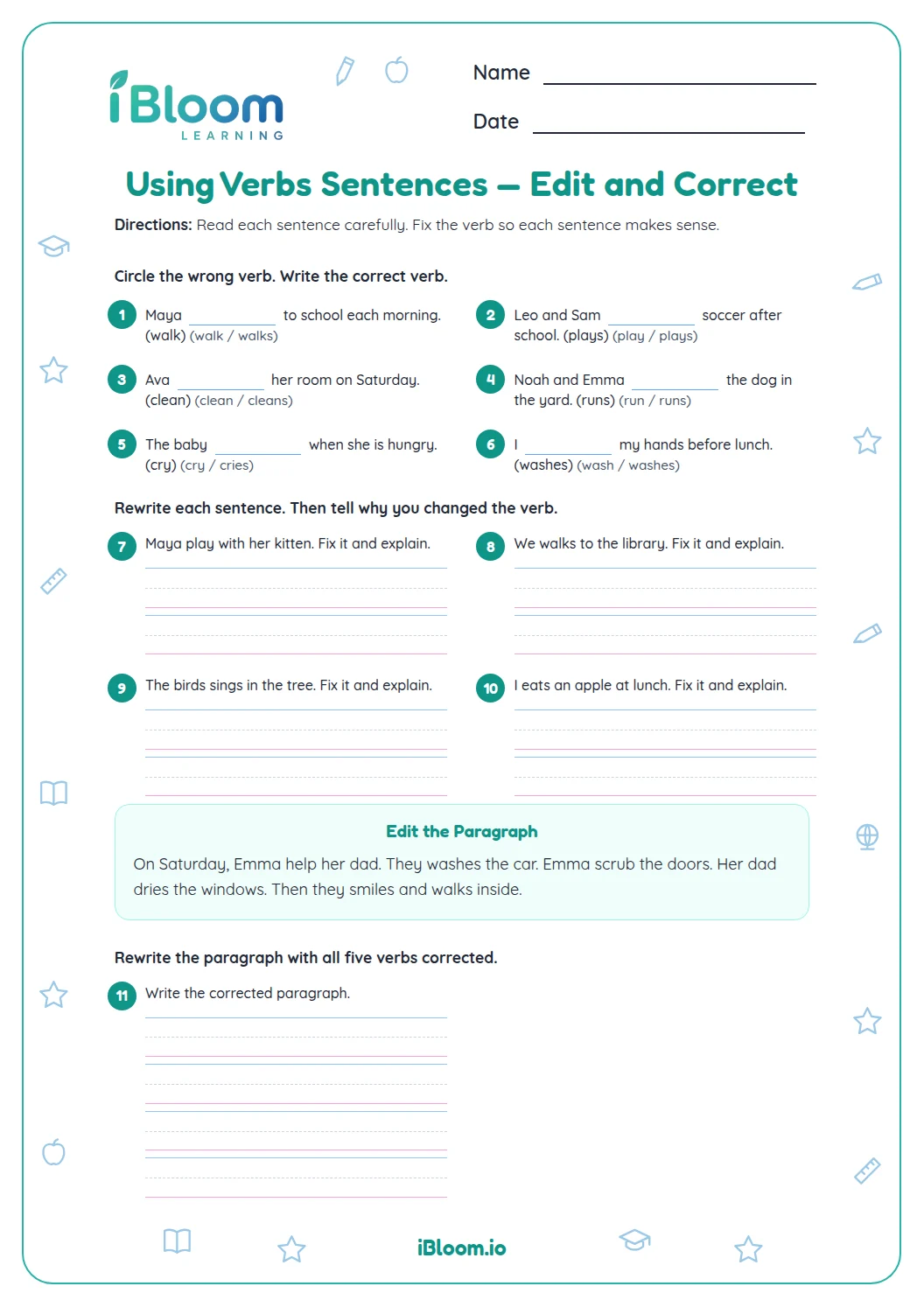
This Grade 2 grammar worksheet helps learners choose action and linking verbs that make sentences complete and clear. Students identify what action verbs do and how linking verbs connect a subject to a description, then edit simple subject-verb agreement errors and write their own examples. It supports CCSS.ELA-LITERACY.L.2.1 by asking children to use standard English grammar when writing or speaking.
How do action verbs work?
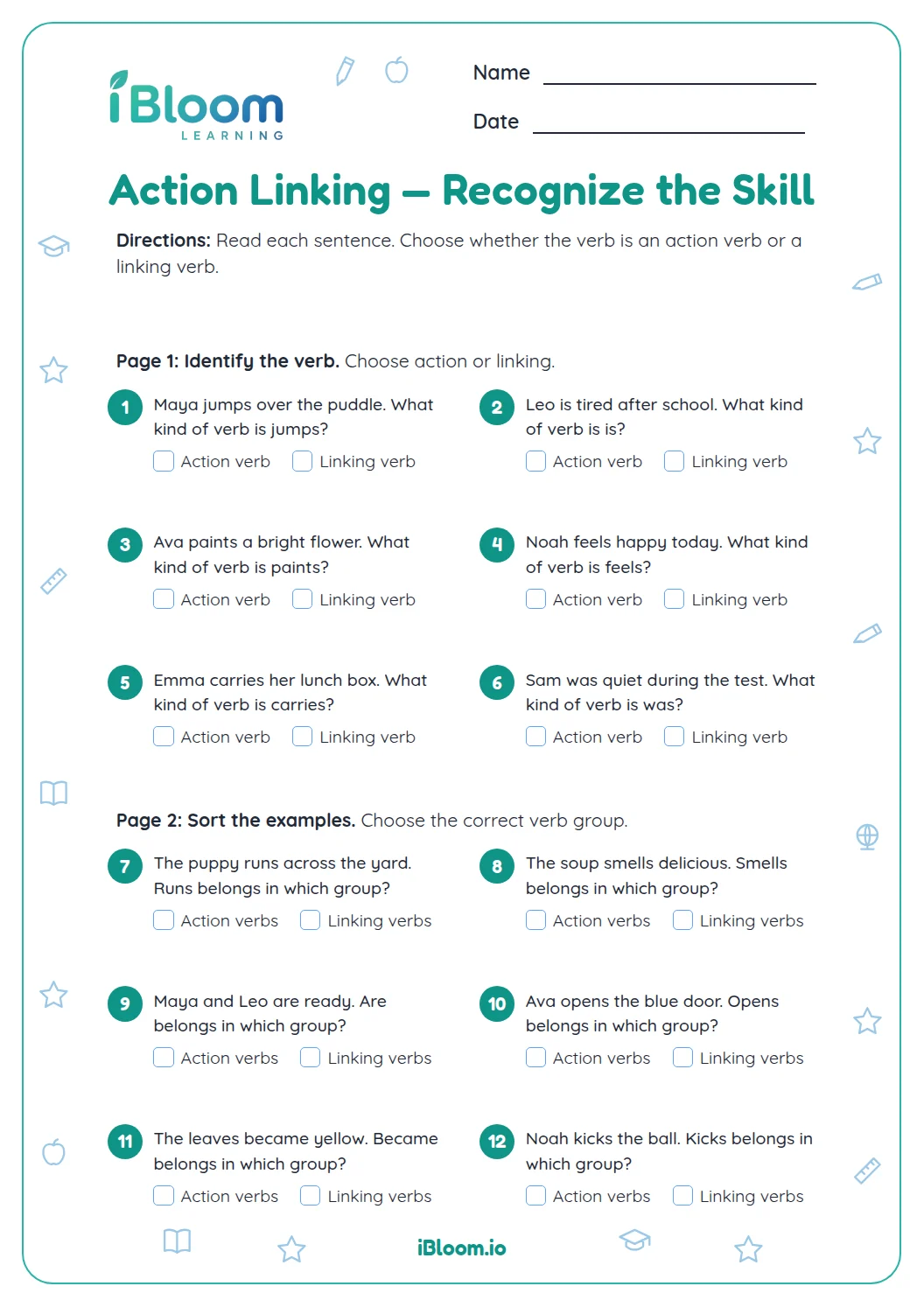
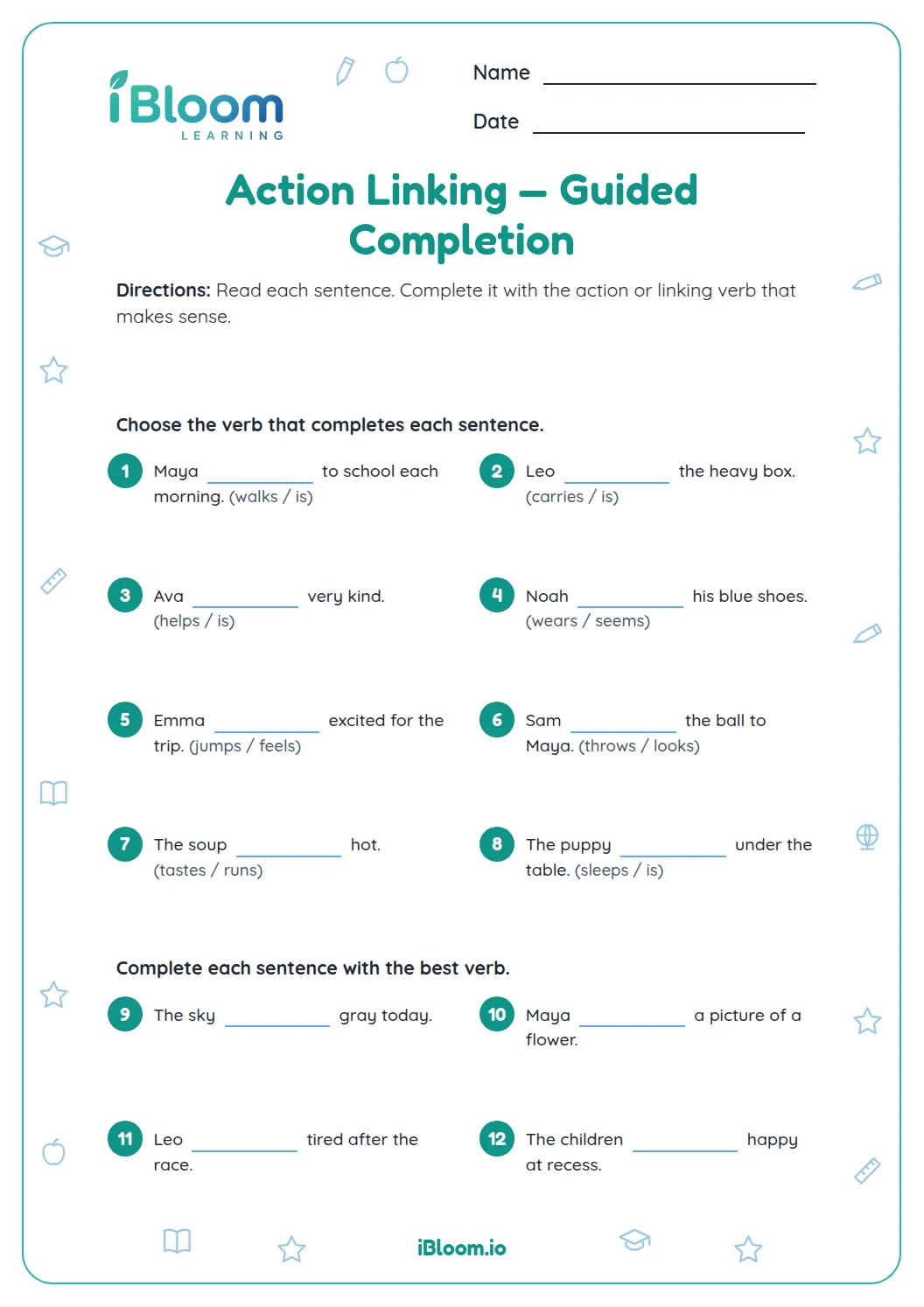
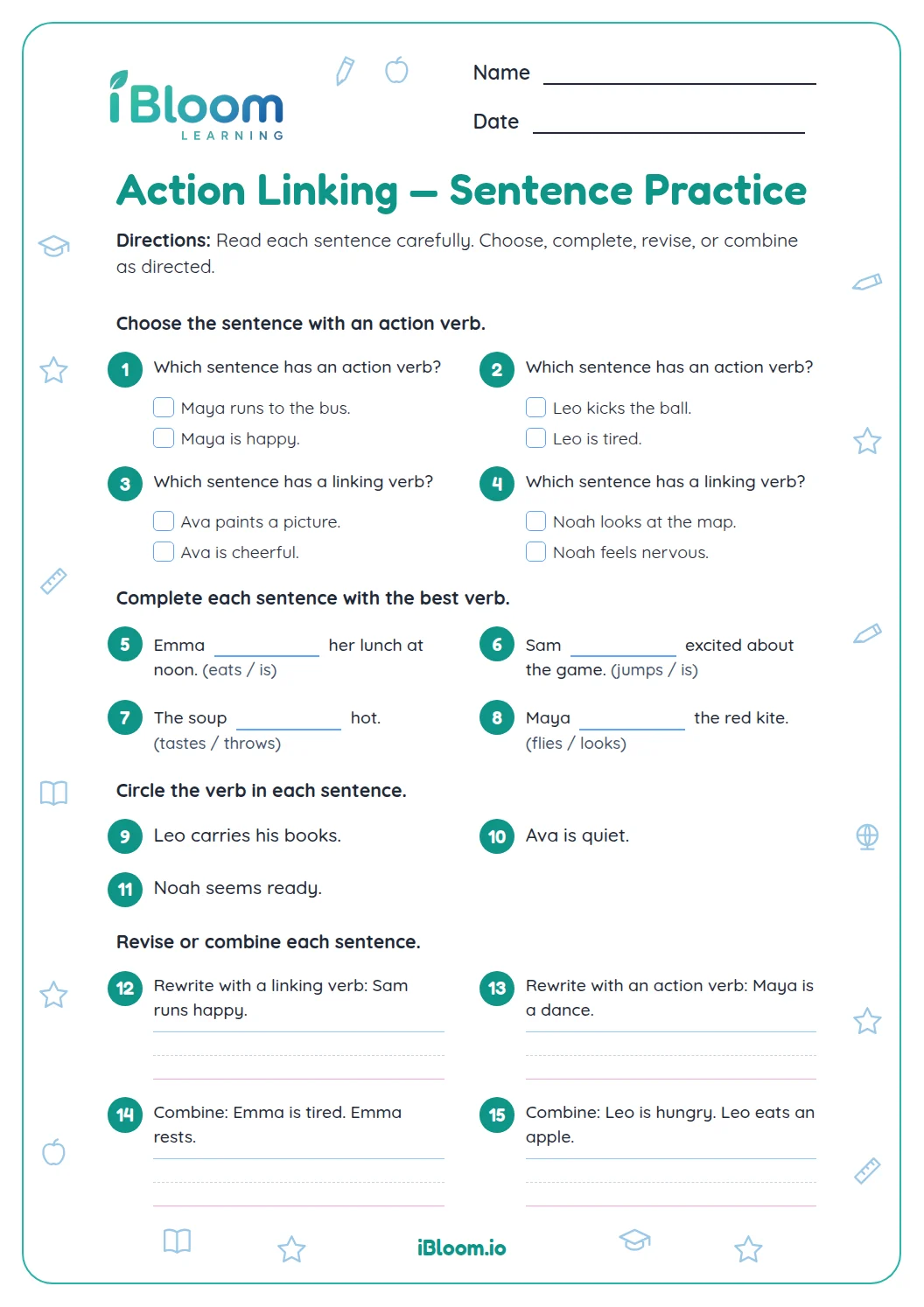
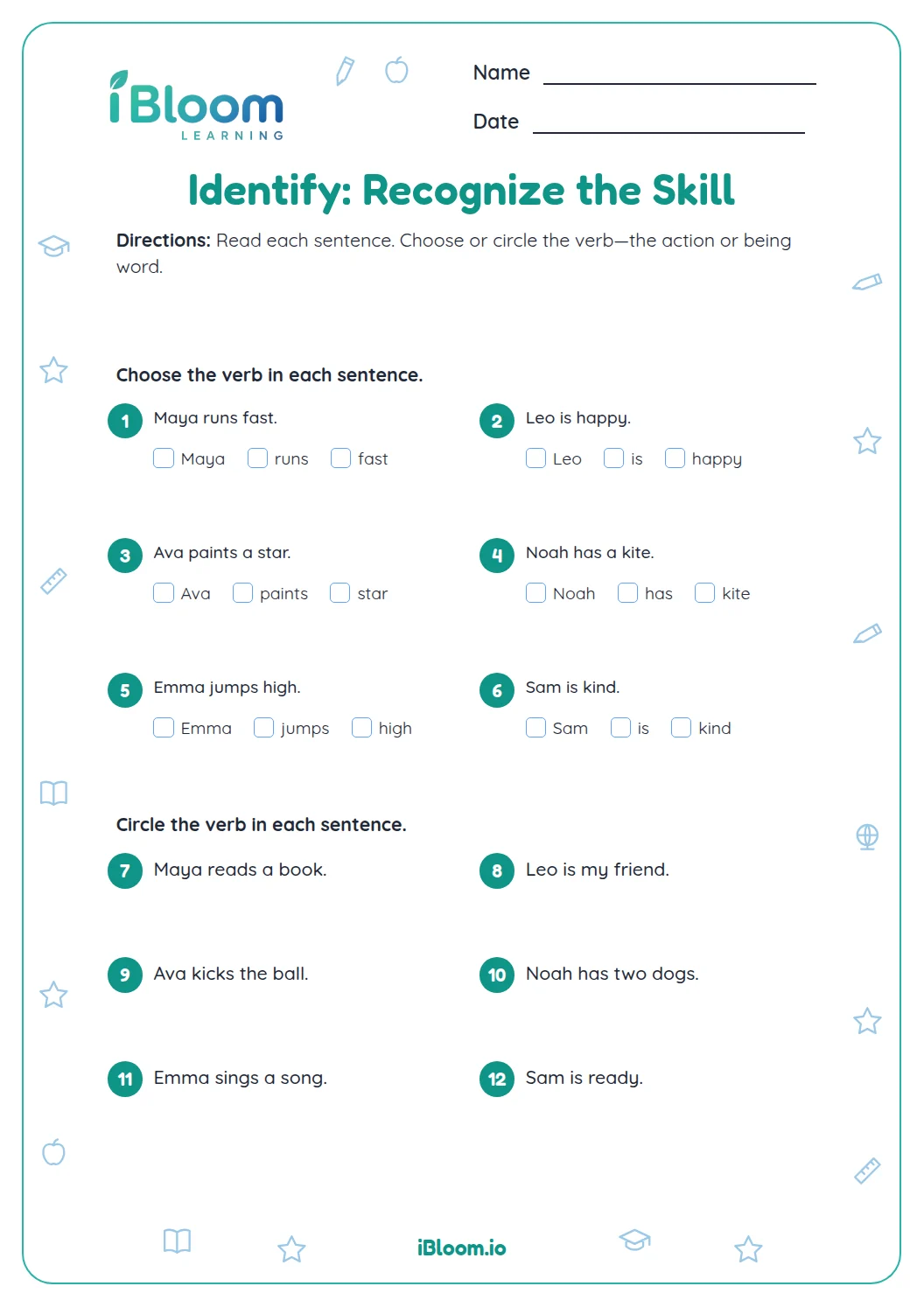
An action verb tells what someone or something does. “Ava throws the red ball” uses throws to name an action.
How do linking verbs work?
A linking verb connects the subject to a word that describes it. In “Leo is tired,” is links Leo with the description tired.
How can you edit for agreement?
Check whether the subject is one or more than one, then choose a verb that fits. “The puppy is sleepy” uses is with one puppy.
How to use this worksheet
- 1Read the whole sentence before choosing a verb.
- 2Ask whether the verb shows an action or links to a description.
- 3Check whether the subject is singular or plural.
- 4Rewrite the complete corrected sentence.
- 5Use an action or linking verb in your own example.
Common mistakes and quick fixes
The mistake
Choosing a verb that makes sense but does not fit the subject.
The fix
Read the subject and verb together and check agreement.
The mistake
Calling every verb an action verb.
The fix
Ask whether the verb shows doing or links the subject to a description.
The mistake
Changing only one word but leaving the sentence incomplete.
The fix
Read the edited sentence aloud to check that it says a complete thought.
What to practice next
Make more practice
Questions parents and teachers ask
What is an action verb?
An action verb tells what a person, animal, or thing does. In “Ava throws the red ball,” throws names the action. Invite the learner to return to the printed directions and explain the clue in a complete sentence. Invite the learner to return to the printed directions and explain the clue in a complete sentence.
What is a linking verb?
A linking verb connects a subject to a describing word or phrase. In “Leo is tired,” is links Leo to the description tired. Invite the learner to return to the printed directions and explain the clue in a complete sentence.
How many questions are included?
The worksheet has 16 questions: verb choices, explanations, sentence editing, and two original sentence prompts. The answer key gives sample responses where more than one sentence can work. Invite the learner to return to the printed directions and explain the clue in a complete sentence.
Does the worksheet include editing practice?
Yes. Four items ask learners to rewrite a sentence with a verb or subject-verb agreement error corrected. Students should write the full corrected sentence. Invite the learner to return to the printed directions and explain the clue in a complete sentence.
How can a parent support the practice?
Ask the child to say what the subject is doing or what description follows it. Then have them read the whole sentence after choosing or correcting the verb. Invite the learner to return to the printed directions and explain the clue in a complete sentence.