


About this worksheet
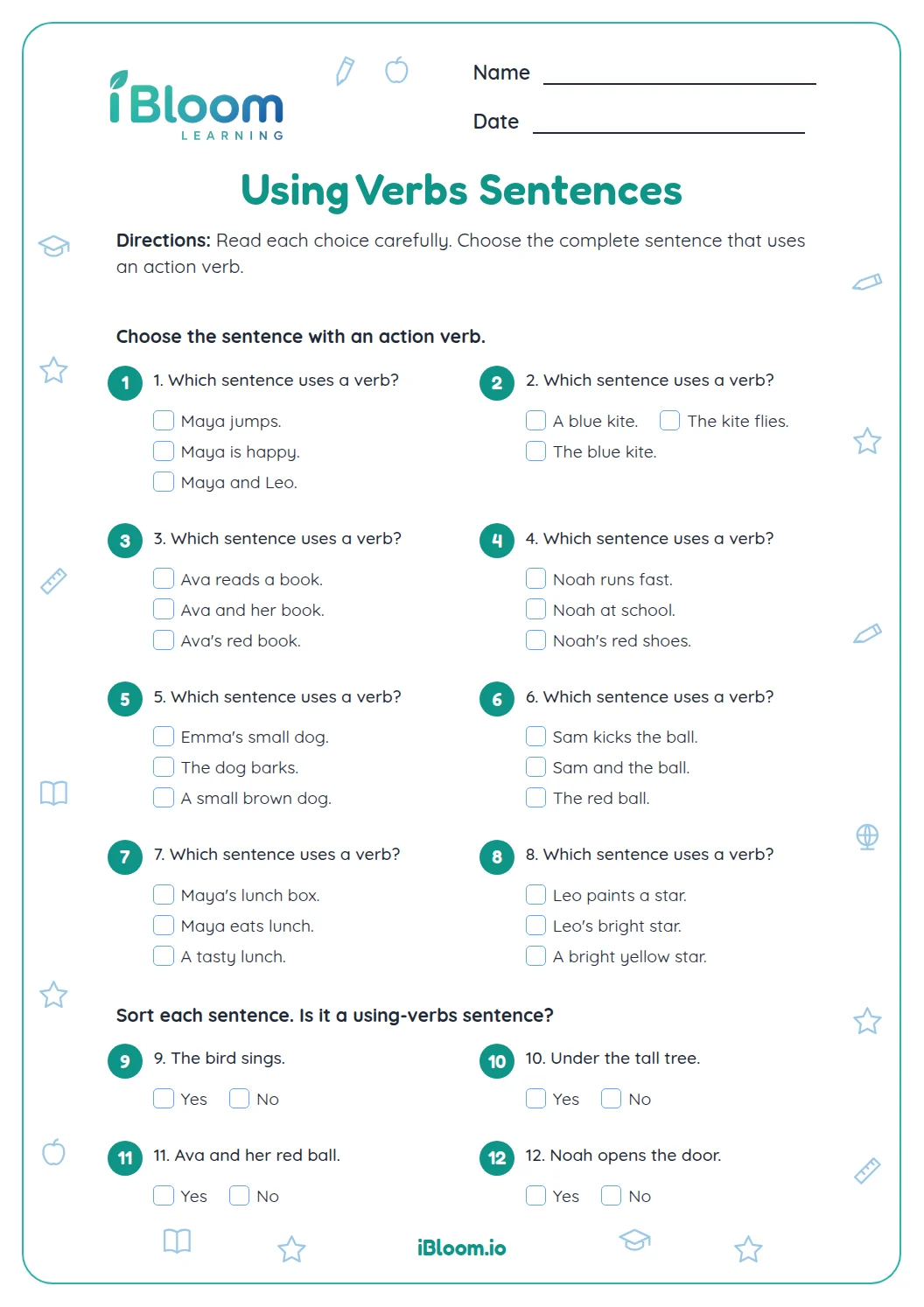
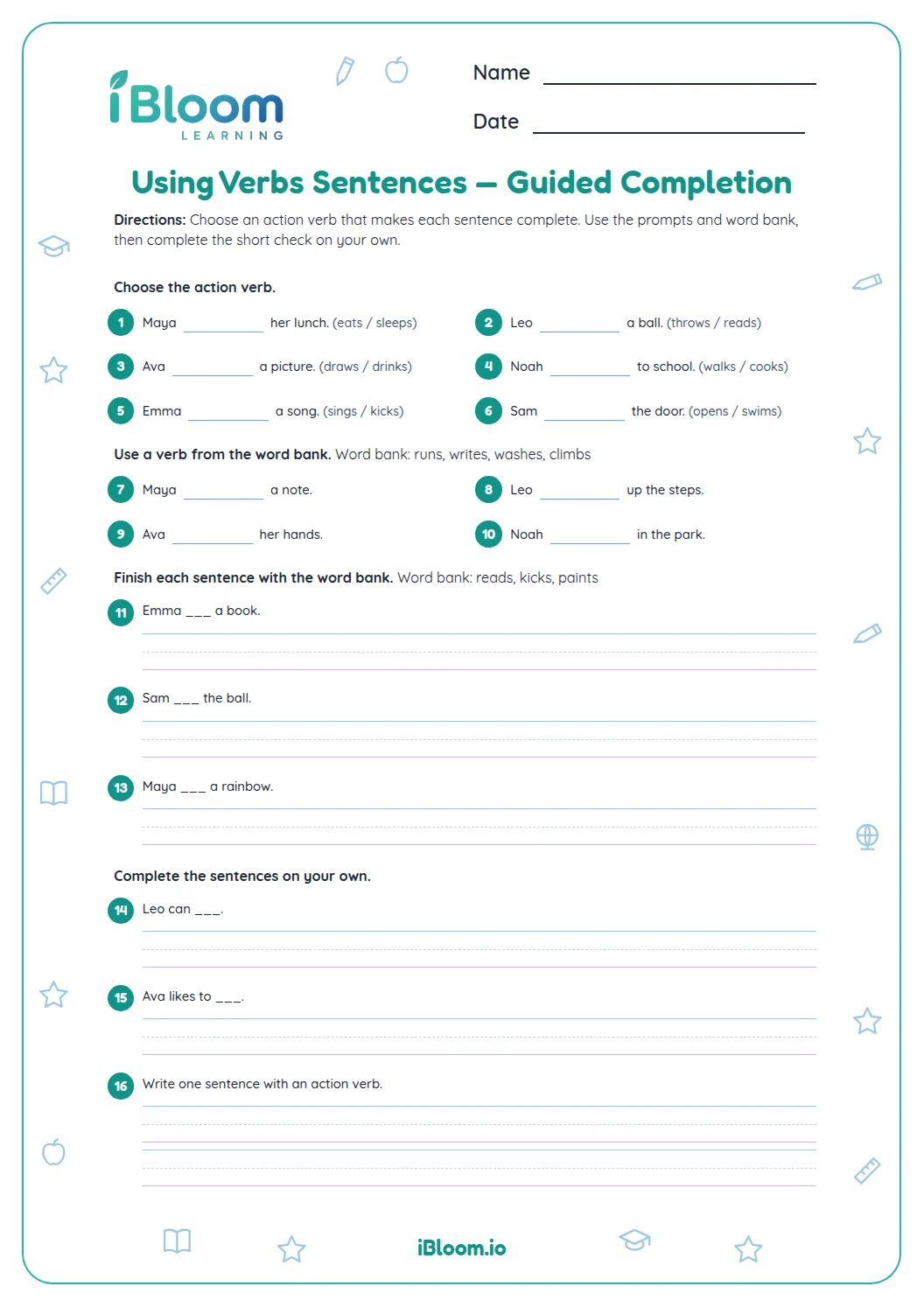
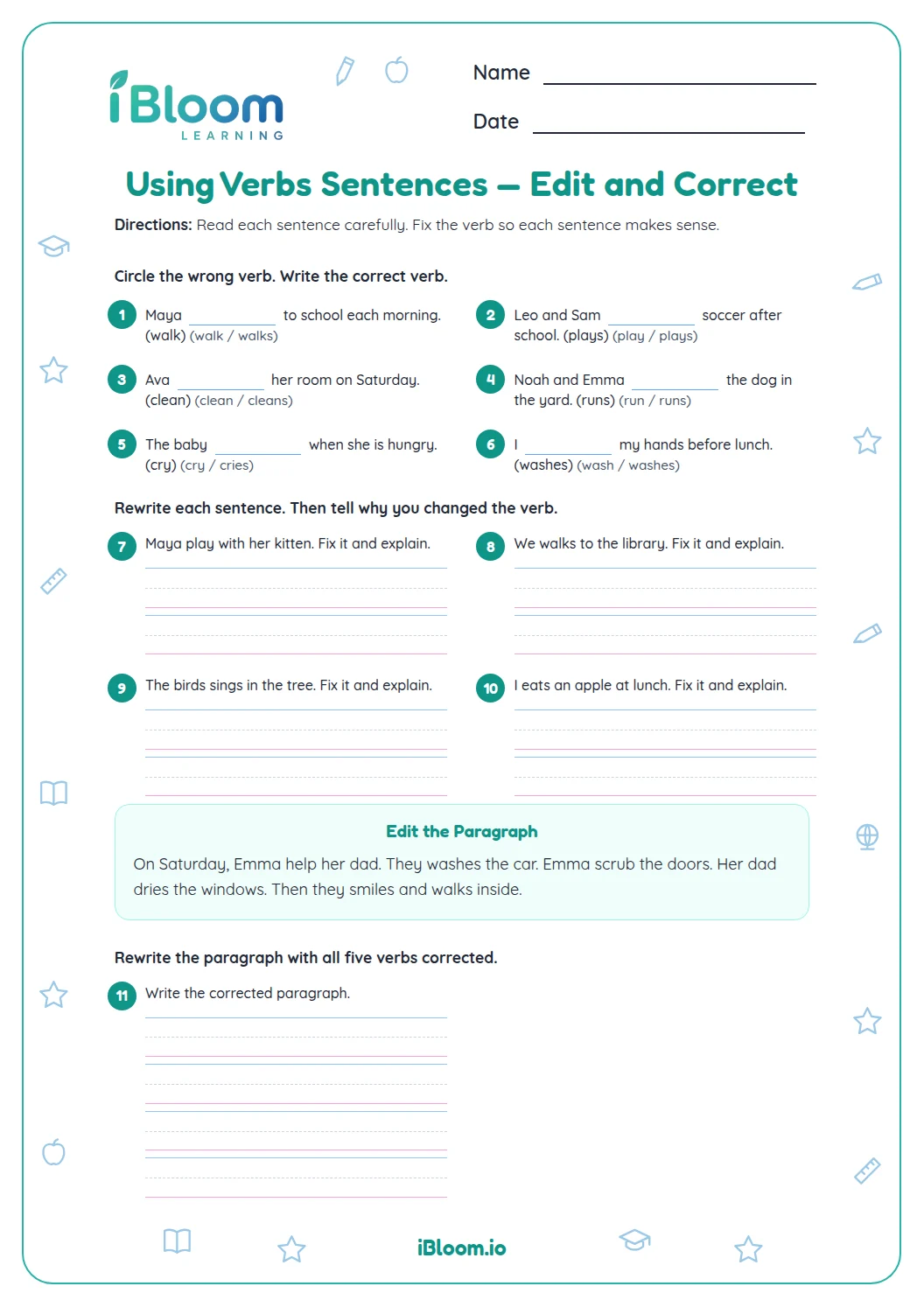
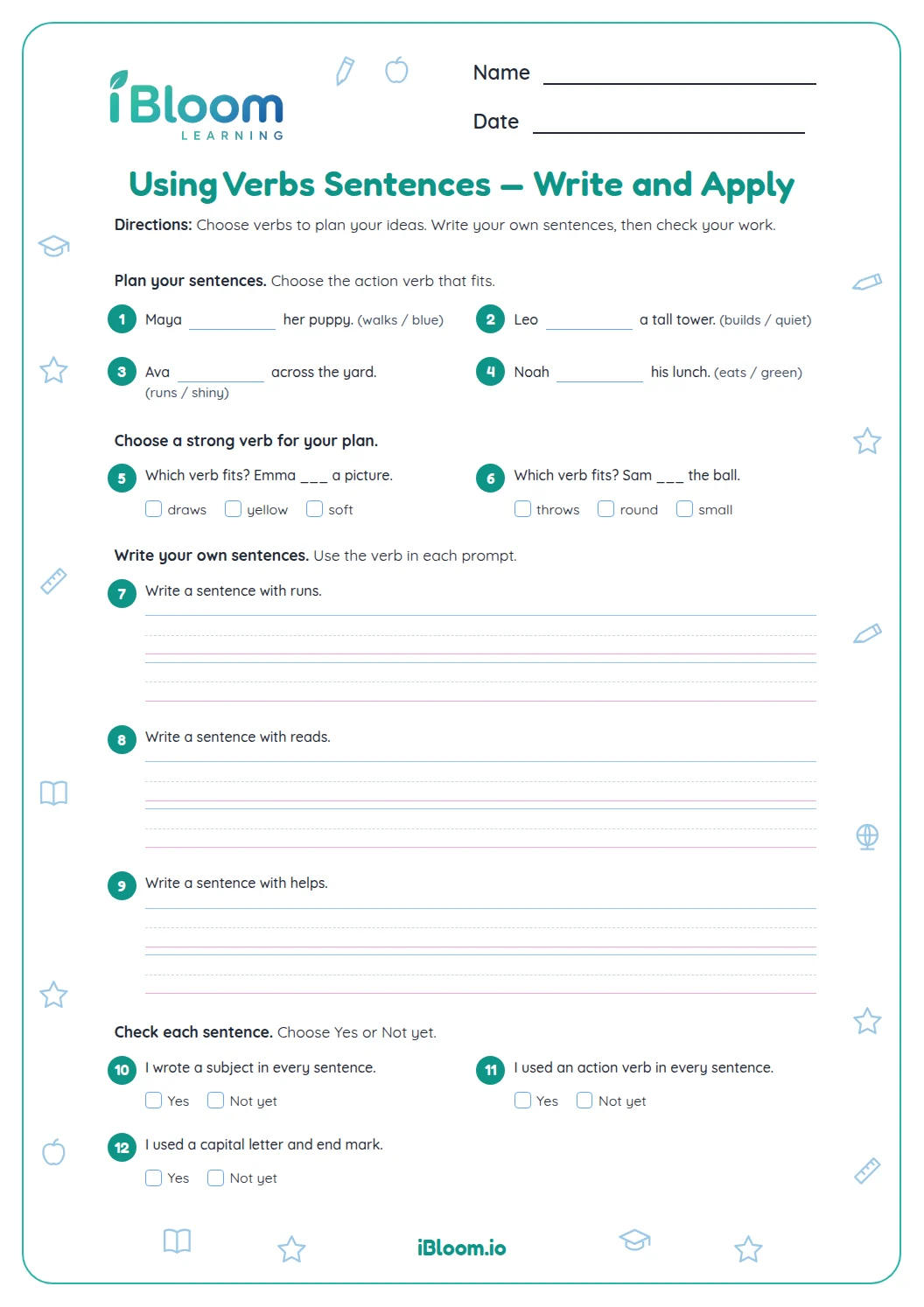
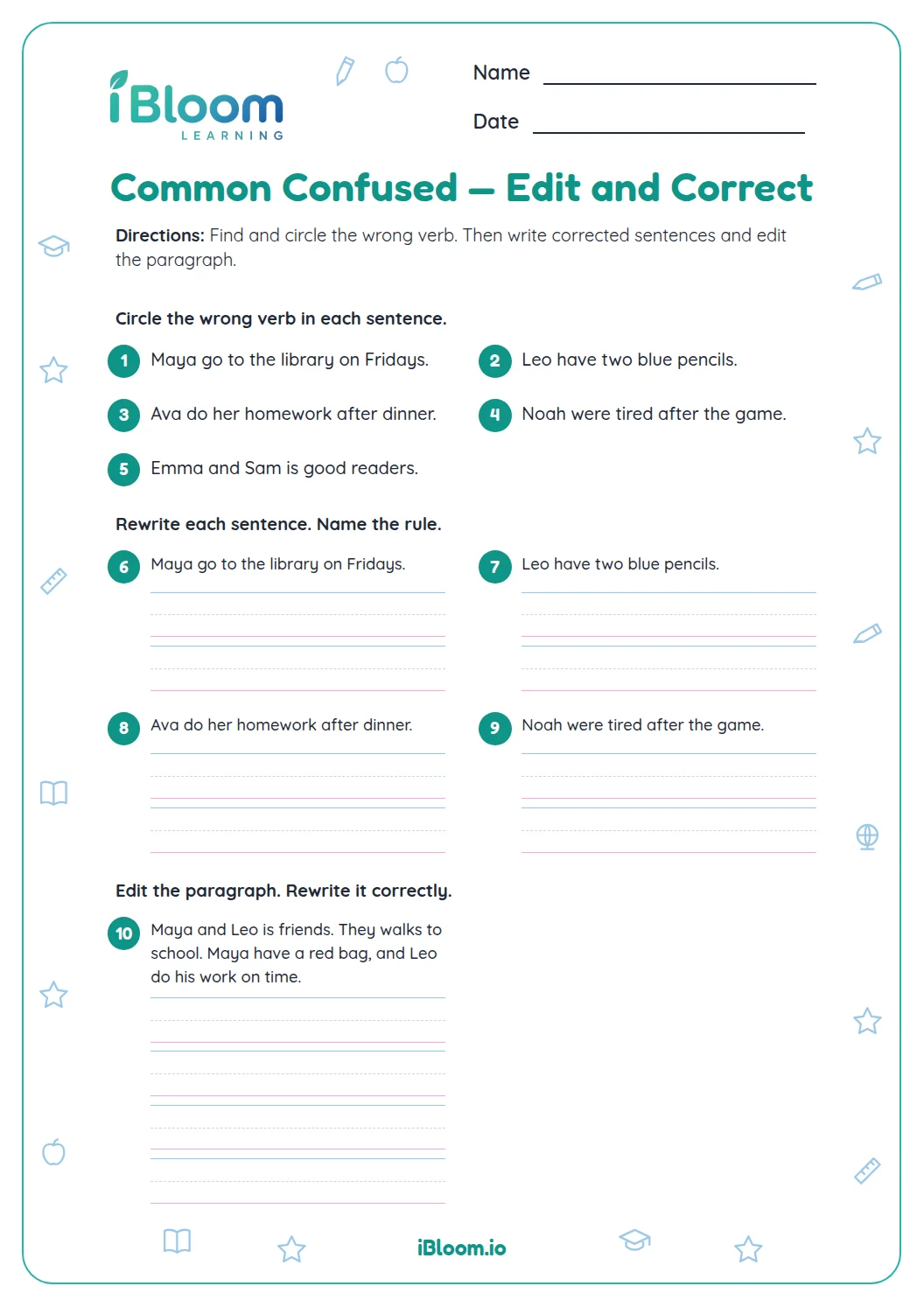
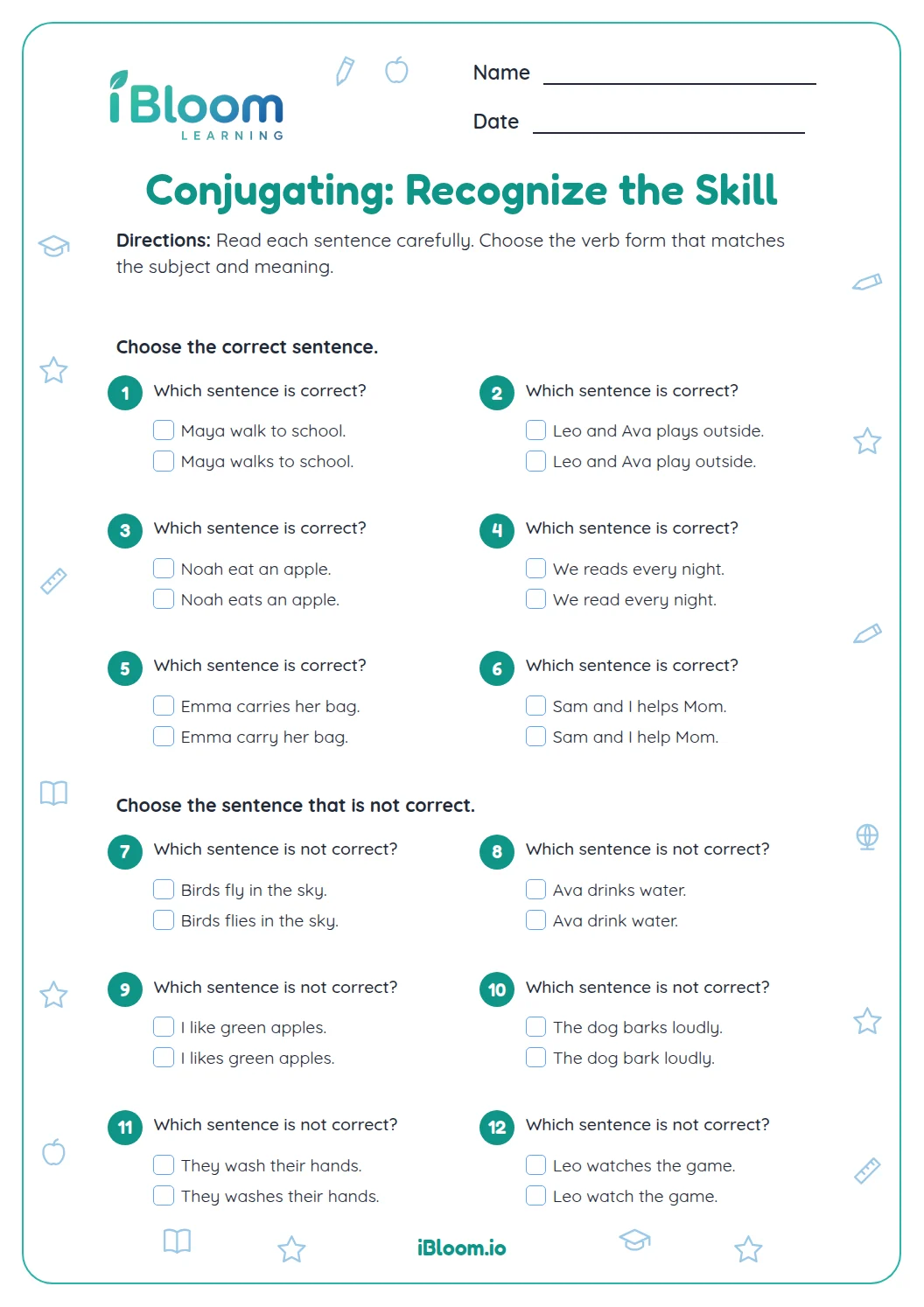
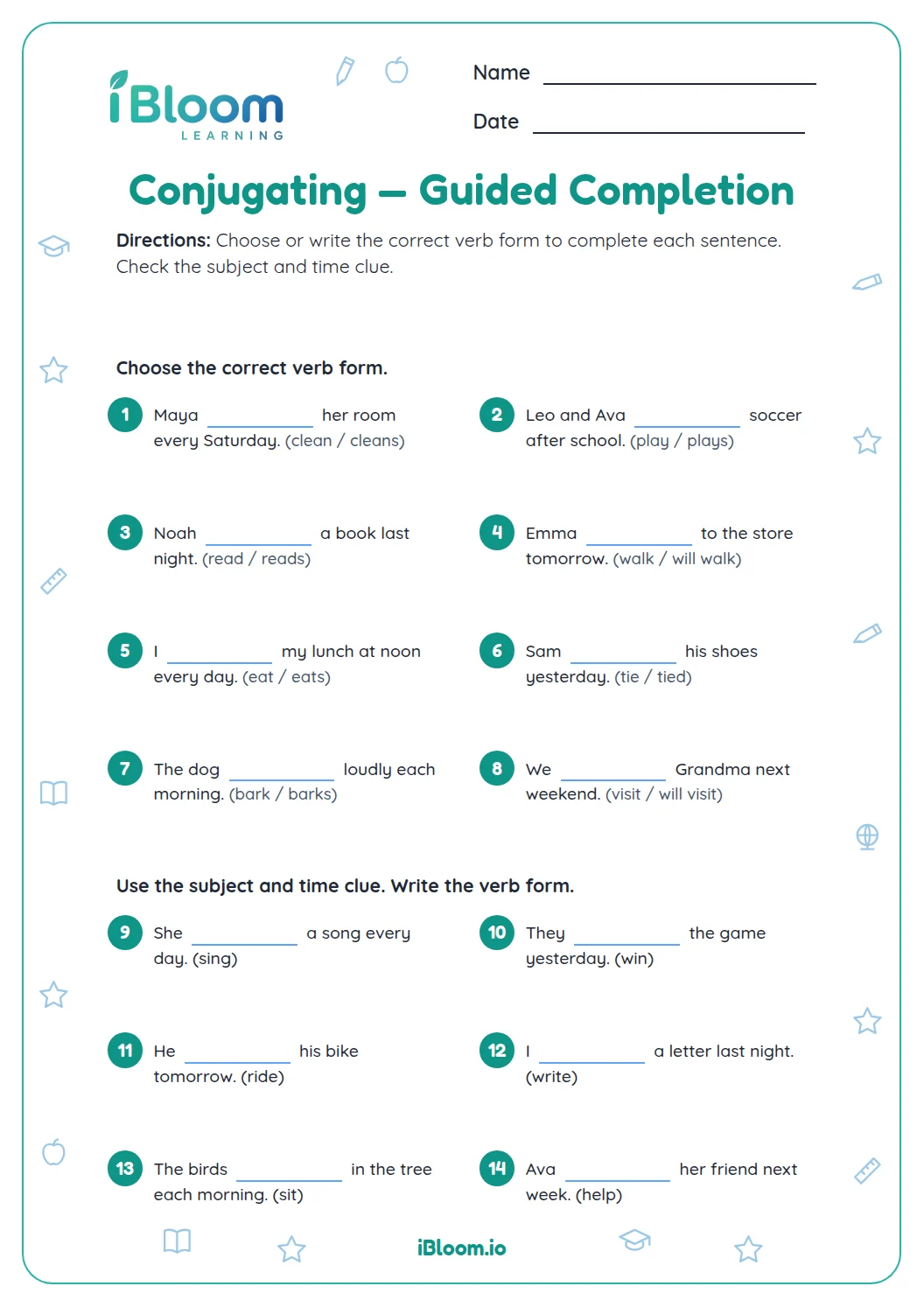
This Grade 2 worksheet reviews how verbs work in sentences. Students choose forms that agree with singular and plural subjects, complete sentences using time clues such as yesterday, explain what makes a sentence complete, and strengthen or write sentences with specific action verbs. The final section includes sentence checks, a stronger-verb completion, and an original sentence task. The separate answer key gives exact choices and sample responses for open-ended items. Several completions practice common irregular past-tense verbs, aligning with Common Core L.2.1.d.
Aligned to L.2.1.d
How does the verb fit its subject?
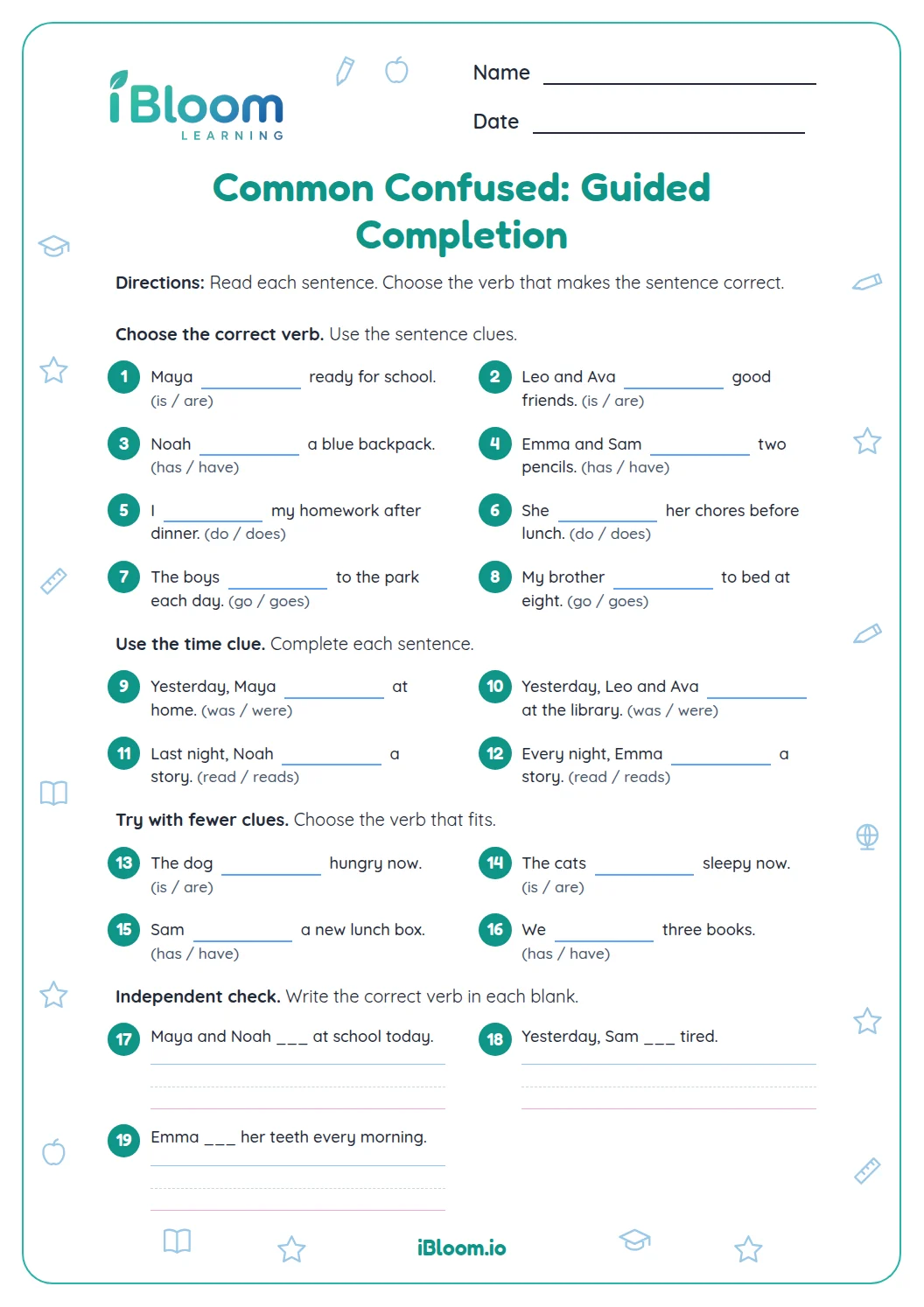
A singular subject often takes a verb ending in -s in the present tense: Maya reads. A plural subject uses the base form: Leo and Ava run. Read the subject before choosing the verb.
- 1Leo and Ava ___ across the playground.
- 2Two people make a plural subject, so the verb is run.
How do time clues change a verb?
Words such as yesterday and last night show that an action happened in the past. Some common verbs change in an irregular way: write becomes wrote, and make becomes made.
- 1Yesterday, we ___ a story. (write)
- 2Answer: wrote
What makes a verb clear and useful?
A complete sentence includes a subject and a verb. A specific action verb can show exactly what happened: “Sam raced across the yard” gives more information than “Sam went across the yard.” The final questions ask students to explain sentence structure and choose precise verbs.
How to use this worksheet
- 1Read the whole sentence and identify its subject.
- 2Check whether the subject is singular or plural.
- 3Look for time words such as yesterday or every morning.
- 4Choose or form a verb that agrees with the subject and time.
- 5In the writing section, check for a subject and a clear action verb.
Common mistakes and quick fixes
The mistake
Adding -s to a verb after a plural subject.
The fix
For two or more people, use the plural verb form: Leo and Ava run.
The mistake
Using a present-tense verb after yesterday.
The fix
Let the time clue guide the tense; write becomes wrote.
The mistake
Calling a word group a complete sentence without a verb.
The fix
Check that it names who or what and tells what that subject does.
Common Core alignment
This worksheet practices the listed Common Core skill through its questions.
Form and use common irregular past-tense verbs.
On this sheet: Several items practice irregular past-tense forms in complete sentences.
Show the official wordingHide the official wording
Form and use the past tense of frequently occurring irregular verbs (e.g., sat, hid, told ).
What to practice next
Make more practice
Further reading
Questions parents and teachers ask
How many questions are on this worksheet?
There are 15 questions. The first six ask students to choose a verb, seven sentence completions use subject or time clues, and two questions check sentence structure. The answer key gives exact forms for the choices and blanks, plus a model explanation for the sentence questions.
How can a student tell whether a verb matches its subject?
Find the subject first. A single name such as Maya takes reads in the present-tense example, while two names such as Leo and Ava take run. The worksheet’s first part lets students compare the subject with each verb choice.
Which irregular past-tense verbs appear here?
The tense-completion items include wrote and made, alongside the regular past-tense form painted and the present-tense forms sing. Time words such as yesterday and last night signal which form belongs. The final answer key lists the expected verb for each blank.
What makes a sentence complete?
A complete sentence has a subject and a verb that tells what the subject does or is. “The puppy barks” has both; “The puppy” does not tell an action. One written question asks students to explain that difference in their own words.
What counts as a stronger verb in the writing items?
A strong verb names a specific action that fits the sentence. “Sam raced across the yard” tells more about the movement than “Sam went across the yard.” Students also write about helping at home and an animal moving; the answer key offers samples, not the only possible wording.