




About this worksheet
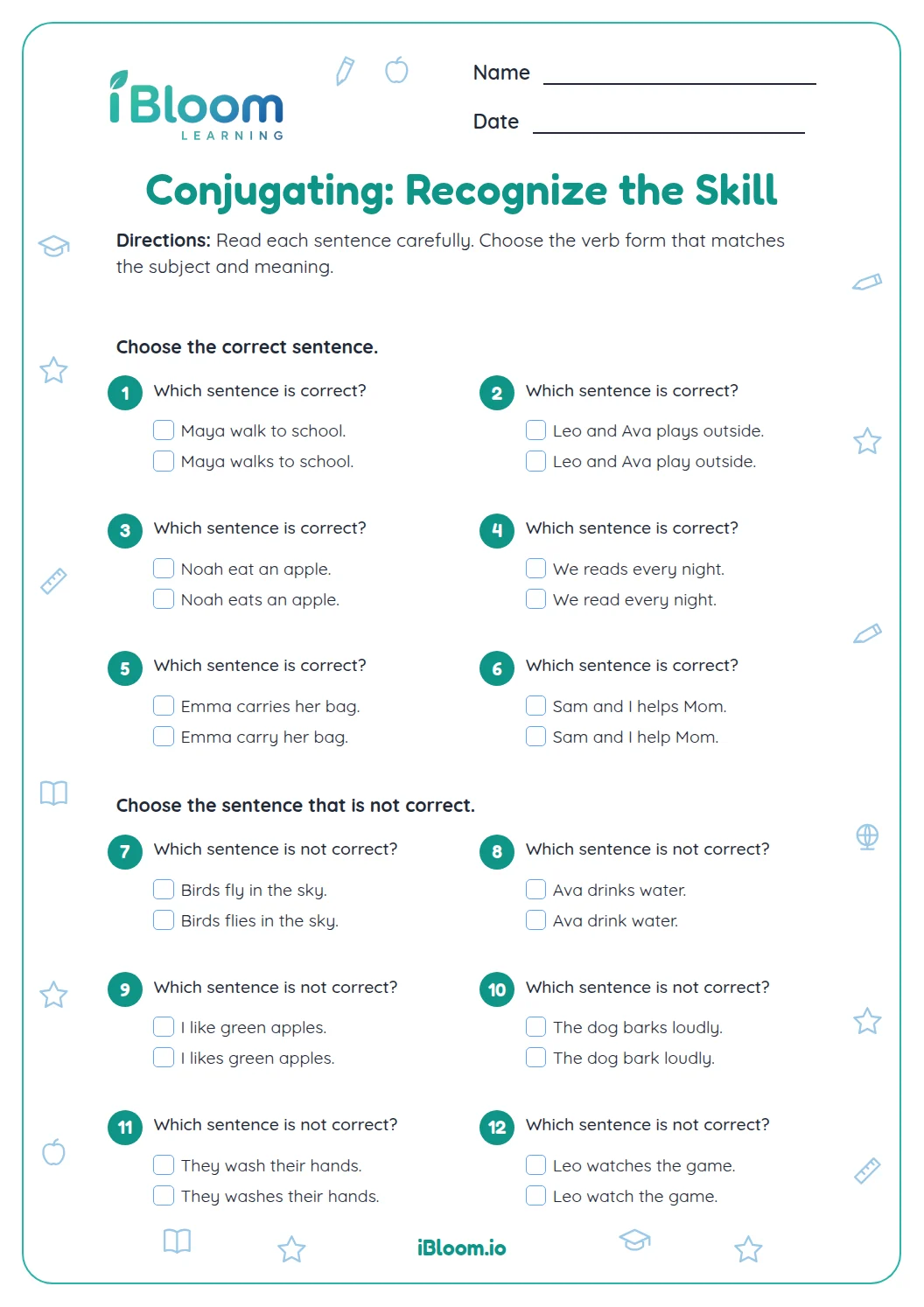
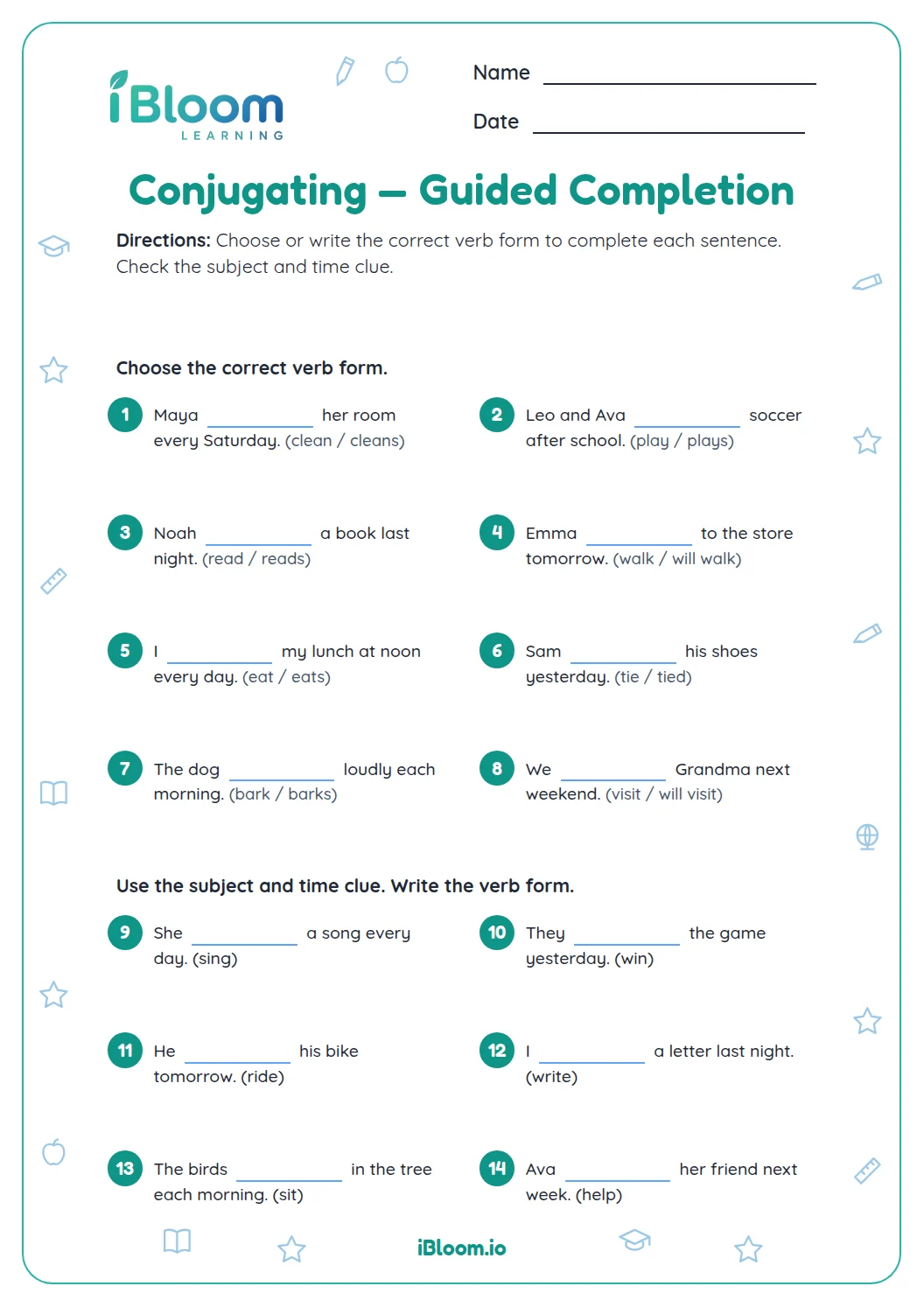
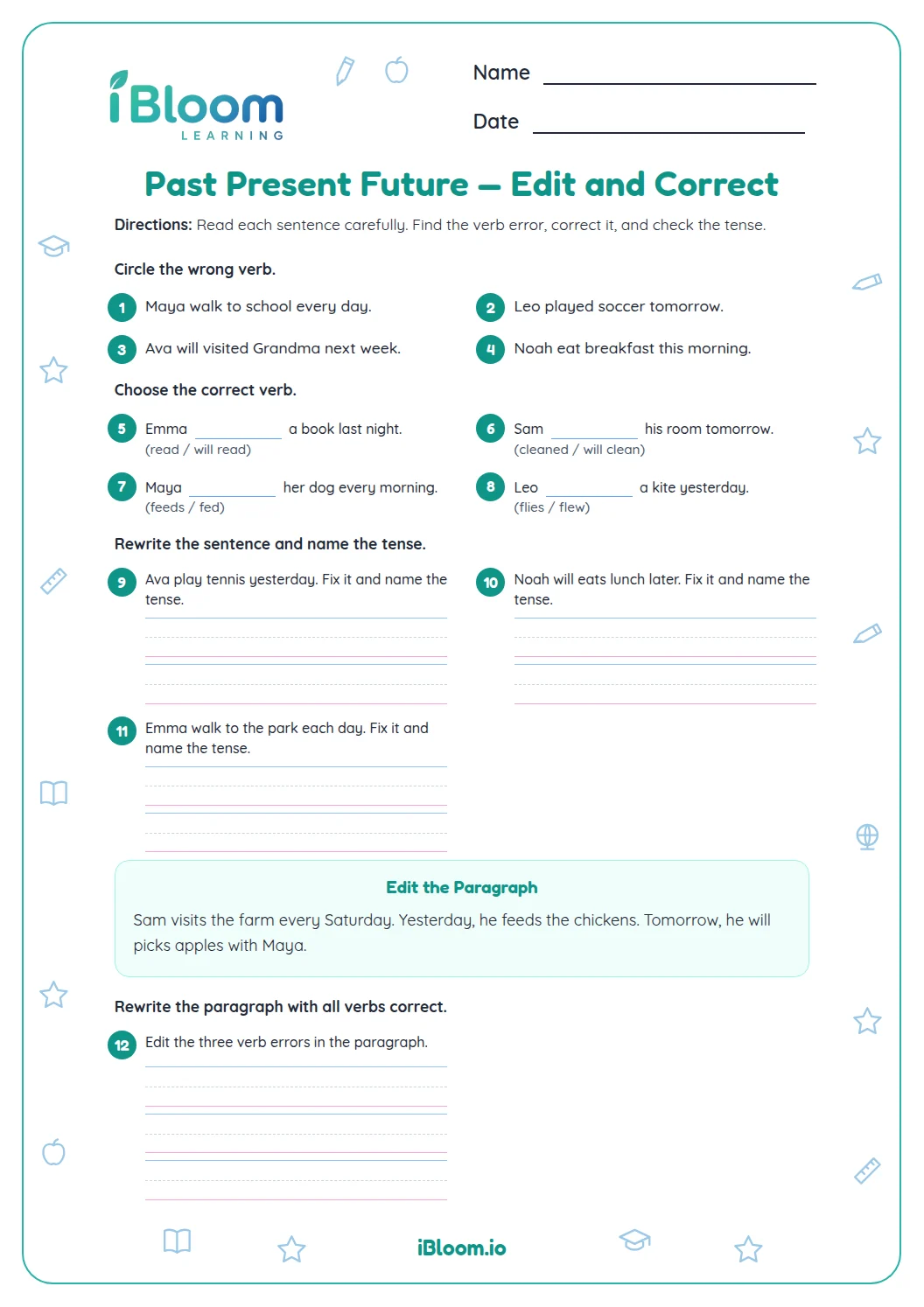
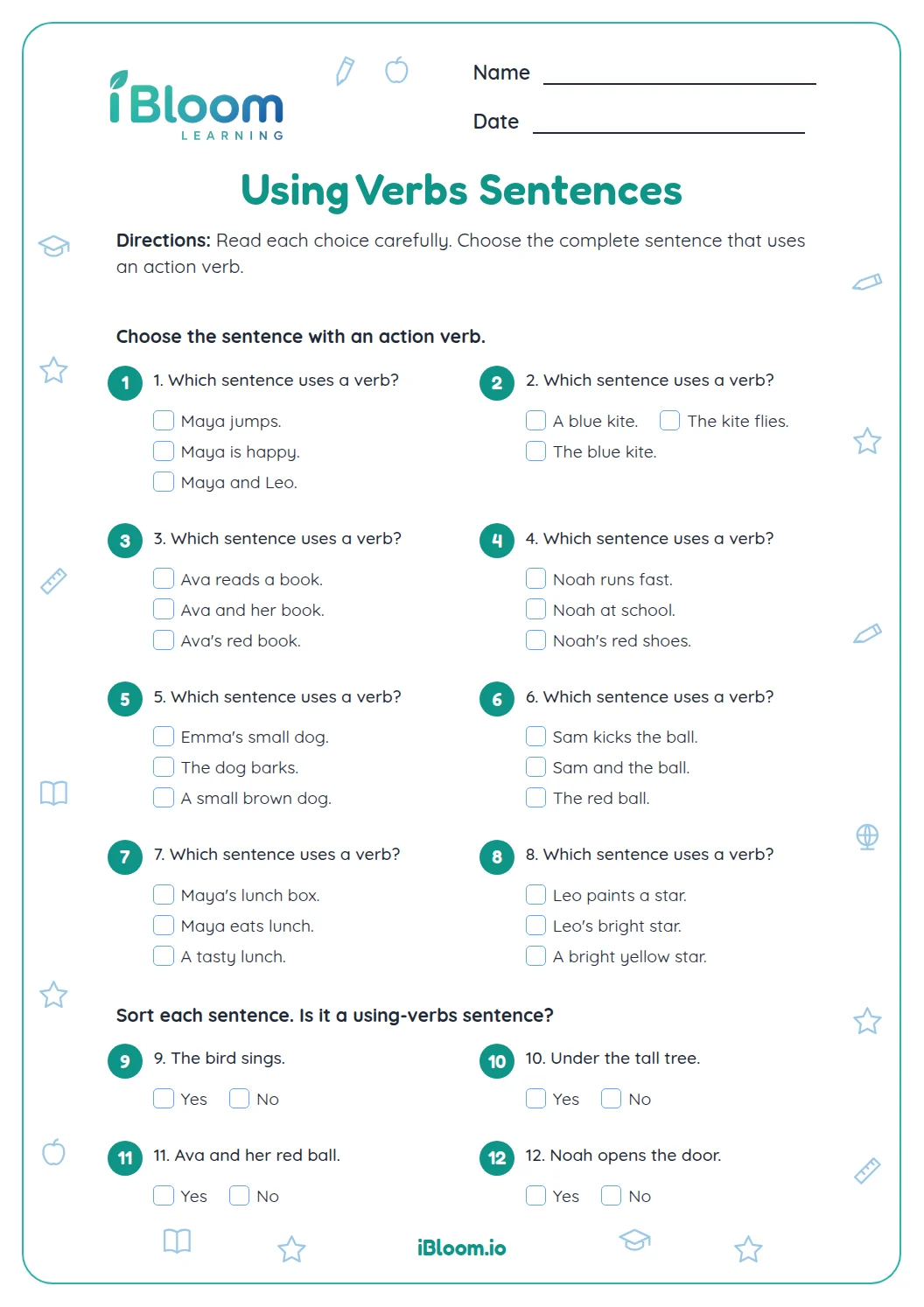
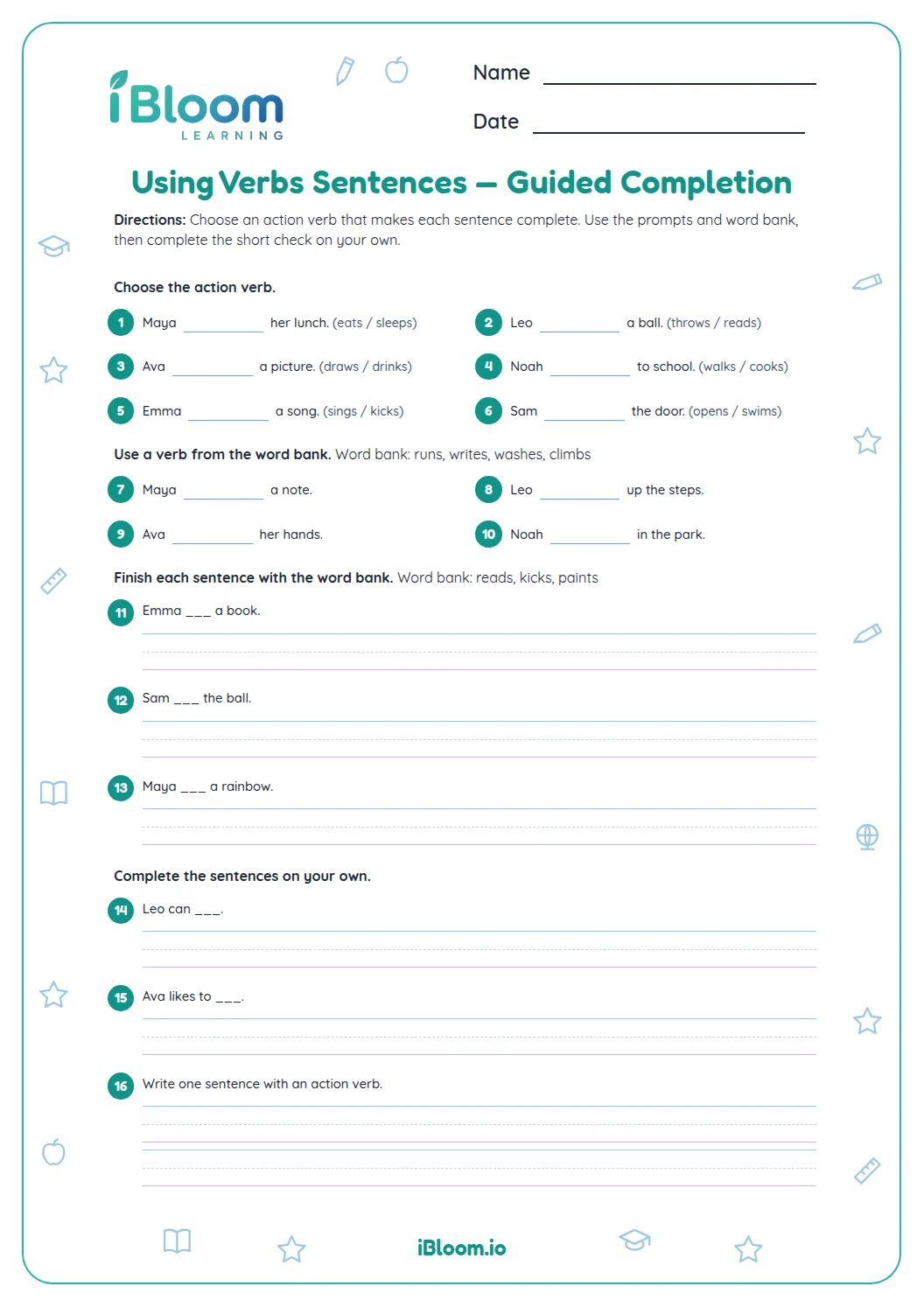
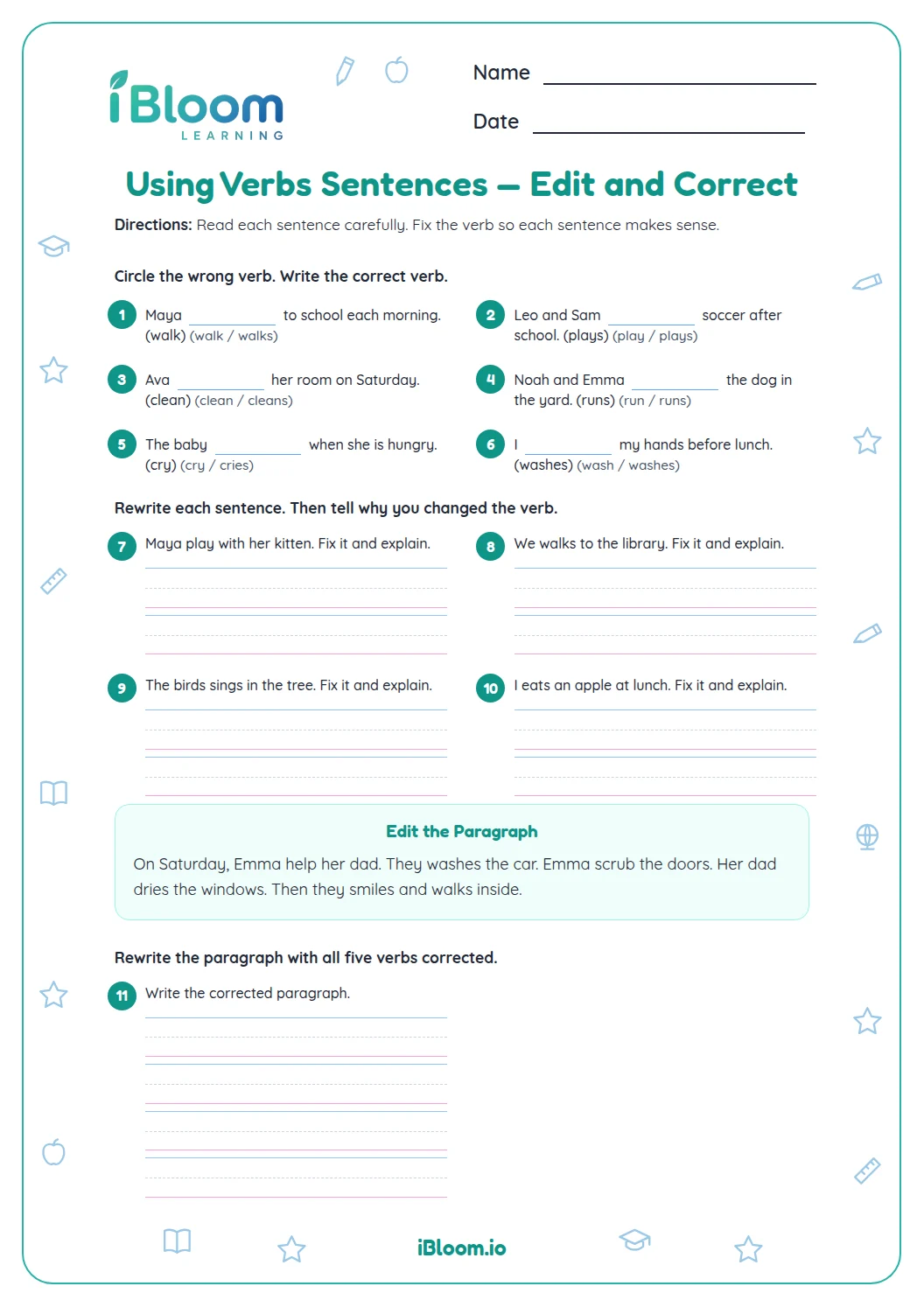
This printable Grade 2 verb worksheet gives students practice choosing and using past-tense verbs in complete sentences. It supports Common Core L.2.1.d through frequent irregular verbs such as drew, saw, went, and gave. Parts A and B offer 12 sentence choices; Part C asks students to apply verb forms in two original sentences.
Aligned to L.2.1.d and L.2.1.f
How does a time clue help with a verb?
A time phrase gives a reader a clue about when the action happened. Yesterday, last night, and last week point to the past. Students use those phrases to choose a form such as drew, put, or saw, then reread the sentence.
The first two parts provide 12 choices. The final two prompts ask students to use requested forms in their own sentences.
Why do some past-tense verbs change?
Many verbs add -ed, but common irregular verbs change in other ways. See becomes saw, fly becomes flew, and go becomes went. The word itself changes, so remembering and using each form in a sentence is useful practice.
- 1Yesterday, Maya ___ a picture for her aunt.
- 2Yesterday marks a past action. Draw changes to drew.
- 3Completed sentence: Yesterday, Maya drew a picture for her aunt.
What makes a written verb answer complete?
A complete sentence tells who did something and what happened. For the writing prompts, students should use the requested verb and time clue, then check that the sentence begins with a capital letter and ends with punctuation. The key accepts other correct sentences.
How to use this worksheet
- 1Underline or say the time clue in the sentence.
- 2Decide whether the action happened in the past.
- 3Choose the verb form that fits the clue.
- 4Read the full sentence to check its meaning.
- 5For Part C, write a complete sentence with the requested verb.
- 6Compare the choice items with the key and use its samples to check writing.
Common mistakes and quick fixes
The mistake
Choosing “draw” after “yesterday.”
The fix
Use the time clue to check whether the action is past or present.
The mistake
Adding -ed to every verb, such as “putted.”
The fix
Remember that common irregular verbs change form: put stays put.
The mistake
Writing only a verb in Part C.
The fix
Include who did the action so the response is a complete sentence.
Common Core alignment
The practice connects the page activities to these Common Core skills.
Use common irregular verbs in the past tense in sentence context.
On this sheet: Students choose and use common irregular past forms in sentences.
Show the official wordingHide the official wording
Form and use the past tense of frequently occurring irregular verbs (e.g., sat, hid, told).
Write complete simple sentences with a fitting verb form.
On this sheet: Part C asks students to produce complete simple sentences using target verbs.
Show the official wordingHide the official wording
Produce, expand, and rearrange complete simple and compound sentences (e.g., The boy watched the movie; The little boy watched the movie; The action movie was watched by the little boy).
What to practice next
Make more practice
Further reading
Questions parents and teachers ask
What is a verb form?
A verb form is the version of a verb that fits the sentence, including when the action happens. In “Yesterday, Maya drew a picture,” drew shows a past action. This worksheet uses time clues such as yesterday, last week, and last night to help students select or write an appropriate form.
Why does “drew” change from “draw”?
Some common verbs do not make the past tense by adding -ed. Draw becomes drew, see becomes saw, and go becomes went. These are irregular past-tense forms, so students learn them through use in complete sentences rather than by applying one ending rule.
How many questions are included?
There are 14 questions in three parts. The first two parts contain 12 multiple-choice sentences, and the final part asks students to write two complete sentences using past-tense verbs. The answer key lists the selected forms and provides sample responses for the writing items.
Can answers to the writing questions vary?
Yes. The last four items invite students to make their own sentences, so the key gives a sample rather than a single required sentence. A response is correct when it is a complete sentence, follows the requested time clue, and uses the named verb form correctly.
How can a child check a verb tense?
Look for the time clue first. Words such as yesterday or last night point to a past action. Then read the whole sentence with the chosen verb. If the sentence tells clearly what happened and sounds complete, the form fits the sentence.