


About this worksheet
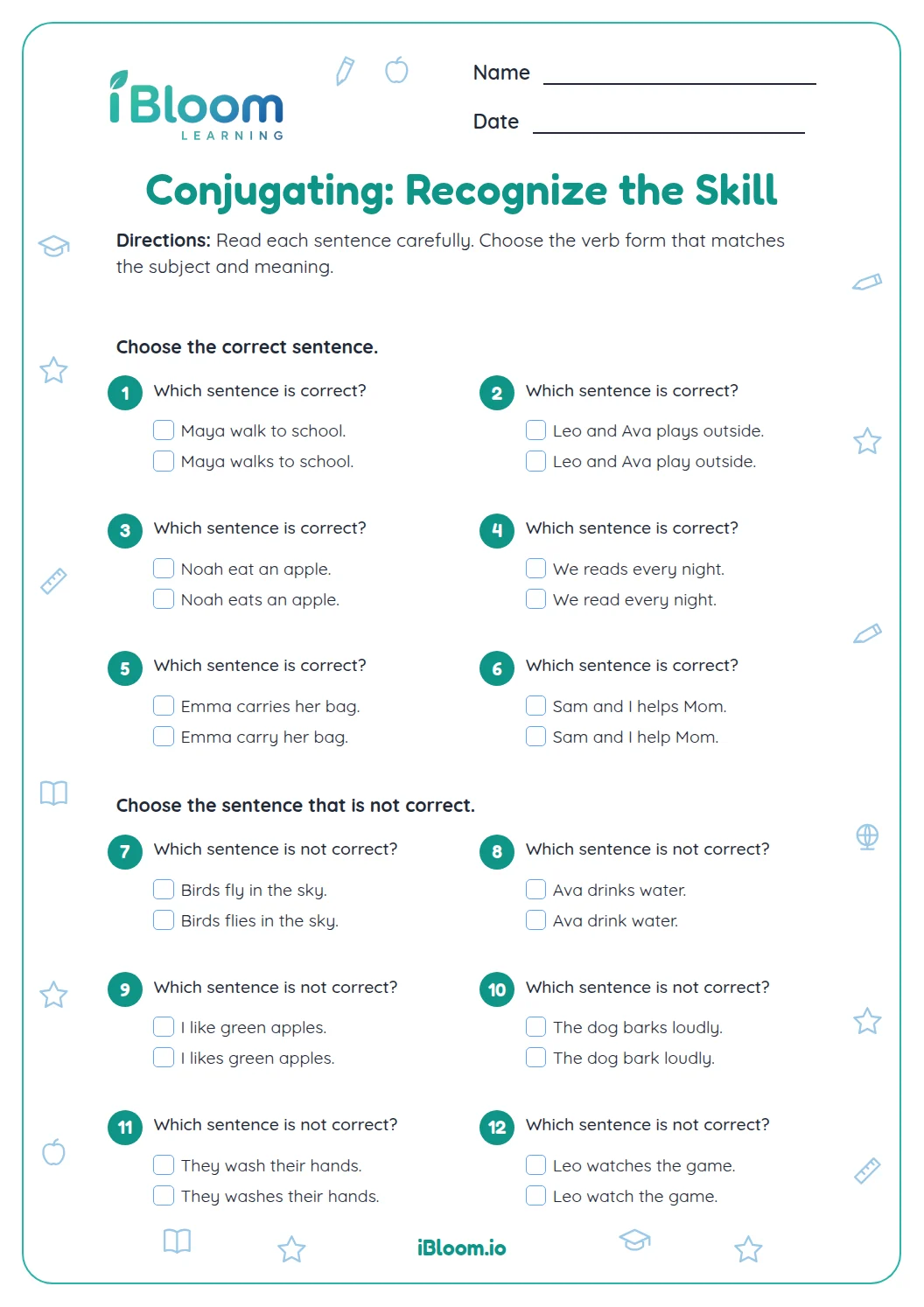
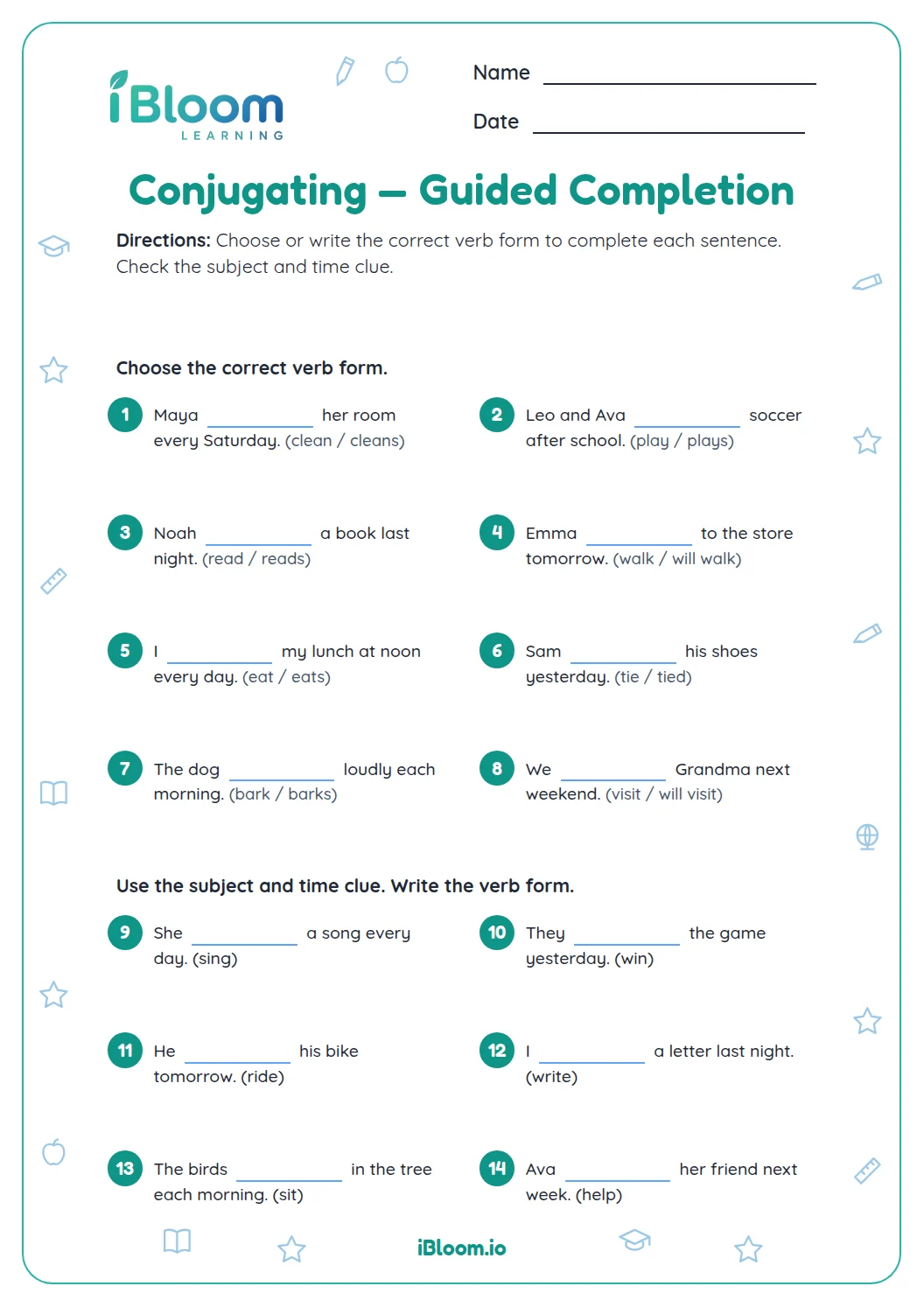
This Grade 2 worksheet asks children to use a sentence’s time clue to choose a verb form. Words such as yesterday and last night call for past tense; today, now, and every day point to present-tense forms. Each sentence now supplies the verb prompt, so the answer is clear—for example, “Yesterday, Maya ___ (jump)” becomes “jumped.” Irregular past forms include told, hid, saw, sat, and made. The 16 completions come with a separate answer key.
Aligned to L.2.1d
What time clues appear in the sentences?
Yesterday, last night, and last Saturday point to past actions. Today, now, every day, and each morning point to present actions. Children use both the time phrase and the verb prompt to complete each sentence.
How do time clues change a verb?
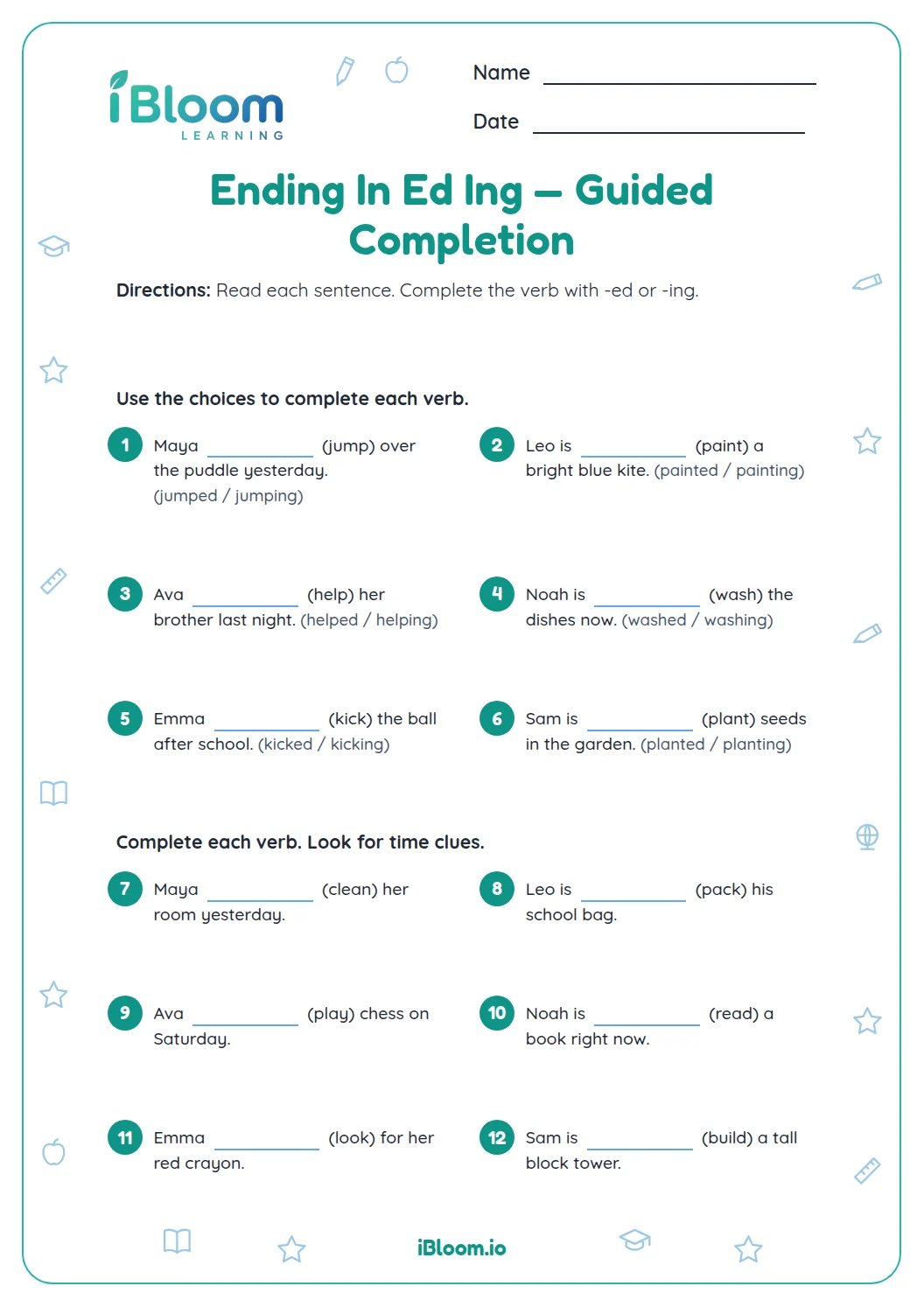
Read the sentence for its time clue, then change the verb in parentheses to fit. Some past forms add -ed; other common verbs change in a different way.
- 1Yesterday, Maya ___ (jump) over a puddle.
- 2Yesterday signals past time, so jump becomes jumped.
Which verbs have an irregular past form?
Several common verbs do not make the past by simply adding -ed. This sheet includes told, hid, saw, sat, and made. Read the whole sentence and use its time clue before choosing the form.
How to complete each verb sentence
- 1Read the full sentence, including its time phrase.
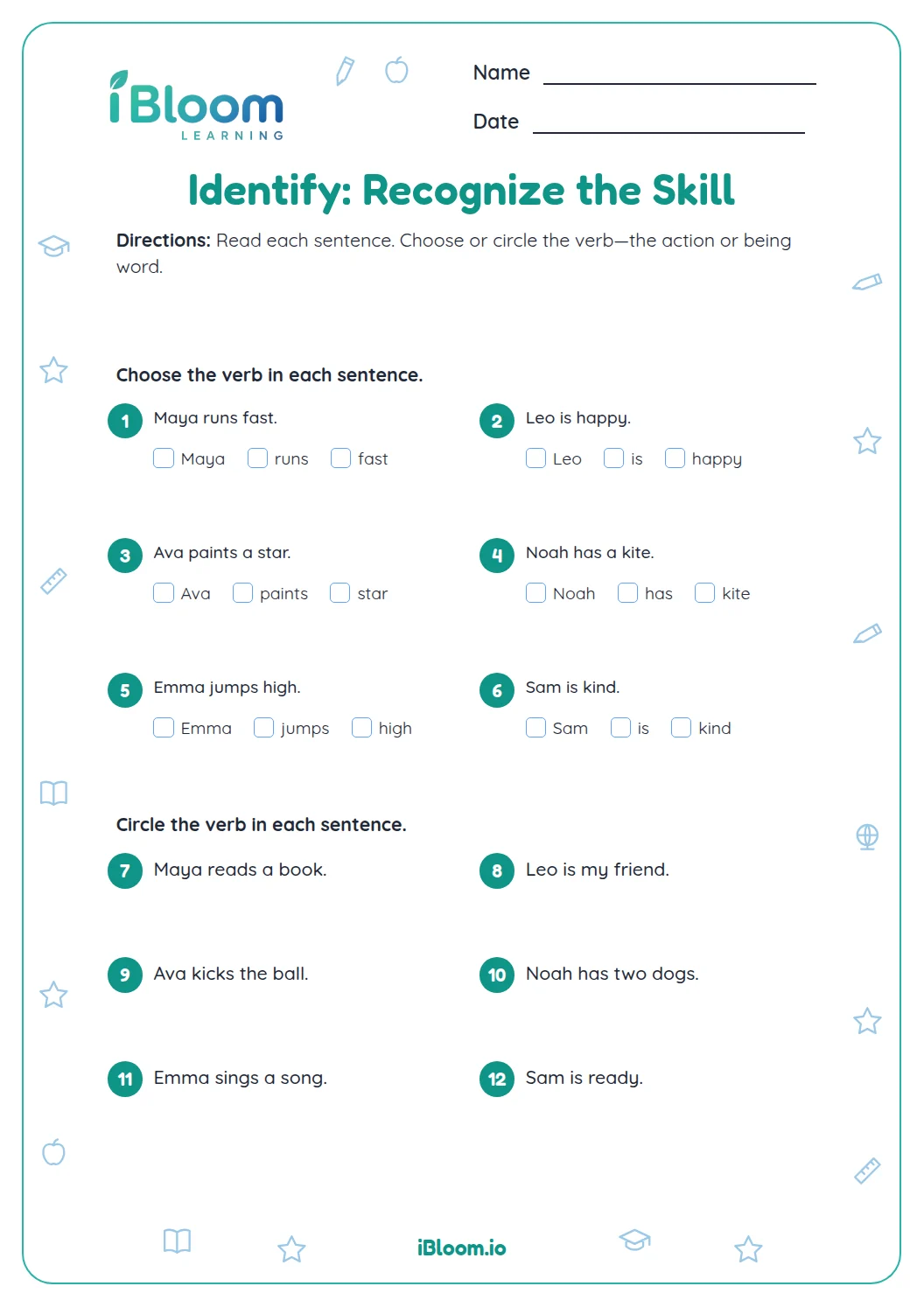
- 2Find the verb shown in parentheses.
- 3Decide whether the sentence describes present or past time.
- 4Write the verb form that fits the subject and time clue.
- 5Reread the sentence with your answer in place.
- 6Use the key to check regular and irregular forms.
Common mistakes and quick fixes
The mistake
Adding -ed to an irregular verb such as see.
The fix
Use the familiar past form saw for an action that happened yesterday.
The mistake
Missing the subject when choosing a present form.
The fix
Check whether the subject is one person or thing, as in Ben washes, or a plural subject, as in children draw.
The mistake
Following the verb clue but overlooking the time word.
The fix
Read yesterday, now, or every day before choosing the form.
Common Core alignment
Use verbs to convey time in sentences.
On this sheet: Items practice past forms of common verbs.
Show the official wordingHide the official wording
Form and use the past tense of frequently occurring irregular verbs (e.g., sat, hid, told).
What to practice next
Make more practice
Further reading
Questions parents and teachers ask
How do time words help choose a verb form?
Time words give a clue about when the action happens. Yesterday and last night point to past tense; today, now, and every day point to present tense. Read the whole sentence so the time phrase and subject both guide the verb form.
Why does the worksheet show a verb in parentheses?
The verb in parentheses names the action children need to use, while the blank asks them to form it for the sentence. For example, (jump) becomes jumped after yesterday, and (wash) becomes washes with the subject Ben. The time clue and subject both matter.
Which irregular past tense verbs are included?
The sentences practice told, hid, saw, sat, and made. These past forms do not follow the simple pattern of adding -ed, so children use the time clue and recall the matching form of the verb. The other prompts practice regular past and present forms.
What does the answer key include?
The separate key gives the completed verb for each of the 16 sentences. It lets an adult check regular endings and irregular past forms after a child has read the time clue, considered the subject, and filled in the blank.
How long does the verb worksheet take?
About 15 minutes is a reasonable estimate for reading 16 sentences and checking the forms. Children can pause between parts to review how yesterday differs from time clues such as now, today, and every day, then finish the remaining examples.