




About this worksheet
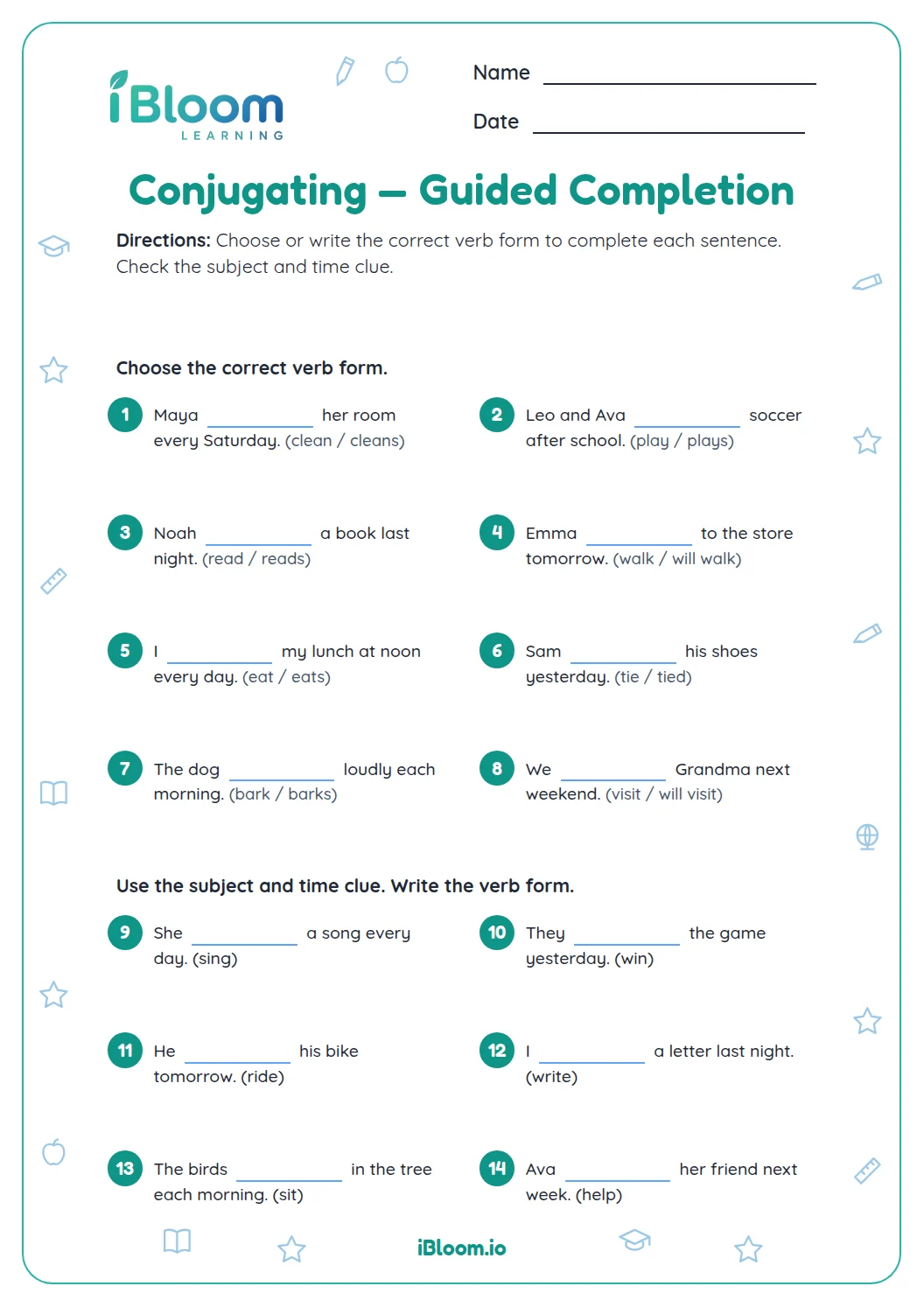
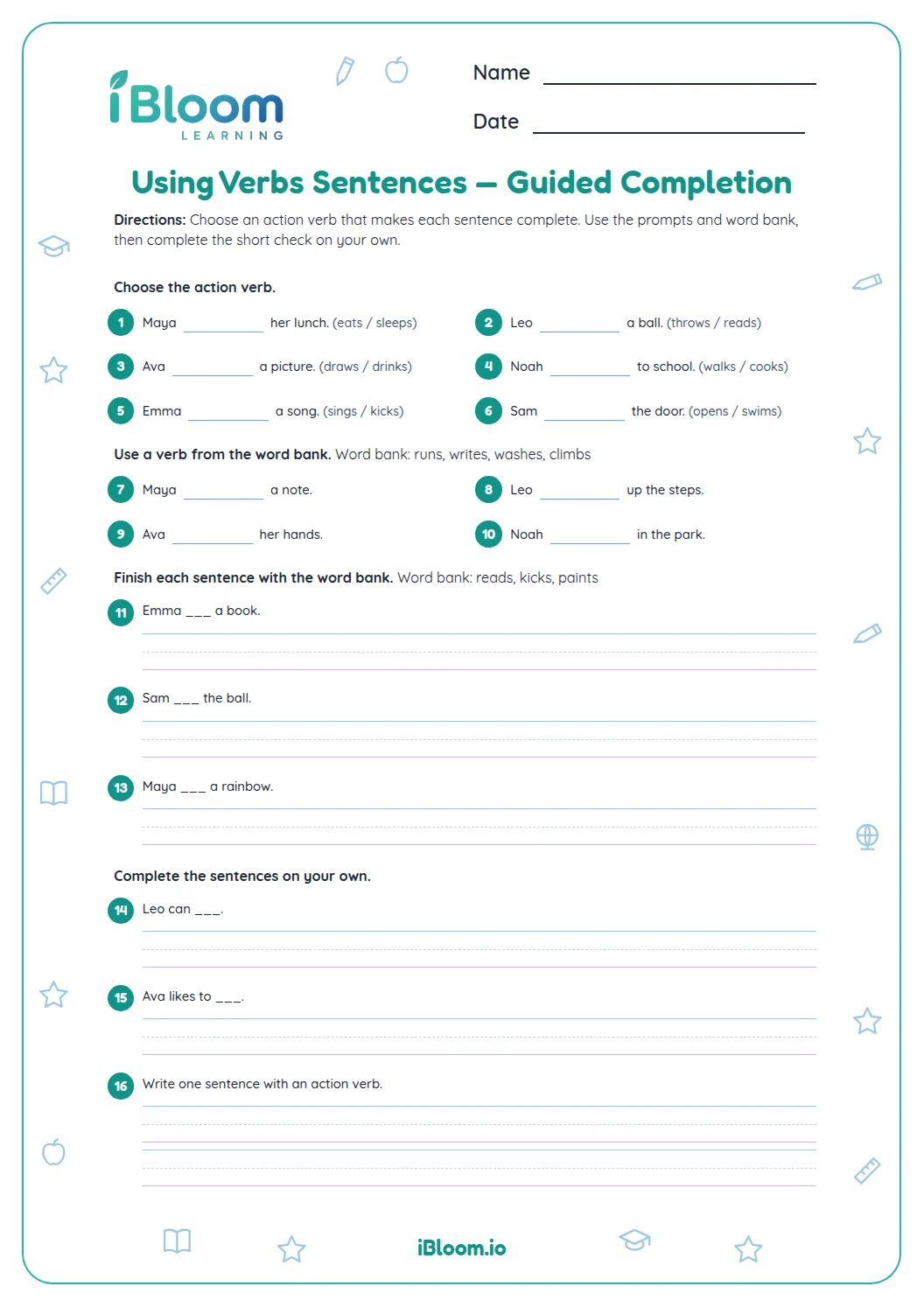
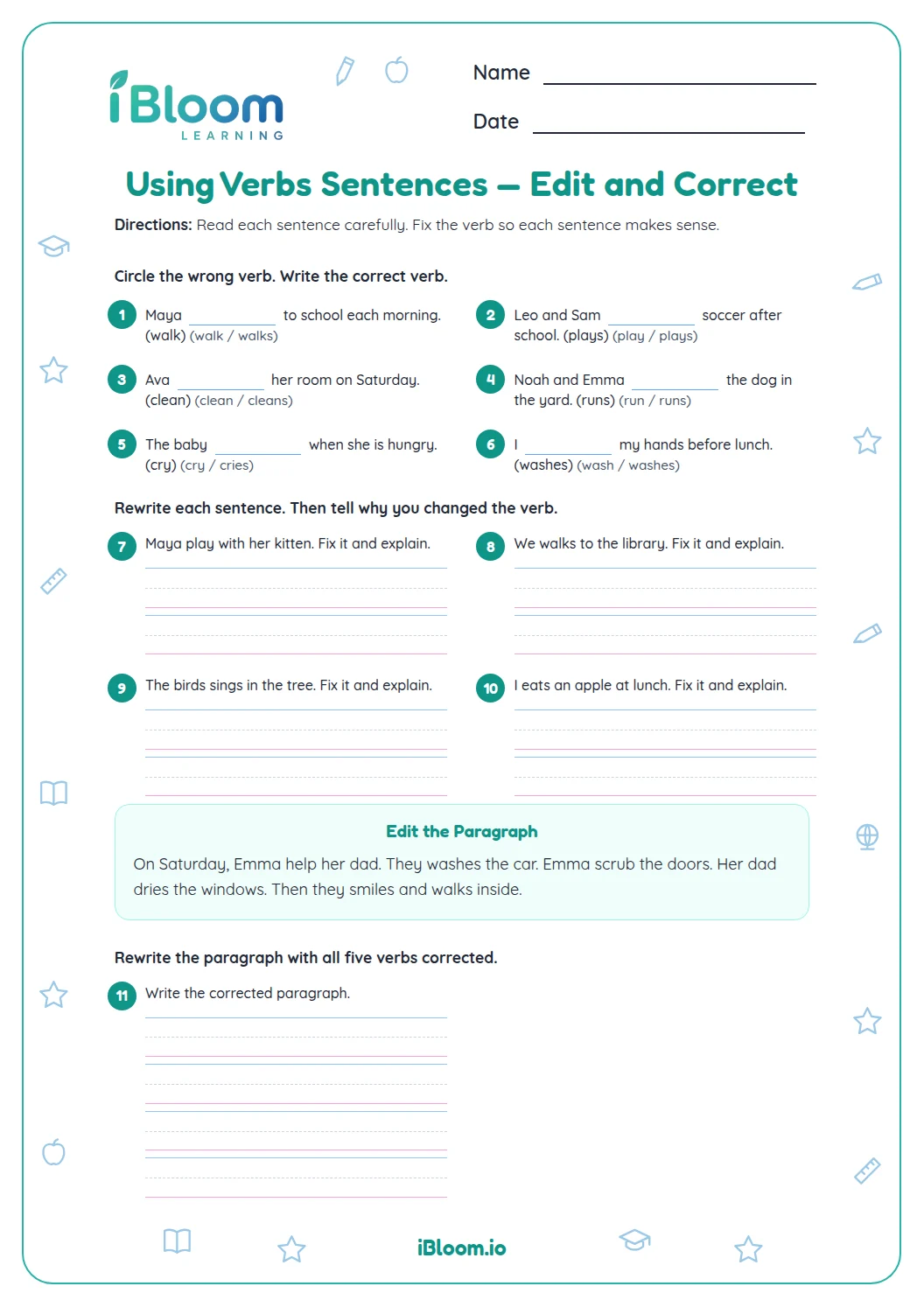
This Grade 2 verb worksheet helps students change a verb to show that an action happened in the past. Each prompt includes a time clue such as “yesterday” or “last week,” and the verb in parentheses makes the target clear. Students practice common irregular forms such as wrote, saw, and went, with a few regular verbs mixed in. The key lists all 16 answers.
Aligned to L.2.1.d
How does a time clue help conjugate a verb?
Words such as yesterday and last week tell when the action happened. That clue signals a past-tense verb.
- 1Question 1: “Yesterday, Mia ___ a note.” Write wrote, the past of write.
Why do some verbs change in an unexpected way?
Many common verbs do not form the past by adding -ed. Their past forms need practice: see becomes saw, and go becomes went.
- 1“Last Sunday, we ___ to the lake.” The past form of go is went.
How can I check the completed sentence?
Read the whole sentence with the new verb. Confirm that the time clue and verb form agree. Part B includes irregular forms and two regular verbs.
- 1Question 15: yesterday points to the past, so wash becomes washed.
How to use this worksheet
- 1Circle or notice the time clue.
- 2Read the verb in parentheses.
- 3Say the past-tense form aloud.
- 4Write it in the blank and reread the full sentence.
- 5Check the key and practice any irregular form again.
Common mistakes and quick fixes
The mistake
Adding -ed to every verb, such as writed.
The fix
Remember the irregular form wrote; it does not use -ed.
The mistake
Using present tense after yesterday.
The fix
Let the past-time clue guide the verb form.
The mistake
Choosing a word that does not fit the sentence.
The fix
Read the full sentence aloud after filling the blank.
Common Core alignment
Form and use past-tense forms of familiar irregular verbs.
On this sheet: Most prompts practice irregular past-tense forms; two regular forms provide mixed review.
Show the official wordingHide the official wording
Form and use the past tense of frequently occurring irregular verbs (e.g., sat, hid, told ).
What to practice next
Make more practice
Further reading
Questions parents and teachers ask
How many verbs are on this worksheet?
There are 16 fill-in-the-blank sentences. Most ask for irregular past-tense forms such as wrote, saw, and went. Two Part B prompts use regular forms, washed and barked, for mixed review. Every sentence gives a clear past-time clue and the base verb in parentheses.
What is an irregular past-tense verb?
An irregular verb changes in a way that does not follow the usual -ed pattern. For example, write becomes wrote and go becomes went. The first group gives students practice with these common changes, and the answer key lists each form.
Why does each sentence include a time clue?
Time clues such as yesterday and last week help students identify when the action happened. They point toward past tense, while the verb in parentheses names the word to change. Reading both clues together makes each blank easier to solve.
Are regular verbs included too?
Yes. Most questions focus on irregular forms, and two use regular forms: washed and barked. Mixing the forms gives students a chance to apply past tense to more than one spelling pattern while keeping the focus on verb conjugation.
How can I help a child who writes “goed” or “writed”?
Say the base verb and its past form together: go, went; write, wrote. Ask the child to repeat the completed sentence, then return to the question later for another try. These frequent irregular forms are learned through repeated reading and use.