


About this worksheet
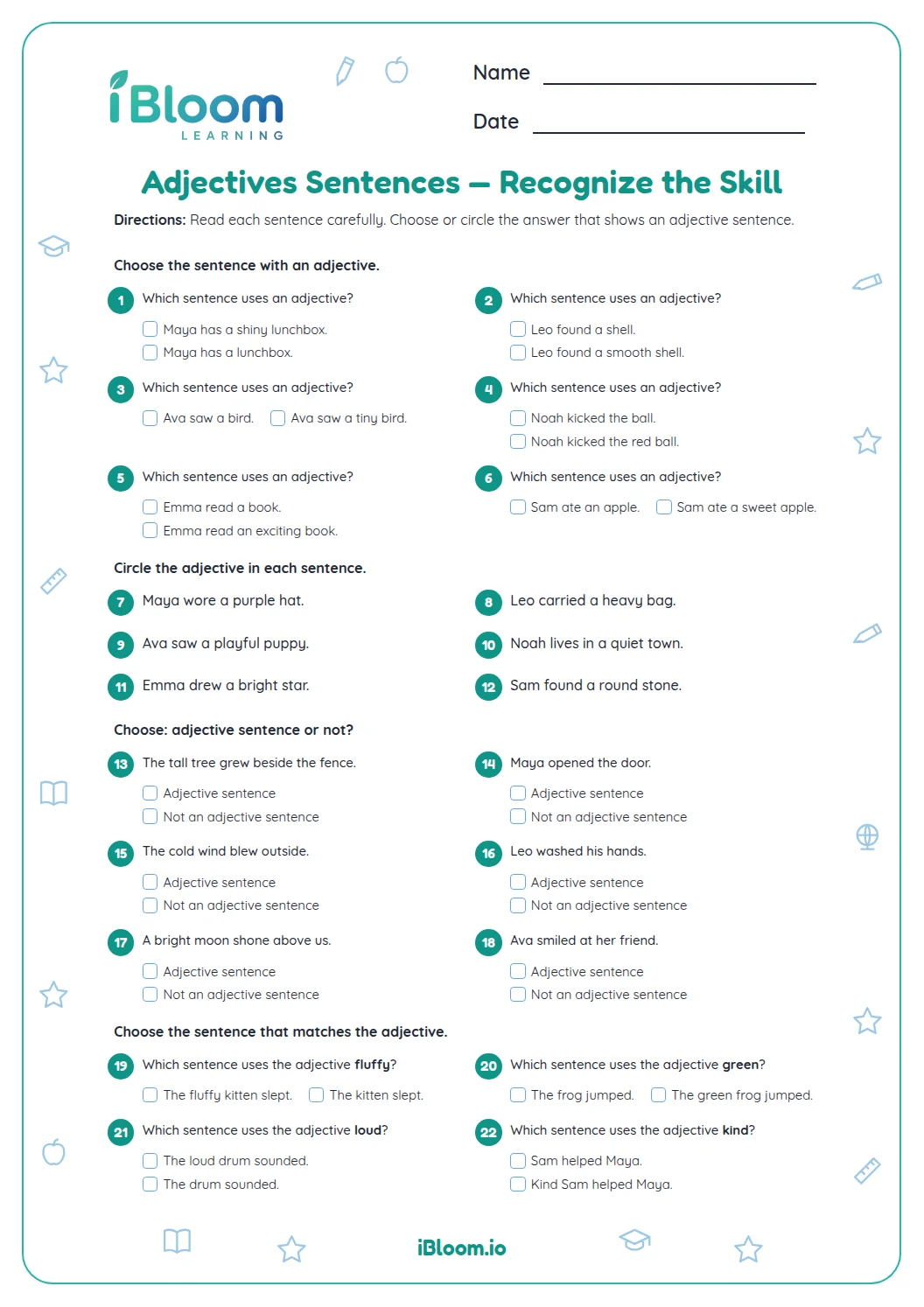
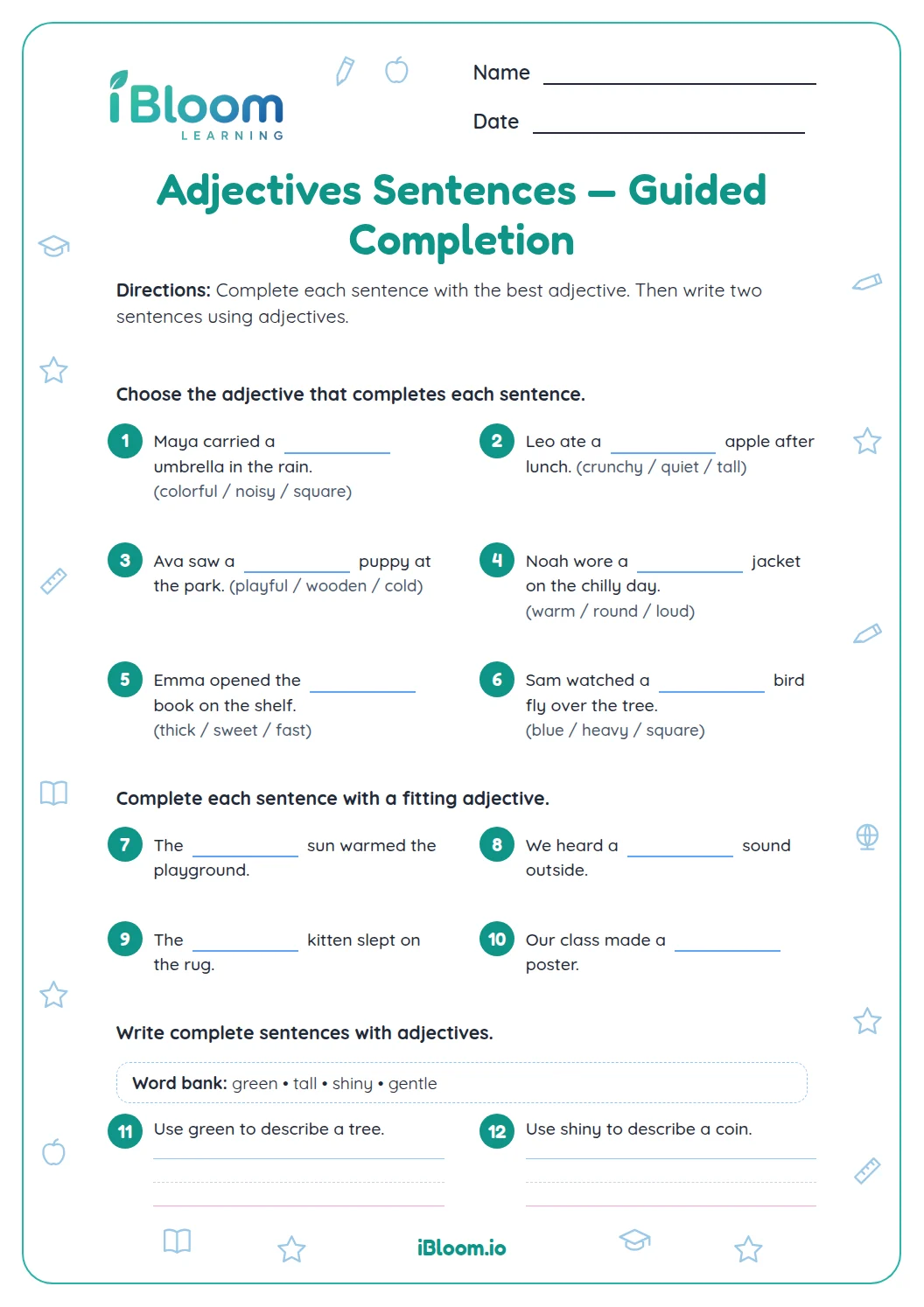
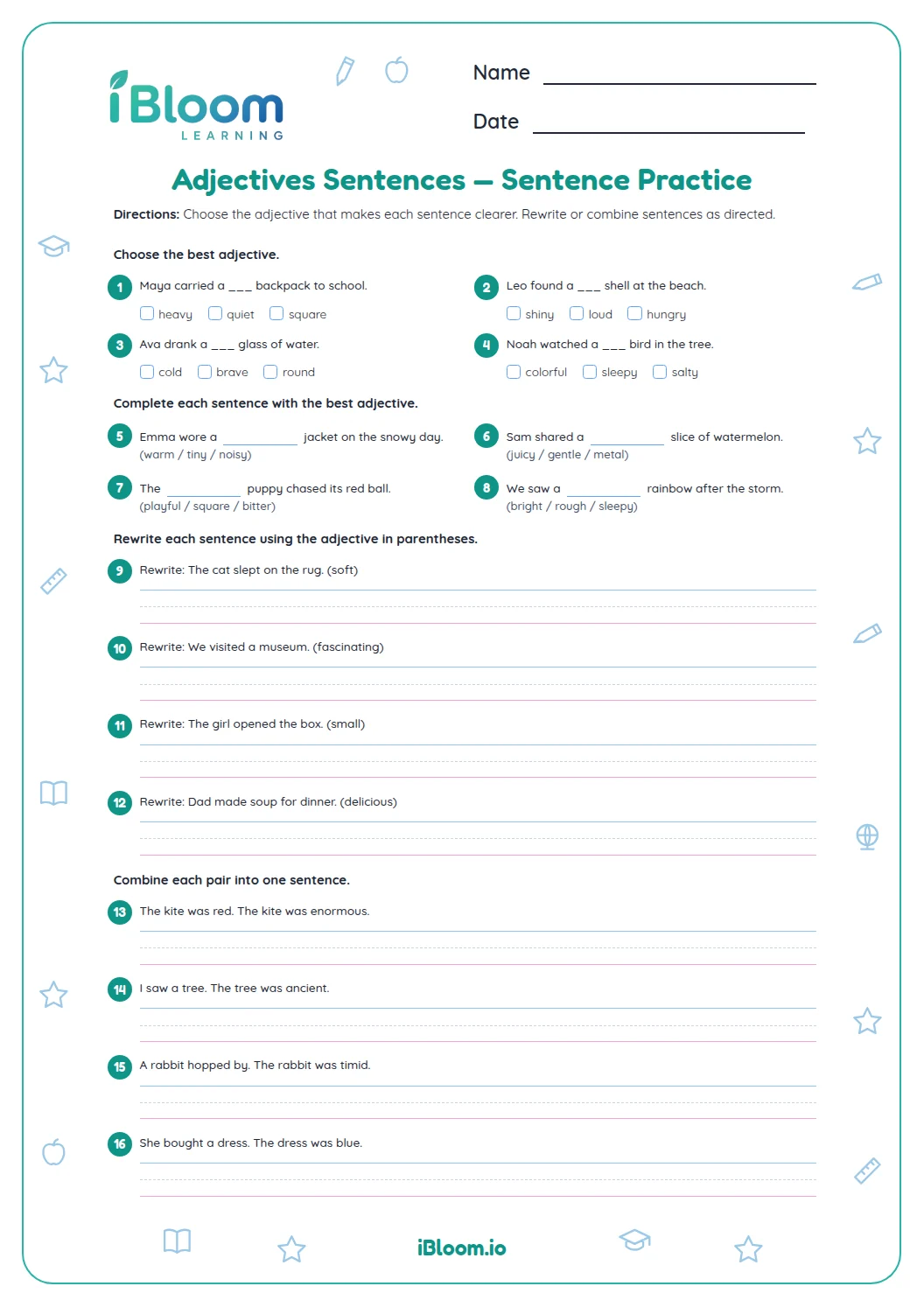
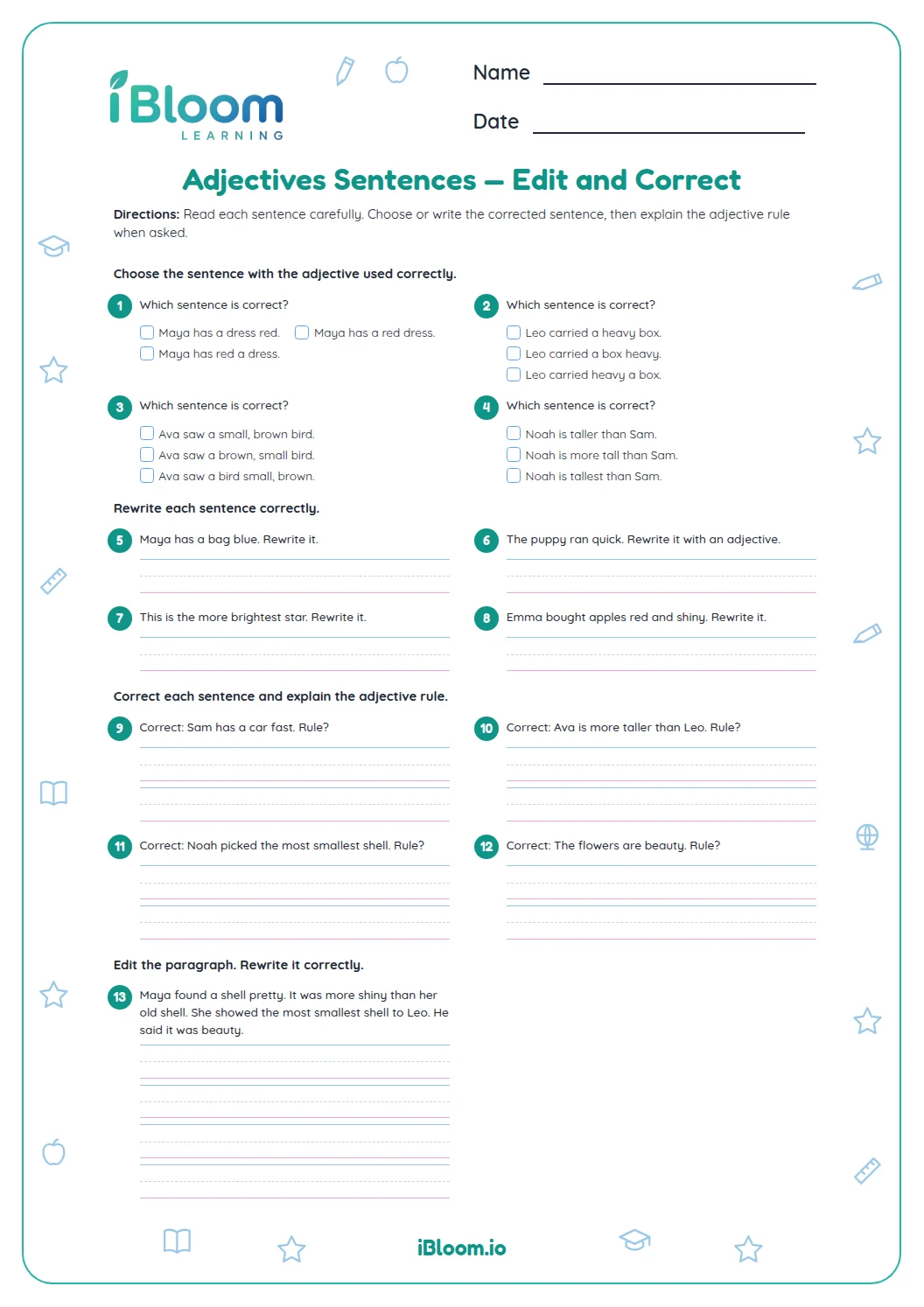
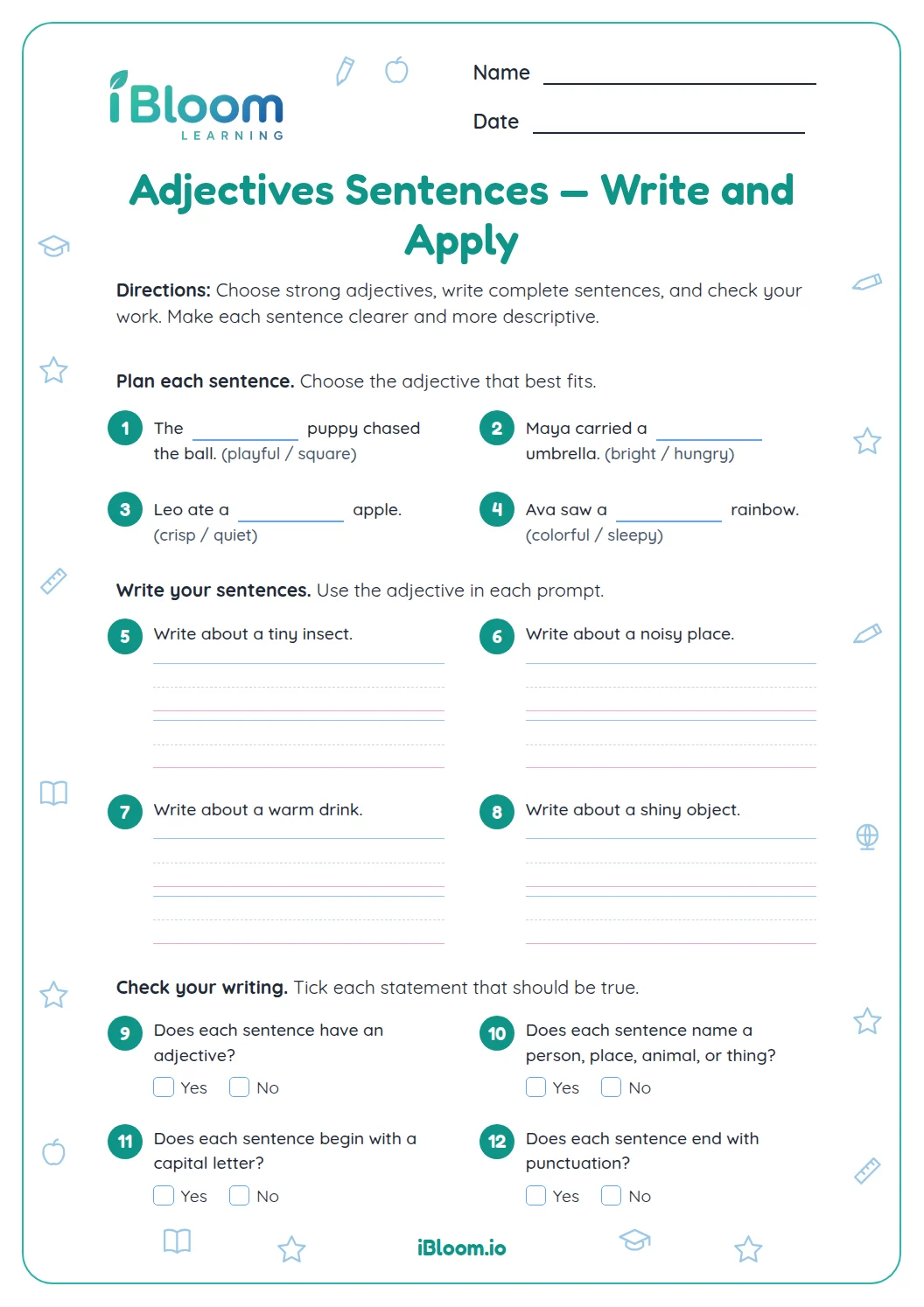
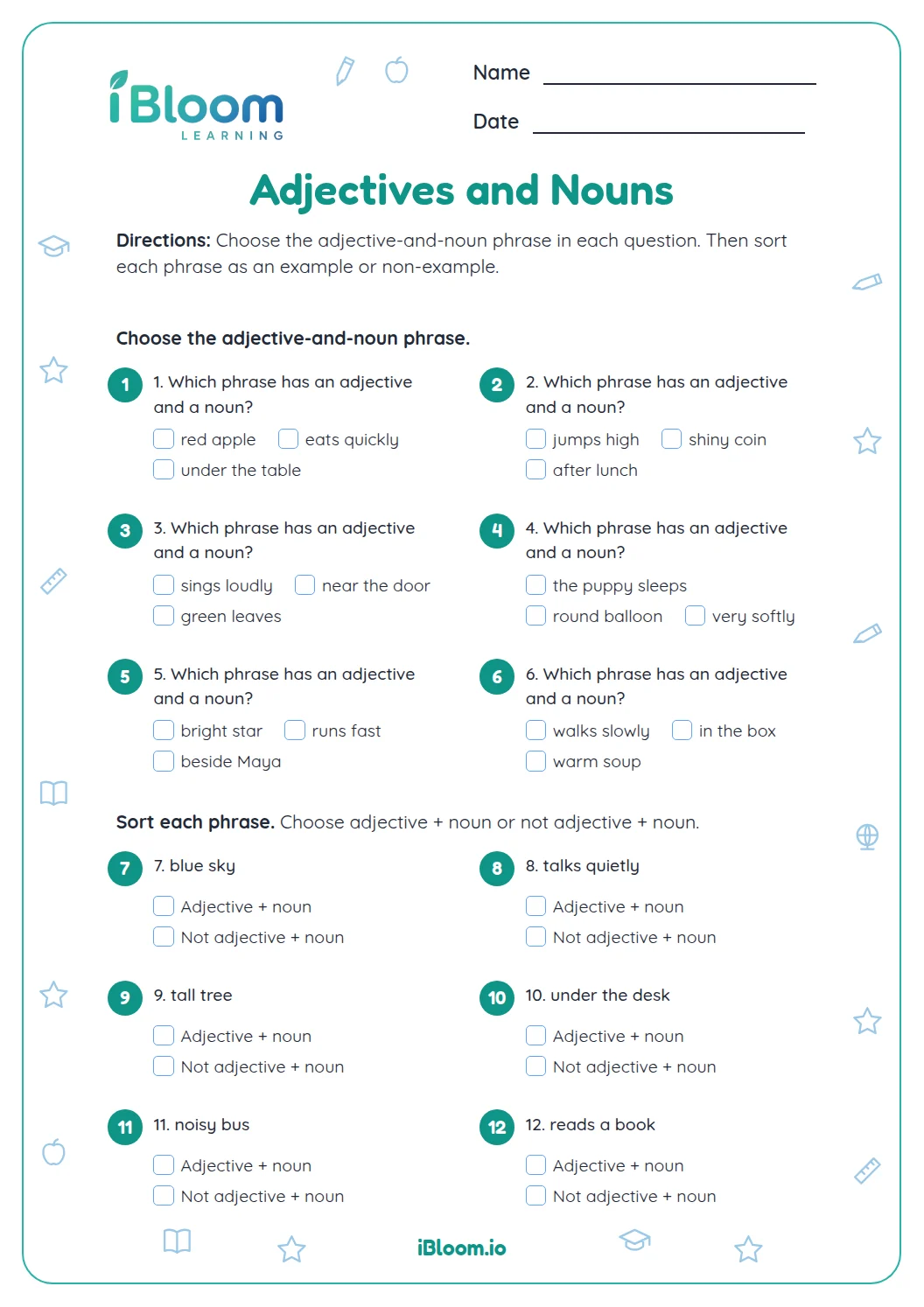
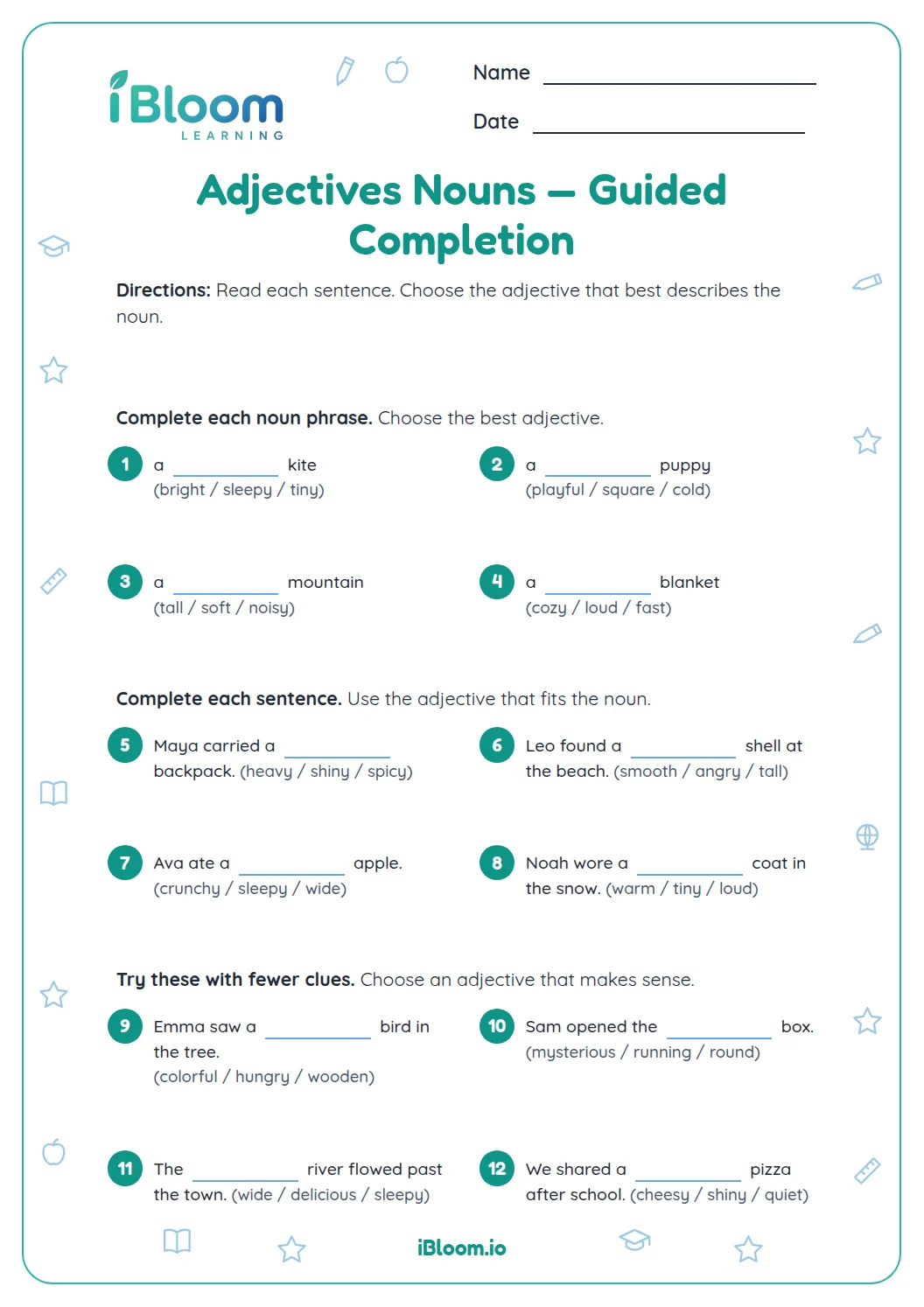
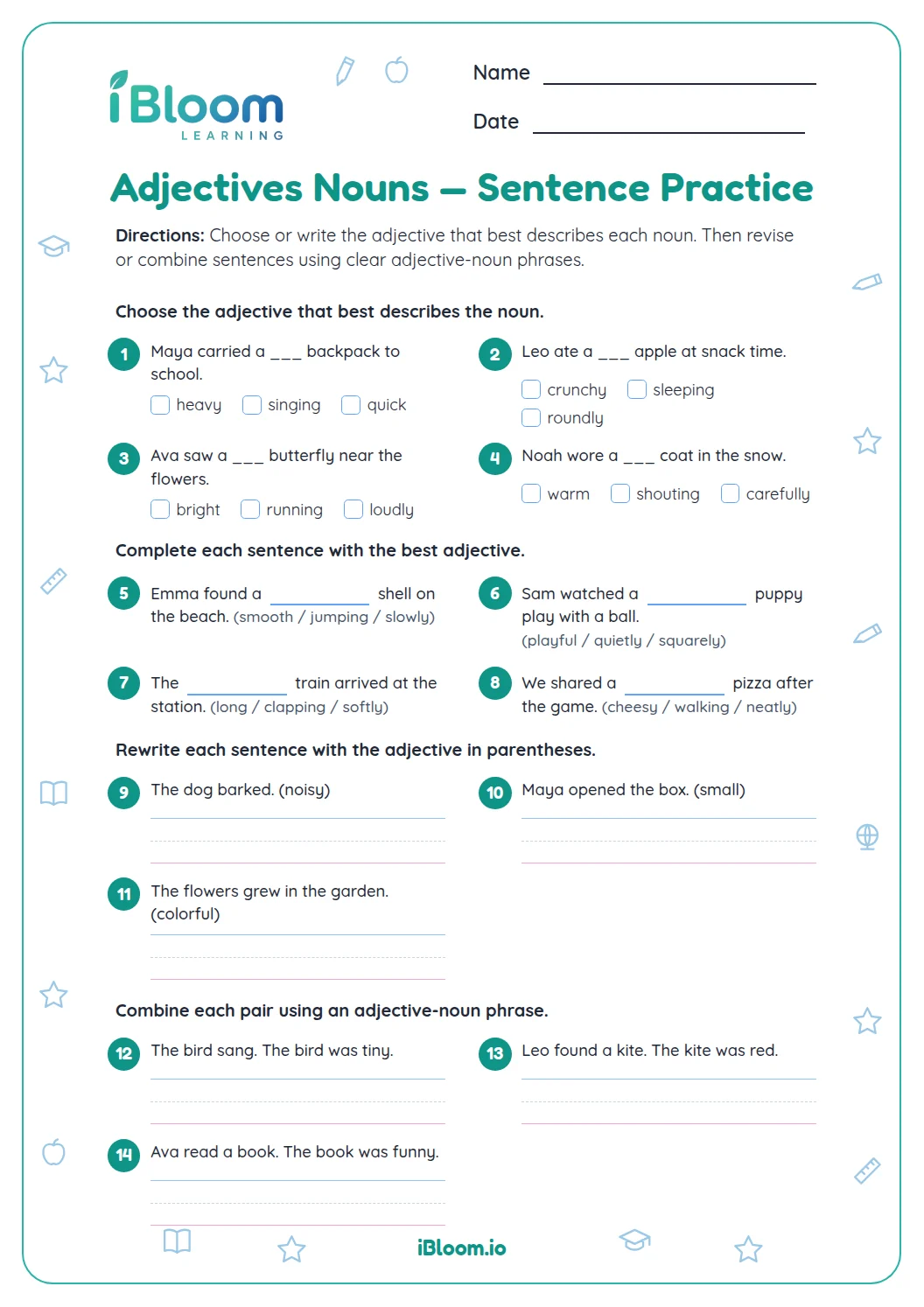
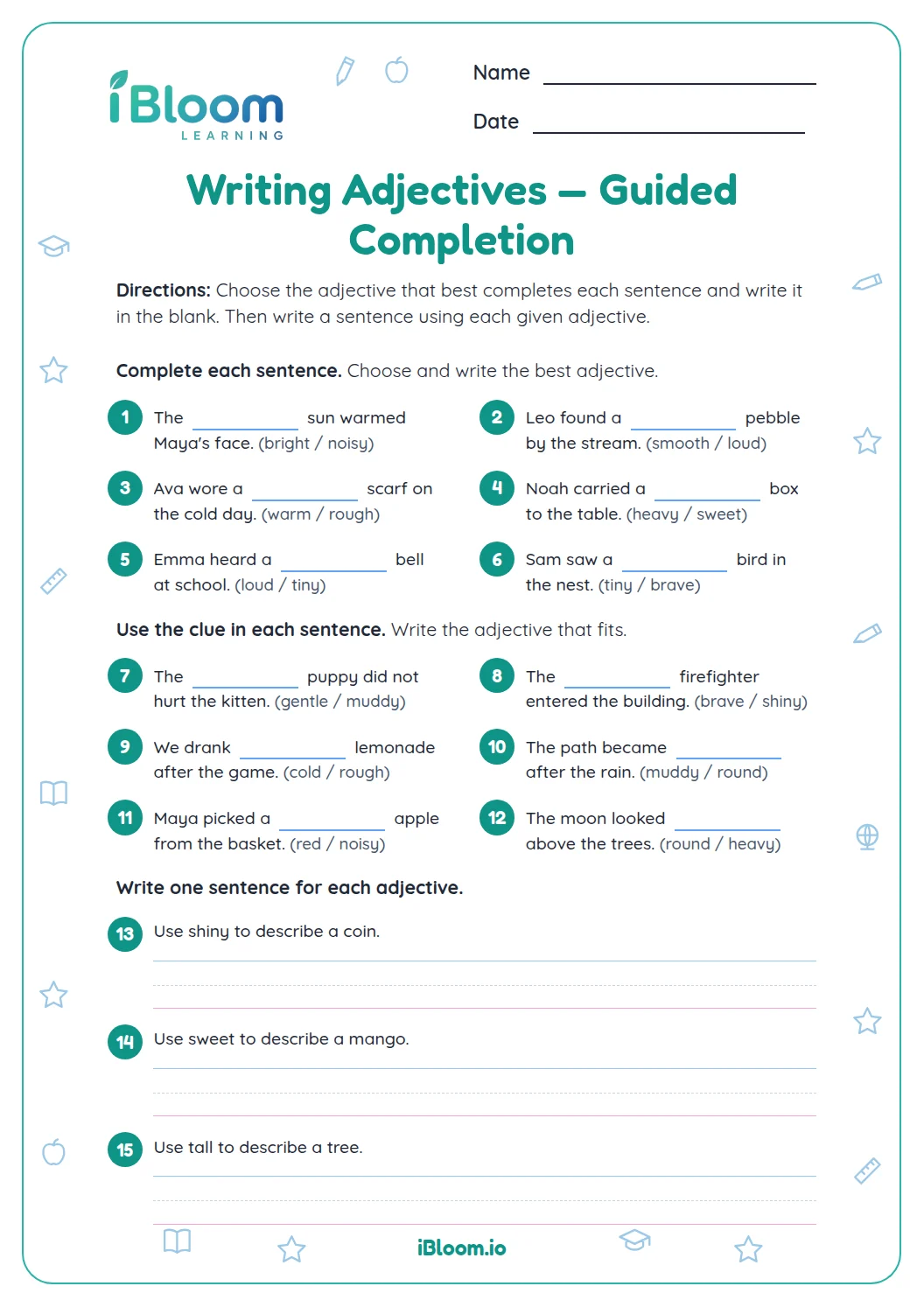
This free printable Grade 3 worksheet reviews choosing and using adjectives in sentences. Seven clue sentences ask children to choose a fitting adjective. Five sentence pairs ask which version adds a clear describing detail. Two writing tasks finish the review: revise a sentence and describe a meal. A separate answer key marks the choices and gives sample writing.
Aligned to L.3.1a and L.3.3a
How do children choose an adjective that fits?
Read the whole sentence and find its clue. Question 1 says the backpack was hard to lift. That points to heavy; empty and tiny suggest something easier to lift.
- 1The ___ backpack was hard to lift.
- 2Clue: hard to lift.
- 3Choose heavy: The heavy backpack was hard to lift.
What makes one description more specific?
Part B compares sentence pairs with the same basic action. The added adjectives supply details: muddy tells about the dog, and large and wooden tell about the box. Children choose A or B for the version with useful description.
A sentence does not improve just by becoming longer; its adjectives must make sense with the noun. Question 12 compares the moon glowing with the bright moon glowing.
What should the writing answers show?
Question 13 asks for two adjectives in a revision of the cat sentence. Question 14 asks for two adjectives in a sentence about a meal. Both answers should be complete sentences with clear descriptions.
Question 13 asks for an explanation: sturdy describes bridge and means strong or firmly built. An adjective can describe a noun even when comes between the two words.
Question 14 asks which noun bright describes in “The bright moon glowed.” The answer is moon.
How to use this worksheet
- 1Read the clue in question 1 and try each adjective aloud.
- 2Complete the seven choices, checking that each adjective fits its noun.
- 3Compare the A and B sentences and identify the detail added.
- 4Revise the cat sentence and write a meal sentence with two adjectives each.
- 5Check your work against the answer key and discuss other clear descriptions.
Mistakes to discuss
The mistake
Choosing tiny because a backpack could be small.
The fix
Use the given clue, hard to lift, to choose heavy.
The mistake
Choosing a sentence just because it has more words.
The fix
Name the added adjective and the noun it describes.
The mistake
Writing “warm soup and crunchy toast” without a sentence.
The fix
Turn the two descriptions into a complete sentence, such as “I ate warm soup and crunchy toast.”
Common Core alignment
Identify adjectives and explain which nouns they describe.
On this sheet: The final explanation identifies bridge as the noun described by sturdy and explains the adjective’s meaning.
Show the official wordingHide the official wording
Explain the function of nouns, pronouns, verbs, adjectives, and adverbs in general and their functions in particular sentences.
Choose adjectives that add a clear descriptive detail.
On this sheet: Children compare descriptions and select adjectives for their own sentences.
Show the official wordingHide the official wording
Choose words and phrases for effect.
What to practice next
Make more practice
Further reading
Questions parents and teachers ask
How many questions are on the worksheet?
There are 14 questions in three parts: seven adjective choices, five sentence comparisons, and two written responses. Children move from using clues to judging descriptions and writing their own. The separate answer key marks each choice and gives sample responses for the two writing tasks.
Why is heavy the answer to question 1?
The clue hard to lift points to heavy. Children should use that clue rather than imagine any backpack they like. Empty and tiny are possible descriptions of other backpacks, but neither explains this sentence as well as heavy. Read the completed sentence aloud to check.
What do A and B mean in Part B?
A and B label the two sentences in each comparison. Choose the letter for the sentence with an adjective that adds a useful detail. In question 9, A describes the flower as tiny and purple, while B simply names a flower. Both sentences describe the same action.
Must both adjectives describe the same noun?
No, the two writing tasks allow adjectives for one noun or for different nouns. “The sleepy cat slept on the soft blanket” adds one adjective to each noun. For the meal sentence, “I ate warm soup and crunchy toast” also meets the requirement with two separate descriptions.
How should I check the final explanation?
Look for bridge as the noun and strong or firmly built as the meaning of sturdy. The child should explain what the adjective contributes to the sentence. Accept their own clear wording rather than requiring the exact sample, and discuss how is links the noun to its description.