







About this worksheet
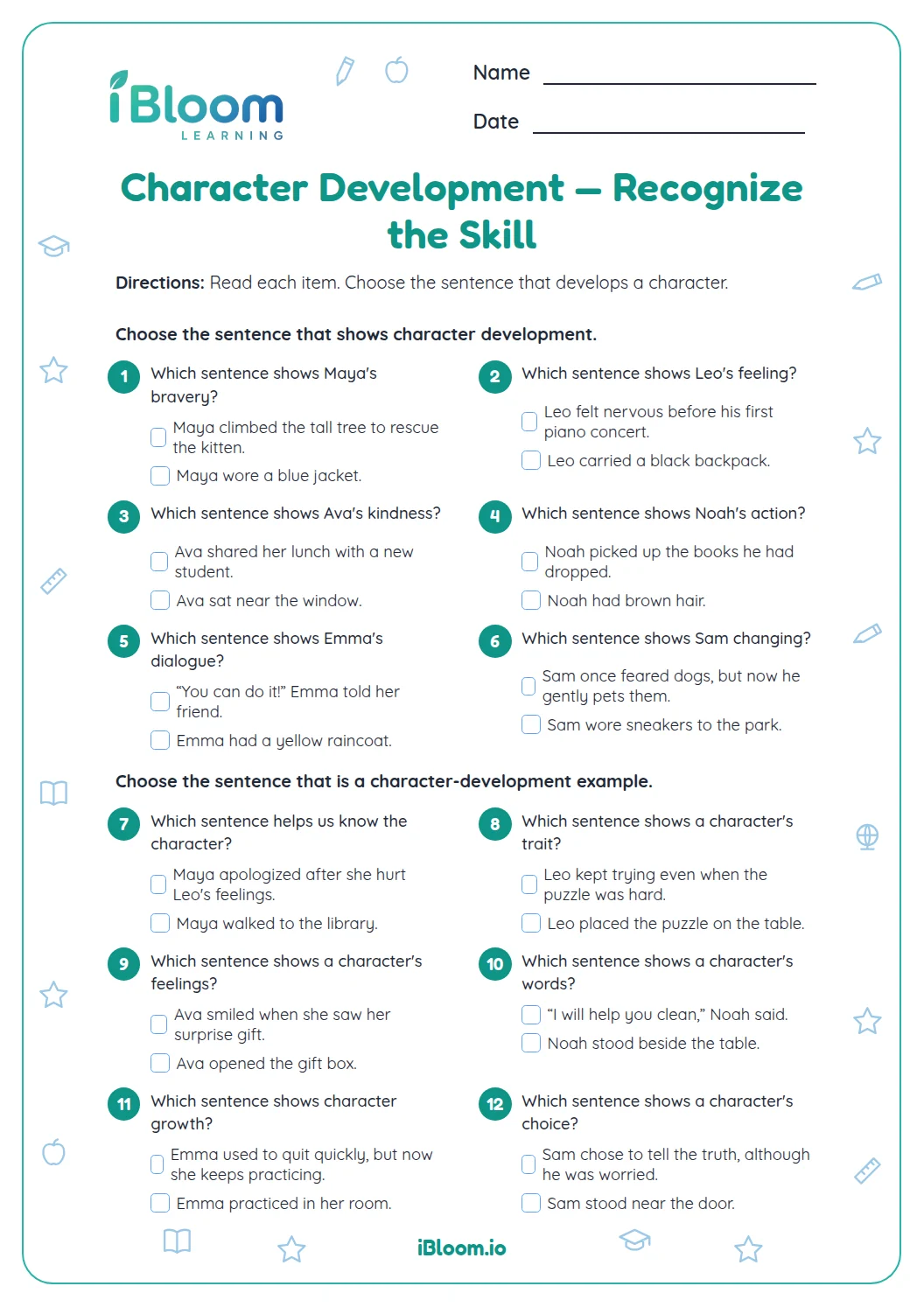
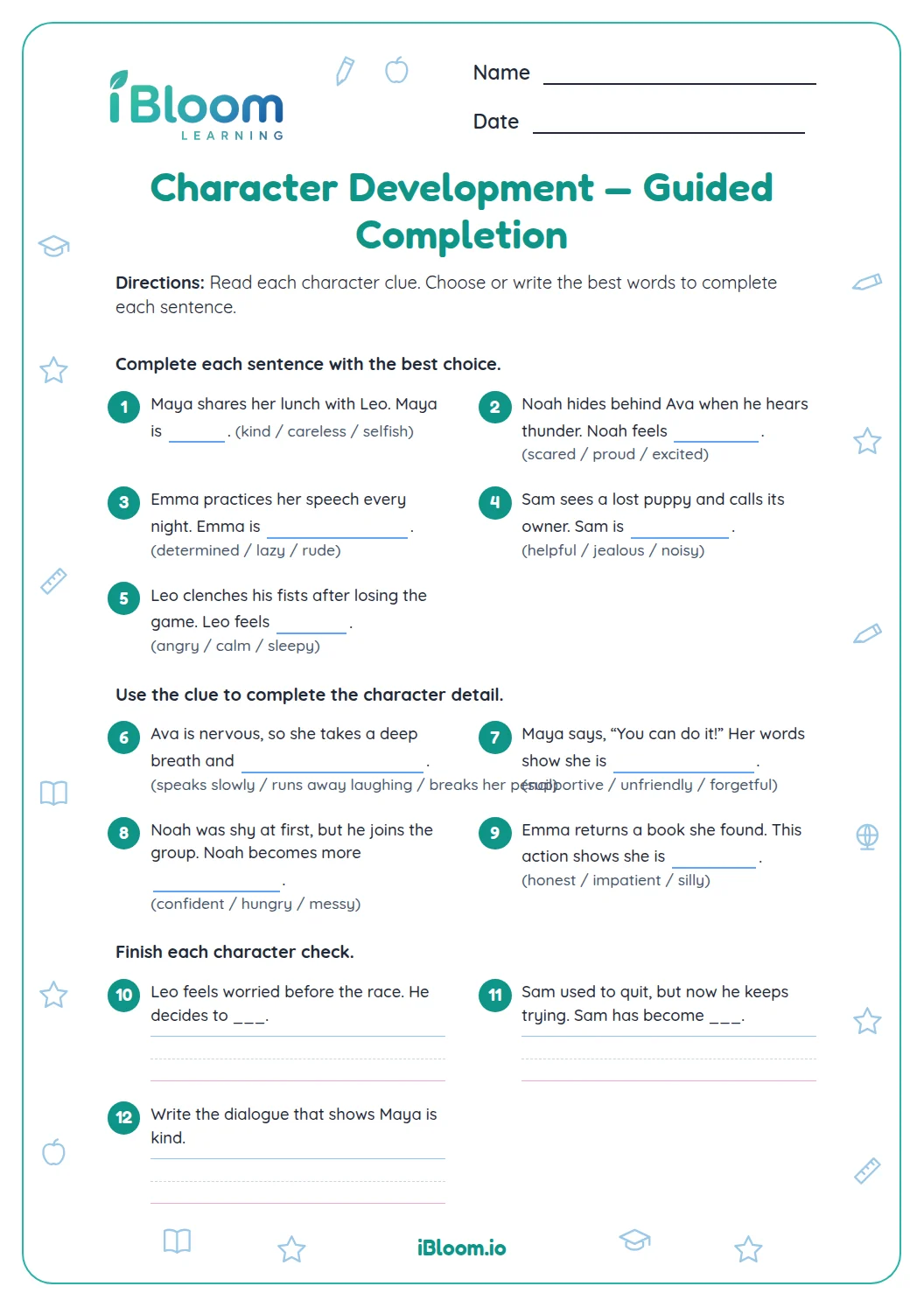
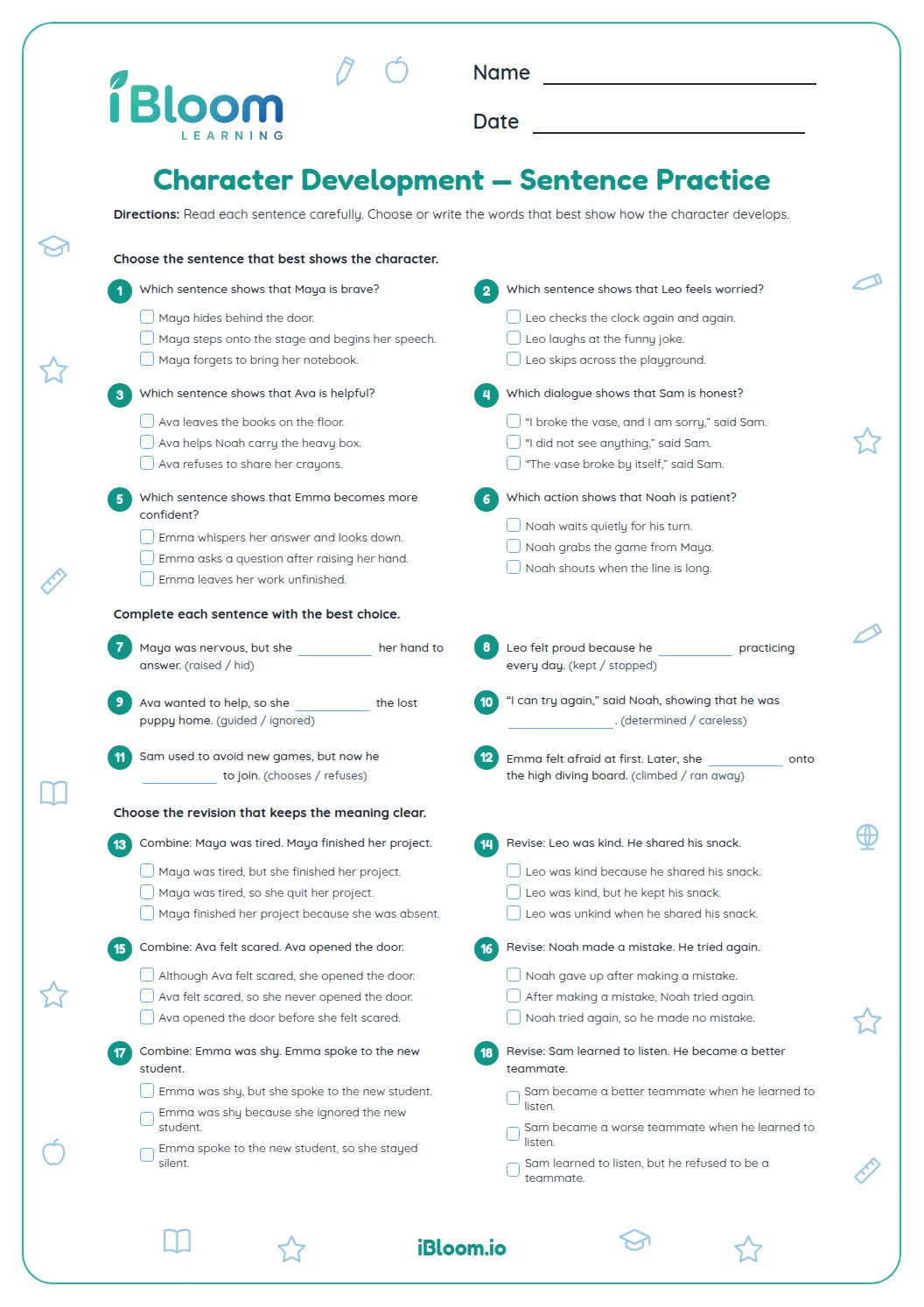
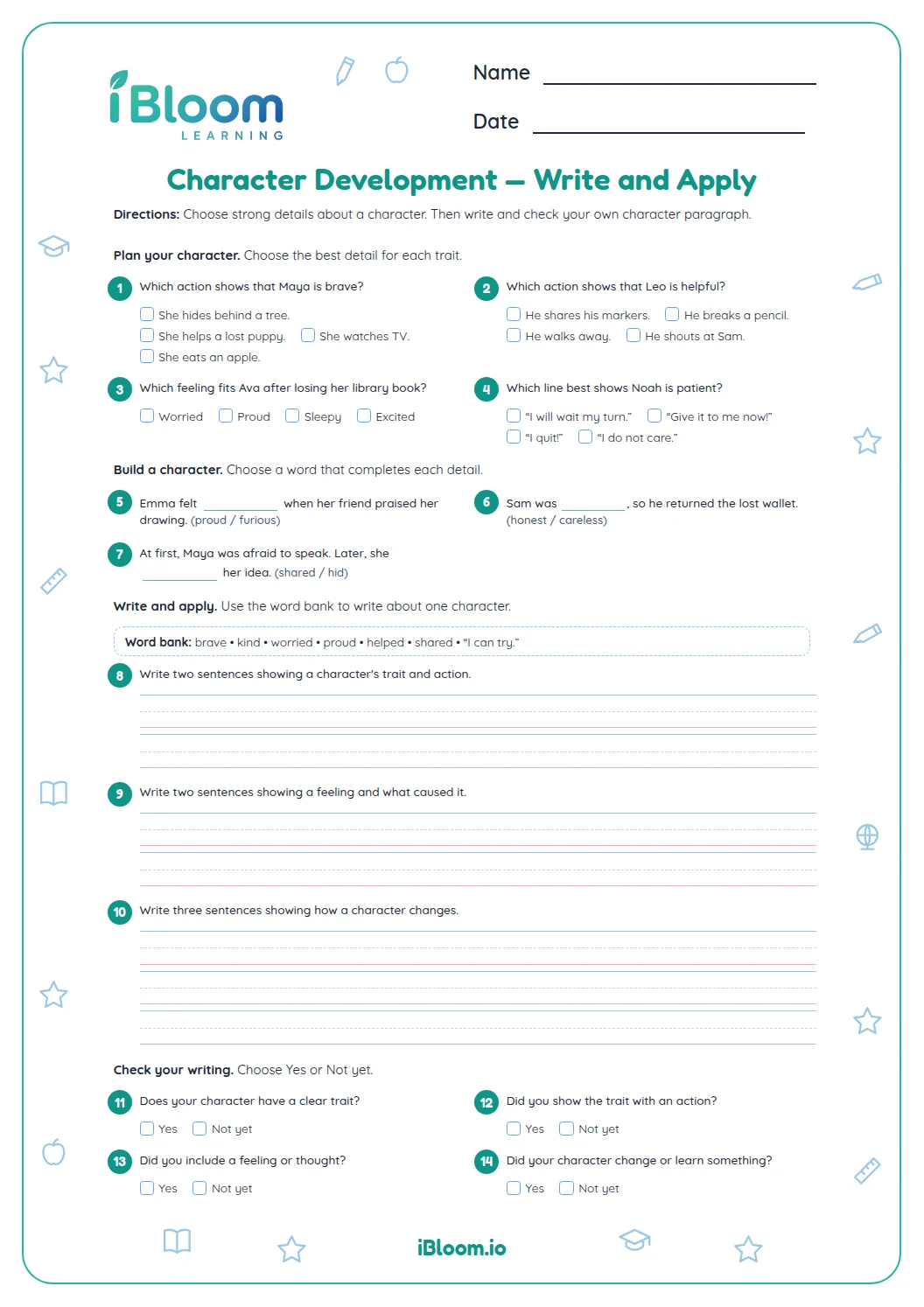
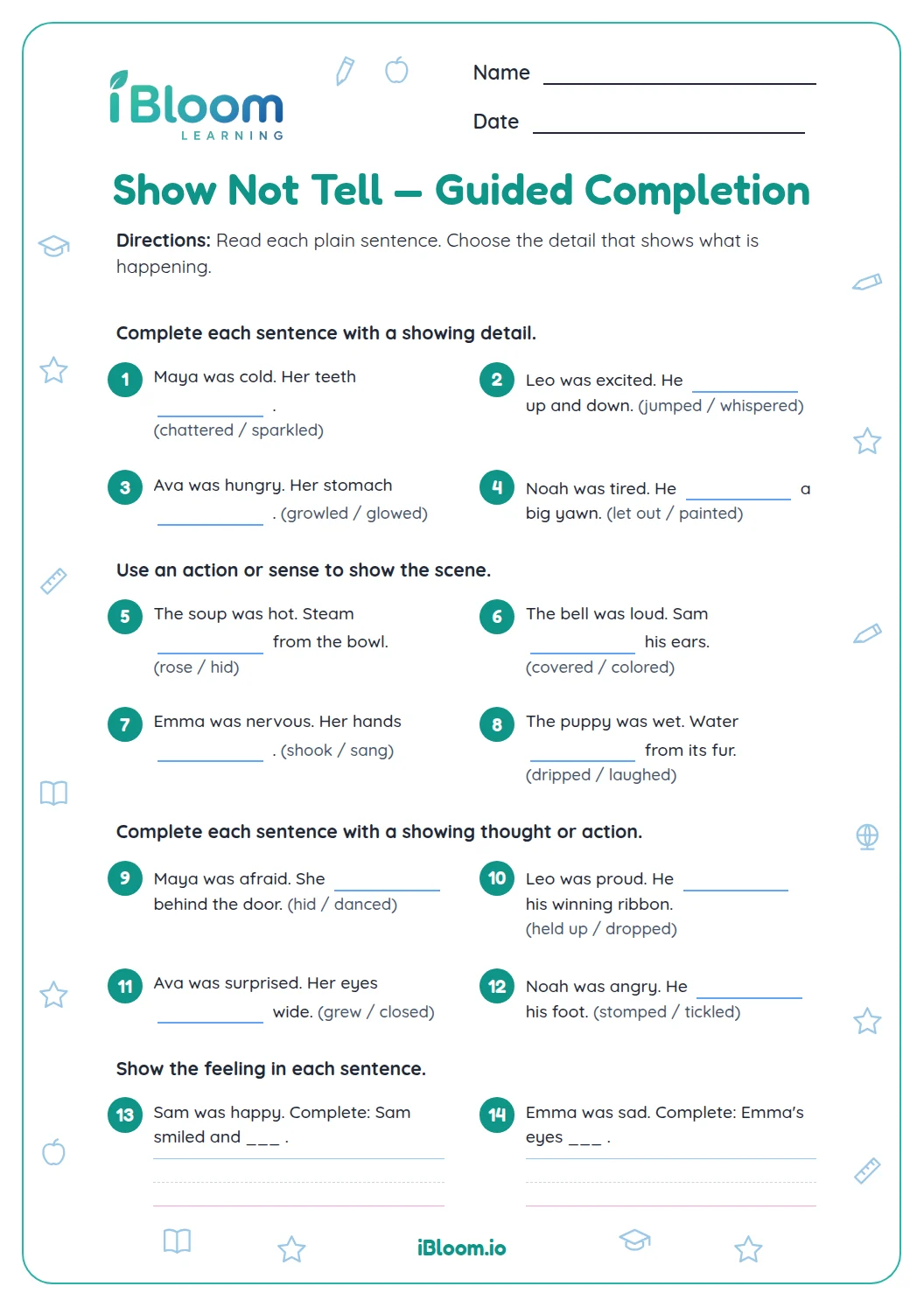
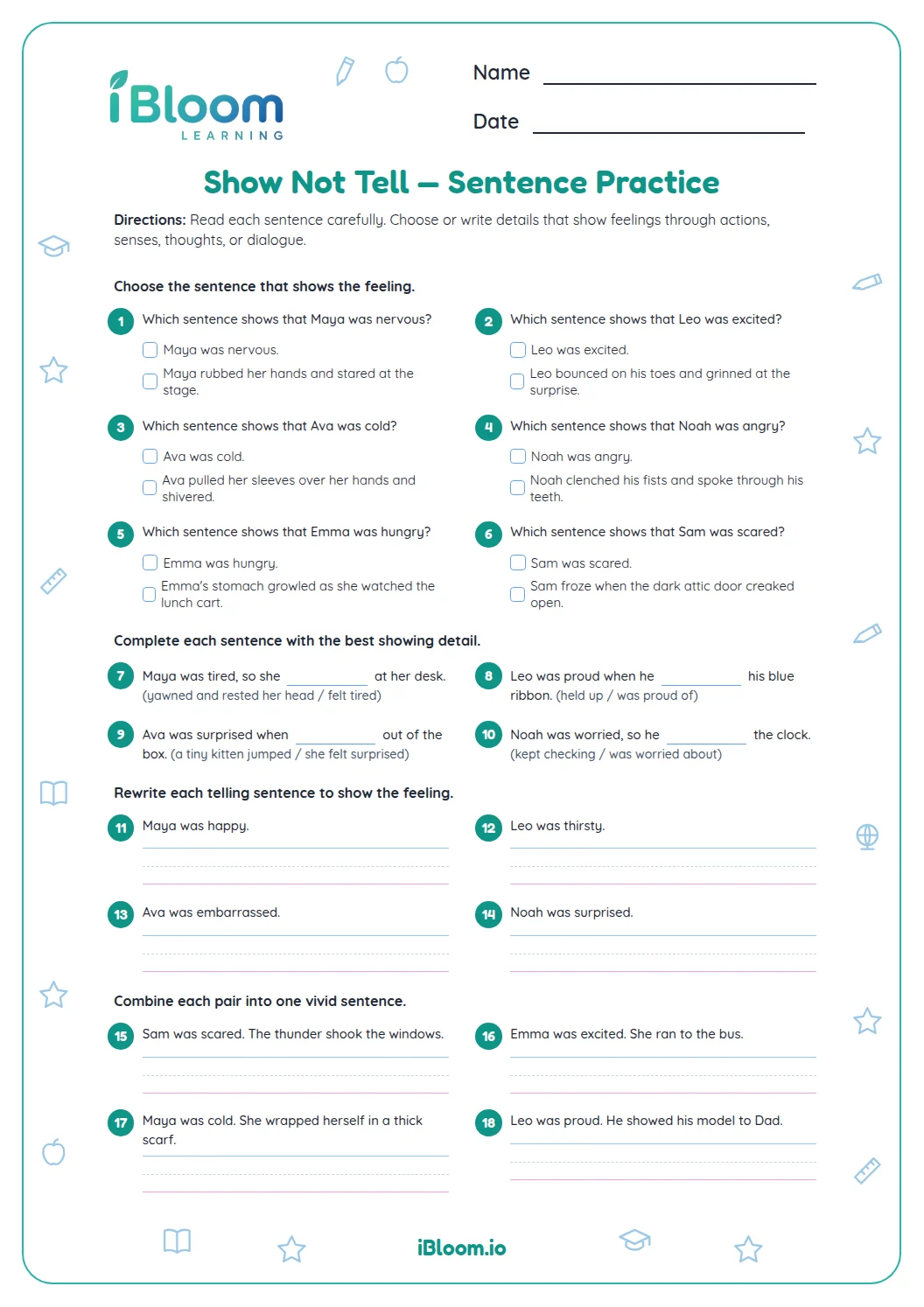
This Grade 3 narrative-writing worksheet helps students develop characters through observable details. Across 15 questions, they match actions to feelings, revise plain sentences with actions, thoughts, or dialogue, and select revisions that reveal a character. The separate key provides sample responses for open-ended edits and correct choices for the rest.
Aligned to W.3.3.b
What character details do students revise?
Part A connects a feeling or trait with a detail that demonstrates it. Part B asks students to replace a plain statement with an action, thought, or dialogue. Part C asks them to select the strongest revision from three choices.
For example, “Ben tried the knot again after it slipped” shows determination through what Ben does. The detail gives evidence instead of naming the trait.
- Part A: connect details to feelings
- Part B: write actions, thoughts, and dialogue
- Part C: select the revision that reveals a trait
What makes a character detail effective?
A useful detail lets a reader infer how a character feels or what the character is like. Look for behavior or words that support the feeling named in the prompt.
- 1Ben tried the knot again after it slipped.
- 2This shows determination.
- 3He keeps trying after a setback.
How do actions, thoughts, and dialogue help?
Actions show what a character does, thoughts reveal what is on the character’s mind, and dialogue lets the character speak. A writer can choose the kind of detail that best fits the moment, then make sure it supports the intended feeling or trait.
How can students improve a revision?
Read the revised sentence without the original trait label. Ask whether a reader could infer the feeling or trait from the detail alone. If not, add a more specific action, thought, expression, or line of dialogue.
How to use this worksheet
- 1Read the feeling or trait named in each prompt.
- 2In Part A, choose the detail that gives evidence for it.
- 3In Part B, replace the plain statement with a specific action, thought, or line of dialogue.
- 4In Part C, compare all three choices and select the clearest evidence.
- 5Check the key and ask what a reader can infer from the detail.
Common mistakes and quick fixes
The mistake
Repeating the trait word instead of showing it.
The fix
Add behavior or a thought that lets the reader infer the trait.
The mistake
Choosing a detail that only describes the setting.
The fix
Check that the character’s action, words, or thoughts provide the clue.
The mistake
Adding an action that does not match the feeling.
The fix
Reread the prompt and check that the detail supports the named emotion or trait.
Common Core alignment
This worksheet gives focused practice with a Common Core language or writing skill.
Revise character details using dialogue, actions, thoughts, and feelings.
On this sheet: Revise character details using dialogue, actions, thoughts, and feelings.
Show the official wordingHide the official wording
Use dialogue and descriptions of actions, thoughts, and feelings to develop experiences and events or show the response of characters to situations.
What to practice next
Make more practice
Further reading
Questions parents and teachers ask
What does character development mean on this page?
Here, character development means adding details that help a reader understand a character. Students connect actions to feelings, then revise plain statements with actions, thoughts, facial expressions, or dialogue. The answer key includes sample edits for open responses. Ask the learner to point to the clue that supports the answer.
How many questions are included?
The worksheet has 15 questions in three parts. Students infer feelings from details, write revisions, and choose which detail best develops a character. The answer key marks the selected choices and offers sample responses for edits. Ask the learner to point to the clue that supports the answer.
Can a written answer differ from the key?
Yes. The key gives one sample for each open response, but other answers can work if they clearly show the requested feeling or trait. Ask whether the detail gives a reader enough evidence to infer the character’s response. Ask the learner to point to the clue that supports the answer.
What is one example of showing determination?
Ben tries the knot again after it slips. The action shows that he continues after a setback. Part A uses this detail as evidence of determination, instead of simply telling the reader that Ben is determined. Ask the learner to point to the clue that supports the answer.
How can I help a student revise a weak sentence?
Start with a plain sentence such as “Omar was scared.” Ask what Omar might do when scared, then add a fitting action, such as stepping back or gripping a railing. Check that the revised detail gives a clear clue to the feeling. Ask the learner to point to the clue that supports the answer.