




About this worksheet
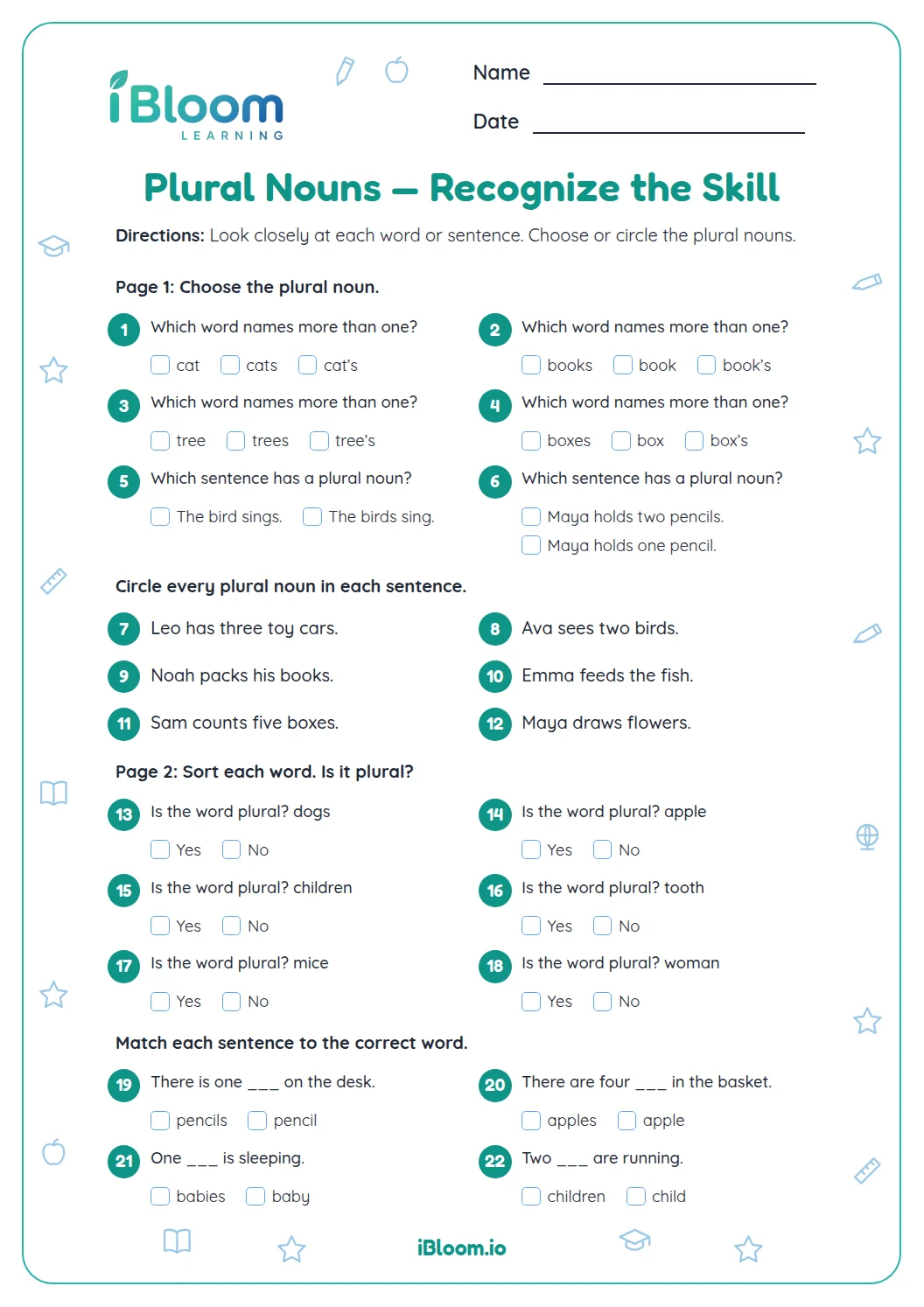
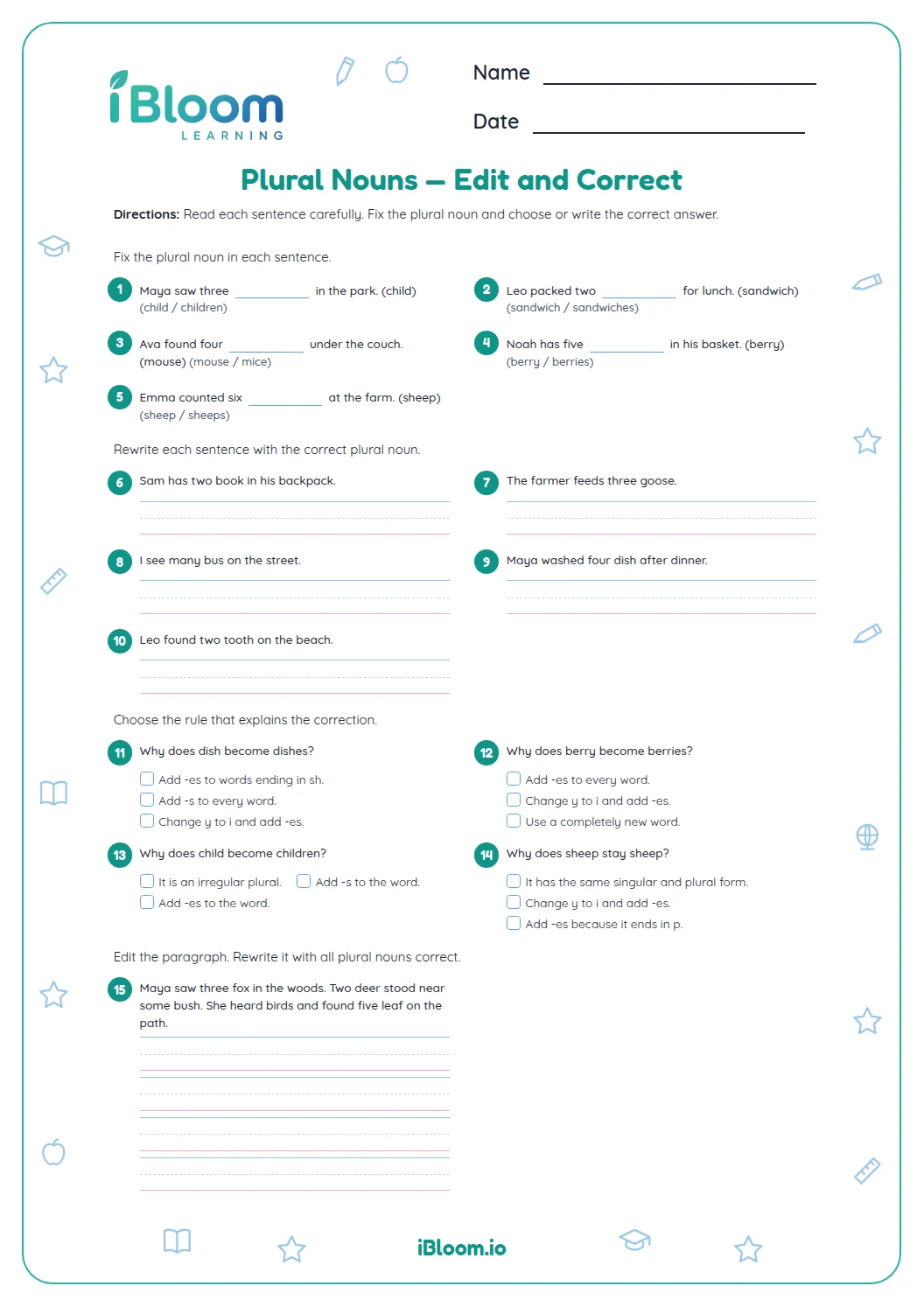
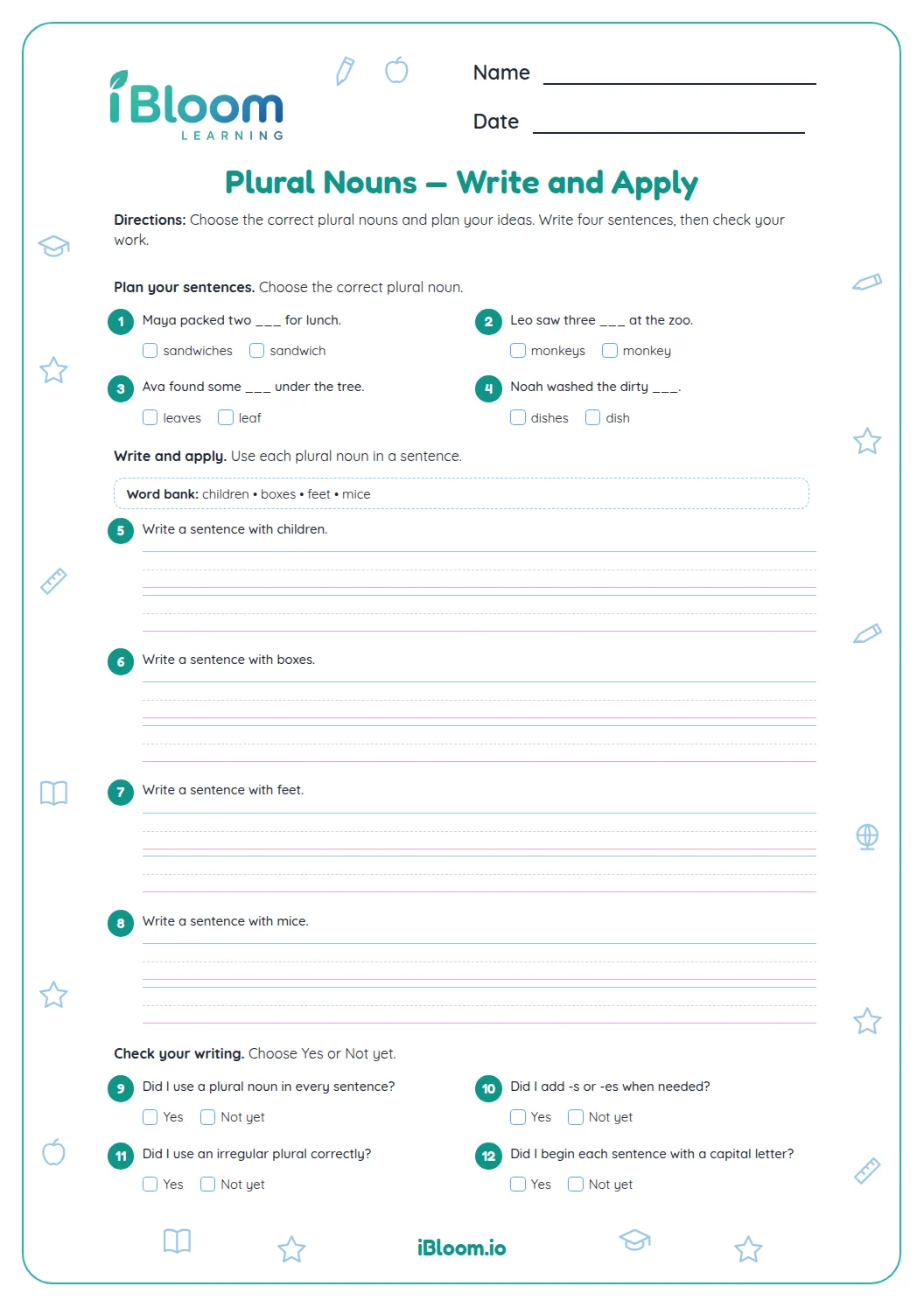
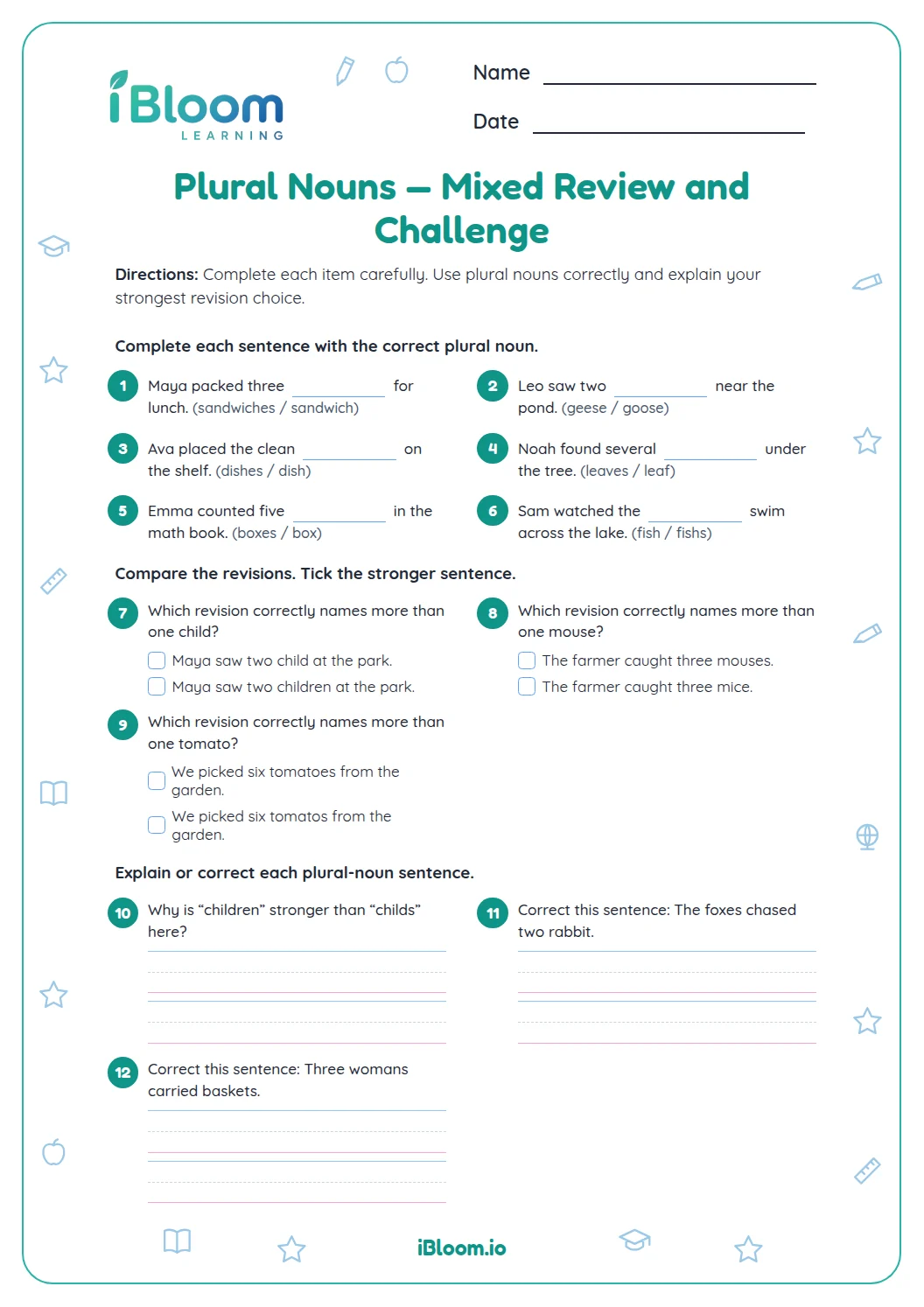
This Grade 3 plural nouns worksheet has 18 guided questions. Students add endings such as -s and -es, change consonant-y to -ies, and choose plural nouns in context. The final section includes common irregular forms such as children. An answer key supports quick checking.
What plural patterns appear on the page?
Part A starts with familiar nouns and asks students to supply the plural. Part B contrasts spellings, and Part C puts plural forms into short sentences. Look at the noun’s final letters before choosing an ending.
- 1One baby; two ___. → babies
- 2The noun ends in consonant + y, so change y to i and add -es.
When does a noun need -es?
Many nouns ending in s, x, sh, or ch add -es so the plural is easy to say: bus becomes buses, and dish becomes dishes. Read the word aloud after adding the ending.
What happens to a noun ending in y?
For a consonant followed by y, change y to i and add -es, as in city to cities. If a vowel comes before y, keep the y and add s: toy becomes toys.
How to use this worksheet
- 1Read the singular noun to its final letter.
- 2For most nouns, add -s.
- 3After s, x, sh, or ch, try -es.
- 4For consonant + y, change y to i and add -es.
- 5Read each sentence with the plural choice before checking the key.
Common mistakes and quick fixes
The mistake
Adding -s to every noun, such as “boxs.”
The fix
Say the plural aloud and use -es after x: boxes.
The mistake
Changing every final y to i.
The fix
Check the letter before y: toy keeps y, but baby changes y to i.
The mistake
Using a plural where the sentence needs one noun.
The fix
Look for number clues such as “two,” “many,” or “three.”
What to practice next
Questions parents and teachers ask
What is a plural noun?
A plural noun names more than one person, place, animal, or thing. On this page, students change cat to cats, box to boxes, and baby to babies. The sentence section adds number clues such as “two” and “many,” so the plural form has to fit the whole sentence.
When do I add -es instead of -s?
Many nouns ending in s, x, sh, or ch take -es. The added vowel helps the ending sound clear: one dish becomes two dishes, and one box becomes two boxes. Students compare these patterns in Part B and use them in the final sentence choices.
Why does baby become babies?
Baby ends with a consonant followed by y. For that pattern, change y to i and add -es: babies. A vowel before y usually stays, so toy becomes toys. Looking at the letter before y helps students choose the spelling instead of relying on a guess.
Does this worksheet include irregular plurals?
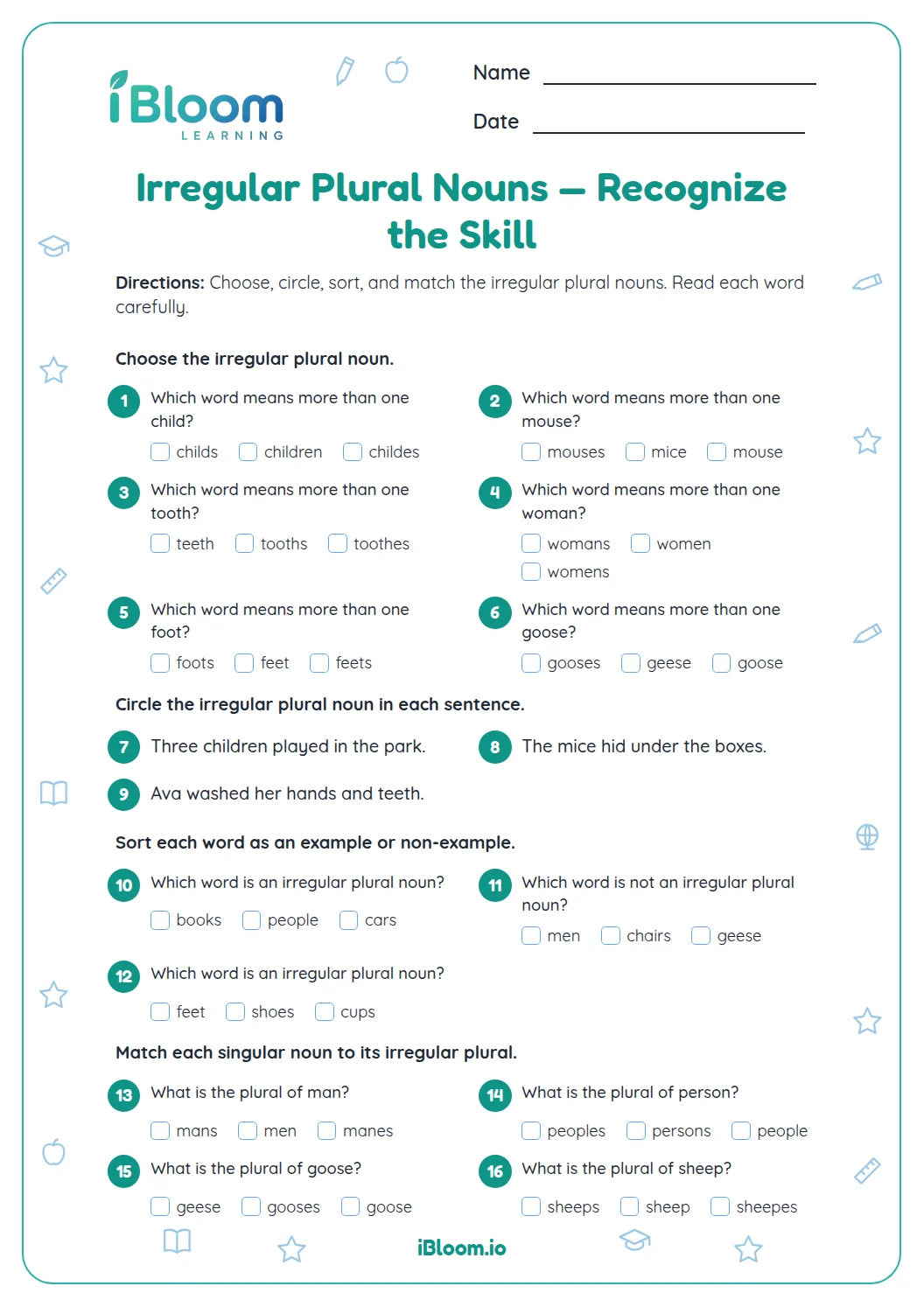
Yes. Most questions focus on regular plural spelling patterns, and one sentence-choice question uses children, an irregular plural of child. The answer key gives the exact form for each question. A linked irregular plural worksheet offers more focused practice with forms that change.
How can I check the sentence answers?
Read each completed sentence aloud and look for a quantity clue. “Two boxes” and “many children” need plural nouns, while the answer must also be spelled correctly. The answer key lists the target answer for every item, including each spelling choice.